
ISO 55001 Asset Management and Calibration
ISO 55001 Asset Management and Calibration
David Bentley
Quality Assurance Engineer
12 min read
ISO 55001 Asset Management and Calibration
ISO 55001 calibration asset management represents a critical intersection where precision measurement meets systematic asset lifecycle planning. For organizations managing extensive portfolios of measuring equipment—from automotive manufacturers tracking hundreds of torque wrenches to pharmaceutical companies overseeing laboratory balances—this standard provides the framework for optimizing both asset performance and measurement reliability. Understanding how ISO 55001 integrates with your calibration program isn't just about compliance; it's about transforming your measurement assets into strategic business enablers.
When quality managers implement ISO 55001 calibration asset management principles, they discover that their measuring instruments become more than tools—they become managed assets with defined value propositions, risk profiles, and performance metrics. This comprehensive approach fundamentally changes how organizations view their calibration investments and operational strategies.
Understanding ISO 55001 Asset Management Standard
ISO 55001 establishes requirements for an asset management system that organizations use to develop, implement, maintain, and continually improve their asset management capabilities. While many associate asset management with heavy machinery or infrastructure, measuring and test equipment represents a significant asset class that directly impacts product quality, regulatory compliance, and operational efficiency.
The standard applies to organizations of all sizes across industries where assets play a crucial role in achieving objectives. Manufacturing companies with extensive measurement capabilities, testing laboratories, aerospace organizations, pharmaceutical manufacturers, and automotive suppliers all benefit from applying ISO 55001 principles to their calibration programs.
For calibration managers, ISO 55001 shifts the focus from reactive maintenance to proactive asset optimization. Instead of simply scheduling calibrations based on fixed intervals, organizations examine measurement uncertainty requirements, usage patterns, environmental conditions, and business criticality to optimize calibration frequencies and methodologies.
A typical example involves a precision machining company managing 200+ measuring instruments. Traditional approaches might calibrate all micrometers annually regardless of usage. ISO 55001 calibration asset management principles would consider factors like measurement application criticality, historical drift patterns, and cost of non-conformance to establish risk-based calibration intervals—potentially extending stable instruments to 18-month cycles while increasing critical process gauges to 6-month intervals.
Key Asset Management Principles for Calibration
The standard emphasizes value realization, where organizations align asset management activities with organizational objectives. For calibration programs, this means demonstrating how measurement capability investments support business goals like reducing scrap rates, improving first-pass yields, or meeting customer quality requirements.
Leadership commitment becomes essential when calibration asset management decisions involve significant resource allocation. Organizations must balance measurement capability investments against other business priorities while maintaining regulatory compliance and customer satisfaction.
Risk-based thinking permeates every aspect of ISO 55001, requiring organizations to identify risks and opportunities associated with their assets. Calibration professionals must assess risks including measurement uncertainty degradation, equipment obsolescence, supplier capability changes, and regulatory requirement modifications.
ISO 55001 Calibration Requirements and Implementation
The standard doesn't prescribe specific calibration intervals or methodologies but requires systematic approaches to asset management decisions. Clause 6.2.1 addresses asset management planning, requiring organizations to establish criteria for making asset management decisions throughout the asset lifecycle.
For measuring equipment, this translates to documented decision criteria for instrument selection, calibration frequency determination, maintenance strategies, and retirement decisions. Organizations must define how they evaluate measurement requirements, assess supplier capabilities, and determine optimal calibration approaches based on technical and economic factors.
Clause 7.5 covers documented information requirements, mandating that organizations maintain records demonstrating effective asset management system implementation. Calibration records must extend beyond simple pass/fail results to include asset performance trends, cost analysis, and decision rationale documentation.
Performance monitoring requirements under Clause 9.1 demand that organizations establish metrics for asset management effectiveness. Calibration programs must demonstrate value through measurable indicators like measurement uncertainty achievement, calibration cost per measurement point, asset availability rates, and contribution to quality objectives.
A medical device manufacturer implementing ISO 55001 calibration asset management might establish metrics including calibration schedule adherence (target: 98%), measurement uncertainty compliance (100% within required limits), and calibration cost optimization (5% annual reduction while maintaining capability). These metrics link calibration activities directly to business performance indicators.
Asset Information Requirements
ISO 55001 requires comprehensive asset information management throughout the asset lifecycle. For measuring equipment, organizations must maintain detailed records including technical specifications, measurement capabilities, calibration histories, maintenance records, and cost data.
This information must be accurate, accessible, and sufficient for making informed asset management decisions. Modern calibration programs require digital systems capable of tracking multiple data points across hundreds or thousands of instruments while providing analytical capabilities for trend analysis and decision support.
Start your free trial of Gaugify today and experience how modern calibration management software transforms asset information management from a compliance burden into a strategic advantage.
What Auditors Evaluate During ISO 55001 Assessments
During ISO 55001 audits, assessors examine how organizations integrate asset management principles into their operational processes. For calibration programs, auditors focus on several key areas that demonstrate systematic asset management implementation.
Auditors first verify that organizations have established clear asset management objectives linked to organizational goals. They expect to see documented connections between calibration program activities and business outcomes. A pharmaceutical company might demonstrate how their analytical balance calibration program supports product quality objectives and regulatory compliance requirements.
Risk assessment documentation receives significant auditor attention. Organizations must demonstrate systematic identification and evaluation of risks associated with their measuring assets. Auditors look for evidence that calibration decisions consider factors including equipment criticality, measurement uncertainty requirements, failure consequences, and supply chain dependencies.
Performance monitoring systems undergo thorough examination. Auditors verify that organizations have established meaningful metrics for calibration asset management effectiveness and can demonstrate continuous improvement based on performance data analysis. They expect to see trends analysis, corrective action implementation, and decision-making based on objective evidence.
Specific Calibration Audit Focus Areas
Auditors examine calibration frequency determination processes to ensure organizations use systematic approaches rather than arbitrary decisions. They look for documented criteria considering factors like measurement uncertainty requirements, historical stability data, usage patterns, and risk assessments.
Asset lifecycle planning receives scrutiny regarding how organizations plan for equipment replacement, technology updates, and capability changes. Auditors expect to see forward-looking strategies that address obsolescence risks, supplier changes, and evolving measurement requirements.
Competence management for personnel involved in calibration asset management decisions undergoes evaluation. Organizations must demonstrate that personnel have appropriate technical knowledge, training, and experience to make informed asset management decisions.
Documentation systems must demonstrate traceability of asset management decisions and their outcomes. Auditors verify that organizations can explain the rationale behind calibration strategies and provide evidence of their effectiveness.
Documentation Requirements for ISO 55001 Calibration Asset Management
ISO 55001 requires extensive documentation to demonstrate systematic asset management implementation. For calibration programs, this documentation extends beyond traditional calibration certificates to include asset management plans, performance data, and decision rationale records.
Asset management plans must document strategies for managing measuring equipment throughout their lifecycle. These plans should address acquisition criteria, calibration strategies, maintenance approaches, and disposal decisions. A typical plan for a temperature measurement program might specify selection criteria for thermocouples, calibration frequency determination methodology, and replacement strategies for aging equipment.
Performance monitoring records must demonstrate asset management effectiveness through objective data. Organizations need systems capable of tracking metrics like calibration schedule compliance, measurement uncertainty achievement, asset utilization rates, and cost per measurement capability. This data must be analyzed regularly to identify trends and improvement opportunities.
Risk assessment documentation requires detailed analysis of factors affecting measurement asset performance and business impact. Records must show how organizations identify, evaluate, and mitigate risks associated with their calibration programs. This includes technical risks like measurement uncertainty degradation and business risks like supplier capability changes.
Digital Documentation Systems
Modern ISO 55001 compliance requires digital systems capable of managing complex asset information and providing analytical capabilities. Paper-based systems cannot effectively handle the data volume and analysis requirements for comprehensive asset management.
Effective documentation systems must integrate calibration data with asset management information to provide complete asset lifecycle visibility. This integration enables organizations to make informed decisions based on technical performance data, cost information, and risk assessments.
Change management documentation becomes critical when organizations modify calibration strategies or asset management approaches. Systems must maintain audit trails showing decision rationale, implementation processes, and effectiveness verification.
Common Non-Conformances in ISO 55001 Calibration Programs
Organizations frequently encounter specific non-conformances when implementing ISO 55001 principles in their calibration programs. Understanding these common issues helps quality managers proactively address potential compliance gaps.
Inadequate risk assessment represents the most frequent non-conformance category. Organizations often fail to systematically identify and evaluate risks associated with their measuring assets. Auditors regularly find calibration programs operating with fixed schedules that don't consider equipment criticality, usage patterns, or failure consequences.
For example, a manufacturing facility might calibrate all pressure gauges annually regardless of their application. ISO 55001 requires risk-based approaches that might result in critical process gauges receiving quarterly calibrations while less critical monitoring instruments operate on extended cycles based on stability data.
Poor performance monitoring constitutes another common issue. Organizations struggle to establish meaningful metrics that demonstrate calibration asset management effectiveness. Many programs track basic compliance indicators like schedule adherence but fail to measure value creation or business impact.
Asset information management deficiencies frequently appear in audit findings. Organizations maintain calibration records but lack integrated systems providing comprehensive asset lifecycle visibility. This fragmentation prevents effective asset management decision-making and limits continuous improvement opportunities.
Documentation and Decision Rationale Issues
Insufficient documentation of asset management decisions creates significant non-conformances. Organizations must demonstrate systematic approaches to calibration frequency determination, supplier selection, and equipment retirement decisions. Auditors expect documented criteria and rationale, not arbitrary choices.
Lack of leadership engagement in asset management decisions represents a systemic issue affecting program effectiveness. ISO 55001 requires top management commitment demonstrated through resource allocation, policy establishment, and performance review participation.
Integration failures between calibration programs and broader asset management systems create compliance gaps. Organizations often manage measuring equipment separately from other assets, missing opportunities for synergy and comprehensive risk management.
How Gaugify Enables ISO 55001 Compliance
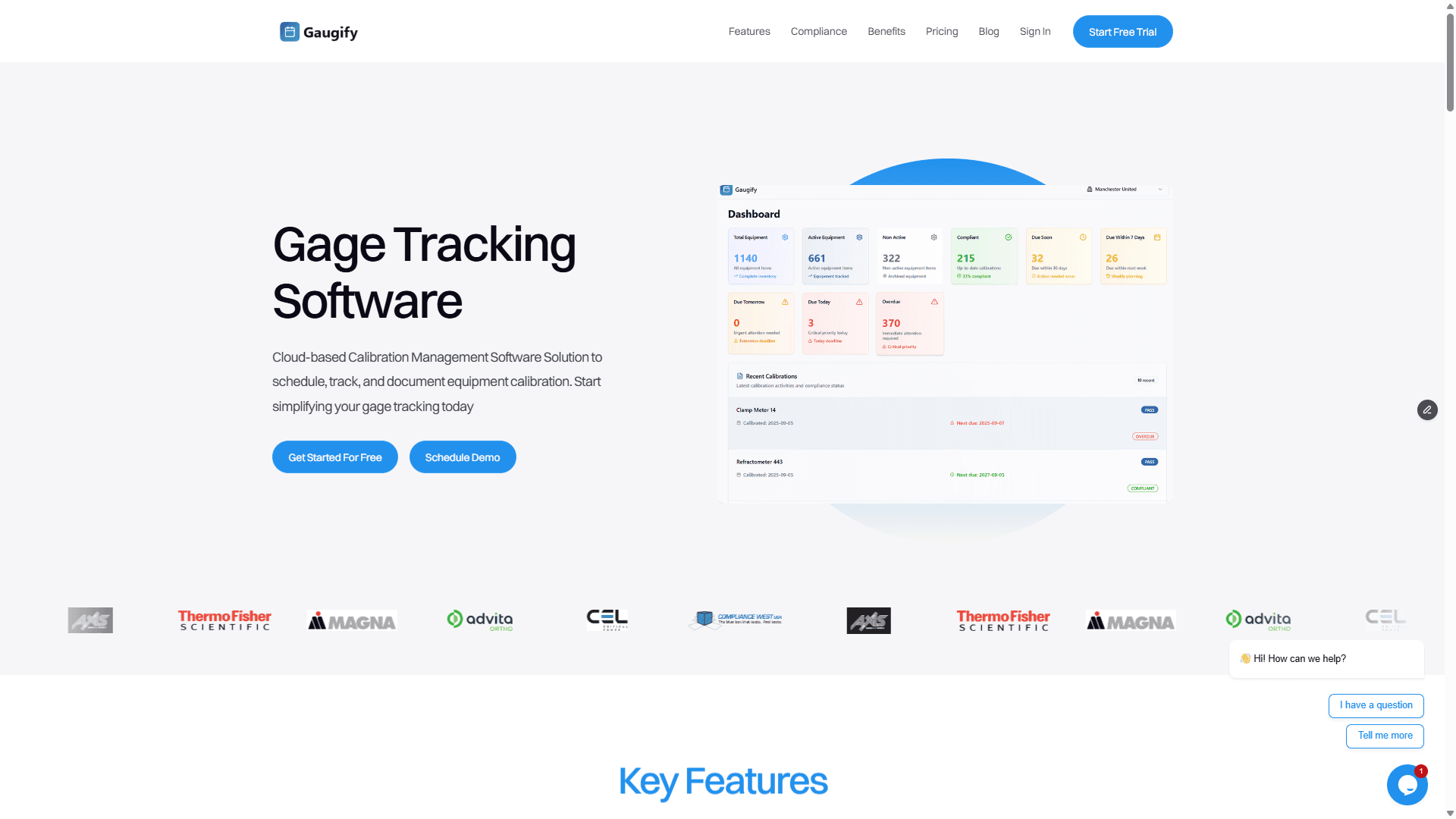
Gaugify's cloud-based calibration management platform directly addresses ISO 55001 requirements through comprehensive asset management capabilities designed specifically for measuring equipment. The platform transforms traditional calibration programs into strategic asset management systems that demonstrate clear business value.
The software's risk assessment tools enable organizations to systematically evaluate factors affecting measurement asset performance and business impact. Users can define custom risk criteria including equipment criticality, measurement uncertainty requirements, usage patterns, and failure consequences. The system automatically calculates risk scores and recommends optimal calibration frequencies based on configurable decision algorithms.
Performance monitoring capabilities provide comprehensive metrics tracking asset management effectiveness. Gaugify's analytics features generate automated reports showing calibration schedule compliance, measurement uncertainty trends, cost per measurement point, and asset utilization rates. These metrics directly support ISO 55001 performance monitoring requirements.
Asset lifecycle management tools help organizations plan for equipment replacement, technology updates, and capability changes. The platform tracks asset age, maintenance history, and performance trends to identify optimal replacement timing and prevent obsolescence issues.
Documentation and Compliance Features
Gaugify maintains comprehensive audit trails documenting all asset management decisions and their rationale. The system records calibration frequency changes, risk assessment updates, and performance trend analysis to provide complete transparency for audit purposes.
The platform's compliance management tools generate automated reports demonstrating ISO 55001 conformance across all program elements. Users can produce asset management plans, performance summaries, and risk assessment documentation with a few clicks.
Integration capabilities enable organizations to connect calibration data with broader enterprise asset management systems, creating unified visibility across all asset categories. This integration supports comprehensive risk management and strategic planning aligned with organizational objectives.
Change management features ensure that modifications to calibration strategies are properly documented, approved, and implemented. The system maintains version control for all configuration changes and provides rollback capabilities when needed.
ISO 55001 Calibration Compliance Checklist
Organizations can use this comprehensive checklist to evaluate their calibration program's alignment with ISO 55001 requirements and identify areas requiring attention or improvement.
Asset Management Planning
Strategic Alignment: Calibration program objectives clearly linked to organizational goals and customer requirements
Asset Management Policy: Documented policy addressing measuring equipment management throughout lifecycle
Decision Criteria: Established criteria for calibration frequency determination, supplier selection, and equipment replacement
Resource Planning: Budget allocation process considering asset management priorities and business impact
Stakeholder Engagement: Defined roles and responsibilities for personnel involved in calibration asset management decisions
Risk Management
Risk Identification: Systematic process for identifying risks associated with measuring equipment throughout lifecycle
Risk Assessment: Methodology for evaluating probability and impact of identified risks
Risk Treatment: Plans for mitigating, accepting, or transferring significant risks
Risk Monitoring: Regular review and update of risk assessments based on changing conditions
Emergency Response: Procedures for addressing unexpected equipment failures or capability loss
Performance Monitoring
Key Performance Indicators: Defined metrics demonstrating calibration asset management effectiveness
Data Collection: Systems for gathering accurate, timely performance data
Trend Analysis: Regular evaluation of performance trends and identification of improvement opportunities
Management Review: Periodic assessment of asset management performance by leadership
Corrective Action: Process for addressing performance deficiencies and implementing improvements
Information Management
Asset Register: Complete inventory of measuring equipment with technical specifications and management information
Documentation Control: System ensuring asset information accuracy, accessibility, and version control
Record Retention: Defined retention periods for different types of asset management records
Information Security: Protection measures for sensitive asset management information
Data Backup: Regular backup procedures ensuring information recovery capability
Transform Your Calibration Program with Strategic Asset Management
ISO 55001 calibration asset management represents more than compliance—it's a pathway to transforming measuring equipment from cost centers into strategic business enablers. Organizations implementing these principles discover improved measurement reliability, optimized resource allocation, and enhanced business performance through systematic asset management approaches.
The key to successful implementation lies in selecting tools that support comprehensive asset management while simplifying daily operations. Modern calibration management software eliminates the complexity traditionally associated with asset management systems while providing the analytical capabilities necessary for informed decision-making.
Start your free trial of Gaugify today and experience how cloud-based calibration management transforms ISO 55001 compliance from a documentation burden into a competitive advantage. Join hundreds of quality professionals who have discovered that effective asset management starts with the right tools and strategic thinking.
Ready to see how Gaugify addresses your specific ISO 55001 requirements? Schedule a personalized demo and discover why leading organizations choose our platform for their calibration asset management needs.
ISO 55001 Asset Management and Calibration
ISO 55001 calibration asset management represents a critical intersection where precision measurement meets systematic asset lifecycle planning. For organizations managing extensive portfolios of measuring equipment—from automotive manufacturers tracking hundreds of torque wrenches to pharmaceutical companies overseeing laboratory balances—this standard provides the framework for optimizing both asset performance and measurement reliability. Understanding how ISO 55001 integrates with your calibration program isn't just about compliance; it's about transforming your measurement assets into strategic business enablers.
When quality managers implement ISO 55001 calibration asset management principles, they discover that their measuring instruments become more than tools—they become managed assets with defined value propositions, risk profiles, and performance metrics. This comprehensive approach fundamentally changes how organizations view their calibration investments and operational strategies.
Understanding ISO 55001 Asset Management Standard
ISO 55001 establishes requirements for an asset management system that organizations use to develop, implement, maintain, and continually improve their asset management capabilities. While many associate asset management with heavy machinery or infrastructure, measuring and test equipment represents a significant asset class that directly impacts product quality, regulatory compliance, and operational efficiency.
The standard applies to organizations of all sizes across industries where assets play a crucial role in achieving objectives. Manufacturing companies with extensive measurement capabilities, testing laboratories, aerospace organizations, pharmaceutical manufacturers, and automotive suppliers all benefit from applying ISO 55001 principles to their calibration programs.
For calibration managers, ISO 55001 shifts the focus from reactive maintenance to proactive asset optimization. Instead of simply scheduling calibrations based on fixed intervals, organizations examine measurement uncertainty requirements, usage patterns, environmental conditions, and business criticality to optimize calibration frequencies and methodologies.
A typical example involves a precision machining company managing 200+ measuring instruments. Traditional approaches might calibrate all micrometers annually regardless of usage. ISO 55001 calibration asset management principles would consider factors like measurement application criticality, historical drift patterns, and cost of non-conformance to establish risk-based calibration intervals—potentially extending stable instruments to 18-month cycles while increasing critical process gauges to 6-month intervals.
Key Asset Management Principles for Calibration
The standard emphasizes value realization, where organizations align asset management activities with organizational objectives. For calibration programs, this means demonstrating how measurement capability investments support business goals like reducing scrap rates, improving first-pass yields, or meeting customer quality requirements.
Leadership commitment becomes essential when calibration asset management decisions involve significant resource allocation. Organizations must balance measurement capability investments against other business priorities while maintaining regulatory compliance and customer satisfaction.
Risk-based thinking permeates every aspect of ISO 55001, requiring organizations to identify risks and opportunities associated with their assets. Calibration professionals must assess risks including measurement uncertainty degradation, equipment obsolescence, supplier capability changes, and regulatory requirement modifications.
ISO 55001 Calibration Requirements and Implementation
The standard doesn't prescribe specific calibration intervals or methodologies but requires systematic approaches to asset management decisions. Clause 6.2.1 addresses asset management planning, requiring organizations to establish criteria for making asset management decisions throughout the asset lifecycle.
For measuring equipment, this translates to documented decision criteria for instrument selection, calibration frequency determination, maintenance strategies, and retirement decisions. Organizations must define how they evaluate measurement requirements, assess supplier capabilities, and determine optimal calibration approaches based on technical and economic factors.
Clause 7.5 covers documented information requirements, mandating that organizations maintain records demonstrating effective asset management system implementation. Calibration records must extend beyond simple pass/fail results to include asset performance trends, cost analysis, and decision rationale documentation.
Performance monitoring requirements under Clause 9.1 demand that organizations establish metrics for asset management effectiveness. Calibration programs must demonstrate value through measurable indicators like measurement uncertainty achievement, calibration cost per measurement point, asset availability rates, and contribution to quality objectives.
A medical device manufacturer implementing ISO 55001 calibration asset management might establish metrics including calibration schedule adherence (target: 98%), measurement uncertainty compliance (100% within required limits), and calibration cost optimization (5% annual reduction while maintaining capability). These metrics link calibration activities directly to business performance indicators.
Asset Information Requirements
ISO 55001 requires comprehensive asset information management throughout the asset lifecycle. For measuring equipment, organizations must maintain detailed records including technical specifications, measurement capabilities, calibration histories, maintenance records, and cost data.
This information must be accurate, accessible, and sufficient for making informed asset management decisions. Modern calibration programs require digital systems capable of tracking multiple data points across hundreds or thousands of instruments while providing analytical capabilities for trend analysis and decision support.
Start your free trial of Gaugify today and experience how modern calibration management software transforms asset information management from a compliance burden into a strategic advantage.
What Auditors Evaluate During ISO 55001 Assessments
During ISO 55001 audits, assessors examine how organizations integrate asset management principles into their operational processes. For calibration programs, auditors focus on several key areas that demonstrate systematic asset management implementation.
Auditors first verify that organizations have established clear asset management objectives linked to organizational goals. They expect to see documented connections between calibration program activities and business outcomes. A pharmaceutical company might demonstrate how their analytical balance calibration program supports product quality objectives and regulatory compliance requirements.
Risk assessment documentation receives significant auditor attention. Organizations must demonstrate systematic identification and evaluation of risks associated with their measuring assets. Auditors look for evidence that calibration decisions consider factors including equipment criticality, measurement uncertainty requirements, failure consequences, and supply chain dependencies.
Performance monitoring systems undergo thorough examination. Auditors verify that organizations have established meaningful metrics for calibration asset management effectiveness and can demonstrate continuous improvement based on performance data analysis. They expect to see trends analysis, corrective action implementation, and decision-making based on objective evidence.
Specific Calibration Audit Focus Areas
Auditors examine calibration frequency determination processes to ensure organizations use systematic approaches rather than arbitrary decisions. They look for documented criteria considering factors like measurement uncertainty requirements, historical stability data, usage patterns, and risk assessments.
Asset lifecycle planning receives scrutiny regarding how organizations plan for equipment replacement, technology updates, and capability changes. Auditors expect to see forward-looking strategies that address obsolescence risks, supplier changes, and evolving measurement requirements.
Competence management for personnel involved in calibration asset management decisions undergoes evaluation. Organizations must demonstrate that personnel have appropriate technical knowledge, training, and experience to make informed asset management decisions.
Documentation systems must demonstrate traceability of asset management decisions and their outcomes. Auditors verify that organizations can explain the rationale behind calibration strategies and provide evidence of their effectiveness.
Documentation Requirements for ISO 55001 Calibration Asset Management
ISO 55001 requires extensive documentation to demonstrate systematic asset management implementation. For calibration programs, this documentation extends beyond traditional calibration certificates to include asset management plans, performance data, and decision rationale records.
Asset management plans must document strategies for managing measuring equipment throughout their lifecycle. These plans should address acquisition criteria, calibration strategies, maintenance approaches, and disposal decisions. A typical plan for a temperature measurement program might specify selection criteria for thermocouples, calibration frequency determination methodology, and replacement strategies for aging equipment.
Performance monitoring records must demonstrate asset management effectiveness through objective data. Organizations need systems capable of tracking metrics like calibration schedule compliance, measurement uncertainty achievement, asset utilization rates, and cost per measurement capability. This data must be analyzed regularly to identify trends and improvement opportunities.
Risk assessment documentation requires detailed analysis of factors affecting measurement asset performance and business impact. Records must show how organizations identify, evaluate, and mitigate risks associated with their calibration programs. This includes technical risks like measurement uncertainty degradation and business risks like supplier capability changes.
Digital Documentation Systems
Modern ISO 55001 compliance requires digital systems capable of managing complex asset information and providing analytical capabilities. Paper-based systems cannot effectively handle the data volume and analysis requirements for comprehensive asset management.
Effective documentation systems must integrate calibration data with asset management information to provide complete asset lifecycle visibility. This integration enables organizations to make informed decisions based on technical performance data, cost information, and risk assessments.
Change management documentation becomes critical when organizations modify calibration strategies or asset management approaches. Systems must maintain audit trails showing decision rationale, implementation processes, and effectiveness verification.
Common Non-Conformances in ISO 55001 Calibration Programs
Organizations frequently encounter specific non-conformances when implementing ISO 55001 principles in their calibration programs. Understanding these common issues helps quality managers proactively address potential compliance gaps.
Inadequate risk assessment represents the most frequent non-conformance category. Organizations often fail to systematically identify and evaluate risks associated with their measuring assets. Auditors regularly find calibration programs operating with fixed schedules that don't consider equipment criticality, usage patterns, or failure consequences.
For example, a manufacturing facility might calibrate all pressure gauges annually regardless of their application. ISO 55001 requires risk-based approaches that might result in critical process gauges receiving quarterly calibrations while less critical monitoring instruments operate on extended cycles based on stability data.
Poor performance monitoring constitutes another common issue. Organizations struggle to establish meaningful metrics that demonstrate calibration asset management effectiveness. Many programs track basic compliance indicators like schedule adherence but fail to measure value creation or business impact.
Asset information management deficiencies frequently appear in audit findings. Organizations maintain calibration records but lack integrated systems providing comprehensive asset lifecycle visibility. This fragmentation prevents effective asset management decision-making and limits continuous improvement opportunities.
Documentation and Decision Rationale Issues
Insufficient documentation of asset management decisions creates significant non-conformances. Organizations must demonstrate systematic approaches to calibration frequency determination, supplier selection, and equipment retirement decisions. Auditors expect documented criteria and rationale, not arbitrary choices.
Lack of leadership engagement in asset management decisions represents a systemic issue affecting program effectiveness. ISO 55001 requires top management commitment demonstrated through resource allocation, policy establishment, and performance review participation.
Integration failures between calibration programs and broader asset management systems create compliance gaps. Organizations often manage measuring equipment separately from other assets, missing opportunities for synergy and comprehensive risk management.
How Gaugify Enables ISO 55001 Compliance
Gaugify's cloud-based calibration management platform directly addresses ISO 55001 requirements through comprehensive asset management capabilities designed specifically for measuring equipment. The platform transforms traditional calibration programs into strategic asset management systems that demonstrate clear business value.
The software's risk assessment tools enable organizations to systematically evaluate factors affecting measurement asset performance and business impact. Users can define custom risk criteria including equipment criticality, measurement uncertainty requirements, usage patterns, and failure consequences. The system automatically calculates risk scores and recommends optimal calibration frequencies based on configurable decision algorithms.
Performance monitoring capabilities provide comprehensive metrics tracking asset management effectiveness. Gaugify's analytics features generate automated reports showing calibration schedule compliance, measurement uncertainty trends, cost per measurement point, and asset utilization rates. These metrics directly support ISO 55001 performance monitoring requirements.
Asset lifecycle management tools help organizations plan for equipment replacement, technology updates, and capability changes. The platform tracks asset age, maintenance history, and performance trends to identify optimal replacement timing and prevent obsolescence issues.
Documentation and Compliance Features
Gaugify maintains comprehensive audit trails documenting all asset management decisions and their rationale. The system records calibration frequency changes, risk assessment updates, and performance trend analysis to provide complete transparency for audit purposes.
The platform's compliance management tools generate automated reports demonstrating ISO 55001 conformance across all program elements. Users can produce asset management plans, performance summaries, and risk assessment documentation with a few clicks.
Integration capabilities enable organizations to connect calibration data with broader enterprise asset management systems, creating unified visibility across all asset categories. This integration supports comprehensive risk management and strategic planning aligned with organizational objectives.
Change management features ensure that modifications to calibration strategies are properly documented, approved, and implemented. The system maintains version control for all configuration changes and provides rollback capabilities when needed.
ISO 55001 Calibration Compliance Checklist
Organizations can use this comprehensive checklist to evaluate their calibration program's alignment with ISO 55001 requirements and identify areas requiring attention or improvement.
Asset Management Planning
Strategic Alignment: Calibration program objectives clearly linked to organizational goals and customer requirements
Asset Management Policy: Documented policy addressing measuring equipment management throughout lifecycle
Decision Criteria: Established criteria for calibration frequency determination, supplier selection, and equipment replacement
Resource Planning: Budget allocation process considering asset management priorities and business impact
Stakeholder Engagement: Defined roles and responsibilities for personnel involved in calibration asset management decisions
Risk Management
Risk Identification: Systematic process for identifying risks associated with measuring equipment throughout lifecycle
Risk Assessment: Methodology for evaluating probability and impact of identified risks
Risk Treatment: Plans for mitigating, accepting, or transferring significant risks
Risk Monitoring: Regular review and update of risk assessments based on changing conditions
Emergency Response: Procedures for addressing unexpected equipment failures or capability loss
Performance Monitoring
Key Performance Indicators: Defined metrics demonstrating calibration asset management effectiveness
Data Collection: Systems for gathering accurate, timely performance data
Trend Analysis: Regular evaluation of performance trends and identification of improvement opportunities
Management Review: Periodic assessment of asset management performance by leadership
Corrective Action: Process for addressing performance deficiencies and implementing improvements
Information Management
Asset Register: Complete inventory of measuring equipment with technical specifications and management information
Documentation Control: System ensuring asset information accuracy, accessibility, and version control
Record Retention: Defined retention periods for different types of asset management records
Information Security: Protection measures for sensitive asset management information
Data Backup: Regular backup procedures ensuring information recovery capability
Transform Your Calibration Program with Strategic Asset Management
ISO 55001 calibration asset management represents more than compliance—it's a pathway to transforming measuring equipment from cost centers into strategic business enablers. Organizations implementing these principles discover improved measurement reliability, optimized resource allocation, and enhanced business performance through systematic asset management approaches.
The key to successful implementation lies in selecting tools that support comprehensive asset management while simplifying daily operations. Modern calibration management software eliminates the complexity traditionally associated with asset management systems while providing the analytical capabilities necessary for informed decision-making.
Start your free trial of Gaugify today and experience how cloud-based calibration management transforms ISO 55001 compliance from a documentation burden into a competitive advantage. Join hundreds of quality professionals who have discovered that effective asset management starts with the right tools and strategic thinking.
Ready to see how Gaugify addresses your specific ISO 55001 requirements? Schedule a personalized demo and discover why leading organizations choose our platform for their calibration asset management needs.