
NIST Traceability: What It Means and Why It Matters
NIST Traceability: What It Means and Why It Matters
David Bentley
Quality Assurance Engineer
12 min read
NIST Traceability: What It Means and Why It Matters
When your customer asks if your measurements are NIST traceable, or when an auditor questions your calibration certificates, you're dealing with one of the most fundamental concepts in quality management. NIST traceability calibration isn't just a checkbox requirement—it's the foundation that makes your measurement data legally defensible and scientifically valid. Whether you're running precision machining operations with micrometers requiring ±0.0001" accuracy or managing environmental chambers in pharmaceutical testing, understanding NIST traceability can mean the difference between passing critical audits and facing costly non-conformances.
The National Institute of Standards and Technology (NIST) serves as the United States' primary measurement standards laboratory, but its influence extends far beyond American borders. Companies worldwide rely on NIST traceability to demonstrate that their measurements connect to internationally recognized standards through an unbroken chain of calibrations.
Who Must Comply with NIST Traceability Requirements
NIST traceability calibration requirements apply to virtually every industry where measurement accuracy affects product quality, safety, or regulatory compliance. This includes:
Aerospace and Defense: Contractors must demonstrate traceability for all measuring equipment used in production and testing, from torque wrenches calibrated to ±2% to coordinate measuring machines with volumetric accuracy specifications
Automotive Manufacturing: Suppliers in the automotive supply chain require traceable calibrations for everything from digital calipers measuring critical dimensions to durometer gauges testing rubber components
Medical Device Manufacturing: FDA regulations demand traceable calibrations for all equipment used in device production and testing, including force gauges, pressure transducers, and temperature monitoring systems
Pharmaceutical and Biotechnology: Environmental monitoring equipment, analytical balances, and temperature mapping devices must maintain traceable calibrations to support FDA submissions
Oil and Gas: Pipeline pressure gauges, flow meters, and safety monitoring equipment require traceable calibrations for both operational safety and environmental compliance
The common thread across these industries is that measurement uncertainty directly impacts product quality, safety, or regulatory compliance. When a automotive parts manufacturer uses a coordinate measuring machine to verify that engine components meet tolerances of ±0.05mm, the traceability of that CMM's calibration determines whether those measurements can withstand scrutiny from customers, regulators, or courts.
Understanding the NIST Hierarchy
NIST traceability follows a pyramid structure. At the top sits NIST's primary standards—the most accurate measurement standards maintained by NIST laboratories. These include the fundamental units like the meter, kilogram, and second. Below this level, NIST maintains working standards that are calibrated against the primary standards. Commercial calibration laboratories then calibrate their reference standards against NIST's working standards, creating the next level in the traceability chain.
Your measuring equipment sits at the bottom of this pyramid. When your local calibration lab calibrates your digital multimeter against their reference standard, and that reference standard has been calibrated against NIST standards, your multimeter achieves NIST traceability. The key is maintaining documentation of each link in this chain.
Core NIST Traceability Calibration Requirements
The concept of NIST traceability centers on five essential elements that every quality manager must understand and implement:
1. Unbroken Chain of Comparisons
Every calibration must connect back to NIST standards through documented comparisons. For example, when you calibrate a pressure gauge reading 0-100 PSI with ±0.25% accuracy, the calibration laboratory must use a pressure standard that was itself calibrated against a higher-level standard, ultimately tracing back to NIST's pressure standards. Each link in this chain must be documented with calibration certificates showing the traceability path.
2. Measurement Uncertainty Analysis
NIST traceability requires calculating and documenting measurement uncertainty at each level. This means your calibration certificates must show not just the measured values, but also the uncertainty associated with those measurements. A typical certificate for a digital caliper might show measurements accurate to ±0.001" with an uncertainty of ±0.0002" at a 95% confidence level.
3. Appropriate Measurement Standards
The standards used for calibration must have accuracy specifications that are appropriate for the equipment being calibrated. The general rule of thumb is a 4:1 accuracy ratio—the calibration standard should be four times more accurate than the equipment being calibrated. However, NIST guidance allows for lower ratios when justified by proper uncertainty analysis.
4. Competent Personnel and Procedures
Calibrations must be performed by qualified technicians following documented procedures. This requirement extends beyond just technical competence to include training records, procedure validation, and ongoing competency assessment. Many companies struggle with this requirement when performing in-house calibrations without proper documentation of technician qualifications.
5. Environmental Controls
NIST traceability requires appropriate environmental conditions during calibration. Temperature, humidity, vibration, and other environmental factors can significantly affect measurement accuracy. Calibration certificates should document the environmental conditions during calibration and confirm they were within acceptable limits.
These requirements apply whether you're calibrating a simple steel rule or a sophisticated coordinate measuring machine. The complexity and documentation requirements scale with the criticality and precision of the measurements, but the fundamental principles remain consistent.
Ready to streamline your NIST traceability documentation? Start your free Gaugify trial and discover how modern calibration management software can automatically track traceability chains and maintain compliance documentation.
What Auditors Examine During NIST Traceability Assessments
When auditors assess your NIST traceability program, they focus on specific evidence that demonstrates compliance with traceability requirements. Understanding their perspective helps you prepare effectively and avoid common pitfalls.
Calibration Certificate Analysis
Auditors scrutinize calibration certificates for specific elements that prove NIST traceability. They look for:
Clear traceability statements: The certificate must explicitly state traceability to NIST or equivalent national standards. Vague statements like "traceable to national standards" without specific identification are insufficient.
Measurement uncertainty values: Every calibration point must include uncertainty calculations. Auditors often challenge certificates showing only pass/fail results without quantified uncertainties.
Calibration laboratory accreditation: While not strictly required for NIST traceability, auditors expect to see evidence that calibration providers maintain appropriate quality systems, typically through ISO/IEC 17025 accreditation.
Environmental condition documentation: Certificates should show that calibrations were performed under controlled conditions appropriate for the required accuracy levels.
Equipment Selection and Application
Auditors examine whether your measuring equipment is appropriate for its intended applications and whether calibration intervals align with usage patterns and accuracy requirements. They frequently identify issues where companies use equipment beyond its calibrated range or apply instruments with insufficient accuracy for critical measurements.
For example, an auditor might question why you're using a digital caliper with ±0.001" accuracy to verify features with ±0.0005" tolerances. This represents a fundamental misunderstanding of measurement uncertainty principles and suggests inadequate measurement system planning.
Record Keeping and Documentation Control
Auditors expect to see comprehensive records demonstrating ongoing compliance with traceability requirements. This includes:
Current calibration certificates for all measuring equipment
Equipment identification and tracking systems
Calibration interval documentation and justification
Procedures for handling out-of-tolerance conditions
Training records for personnel performing calibrations or using critical measuring equipment
Measurement System Validation
Beyond basic calibration compliance, auditors increasingly examine whether companies validate their measurement systems for specific applications. This includes gauge R&R studies, measurement system analysis, and correlation studies between different measurement methods.
A sophisticated auditor might ask to see evidence that your coordinate measuring machine not only receives traceable calibration but also demonstrates acceptable measurement capability for the specific features you're measuring on production parts.
Essential Documentation Requirements for NIST Traceability
Maintaining proper documentation forms the backbone of any effective NIST traceability calibration program. The documentation requirements extend far beyond simply filing calibration certificates—they encompass a comprehensive system that demonstrates ongoing compliance and measurement reliability.
Calibration Certificates and Traceability Documentation
Every piece of measuring equipment must have current calibration certificates that clearly establish NIST traceability. These certificates must contain specific information:
Unique identification: Both the certificate and the equipment must have clear, permanent identification that links them together
Calibration dates and intervals: Clear documentation of when calibration was performed and when the next calibration is due
Measurement uncertainty statements: Quantified uncertainty values for all calibration points, typically expressed at 95% confidence level
Traceability path: Clear identification of the standards used and their traceability to NIST or equivalent national standards
Environmental conditions: Documentation of temperature, humidity, and other relevant conditions during calibration
For companies managing hundreds or thousands of instruments, organizing and maintaining these certificates becomes a significant challenge. Digital calibration management systems like Gaugify's comprehensive platform automatically organize certificates, track expiration dates, and maintain searchable databases of traceability information.
Equipment Master Lists and Tracking Systems
You must maintain comprehensive lists of all measuring equipment requiring calibration. These master lists should include:
Unique equipment identification numbers
Equipment descriptions, including make, model, and serial numbers
Calibration intervals and due dates
Location and responsible department information
Critical measurement applications and accuracy requirements
The master list serves as the foundation for scheduling calibrations, budgeting for calibration services, and demonstrating comprehensive coverage of your measurement equipment population.
Procedures and Work Instructions
Document your processes for managing calibration and maintaining traceability. Key procedures should address:
Equipment procurement and initial calibration requirements
Calibration scheduling and tracking processes
Handling of overdue or out-of-tolerance equipment
Selection and qualification of calibration service providers
Internal calibration procedures where applicable
Training and Competency Records
NIST traceability requires that calibrations be performed by competent personnel. This extends to both external calibration service providers and internal personnel who perform calibrations or use measuring equipment for critical applications. Documentation should include:
Training records for personnel performing calibrations
Competency assessments and periodic evaluations
Certification records for specialized equipment or measurement techniques
Ongoing professional development and training updates
Common Non-Conformances in NIST Traceability Programs
Understanding the most frequent failures in NIST traceability calibration programs helps you proactively address potential issues before they become audit findings or compromise your measurement quality.
Inadequate Traceability Documentation
The most common non-conformance involves calibration certificates that fail to establish clear NIST traceability. Examples include:
Missing traceability statements: Certificates that show measurement results without explicitly stating traceability to NIST or equivalent national standards
Broken traceability chains: Cases where the calibration laboratory's reference standards have expired calibrations or unclear traceability paths
Inappropriate calibration providers: Using calibration services that lack proper accreditation or quality system controls
A typical example occurs when a company uses a local calibration service that provides certificates stating measurements are "accurate to NIST standards" without showing the actual traceability path through documented calibration of their reference equipment.
Expired Calibrations and Overdue Equipment
Equipment used beyond its calibration due date represents a fundamental compliance failure. This issue often stems from:
Inadequate tracking systems that fail to provide advance warning of upcoming due dates
Poor communication between calibration management and production departments
Lack of backup equipment to cover instruments that are out for calibration
Extended calibration turnaround times that aren't factored into scheduling
The consequences extend beyond audit findings—measurements made with expired equipment may be invalid, potentially affecting product quality and customer confidence.
Inadequate Measurement Uncertainty Analysis
Many organizations fail to properly consider measurement uncertainty when selecting equipment or establishing calibration requirements. Common issues include:
Using equipment with insufficient accuracy for critical measurements
Failing to account for environmental factors that affect measurement uncertainty
Inadequate documentation of how measurement uncertainty impacts product acceptance decisions
Lack of measurement system analysis to validate overall measurement capability
Poor Documentation Control and Record Keeping
Even organizations with good calibration practices often struggle with documentation management. Frequent problems include:
Lost or misfiled calibration certificates
Outdated equipment master lists that don't reflect current inventory
Inconsistent equipment identification systems
Lack of backup copies or electronic archives of critical documentation
How Gaugify Ensures Complete NIST Traceability Compliance
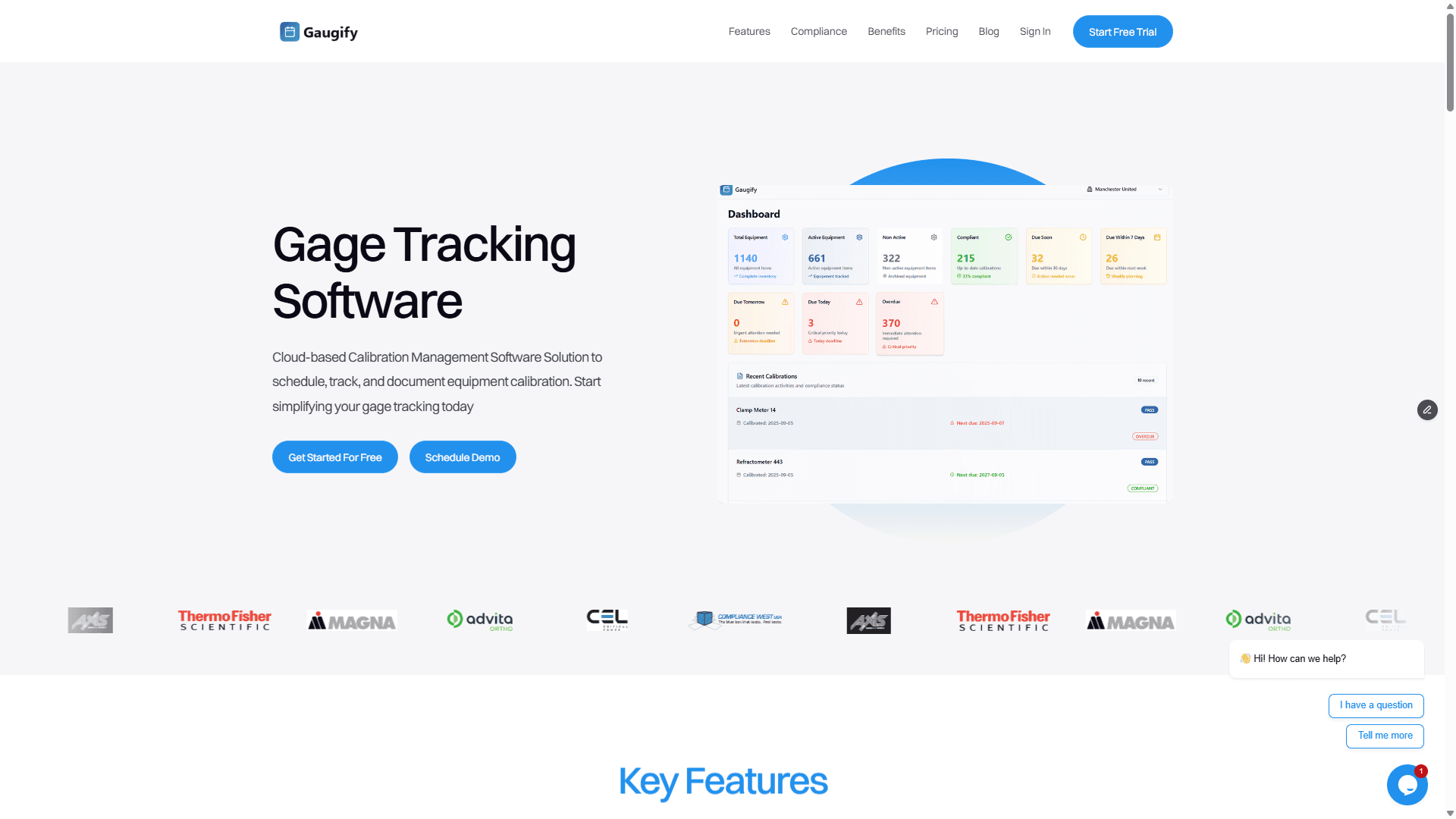
Modern NIST traceability calibration management requires sophisticated software solutions that can handle the complexity of today's measurement environments. Gaugify's cloud-based platform addresses every aspect of NIST traceability requirements through integrated features designed specifically for quality professionals.
Automated Traceability Documentation and Verification
Gaugify automatically captures and organizes traceability information from calibration certificates, creating searchable databases that instantly demonstrate NIST traceability for any piece of equipment. The system:
Parses calibration certificates to extract traceability statements and uncertainty values
Validates that certificates contain required NIST traceability elements
Maintains historical records of all calibration activities and traceability documentation
Generates traceability reports that satisfy auditor requirements and customer demands
When an auditor asks for traceability documentation for your coordinate measuring machine, Gaugify instantly produces a comprehensive report showing the complete traceability chain, measurement uncertainties, and compliance history.
Comprehensive Equipment Management and Tracking
The platform maintains dynamic equipment master lists that automatically update as you add, remove, or modify measuring equipment. Features include:
Unique equipment identification with barcode and QR code support
Automated calibration scheduling based on customizable intervals and usage patterns
Location tracking and department assignment for distributed equipment populations
Integration with maintenance management systems and enterprise resource planning platforms
Proactive Compliance Monitoring and Alerts
Gaugify prevents compliance failures through intelligent monitoring and automated notifications:
Advance warnings before calibration due dates, with escalating alerts for overdue equipment
Automatic identification of equipment used beyond calibration dates
Dashboard views showing compliance status across departments, locations, and equipment types
Integration with procurement systems to streamline calibration service ordering
Audit-Ready Documentation and Reporting
The system maintains comprehensive audit trails and generates professional reports that demonstrate NIST traceability compliance:
Automated compliance reports showing current status and historical trends
Certificate management with digital archives and backup capabilities
Customizable reports for specific audit requirements or customer demands
Real-time compliance dashboards for management oversight
Gaugify's compliance features are specifically designed to meet the documentation requirements of standards like ISO 9001, AS9100, ISO 13485, and ISO/IEC 17025, ensuring your NIST traceability program satisfies multiple regulatory frameworks simultaneously.
NIST Traceability Compliance Checklist
Use this comprehensive checklist to evaluate and maintain your NIST traceability calibration program:
Equipment Inventory and Documentation
□ Maintain current master list of all measuring equipment requiring calibration
□ Assign unique identification numbers to each piece of equipment
□ Document equipment specifications, accuracy requirements, and critical applications
□ Establish appropriate calibration intervals based on usage, stability, and accuracy requirements
□ Maintain backup equipment to cover instruments that are out for calibration
Calibration Service Provider Qualification
□ Verify calibration laboratories maintain ISO/IEC 17025 accreditation for relevant measurement parameters
□ Confirm calibration providers can demonstrate NIST traceability for all services
□ Review provider quality systems and measurement capabilities
□ Establish clear requirements for calibration certificates and documentation
□ Periodically audit calibration service providers or review their accreditation status
Certificate Management and Traceability Documentation
□ Verify all calibration certificates contain explicit NIST traceability statements
□ Confirm certificates include measurement uncertainty values for all calibration points
□ Maintain organized filing system for current and historical calibration certificates
□ Implement digital backup and archive system for critical documentation
□ Establish procedures for handling missing or inadequate calibration certificates
Ongoing Compliance Monitoring
□ Implement automated tracking system for calibration due dates
□ Establish escalating alert system for approaching and overdue calibrations
□ Conduct periodic audits of calibration program effectiveness
□ Monitor equipment for damage, wear, or other factors that might affect accuracy
□ Document and investigate any out-of-tolerance calibration results
Training and Competency Management
□ Train personnel on proper use of measuring equipment
□ Document competency requirements for personnel performing calibrations
□ Maintain training records and periodic competency assessments
□ Establish procedures for qualifying new measurement techniques or equipment
□ Provide ongoing education on measurement uncertainty and traceability concepts
Measurement System Validation
□ Perform gauge R&R studies for critical measurement applications
□ Validate measurement system capability for specific product requirements
□ Establish measurement uncertainty budgets for critical processes
□ Document correlation between different measurement methods where applicable
□ Periodically review and update measurement system validation studies
Start Your NIST Traceability Journey Today
Achieving and maintaining NIST traceability calibration compliance doesn't have to be overwhelming. With proper understanding of the requirements, appropriate documentation systems, and modern calibration management tools, you can build a robust traceability program that satisfies auditors, customers, and regulatory requirements.
The key is starting with a solid foundation—comprehensive equipment inventories, qualified calibration providers, and systematic documentation practices. From there, you can build sophisticated measurement systems that not only meet compliance requirements but actually improve your overall quality and operational efficiency.
Ready to transform your calibration management and achieve bulletproof NIST traceability? Start your free Gaugify trial today and discover how modern calibration software can automate compliance, eliminate audit findings, and give you complete confidence in your measurement systems. Join thousands of quality professionals who trust Gaugify to manage their critical calibration requirements.
Don't wait until your next audit to discover compliance gaps. Schedule a personalized demo and see exactly how Gaugify can streamline your NIST traceability program while reducing costs and administrative overhead.
NIST Traceability: What It Means and Why It Matters
When your customer asks if your measurements are NIST traceable, or when an auditor questions your calibration certificates, you're dealing with one of the most fundamental concepts in quality management. NIST traceability calibration isn't just a checkbox requirement—it's the foundation that makes your measurement data legally defensible and scientifically valid. Whether you're running precision machining operations with micrometers requiring ±0.0001" accuracy or managing environmental chambers in pharmaceutical testing, understanding NIST traceability can mean the difference between passing critical audits and facing costly non-conformances.
The National Institute of Standards and Technology (NIST) serves as the United States' primary measurement standards laboratory, but its influence extends far beyond American borders. Companies worldwide rely on NIST traceability to demonstrate that their measurements connect to internationally recognized standards through an unbroken chain of calibrations.
Who Must Comply with NIST Traceability Requirements
NIST traceability calibration requirements apply to virtually every industry where measurement accuracy affects product quality, safety, or regulatory compliance. This includes:
Aerospace and Defense: Contractors must demonstrate traceability for all measuring equipment used in production and testing, from torque wrenches calibrated to ±2% to coordinate measuring machines with volumetric accuracy specifications
Automotive Manufacturing: Suppliers in the automotive supply chain require traceable calibrations for everything from digital calipers measuring critical dimensions to durometer gauges testing rubber components
Medical Device Manufacturing: FDA regulations demand traceable calibrations for all equipment used in device production and testing, including force gauges, pressure transducers, and temperature monitoring systems
Pharmaceutical and Biotechnology: Environmental monitoring equipment, analytical balances, and temperature mapping devices must maintain traceable calibrations to support FDA submissions
Oil and Gas: Pipeline pressure gauges, flow meters, and safety monitoring equipment require traceable calibrations for both operational safety and environmental compliance
The common thread across these industries is that measurement uncertainty directly impacts product quality, safety, or regulatory compliance. When a automotive parts manufacturer uses a coordinate measuring machine to verify that engine components meet tolerances of ±0.05mm, the traceability of that CMM's calibration determines whether those measurements can withstand scrutiny from customers, regulators, or courts.
Understanding the NIST Hierarchy
NIST traceability follows a pyramid structure. At the top sits NIST's primary standards—the most accurate measurement standards maintained by NIST laboratories. These include the fundamental units like the meter, kilogram, and second. Below this level, NIST maintains working standards that are calibrated against the primary standards. Commercial calibration laboratories then calibrate their reference standards against NIST's working standards, creating the next level in the traceability chain.
Your measuring equipment sits at the bottom of this pyramid. When your local calibration lab calibrates your digital multimeter against their reference standard, and that reference standard has been calibrated against NIST standards, your multimeter achieves NIST traceability. The key is maintaining documentation of each link in this chain.
Core NIST Traceability Calibration Requirements
The concept of NIST traceability centers on five essential elements that every quality manager must understand and implement:
1. Unbroken Chain of Comparisons
Every calibration must connect back to NIST standards through documented comparisons. For example, when you calibrate a pressure gauge reading 0-100 PSI with ±0.25% accuracy, the calibration laboratory must use a pressure standard that was itself calibrated against a higher-level standard, ultimately tracing back to NIST's pressure standards. Each link in this chain must be documented with calibration certificates showing the traceability path.
2. Measurement Uncertainty Analysis
NIST traceability requires calculating and documenting measurement uncertainty at each level. This means your calibration certificates must show not just the measured values, but also the uncertainty associated with those measurements. A typical certificate for a digital caliper might show measurements accurate to ±0.001" with an uncertainty of ±0.0002" at a 95% confidence level.
3. Appropriate Measurement Standards
The standards used for calibration must have accuracy specifications that are appropriate for the equipment being calibrated. The general rule of thumb is a 4:1 accuracy ratio—the calibration standard should be four times more accurate than the equipment being calibrated. However, NIST guidance allows for lower ratios when justified by proper uncertainty analysis.
4. Competent Personnel and Procedures
Calibrations must be performed by qualified technicians following documented procedures. This requirement extends beyond just technical competence to include training records, procedure validation, and ongoing competency assessment. Many companies struggle with this requirement when performing in-house calibrations without proper documentation of technician qualifications.
5. Environmental Controls
NIST traceability requires appropriate environmental conditions during calibration. Temperature, humidity, vibration, and other environmental factors can significantly affect measurement accuracy. Calibration certificates should document the environmental conditions during calibration and confirm they were within acceptable limits.
These requirements apply whether you're calibrating a simple steel rule or a sophisticated coordinate measuring machine. The complexity and documentation requirements scale with the criticality and precision of the measurements, but the fundamental principles remain consistent.
Ready to streamline your NIST traceability documentation? Start your free Gaugify trial and discover how modern calibration management software can automatically track traceability chains and maintain compliance documentation.
What Auditors Examine During NIST Traceability Assessments
When auditors assess your NIST traceability program, they focus on specific evidence that demonstrates compliance with traceability requirements. Understanding their perspective helps you prepare effectively and avoid common pitfalls.
Calibration Certificate Analysis
Auditors scrutinize calibration certificates for specific elements that prove NIST traceability. They look for:
Clear traceability statements: The certificate must explicitly state traceability to NIST or equivalent national standards. Vague statements like "traceable to national standards" without specific identification are insufficient.
Measurement uncertainty values: Every calibration point must include uncertainty calculations. Auditors often challenge certificates showing only pass/fail results without quantified uncertainties.
Calibration laboratory accreditation: While not strictly required for NIST traceability, auditors expect to see evidence that calibration providers maintain appropriate quality systems, typically through ISO/IEC 17025 accreditation.
Environmental condition documentation: Certificates should show that calibrations were performed under controlled conditions appropriate for the required accuracy levels.
Equipment Selection and Application
Auditors examine whether your measuring equipment is appropriate for its intended applications and whether calibration intervals align with usage patterns and accuracy requirements. They frequently identify issues where companies use equipment beyond its calibrated range or apply instruments with insufficient accuracy for critical measurements.
For example, an auditor might question why you're using a digital caliper with ±0.001" accuracy to verify features with ±0.0005" tolerances. This represents a fundamental misunderstanding of measurement uncertainty principles and suggests inadequate measurement system planning.
Record Keeping and Documentation Control
Auditors expect to see comprehensive records demonstrating ongoing compliance with traceability requirements. This includes:
Current calibration certificates for all measuring equipment
Equipment identification and tracking systems
Calibration interval documentation and justification
Procedures for handling out-of-tolerance conditions
Training records for personnel performing calibrations or using critical measuring equipment
Measurement System Validation
Beyond basic calibration compliance, auditors increasingly examine whether companies validate their measurement systems for specific applications. This includes gauge R&R studies, measurement system analysis, and correlation studies between different measurement methods.
A sophisticated auditor might ask to see evidence that your coordinate measuring machine not only receives traceable calibration but also demonstrates acceptable measurement capability for the specific features you're measuring on production parts.
Essential Documentation Requirements for NIST Traceability
Maintaining proper documentation forms the backbone of any effective NIST traceability calibration program. The documentation requirements extend far beyond simply filing calibration certificates—they encompass a comprehensive system that demonstrates ongoing compliance and measurement reliability.
Calibration Certificates and Traceability Documentation
Every piece of measuring equipment must have current calibration certificates that clearly establish NIST traceability. These certificates must contain specific information:
Unique identification: Both the certificate and the equipment must have clear, permanent identification that links them together
Calibration dates and intervals: Clear documentation of when calibration was performed and when the next calibration is due
Measurement uncertainty statements: Quantified uncertainty values for all calibration points, typically expressed at 95% confidence level
Traceability path: Clear identification of the standards used and their traceability to NIST or equivalent national standards
Environmental conditions: Documentation of temperature, humidity, and other relevant conditions during calibration
For companies managing hundreds or thousands of instruments, organizing and maintaining these certificates becomes a significant challenge. Digital calibration management systems like Gaugify's comprehensive platform automatically organize certificates, track expiration dates, and maintain searchable databases of traceability information.
Equipment Master Lists and Tracking Systems
You must maintain comprehensive lists of all measuring equipment requiring calibration. These master lists should include:
Unique equipment identification numbers
Equipment descriptions, including make, model, and serial numbers
Calibration intervals and due dates
Location and responsible department information
Critical measurement applications and accuracy requirements
The master list serves as the foundation for scheduling calibrations, budgeting for calibration services, and demonstrating comprehensive coverage of your measurement equipment population.
Procedures and Work Instructions
Document your processes for managing calibration and maintaining traceability. Key procedures should address:
Equipment procurement and initial calibration requirements
Calibration scheduling and tracking processes
Handling of overdue or out-of-tolerance equipment
Selection and qualification of calibration service providers
Internal calibration procedures where applicable
Training and Competency Records
NIST traceability requires that calibrations be performed by competent personnel. This extends to both external calibration service providers and internal personnel who perform calibrations or use measuring equipment for critical applications. Documentation should include:
Training records for personnel performing calibrations
Competency assessments and periodic evaluations
Certification records for specialized equipment or measurement techniques
Ongoing professional development and training updates
Common Non-Conformances in NIST Traceability Programs
Understanding the most frequent failures in NIST traceability calibration programs helps you proactively address potential issues before they become audit findings or compromise your measurement quality.
Inadequate Traceability Documentation
The most common non-conformance involves calibration certificates that fail to establish clear NIST traceability. Examples include:
Missing traceability statements: Certificates that show measurement results without explicitly stating traceability to NIST or equivalent national standards
Broken traceability chains: Cases where the calibration laboratory's reference standards have expired calibrations or unclear traceability paths
Inappropriate calibration providers: Using calibration services that lack proper accreditation or quality system controls
A typical example occurs when a company uses a local calibration service that provides certificates stating measurements are "accurate to NIST standards" without showing the actual traceability path through documented calibration of their reference equipment.
Expired Calibrations and Overdue Equipment
Equipment used beyond its calibration due date represents a fundamental compliance failure. This issue often stems from:
Inadequate tracking systems that fail to provide advance warning of upcoming due dates
Poor communication between calibration management and production departments
Lack of backup equipment to cover instruments that are out for calibration
Extended calibration turnaround times that aren't factored into scheduling
The consequences extend beyond audit findings—measurements made with expired equipment may be invalid, potentially affecting product quality and customer confidence.
Inadequate Measurement Uncertainty Analysis
Many organizations fail to properly consider measurement uncertainty when selecting equipment or establishing calibration requirements. Common issues include:
Using equipment with insufficient accuracy for critical measurements
Failing to account for environmental factors that affect measurement uncertainty
Inadequate documentation of how measurement uncertainty impacts product acceptance decisions
Lack of measurement system analysis to validate overall measurement capability
Poor Documentation Control and Record Keeping
Even organizations with good calibration practices often struggle with documentation management. Frequent problems include:
Lost or misfiled calibration certificates
Outdated equipment master lists that don't reflect current inventory
Inconsistent equipment identification systems
Lack of backup copies or electronic archives of critical documentation
How Gaugify Ensures Complete NIST Traceability Compliance
Modern NIST traceability calibration management requires sophisticated software solutions that can handle the complexity of today's measurement environments. Gaugify's cloud-based platform addresses every aspect of NIST traceability requirements through integrated features designed specifically for quality professionals.
Automated Traceability Documentation and Verification
Gaugify automatically captures and organizes traceability information from calibration certificates, creating searchable databases that instantly demonstrate NIST traceability for any piece of equipment. The system:
Parses calibration certificates to extract traceability statements and uncertainty values
Validates that certificates contain required NIST traceability elements
Maintains historical records of all calibration activities and traceability documentation
Generates traceability reports that satisfy auditor requirements and customer demands
When an auditor asks for traceability documentation for your coordinate measuring machine, Gaugify instantly produces a comprehensive report showing the complete traceability chain, measurement uncertainties, and compliance history.
Comprehensive Equipment Management and Tracking
The platform maintains dynamic equipment master lists that automatically update as you add, remove, or modify measuring equipment. Features include:
Unique equipment identification with barcode and QR code support
Automated calibration scheduling based on customizable intervals and usage patterns
Location tracking and department assignment for distributed equipment populations
Integration with maintenance management systems and enterprise resource planning platforms
Proactive Compliance Monitoring and Alerts
Gaugify prevents compliance failures through intelligent monitoring and automated notifications:
Advance warnings before calibration due dates, with escalating alerts for overdue equipment
Automatic identification of equipment used beyond calibration dates
Dashboard views showing compliance status across departments, locations, and equipment types
Integration with procurement systems to streamline calibration service ordering
Audit-Ready Documentation and Reporting
The system maintains comprehensive audit trails and generates professional reports that demonstrate NIST traceability compliance:
Automated compliance reports showing current status and historical trends
Certificate management with digital archives and backup capabilities
Customizable reports for specific audit requirements or customer demands
Real-time compliance dashboards for management oversight
Gaugify's compliance features are specifically designed to meet the documentation requirements of standards like ISO 9001, AS9100, ISO 13485, and ISO/IEC 17025, ensuring your NIST traceability program satisfies multiple regulatory frameworks simultaneously.
NIST Traceability Compliance Checklist
Use this comprehensive checklist to evaluate and maintain your NIST traceability calibration program:
Equipment Inventory and Documentation
□ Maintain current master list of all measuring equipment requiring calibration
□ Assign unique identification numbers to each piece of equipment
□ Document equipment specifications, accuracy requirements, and critical applications
□ Establish appropriate calibration intervals based on usage, stability, and accuracy requirements
□ Maintain backup equipment to cover instruments that are out for calibration
Calibration Service Provider Qualification
□ Verify calibration laboratories maintain ISO/IEC 17025 accreditation for relevant measurement parameters
□ Confirm calibration providers can demonstrate NIST traceability for all services
□ Review provider quality systems and measurement capabilities
□ Establish clear requirements for calibration certificates and documentation
□ Periodically audit calibration service providers or review their accreditation status
Certificate Management and Traceability Documentation
□ Verify all calibration certificates contain explicit NIST traceability statements
□ Confirm certificates include measurement uncertainty values for all calibration points
□ Maintain organized filing system for current and historical calibration certificates
□ Implement digital backup and archive system for critical documentation
□ Establish procedures for handling missing or inadequate calibration certificates
Ongoing Compliance Monitoring
□ Implement automated tracking system for calibration due dates
□ Establish escalating alert system for approaching and overdue calibrations
□ Conduct periodic audits of calibration program effectiveness
□ Monitor equipment for damage, wear, or other factors that might affect accuracy
□ Document and investigate any out-of-tolerance calibration results
Training and Competency Management
□ Train personnel on proper use of measuring equipment
□ Document competency requirements for personnel performing calibrations
□ Maintain training records and periodic competency assessments
□ Establish procedures for qualifying new measurement techniques or equipment
□ Provide ongoing education on measurement uncertainty and traceability concepts
Measurement System Validation
□ Perform gauge R&R studies for critical measurement applications
□ Validate measurement system capability for specific product requirements
□ Establish measurement uncertainty budgets for critical processes
□ Document correlation between different measurement methods where applicable
□ Periodically review and update measurement system validation studies
Start Your NIST Traceability Journey Today
Achieving and maintaining NIST traceability calibration compliance doesn't have to be overwhelming. With proper understanding of the requirements, appropriate documentation systems, and modern calibration management tools, you can build a robust traceability program that satisfies auditors, customers, and regulatory requirements.
The key is starting with a solid foundation—comprehensive equipment inventories, qualified calibration providers, and systematic documentation practices. From there, you can build sophisticated measurement systems that not only meet compliance requirements but actually improve your overall quality and operational efficiency.
Ready to transform your calibration management and achieve bulletproof NIST traceability? Start your free Gaugify trial today and discover how modern calibration software can automate compliance, eliminate audit findings, and give you complete confidence in your measurement systems. Join thousands of quality professionals who trust Gaugify to manage their critical calibration requirements.
Don't wait until your next audit to discover compliance gaps. Schedule a personalized demo and see exactly how Gaugify can streamline your NIST traceability program while reducing costs and administrative overhead.