
Calibration Management Software in New Jersey
Calibration Management Software in New Jersey
David Bentley
Quality Assurance Engineer
6 min read
Calibration Management Software in New Jersey
New Jersey's industrial landscape demands precision at every level, from the pharmaceutical giants in Somerset County to the aerospace manufacturers along the I-95 corridor. Companies across the Garden State rely on calibration management software New Jersey businesses trust to maintain their competitive edge and regulatory compliance. With over 9,000 manufacturing facilities generating $50+ billion annually, New Jersey's diverse industrial base requires sophisticated calibration management solutions that can adapt to multiple industry standards and regulatory requirements.
The state's strategic location between New York City and Philadelphia, combined with extensive port facilities and transportation infrastructure, has created a manufacturing hub where precision measurement is critical to success. From Johnson & Johnson's pharmaceutical operations in New Brunswick to the precision machining shops supporting defense contractors, New Jersey companies understand that effective calibration management directly impacts product quality, regulatory compliance, and bottom-line profitability.
New Jersey's Industrial Powerhouses Drive Calibration Needs
New Jersey's manufacturing sector spans multiple high-precision industries, each with unique calibration requirements that demand robust management systems. The state's industrial diversity creates a complex calibration landscape where companies often must satisfy multiple regulatory frameworks simultaneously.
Pharmaceutical and Life Sciences
New Jersey hosts the highest concentration of pharmaceutical companies in the United States, with over 400 life sciences companies calling the state home. Major players like Merck, Johnson & Johnson, and Bristol Myers Squibb operate extensive manufacturing and research facilities that require meticulous calibration management for equipment ranging from analytical balances with ±0.1mg tolerances to autoclave temperature sensors maintaining ±1°C accuracy.
These facilities typically manage thousands of instruments including pH meters, spectrophotometers, HPLC systems, and environmental monitoring equipment. A typical pharmaceutical manufacturing facility might calibrate 200+ critical measurement devices monthly, with documentation requirements that span FDA 21 CFR Part 11 compliance, ISO 17025 traceability, and internal quality system standards.
Chemical Manufacturing
The chemical industry represents one of New Jersey's largest manufacturing sectors, with companies like BASF, DuPont, and Honeywell operating major production facilities. Chemical manufacturing demands precise calibration of pressure transmitters (±0.25% accuracy), temperature sensors in reactor vessels, and flow meters measuring raw material inputs within ±1% tolerances.
These facilities often operate 24/7 production schedules, making calibration scheduling critical to avoid costly downtime. A petrochemical plant might have 500+ instruments requiring calibration on intervals ranging from monthly for critical safety systems to annually for non-critical monitoring equipment.
Aerospace and Defense
New Jersey's aerospace sector, including companies like Lockheed Martin and numerous precision machining subcontractors, requires calibration management that supports AS9100 aerospace quality standards. These facilities calibrate coordinate measuring machines (CMMs) with measurement uncertainties of ±0.0001 inches, torque wrenches maintaining ±4% accuracy, and environmental chambers controlling temperature within ±2°C.
Defense contractors must also maintain NIST traceability documentation and often require calibration certificates with measurement uncertainty calculations that satisfy stringent customer requirements.
Quality Standards Driving New Jersey Calibration Management Software Requirements
New Jersey manufacturers must navigate a complex web of quality standards, each imposing specific calibration documentation and traceability requirements. The state's diverse industrial base means companies often must satisfy multiple standards simultaneously, creating demand for flexible calibration management software New Jersey companies can customize to their specific regulatory landscape.
FDA and Pharmaceutical Regulations
Pharmaceutical manufacturers must comply with FDA 21 CFR Part 11 requirements for electronic records and signatures, Current Good Manufacturing Practice (cGMP) regulations, and often international standards like ICH guidelines. These regulations require calibration records with complete audit trails, electronic signature capabilities, and the ability to generate compliance reports for regulatory inspections.
A typical FDA inspection might review calibration records for analytical instruments, environmental monitoring systems, and production equipment, requiring companies to produce documentation showing calibration schedules, procedures, results, and corrective actions taken for out-of-tolerance conditions.
ISO Standards Implementation
Many New Jersey manufacturers implement ISO 9001 quality management systems, with testing laboratories often requiring ISO 17025 accreditation. These standards mandate documented calibration procedures, measurement uncertainty calculations, and traceability to national standards.
ISO 17025 laboratories must maintain detailed records of calibration uncertainties, environmental conditions during calibration, and evidence of personnel competency. The standard requires calibration certificates that include measurement results, uncertainties, and traceability statements.
Industry-Specific Requirements
Aerospace manufacturers follow AS9100 standards requiring calibration system integration with quality management systems and supplier quality requirements. Automotive suppliers must satisfy IATF 16949 standards that emphasize statistical process control and measurement system analysis (MSA) studies.
Chemical manufacturers often implement API standards for petroleum industry equipment and ASME standards for pressure vessel instrumentation, each with specific calibration interval and documentation requirements.
Regional Calibration Challenges in the Garden State
New Jersey's unique geographic and regulatory environment creates specific challenges that calibration management software New Jersey businesses require must address effectively. Understanding these regional factors is crucial for maintaining measurement accuracy and compliance across the state's diverse industrial landscape.
Environmental Factors
New Jersey's coastal climate creates humidity and temperature variations that affect instrument stability and calibration intervals. Facilities near the Atlantic coast deal with salt air that can accelerate corrosion in electronic instruments, while inland facilities experience greater temperature swings that affect measurement equipment accuracy.
Many companies adjust calibration frequencies based on environmental conditions, with coastal facilities calibrating electronic instruments 20-30% more frequently than standard recommendations. Environmental monitoring equipment requires particular attention, with temperature and humidity sensors needing quarterly calibration in high-humidity coastal environments versus semi-annual calibration inland.
Multi-State Operations
Many New Jersey manufacturers operate facilities across multiple states, creating challenges in standardizing calibration procedures and maintaining consistent documentation. Companies need calibration management systems that can accommodate different state regulations, customer requirements, and facility-specific procedures while maintaining centralized oversight and reporting.
A pharmaceutical company with facilities in New Jersey, Pennsylvania, and North Carolina must coordinate calibration schedules, ensure consistent procedures, and aggregate compliance reporting across all locations while accommodating local regulatory variations.
Supplier and Customer Requirements
New Jersey's position in the Northeast corridor means companies often serve customers with varying calibration requirements. Defense contractors might require NIST-traceable certificates with expanded measurement uncertainties, while pharmaceutical customers demand FDA-compliant documentation with electronic signatures.
Managing these diverse requirements requires calibration software that can generate different certificate formats, maintain multiple approval workflows, and track customer-specific calibration requirements across hundreds of instruments.
How Gaugify Serves New Jersey's Calibration Management Needs
Modern calibration management software New Jersey manufacturers depend on must address the state's unique combination of regulatory complexity, environmental challenges, and industry diversity. Gaugify's cloud-based platform provides New Jersey companies with the flexibility and functionality needed to maintain compliance across multiple standards while optimizing calibration operations.
Cloud-Based Accessibility
Gaugify's cloud architecture eliminates the need for local IT infrastructure, allowing New Jersey companies to access calibration records from any location with internet connectivity. This capability proves invaluable for companies with multiple facilities or personnel who need access to calibration data while working remotely or traveling between sites.
Quality managers can review calibration schedules from their offices in Princeton, while technicians can access procedures and record results from production floors in Camden or laboratory benches in Newark. The system automatically synchronizes data across all users, ensuring everyone works with current information regardless of their location.
Ready to streamline your calibration management? Start your free trial today and see how Gaugify can transform your quality operations.
Multi-Standard Compliance Support
New Jersey's diverse industrial landscape requires calibration software that supports multiple quality standards simultaneously. Gaugify's compliance features accommodate FDA 21 CFR Part 11 requirements for pharmaceutical companies, ISO 17025 standards for testing laboratories, and AS9100 requirements for aerospace manufacturers – all within a single platform.
The system generates audit trails that satisfy FDA inspectors, produces calibration certificates with measurement uncertainties for ISO 17025 compliance, and maintains supplier quality records for aerospace applications. Companies can configure different workflows and documentation requirements for different product lines or customer contracts without maintaining separate systems.
Advanced Scheduling and Notifications
Gaugify's intelligent scheduling system helps New Jersey companies optimize calibration operations by considering factors like instrument criticality, environmental conditions, and resource availability. The system can adjust calibration frequencies based on historical performance data and environmental factors specific to each facility location.
Automated notifications ensure calibrations are completed on schedule, with escalation procedures that prevent instruments from being used beyond their calibration due dates. The system can coordinate calibration schedules across multiple shifts and facilities, optimizing technician workloads and minimizing production disruptions.
Comprehensive Reporting and Analytics
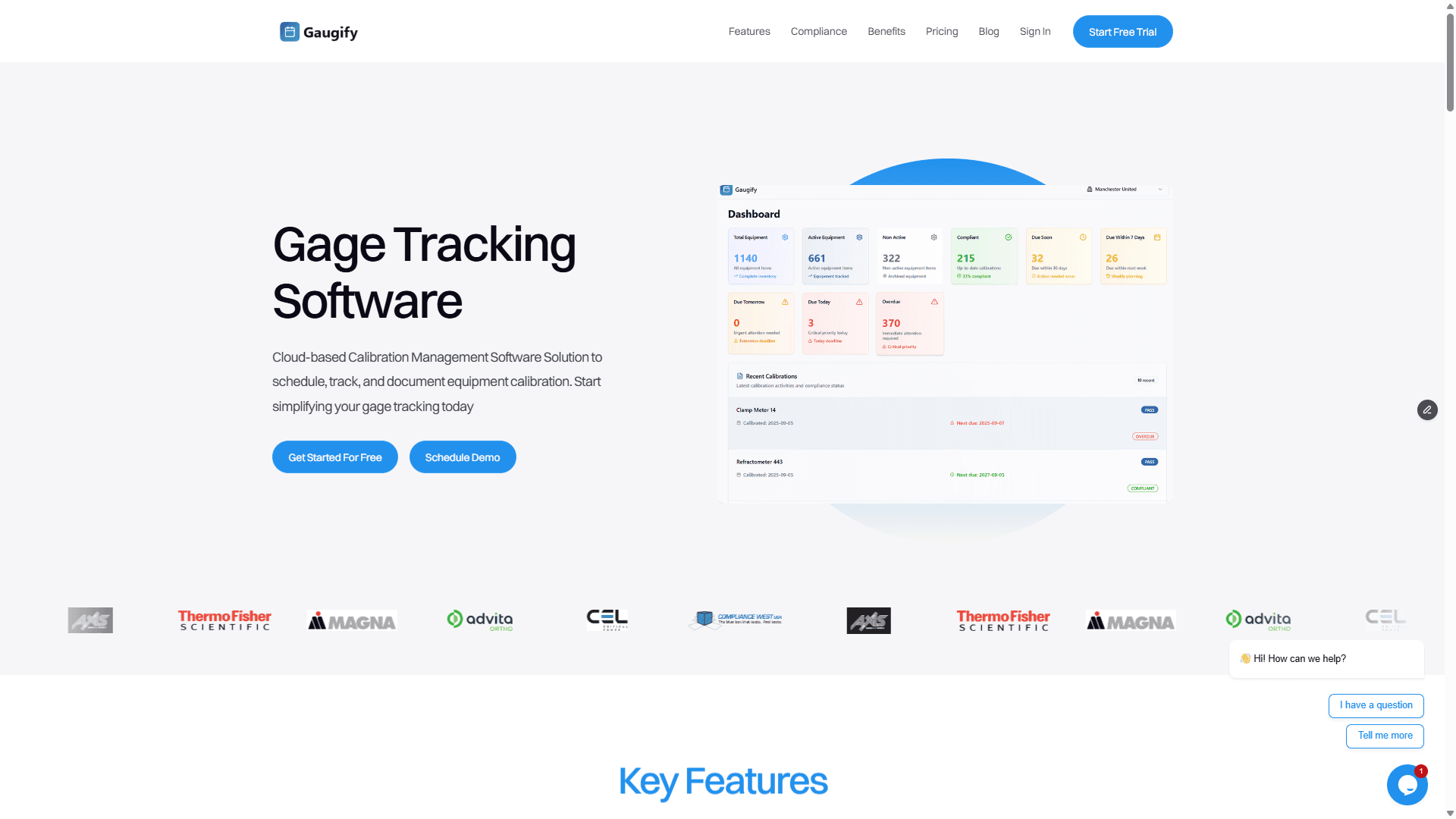
New Jersey manufacturers benefit from Gaugify's advanced reporting capabilities that provide insights into calibration program performance, compliance status, and cost optimization opportunities. The system generates regulatory compliance reports for FDA inspections, ISO audits, and customer quality assessments.
Analytics features help identify trends in instrument performance, optimize calibration intervals, and predict maintenance requirements before they impact production. Companies can track key performance indicators like on-time calibration completion rates, out-of-tolerance frequencies, and calibration costs across different facilities and instrument categories.
Transform Your New Jersey Calibration Operations
New Jersey's competitive manufacturing environment demands calibration management solutions that deliver reliability, compliance, and operational efficiency. Companies across the state – from pharmaceutical giants in Somerset County to precision manufacturers in Bergen County – trust modern calibration management software to maintain their quality standards and regulatory compliance.
Gaugify's cloud-based platform addresses the unique challenges facing New Jersey manufacturers, providing the flexibility to accommodate multiple quality standards, the accessibility to support multi-site operations, and the functionality to optimize calibration operations. The system's comprehensive compliance features ensure companies can satisfy FDA regulations, ISO standards, and customer requirements while reducing administrative overhead and improving operational efficiency.
Don't let outdated calibration management processes limit your competitive advantage. Discover how Gaugify can streamline your calibration operations, improve compliance, and reduce costs. Schedule a personalized demo to see how our platform addresses the specific needs of New Jersey manufacturers, or explore our flexible pricing options designed to scale with your business requirements.
Join the growing number of New Jersey companies that have transformed their calibration management with Gaugify's innovative platform. Your journey toward more efficient, compliant, and cost-effective calibration operations starts with a single click.
Calibration Management Software in New Jersey
New Jersey's industrial landscape demands precision at every level, from the pharmaceutical giants in Somerset County to the aerospace manufacturers along the I-95 corridor. Companies across the Garden State rely on calibration management software New Jersey businesses trust to maintain their competitive edge and regulatory compliance. With over 9,000 manufacturing facilities generating $50+ billion annually, New Jersey's diverse industrial base requires sophisticated calibration management solutions that can adapt to multiple industry standards and regulatory requirements.
The state's strategic location between New York City and Philadelphia, combined with extensive port facilities and transportation infrastructure, has created a manufacturing hub where precision measurement is critical to success. From Johnson & Johnson's pharmaceutical operations in New Brunswick to the precision machining shops supporting defense contractors, New Jersey companies understand that effective calibration management directly impacts product quality, regulatory compliance, and bottom-line profitability.
New Jersey's Industrial Powerhouses Drive Calibration Needs
New Jersey's manufacturing sector spans multiple high-precision industries, each with unique calibration requirements that demand robust management systems. The state's industrial diversity creates a complex calibration landscape where companies often must satisfy multiple regulatory frameworks simultaneously.
Pharmaceutical and Life Sciences
New Jersey hosts the highest concentration of pharmaceutical companies in the United States, with over 400 life sciences companies calling the state home. Major players like Merck, Johnson & Johnson, and Bristol Myers Squibb operate extensive manufacturing and research facilities that require meticulous calibration management for equipment ranging from analytical balances with ±0.1mg tolerances to autoclave temperature sensors maintaining ±1°C accuracy.
These facilities typically manage thousands of instruments including pH meters, spectrophotometers, HPLC systems, and environmental monitoring equipment. A typical pharmaceutical manufacturing facility might calibrate 200+ critical measurement devices monthly, with documentation requirements that span FDA 21 CFR Part 11 compliance, ISO 17025 traceability, and internal quality system standards.
Chemical Manufacturing
The chemical industry represents one of New Jersey's largest manufacturing sectors, with companies like BASF, DuPont, and Honeywell operating major production facilities. Chemical manufacturing demands precise calibration of pressure transmitters (±0.25% accuracy), temperature sensors in reactor vessels, and flow meters measuring raw material inputs within ±1% tolerances.
These facilities often operate 24/7 production schedules, making calibration scheduling critical to avoid costly downtime. A petrochemical plant might have 500+ instruments requiring calibration on intervals ranging from monthly for critical safety systems to annually for non-critical monitoring equipment.
Aerospace and Defense
New Jersey's aerospace sector, including companies like Lockheed Martin and numerous precision machining subcontractors, requires calibration management that supports AS9100 aerospace quality standards. These facilities calibrate coordinate measuring machines (CMMs) with measurement uncertainties of ±0.0001 inches, torque wrenches maintaining ±4% accuracy, and environmental chambers controlling temperature within ±2°C.
Defense contractors must also maintain NIST traceability documentation and often require calibration certificates with measurement uncertainty calculations that satisfy stringent customer requirements.
Quality Standards Driving New Jersey Calibration Management Software Requirements
New Jersey manufacturers must navigate a complex web of quality standards, each imposing specific calibration documentation and traceability requirements. The state's diverse industrial base means companies often must satisfy multiple standards simultaneously, creating demand for flexible calibration management software New Jersey companies can customize to their specific regulatory landscape.
FDA and Pharmaceutical Regulations
Pharmaceutical manufacturers must comply with FDA 21 CFR Part 11 requirements for electronic records and signatures, Current Good Manufacturing Practice (cGMP) regulations, and often international standards like ICH guidelines. These regulations require calibration records with complete audit trails, electronic signature capabilities, and the ability to generate compliance reports for regulatory inspections.
A typical FDA inspection might review calibration records for analytical instruments, environmental monitoring systems, and production equipment, requiring companies to produce documentation showing calibration schedules, procedures, results, and corrective actions taken for out-of-tolerance conditions.
ISO Standards Implementation
Many New Jersey manufacturers implement ISO 9001 quality management systems, with testing laboratories often requiring ISO 17025 accreditation. These standards mandate documented calibration procedures, measurement uncertainty calculations, and traceability to national standards.
ISO 17025 laboratories must maintain detailed records of calibration uncertainties, environmental conditions during calibration, and evidence of personnel competency. The standard requires calibration certificates that include measurement results, uncertainties, and traceability statements.
Industry-Specific Requirements
Aerospace manufacturers follow AS9100 standards requiring calibration system integration with quality management systems and supplier quality requirements. Automotive suppliers must satisfy IATF 16949 standards that emphasize statistical process control and measurement system analysis (MSA) studies.
Chemical manufacturers often implement API standards for petroleum industry equipment and ASME standards for pressure vessel instrumentation, each with specific calibration interval and documentation requirements.
Regional Calibration Challenges in the Garden State
New Jersey's unique geographic and regulatory environment creates specific challenges that calibration management software New Jersey businesses require must address effectively. Understanding these regional factors is crucial for maintaining measurement accuracy and compliance across the state's diverse industrial landscape.
Environmental Factors
New Jersey's coastal climate creates humidity and temperature variations that affect instrument stability and calibration intervals. Facilities near the Atlantic coast deal with salt air that can accelerate corrosion in electronic instruments, while inland facilities experience greater temperature swings that affect measurement equipment accuracy.
Many companies adjust calibration frequencies based on environmental conditions, with coastal facilities calibrating electronic instruments 20-30% more frequently than standard recommendations. Environmental monitoring equipment requires particular attention, with temperature and humidity sensors needing quarterly calibration in high-humidity coastal environments versus semi-annual calibration inland.
Multi-State Operations
Many New Jersey manufacturers operate facilities across multiple states, creating challenges in standardizing calibration procedures and maintaining consistent documentation. Companies need calibration management systems that can accommodate different state regulations, customer requirements, and facility-specific procedures while maintaining centralized oversight and reporting.
A pharmaceutical company with facilities in New Jersey, Pennsylvania, and North Carolina must coordinate calibration schedules, ensure consistent procedures, and aggregate compliance reporting across all locations while accommodating local regulatory variations.
Supplier and Customer Requirements
New Jersey's position in the Northeast corridor means companies often serve customers with varying calibration requirements. Defense contractors might require NIST-traceable certificates with expanded measurement uncertainties, while pharmaceutical customers demand FDA-compliant documentation with electronic signatures.
Managing these diverse requirements requires calibration software that can generate different certificate formats, maintain multiple approval workflows, and track customer-specific calibration requirements across hundreds of instruments.
How Gaugify Serves New Jersey's Calibration Management Needs
Modern calibration management software New Jersey manufacturers depend on must address the state's unique combination of regulatory complexity, environmental challenges, and industry diversity. Gaugify's cloud-based platform provides New Jersey companies with the flexibility and functionality needed to maintain compliance across multiple standards while optimizing calibration operations.
Cloud-Based Accessibility
Gaugify's cloud architecture eliminates the need for local IT infrastructure, allowing New Jersey companies to access calibration records from any location with internet connectivity. This capability proves invaluable for companies with multiple facilities or personnel who need access to calibration data while working remotely or traveling between sites.
Quality managers can review calibration schedules from their offices in Princeton, while technicians can access procedures and record results from production floors in Camden or laboratory benches in Newark. The system automatically synchronizes data across all users, ensuring everyone works with current information regardless of their location.
Ready to streamline your calibration management? Start your free trial today and see how Gaugify can transform your quality operations.
Multi-Standard Compliance Support
New Jersey's diverse industrial landscape requires calibration software that supports multiple quality standards simultaneously. Gaugify's compliance features accommodate FDA 21 CFR Part 11 requirements for pharmaceutical companies, ISO 17025 standards for testing laboratories, and AS9100 requirements for aerospace manufacturers – all within a single platform.
The system generates audit trails that satisfy FDA inspectors, produces calibration certificates with measurement uncertainties for ISO 17025 compliance, and maintains supplier quality records for aerospace applications. Companies can configure different workflows and documentation requirements for different product lines or customer contracts without maintaining separate systems.
Advanced Scheduling and Notifications
Gaugify's intelligent scheduling system helps New Jersey companies optimize calibration operations by considering factors like instrument criticality, environmental conditions, and resource availability. The system can adjust calibration frequencies based on historical performance data and environmental factors specific to each facility location.
Automated notifications ensure calibrations are completed on schedule, with escalation procedures that prevent instruments from being used beyond their calibration due dates. The system can coordinate calibration schedules across multiple shifts and facilities, optimizing technician workloads and minimizing production disruptions.
Comprehensive Reporting and Analytics
New Jersey manufacturers benefit from Gaugify's advanced reporting capabilities that provide insights into calibration program performance, compliance status, and cost optimization opportunities. The system generates regulatory compliance reports for FDA inspections, ISO audits, and customer quality assessments.
Analytics features help identify trends in instrument performance, optimize calibration intervals, and predict maintenance requirements before they impact production. Companies can track key performance indicators like on-time calibration completion rates, out-of-tolerance frequencies, and calibration costs across different facilities and instrument categories.
Transform Your New Jersey Calibration Operations
New Jersey's competitive manufacturing environment demands calibration management solutions that deliver reliability, compliance, and operational efficiency. Companies across the state – from pharmaceutical giants in Somerset County to precision manufacturers in Bergen County – trust modern calibration management software to maintain their quality standards and regulatory compliance.
Gaugify's cloud-based platform addresses the unique challenges facing New Jersey manufacturers, providing the flexibility to accommodate multiple quality standards, the accessibility to support multi-site operations, and the functionality to optimize calibration operations. The system's comprehensive compliance features ensure companies can satisfy FDA regulations, ISO standards, and customer requirements while reducing administrative overhead and improving operational efficiency.
Don't let outdated calibration management processes limit your competitive advantage. Discover how Gaugify can streamline your calibration operations, improve compliance, and reduce costs. Schedule a personalized demo to see how our platform addresses the specific needs of New Jersey manufacturers, or explore our flexible pricing options designed to scale with your business requirements.
Join the growing number of New Jersey companies that have transformed their calibration management with Gaugify's innovative platform. Your journey toward more efficient, compliant, and cost-effective calibration operations starts with a single click.