
Calibration Management Software in Spain
Calibration Management Software in Spain
David Bentley
Quality Assurance Engineer
7 min read
Calibration Management Software in Spain
Spain's robust manufacturing sector and world-class industrial infrastructure demand precise quality control systems to maintain competitive advantage in global markets. From automotive plants in Catalonia to aerospace facilities in Madrid, Spanish companies require reliable calibration management software in Spain to meet stringent international standards while supporting their operational excellence goals. As industries continue to modernize and embrace digital transformation, cloud-based calibration solutions are becoming essential for maintaining measurement accuracy and regulatory compliance.
Spain's Industrial Manufacturing Landscape
Spain ranks as one of Europe's largest industrial economies, with manufacturing contributing approximately 12% of the nation's GDP. The country's strategic location, skilled workforce, and advanced infrastructure have attracted significant foreign investment from global manufacturers. Key industrial regions include Catalonia, Madrid, Valencia, and the Basque Country, each hosting diverse manufacturing operations that require precise measurement and calibration systems.
Spanish manufacturing has undergone significant modernization over the past two decades, with companies investing heavily in automation, digitalization, and quality management systems. This transformation has created increased demand for sophisticated calibration management solutions that can support complex manufacturing processes while ensuring compliance with both European and international standards.
Key Industries Requiring Calibration Management Software in Spain
Several dominant industries in Spain depend on precise calibration management to maintain product quality and regulatory compliance:
Automotive Manufacturing
Spain is Europe's second-largest automotive producer, with major facilities from SEAT, Ford, Renault, and PSA Group. These plants utilize thousands of measurement instruments, from torque wrenches requiring ±2% accuracy to coordinate measuring machines (CMMs) with tolerances of ±0.001mm. Automotive suppliers must maintain calibration records for geometric dimensioning and tolerancing (GD&T) measurements, ensuring components meet strict specifications for engine blocks, transmission parts, and safety-critical systems.
Aerospace and Defense
The Spanish aerospace sector, led by companies like Airbus Operations and ITP Aero, demands exceptional measurement precision. Calibration programs must support instruments measuring blade twist angles to ±0.05°, turbine clearances to ±0.025mm, and material testing equipment for composite structures. Defense contractors require additional security protocols and traceability documentation for classified projects.
Pharmaceutical and Biotechnology
Spain's pharmaceutical industry, including companies like Grifols and Almirall, operates under strict GMP (Good Manufacturing Practice) regulations. Temperature mapping systems require calibration to ±0.1°C, analytical balances need verification to 0.1mg resolution, and HPLC systems demand comprehensive calibration protocols. Biotechnology facilities must maintain calibration records for cell culture incubators, centrifuges, and spectrophotometers used in drug development.
Food and Beverage Processing
From olive oil production in Andalusia to wine making in Rioja, Spain's food industry requires calibration management for safety and quality. pH meters need calibration to ±0.01 pH units, temperature probes in pasteurization systems require ±0.5°C accuracy, and weighing systems for packaging must maintain ±0.1g precision. HACCP compliance demands documented calibration schedules and immediate alerts for out-of-specification readings.
Energy and Utilities
Spain's renewable energy sector, particularly wind and solar power, relies on calibrated instruments for efficiency optimization. Wind turbine nacelle anemometers require calibration to ±2% of reading, while solar irradiance sensors need verification against NIST-traceable standards. Traditional power generation facilities must calibrate pressure transmitters, flow meters, and temperature sensors supporting steam turbine operations.
Quality Standards and Regulatory Requirements in Spain
Spanish manufacturers must comply with multiple overlapping standards depending on their industry and export markets. The most commonly implemented quality standards requiring robust calibration management software in Spain include:
ISO 9001:2015 serves as the foundation for quality management systems across all industries. The standard requires documented calibration procedures, measurement uncertainty analysis, and evidence of metrological traceability. Spanish companies often struggle with clause 7.1.5.2, which demands that measurement equipment be calibrated at specified intervals against standards traceable to international or national measurement standards.
ISO/TS 16949 adds automotive-specific requirements, including statistical process control (SPC) for measurement systems and advanced product quality planning (APQP) protocols. Automotive suppliers must demonstrate measurement system analysis (MSA) studies showing gage R&R values below 10% for critical characteristics.
AS9100 governs aerospace quality systems, requiring configuration management for calibration procedures and risk-based approaches to calibration intervals. Spanish aerospace companies must maintain calibration records supporting first article inspection reports (FAIR) and certificate of conformance documentation.
European regulations such as the Medical Device Regulation (MDR 2017/745) and In Vitro Diagnostic Regulation (IVDR 2017/746) impose additional calibration requirements on Spanish medical device manufacturers. These regulations demand comprehensive calibration validation protocols and post-market surveillance of measurement systems.
Regional Calibration Challenges in Spain
Spanish manufacturers face unique calibration management challenges that require specialized software solutions:
Mediterranean Climate Impacts
Spain's varied climate zones create significant challenges for measurement stability. Coastal regions experience high humidity that affects electronic instruments, while interior regions face extreme temperature variations. Calibration intervals may need adjustment based on environmental conditions, with humidity-sensitive instruments requiring more frequent verification in coastal facilities.
Multi-Site Operations
Many Spanish manufacturers operate multiple facilities across different regions, creating coordination challenges for calibration management. A pharmaceutical company might have R&D facilities in Madrid, production plants in Barcelona, and distribution centers in Seville. Centralized calibration scheduling and standardized procedures become critical for maintaining consistency across locations.
Language and Documentation Requirements
Spanish companies often require calibration documentation in multiple languages to support international customers and regulatory authorities. Technical procedures must be available in Spanish for local technicians while maintaining English versions for global quality audits. Software solutions must accommodate multilingual reporting and user interfaces.
Integration with Existing Systems
Spanish manufacturers have invested significantly in ERP systems like SAP and Oracle, along with manufacturing execution systems (MES) from local providers. Calibration management software must integrate seamlessly with these existing systems to avoid data silos and duplicate data entry.
How Gaugify Serves Spanish Manufacturers
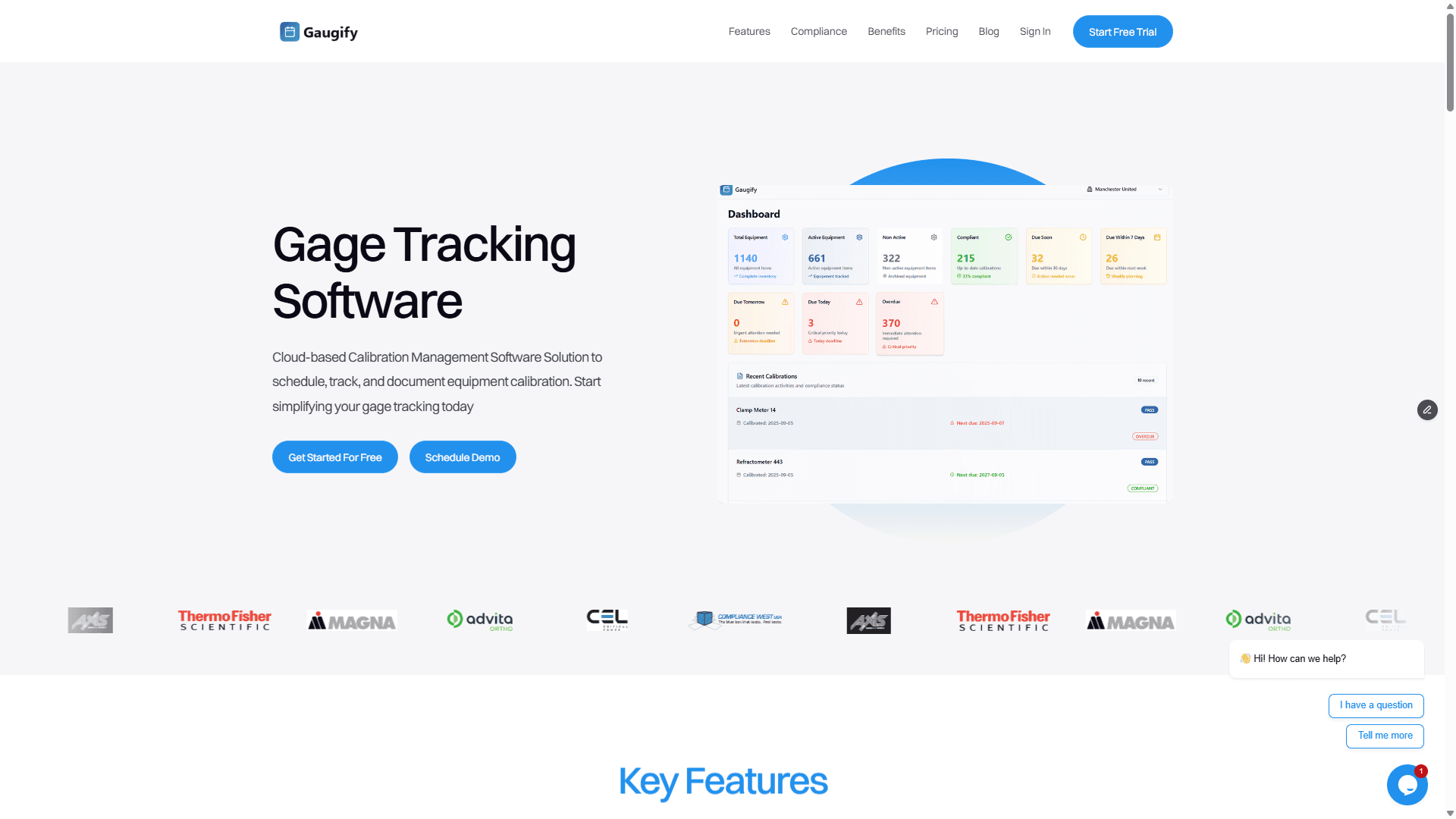
Modern Spanish manufacturers need flexible, cloud-based solutions that can adapt to their specific requirements while supporting growth and international expansion. Gaugify's calibration management platform addresses the unique challenges facing Spanish companies through several key capabilities:
Cloud-Based Accessibility
Spanish companies with multiple facilities benefit from Gaugify's cloud architecture, which provides secure access from any location without requiring local IT infrastructure. Quality managers in Madrid can schedule calibrations for instruments in Barcelona while technicians in Seville upload calibration certificates directly from their mobile devices. This eliminates the traditional barriers of on-premises software that require expensive servers and dedicated IT support.
Ready to modernize your calibration management? Start your free trial today and see how cloud-based calibration management can transform your operations.
Comprehensive Standards Support
Spanish manufacturers appreciate that Gaugify supports all major quality standards commonly required in Spain, including ISO 9001, ISO/TS 16949, AS9100, and ISO 13485. The platform generates audit-ready reports that satisfy both Spanish regulatory authorities and international customers. Built-in templates for measurement uncertainty calculations and traceability documentation reduce the administrative burden on quality teams.
Multilingual Capabilities
Understanding the importance of language flexibility for Spanish companies, Gaugify provides user interfaces and reports in multiple languages. Spanish technicians can work in their native language while automatically generating English reports for international auditors. This dual-language capability is particularly valuable for companies serving both domestic and export markets.
Scalable Architecture
Spanish manufacturers often experience rapid growth, especially in export-oriented industries. Gaugify's subscription-based model scales seamlessly from small facilities with 50 instruments to large operations managing 5,000+ measurement devices. Companies can add new facilities and users without significant upfront investments or lengthy implementation projects.
Advanced Analytics and Reporting
Gaugify's analytics capabilities help Spanish companies optimize their calibration programs by identifying trends in instrument performance, predicting potential failures, and adjusting calibration intervals based on actual usage data. These insights are particularly valuable for companies implementing predictive maintenance strategies as part of Industry 4.0 initiatives.
Mobile Integration
Spanish manufacturing facilities often have instruments distributed across large production floors or multiple buildings. Gaugify's mobile app allows technicians to access calibration procedures, record results, and attach photos directly from the instrument location. QR code scanning eliminates transcription errors while GPS location tracking provides additional verification for audits.
Integration Capabilities
Recognizing that Spanish manufacturers have significant investments in existing IT systems, Gaugify offers robust integration options with popular ERP and MES platforms. API connections enable automatic synchronization of asset data, work orders, and calibration results, eliminating duplicate data entry and ensuring consistency across systems.
Success Stories from Spanish Manufacturers
Spanish companies across various industries have successfully implemented Gaugify to improve their calibration management processes. Automotive suppliers have reduced calibration-related downtime by 35% through better scheduling and predictive analytics. Pharmaceutical manufacturers have eliminated audit findings related to calibration documentation by leveraging Gaugify's automated compliance reporting. Aerospace companies have improved measurement traceability while reducing administrative costs by 40%.
These success stories demonstrate that modern calibration management software in Spain delivers measurable benefits beyond basic compliance. Companies achieve operational efficiency, cost reduction, and improved product quality through intelligent calibration management.
Getting Started with Modern Calibration Management
Spanish manufacturers ready to modernize their calibration programs can begin immediately with cloud-based solutions that require no upfront investment in hardware or software. The transition from paper-based or legacy systems typically takes 2-4 weeks, with most companies seeing immediate benefits in organization and efficiency.
For companies evaluating calibration management solutions, key considerations include scalability, standards compliance, integration capabilities, and total cost of ownership. Cloud-based platforms like Gaugify eliminate many traditional barriers to implementation while providing enterprise-grade functionality accessible to companies of all sizes.
Spanish manufacturers competing in global markets need calibration management solutions that support their quality objectives while adapting to changing regulatory requirements. ISO 17025 compliance capabilities become increasingly important as companies pursue accreditation for their internal calibration laboratories.
Transform your calibration management today with a solution designed for modern manufacturers. Schedule a personalized demo to see how Gaugify can support your Spanish manufacturing operation's specific requirements while providing the flexibility to grow and adapt to future challenges. Experience the power of cloud-based calibration management and join the growing number of Spanish companies achieving operational excellence through intelligent quality systems.
Calibration Management Software in Spain
Spain's robust manufacturing sector and world-class industrial infrastructure demand precise quality control systems to maintain competitive advantage in global markets. From automotive plants in Catalonia to aerospace facilities in Madrid, Spanish companies require reliable calibration management software in Spain to meet stringent international standards while supporting their operational excellence goals. As industries continue to modernize and embrace digital transformation, cloud-based calibration solutions are becoming essential for maintaining measurement accuracy and regulatory compliance.
Spain's Industrial Manufacturing Landscape
Spain ranks as one of Europe's largest industrial economies, with manufacturing contributing approximately 12% of the nation's GDP. The country's strategic location, skilled workforce, and advanced infrastructure have attracted significant foreign investment from global manufacturers. Key industrial regions include Catalonia, Madrid, Valencia, and the Basque Country, each hosting diverse manufacturing operations that require precise measurement and calibration systems.
Spanish manufacturing has undergone significant modernization over the past two decades, with companies investing heavily in automation, digitalization, and quality management systems. This transformation has created increased demand for sophisticated calibration management solutions that can support complex manufacturing processes while ensuring compliance with both European and international standards.
Key Industries Requiring Calibration Management Software in Spain
Several dominant industries in Spain depend on precise calibration management to maintain product quality and regulatory compliance:
Automotive Manufacturing
Spain is Europe's second-largest automotive producer, with major facilities from SEAT, Ford, Renault, and PSA Group. These plants utilize thousands of measurement instruments, from torque wrenches requiring ±2% accuracy to coordinate measuring machines (CMMs) with tolerances of ±0.001mm. Automotive suppliers must maintain calibration records for geometric dimensioning and tolerancing (GD&T) measurements, ensuring components meet strict specifications for engine blocks, transmission parts, and safety-critical systems.
Aerospace and Defense
The Spanish aerospace sector, led by companies like Airbus Operations and ITP Aero, demands exceptional measurement precision. Calibration programs must support instruments measuring blade twist angles to ±0.05°, turbine clearances to ±0.025mm, and material testing equipment for composite structures. Defense contractors require additional security protocols and traceability documentation for classified projects.
Pharmaceutical and Biotechnology
Spain's pharmaceutical industry, including companies like Grifols and Almirall, operates under strict GMP (Good Manufacturing Practice) regulations. Temperature mapping systems require calibration to ±0.1°C, analytical balances need verification to 0.1mg resolution, and HPLC systems demand comprehensive calibration protocols. Biotechnology facilities must maintain calibration records for cell culture incubators, centrifuges, and spectrophotometers used in drug development.
Food and Beverage Processing
From olive oil production in Andalusia to wine making in Rioja, Spain's food industry requires calibration management for safety and quality. pH meters need calibration to ±0.01 pH units, temperature probes in pasteurization systems require ±0.5°C accuracy, and weighing systems for packaging must maintain ±0.1g precision. HACCP compliance demands documented calibration schedules and immediate alerts for out-of-specification readings.
Energy and Utilities
Spain's renewable energy sector, particularly wind and solar power, relies on calibrated instruments for efficiency optimization. Wind turbine nacelle anemometers require calibration to ±2% of reading, while solar irradiance sensors need verification against NIST-traceable standards. Traditional power generation facilities must calibrate pressure transmitters, flow meters, and temperature sensors supporting steam turbine operations.
Quality Standards and Regulatory Requirements in Spain
Spanish manufacturers must comply with multiple overlapping standards depending on their industry and export markets. The most commonly implemented quality standards requiring robust calibration management software in Spain include:
ISO 9001:2015 serves as the foundation for quality management systems across all industries. The standard requires documented calibration procedures, measurement uncertainty analysis, and evidence of metrological traceability. Spanish companies often struggle with clause 7.1.5.2, which demands that measurement equipment be calibrated at specified intervals against standards traceable to international or national measurement standards.
ISO/TS 16949 adds automotive-specific requirements, including statistical process control (SPC) for measurement systems and advanced product quality planning (APQP) protocols. Automotive suppliers must demonstrate measurement system analysis (MSA) studies showing gage R&R values below 10% for critical characteristics.
AS9100 governs aerospace quality systems, requiring configuration management for calibration procedures and risk-based approaches to calibration intervals. Spanish aerospace companies must maintain calibration records supporting first article inspection reports (FAIR) and certificate of conformance documentation.
European regulations such as the Medical Device Regulation (MDR 2017/745) and In Vitro Diagnostic Regulation (IVDR 2017/746) impose additional calibration requirements on Spanish medical device manufacturers. These regulations demand comprehensive calibration validation protocols and post-market surveillance of measurement systems.
Regional Calibration Challenges in Spain
Spanish manufacturers face unique calibration management challenges that require specialized software solutions:
Mediterranean Climate Impacts
Spain's varied climate zones create significant challenges for measurement stability. Coastal regions experience high humidity that affects electronic instruments, while interior regions face extreme temperature variations. Calibration intervals may need adjustment based on environmental conditions, with humidity-sensitive instruments requiring more frequent verification in coastal facilities.
Multi-Site Operations
Many Spanish manufacturers operate multiple facilities across different regions, creating coordination challenges for calibration management. A pharmaceutical company might have R&D facilities in Madrid, production plants in Barcelona, and distribution centers in Seville. Centralized calibration scheduling and standardized procedures become critical for maintaining consistency across locations.
Language and Documentation Requirements
Spanish companies often require calibration documentation in multiple languages to support international customers and regulatory authorities. Technical procedures must be available in Spanish for local technicians while maintaining English versions for global quality audits. Software solutions must accommodate multilingual reporting and user interfaces.
Integration with Existing Systems
Spanish manufacturers have invested significantly in ERP systems like SAP and Oracle, along with manufacturing execution systems (MES) from local providers. Calibration management software must integrate seamlessly with these existing systems to avoid data silos and duplicate data entry.
How Gaugify Serves Spanish Manufacturers
Modern Spanish manufacturers need flexible, cloud-based solutions that can adapt to their specific requirements while supporting growth and international expansion. Gaugify's calibration management platform addresses the unique challenges facing Spanish companies through several key capabilities:
Cloud-Based Accessibility
Spanish companies with multiple facilities benefit from Gaugify's cloud architecture, which provides secure access from any location without requiring local IT infrastructure. Quality managers in Madrid can schedule calibrations for instruments in Barcelona while technicians in Seville upload calibration certificates directly from their mobile devices. This eliminates the traditional barriers of on-premises software that require expensive servers and dedicated IT support.
Ready to modernize your calibration management? Start your free trial today and see how cloud-based calibration management can transform your operations.
Comprehensive Standards Support
Spanish manufacturers appreciate that Gaugify supports all major quality standards commonly required in Spain, including ISO 9001, ISO/TS 16949, AS9100, and ISO 13485. The platform generates audit-ready reports that satisfy both Spanish regulatory authorities and international customers. Built-in templates for measurement uncertainty calculations and traceability documentation reduce the administrative burden on quality teams.
Multilingual Capabilities
Understanding the importance of language flexibility for Spanish companies, Gaugify provides user interfaces and reports in multiple languages. Spanish technicians can work in their native language while automatically generating English reports for international auditors. This dual-language capability is particularly valuable for companies serving both domestic and export markets.
Scalable Architecture
Spanish manufacturers often experience rapid growth, especially in export-oriented industries. Gaugify's subscription-based model scales seamlessly from small facilities with 50 instruments to large operations managing 5,000+ measurement devices. Companies can add new facilities and users without significant upfront investments or lengthy implementation projects.
Advanced Analytics and Reporting
Gaugify's analytics capabilities help Spanish companies optimize their calibration programs by identifying trends in instrument performance, predicting potential failures, and adjusting calibration intervals based on actual usage data. These insights are particularly valuable for companies implementing predictive maintenance strategies as part of Industry 4.0 initiatives.
Mobile Integration
Spanish manufacturing facilities often have instruments distributed across large production floors or multiple buildings. Gaugify's mobile app allows technicians to access calibration procedures, record results, and attach photos directly from the instrument location. QR code scanning eliminates transcription errors while GPS location tracking provides additional verification for audits.
Integration Capabilities
Recognizing that Spanish manufacturers have significant investments in existing IT systems, Gaugify offers robust integration options with popular ERP and MES platforms. API connections enable automatic synchronization of asset data, work orders, and calibration results, eliminating duplicate data entry and ensuring consistency across systems.
Success Stories from Spanish Manufacturers
Spanish companies across various industries have successfully implemented Gaugify to improve their calibration management processes. Automotive suppliers have reduced calibration-related downtime by 35% through better scheduling and predictive analytics. Pharmaceutical manufacturers have eliminated audit findings related to calibration documentation by leveraging Gaugify's automated compliance reporting. Aerospace companies have improved measurement traceability while reducing administrative costs by 40%.
These success stories demonstrate that modern calibration management software in Spain delivers measurable benefits beyond basic compliance. Companies achieve operational efficiency, cost reduction, and improved product quality through intelligent calibration management.
Getting Started with Modern Calibration Management
Spanish manufacturers ready to modernize their calibration programs can begin immediately with cloud-based solutions that require no upfront investment in hardware or software. The transition from paper-based or legacy systems typically takes 2-4 weeks, with most companies seeing immediate benefits in organization and efficiency.
For companies evaluating calibration management solutions, key considerations include scalability, standards compliance, integration capabilities, and total cost of ownership. Cloud-based platforms like Gaugify eliminate many traditional barriers to implementation while providing enterprise-grade functionality accessible to companies of all sizes.
Spanish manufacturers competing in global markets need calibration management solutions that support their quality objectives while adapting to changing regulatory requirements. ISO 17025 compliance capabilities become increasingly important as companies pursue accreditation for their internal calibration laboratories.
Transform your calibration management today with a solution designed for modern manufacturers. Schedule a personalized demo to see how Gaugify can support your Spanish manufacturing operation's specific requirements while providing the flexibility to grow and adapt to future challenges. Experience the power of cloud-based calibration management and join the growing number of Spanish companies achieving operational excellence through intelligent quality systems.