
Calibration Management Software in Sweden
Calibration Management Software in Sweden
David Bentley
Quality Assurance Engineer
6 min read
Calibration Management Software in Sweden
Sweden's manufacturing sector stands as one of Europe's most sophisticated industrial ecosystems, where precision engineering meets cutting-edge technology. From the automotive plants in Gothenburg to aerospace facilities in Stockholm, Swedish manufacturers demand the highest calibration standards. Calibration management software Sweden companies rely on must handle everything from Volvo's automotive precision requirements to Ericsson's telecommunications equipment tolerances. Whether you're managing micrometers with ±0.001mm tolerances at SKF or calibrating pressure transducers for Sandvik's mining equipment, the right digital calibration system ensures compliance with Sweden's stringent quality requirements.
Swedish industry's commitment to sustainability and Industry 4.0 initiatives has created unique demands for calibration management systems. Companies need solutions that not only ensure measurement accuracy but also integrate seamlessly with digital transformation goals while meeting both Swedish and EU regulatory requirements.
Sweden's Industrial Calibration Landscape
Sweden's industrial foundation rests on several world-renowned sectors that have built the country's reputation for quality and innovation. The automotive industry, anchored by Volvo Cars and Volvo Trucks, requires precise calibration of coordinate measuring machines (CMMs), torque wrenches, and dimensional gages. A typical Volvo assembly line might use hundreds of calibrated instruments, from pneumatic torque tools requiring ±3% accuracy to laser measurement systems with nanometer precision.
The aerospace and defense sector, including Saab and numerous suppliers, operates under the most stringent calibration requirements. Flight-critical components demand traceability to national standards, with calibration intervals as short as 30 days for critical measurement equipment. Temperature sensors used in jet engine testing might require calibration to ±0.1°C across ranges from -60°C to +1200°C.
Sweden's mining equipment industry, led by companies like Sandvik and Atlas Copco, presents unique calibration challenges. Hydraulic pressure gages used in rock drilling equipment operate in harsh conditions and require frequent recalibration. These instruments often need validation across pressure ranges exceeding 350 bar with accuracy requirements of ±0.5% full scale.
The pharmaceutical and biotech sector adds another layer of complexity, where cleanroom environments and FDA validation requirements intersect with Swedish Medical Products Agency regulations. Temperature mapping studies in pharmaceutical warehouses might involve 50+ calibrated data loggers, each requiring individual certificates traceable to SWEDAC (Swedish Board for Accreditation and Conformity Assessment).
Quality Standards Governing Swedish Calibration Management Software
Swedish manufacturers must navigate a complex web of international, European, and national standards. ISO 9001 remains the foundation, but sector-specific requirements add significant complexity. The automotive industry follows IATF 16949, which mandates statistical process control and measurement system analysis (MSA) studies. A typical MSA study for a CMM measuring engine block bore diameters might require 50+ measurements across multiple operators and time periods.
Aerospace companies operating under AS9100 face even stricter requirements. First article inspection reports (FAIRs) must include calibration certificates for every measuring device used. This means a single aircraft component might require documentation from 20+ calibrated instruments, each with current certificates and uncertainty calculations.
The medical device sector follows ISO 13485, where calibration records become part of the device history record. Temperature monitoring systems in medical device manufacturing might require calibration every 90 days with uncertainty calculations documented to two decimal places.
Environmental management under ISO 14001 has gained prominence as Swedish companies pursue sustainability goals. This often involves calibrating environmental monitoring equipment like particulate counters, noise meters, and emission analyzers. These instruments require specialized calibration procedures often performed by accredited third-party laboratories.
Regional Calibration Challenges in Swedish Manufacturing
Sweden's harsh climate creates unique calibration challenges that software systems must address. Temperature fluctuations between -30°C winters and +30°C summers affect instrument stability. Outdoor measurement equipment, particularly in the mining and forestry sectors, requires temperature compensation algorithms and shortened calibration intervals during extreme weather periods.
The country's commitment to sustainability has introduced new measurement requirements. Carbon footprint monitoring systems require calibration of gas analyzers, flow meters, and energy measurement devices. A pulp and paper mill might need to calibrate 100+ instruments for environmental monitoring, each with different intervals and acceptance criteria.
Sweden's highly distributed industrial base presents logistical challenges. A mining operation in Kiruna faces very different calibration logistics than a pharmaceutical plant in Stockholm. Remote locations often require on-site calibration services, making calibration scheduling and coordination critical. Calibration management software Sweden operations depend on must handle multi-site coordination and vendor management across vast distances.
Language and localization requirements add another layer of complexity. While technical staff often work in English, calibration certificates and audit documentation frequently require Swedish translations. Integration with local ERP systems like IFS (developed in Sweden) requires specific data formats and communication protocols.
Ready to streamline your calibration management with software designed for Swedish industry requirements? Start your free trial and see how Gaugify handles multi-site coordination, regulatory compliance, and vendor management in one integrated platform.
Regulatory Compliance and Documentation
Swedish companies must maintain calibration documentation that satisfies multiple stakeholders. SWEDAC accreditation requirements demand specific certificate formats and uncertainty calculations. A pressure calibration laboratory might need to document measurement uncertainty budgets with 15+ uncertainty sources, from reference standard stability to environmental effects.
Export-oriented companies face additional challenges. Products shipped to the US require NIST-traceable calibrations, while those going to Germany need PTB traceability. Managing multiple traceability chains for the same instrument creates complex documentation requirements that manual systems struggle to handle.
Audit preparation becomes particularly challenging during multi-standard assessments. A medical device manufacturer might face simultaneous audits from the Swedish Medical Products Agency, notified bodies for CE marking, and FDA inspectors. Each audit team expects calibration documentation in specific formats with particular emphasis points.
How Gaugify Serves Swedish Calibration Management Software Needs
Gaugify's cloud-based platform addresses Sweden's unique calibration challenges through several key capabilities. The system's multi-language support ensures calibration certificates can be generated in Swedish while maintaining English technical content for international standards compliance. This dual-language capability proves essential during regulatory inspections and customer audits.
The platform's vendor management system excels in Sweden's distributed industrial environment. Companies can coordinate calibrations across multiple service providers, from local instrument shops in Malmö to specialized aerospace calibration laboratories in Stockholm. Automatic scheduling algorithms account for travel time and service provider capabilities, optimizing calibration routes across Sweden's geography.
Gaugify's advanced features include environmental monitoring integration, crucial for Swedish companies tracking sustainability metrics. The system can automatically import data from environmental monitoring systems and trigger calibration activities when measurement uncertainty exceeds predetermined thresholds.
Temperature compensation algorithms built into the platform address Sweden's climate challenges. The system can adjust calibration intervals based on environmental exposure data, extending intervals during stable periods and shortening them when instruments experience extreme temperature cycling.
Multi-standard compliance capabilities ensure Swedish companies can satisfy diverse regulatory requirements simultaneously. The same CMM calibration data can generate certificates meeting ISO 17025, IATF 16949, and AS9100 requirements without duplicate data entry. Gaugify's compliance features automatically format reports according to different standard requirements.
Integration with Swedish Business Systems
Gaugify integrates seamlessly with popular Swedish ERP and manufacturing systems. Direct connections to IFS, SAP, and other enterprise systems ensure calibration data flows automatically into maintenance schedules and quality records. This integration eliminates manual data entry and reduces the risk of scheduling conflicts.
The system's API capabilities support custom integrations with specialized Swedish software solutions. Many Swedish companies use locally developed quality management systems that require specific data formats and communication protocols. Gaugify's flexible architecture accommodates these requirements without extensive customization.
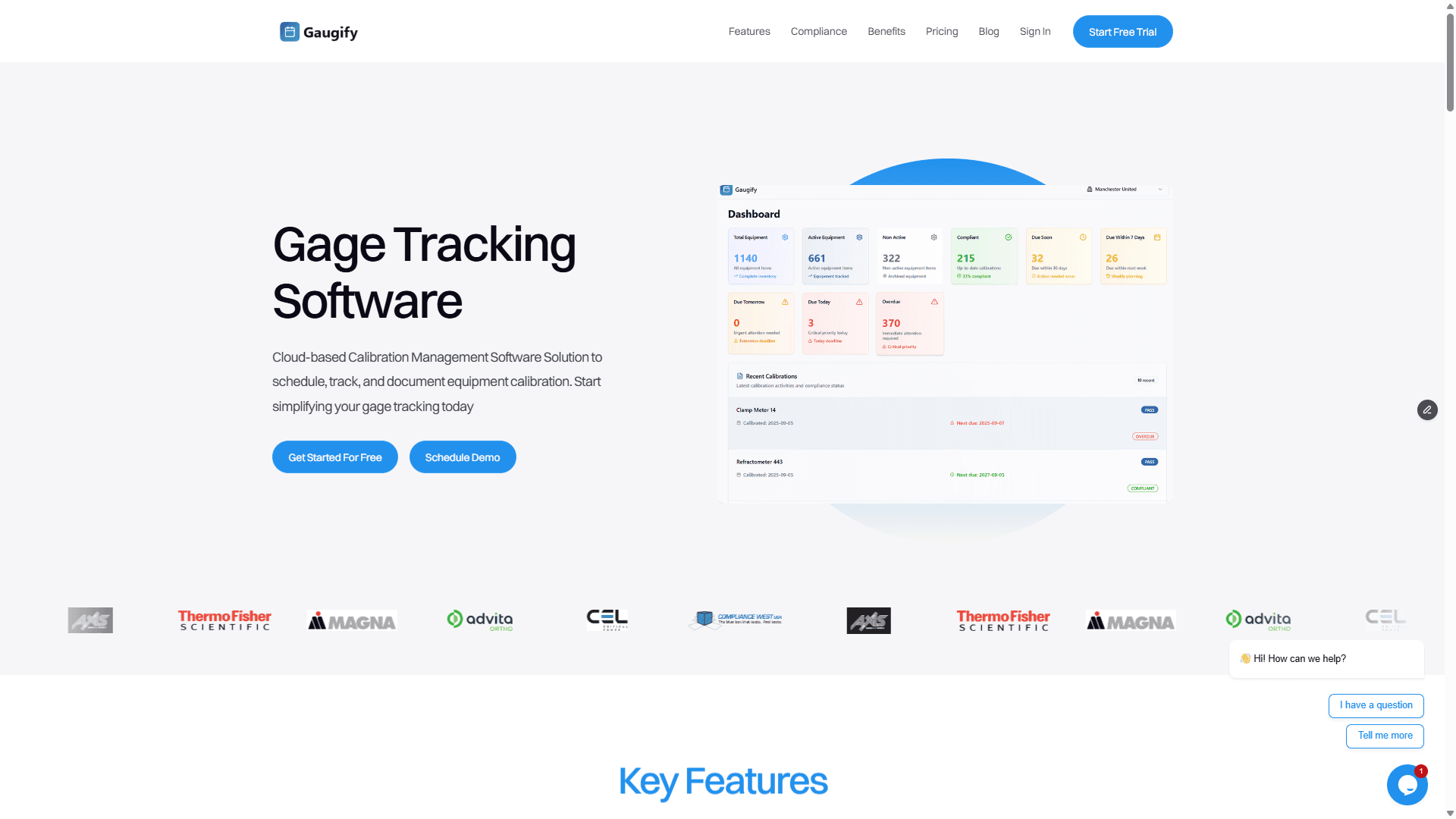
Real-time dashboard capabilities provide management visibility across multiple Swedish facilities. Executives can monitor calibration compliance rates, vendor performance, and cost trends from a single interface, whether overseeing operations from Stockholm headquarters or visiting remote manufacturing sites.
Start Your Swedish Calibration Management Software Journey
Swedish manufacturers choosing calibration management software Sweden operations demand need solutions that understand local requirements while supporting global quality standards. Gaugify combines sophisticated calibration management capabilities with the flexibility to address Sweden's unique industrial challenges.
The platform's cloud-based architecture eliminates IT infrastructure concerns while ensuring data security meets European GDPR requirements. Automatic backup and disaster recovery capabilities provide business continuity assurance critical for export-oriented Swedish manufacturers.
Whether you're managing calibrations for a single facility in Gothenburg or coordinating across multiple sites from Kiruna to Malmö, Gaugify provides the comprehensive solution Swedish industry demands. The system scales from small job shops with 50 instruments to large corporations managing thousands of calibrated devices across multiple countries.
Experience how modern calibration management software can transform your Swedish operations. Start your free trial today and discover why leading Swedish manufacturers trust Gaugify for their calibration management needs. Our platform delivers the precision, compliance, and efficiency that Swedish industry demands while supporting your company's digital transformation initiatives.
Calibration Management Software in Sweden
Sweden's manufacturing sector stands as one of Europe's most sophisticated industrial ecosystems, where precision engineering meets cutting-edge technology. From the automotive plants in Gothenburg to aerospace facilities in Stockholm, Swedish manufacturers demand the highest calibration standards. Calibration management software Sweden companies rely on must handle everything from Volvo's automotive precision requirements to Ericsson's telecommunications equipment tolerances. Whether you're managing micrometers with ±0.001mm tolerances at SKF or calibrating pressure transducers for Sandvik's mining equipment, the right digital calibration system ensures compliance with Sweden's stringent quality requirements.
Swedish industry's commitment to sustainability and Industry 4.0 initiatives has created unique demands for calibration management systems. Companies need solutions that not only ensure measurement accuracy but also integrate seamlessly with digital transformation goals while meeting both Swedish and EU regulatory requirements.
Sweden's Industrial Calibration Landscape
Sweden's industrial foundation rests on several world-renowned sectors that have built the country's reputation for quality and innovation. The automotive industry, anchored by Volvo Cars and Volvo Trucks, requires precise calibration of coordinate measuring machines (CMMs), torque wrenches, and dimensional gages. A typical Volvo assembly line might use hundreds of calibrated instruments, from pneumatic torque tools requiring ±3% accuracy to laser measurement systems with nanometer precision.
The aerospace and defense sector, including Saab and numerous suppliers, operates under the most stringent calibration requirements. Flight-critical components demand traceability to national standards, with calibration intervals as short as 30 days for critical measurement equipment. Temperature sensors used in jet engine testing might require calibration to ±0.1°C across ranges from -60°C to +1200°C.
Sweden's mining equipment industry, led by companies like Sandvik and Atlas Copco, presents unique calibration challenges. Hydraulic pressure gages used in rock drilling equipment operate in harsh conditions and require frequent recalibration. These instruments often need validation across pressure ranges exceeding 350 bar with accuracy requirements of ±0.5% full scale.
The pharmaceutical and biotech sector adds another layer of complexity, where cleanroom environments and FDA validation requirements intersect with Swedish Medical Products Agency regulations. Temperature mapping studies in pharmaceutical warehouses might involve 50+ calibrated data loggers, each requiring individual certificates traceable to SWEDAC (Swedish Board for Accreditation and Conformity Assessment).
Quality Standards Governing Swedish Calibration Management Software
Swedish manufacturers must navigate a complex web of international, European, and national standards. ISO 9001 remains the foundation, but sector-specific requirements add significant complexity. The automotive industry follows IATF 16949, which mandates statistical process control and measurement system analysis (MSA) studies. A typical MSA study for a CMM measuring engine block bore diameters might require 50+ measurements across multiple operators and time periods.
Aerospace companies operating under AS9100 face even stricter requirements. First article inspection reports (FAIRs) must include calibration certificates for every measuring device used. This means a single aircraft component might require documentation from 20+ calibrated instruments, each with current certificates and uncertainty calculations.
The medical device sector follows ISO 13485, where calibration records become part of the device history record. Temperature monitoring systems in medical device manufacturing might require calibration every 90 days with uncertainty calculations documented to two decimal places.
Environmental management under ISO 14001 has gained prominence as Swedish companies pursue sustainability goals. This often involves calibrating environmental monitoring equipment like particulate counters, noise meters, and emission analyzers. These instruments require specialized calibration procedures often performed by accredited third-party laboratories.
Regional Calibration Challenges in Swedish Manufacturing
Sweden's harsh climate creates unique calibration challenges that software systems must address. Temperature fluctuations between -30°C winters and +30°C summers affect instrument stability. Outdoor measurement equipment, particularly in the mining and forestry sectors, requires temperature compensation algorithms and shortened calibration intervals during extreme weather periods.
The country's commitment to sustainability has introduced new measurement requirements. Carbon footprint monitoring systems require calibration of gas analyzers, flow meters, and energy measurement devices. A pulp and paper mill might need to calibrate 100+ instruments for environmental monitoring, each with different intervals and acceptance criteria.
Sweden's highly distributed industrial base presents logistical challenges. A mining operation in Kiruna faces very different calibration logistics than a pharmaceutical plant in Stockholm. Remote locations often require on-site calibration services, making calibration scheduling and coordination critical. Calibration management software Sweden operations depend on must handle multi-site coordination and vendor management across vast distances.
Language and localization requirements add another layer of complexity. While technical staff often work in English, calibration certificates and audit documentation frequently require Swedish translations. Integration with local ERP systems like IFS (developed in Sweden) requires specific data formats and communication protocols.
Ready to streamline your calibration management with software designed for Swedish industry requirements? Start your free trial and see how Gaugify handles multi-site coordination, regulatory compliance, and vendor management in one integrated platform.
Regulatory Compliance and Documentation
Swedish companies must maintain calibration documentation that satisfies multiple stakeholders. SWEDAC accreditation requirements demand specific certificate formats and uncertainty calculations. A pressure calibration laboratory might need to document measurement uncertainty budgets with 15+ uncertainty sources, from reference standard stability to environmental effects.
Export-oriented companies face additional challenges. Products shipped to the US require NIST-traceable calibrations, while those going to Germany need PTB traceability. Managing multiple traceability chains for the same instrument creates complex documentation requirements that manual systems struggle to handle.
Audit preparation becomes particularly challenging during multi-standard assessments. A medical device manufacturer might face simultaneous audits from the Swedish Medical Products Agency, notified bodies for CE marking, and FDA inspectors. Each audit team expects calibration documentation in specific formats with particular emphasis points.
How Gaugify Serves Swedish Calibration Management Software Needs
Gaugify's cloud-based platform addresses Sweden's unique calibration challenges through several key capabilities. The system's multi-language support ensures calibration certificates can be generated in Swedish while maintaining English technical content for international standards compliance. This dual-language capability proves essential during regulatory inspections and customer audits.
The platform's vendor management system excels in Sweden's distributed industrial environment. Companies can coordinate calibrations across multiple service providers, from local instrument shops in Malmö to specialized aerospace calibration laboratories in Stockholm. Automatic scheduling algorithms account for travel time and service provider capabilities, optimizing calibration routes across Sweden's geography.
Gaugify's advanced features include environmental monitoring integration, crucial for Swedish companies tracking sustainability metrics. The system can automatically import data from environmental monitoring systems and trigger calibration activities when measurement uncertainty exceeds predetermined thresholds.
Temperature compensation algorithms built into the platform address Sweden's climate challenges. The system can adjust calibration intervals based on environmental exposure data, extending intervals during stable periods and shortening them when instruments experience extreme temperature cycling.
Multi-standard compliance capabilities ensure Swedish companies can satisfy diverse regulatory requirements simultaneously. The same CMM calibration data can generate certificates meeting ISO 17025, IATF 16949, and AS9100 requirements without duplicate data entry. Gaugify's compliance features automatically format reports according to different standard requirements.
Integration with Swedish Business Systems
Gaugify integrates seamlessly with popular Swedish ERP and manufacturing systems. Direct connections to IFS, SAP, and other enterprise systems ensure calibration data flows automatically into maintenance schedules and quality records. This integration eliminates manual data entry and reduces the risk of scheduling conflicts.
The system's API capabilities support custom integrations with specialized Swedish software solutions. Many Swedish companies use locally developed quality management systems that require specific data formats and communication protocols. Gaugify's flexible architecture accommodates these requirements without extensive customization.
Real-time dashboard capabilities provide management visibility across multiple Swedish facilities. Executives can monitor calibration compliance rates, vendor performance, and cost trends from a single interface, whether overseeing operations from Stockholm headquarters or visiting remote manufacturing sites.
Start Your Swedish Calibration Management Software Journey
Swedish manufacturers choosing calibration management software Sweden operations demand need solutions that understand local requirements while supporting global quality standards. Gaugify combines sophisticated calibration management capabilities with the flexibility to address Sweden's unique industrial challenges.
The platform's cloud-based architecture eliminates IT infrastructure concerns while ensuring data security meets European GDPR requirements. Automatic backup and disaster recovery capabilities provide business continuity assurance critical for export-oriented Swedish manufacturers.
Whether you're managing calibrations for a single facility in Gothenburg or coordinating across multiple sites from Kiruna to Malmö, Gaugify provides the comprehensive solution Swedish industry demands. The system scales from small job shops with 50 instruments to large corporations managing thousands of calibrated devices across multiple countries.
Experience how modern calibration management software can transform your Swedish operations. Start your free trial today and discover why leading Swedish manufacturers trust Gaugify for their calibration management needs. Our platform delivers the precision, compliance, and efficiency that Swedish industry demands while supporting your company's digital transformation initiatives.