
Common Calibration Mistakes That Cost Manufacturers Thousands
Common Calibration Mistakes That Cost Manufacturers Thousands
David Bentley
Quality Assurance Engineer
8 min read
Common Calibration Mistakes That Cost Manufacturers Thousands
A precision machining shop in Ohio discovered their $45,000 coordinate measuring machine (CMM) had been operating with an expired calibration certificate for six months. The result? $180,000 in rejected parts, a failed ISO 9001 audit, and the loss of their largest automotive contract. This scenario illustrates how calibration mistakes manufacturing companies make can spiral into devastating financial consequences faster than most quality managers realize.
Every day, manufacturers across industries unknowingly make calibration errors that put their operations at risk. From using uncalibrated micrometers on critical aerospace components to missing calibration due dates on environmental monitoring equipment, these seemingly small oversights create massive vulnerabilities in quality systems.
Why Calibration Mistakes Are More Common Than You Think
Walk through any manufacturing facility, and you'll likely find calibration blind spots hiding in plain sight. A recent industry survey revealed that 73% of manufacturers have experienced at least one significant calibration-related incident in the past two years, yet most quality managers believe their calibration programs are "under control."
The reality is that traditional calibration management methods—spreadsheets, paper certificates, and manual tracking systems—are inherently prone to human error. When your quality technician manages 200+ instruments using an Excel spreadsheet, critical details slip through the cracks:
Due dates get buried in busy schedules
Calibration certificates are misfiled or lost
Instrument usage restrictions aren't properly communicated
Measurement uncertainty calculations contain errors
Traceability chains become incomplete
Consider the complexity of a typical automotive supplier's calibration program: 150 gages ranging from simple pin gages (±0.0002" tolerance) to sophisticated surface roughness testers, each with different calibration intervals, multiple certificates to track, and varying measurement ranges. Managing this manually is like playing calibration roulette.
The Hidden Complexity of Modern Calibration Programs
Today's manufacturing environments are more complex than ever. Multi-site operations mean instruments move between facilities. Lean manufacturing principles demand faster production cycles, putting pressure on calibration schedules. Regulatory requirements continue to tighten, especially in medical device and aerospace manufacturing where FDA 21 CFR Part 820 and AS9100 standards leave no room for calibration gaps.
Meanwhile, the workforce is changing. Experienced quality professionals retire, taking institutional knowledge with them. New technicians need training on calibration procedures, but often receive incomplete handoffs. This knowledge gap creates fertile ground for calibration mistakes manufacturing teams struggle to avoid.
The True Cost of Calibration Mistakes in Manufacturing
When calibration mistakes surface, the financial impact extends far beyond the initial error. Let's examine the real numbers manufacturers face:
Direct Costs: Scrap, Rework, and Recall Expenses
A medical device manufacturer discovered their torque wrench had drifted out of specification, compromising 2,800 implantable devices. Direct costs included:
$340,000 in scrapped inventory
$125,000 in rework labor
$89,000 in expedited raw materials
$156,000 in customer notification and recall logistics
Total direct impact: $710,000 from a single uncalibrated $800 torque wrench.
Audit Failures and Compliance Penalties
Calibration non-conformances consistently rank among the top findings during ISO 9001, AS9100, and FDA inspections. A aerospace manufacturer faced:
$50,000 in consultant fees for corrective action plans
6-month customer audit hold, delaying $2.3M in shipments
Additional surveillance audits costing $25,000 annually
Increased insurance premiums due to compliance issues
Lost Customers and Reputation Damage
Perhaps most damaging are the long-term consequences. When a Tier 1 automotive supplier discovered calibration gaps during a customer audit, they lost preferred supplier status—worth an estimated $8.2 million in annual business. Rebuilding that relationship took three years of flawless performance.
In today's social media environment, quality failures spread quickly. A single recall due to calibration errors can damage brand reputation that took decades to build.
Root Causes: Why Calibration Mistakes Keep Happening
Understanding why calibration mistakes occur is essential for prevention. Based on analysis of hundreds of calibration incidents, five root causes dominate:
1. Manual Tracking Systems and Human Error
Excel spreadsheets and paper-based systems rely entirely on human vigilance. When your quality technician receives 47 emails per day and manages calibration schedules manually, mistakes become inevitable. Common scenarios include:
Transcription errors when entering calibration data
Missed due dates because notifications weren't set
Using instruments beyond their calibrated range
Failing to update calibration status after service
2. Poor Communication Between Shifts and Departments
A gage returned from calibration with a restricted measurement range, but the information never reached the night shift. They unknowingly used the instrument outside its calibrated range for six weeks, affecting 127 production lots. This communication breakdown—typical in 24/7 manufacturing—demonstrates how calibration mistakes cascade when information doesn't flow properly.
3. Inadequate Training and Procedure Documentation
Many facilities lack standardized calibration procedures. New employees learn through informal training, creating inconsistencies. When procedures exist, they're often outdated or difficult to access. The result: well-intentioned technicians making decisions without complete information.
4. Reactive Instead of Proactive Management
Traditional calibration management is reactive. Teams scramble when audits approach or when instruments fail unexpectedly. This firefighting mentality prevents strategic planning and continuous improvement. Modern calibration management software transforms reactive programs into proactive systems that prevent problems before they occur.
5. Disconnected Systems and Data Silos
Calibration data often exists in isolation from other quality systems. When calibration information isn't integrated with production records, quality control results, and corrective action systems, opportunities for cross-verification are lost. This disconnection allows problems to compound before detection.
Comprehensive Solution: Building a Mistake-Proof Calibration System
Eliminating calibration mistakes manufacturing operations face requires systematic changes across people, processes, and technology. Here's a proven framework that transforms calibration programs from liability to competitive advantage:
Step 1: Conduct a Calibration Risk Assessment
Start by mapping every measurement device in your facility and assessing its criticality. Create three categories:
Critical: Instruments affecting product safety or key characteristics (CMMs measuring aerospace tolerances, torque wrenches for medical devices)
Important: Instruments supporting quality control but not directly impacting safety (routine dimensional gages, environmental monitors)
Supporting: Instruments for general use (rulers, basic calipers for non-critical measurements)
This risk-based approach allows you to focus resources where calibration mistakes have the highest potential impact.
Step 2: Implement Automated Tracking and Notifications
Replace manual systems with automated calibration management. Modern solutions should provide:
Automated due date notifications sent to multiple stakeholders
Real-time calibration status visible to all users
Automatic lockout of expired instruments
Digital certificate storage with instant access
Traceability reporting for audits
When implemented properly, automation eliminates the human errors that cause most calibration mistakes. Start a free trial to experience how automated calibration management transforms your quality program.
Step 3: Establish Clear Procedures and Training Programs
Document every aspect of your calibration program:
Instrument identification and tagging procedures
Calibration frequency determination methods
Vendor qualification and selection criteria
Certificate review and approval processes
Non-conforming instrument handling
Create role-based training programs that ensure everyone understands their responsibilities. Test comprehension regularly and update training when procedures change.
Step 4: Integrate Calibration with Quality Management Systems
Break down data silos by connecting calibration information with production records, quality control data, and customer requirements. This integration enables:
Automatic flagging of measurements taken with expired instruments
Root cause analysis when quality issues occur
Trend analysis to optimize calibration intervals
Complete traceability for audit purposes
Step 5: Implement Continuous Monitoring and Improvement
Establish key performance indicators (KPIs) to monitor calibration program effectiveness:
Percentage of instruments calibrated on time
Number of expired instruments found during audits
Calibration-related non-conformances per month
Average time to resolve calibration issues
Cost per calibration event
Review these metrics monthly and investigate trends. Use data to justify calibration interval adjustments and process improvements.
How Modern Calibration Management Prevents Costly Mistakes
Technology has revolutionized how smart manufacturers approach calibration management. Cloud-based calibration software eliminates the root causes of calibration mistakes through several key mechanisms:
Proactive Due Date Management
Instead of relying on technicians to remember due dates, modern systems send automated notifications weeks in advance. Stakeholders receive escalating alerts, and instruments approaching expiration are automatically flagged in the system. This proactive approach ensures calibration never becomes an emergency.
Real-Time Compliance Monitoring
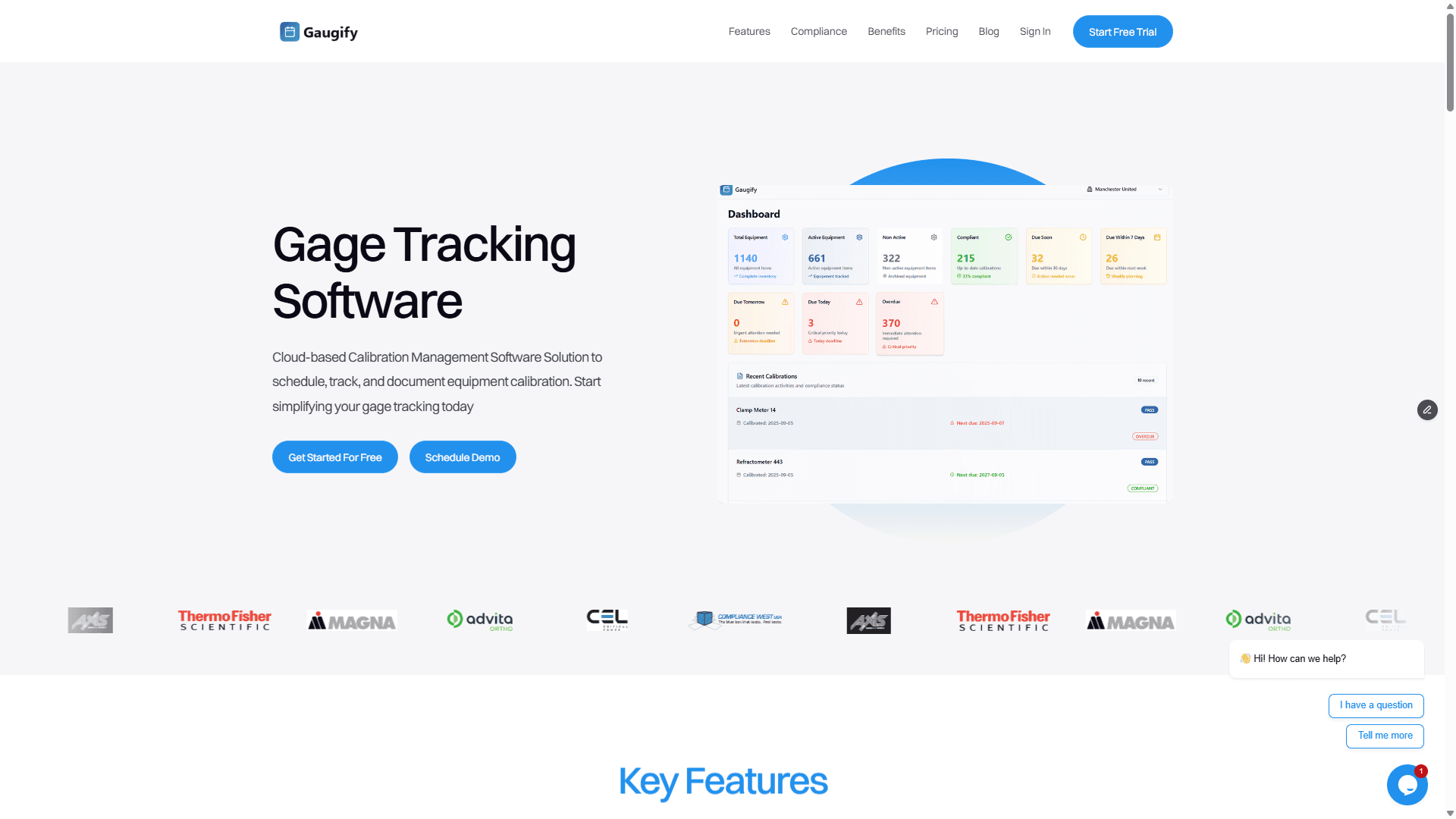
Advanced calibration software provides real-time compliance dashboards that show calibration status across all instruments, locations, and departments. Quality managers can instantly identify risks and take corrective action before problems impact production.
Automated Documentation and Audit Trails
Every action within the system creates an automated audit trail. When auditors ask about calibration traceability, you can generate comprehensive reports in minutes instead of scrambling to locate paper certificates. Compliance features ensure your program meets ISO 9001, AS9100, ISO 17025, and FDA requirements.
Integration with Existing Quality Systems
Modern calibration management integrates seamlessly with ERP systems, quality management software, and production databases. This connectivity ensures calibration information flows automatically to where it's needed, eliminating communication gaps that cause mistakes.
Mobile Access and Real-Time Updates
Technicians can check calibration status, update instrument information, and access certificates from mobile devices on the shop floor. This real-time access prevents the use of expired instruments and ensures information stays current.
Success Story: Transforming Calibration from Liability to Asset
A precision manufacturing company with 300+ instruments across three facilities struggled with calibration mistakes that cost them $200,000+ annually in scrap, rework, and audit findings. After implementing a comprehensive calibration management system:
Eliminated 100% of expired instrument usage within 90 days
Reduced calibration-related non-conformances by 94%
Passed their next ISO 9001 audit with zero calibration findings
Decreased calibration administrative time by 75%
Achieved ROI within 6 months through reduced errors and improved efficiency
The transformation came from addressing root causes systematically rather than simply reacting to problems as they occurred.
Start Preventing Calibration Mistakes Today
The cost of calibration mistakes in manufacturing is too high to ignore, but the solution is within reach. Modern calibration management technology, combined with proper procedures and training, eliminates the human errors and system gaps that create expensive problems.
Don't wait for a failed audit or customer complaint to expose calibration weaknesses in your quality program. Take action now to build a mistake-proof calibration system that protects your bottom line and reputation.
Schedule a demo to see how Gaugify's calibration management software can transform your quality program from reactive to proactive. Our platform has helped hundreds of manufacturers eliminate calibration mistakes and achieve compliance confidence.
Your calibration program should be a competitive advantage, not a constant worry. Start building a bulletproof calibration system today.
Common Calibration Mistakes That Cost Manufacturers Thousands
A precision machining shop in Ohio discovered their $45,000 coordinate measuring machine (CMM) had been operating with an expired calibration certificate for six months. The result? $180,000 in rejected parts, a failed ISO 9001 audit, and the loss of their largest automotive contract. This scenario illustrates how calibration mistakes manufacturing companies make can spiral into devastating financial consequences faster than most quality managers realize.
Every day, manufacturers across industries unknowingly make calibration errors that put their operations at risk. From using uncalibrated micrometers on critical aerospace components to missing calibration due dates on environmental monitoring equipment, these seemingly small oversights create massive vulnerabilities in quality systems.
Why Calibration Mistakes Are More Common Than You Think
Walk through any manufacturing facility, and you'll likely find calibration blind spots hiding in plain sight. A recent industry survey revealed that 73% of manufacturers have experienced at least one significant calibration-related incident in the past two years, yet most quality managers believe their calibration programs are "under control."
The reality is that traditional calibration management methods—spreadsheets, paper certificates, and manual tracking systems—are inherently prone to human error. When your quality technician manages 200+ instruments using an Excel spreadsheet, critical details slip through the cracks:
Due dates get buried in busy schedules
Calibration certificates are misfiled or lost
Instrument usage restrictions aren't properly communicated
Measurement uncertainty calculations contain errors
Traceability chains become incomplete
Consider the complexity of a typical automotive supplier's calibration program: 150 gages ranging from simple pin gages (±0.0002" tolerance) to sophisticated surface roughness testers, each with different calibration intervals, multiple certificates to track, and varying measurement ranges. Managing this manually is like playing calibration roulette.
The Hidden Complexity of Modern Calibration Programs
Today's manufacturing environments are more complex than ever. Multi-site operations mean instruments move between facilities. Lean manufacturing principles demand faster production cycles, putting pressure on calibration schedules. Regulatory requirements continue to tighten, especially in medical device and aerospace manufacturing where FDA 21 CFR Part 820 and AS9100 standards leave no room for calibration gaps.
Meanwhile, the workforce is changing. Experienced quality professionals retire, taking institutional knowledge with them. New technicians need training on calibration procedures, but often receive incomplete handoffs. This knowledge gap creates fertile ground for calibration mistakes manufacturing teams struggle to avoid.
The True Cost of Calibration Mistakes in Manufacturing
When calibration mistakes surface, the financial impact extends far beyond the initial error. Let's examine the real numbers manufacturers face:
Direct Costs: Scrap, Rework, and Recall Expenses
A medical device manufacturer discovered their torque wrench had drifted out of specification, compromising 2,800 implantable devices. Direct costs included:
$340,000 in scrapped inventory
$125,000 in rework labor
$89,000 in expedited raw materials
$156,000 in customer notification and recall logistics
Total direct impact: $710,000 from a single uncalibrated $800 torque wrench.
Audit Failures and Compliance Penalties
Calibration non-conformances consistently rank among the top findings during ISO 9001, AS9100, and FDA inspections. A aerospace manufacturer faced:
$50,000 in consultant fees for corrective action plans
6-month customer audit hold, delaying $2.3M in shipments
Additional surveillance audits costing $25,000 annually
Increased insurance premiums due to compliance issues
Lost Customers and Reputation Damage
Perhaps most damaging are the long-term consequences. When a Tier 1 automotive supplier discovered calibration gaps during a customer audit, they lost preferred supplier status—worth an estimated $8.2 million in annual business. Rebuilding that relationship took three years of flawless performance.
In today's social media environment, quality failures spread quickly. A single recall due to calibration errors can damage brand reputation that took decades to build.
Root Causes: Why Calibration Mistakes Keep Happening
Understanding why calibration mistakes occur is essential for prevention. Based on analysis of hundreds of calibration incidents, five root causes dominate:
1. Manual Tracking Systems and Human Error
Excel spreadsheets and paper-based systems rely entirely on human vigilance. When your quality technician receives 47 emails per day and manages calibration schedules manually, mistakes become inevitable. Common scenarios include:
Transcription errors when entering calibration data
Missed due dates because notifications weren't set
Using instruments beyond their calibrated range
Failing to update calibration status after service
2. Poor Communication Between Shifts and Departments
A gage returned from calibration with a restricted measurement range, but the information never reached the night shift. They unknowingly used the instrument outside its calibrated range for six weeks, affecting 127 production lots. This communication breakdown—typical in 24/7 manufacturing—demonstrates how calibration mistakes cascade when information doesn't flow properly.
3. Inadequate Training and Procedure Documentation
Many facilities lack standardized calibration procedures. New employees learn through informal training, creating inconsistencies. When procedures exist, they're often outdated or difficult to access. The result: well-intentioned technicians making decisions without complete information.
4. Reactive Instead of Proactive Management
Traditional calibration management is reactive. Teams scramble when audits approach or when instruments fail unexpectedly. This firefighting mentality prevents strategic planning and continuous improvement. Modern calibration management software transforms reactive programs into proactive systems that prevent problems before they occur.
5. Disconnected Systems and Data Silos
Calibration data often exists in isolation from other quality systems. When calibration information isn't integrated with production records, quality control results, and corrective action systems, opportunities for cross-verification are lost. This disconnection allows problems to compound before detection.
Comprehensive Solution: Building a Mistake-Proof Calibration System
Eliminating calibration mistakes manufacturing operations face requires systematic changes across people, processes, and technology. Here's a proven framework that transforms calibration programs from liability to competitive advantage:
Step 1: Conduct a Calibration Risk Assessment
Start by mapping every measurement device in your facility and assessing its criticality. Create three categories:
Critical: Instruments affecting product safety or key characteristics (CMMs measuring aerospace tolerances, torque wrenches for medical devices)
Important: Instruments supporting quality control but not directly impacting safety (routine dimensional gages, environmental monitors)
Supporting: Instruments for general use (rulers, basic calipers for non-critical measurements)
This risk-based approach allows you to focus resources where calibration mistakes have the highest potential impact.
Step 2: Implement Automated Tracking and Notifications
Replace manual systems with automated calibration management. Modern solutions should provide:
Automated due date notifications sent to multiple stakeholders
Real-time calibration status visible to all users
Automatic lockout of expired instruments
Digital certificate storage with instant access
Traceability reporting for audits
When implemented properly, automation eliminates the human errors that cause most calibration mistakes. Start a free trial to experience how automated calibration management transforms your quality program.
Step 3: Establish Clear Procedures and Training Programs
Document every aspect of your calibration program:
Instrument identification and tagging procedures
Calibration frequency determination methods
Vendor qualification and selection criteria
Certificate review and approval processes
Non-conforming instrument handling
Create role-based training programs that ensure everyone understands their responsibilities. Test comprehension regularly and update training when procedures change.
Step 4: Integrate Calibration with Quality Management Systems
Break down data silos by connecting calibration information with production records, quality control data, and customer requirements. This integration enables:
Automatic flagging of measurements taken with expired instruments
Root cause analysis when quality issues occur
Trend analysis to optimize calibration intervals
Complete traceability for audit purposes
Step 5: Implement Continuous Monitoring and Improvement
Establish key performance indicators (KPIs) to monitor calibration program effectiveness:
Percentage of instruments calibrated on time
Number of expired instruments found during audits
Calibration-related non-conformances per month
Average time to resolve calibration issues
Cost per calibration event
Review these metrics monthly and investigate trends. Use data to justify calibration interval adjustments and process improvements.
How Modern Calibration Management Prevents Costly Mistakes
Technology has revolutionized how smart manufacturers approach calibration management. Cloud-based calibration software eliminates the root causes of calibration mistakes through several key mechanisms:
Proactive Due Date Management
Instead of relying on technicians to remember due dates, modern systems send automated notifications weeks in advance. Stakeholders receive escalating alerts, and instruments approaching expiration are automatically flagged in the system. This proactive approach ensures calibration never becomes an emergency.
Real-Time Compliance Monitoring
Advanced calibration software provides real-time compliance dashboards that show calibration status across all instruments, locations, and departments. Quality managers can instantly identify risks and take corrective action before problems impact production.
Automated Documentation and Audit Trails
Every action within the system creates an automated audit trail. When auditors ask about calibration traceability, you can generate comprehensive reports in minutes instead of scrambling to locate paper certificates. Compliance features ensure your program meets ISO 9001, AS9100, ISO 17025, and FDA requirements.
Integration with Existing Quality Systems
Modern calibration management integrates seamlessly with ERP systems, quality management software, and production databases. This connectivity ensures calibration information flows automatically to where it's needed, eliminating communication gaps that cause mistakes.
Mobile Access and Real-Time Updates
Technicians can check calibration status, update instrument information, and access certificates from mobile devices on the shop floor. This real-time access prevents the use of expired instruments and ensures information stays current.
Success Story: Transforming Calibration from Liability to Asset
A precision manufacturing company with 300+ instruments across three facilities struggled with calibration mistakes that cost them $200,000+ annually in scrap, rework, and audit findings. After implementing a comprehensive calibration management system:
Eliminated 100% of expired instrument usage within 90 days
Reduced calibration-related non-conformances by 94%
Passed their next ISO 9001 audit with zero calibration findings
Decreased calibration administrative time by 75%
Achieved ROI within 6 months through reduced errors and improved efficiency
The transformation came from addressing root causes systematically rather than simply reacting to problems as they occurred.
Start Preventing Calibration Mistakes Today
The cost of calibration mistakes in manufacturing is too high to ignore, but the solution is within reach. Modern calibration management technology, combined with proper procedures and training, eliminates the human errors and system gaps that create expensive problems.
Don't wait for a failed audit or customer complaint to expose calibration weaknesses in your quality program. Take action now to build a mistake-proof calibration system that protects your bottom line and reputation.
Schedule a demo to see how Gaugify's calibration management software can transform your quality program from reactive to proactive. Our platform has helped hundreds of manufacturers eliminate calibration mistakes and achieve compliance confidence.
Your calibration program should be a competitive advantage, not a constant worry. Start building a bulletproof calibration system today.