
Equipment Lifecycle Management in Calibration Software
Equipment Lifecycle Management in Calibration Software
David Bentley
Quality Assurance Engineer
8 min read
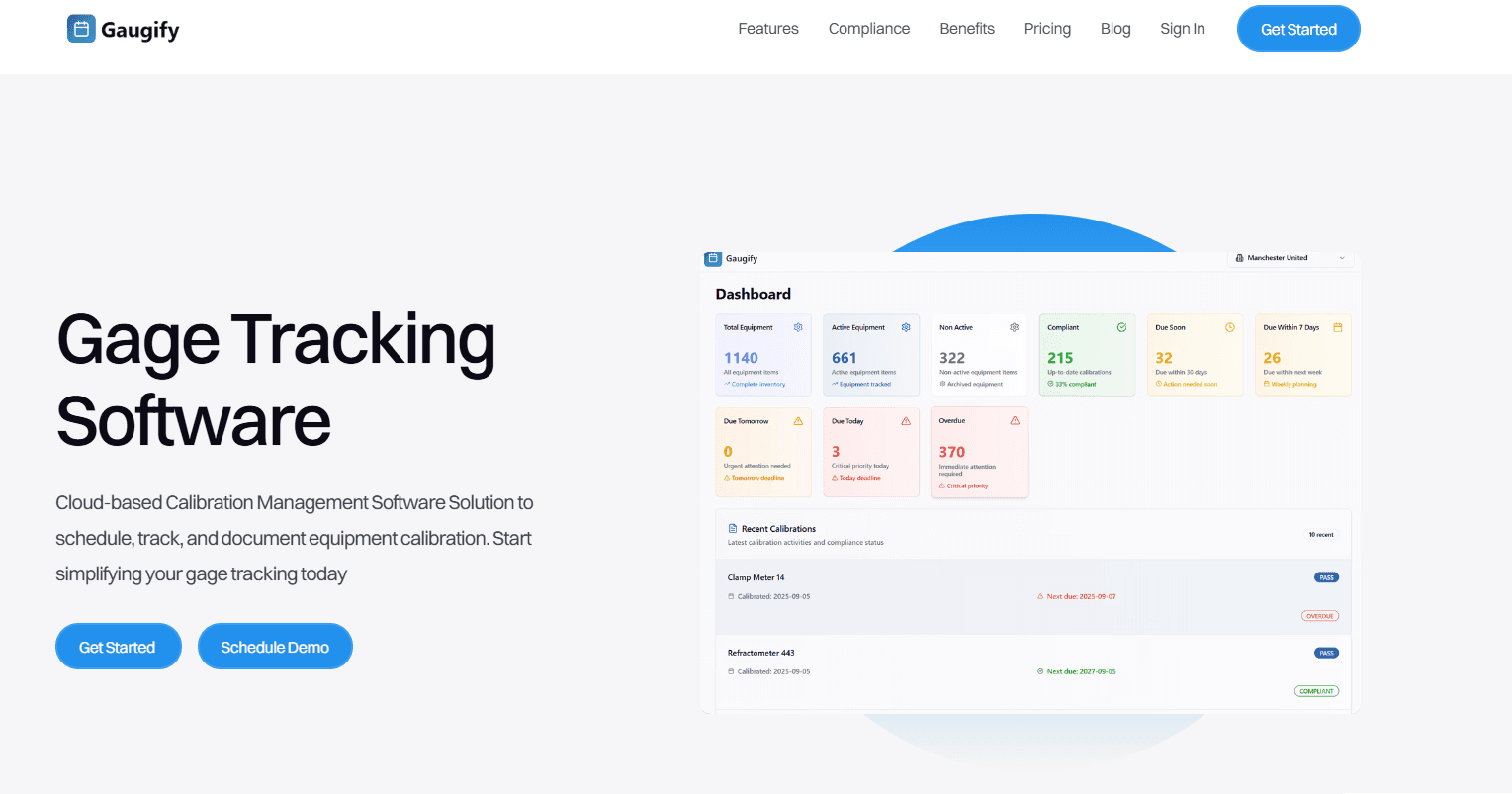
Equipment Lifecycle Management in Calibration Software
Modern calibration programs require more than just tracking due dates and certificates. Equipment lifecycle management calibration features provide complete visibility into your measurement equipment from procurement to retirement, enabling quality managers to make data-driven decisions about their metrology investments. This comprehensive approach transforms how organizations track, maintain, and optimize their calibration programs while ensuring continuous compliance with quality standards.
When your digital calipers show increasing measurement uncertainty over successive calibrations, or your pressure gauges consistently fail calibration after three years, these patterns reveal critical insights about equipment performance and replacement timing. Equipment lifecycle management in calibration software captures these trends automatically, providing the analytics needed to optimize your metrology program.
The Hidden Costs of Limited Equipment Lifecycle Management Calibration Tracking
Without comprehensive equipment lifecycle management, calibration programs operate in the dark about their true costs and performance. Consider a typical manufacturing facility with 500+ measurement devices spread across multiple departments. Quality managers face several critical challenges:
Reactive Equipment Replacement: A coordinate measuring machine (CMM) that costs $150,000 suddenly fails calibration after eight years. Without historical performance data, the quality manager has no advance warning and must make an emergency replacement decision, potentially disrupting production schedules and budget planning.
Hidden Cost Accumulation: A set of digital micrometers purchased five years ago for $2,500 now costs $1,200 annually in calibration fees due to increasing adjustment requirements. The cumulative calibration costs have exceeded the original purchase price, but this trend remains invisible without lifecycle tracking.
Compliance Gaps: During an ISO 9001 audit, an auditor questions the rationale for equipment replacement decisions. Without documented lifecycle data showing performance degradation trends, the organization struggles to demonstrate systematic decision-making processes.
Inefficient Capital Planning: Budget planning becomes guesswork when equipment replacement needs aren't predictable. A automotive supplier discovers they need to replace twelve torque wrenches simultaneously, creating an unexpected $15,000 budget impact that could have been spread over multiple years with proper lifecycle planning.
How Equipment Lifecycle Management Works in Modern Calibration Software
Effective equipment lifecycle management calibration features integrate seamlessly into daily calibration workflows while building comprehensive historical databases. Here's how this functionality transforms calibration management:
Automated Data Capture Throughout Equipment Lifespan
Every calibration event generates valuable lifecycle data points. When a technician calibrates a digital multimeter, the system automatically records:
Measurement uncertainty values across all ranges
Required adjustments and their magnitude
Calibration duration and complexity scores
Environmental conditions during calibration
Technician observations and condition assessments
This data accumulates over years, creating detailed performance profiles for individual instruments and equipment categories. A Fluke 87V multimeter purchased in 2019 might show stable performance for the first three years, then gradual drift increases in the voltage ranges, indicating potential component aging.
Predictive Analytics and Trend Analysis
Advanced calibration software analyzes historical patterns to predict future performance and maintenance needs. The system identifies when a pressure gauge's calibration intervals could be extended from 12 to 18 months based on consistent performance, or when a torque wrench shows degradation patterns suggesting replacement within the next year.
Cost Trend Tracking: The software calculates total cost of ownership (TCO) for each instrument, combining purchase price, calibration costs, repair expenses, and downtime impacts. A temperature probe costing $350 initially might accumulate $1,200 in calibration and repair costs over five years, triggering replacement recommendations.
Ready to see how comprehensive lifecycle tracking can optimize your calibration program? Start your free trial of Gaugify and explore advanced equipment management features designed for modern quality programs.
Intelligent Replacement Recommendations
Equipment lifecycle management calibration systems use multiple data points to generate replacement recommendations:
Performance Degradation: Measurement uncertainty increases beyond acceptable limits
Economic Analysis: Annual maintenance costs exceed depreciated equipment value
Reliability Metrics: Failure rates or out-of-tolerance conditions increase significantly
Technology Obsolescence: Manufacturer discontinuation or calibration service availability
For example, a set of dial indicators showing consistent performance for six years might trigger replacement recommendations when annual calibration costs reach 40% of replacement cost, even before performance degrades significantly.
Quantifiable Benefits and ROI of Equipment Lifecycle Management
Organizations implementing comprehensive equipment lifecycle management typically realize substantial returns through optimized decision-making and reduced operational costs.
Cost Optimization Through Data-Driven Decisions
A precision machining company with 200+ measurement instruments reduced annual calibration costs by 23% through lifecycle-based interval optimization. By extending calibration intervals for stable instruments and shortening intervals for problematic equipment, they maintained measurement quality while reducing unnecessary calibration frequency.
Preventive Replacement Savings: Planned equipment replacement typically costs 30-50% less than emergency replacement due to failure. A pharmaceutical manufacturer avoided $45,000 in emergency procurement costs by replacing aging analytical balances based on lifecycle predictions rather than waiting for calibration failures.
Improved Budget Planning and Capital Allocation
Equipment lifecycle management enables accurate multi-year budget forecasting. Instead of unexpected capital expenses, organizations can plan equipment replacement over 3-5 year cycles, often securing better pricing through planned procurement.
A medical device manufacturer uses lifecycle data to maintain a rolling equipment replacement budget, spreading $200,000 in annual measurement equipment investments across predictable quarterly purchases rather than lumpy emergency expenditures.
Enhanced Operational Efficiency
Lifecycle management reduces administrative overhead by automating many manual tracking tasks. Quality managers spend less time researching equipment history and more time on strategic calibration program improvements.
Automated vendor performance analysis based on equipment reliability data
Streamlined audit preparation with complete equipment documentation
Reduced calibration scheduling conflicts through predictive planning
Improved technician efficiency with equipment-specific calibration histories
Supporting Compliance Through Comprehensive Equipment Lifecycle Management Calibration
Regulatory standards increasingly require documented equipment management processes that demonstrate systematic decision-making and continuous improvement. Equipment lifecycle management provides the foundation for robust compliance programs.
ISO 9001 Quality Management System Requirements
ISO 9001:2015 requires organizations to determine resources needed for quality management and demonstrate evidence-based decision making. Equipment lifecycle management directly supports these requirements by providing:
Documented equipment performance monitoring processes
Objective criteria for equipment replacement decisions
Risk-based thinking applied to measurement system reliability
Continuous improvement evidence through lifecycle optimization
During audits, organizations can demonstrate systematic approaches to equipment management rather than ad-hoc decision making. Learn how Gaugify supports comprehensive compliance management across multiple standards and regulations.
ISO 17025 Laboratory Accreditation Support
ISO 17025 specifically addresses equipment selection, calibration, and maintenance throughout the equipment lifecycle. Advanced calibration software supports these requirements through:
Equipment Verification Programs: Automated tracking of intermediate checks and verification procedures between calibrations, ensuring continuous equipment monitoring as required by ISO 17025.
Measurement Uncertainty Management: Historical tracking of measurement uncertainty values enables laboratories to demonstrate control over measurement processes and identify equipment contributing to uncertainty budgets.
Equipment Records Management: Complete documentation of equipment history, including calibration certificates, maintenance records, and performance trends, supporting ISO 17025 record-keeping requirements.
FDA and Pharmaceutical Industry Compliance
FDA 21 CFR Part 211 requires pharmaceutical manufacturers to maintain equipment in calibrated status and document equipment performance. Equipment lifecycle management supports these requirements through:
Complete audit trails for all equipment-related activities
Validation support for equipment qualification protocols
Change control documentation for equipment modifications
Risk assessment integration for equipment criticality analysis
Pharmaceutical companies use lifecycle data to support equipment validation activities, demonstrating equipment suitability for intended use through historical performance analysis.
Comparison: Modern Software vs. Traditional Equipment Tracking Methods
Most organizations begin equipment management using spreadsheets, filing cabinets, or basic database systems. While these approaches capture basic information, they lack the analytical capabilities needed for effective lifecycle management.
Traditional Spreadsheet-Based Tracking
Excel-based equipment logs typically include purchase dates, calibration due dates, and basic cost information. However, spreadsheets cannot:
Analyze performance trends across multiple calibration cycles
Calculate total cost of ownership including hidden costs
Generate predictive recommendations for replacement timing
Integrate calibration results with lifecycle analysis
Provide real-time dashboard visibility for management decisions
A quality manager using spreadsheets might track that a torque wrench was purchased in 2019 and calibrated six times, but cannot easily analyze whether calibration costs are increasing or performance is degrading over time.
Basic Calibration Software Limitations
Many calibration software solutions focus primarily on scheduling and certificate management without comprehensive lifecycle functionality. These systems track calibration events but miss opportunities for optimization through:
Limited historical analysis capabilities
No integration between calibration results and cost tracking
Lack of predictive analytics for replacement planning
Minimal reporting for lifecycle decision support
Advanced Equipment Lifecycle Management Calibration Features
Modern calibration management platforms integrate lifecycle management throughout the software architecture. Gaugify's comprehensive feature set includes advanced lifecycle management capabilities that transform how organizations manage their measurement equipment investments.
Key advantages of integrated lifecycle management include:
Unified Data Model: All calibration, maintenance, and cost data flows into lifecycle analysis automatically
Advanced Analytics: Machine learning algorithms identify patterns and trends across equipment populations
Predictive Capabilities: Statistical models forecast equipment replacement needs and optimal timing
Integration Support: APIs connect with ERP, CMMS, and procurement systems for complete lifecycle visibility
Implementation Strategy for Equipment Lifecycle Management
Successfully implementing equipment lifecycle management requires systematic planning and phased deployment. Organizations achieve best results by starting with high-value equipment and expanding coverage over time.
Phase 1: Critical Equipment Focus
Begin lifecycle management with equipment that has the highest impact on quality, safety, or cost. This might include:
Coordinate measuring machines and other high-value precision instruments
Safety-critical measurement equipment like pressure gauges and flow meters
Equipment with high calibration frequency or costs
Instruments required for regulatory compliance or customer specifications
Phase 2: Data Integration and Analysis Setup
Configure the calibration software to capture comprehensive lifecycle data during routine calibration activities. This includes:
Standardizing calibration procedures to ensure consistent data capture
Training calibration technicians on lifecycle data importance
Establishing cost allocation methods for accurate TCO calculations
Setting up automated reporting and dashboard monitoring
Phase 3: Expansion and Optimization
After establishing lifecycle management for critical equipment, expand coverage to include all measurement instruments. Use accumulated data to optimize calibration intervals, vendor selection, and replacement timing across the entire equipment population.
Transform Your Calibration Program with Advanced Lifecycle Management
Equipment lifecycle management calibration features represent a fundamental shift from reactive maintenance to proactive optimization. By capturing and analyzing comprehensive equipment data throughout the entire lifecycle, organizations gain unprecedented visibility into their measurement system performance and costs.
The benefits extend far beyond cost savings, though financial returns alone often justify implementation. Improved compliance readiness, enhanced decision-making capability, and reduced administrative overhead create sustainable competitive advantages for organizations embracing comprehensive lifecycle management.
Modern calibration software platforms integrate lifecycle management seamlessly into daily workflows, ensuring data capture happens automatically without additional administrative burden. This integration enables small quality teams to achieve enterprise-level equipment management capabilities previously available only to large organizations with dedicated resources.
Ready to experience the power of comprehensive equipment lifecycle management? Start your free trial of Gaugify today and discover how advanced calibration management software can transform your quality program. Explore features designed specifically for modern calibration challenges, from ISO 17025 compliance to predictive equipment analytics.
Take the first step toward data-driven calibration management. Schedule a personalized demo to see how Gaugify's equipment lifecycle management features can optimize your specific calibration program requirements.
Equipment Lifecycle Management in Calibration Software
Modern calibration programs require more than just tracking due dates and certificates. Equipment lifecycle management calibration features provide complete visibility into your measurement equipment from procurement to retirement, enabling quality managers to make data-driven decisions about their metrology investments. This comprehensive approach transforms how organizations track, maintain, and optimize their calibration programs while ensuring continuous compliance with quality standards.
When your digital calipers show increasing measurement uncertainty over successive calibrations, or your pressure gauges consistently fail calibration after three years, these patterns reveal critical insights about equipment performance and replacement timing. Equipment lifecycle management in calibration software captures these trends automatically, providing the analytics needed to optimize your metrology program.
The Hidden Costs of Limited Equipment Lifecycle Management Calibration Tracking
Without comprehensive equipment lifecycle management, calibration programs operate in the dark about their true costs and performance. Consider a typical manufacturing facility with 500+ measurement devices spread across multiple departments. Quality managers face several critical challenges:
Reactive Equipment Replacement: A coordinate measuring machine (CMM) that costs $150,000 suddenly fails calibration after eight years. Without historical performance data, the quality manager has no advance warning and must make an emergency replacement decision, potentially disrupting production schedules and budget planning.
Hidden Cost Accumulation: A set of digital micrometers purchased five years ago for $2,500 now costs $1,200 annually in calibration fees due to increasing adjustment requirements. The cumulative calibration costs have exceeded the original purchase price, but this trend remains invisible without lifecycle tracking.
Compliance Gaps: During an ISO 9001 audit, an auditor questions the rationale for equipment replacement decisions. Without documented lifecycle data showing performance degradation trends, the organization struggles to demonstrate systematic decision-making processes.
Inefficient Capital Planning: Budget planning becomes guesswork when equipment replacement needs aren't predictable. A automotive supplier discovers they need to replace twelve torque wrenches simultaneously, creating an unexpected $15,000 budget impact that could have been spread over multiple years with proper lifecycle planning.
How Equipment Lifecycle Management Works in Modern Calibration Software
Effective equipment lifecycle management calibration features integrate seamlessly into daily calibration workflows while building comprehensive historical databases. Here's how this functionality transforms calibration management:
Automated Data Capture Throughout Equipment Lifespan
Every calibration event generates valuable lifecycle data points. When a technician calibrates a digital multimeter, the system automatically records:
Measurement uncertainty values across all ranges
Required adjustments and their magnitude
Calibration duration and complexity scores
Environmental conditions during calibration
Technician observations and condition assessments
This data accumulates over years, creating detailed performance profiles for individual instruments and equipment categories. A Fluke 87V multimeter purchased in 2019 might show stable performance for the first three years, then gradual drift increases in the voltage ranges, indicating potential component aging.
Predictive Analytics and Trend Analysis
Advanced calibration software analyzes historical patterns to predict future performance and maintenance needs. The system identifies when a pressure gauge's calibration intervals could be extended from 12 to 18 months based on consistent performance, or when a torque wrench shows degradation patterns suggesting replacement within the next year.
Cost Trend Tracking: The software calculates total cost of ownership (TCO) for each instrument, combining purchase price, calibration costs, repair expenses, and downtime impacts. A temperature probe costing $350 initially might accumulate $1,200 in calibration and repair costs over five years, triggering replacement recommendations.
Ready to see how comprehensive lifecycle tracking can optimize your calibration program? Start your free trial of Gaugify and explore advanced equipment management features designed for modern quality programs.
Intelligent Replacement Recommendations
Equipment lifecycle management calibration systems use multiple data points to generate replacement recommendations:
Performance Degradation: Measurement uncertainty increases beyond acceptable limits
Economic Analysis: Annual maintenance costs exceed depreciated equipment value
Reliability Metrics: Failure rates or out-of-tolerance conditions increase significantly
Technology Obsolescence: Manufacturer discontinuation or calibration service availability
For example, a set of dial indicators showing consistent performance for six years might trigger replacement recommendations when annual calibration costs reach 40% of replacement cost, even before performance degrades significantly.
Quantifiable Benefits and ROI of Equipment Lifecycle Management
Organizations implementing comprehensive equipment lifecycle management typically realize substantial returns through optimized decision-making and reduced operational costs.
Cost Optimization Through Data-Driven Decisions
A precision machining company with 200+ measurement instruments reduced annual calibration costs by 23% through lifecycle-based interval optimization. By extending calibration intervals for stable instruments and shortening intervals for problematic equipment, they maintained measurement quality while reducing unnecessary calibration frequency.
Preventive Replacement Savings: Planned equipment replacement typically costs 30-50% less than emergency replacement due to failure. A pharmaceutical manufacturer avoided $45,000 in emergency procurement costs by replacing aging analytical balances based on lifecycle predictions rather than waiting for calibration failures.
Improved Budget Planning and Capital Allocation
Equipment lifecycle management enables accurate multi-year budget forecasting. Instead of unexpected capital expenses, organizations can plan equipment replacement over 3-5 year cycles, often securing better pricing through planned procurement.
A medical device manufacturer uses lifecycle data to maintain a rolling equipment replacement budget, spreading $200,000 in annual measurement equipment investments across predictable quarterly purchases rather than lumpy emergency expenditures.
Enhanced Operational Efficiency
Lifecycle management reduces administrative overhead by automating many manual tracking tasks. Quality managers spend less time researching equipment history and more time on strategic calibration program improvements.
Automated vendor performance analysis based on equipment reliability data
Streamlined audit preparation with complete equipment documentation
Reduced calibration scheduling conflicts through predictive planning
Improved technician efficiency with equipment-specific calibration histories
Supporting Compliance Through Comprehensive Equipment Lifecycle Management Calibration
Regulatory standards increasingly require documented equipment management processes that demonstrate systematic decision-making and continuous improvement. Equipment lifecycle management provides the foundation for robust compliance programs.
ISO 9001 Quality Management System Requirements
ISO 9001:2015 requires organizations to determine resources needed for quality management and demonstrate evidence-based decision making. Equipment lifecycle management directly supports these requirements by providing:
Documented equipment performance monitoring processes
Objective criteria for equipment replacement decisions
Risk-based thinking applied to measurement system reliability
Continuous improvement evidence through lifecycle optimization
During audits, organizations can demonstrate systematic approaches to equipment management rather than ad-hoc decision making. Learn how Gaugify supports comprehensive compliance management across multiple standards and regulations.
ISO 17025 Laboratory Accreditation Support
ISO 17025 specifically addresses equipment selection, calibration, and maintenance throughout the equipment lifecycle. Advanced calibration software supports these requirements through:
Equipment Verification Programs: Automated tracking of intermediate checks and verification procedures between calibrations, ensuring continuous equipment monitoring as required by ISO 17025.
Measurement Uncertainty Management: Historical tracking of measurement uncertainty values enables laboratories to demonstrate control over measurement processes and identify equipment contributing to uncertainty budgets.
Equipment Records Management: Complete documentation of equipment history, including calibration certificates, maintenance records, and performance trends, supporting ISO 17025 record-keeping requirements.
FDA and Pharmaceutical Industry Compliance
FDA 21 CFR Part 211 requires pharmaceutical manufacturers to maintain equipment in calibrated status and document equipment performance. Equipment lifecycle management supports these requirements through:
Complete audit trails for all equipment-related activities
Validation support for equipment qualification protocols
Change control documentation for equipment modifications
Risk assessment integration for equipment criticality analysis
Pharmaceutical companies use lifecycle data to support equipment validation activities, demonstrating equipment suitability for intended use through historical performance analysis.
Comparison: Modern Software vs. Traditional Equipment Tracking Methods
Most organizations begin equipment management using spreadsheets, filing cabinets, or basic database systems. While these approaches capture basic information, they lack the analytical capabilities needed for effective lifecycle management.
Traditional Spreadsheet-Based Tracking
Excel-based equipment logs typically include purchase dates, calibration due dates, and basic cost information. However, spreadsheets cannot:
Analyze performance trends across multiple calibration cycles
Calculate total cost of ownership including hidden costs
Generate predictive recommendations for replacement timing
Integrate calibration results with lifecycle analysis
Provide real-time dashboard visibility for management decisions
A quality manager using spreadsheets might track that a torque wrench was purchased in 2019 and calibrated six times, but cannot easily analyze whether calibration costs are increasing or performance is degrading over time.
Basic Calibration Software Limitations
Many calibration software solutions focus primarily on scheduling and certificate management without comprehensive lifecycle functionality. These systems track calibration events but miss opportunities for optimization through:
Limited historical analysis capabilities
No integration between calibration results and cost tracking
Lack of predictive analytics for replacement planning
Minimal reporting for lifecycle decision support
Advanced Equipment Lifecycle Management Calibration Features
Modern calibration management platforms integrate lifecycle management throughout the software architecture. Gaugify's comprehensive feature set includes advanced lifecycle management capabilities that transform how organizations manage their measurement equipment investments.
Key advantages of integrated lifecycle management include:
Unified Data Model: All calibration, maintenance, and cost data flows into lifecycle analysis automatically
Advanced Analytics: Machine learning algorithms identify patterns and trends across equipment populations
Predictive Capabilities: Statistical models forecast equipment replacement needs and optimal timing
Integration Support: APIs connect with ERP, CMMS, and procurement systems for complete lifecycle visibility
Implementation Strategy for Equipment Lifecycle Management
Successfully implementing equipment lifecycle management requires systematic planning and phased deployment. Organizations achieve best results by starting with high-value equipment and expanding coverage over time.
Phase 1: Critical Equipment Focus
Begin lifecycle management with equipment that has the highest impact on quality, safety, or cost. This might include:
Coordinate measuring machines and other high-value precision instruments
Safety-critical measurement equipment like pressure gauges and flow meters
Equipment with high calibration frequency or costs
Instruments required for regulatory compliance or customer specifications
Phase 2: Data Integration and Analysis Setup
Configure the calibration software to capture comprehensive lifecycle data during routine calibration activities. This includes:
Standardizing calibration procedures to ensure consistent data capture
Training calibration technicians on lifecycle data importance
Establishing cost allocation methods for accurate TCO calculations
Setting up automated reporting and dashboard monitoring
Phase 3: Expansion and Optimization
After establishing lifecycle management for critical equipment, expand coverage to include all measurement instruments. Use accumulated data to optimize calibration intervals, vendor selection, and replacement timing across the entire equipment population.
Transform Your Calibration Program with Advanced Lifecycle Management
Equipment lifecycle management calibration features represent a fundamental shift from reactive maintenance to proactive optimization. By capturing and analyzing comprehensive equipment data throughout the entire lifecycle, organizations gain unprecedented visibility into their measurement system performance and costs.
The benefits extend far beyond cost savings, though financial returns alone often justify implementation. Improved compliance readiness, enhanced decision-making capability, and reduced administrative overhead create sustainable competitive advantages for organizations embracing comprehensive lifecycle management.
Modern calibration software platforms integrate lifecycle management seamlessly into daily workflows, ensuring data capture happens automatically without additional administrative burden. This integration enables small quality teams to achieve enterprise-level equipment management capabilities previously available only to large organizations with dedicated resources.
Ready to experience the power of comprehensive equipment lifecycle management? Start your free trial of Gaugify today and discover how advanced calibration management software can transform your quality program. Explore features designed specifically for modern calibration challenges, from ISO 17025 compliance to predictive equipment analytics.
Take the first step toward data-driven calibration management. Schedule a personalized demo to see how Gaugify's equipment lifecycle management features can optimize your specific calibration program requirements.