
Gaugify vs GageList: Feature-by-Feature Breakdown
Gaugify vs GageList: Feature-by-Feature Breakdown
David Bentley
Quality Assurance Engineer
8 min read
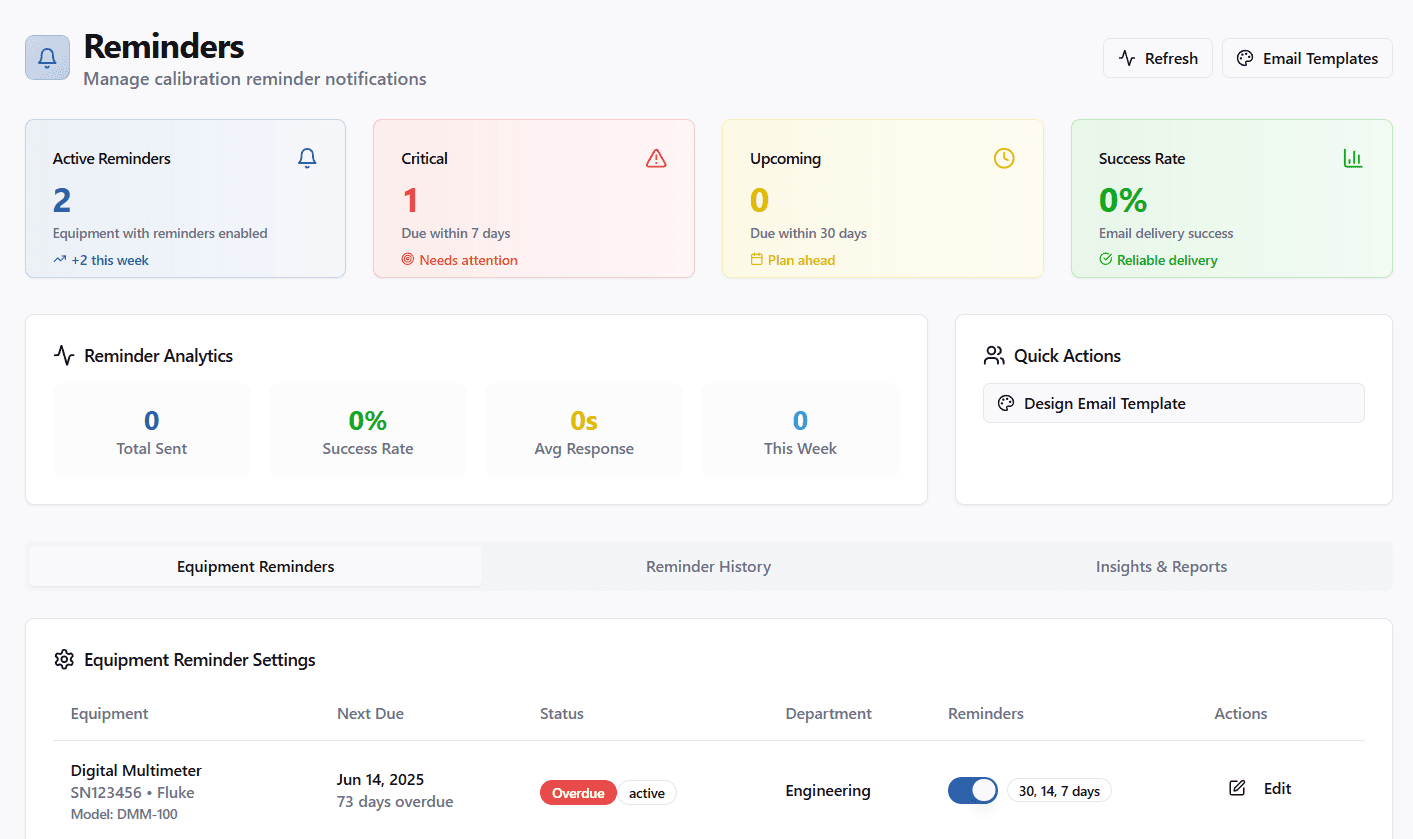
Gaugify vs GageList: Feature-by-Feature Breakdown
When evaluating calibration management software, the Gaugify vs GageList comparison comes up frequently among quality managers and lab technicians. Both solutions aim to streamline gage calibration workflows, but they take fundamentally different approaches to solving the same problem. GageList has been serving the calibration community as a desktop-based solution, while Gaugify represents the modern, cloud-first approach to calibration management.
This comprehensive breakdown examines both platforms across key features, usability, pricing, and deployment options to help you make an informed decision for your calibration program. Whether you're managing 50 micrometers or 5,000 precision gages across multiple facilities, understanding these differences is crucial for your quality management success.
Company Background and Market Position
GageList emerged from the traditional calibration software market, focusing primarily on Windows-based desktop applications for gage management. The platform has built a following among manufacturers who prefer on-premise solutions and are comfortable with desktop software interfaces reminiscent of older Windows applications.
Gaugify, by contrast, was built from the ground up as a modern, cloud-native calibration management platform. Founded with the principle that calibration software should be as accessible and intuitive as consumer web applications, Gaugify targets quality teams who want powerful functionality without the complexity of legacy systems.
The fundamental difference in philosophy becomes apparent immediately: GageList focuses on replicating familiar desktop experiences, while Gaugify prioritizes modern user experience and accessibility across devices.
Calibration Scheduling and Work Order Management
Both platforms handle basic calibration scheduling, but their approaches differ significantly. GageList provides traditional calendar-based scheduling with work order generation, suitable for shops that plan calibrations weeks or months in advance.
Gaugify's scheduling system offers more flexibility with intelligent due date calculations, automatic work order creation, and real-time priority adjustments. For example, when a Mitutoyo digital caliper with ±0.001" tolerance requirements approaches its due date, Gaugify automatically escalates its priority and can trigger notifications to multiple team members. The system also handles complex scenarios like coordinating calibrations for gages used in statistical process control where downtime must be minimized.
The Gaugify vs GageList scheduling comparison becomes particularly relevant for facilities running lean operations where calibration delays can impact production schedules.
Certificate Generation and Customization
Certificate generation represents a critical differentiator between these platforms. GageList offers basic certificate templates with limited customization options, primarily focused on meeting minimum compliance requirements.
Gaugify provides advanced certificate customization with professional templates, automated data population, and built-in uncertainty calculations. When calibrating precision instruments like Starrett micrometers or Fluke multimeters, Gaugify automatically calculates and displays measurement uncertainty according to ISO/IEC 17025 requirements. This eliminates the manual calculations that often lead to errors in certificate generation.
The platform also supports multiple certificate formats for different customer requirements - essential for contract manufacturers serving aerospace, medical device, or automotive industries with varying documentation standards.
Measurement Uncertainty Calculations
This is where the platforms diverge most significantly. GageList requires manual uncertainty calculations or external spreadsheets, placing the burden on technicians to perform complex mathematical calculations for each calibration.
Gaugify's built-in uncertainty calculations automatically compute measurement uncertainty based on equipment specifications, environmental conditions, and calibration procedures. For instance, when calibrating a digital torque wrench with a ±2% accuracy specification, the system factors in the reference standard's uncertainty, environmental conditions, and repeatability measurements to generate compliant uncertainty statements.
This automation not only saves time but significantly reduces the risk of calculation errors that can lead to audit findings or customer complaints.
Audit Trail and Compliance Features
Both platforms recognize the importance of audit trails, but their implementation approaches reflect their underlying architectures. GageList maintains basic change logs within its database structure, providing timestamp and user information for modifications.
Gaugify implements comprehensive audit trails with immutable records, user authentication logs, and detailed change tracking. Every action - from updating gage specifications to modifying calibration procedures - creates permanent audit entries with user identification, timestamps, and change descriptions. This level of detail proves invaluable during ISO 17025 audits or customer quality assessments.
The platform also provides audit preparation reports that compile all activities for specific time periods, making external audits significantly less stressful for quality managers.
Crib and Inventory Management
Inventory management capabilities show another clear distinction in the Gaugify vs GageList comparison. GageList offers basic inventory tracking with check-in/check-out functionality suitable for simple tool crib operations.
Gaugify extends inventory management with location tracking, usage analytics, and automated alerts. The system can track a precision gage block set across multiple work centers, monitor usage patterns to optimize calibration frequencies, and automatically flag instruments that haven't been used within specified periods. This intelligence helps quality managers make data-driven decisions about inventory optimization and calibration scheduling.
Ready to experience modern calibration management? Start your free trial and see how Gaugify simplifies your daily workflows while improving compliance.
Mobile Access and Remote Capabilities
The mobile experience represents perhaps the starkest difference between these platforms. GageList, as a desktop application, provides no native mobile access. Technicians must return to workstations to update records or check calibration requirements.
Gaugify's cloud-native architecture enables full mobile functionality through web browsers on tablets and smartphones. Calibration technicians can access gage information, update calibration status, and even generate certificates directly from the calibration bench using mobile devices. This mobility proves particularly valuable for facilities with distributed work areas or field calibration requirements.
Reporting and Analytics
Standard reporting exists in both platforms, but their analytical capabilities differ substantially. GageList provides basic reports focusing on calibration status, due dates, and historical records - adequate for fundamental compliance requirements.
Gaugify offers advanced analytics including calibration performance trending, cost analysis, and predictive insights. Quality managers can analyze patterns like recurring out-of-tolerance conditions for specific gage types, identify optimization opportunities in calibration frequencies, and generate executive dashboards showing key performance indicators.
For example, the system might reveal that Fowler height gages consistently pass calibration with significant margin, suggesting extended calibration intervals could maintain quality while reducing costs.
User Interface and Experience Comparison
The user interface comparison reveals fundamental philosophical differences. GageList maintains a traditional Windows application appearance with menu bars, dialog boxes, and multiple windows - familiar to users comfortable with older software paradigms.
Gaugify prioritizes modern web application design with intuitive navigation, responsive layouts, and streamlined workflows. New users typically require minimal training to become productive, while the interface scales effectively from smartphone screens to large desktop monitors.
This usability difference becomes crucial when training new technicians or when experienced staff members need to access the system infrequently.
Pricing and Total Cost of Ownership
Pricing structures highlight another significant difference in the Gaugify vs GageList evaluation. GageList typically involves substantial upfront licensing costs plus annual maintenance fees, creating significant initial capital requirements.
Gaugify's transparent SaaS pricing eliminates upfront costs with predictable monthly subscriptions based on user count and features needed. This approach provides better cash flow management and allows organizations to scale usage based on actual requirements.
When calculating total cost of ownership, consider that Gaugify includes automatic updates, cloud hosting, security management, and backup services - costs that must be managed separately with desktop solutions.
Deployment Options and IT Requirements
Deployment represents a fundamental architectural difference. GageList requires local installation, database management, backup procedures, and ongoing IT maintenance. Organizations must allocate internal resources for system administration, security updates, and hardware management.
Gaugify's cloud-native architecture eliminates these IT burdens. The platform provides enterprise-grade security, automatic backups, and continuous updates without requiring internal IT resources. This difference proves particularly valuable for smaller organizations lacking dedicated IT staff.
Customer Support and Training
Both platforms offer customer support, but their approaches reflect their target markets. GageList provides traditional support channels with phone and email assistance during business hours.
Gaugify emphasizes comprehensive onboarding with interactive training, extensive documentation, and responsive support. The platform's intuitive design reduces support requirements, while cloud-based architecture enables remote assistance when needed.
Integration Capabilities
Modern calibration programs often require integration with ERP systems, quality management platforms, or specialized calibration equipment. GageList offers limited integration options, typically requiring custom development for connections with other systems.
Gaugify provides API access and pre-built integrations with common business systems. The platform can sync with inventory management systems, export data to quality dashboards, and interface with automated calibration equipment - capabilities essential for Industry 4.0 initiatives.
Who Each Product Serves Best
GageList suits organizations comfortable with desktop software, preferring on-premise data control, and having dedicated IT resources for system management. It works well for facilities with stable calibration processes and minimal need for mobile access or advanced analytics.
Gaugify excels for quality teams wanting modern, accessible calibration management without IT overhead. It's particularly valuable for organizations with multiple locations, mobile technicians, or complex uncertainty calculation requirements. The platform scales effectively from small job shops to large manufacturing enterprises.
Companies prioritizing ease of use, built-in compliance features, and predictable costs typically find Gaugify more aligned with their operational goals.
The Modern Choice for Calibration Management
While both platforms address calibration management needs, they represent different eras of software development. GageList serves organizations comfortable with traditional desktop applications and willing to manage associated IT requirements.
Gaugify represents the future of calibration management - cloud-native, user-friendly, and built for modern quality operations. Its combination of powerful features, intuitive design, and transparent pricing makes it the logical choice for organizations wanting to modernize their calibration programs without complexity.
The Gaugify vs GageList decision ultimately comes down to whether you want to maintain legacy approaches or embrace modern calibration management that grows with your organization.
Experience the difference modern calibration management makes. Try Gaugify free for 30 days and discover why quality teams are making the switch to cloud-based calibration management. No credit card required, full access to all features, and expert support to help you get started.
Gaugify vs GageList: Feature-by-Feature Breakdown
When evaluating calibration management software, the Gaugify vs GageList comparison comes up frequently among quality managers and lab technicians. Both solutions aim to streamline gage calibration workflows, but they take fundamentally different approaches to solving the same problem. GageList has been serving the calibration community as a desktop-based solution, while Gaugify represents the modern, cloud-first approach to calibration management.
This comprehensive breakdown examines both platforms across key features, usability, pricing, and deployment options to help you make an informed decision for your calibration program. Whether you're managing 50 micrometers or 5,000 precision gages across multiple facilities, understanding these differences is crucial for your quality management success.
Company Background and Market Position
GageList emerged from the traditional calibration software market, focusing primarily on Windows-based desktop applications for gage management. The platform has built a following among manufacturers who prefer on-premise solutions and are comfortable with desktop software interfaces reminiscent of older Windows applications.
Gaugify, by contrast, was built from the ground up as a modern, cloud-native calibration management platform. Founded with the principle that calibration software should be as accessible and intuitive as consumer web applications, Gaugify targets quality teams who want powerful functionality without the complexity of legacy systems.
The fundamental difference in philosophy becomes apparent immediately: GageList focuses on replicating familiar desktop experiences, while Gaugify prioritizes modern user experience and accessibility across devices.
Calibration Scheduling and Work Order Management
Both platforms handle basic calibration scheduling, but their approaches differ significantly. GageList provides traditional calendar-based scheduling with work order generation, suitable for shops that plan calibrations weeks or months in advance.
Gaugify's scheduling system offers more flexibility with intelligent due date calculations, automatic work order creation, and real-time priority adjustments. For example, when a Mitutoyo digital caliper with ±0.001" tolerance requirements approaches its due date, Gaugify automatically escalates its priority and can trigger notifications to multiple team members. The system also handles complex scenarios like coordinating calibrations for gages used in statistical process control where downtime must be minimized.
The Gaugify vs GageList scheduling comparison becomes particularly relevant for facilities running lean operations where calibration delays can impact production schedules.
Certificate Generation and Customization
Certificate generation represents a critical differentiator between these platforms. GageList offers basic certificate templates with limited customization options, primarily focused on meeting minimum compliance requirements.
Gaugify provides advanced certificate customization with professional templates, automated data population, and built-in uncertainty calculations. When calibrating precision instruments like Starrett micrometers or Fluke multimeters, Gaugify automatically calculates and displays measurement uncertainty according to ISO/IEC 17025 requirements. This eliminates the manual calculations that often lead to errors in certificate generation.
The platform also supports multiple certificate formats for different customer requirements - essential for contract manufacturers serving aerospace, medical device, or automotive industries with varying documentation standards.
Measurement Uncertainty Calculations
This is where the platforms diverge most significantly. GageList requires manual uncertainty calculations or external spreadsheets, placing the burden on technicians to perform complex mathematical calculations for each calibration.
Gaugify's built-in uncertainty calculations automatically compute measurement uncertainty based on equipment specifications, environmental conditions, and calibration procedures. For instance, when calibrating a digital torque wrench with a ±2% accuracy specification, the system factors in the reference standard's uncertainty, environmental conditions, and repeatability measurements to generate compliant uncertainty statements.
This automation not only saves time but significantly reduces the risk of calculation errors that can lead to audit findings or customer complaints.
Audit Trail and Compliance Features
Both platforms recognize the importance of audit trails, but their implementation approaches reflect their underlying architectures. GageList maintains basic change logs within its database structure, providing timestamp and user information for modifications.
Gaugify implements comprehensive audit trails with immutable records, user authentication logs, and detailed change tracking. Every action - from updating gage specifications to modifying calibration procedures - creates permanent audit entries with user identification, timestamps, and change descriptions. This level of detail proves invaluable during ISO 17025 audits or customer quality assessments.
The platform also provides audit preparation reports that compile all activities for specific time periods, making external audits significantly less stressful for quality managers.
Crib and Inventory Management
Inventory management capabilities show another clear distinction in the Gaugify vs GageList comparison. GageList offers basic inventory tracking with check-in/check-out functionality suitable for simple tool crib operations.
Gaugify extends inventory management with location tracking, usage analytics, and automated alerts. The system can track a precision gage block set across multiple work centers, monitor usage patterns to optimize calibration frequencies, and automatically flag instruments that haven't been used within specified periods. This intelligence helps quality managers make data-driven decisions about inventory optimization and calibration scheduling.
Ready to experience modern calibration management? Start your free trial and see how Gaugify simplifies your daily workflows while improving compliance.
Mobile Access and Remote Capabilities
The mobile experience represents perhaps the starkest difference between these platforms. GageList, as a desktop application, provides no native mobile access. Technicians must return to workstations to update records or check calibration requirements.
Gaugify's cloud-native architecture enables full mobile functionality through web browsers on tablets and smartphones. Calibration technicians can access gage information, update calibration status, and even generate certificates directly from the calibration bench using mobile devices. This mobility proves particularly valuable for facilities with distributed work areas or field calibration requirements.
Reporting and Analytics
Standard reporting exists in both platforms, but their analytical capabilities differ substantially. GageList provides basic reports focusing on calibration status, due dates, and historical records - adequate for fundamental compliance requirements.
Gaugify offers advanced analytics including calibration performance trending, cost analysis, and predictive insights. Quality managers can analyze patterns like recurring out-of-tolerance conditions for specific gage types, identify optimization opportunities in calibration frequencies, and generate executive dashboards showing key performance indicators.
For example, the system might reveal that Fowler height gages consistently pass calibration with significant margin, suggesting extended calibration intervals could maintain quality while reducing costs.
User Interface and Experience Comparison
The user interface comparison reveals fundamental philosophical differences. GageList maintains a traditional Windows application appearance with menu bars, dialog boxes, and multiple windows - familiar to users comfortable with older software paradigms.
Gaugify prioritizes modern web application design with intuitive navigation, responsive layouts, and streamlined workflows. New users typically require minimal training to become productive, while the interface scales effectively from smartphone screens to large desktop monitors.
This usability difference becomes crucial when training new technicians or when experienced staff members need to access the system infrequently.
Pricing and Total Cost of Ownership
Pricing structures highlight another significant difference in the Gaugify vs GageList evaluation. GageList typically involves substantial upfront licensing costs plus annual maintenance fees, creating significant initial capital requirements.
Gaugify's transparent SaaS pricing eliminates upfront costs with predictable monthly subscriptions based on user count and features needed. This approach provides better cash flow management and allows organizations to scale usage based on actual requirements.
When calculating total cost of ownership, consider that Gaugify includes automatic updates, cloud hosting, security management, and backup services - costs that must be managed separately with desktop solutions.
Deployment Options and IT Requirements
Deployment represents a fundamental architectural difference. GageList requires local installation, database management, backup procedures, and ongoing IT maintenance. Organizations must allocate internal resources for system administration, security updates, and hardware management.
Gaugify's cloud-native architecture eliminates these IT burdens. The platform provides enterprise-grade security, automatic backups, and continuous updates without requiring internal IT resources. This difference proves particularly valuable for smaller organizations lacking dedicated IT staff.
Customer Support and Training
Both platforms offer customer support, but their approaches reflect their target markets. GageList provides traditional support channels with phone and email assistance during business hours.
Gaugify emphasizes comprehensive onboarding with interactive training, extensive documentation, and responsive support. The platform's intuitive design reduces support requirements, while cloud-based architecture enables remote assistance when needed.
Integration Capabilities
Modern calibration programs often require integration with ERP systems, quality management platforms, or specialized calibration equipment. GageList offers limited integration options, typically requiring custom development for connections with other systems.
Gaugify provides API access and pre-built integrations with common business systems. The platform can sync with inventory management systems, export data to quality dashboards, and interface with automated calibration equipment - capabilities essential for Industry 4.0 initiatives.
Who Each Product Serves Best
GageList suits organizations comfortable with desktop software, preferring on-premise data control, and having dedicated IT resources for system management. It works well for facilities with stable calibration processes and minimal need for mobile access or advanced analytics.
Gaugify excels for quality teams wanting modern, accessible calibration management without IT overhead. It's particularly valuable for organizations with multiple locations, mobile technicians, or complex uncertainty calculation requirements. The platform scales effectively from small job shops to large manufacturing enterprises.
Companies prioritizing ease of use, built-in compliance features, and predictable costs typically find Gaugify more aligned with their operational goals.
The Modern Choice for Calibration Management
While both platforms address calibration management needs, they represent different eras of software development. GageList serves organizations comfortable with traditional desktop applications and willing to manage associated IT requirements.
Gaugify represents the future of calibration management - cloud-native, user-friendly, and built for modern quality operations. Its combination of powerful features, intuitive design, and transparent pricing makes it the logical choice for organizations wanting to modernize their calibration programs without complexity.
The Gaugify vs GageList decision ultimately comes down to whether you want to maintain legacy approaches or embrace modern calibration management that grows with your organization.
Experience the difference modern calibration management makes. Try Gaugify free for 30 days and discover why quality teams are making the switch to cloud-based calibration management. No credit card required, full access to all features, and expert support to help you get started.