
Gaugify vs Qualityze Calibration Module
Gaugify vs Qualityze Calibration Module
David Bentley
Quality Assurance Engineer
8 min read
Gaugify vs Qualityze Calibration Module
When evaluating calibration management software, the choice between Gaugify vs Qualityze often comes down to your organization's specific needs, budget, and technical requirements. Both platforms offer calibration management capabilities, but they take distinctly different approaches to solving the challenges of maintaining measurement accuracy and regulatory compliance.
Gaugify positions itself as a modern, cloud-native calibration management solution designed specifically for calibration workflows. Qualityze, on the other hand, offers calibration management as one module within their broader Quality Management System (QMS) platform. This fundamental difference shapes everything from user experience to pricing structure.
In this comprehensive comparison of Gaugify vs Qualityze, we'll examine both platforms across key areas including features, usability, compliance capabilities, and value proposition to help you make an informed decision for your calibration management needs.
Company Background and Market Position
Understanding the origins and focus of each company provides important context for their product capabilities and strategic direction.
Gaugify was founded as a calibration-first company, built from the ground up to address the specific pain points that quality managers and technicians face daily. The platform emerged from real-world calibration lab experience, with founders who understood the frustrations of managing due dates in spreadsheets, hunting for calibration certificates, and struggling with cumbersome legacy systems. This focused approach means every feature was designed specifically for calibration workflows.
Qualityze operates as a comprehensive QMS provider that includes calibration management among its many modules. Founded as an enterprise quality management platform, Qualityze serves large organizations that need integrated quality systems covering everything from document control to supplier management. Their calibration module exists within this broader ecosystem.
This difference in focus significantly impacts the user experience. While Qualityze offers breadth across quality management disciplines, Gaugify provides depth specifically in calibration management workflows.
Feature-by-Feature Comparison: Gaugify vs Qualityze
Calibration Scheduling and Due Date Management
Both platforms handle the fundamental requirement of tracking calibration due dates, but their approaches differ considerably.
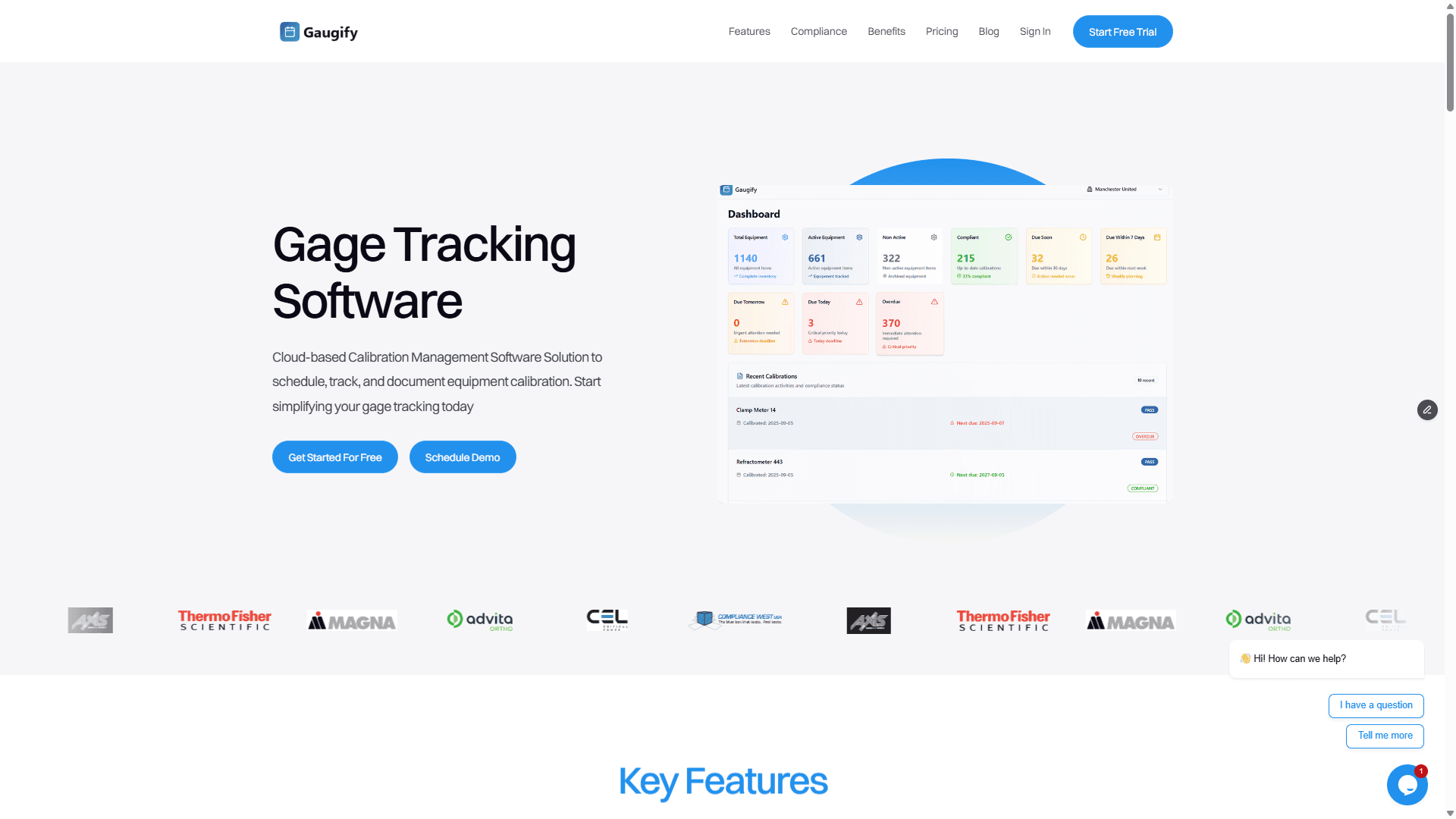
Gaugify provides intuitive dashboard views that immediately show overdue items, upcoming calibrations, and scheduling conflicts. For example, if you have 47 digital calipers due for calibration next month, Gaugify's scheduling engine can automatically distribute these across available time slots while considering technician workload and equipment availability. The system sends automated email notifications at configurable intervals - typically 30, 14, and 7 days before due dates.
Qualityze handles scheduling within their broader workflow engine, which can be powerful for organizations that need calibration scheduling integrated with other quality processes. However, users often report that accessing calibration-specific scheduling views requires navigating through multiple menu layers within the larger QMS interface.
Certificate Generation and Management
Certificate handling represents a critical differentiator between these platforms.
Gaugify's certificate system generates professional, customizable calibration certificates automatically upon completion of calibration activities. The system handles complex scenarios like multi-point calibrations for temperature sensors or pressure transducers, automatically calculating measurement uncertainties and presenting results in clear, audit-ready formats. Certificates include digital signatures, measurement traceability chains, and environmental condition data.
Qualityze offers certificate generation through their document management system, which provides extensive customization options but requires more configuration effort. The integration with their broader document control workflows can be advantageous for organizations with complex approval processes, but may add unnecessary complexity for straightforward calibration operations.
Measurement Uncertainty Calculations
This area showcases one of Gaugify's key strengths in calibration-specific functionality.
Gaugify includes built-in uncertainty calculation engines that handle common measurement scenarios automatically. For instance, when calibrating a torque wrench with a ±2% specification against a reference standard with ±0.5% uncertainty, Gaugify automatically calculates the combined standard uncertainty and provides pass/fail determinations based on configurable Test Accuracy Ratios (TAR). The system maintains uncertainty budgets and can handle complex calculations involving multiple uncertainty components.
Qualityze's approach to uncertainty calculations varies depending on configuration, but typically requires more manual setup and may not include the specialized calculation engines that calibration professionals expect. Organizations often need to supplement with external calculation tools or custom development.
Audit Trails and Compliance Documentation
Both platforms recognize the critical importance of maintaining comprehensive audit trails for regulatory compliance.
Gaugify automatically captures every calibration activity, from initial measurements through certificate approval. The audit trail includes technician identity, timestamps, environmental conditions, measurement values, and any adjustments made. This compliance-focused approach ensures that inspectors can easily trace calibration history for any instrument, including who performed the work, what standards were used, and when the next calibration is due.
Qualityze provides extensive audit capabilities through their enterprise workflow engine. While comprehensive, the audit trail functionality is designed for broader quality management activities, which can make calibration-specific audit queries more complex than necessary.
Tool Crib and Asset Management
Managing the physical location and status of calibrated instruments presents unique challenges that both platforms address differently.
Gaugify's crib management system tracks instrument check-in/check-out activities, maintains custody chains, and can integrate with barcode or RFID systems for efficient asset tracking. When a machinist returns a micrometer that's approaching its calibration due date, the system can automatically flag it for calibration scheduling rather than returning it to general circulation.
Qualityze handles asset management through their broader asset tracking modules, which can provide more extensive asset lifecycle management capabilities but may be over-engineered for organizations focused primarily on calibration tracking.
Mobile Access and Field Calibration
Modern calibration operations increasingly require mobile capabilities for field work and shop floor activities.
Gaugify provides responsive web interfaces optimized for tablets and smartphones, enabling technicians to perform calibrations, record measurements, and generate certificates directly from mobile devices. This capability proves essential for calibrating installed equipment like temperature sensors in environmental chambers or pressure gauges on production machinery.
Qualityze offers mobile access through their QMS mobile application, though the interface is optimized for broader quality management tasks rather than calibration-specific workflows. Users may find the mobile calibration experience less streamlined than dedicated calibration platforms.
Ready to experience the difference? Start your free trial of Gaugify and see how modern calibration management should work.
User Experience and Interface Design
The daily user experience represents perhaps the most significant difference between these platforms.
Gaugify prioritizes intuitive, task-focused interfaces designed specifically for calibration technicians and quality managers. The dashboard immediately presents the most critical information: overdue calibrations, upcoming due dates, and instruments requiring attention. Navigation follows calibration workflow logic - from scheduling through execution to certificate generation - without unnecessary complexity.
Qualityze's interface reflects its enterprise QMS heritage, with extensive menu structures and configuration options. While powerful, new users often require significant training to navigate efficiently to calibration-specific functions. The interface excels for organizations that need deep integration between calibration activities and other quality processes, but can feel overwhelming for users focused primarily on calibration management.
User feedback consistently indicates that Gaugify requires minimal training for calibration technicians to become productive, while Qualityze typically requires more extensive onboarding and ongoing support.
Pricing and Value Comparison
The Gaugify vs Qualityze pricing comparison reveals fundamentally different business models and value propositions.
Gaugify operates on transparent, subscription-based pricing that scales with the number of instruments under management. Their pricing model allows organizations to calculate costs accurately and start small while scaling up as needed. This approach makes modern calibration management accessible to smaller organizations and individual labs that previously couldn't justify enterprise QMS investments.
Qualityze typically involves enterprise licensing that includes calibration management as part of broader QMS implementations. While this can provide value for organizations that need comprehensive quality management capabilities, it often represents significant over-investment for companies focused primarily on calibration compliance.
The total cost of ownership extends beyond licensing to include implementation, training, and ongoing support. Gaugify's focused approach typically results in faster implementation and lower training costs, while Qualityze implementations often require extensive customization and change management efforts.
Deployment Options and Technical Requirements
Infrastructure requirements and deployment models represent another key differentiator.
Gaugify operates as a cloud-native Software-as-a-Service platform, eliminating the need for internal IT infrastructure, maintenance, or software updates. This approach ensures users always access the latest features and security updates while minimizing IT overhead. The cloud deployment also enables seamless remote access and mobile capabilities without VPN complexity.
Qualityze offers both cloud and on-premise deployment options, which can be advantageous for organizations with specific data residency requirements or existing infrastructure investments. However, on-premise deployments require significant IT resources for maintenance, updates, and security management.
For most calibration operations, Gaugify's cloud-first approach provides superior reliability, security, and accessibility without the associated IT complexity.
Customer Support and Implementation
The support experience reflects each company's different market positioning and customer focus.
Gaugify provides specialized calibration expertise through their support team, with staff who understand measurement uncertainty, TAR calculations, and regulatory requirements like ISO/IEC 17025. Implementation typically involves guided setup sessions focused on calibration workflows rather than extensive consulting engagements.
Qualityze offers enterprise-level support through their broader QMS expertise, which can be valuable for complex implementations involving multiple quality management modules. However, calibration-specific expertise may be less readily available, and implementations often require longer timeframes and higher consulting investments.
ISO 17025 and Regulatory Compliance
Both platforms address regulatory compliance requirements, but with different depths of calibration-specific functionality.
Gaugify's ISO 17025 compliance features were designed specifically for calibration laboratories and include built-in templates, audit checklists, and documentation frameworks that align directly with standard requirements. The system automatically maintains traceability records, uncertainty calculations, and measurement validity assessments required by the standard.
Qualityze addresses ISO 17025 requirements through their broader quality management framework, which can be configured to meet standard requirements but may require additional customization and setup effort to achieve full compliance.
Who Each Product Is Best For
Understanding the ideal use cases helps clarify when each platform provides the best value.
Gaugify excels for:
Dedicated calibration laboratories seeking specialized functionality
Manufacturing quality departments focused primarily on instrument calibration
Organizations wanting rapid implementation without extensive customization
Companies seeking modern, mobile-accessible calibration management
Teams requiring built-in measurement uncertainty calculations
Smaller to mid-size organizations needing cost-effective calibration solutions
Qualityze may be preferable for:
Large enterprises requiring comprehensive QMS integration
Organizations with complex quality workflows extending beyond calibration
Companies with specific on-premise deployment requirements
Enterprises needing extensive customization and workflow integration
Organizations already invested in Qualityze's broader QMS platform
Integration Capabilities
Modern calibration management rarely operates in isolation, requiring integration with existing business systems.
Gaugify provides APIs and integration capabilities focused on calibration-related data exchange, including connections to enterprise asset management systems, quality databases, and measurement equipment with digital interfaces. The integrations prioritize calibration workflow efficiency rather than comprehensive enterprise integration.
Qualityze offers extensive integration capabilities through their enterprise platform, with connections to ERP systems, document management platforms, and other quality management tools. While comprehensive, these integrations may be more complex than required for organizations focused primarily on calibration management.
Reporting and Analytics
Both platforms provide reporting capabilities, but with different focuses and capabilities.
Gaugify delivers calibration-specific reporting including instrument utilization analysis, calibration cost tracking, out-of-tolerance trend analysis, and technician productivity metrics. Reports are designed for calibration managers and quality professionals who need actionable insights into calibration operations performance.
Qualityze provides comprehensive reporting across all quality management activities, with calibration reporting as one component. While extensive, users may find extracting calibration-specific insights requires navigating broader quality metrics and report structures.
Final Verdict: Choosing Between Gaugify vs Qualityze
The choice between Gaugify vs Qualityze ultimately depends on your organization's specific requirements, existing systems, and strategic priorities.
Gaugify represents the modern approach to calibration management - cloud-native, user-friendly, and purpose-built for calibration workflows. Organizations choosing Gaugify typically benefit from faster implementation, lower total cost of ownership, and specialized calibration functionality that improves daily operational efficiency.
Qualityze serves organizations that need calibration management integrated within broader quality management initiatives and can justify the additional complexity and investment for comprehensive QMS capabilities.
For most calibration operations, Gaugify provides superior value through its combination of specialized functionality, modern user experience, transparent pricing, and rapid implementation. The platform eliminates common calibration management frustrations while providing the compliance documentation and audit capabilities that quality professionals require.
The best way to evaluate these platforms is through hands-on experience with your actual calibration workflows and data.
Experience Modern Calibration Management
Stop settling for calibration management tools that weren't designed for calibration professionals. Start your free trial of Gaugify today and discover how calibration management should work in the modern era.
With no setup fees, transparent pricing, and calibration-specific functionality built from the ground up, Gaugify eliminates the complexity and frustrations that have defined calibration management for too long. Schedule a personalized demo to see how Gaugify can transform your calibration operations and ensure you never miss another due date.
Your instruments deserve better than spreadsheets. Your team deserves better than complicated enterprise software designed for everything except calibration. Choose the platform built specifically for calibration professionals by calibration professionals.
Gaugify vs Qualityze Calibration Module
When evaluating calibration management software, the choice between Gaugify vs Qualityze often comes down to your organization's specific needs, budget, and technical requirements. Both platforms offer calibration management capabilities, but they take distinctly different approaches to solving the challenges of maintaining measurement accuracy and regulatory compliance.
Gaugify positions itself as a modern, cloud-native calibration management solution designed specifically for calibration workflows. Qualityze, on the other hand, offers calibration management as one module within their broader Quality Management System (QMS) platform. This fundamental difference shapes everything from user experience to pricing structure.
In this comprehensive comparison of Gaugify vs Qualityze, we'll examine both platforms across key areas including features, usability, compliance capabilities, and value proposition to help you make an informed decision for your calibration management needs.
Company Background and Market Position
Understanding the origins and focus of each company provides important context for their product capabilities and strategic direction.
Gaugify was founded as a calibration-first company, built from the ground up to address the specific pain points that quality managers and technicians face daily. The platform emerged from real-world calibration lab experience, with founders who understood the frustrations of managing due dates in spreadsheets, hunting for calibration certificates, and struggling with cumbersome legacy systems. This focused approach means every feature was designed specifically for calibration workflows.
Qualityze operates as a comprehensive QMS provider that includes calibration management among its many modules. Founded as an enterprise quality management platform, Qualityze serves large organizations that need integrated quality systems covering everything from document control to supplier management. Their calibration module exists within this broader ecosystem.
This difference in focus significantly impacts the user experience. While Qualityze offers breadth across quality management disciplines, Gaugify provides depth specifically in calibration management workflows.
Feature-by-Feature Comparison: Gaugify vs Qualityze
Calibration Scheduling and Due Date Management
Both platforms handle the fundamental requirement of tracking calibration due dates, but their approaches differ considerably.
Gaugify provides intuitive dashboard views that immediately show overdue items, upcoming calibrations, and scheduling conflicts. For example, if you have 47 digital calipers due for calibration next month, Gaugify's scheduling engine can automatically distribute these across available time slots while considering technician workload and equipment availability. The system sends automated email notifications at configurable intervals - typically 30, 14, and 7 days before due dates.
Qualityze handles scheduling within their broader workflow engine, which can be powerful for organizations that need calibration scheduling integrated with other quality processes. However, users often report that accessing calibration-specific scheduling views requires navigating through multiple menu layers within the larger QMS interface.
Certificate Generation and Management
Certificate handling represents a critical differentiator between these platforms.
Gaugify's certificate system generates professional, customizable calibration certificates automatically upon completion of calibration activities. The system handles complex scenarios like multi-point calibrations for temperature sensors or pressure transducers, automatically calculating measurement uncertainties and presenting results in clear, audit-ready formats. Certificates include digital signatures, measurement traceability chains, and environmental condition data.
Qualityze offers certificate generation through their document management system, which provides extensive customization options but requires more configuration effort. The integration with their broader document control workflows can be advantageous for organizations with complex approval processes, but may add unnecessary complexity for straightforward calibration operations.
Measurement Uncertainty Calculations
This area showcases one of Gaugify's key strengths in calibration-specific functionality.
Gaugify includes built-in uncertainty calculation engines that handle common measurement scenarios automatically. For instance, when calibrating a torque wrench with a ±2% specification against a reference standard with ±0.5% uncertainty, Gaugify automatically calculates the combined standard uncertainty and provides pass/fail determinations based on configurable Test Accuracy Ratios (TAR). The system maintains uncertainty budgets and can handle complex calculations involving multiple uncertainty components.
Qualityze's approach to uncertainty calculations varies depending on configuration, but typically requires more manual setup and may not include the specialized calculation engines that calibration professionals expect. Organizations often need to supplement with external calculation tools or custom development.
Audit Trails and Compliance Documentation
Both platforms recognize the critical importance of maintaining comprehensive audit trails for regulatory compliance.
Gaugify automatically captures every calibration activity, from initial measurements through certificate approval. The audit trail includes technician identity, timestamps, environmental conditions, measurement values, and any adjustments made. This compliance-focused approach ensures that inspectors can easily trace calibration history for any instrument, including who performed the work, what standards were used, and when the next calibration is due.
Qualityze provides extensive audit capabilities through their enterprise workflow engine. While comprehensive, the audit trail functionality is designed for broader quality management activities, which can make calibration-specific audit queries more complex than necessary.
Tool Crib and Asset Management
Managing the physical location and status of calibrated instruments presents unique challenges that both platforms address differently.
Gaugify's crib management system tracks instrument check-in/check-out activities, maintains custody chains, and can integrate with barcode or RFID systems for efficient asset tracking. When a machinist returns a micrometer that's approaching its calibration due date, the system can automatically flag it for calibration scheduling rather than returning it to general circulation.
Qualityze handles asset management through their broader asset tracking modules, which can provide more extensive asset lifecycle management capabilities but may be over-engineered for organizations focused primarily on calibration tracking.
Mobile Access and Field Calibration
Modern calibration operations increasingly require mobile capabilities for field work and shop floor activities.
Gaugify provides responsive web interfaces optimized for tablets and smartphones, enabling technicians to perform calibrations, record measurements, and generate certificates directly from mobile devices. This capability proves essential for calibrating installed equipment like temperature sensors in environmental chambers or pressure gauges on production machinery.
Qualityze offers mobile access through their QMS mobile application, though the interface is optimized for broader quality management tasks rather than calibration-specific workflows. Users may find the mobile calibration experience less streamlined than dedicated calibration platforms.
Ready to experience the difference? Start your free trial of Gaugify and see how modern calibration management should work.
User Experience and Interface Design
The daily user experience represents perhaps the most significant difference between these platforms.
Gaugify prioritizes intuitive, task-focused interfaces designed specifically for calibration technicians and quality managers. The dashboard immediately presents the most critical information: overdue calibrations, upcoming due dates, and instruments requiring attention. Navigation follows calibration workflow logic - from scheduling through execution to certificate generation - without unnecessary complexity.
Qualityze's interface reflects its enterprise QMS heritage, with extensive menu structures and configuration options. While powerful, new users often require significant training to navigate efficiently to calibration-specific functions. The interface excels for organizations that need deep integration between calibration activities and other quality processes, but can feel overwhelming for users focused primarily on calibration management.
User feedback consistently indicates that Gaugify requires minimal training for calibration technicians to become productive, while Qualityze typically requires more extensive onboarding and ongoing support.
Pricing and Value Comparison
The Gaugify vs Qualityze pricing comparison reveals fundamentally different business models and value propositions.
Gaugify operates on transparent, subscription-based pricing that scales with the number of instruments under management. Their pricing model allows organizations to calculate costs accurately and start small while scaling up as needed. This approach makes modern calibration management accessible to smaller organizations and individual labs that previously couldn't justify enterprise QMS investments.
Qualityze typically involves enterprise licensing that includes calibration management as part of broader QMS implementations. While this can provide value for organizations that need comprehensive quality management capabilities, it often represents significant over-investment for companies focused primarily on calibration compliance.
The total cost of ownership extends beyond licensing to include implementation, training, and ongoing support. Gaugify's focused approach typically results in faster implementation and lower training costs, while Qualityze implementations often require extensive customization and change management efforts.
Deployment Options and Technical Requirements
Infrastructure requirements and deployment models represent another key differentiator.
Gaugify operates as a cloud-native Software-as-a-Service platform, eliminating the need for internal IT infrastructure, maintenance, or software updates. This approach ensures users always access the latest features and security updates while minimizing IT overhead. The cloud deployment also enables seamless remote access and mobile capabilities without VPN complexity.
Qualityze offers both cloud and on-premise deployment options, which can be advantageous for organizations with specific data residency requirements or existing infrastructure investments. However, on-premise deployments require significant IT resources for maintenance, updates, and security management.
For most calibration operations, Gaugify's cloud-first approach provides superior reliability, security, and accessibility without the associated IT complexity.
Customer Support and Implementation
The support experience reflects each company's different market positioning and customer focus.
Gaugify provides specialized calibration expertise through their support team, with staff who understand measurement uncertainty, TAR calculations, and regulatory requirements like ISO/IEC 17025. Implementation typically involves guided setup sessions focused on calibration workflows rather than extensive consulting engagements.
Qualityze offers enterprise-level support through their broader QMS expertise, which can be valuable for complex implementations involving multiple quality management modules. However, calibration-specific expertise may be less readily available, and implementations often require longer timeframes and higher consulting investments.
ISO 17025 and Regulatory Compliance
Both platforms address regulatory compliance requirements, but with different depths of calibration-specific functionality.
Gaugify's ISO 17025 compliance features were designed specifically for calibration laboratories and include built-in templates, audit checklists, and documentation frameworks that align directly with standard requirements. The system automatically maintains traceability records, uncertainty calculations, and measurement validity assessments required by the standard.
Qualityze addresses ISO 17025 requirements through their broader quality management framework, which can be configured to meet standard requirements but may require additional customization and setup effort to achieve full compliance.
Who Each Product Is Best For
Understanding the ideal use cases helps clarify when each platform provides the best value.
Gaugify excels for:
Dedicated calibration laboratories seeking specialized functionality
Manufacturing quality departments focused primarily on instrument calibration
Organizations wanting rapid implementation without extensive customization
Companies seeking modern, mobile-accessible calibration management
Teams requiring built-in measurement uncertainty calculations
Smaller to mid-size organizations needing cost-effective calibration solutions
Qualityze may be preferable for:
Large enterprises requiring comprehensive QMS integration
Organizations with complex quality workflows extending beyond calibration
Companies with specific on-premise deployment requirements
Enterprises needing extensive customization and workflow integration
Organizations already invested in Qualityze's broader QMS platform
Integration Capabilities
Modern calibration management rarely operates in isolation, requiring integration with existing business systems.
Gaugify provides APIs and integration capabilities focused on calibration-related data exchange, including connections to enterprise asset management systems, quality databases, and measurement equipment with digital interfaces. The integrations prioritize calibration workflow efficiency rather than comprehensive enterprise integration.
Qualityze offers extensive integration capabilities through their enterprise platform, with connections to ERP systems, document management platforms, and other quality management tools. While comprehensive, these integrations may be more complex than required for organizations focused primarily on calibration management.
Reporting and Analytics
Both platforms provide reporting capabilities, but with different focuses and capabilities.
Gaugify delivers calibration-specific reporting including instrument utilization analysis, calibration cost tracking, out-of-tolerance trend analysis, and technician productivity metrics. Reports are designed for calibration managers and quality professionals who need actionable insights into calibration operations performance.
Qualityze provides comprehensive reporting across all quality management activities, with calibration reporting as one component. While extensive, users may find extracting calibration-specific insights requires navigating broader quality metrics and report structures.
Final Verdict: Choosing Between Gaugify vs Qualityze
The choice between Gaugify vs Qualityze ultimately depends on your organization's specific requirements, existing systems, and strategic priorities.
Gaugify represents the modern approach to calibration management - cloud-native, user-friendly, and purpose-built for calibration workflows. Organizations choosing Gaugify typically benefit from faster implementation, lower total cost of ownership, and specialized calibration functionality that improves daily operational efficiency.
Qualityze serves organizations that need calibration management integrated within broader quality management initiatives and can justify the additional complexity and investment for comprehensive QMS capabilities.
For most calibration operations, Gaugify provides superior value through its combination of specialized functionality, modern user experience, transparent pricing, and rapid implementation. The platform eliminates common calibration management frustrations while providing the compliance documentation and audit capabilities that quality professionals require.
The best way to evaluate these platforms is through hands-on experience with your actual calibration workflows and data.
Experience Modern Calibration Management
Stop settling for calibration management tools that weren't designed for calibration professionals. Start your free trial of Gaugify today and discover how calibration management should work in the modern era.
With no setup fees, transparent pricing, and calibration-specific functionality built from the ground up, Gaugify eliminates the complexity and frustrations that have defined calibration management for too long. Schedule a personalized demo to see how Gaugify can transform your calibration operations and ensure you never miss another due date.
Your instruments deserve better than spreadsheets. Your team deserves better than complicated enterprise software designed for everything except calibration. Choose the platform built specifically for calibration professionals by calibration professionals.