
How to Calibrate a Coating Thickness Gauge
How to Calibrate a Coating Thickness Gauge
David Bentley
Quality Assurance Engineer
12 min read
How to Calibrate a Coating Thickness Gauge
Coating thickness gauges are essential measurement instruments used across manufacturing industries to ensure protective coatings meet specification requirements. Whether you're measuring paint on automotive panels, zinc plating on fasteners, or powder coating on industrial equipment, proper coating thickness gauge calibration is critical for maintaining quality control and meeting customer specifications. This comprehensive guide will walk you through the complete calibration process, helping quality managers and technicians ensure their instruments deliver accurate, reliable measurements every time.
From aerospace components requiring coating thickness within ±2 micrometers to marine applications where protective coatings prevent costly corrosion failures, the stakes are high when measurements are inaccurate. Let's explore how to properly calibrate these vital instruments and maintain measurement confidence in your quality system.
Understanding Coating Thickness Gauges and Their Applications
Coating thickness gauges, also known as paint thickness meters or film thickness gauges, measure the thickness of non-magnetic coatings on magnetic substrates (ferrous method) or non-conductive coatings on conductive substrates (eddy current method). These instruments typically provide measurements in micrometers (µm), mils (thousandths of an inch), or both.
Common applications include:
Automotive manufacturing: Paint thickness on steel body panels, typically 80-120 µm
Aerospace: Primer and topcoat systems on aluminum substrates, often 25-75 µm total
Marine coatings: Anti-corrosion systems on steel hulls, ranging 200-500 µm
Industrial equipment: Powder coatings on machinery components, usually 50-100 µm
Galvanizing operations: Zinc coatings on steel products, typically 45-85 µm
Popular models include the DeFelsko PosiTector series, Elcometer coating thickness gauges, and Fischer measurement systems. Each operates on electromagnetic induction or eddy current principles, requiring specific calibration approaches based on the measurement technology.
Why Coating Thickness Gauge Calibration Is Critical
Coating thickness directly impacts product performance, longevity, and cost. Too thin, and the coating fails to provide adequate protection—leading to corrosion, wear, or aesthetic degradation. Too thick, and you're wasting expensive coating materials while potentially creating adhesion or curing problems.
Consider these real-world consequences of poor coating thickness gauge calibration:
A major automotive supplier discovered their paint thickness gauges were reading 15% high due to improper calibration. This led to six months of undercoated vehicles before the issue was caught during a customer audit. The resulting rework costs exceeded $2.3 million, not including the damage to their supplier rating.
In aerospace applications, coating thickness variations outside specification can affect radar signatures on military aircraft or compromise corrosion protection on commercial jets. A single batch of mis-coated components can ground an entire aircraft fleet.
Marine coating contractors face similar risks—inadequate coating thickness leads to premature failure and expensive reapplication under warranty. With marine coating systems costing $50-100 per square meter, measurement accuracy directly impacts profitability.
Step-by-Step Coating Thickness Gauge Calibration Procedure
Proper calibration requires certified reference standards, controlled environmental conditions, and systematic documentation. Here's the complete procedure:
Pre-Calibration Preparation
Environmental Conditions:
Temperature: 20°C ± 5°C (68°F ± 9°F)
Relative humidity: 45-75%
Stable environment free from vibration and electromagnetic interference
Allow instruments to stabilize for minimum 30 minutes
Required Equipment:
Certified coating thickness standards (traceable to national standards)
Uncoated substrate samples (steel for magnetic, aluminum for non-ferrous)
Cleaning materials (isopropyl alcohol, lint-free cloths)
Calibration certificate templates and data sheets
Calibration Standards Selection
Choose standards that span your typical measurement range. For example:
Automotive applications: 0, 25, 50, 100, 150 µm standards
Heavy industrial: 0, 50, 100, 250, 500 µm standards
Precision electronics: 0, 5, 10, 25, 50 µm standards
Standards must be certified with uncertainty statements, typically ±1-2% of nominal value or ±2 µm, whichever is greater.
Zero Point Calibration
Clean the uncoated substrate sample thoroughly
Place probe perpendicular to the surface with consistent pressure
Take 10 readings at different locations
Average reading should be 0.0 µm ± 1.0 µm
Adjust zero setting if necessary according to manufacturer instructions
Multi-Point Calibration Check
Starting with the thinnest standard:
Clean standard surface with alcohol and lint-free cloth
Take 5 readings at different locations, avoiding previous measurement spots
Calculate average and standard deviation
Record as-found values before any adjustments
Repeat for each standard thickness
Acceptance Criteria:
Individual readings within ±5% of standard value or ±3 µm, whichever is greater
Average of 5 readings within ±2% of standard value or ±2 µm
Standard deviation should not exceed 2% of the measured value
Adjustment and As-Left Verification
If readings exceed tolerance:
Perform calibration adjustment per manufacturer procedure
Re-verify all standards to confirm improvement
Document as-left values for each standard
If unable to bring within tolerance, remove instrument from service
Relevant Standards for Coating Thickness Gauge Calibration
Several industry standards govern coating thickness measurement and calibration:
ISO 2178:2016 - Non-magnetic coatings on magnetic substrates. Specifies measurement methods and accuracy requirements for magnetic induction instruments. Requires calibration using certified reference standards with traceability to national metrology institutes.
ISO 2360:2017 - Non-conductive coatings on non-magnetic electrically conductive substrates. Covers eddy current method instruments with similar calibration requirements to ISO 2178.
ASTM D7091-13 - Standard practice for non-destructive measurement of dry film thickness using magnetic induction or eddy current instruments. Provides detailed procedures for calibration verification and adjustment.
SSPC-PA 2 - Procedure for determining conformance to dry coating thickness requirements. Widely used in protective coatings industry, specifying calibration frequency and acceptance criteria.
For organizations requiring ISO 17025 compliance, additional requirements include:
Formal calibration procedures with technical justification
Uncertainty budgets for calibration measurements
Environmental monitoring during calibration
Competency records for calibration personnel
Recommended Calibration Intervals for Coating Thickness Gauges
Calibration frequency depends on several factors, but industry best practices suggest:
Standard Intervals:
Production floor instruments: Every 3-6 months
Laboratory reference instruments: Every 12 months
Portable field instruments: Every 6 months or after 1000 measurements
High-precision applications: Monthly or before critical measurements
Factors Affecting Calibration Frequency:
Usage intensity: Instruments used for hundreds of daily measurements may require monthly calibration checks, while occasional-use laboratory instruments can extend to annual intervals.
Environmental conditions: Harsh environments (high temperature, humidity, dust, or chemical exposure) accelerate instrument drift. Foundries, paint booths, and marine environments typically require more frequent calibration.
Measurement criticality: Safety-critical applications like aerospace primer thickness or nuclear facility coatings may require weekly verification checks against working standards.
Historical performance: Track calibration data to identify drift patterns. Instruments consistently within tolerance can potentially extend intervals, while those showing drift need more frequent attention.
Ready to implement a systematic approach to coating thickness gauge calibration scheduling? Start your free Gaugify trial today and see how automated reminders and calibration tracking can prevent missed intervals while maintaining complete audit trails.
Intermediate Checks and Working Standards
Between formal calibrations, implement intermediate checks using working standards:
Daily reference standard checks for production instruments
Before/after measurement sessions for portable units
Following any physical shock or suspected damage
When measurements appear inconsistent with expectations
Common Calibration Mistakes and How to Avoid Them
Even experienced technicians make calibration errors that compromise measurement accuracy. Here are the most frequent mistakes and prevention strategies:
Incorrect Standard Handling
Mistake: Using damaged, contaminated, or uncertified standards. Coating thickness standards are delicate—scratches, corrosion, or contamination alter their nominal values.
Prevention: Store standards in protective cases with individual compartments. Clean before each use with appropriate solvents. Visually inspect for damage and verify certification dates. Replace standards showing wear or when certificates expire.
Environmental Neglect
Mistake: Calibrating in uncontrolled environments. Temperature fluctuations affect both instrument electronics and coating standard dimensions. Humidity can cause condensation on probe surfaces.
Prevention: Establish dedicated calibration areas with environmental monitoring. Document temperature and humidity during calibration. Allow adequate stabilization time when moving instruments between environments.
Inadequate Measurement Technique
Mistake: Inconsistent probe pressure, angle, or measurement locations. Coating thickness gauges are sensitive to probe technique—pressure variations can cause 5-10% measurement differences.
Prevention: Train operators on proper technique. Use consistent downward pressure (many probes have tactile feedback). Maintain perpendicular probe orientation. Avoid measuring the same spot repeatedly.
Insufficient Data Collection
Mistake: Taking too few measurements or ignoring statistical analysis. Single-point measurements can't identify systematic errors or assess measurement uncertainty.
Prevention: Follow standard procedures requiring multiple measurements per standard. Calculate averages and standard deviations. Investigate outliers before discarding data.
Poor Documentation
Mistake: Incomplete calibration records or missing as-found data. Auditors expect complete documentation showing instrument performance before and after calibration.
Prevention: Use standardized calibration sheets capturing all required data. Document as-found readings before making adjustments. Include environmental conditions, standard certificates, and technician identification.
Tracking Coating Thickness Gauge Calibrations with Modern Software
Manual calibration tracking using spreadsheets or paper systems creates unnecessary risks and inefficiencies. Modern calibration management software like Gaugify provides comprehensive solutions specifically designed for coating thickness gauge calibration tracking.
Automated Scheduling and Reminders
Gaugify's intelligent scheduling system prevents missed calibrations by:
Automatically calculating due dates based on your specified intervals
Sending email reminders at configurable intervals (30, 14, 7 days before due)
Escalating overdue notifications to supervisors and quality managers
Adjusting schedules based on usage patterns and historical performance
For coating thickness gauges used in production environments, this automation is crucial—missing a calibration can halt production lines or create non-conforming product.
Comprehensive Data Management
Track complete calibration history including:
As-found and as-left readings: Monitor instrument drift patterns over time
Environmental conditions: Temperature and humidity documentation for audit compliance
Standard certificates: Digital storage with expiration tracking
Technician records: Link calibrations to qualified personnel
Measurement uncertainty: Calculate and track uncertainty budgets per ISO 17025 requirements
Digital Calibration Certificates
Generate professional calibration certificates instantly with:
Complete measurement data tables showing all standards tested
Uncertainty statements and traceability information
Digital signatures and tamper-proof formatting
Automatic distribution to stakeholders
Secure cloud storage with 24/7 access
This eliminates the time-consuming manual certificate preparation while ensuring consistency and professional appearance for customer audits.
Advanced Analytics and Reporting
Gaugify's reporting features help quality managers identify trends and optimize calibration programs:
Drift analysis: Identify instruments requiring more frequent calibration
Cost tracking: Monitor calibration expenses and ROI on instrument investments
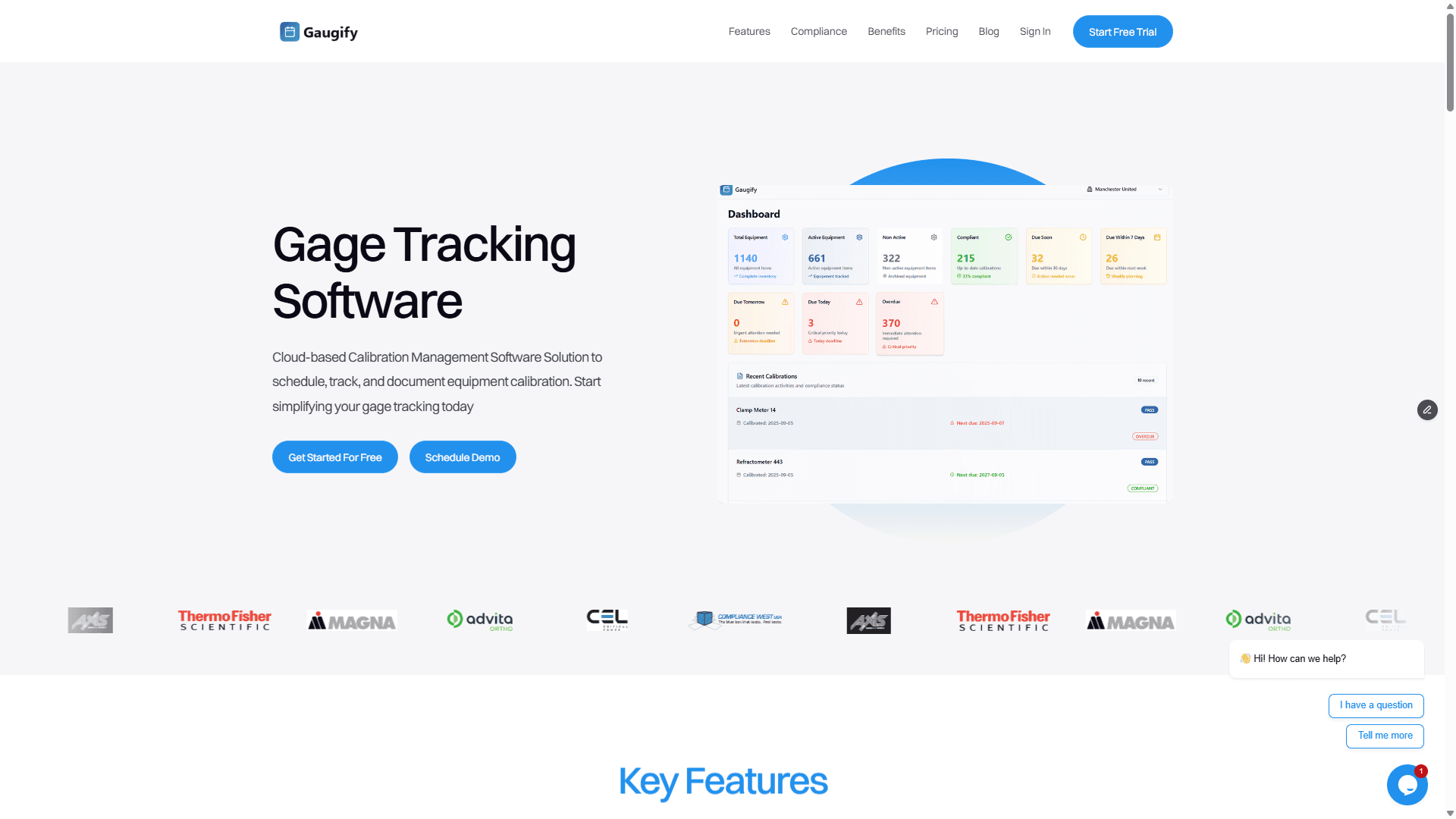
Compliance dashboards: Real-time visibility into calibration status across all locations
Audit preparation: One-click reports showing calibration compliance for any time period
Mobile Accessibility
Field technicians using portable coating thickness gauges benefit from Gaugify's mobile capabilities:
Check calibration status before starting measurements
Record intermediate checks using working standards
Upload calibration data from any location
Access calibration certificates for customer reviews
This is particularly valuable for coating contractors working at customer facilities or remote job sites.
Integration Capabilities
Connect coating thickness gauge calibration data with broader quality systems through:
ERP system integration for maintenance planning
Quality management system data sharing
Automated reporting to customer portals
API connections for custom applications
These integrations eliminate duplicate data entry while ensuring calibration status is visible across your organization's quality infrastructure.
Start Optimizing Your Coating Thickness Gauge Calibration Program
Proper coating thickness gauge calibration is essential for maintaining product quality, customer satisfaction, and regulatory compliance. By following the systematic procedures outlined in this guide—from proper standard handling to comprehensive documentation—you'll ensure your measurement instruments provide the accuracy your quality system demands.
Modern calibration management software transforms manual, error-prone processes into automated, audit-ready systems that save time while improving compliance. Whether you're managing a single coating thickness gauge or hundreds of instruments across multiple facilities, the right tools make all the difference.
Ready to see how Gaugify can streamline your calibration compliance while reducing administrative burden? Our cloud-based platform is specifically designed for organizations like yours that need reliable calibration management without the complexity of traditional systems.
Schedule a personalized demo to see exactly how Gaugify handles coating thickness gauge calibrations, from automated scheduling through certificate generation. Our calibration experts will show you how to optimize your current processes while building a foundation for long-term measurement confidence.
Don't let manual calibration tracking put your quality system at risk. Join hundreds of quality-focused organizations that trust Gaugify to keep their measurement instruments calibrated and their auditors satisfied.
How to Calibrate a Coating Thickness Gauge
Coating thickness gauges are essential measurement instruments used across manufacturing industries to ensure protective coatings meet specification requirements. Whether you're measuring paint on automotive panels, zinc plating on fasteners, or powder coating on industrial equipment, proper coating thickness gauge calibration is critical for maintaining quality control and meeting customer specifications. This comprehensive guide will walk you through the complete calibration process, helping quality managers and technicians ensure their instruments deliver accurate, reliable measurements every time.
From aerospace components requiring coating thickness within ±2 micrometers to marine applications where protective coatings prevent costly corrosion failures, the stakes are high when measurements are inaccurate. Let's explore how to properly calibrate these vital instruments and maintain measurement confidence in your quality system.
Understanding Coating Thickness Gauges and Their Applications
Coating thickness gauges, also known as paint thickness meters or film thickness gauges, measure the thickness of non-magnetic coatings on magnetic substrates (ferrous method) or non-conductive coatings on conductive substrates (eddy current method). These instruments typically provide measurements in micrometers (µm), mils (thousandths of an inch), or both.
Common applications include:
Automotive manufacturing: Paint thickness on steel body panels, typically 80-120 µm
Aerospace: Primer and topcoat systems on aluminum substrates, often 25-75 µm total
Marine coatings: Anti-corrosion systems on steel hulls, ranging 200-500 µm
Industrial equipment: Powder coatings on machinery components, usually 50-100 µm
Galvanizing operations: Zinc coatings on steel products, typically 45-85 µm
Popular models include the DeFelsko PosiTector series, Elcometer coating thickness gauges, and Fischer measurement systems. Each operates on electromagnetic induction or eddy current principles, requiring specific calibration approaches based on the measurement technology.
Why Coating Thickness Gauge Calibration Is Critical
Coating thickness directly impacts product performance, longevity, and cost. Too thin, and the coating fails to provide adequate protection—leading to corrosion, wear, or aesthetic degradation. Too thick, and you're wasting expensive coating materials while potentially creating adhesion or curing problems.
Consider these real-world consequences of poor coating thickness gauge calibration:
A major automotive supplier discovered their paint thickness gauges were reading 15% high due to improper calibration. This led to six months of undercoated vehicles before the issue was caught during a customer audit. The resulting rework costs exceeded $2.3 million, not including the damage to their supplier rating.
In aerospace applications, coating thickness variations outside specification can affect radar signatures on military aircraft or compromise corrosion protection on commercial jets. A single batch of mis-coated components can ground an entire aircraft fleet.
Marine coating contractors face similar risks—inadequate coating thickness leads to premature failure and expensive reapplication under warranty. With marine coating systems costing $50-100 per square meter, measurement accuracy directly impacts profitability.
Step-by-Step Coating Thickness Gauge Calibration Procedure
Proper calibration requires certified reference standards, controlled environmental conditions, and systematic documentation. Here's the complete procedure:
Pre-Calibration Preparation
Environmental Conditions:
Temperature: 20°C ± 5°C (68°F ± 9°F)
Relative humidity: 45-75%
Stable environment free from vibration and electromagnetic interference
Allow instruments to stabilize for minimum 30 minutes
Required Equipment:
Certified coating thickness standards (traceable to national standards)
Uncoated substrate samples (steel for magnetic, aluminum for non-ferrous)
Cleaning materials (isopropyl alcohol, lint-free cloths)
Calibration certificate templates and data sheets
Calibration Standards Selection
Choose standards that span your typical measurement range. For example:
Automotive applications: 0, 25, 50, 100, 150 µm standards
Heavy industrial: 0, 50, 100, 250, 500 µm standards
Precision electronics: 0, 5, 10, 25, 50 µm standards
Standards must be certified with uncertainty statements, typically ±1-2% of nominal value or ±2 µm, whichever is greater.
Zero Point Calibration
Clean the uncoated substrate sample thoroughly
Place probe perpendicular to the surface with consistent pressure
Take 10 readings at different locations
Average reading should be 0.0 µm ± 1.0 µm
Adjust zero setting if necessary according to manufacturer instructions
Multi-Point Calibration Check
Starting with the thinnest standard:
Clean standard surface with alcohol and lint-free cloth
Take 5 readings at different locations, avoiding previous measurement spots
Calculate average and standard deviation
Record as-found values before any adjustments
Repeat for each standard thickness
Acceptance Criteria:
Individual readings within ±5% of standard value or ±3 µm, whichever is greater
Average of 5 readings within ±2% of standard value or ±2 µm
Standard deviation should not exceed 2% of the measured value
Adjustment and As-Left Verification
If readings exceed tolerance:
Perform calibration adjustment per manufacturer procedure
Re-verify all standards to confirm improvement
Document as-left values for each standard
If unable to bring within tolerance, remove instrument from service
Relevant Standards for Coating Thickness Gauge Calibration
Several industry standards govern coating thickness measurement and calibration:
ISO 2178:2016 - Non-magnetic coatings on magnetic substrates. Specifies measurement methods and accuracy requirements for magnetic induction instruments. Requires calibration using certified reference standards with traceability to national metrology institutes.
ISO 2360:2017 - Non-conductive coatings on non-magnetic electrically conductive substrates. Covers eddy current method instruments with similar calibration requirements to ISO 2178.
ASTM D7091-13 - Standard practice for non-destructive measurement of dry film thickness using magnetic induction or eddy current instruments. Provides detailed procedures for calibration verification and adjustment.
SSPC-PA 2 - Procedure for determining conformance to dry coating thickness requirements. Widely used in protective coatings industry, specifying calibration frequency and acceptance criteria.
For organizations requiring ISO 17025 compliance, additional requirements include:
Formal calibration procedures with technical justification
Uncertainty budgets for calibration measurements
Environmental monitoring during calibration
Competency records for calibration personnel
Recommended Calibration Intervals for Coating Thickness Gauges
Calibration frequency depends on several factors, but industry best practices suggest:
Standard Intervals:
Production floor instruments: Every 3-6 months
Laboratory reference instruments: Every 12 months
Portable field instruments: Every 6 months or after 1000 measurements
High-precision applications: Monthly or before critical measurements
Factors Affecting Calibration Frequency:
Usage intensity: Instruments used for hundreds of daily measurements may require monthly calibration checks, while occasional-use laboratory instruments can extend to annual intervals.
Environmental conditions: Harsh environments (high temperature, humidity, dust, or chemical exposure) accelerate instrument drift. Foundries, paint booths, and marine environments typically require more frequent calibration.
Measurement criticality: Safety-critical applications like aerospace primer thickness or nuclear facility coatings may require weekly verification checks against working standards.
Historical performance: Track calibration data to identify drift patterns. Instruments consistently within tolerance can potentially extend intervals, while those showing drift need more frequent attention.
Ready to implement a systematic approach to coating thickness gauge calibration scheduling? Start your free Gaugify trial today and see how automated reminders and calibration tracking can prevent missed intervals while maintaining complete audit trails.
Intermediate Checks and Working Standards
Between formal calibrations, implement intermediate checks using working standards:
Daily reference standard checks for production instruments
Before/after measurement sessions for portable units
Following any physical shock or suspected damage
When measurements appear inconsistent with expectations
Common Calibration Mistakes and How to Avoid Them
Even experienced technicians make calibration errors that compromise measurement accuracy. Here are the most frequent mistakes and prevention strategies:
Incorrect Standard Handling
Mistake: Using damaged, contaminated, or uncertified standards. Coating thickness standards are delicate—scratches, corrosion, or contamination alter their nominal values.
Prevention: Store standards in protective cases with individual compartments. Clean before each use with appropriate solvents. Visually inspect for damage and verify certification dates. Replace standards showing wear or when certificates expire.
Environmental Neglect
Mistake: Calibrating in uncontrolled environments. Temperature fluctuations affect both instrument electronics and coating standard dimensions. Humidity can cause condensation on probe surfaces.
Prevention: Establish dedicated calibration areas with environmental monitoring. Document temperature and humidity during calibration. Allow adequate stabilization time when moving instruments between environments.
Inadequate Measurement Technique
Mistake: Inconsistent probe pressure, angle, or measurement locations. Coating thickness gauges are sensitive to probe technique—pressure variations can cause 5-10% measurement differences.
Prevention: Train operators on proper technique. Use consistent downward pressure (many probes have tactile feedback). Maintain perpendicular probe orientation. Avoid measuring the same spot repeatedly.
Insufficient Data Collection
Mistake: Taking too few measurements or ignoring statistical analysis. Single-point measurements can't identify systematic errors or assess measurement uncertainty.
Prevention: Follow standard procedures requiring multiple measurements per standard. Calculate averages and standard deviations. Investigate outliers before discarding data.
Poor Documentation
Mistake: Incomplete calibration records or missing as-found data. Auditors expect complete documentation showing instrument performance before and after calibration.
Prevention: Use standardized calibration sheets capturing all required data. Document as-found readings before making adjustments. Include environmental conditions, standard certificates, and technician identification.
Tracking Coating Thickness Gauge Calibrations with Modern Software
Manual calibration tracking using spreadsheets or paper systems creates unnecessary risks and inefficiencies. Modern calibration management software like Gaugify provides comprehensive solutions specifically designed for coating thickness gauge calibration tracking.
Automated Scheduling and Reminders
Gaugify's intelligent scheduling system prevents missed calibrations by:
Automatically calculating due dates based on your specified intervals
Sending email reminders at configurable intervals (30, 14, 7 days before due)
Escalating overdue notifications to supervisors and quality managers
Adjusting schedules based on usage patterns and historical performance
For coating thickness gauges used in production environments, this automation is crucial—missing a calibration can halt production lines or create non-conforming product.
Comprehensive Data Management
Track complete calibration history including:
As-found and as-left readings: Monitor instrument drift patterns over time
Environmental conditions: Temperature and humidity documentation for audit compliance
Standard certificates: Digital storage with expiration tracking
Technician records: Link calibrations to qualified personnel
Measurement uncertainty: Calculate and track uncertainty budgets per ISO 17025 requirements
Digital Calibration Certificates
Generate professional calibration certificates instantly with:
Complete measurement data tables showing all standards tested
Uncertainty statements and traceability information
Digital signatures and tamper-proof formatting
Automatic distribution to stakeholders
Secure cloud storage with 24/7 access
This eliminates the time-consuming manual certificate preparation while ensuring consistency and professional appearance for customer audits.
Advanced Analytics and Reporting
Gaugify's reporting features help quality managers identify trends and optimize calibration programs:
Drift analysis: Identify instruments requiring more frequent calibration
Cost tracking: Monitor calibration expenses and ROI on instrument investments
Compliance dashboards: Real-time visibility into calibration status across all locations
Audit preparation: One-click reports showing calibration compliance for any time period
Mobile Accessibility
Field technicians using portable coating thickness gauges benefit from Gaugify's mobile capabilities:
Check calibration status before starting measurements
Record intermediate checks using working standards
Upload calibration data from any location
Access calibration certificates for customer reviews
This is particularly valuable for coating contractors working at customer facilities or remote job sites.
Integration Capabilities
Connect coating thickness gauge calibration data with broader quality systems through:
ERP system integration for maintenance planning
Quality management system data sharing
Automated reporting to customer portals
API connections for custom applications
These integrations eliminate duplicate data entry while ensuring calibration status is visible across your organization's quality infrastructure.
Start Optimizing Your Coating Thickness Gauge Calibration Program
Proper coating thickness gauge calibration is essential for maintaining product quality, customer satisfaction, and regulatory compliance. By following the systematic procedures outlined in this guide—from proper standard handling to comprehensive documentation—you'll ensure your measurement instruments provide the accuracy your quality system demands.
Modern calibration management software transforms manual, error-prone processes into automated, audit-ready systems that save time while improving compliance. Whether you're managing a single coating thickness gauge or hundreds of instruments across multiple facilities, the right tools make all the difference.
Ready to see how Gaugify can streamline your calibration compliance while reducing administrative burden? Our cloud-based platform is specifically designed for organizations like yours that need reliable calibration management without the complexity of traditional systems.
Schedule a personalized demo to see exactly how Gaugify handles coating thickness gauge calibrations, from automated scheduling through certificate generation. Our calibration experts will show you how to optimize your current processes while building a foundation for long-term measurement confidence.
Don't let manual calibration tracking put your quality system at risk. Join hundreds of quality-focused organizations that trust Gaugify to keep their measurement instruments calibrated and their auditors satisfied.