
How to Calibrate a Coordinate Measuring Machine Probe
How to Calibrate a Coordinate Measuring Machine Probe
David Bentley
Quality Assurance Engineer
12 min read
How to Calibrate a Coordinate Measuring Machine Probe
Coordinate Measuring Machines (CMMs) are precision measurement instruments that use probes to determine the geometric characteristics of manufactured parts with exceptional accuracy. CMM probe calibration is a critical process that ensures these sophisticated measurement systems continue to deliver reliable dimensional data within specified tolerances. Whether you're measuring automotive engine blocks with tolerances of ±0.005 mm or aerospace components requiring ±0.001 mm precision, proper probe calibration forms the foundation of trustworthy measurement results.
Modern CMMs typically employ touch-trigger probes, scanning probes, or optical probes, each requiring specific calibration procedures to maintain their measurement integrity. The calibration process establishes the probe's tip diameter and spatial relationship to the machine's coordinate system, directly impacting every subsequent measurement performed on the CMM.
Understanding CMM Probes and Their Measurement Capabilities
A CMM probe serves as the critical interface between the measuring machine and the workpiece being inspected. Touch-trigger probes, the most common type, contain a stylus with a ruby or ceramic ball tip that makes contact with the part surface. When the probe touches the workpiece, it triggers an electrical signal that records the precise X, Y, and Z coordinates of that contact point.
Scanning probes operate differently by maintaining continuous contact with the surface while collecting thousands of data points per second. These probes are ideal for measuring complex geometries like turbine blades or medical implants where surface form is critical. Optical probes use laser or white light technology to measure surfaces without physical contact, making them perfect for delicate components or soft materials.
The probe's stylus configuration significantly affects measurement accuracy. A standard setup might include a 2mm ruby ball on a 50mm steel shaft, but complex parts often require compound angles with multiple ball tips or specialized shapes. Each configuration must be individually calibrated to establish its unique geometric characteristics within the CMM's coordinate system.
Key Measurement Parameters
CMM probes measure fundamental geometric characteristics including:
Linear dimensions: lengths, widths, heights, and distances between features
Angular measurements: angles between surfaces, perpendicularity, and parallelism
Form characteristics: roundness, flatness, straightness, and cylindricity
Position tolerances: true position, concentricity, and runout
Surface profiles: complex 3D geometries and free-form surfaces
Why CMM Probe Calibration Is Mission-Critical
CMM probe calibration directly impacts measurement uncertainty and traceability. An improperly calibrated probe can introduce systematic errors that compound across all measurements, potentially leading to costly quality escapes or unnecessary part rejections. In aerospace applications, where a single mismeasured feature could compromise flight safety, probe calibration becomes a matter of regulatory compliance and public safety.
Temperature variations, mechanical wear, and stylus changes all affect probe performance. A probe calibrated at 20°C may exhibit different characteristics when the shop floor temperature rises to 23°C, potentially shifting measurements by several micrometers. Similarly, repeated contact with hardened steel surfaces gradually wears the ruby tip, altering the effective ball diameter and introducing measurement bias.
Measurement uncertainty calculations required by ISO 17025 and IATF 16949 standards depend heavily on probe calibration data. Without proper calibration documentation, measurement results lack the traceability needed for customer approval, regulatory compliance, and quality system audits. Quality managers often discover during AS9100 audits that inadequate probe calibration records can trigger major nonconformances affecting the entire quality management system.
Financial Impact of Poor Calibration
Consider a automotive supplier measuring transmission housing bore diameters with a specification of 50.000mm ±0.025mm. An uncalibrated probe with a +0.015mm bias would accept parts that are actually 0.015mm oversized, potentially causing assembly issues and warranty claims. Conversely, the same bias might reject conforming parts, increasing scrap costs and delivery delays.
Step-by-Step CMM Probe Calibration Procedure
Professional CMM probe calibration requires specific reference standards, controlled environmental conditions, and documented procedures to ensure measurement traceability. The process establishes the probe's effective working diameter and geometric relationship to the machine's coordinate system.
Environmental Requirements
Perform calibration in a temperature-controlled environment at 20°C ±2°C with temperature gradients less than 1°C per meter. Humidity should remain between 45-65% RH to minimize static electricity and thermal effects. Allow the CMM, probe system, and calibration artifacts to stabilize for at least 2 hours before beginning calibration.
Vibration isolation is critical during calibration. Even minor floor vibrations from nearby machinery can introduce measurement errors exceeding the calibration uncertainty. Schedule calibrations during periods of minimal shop activity or ensure proper vibration isolation systems are operational.
Reference Standards and Equipment
The primary calibration artifact is typically a certified reference sphere with diameter uncertainty not exceeding 1:10 of the required probe calibration uncertainty. For sub-micrometer applications, ruby spheres with diameter uncertainties of ±0.025μm provide adequate reference accuracy. The sphere must be mounted on a stable kinematic mount to ensure repeatable positioning.
Alternative calibration artifacts include certified ring gages, gage blocks configured in step arrangements, or specialized probe calibration cubes. Each artifact must include current calibration certificates traceable to national measurement standards, typically NIST in the United States or equivalent national metrology institutes internationally.
Detailed Calibration Steps
Step 1: Initial Setup and Inspection
Clean the probe stylus and reference sphere with appropriate solvents to remove contaminants that could affect measurement accuracy. Inspect the ruby tip for chips, wear, or damage using a 10X magnifier. Mount the reference sphere in the CMM work volume where thermal gradients are minimized, typically near the center of the measuring volume.
Step 2: Rough Probe Qualification
Using the CMM software's probe calibration routine, approach the reference sphere from multiple angles to establish approximate probe parameters. Most modern CMMs require a minimum of 25 measurement points distributed over the sphere's surface to calculate the effective probe diameter and spatial compensation values.
Step 3: Precision Calibration Sequence
Execute the formal calibration sequence using the CMM's certified software. Typical parameters include:
Measurement force: 0.5N to 2.0N depending on probe type
Approach speed: 2-5mm/s for consistent triggering
Number of calibration points: 25-125 points depending on accuracy requirements
Point distribution: uniform coverage over accessible sphere surface
Step 4: Statistical Analysis
Evaluate calibration results against acceptance criteria. Form error (sphericity) should typically not exceed 0.5μm, with individual point deviations less than 0.2μm. Calculate the standard deviation of all measurement points and verify it meets the required uncertainty specifications.
Step 5: Verification Measurements
Perform independent verification measurements on secondary artifacts such as certified gage blocks or ring gages. These verification checks confirm that the calibration process produced accurate results and the probe is functioning within specifications.
Governing Standards and Compliance Requirements
Multiple standards govern CMM probe calibration procedures, each addressing specific aspects of measurement traceability and quality assurance. Understanding these requirements ensures calibration procedures meet customer specifications and regulatory compliance obligations.
ISO 10360 Series Standards
ISO 10360-2 specifies acceptance and reverification tests for CMM performance, including probe calibration requirements. The standard defines length measurement error (E) and probing error (P) specifications that must be verified through calibrated test procedures. Most CMMs must demonstrate probing errors less than 2.5μm to meet typical commercial accuracy requirements.
ISO 10360-5 addresses CMMs using single and multiple stylus probing systems, providing specific guidance for complex probe configurations common in production environments. The standard requires documentation of measurement uncertainty for each probe configuration used in production measurements.
ASME B89.4.1 Standards
The American Society of Mechanical Engineers (ASME) B89.4.1 standard provides comprehensive guidance for CMM performance evaluation, including probe qualification procedures. This standard is widely referenced in aerospace and defense applications where measurement traceability is contractually mandated.
ASME B89.4.1 specifies minimum calibration artifact requirements, environmental conditions, and statistical analysis methods for probe calibration results. Compliance with this standard often satisfies customer quality requirements for major aerospace and automotive manufacturers.
VDI/VDE 2617 Guidelines
These German engineering standards provide detailed technical guidance for CMM accuracy assessment and probe calibration procedures. VDI/VDE 2617-6 specifically addresses probe calibration methods and uncertainty evaluation, making it particularly valuable for precision measurement applications.
Calibration Intervals and Frequency Considerations
Determining appropriate CMM probe calibration intervals requires balancing measurement risk, cost considerations, and practical shop floor operations. Most quality systems specify probe calibration frequencies based on usage patterns, measurement criticality, and historical stability data.
Standard Calibration Intervals
Production environments typically require probe calibration at the beginning of each measurement session or shift. High-volume automotive suppliers often calibrate probes every 8 hours during continuous operation, while aerospace measurement labs may calibrate daily or weekly depending on usage intensity.
Environmental stability significantly affects calibration intervals. CMMs operating in temperature-controlled metrology labs maintain calibration stability longer than machines in production environments subject to temperature variations and contamination. A probe calibrated in a stable 20°C lab might remain accurate for weeks, while the same probe on a shop floor requiring daily recalibration due to thermal cycling.
Risk-Based Calibration Scheduling
Critical safety components often mandate more frequent probe calibration regardless of stability history. Aircraft engine components, medical implants, and nuclear power components typically require proof of calibration validity for each measurement session, even if historical data suggests longer intervals would be statistically acceptable.
Conversely, non-critical measurements or screening applications might safely extend calibration intervals based on statistical process control data. Quality managers can analyze historical calibration results to identify drift patterns and optimize calibration frequencies without compromising measurement integrity.
Ready to streamline your calibration scheduling and never miss another due date? Start your free trial of Gaugify and see how automated reminders and compliance tracking can transform your quality management system.
Common CMM Probe Calibration Mistakes and Prevention Strategies
Even experienced metrologists can make critical errors during probe calibration that compromise measurement accuracy and quality system compliance. Understanding these common pitfalls helps establish robust procedures that deliver consistent, reliable results.
Inadequate Thermal Stabilization
The most frequent calibration error involves insufficient thermal stabilization time. CMM components, particularly granite structures and steel probe systems, require hours to reach thermal equilibrium. Rushing this process introduces thermal gradients that can cause measurement errors exceeding ±5μm even with apparently stable temperature readings.
Establish documented stabilization procedures specifying minimum wait times based on temperature differential. A CMM moved from a 15°C storage area to a 20°C lab requires at least 4 hours stabilization time, with longer periods needed for large machines or significant temperature differences.
Contaminated Reference Standards
Microscopic contamination on calibration spheres or probe tips creates systematic measurement errors that propagate through all subsequent measurements. Shop floor environments expose reference standards to coolants, oils, and metal particles that accumulate over time.
Implement rigorous cleaning procedures using appropriate solvents and lint-free cloths. Store calibration artifacts in protective containers when not in use, and inspect surfaces under magnification before each calibration session. Replace reference standards showing wear or damage that exceeds specified tolerances.
Incorrect Statistical Analysis
Many operators focus solely on probe diameter calculations while ignoring form error and measurement repeatability statistics. A probe calibration showing good average diameter but poor repeatability indicates systematic problems that will affect all measurements performed with that configuration.
Establish clear acceptance criteria for all calibration parameters including probe diameter uncertainty, form error limits, and measurement repeatability requirements. Document these criteria in calibration procedures and train operators to recognize when results indicate potential problems.
Inadequate Documentation
Calibration records must include sufficient detail to demonstrate measurement traceability and support uncertainty calculations. Common documentation deficiencies include missing environmental data, incomplete reference standard information, and inadequate measurement uncertainty statements.
Quality system auditors frequently cite inadequate calibration documentation as evidence of ineffective measurement control. Ensure calibration records include reference standard certificates, environmental conditions, measurement results, uncertainty calculations, and technician identification for full traceability.
How Gaugify Streamlines CMM Probe Calibration Management
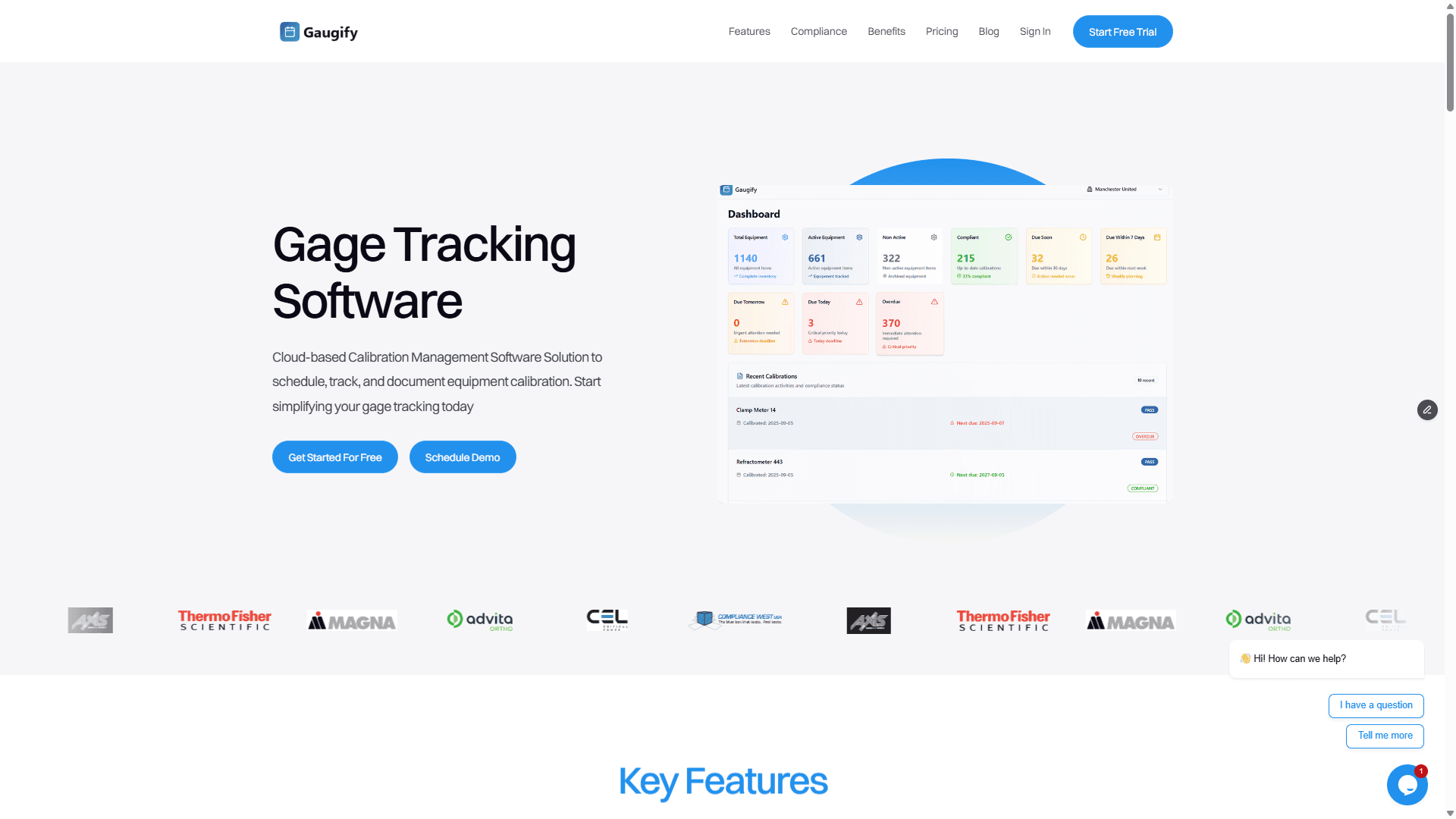
Modern calibration management requires sophisticated software tools to handle complex scheduling, documentation, and compliance requirements associated with CMM probe calibration programs. Gaugify's comprehensive calibration management platform addresses these challenges with automated workflows designed specifically for precision measurement environments.
Intelligent Calibration Scheduling
Gaugify automatically tracks calibration due dates for individual probe configurations, accounting for usage-based schedules common in CMM applications. The system recognizes that different stylus configurations require separate calibration records and schedules, preventing the common mistake of assuming one probe calibration covers all possible configurations.
The platform's risk-based scheduling algorithms consider measurement criticality, historical stability data, and regulatory requirements to optimize calibration intervals. Critical aerospace measurements automatically receive priority scheduling, while less critical applications benefit from extended intervals based on statistical analysis of historical calibration data.
Comprehensive Data Management
CMM probe calibration generates extensive data including as-found measurements, environmental conditions, reference standard information, and final calibration results. Gaugify's data management system captures all relevant parameters in structured formats that support uncertainty calculations and audit trail requirements.
The system automatically links calibration records with reference standard certificates, ensuring traceability chains remain intact even as standards are recalibrated or replaced. This automated traceability management eliminates manual tracking errors that can compromise quality system compliance during customer or regulatory audits.
Integration with Quality Management Systems
Gaugify's compliance features seamlessly integrate with existing quality management systems, providing calibration status data needed for measurement system analysis and process control applications. Real-time calibration status prevents the use of expired probe calibrations that could invalidate measurement results.
The platform generates automated notifications when probe calibrations approach expiration, preventing costly production delays caused by expired calibration status. Quality managers receive dashboard summaries showing system-wide calibration compliance status, enabling proactive management of calibration resources and scheduling.
Advanced Reporting and Analytics
Comprehensive reporting capabilities support both internal quality management and customer audit requirements. Standard reports include calibration certificates, traceability documentation, and statistical summaries of probe performance over time. Custom reporting options accommodate specific customer requirements common in aerospace and automotive supply chains.
Gaugify's analytics engine identifies trends in probe calibration data that can indicate developing problems before they affect measurement accuracy. Historical analysis might reveal gradual probe wear patterns, environmental effects, or systematic calibration drift requiring corrective action.
Transform Your CMM Probe Calibration Management Today
Effective CMM probe calibration management requires more than technical expertise—it demands sophisticated organizational systems that ensure compliance, optimize resources, and support continuous improvement initiatives. Manual calibration tracking systems quickly become overwhelmed by the complexity of modern measurement environments where multiple probe configurations, varying calibration intervals, and stringent documentation requirements create substantial administrative burdens.
Gaugify's modern calibration management platform eliminates these administrative complexities while strengthening quality system compliance and measurement traceability. The system's automated workflows, intelligent scheduling algorithms, and comprehensive reporting capabilities transform calibration management from a reactive administrative task into a proactive quality improvement tool.
Quality managers using Gaugify report significant improvements in calibration compliance rates, reduced administrative overhead, and enhanced audit readiness. The platform's risk-based scheduling optimization often enables more efficient resource utilization while maintaining or improving measurement system reliability.
Don't let manual calibration management compromise your measurement system effectiveness or regulatory compliance. Experience Gaugify's advanced calibration management capabilities with a free trial and discover how modern software solutions can transform your quality management system's efficiency and reliability.
Ready to see Gaugify in action with your specific CMM calibration requirements? Schedule a personalized demonstration to explore how the platform addresses your unique measurement management challenges and compliance objectives.
How to Calibrate a Coordinate Measuring Machine Probe
Coordinate Measuring Machines (CMMs) are precision measurement instruments that use probes to determine the geometric characteristics of manufactured parts with exceptional accuracy. CMM probe calibration is a critical process that ensures these sophisticated measurement systems continue to deliver reliable dimensional data within specified tolerances. Whether you're measuring automotive engine blocks with tolerances of ±0.005 mm or aerospace components requiring ±0.001 mm precision, proper probe calibration forms the foundation of trustworthy measurement results.
Modern CMMs typically employ touch-trigger probes, scanning probes, or optical probes, each requiring specific calibration procedures to maintain their measurement integrity. The calibration process establishes the probe's tip diameter and spatial relationship to the machine's coordinate system, directly impacting every subsequent measurement performed on the CMM.
Understanding CMM Probes and Their Measurement Capabilities
A CMM probe serves as the critical interface between the measuring machine and the workpiece being inspected. Touch-trigger probes, the most common type, contain a stylus with a ruby or ceramic ball tip that makes contact with the part surface. When the probe touches the workpiece, it triggers an electrical signal that records the precise X, Y, and Z coordinates of that contact point.
Scanning probes operate differently by maintaining continuous contact with the surface while collecting thousands of data points per second. These probes are ideal for measuring complex geometries like turbine blades or medical implants where surface form is critical. Optical probes use laser or white light technology to measure surfaces without physical contact, making them perfect for delicate components or soft materials.
The probe's stylus configuration significantly affects measurement accuracy. A standard setup might include a 2mm ruby ball on a 50mm steel shaft, but complex parts often require compound angles with multiple ball tips or specialized shapes. Each configuration must be individually calibrated to establish its unique geometric characteristics within the CMM's coordinate system.
Key Measurement Parameters
CMM probes measure fundamental geometric characteristics including:
Linear dimensions: lengths, widths, heights, and distances between features
Angular measurements: angles between surfaces, perpendicularity, and parallelism
Form characteristics: roundness, flatness, straightness, and cylindricity
Position tolerances: true position, concentricity, and runout
Surface profiles: complex 3D geometries and free-form surfaces
Why CMM Probe Calibration Is Mission-Critical
CMM probe calibration directly impacts measurement uncertainty and traceability. An improperly calibrated probe can introduce systematic errors that compound across all measurements, potentially leading to costly quality escapes or unnecessary part rejections. In aerospace applications, where a single mismeasured feature could compromise flight safety, probe calibration becomes a matter of regulatory compliance and public safety.
Temperature variations, mechanical wear, and stylus changes all affect probe performance. A probe calibrated at 20°C may exhibit different characteristics when the shop floor temperature rises to 23°C, potentially shifting measurements by several micrometers. Similarly, repeated contact with hardened steel surfaces gradually wears the ruby tip, altering the effective ball diameter and introducing measurement bias.
Measurement uncertainty calculations required by ISO 17025 and IATF 16949 standards depend heavily on probe calibration data. Without proper calibration documentation, measurement results lack the traceability needed for customer approval, regulatory compliance, and quality system audits. Quality managers often discover during AS9100 audits that inadequate probe calibration records can trigger major nonconformances affecting the entire quality management system.
Financial Impact of Poor Calibration
Consider a automotive supplier measuring transmission housing bore diameters with a specification of 50.000mm ±0.025mm. An uncalibrated probe with a +0.015mm bias would accept parts that are actually 0.015mm oversized, potentially causing assembly issues and warranty claims. Conversely, the same bias might reject conforming parts, increasing scrap costs and delivery delays.
Step-by-Step CMM Probe Calibration Procedure
Professional CMM probe calibration requires specific reference standards, controlled environmental conditions, and documented procedures to ensure measurement traceability. The process establishes the probe's effective working diameter and geometric relationship to the machine's coordinate system.
Environmental Requirements
Perform calibration in a temperature-controlled environment at 20°C ±2°C with temperature gradients less than 1°C per meter. Humidity should remain between 45-65% RH to minimize static electricity and thermal effects. Allow the CMM, probe system, and calibration artifacts to stabilize for at least 2 hours before beginning calibration.
Vibration isolation is critical during calibration. Even minor floor vibrations from nearby machinery can introduce measurement errors exceeding the calibration uncertainty. Schedule calibrations during periods of minimal shop activity or ensure proper vibration isolation systems are operational.
Reference Standards and Equipment
The primary calibration artifact is typically a certified reference sphere with diameter uncertainty not exceeding 1:10 of the required probe calibration uncertainty. For sub-micrometer applications, ruby spheres with diameter uncertainties of ±0.025μm provide adequate reference accuracy. The sphere must be mounted on a stable kinematic mount to ensure repeatable positioning.
Alternative calibration artifacts include certified ring gages, gage blocks configured in step arrangements, or specialized probe calibration cubes. Each artifact must include current calibration certificates traceable to national measurement standards, typically NIST in the United States or equivalent national metrology institutes internationally.
Detailed Calibration Steps
Step 1: Initial Setup and Inspection
Clean the probe stylus and reference sphere with appropriate solvents to remove contaminants that could affect measurement accuracy. Inspect the ruby tip for chips, wear, or damage using a 10X magnifier. Mount the reference sphere in the CMM work volume where thermal gradients are minimized, typically near the center of the measuring volume.
Step 2: Rough Probe Qualification
Using the CMM software's probe calibration routine, approach the reference sphere from multiple angles to establish approximate probe parameters. Most modern CMMs require a minimum of 25 measurement points distributed over the sphere's surface to calculate the effective probe diameter and spatial compensation values.
Step 3: Precision Calibration Sequence
Execute the formal calibration sequence using the CMM's certified software. Typical parameters include:
Measurement force: 0.5N to 2.0N depending on probe type
Approach speed: 2-5mm/s for consistent triggering
Number of calibration points: 25-125 points depending on accuracy requirements
Point distribution: uniform coverage over accessible sphere surface
Step 4: Statistical Analysis
Evaluate calibration results against acceptance criteria. Form error (sphericity) should typically not exceed 0.5μm, with individual point deviations less than 0.2μm. Calculate the standard deviation of all measurement points and verify it meets the required uncertainty specifications.
Step 5: Verification Measurements
Perform independent verification measurements on secondary artifacts such as certified gage blocks or ring gages. These verification checks confirm that the calibration process produced accurate results and the probe is functioning within specifications.
Governing Standards and Compliance Requirements
Multiple standards govern CMM probe calibration procedures, each addressing specific aspects of measurement traceability and quality assurance. Understanding these requirements ensures calibration procedures meet customer specifications and regulatory compliance obligations.
ISO 10360 Series Standards
ISO 10360-2 specifies acceptance and reverification tests for CMM performance, including probe calibration requirements. The standard defines length measurement error (E) and probing error (P) specifications that must be verified through calibrated test procedures. Most CMMs must demonstrate probing errors less than 2.5μm to meet typical commercial accuracy requirements.
ISO 10360-5 addresses CMMs using single and multiple stylus probing systems, providing specific guidance for complex probe configurations common in production environments. The standard requires documentation of measurement uncertainty for each probe configuration used in production measurements.
ASME B89.4.1 Standards
The American Society of Mechanical Engineers (ASME) B89.4.1 standard provides comprehensive guidance for CMM performance evaluation, including probe qualification procedures. This standard is widely referenced in aerospace and defense applications where measurement traceability is contractually mandated.
ASME B89.4.1 specifies minimum calibration artifact requirements, environmental conditions, and statistical analysis methods for probe calibration results. Compliance with this standard often satisfies customer quality requirements for major aerospace and automotive manufacturers.
VDI/VDE 2617 Guidelines
These German engineering standards provide detailed technical guidance for CMM accuracy assessment and probe calibration procedures. VDI/VDE 2617-6 specifically addresses probe calibration methods and uncertainty evaluation, making it particularly valuable for precision measurement applications.
Calibration Intervals and Frequency Considerations
Determining appropriate CMM probe calibration intervals requires balancing measurement risk, cost considerations, and practical shop floor operations. Most quality systems specify probe calibration frequencies based on usage patterns, measurement criticality, and historical stability data.
Standard Calibration Intervals
Production environments typically require probe calibration at the beginning of each measurement session or shift. High-volume automotive suppliers often calibrate probes every 8 hours during continuous operation, while aerospace measurement labs may calibrate daily or weekly depending on usage intensity.
Environmental stability significantly affects calibration intervals. CMMs operating in temperature-controlled metrology labs maintain calibration stability longer than machines in production environments subject to temperature variations and contamination. A probe calibrated in a stable 20°C lab might remain accurate for weeks, while the same probe on a shop floor requiring daily recalibration due to thermal cycling.
Risk-Based Calibration Scheduling
Critical safety components often mandate more frequent probe calibration regardless of stability history. Aircraft engine components, medical implants, and nuclear power components typically require proof of calibration validity for each measurement session, even if historical data suggests longer intervals would be statistically acceptable.
Conversely, non-critical measurements or screening applications might safely extend calibration intervals based on statistical process control data. Quality managers can analyze historical calibration results to identify drift patterns and optimize calibration frequencies without compromising measurement integrity.
Ready to streamline your calibration scheduling and never miss another due date? Start your free trial of Gaugify and see how automated reminders and compliance tracking can transform your quality management system.
Common CMM Probe Calibration Mistakes and Prevention Strategies
Even experienced metrologists can make critical errors during probe calibration that compromise measurement accuracy and quality system compliance. Understanding these common pitfalls helps establish robust procedures that deliver consistent, reliable results.
Inadequate Thermal Stabilization
The most frequent calibration error involves insufficient thermal stabilization time. CMM components, particularly granite structures and steel probe systems, require hours to reach thermal equilibrium. Rushing this process introduces thermal gradients that can cause measurement errors exceeding ±5μm even with apparently stable temperature readings.
Establish documented stabilization procedures specifying minimum wait times based on temperature differential. A CMM moved from a 15°C storage area to a 20°C lab requires at least 4 hours stabilization time, with longer periods needed for large machines or significant temperature differences.
Contaminated Reference Standards
Microscopic contamination on calibration spheres or probe tips creates systematic measurement errors that propagate through all subsequent measurements. Shop floor environments expose reference standards to coolants, oils, and metal particles that accumulate over time.
Implement rigorous cleaning procedures using appropriate solvents and lint-free cloths. Store calibration artifacts in protective containers when not in use, and inspect surfaces under magnification before each calibration session. Replace reference standards showing wear or damage that exceeds specified tolerances.
Incorrect Statistical Analysis
Many operators focus solely on probe diameter calculations while ignoring form error and measurement repeatability statistics. A probe calibration showing good average diameter but poor repeatability indicates systematic problems that will affect all measurements performed with that configuration.
Establish clear acceptance criteria for all calibration parameters including probe diameter uncertainty, form error limits, and measurement repeatability requirements. Document these criteria in calibration procedures and train operators to recognize when results indicate potential problems.
Inadequate Documentation
Calibration records must include sufficient detail to demonstrate measurement traceability and support uncertainty calculations. Common documentation deficiencies include missing environmental data, incomplete reference standard information, and inadequate measurement uncertainty statements.
Quality system auditors frequently cite inadequate calibration documentation as evidence of ineffective measurement control. Ensure calibration records include reference standard certificates, environmental conditions, measurement results, uncertainty calculations, and technician identification for full traceability.
How Gaugify Streamlines CMM Probe Calibration Management
Modern calibration management requires sophisticated software tools to handle complex scheduling, documentation, and compliance requirements associated with CMM probe calibration programs. Gaugify's comprehensive calibration management platform addresses these challenges with automated workflows designed specifically for precision measurement environments.
Intelligent Calibration Scheduling
Gaugify automatically tracks calibration due dates for individual probe configurations, accounting for usage-based schedules common in CMM applications. The system recognizes that different stylus configurations require separate calibration records and schedules, preventing the common mistake of assuming one probe calibration covers all possible configurations.
The platform's risk-based scheduling algorithms consider measurement criticality, historical stability data, and regulatory requirements to optimize calibration intervals. Critical aerospace measurements automatically receive priority scheduling, while less critical applications benefit from extended intervals based on statistical analysis of historical calibration data.
Comprehensive Data Management
CMM probe calibration generates extensive data including as-found measurements, environmental conditions, reference standard information, and final calibration results. Gaugify's data management system captures all relevant parameters in structured formats that support uncertainty calculations and audit trail requirements.
The system automatically links calibration records with reference standard certificates, ensuring traceability chains remain intact even as standards are recalibrated or replaced. This automated traceability management eliminates manual tracking errors that can compromise quality system compliance during customer or regulatory audits.
Integration with Quality Management Systems
Gaugify's compliance features seamlessly integrate with existing quality management systems, providing calibration status data needed for measurement system analysis and process control applications. Real-time calibration status prevents the use of expired probe calibrations that could invalidate measurement results.
The platform generates automated notifications when probe calibrations approach expiration, preventing costly production delays caused by expired calibration status. Quality managers receive dashboard summaries showing system-wide calibration compliance status, enabling proactive management of calibration resources and scheduling.
Advanced Reporting and Analytics
Comprehensive reporting capabilities support both internal quality management and customer audit requirements. Standard reports include calibration certificates, traceability documentation, and statistical summaries of probe performance over time. Custom reporting options accommodate specific customer requirements common in aerospace and automotive supply chains.
Gaugify's analytics engine identifies trends in probe calibration data that can indicate developing problems before they affect measurement accuracy. Historical analysis might reveal gradual probe wear patterns, environmental effects, or systematic calibration drift requiring corrective action.
Transform Your CMM Probe Calibration Management Today
Effective CMM probe calibration management requires more than technical expertise—it demands sophisticated organizational systems that ensure compliance, optimize resources, and support continuous improvement initiatives. Manual calibration tracking systems quickly become overwhelmed by the complexity of modern measurement environments where multiple probe configurations, varying calibration intervals, and stringent documentation requirements create substantial administrative burdens.
Gaugify's modern calibration management platform eliminates these administrative complexities while strengthening quality system compliance and measurement traceability. The system's automated workflows, intelligent scheduling algorithms, and comprehensive reporting capabilities transform calibration management from a reactive administrative task into a proactive quality improvement tool.
Quality managers using Gaugify report significant improvements in calibration compliance rates, reduced administrative overhead, and enhanced audit readiness. The platform's risk-based scheduling optimization often enables more efficient resource utilization while maintaining or improving measurement system reliability.
Don't let manual calibration management compromise your measurement system effectiveness or regulatory compliance. Experience Gaugify's advanced calibration management capabilities with a free trial and discover how modern software solutions can transform your quality management system's efficiency and reliability.
Ready to see Gaugify in action with your specific CMM calibration requirements? Schedule a personalized demonstration to explore how the platform addresses your unique measurement management challenges and compliance objectives.