
How to Calibrate a pH Meter
How to Calibrate a pH Meter
David Bentley
Quality Assurance Engineer
12 min read
How to Calibrate a pH Meter
pH meters are among the most frequently calibrated instruments in laboratories, manufacturing facilities, and quality control environments. Understanding the proper pH meter calibration procedure is essential for maintaining measurement accuracy and ensuring compliance with quality standards. Whether you're monitoring water treatment processes, validating pharmaceutical products, or testing food and beverage quality, a properly calibrated pH meter is critical for reliable results.
This comprehensive guide will walk you through everything you need to know about pH meter calibration, from the fundamental principles to advanced calibration management strategies that keep your quality system running smoothly.
Understanding pH Meters and Their Critical Role in Quality Control
A pH meter measures the hydrogen ion concentration in a solution, providing a numerical value on the pH scale from 0 to 14. The instrument consists of a pH electrode (typically a glass electrode), a reference electrode, and electronic circuitry that converts the voltage generated by the electrodes into a pH reading.
pH meters are used across diverse industries:
Water treatment facilities monitor drinking water pH (typically 6.5-8.5)
Pharmaceutical laboratories verify drug formulation pH within ±0.02 units
Food processing ensures product safety and quality (yogurt pH 4.0-4.4)
Chemical manufacturing controls reaction conditions within ±0.1 pH units
Environmental testing measures soil and water pH for regulatory compliance
The accuracy of these measurements directly impacts product quality, regulatory compliance, and process control decisions. A drift of just 0.1 pH units can mean the difference between acceptable and rejected product batches.
Why pH Meter Calibration Is Critical for Measurement Accuracy
pH electrodes are inherently unstable and subject to drift over time. The glass membrane becomes contaminated, the reference electrode solution changes composition, and temperature variations affect electrode response. Without regular calibration following a standardized pH meter calibration procedure, measurement errors compound rapidly.
Consider these real-world consequences of improper pH meter calibration:
Pharmaceutical batch rejection: A major pharmaceutical manufacturer lost $2.3 million when an uncalibrated pH meter caused 15 batches of injectable solution to fail stability testing
Water treatment violations: A municipal water facility received EPA violations when drift in their pH monitoring system allowed treated water pH to exceed 8.5 for three consecutive days
Food safety recalls: Inadequate pH control in canned goods production led to botulism risk and a company-wide product recall
pH electrode drift typically ranges from 0.01 to 0.05 pH units per day, depending on sample matrix and electrode condition. For applications requiring ±0.02 pH accuracy, daily calibration may be necessary, while less critical applications might tolerate weekly calibration cycles.
Complete Step-by-Step pH Meter Calibration Procedure
A proper pH meter calibration procedure requires careful attention to environmental conditions, buffer preparation, and measurement techniques. Follow these detailed steps for accurate results:
Pre-Calibration Setup and Equipment Check
Environmental conditions: Perform calibration at 20-25°C with stable temperature (±2°C during procedure). Avoid drafts, vibration, and electromagnetic interference. Document ambient temperature and humidity.
Buffer selection: Use certified pH buffers traceable to NIST standards. Common buffer combinations include:
Two-point: pH 7.00 and 4.01 (general purpose)
Three-point: pH 7.00, 4.01, and 10.01 (extended range)
Application-specific: Choose buffers bracketing your measurement range
Equipment inspection: Check electrode for cracks, coating, or contamination. Verify cable connections and replace buffers older than 6 months or showing signs of contamination.
Detailed Calibration Steps
Step 1: Initial preparation
Allow pH meter and buffers to reach room temperature (minimum 30 minutes)
Remove electrode storage solution and rinse with distilled water
Gently blot (don't wipe) electrode with lint-free tissue
Step 2: First buffer calibration (pH 7.00)
Immerse electrode in fresh pH 7.00 buffer (minimum 25ml volume)
Ensure electrode junction is fully submerged below buffer surface
Wait for stable reading (typically 2-3 minutes, <0.01 units/minute drift)
Adjust meter to read exactly 7.00 (or record as-found value first)
Step 3: Rinse and prepare for second buffer
Remove electrode and rinse thoroughly with distilled water
Blot dry and check for buffer carryover
Use separate rinse container for each buffer to prevent cross-contamination
Step 4: Second buffer calibration (pH 4.01 or 10.01)
Immerse electrode in second buffer (pH 4.01 for acidic samples, 10.01 for alkaline)
Wait for stable reading (may take longer than neutral buffer)
Adjust meter slope or record as-found value
Verify reading is within ±0.02 units of buffer nominal value
Step 5: Third buffer verification (if applicable)
For three-point calibration, verify third buffer without adjustment
Reading should be within ±0.05 units of nominal value
If outside tolerance, investigate electrode condition or buffer integrity
Post-Calibration Verification and Documentation
After completing the calibration, verify system performance with a check standard (independent pH buffer different from calibration buffers). Document all as-found values, environmental conditions, buffer lot numbers, and any deviations from procedure.
Ready to streamline your calibration documentation and ensure nothing falls through the cracks? Start your free Gaugify trial and see how modern calibration management eliminates manual paperwork while improving compliance and traceability.
Relevant Standards Governing pH Meter Calibration Procedures
Multiple standards organizations provide guidance on proper pH meter calibration procedures, each tailored to specific industries and applications:
International Standards
ISO 10523:2008 - Water quality determination of pH. This standard specifies calibration using at least two buffers spanning the measurement range, with maximum 3 pH unit intervals between buffers. Requires calibration verification every 2 hours during extended use.
ISO 17025:2017 - General requirements for testing and calibration laboratories. Mandates documented calibration procedures, measurement uncertainty calculations, and traceability to recognized standards. Gaugify's ISO 17025 calibration software helps laboratories maintain complete compliance with these requirements.
ASTM Standards
ASTM E70-19 - Standard test method for pH of aqueous solutions with the glass electrode. Specifies two-point calibration with buffers within 2 pH units of sample, temperature compensation requirements, and electrode conditioning procedures.
ASTM D1293-18 - Standard test methods for pH of water. Requires calibration before each series of measurements, with buffer accuracy of ±0.01 pH units and calibration verification within ±0.1 units.
Industry-Specific Requirements
USP <791> (United States Pharmacopeia) - pH determination for pharmaceutical applications. Mandates two-point calibration with accuracy within ±0.02 units, electrode response time verification, and temperature compensation validation.
FDA 21 CFR Part 211 - Current Good Manufacturing Practice regulations require written procedures, calibration records, and deviation investigation for pharmaceutical pH measurements.
How Often Should You Calibrate Your pH Meter?
Calibration frequency depends on measurement accuracy requirements, sample matrix, electrode condition, and regulatory obligations. Establishing the right pH meter calibration procedure schedule balances measurement reliability with operational efficiency.
Recommended Calibration Intervals
Daily calibration:
Pharmaceutical quality control (±0.02 pH accuracy)
Critical water treatment monitoring
Research applications requiring high precision
Measurements in aggressive samples (strong acids/bases)
Weekly calibration:
Routine food and beverage testing
Environmental monitoring (soil, surface water)
General laboratory applications
Process control with ±0.1 pH tolerance
Monthly calibration:
Occasional use instruments
Screening applications
Educational laboratories
Applications with relaxed accuracy requirements
Factors Affecting Calibration Frequency
Sample matrix effects: Protein solutions, organic solvents, and samples with extreme pH values accelerate electrode drift. A food laboratory testing dairy products (pH 3.5-6.5) might calibrate daily, while testing neutral solutions allows weekly calibration.
Electrode age and condition: New electrodes typically maintain calibration longer than aged ones. Monitor electrode response time and drift patterns to optimize frequency. Replace electrodes showing >5 millivolt drift between calibrations.
Environmental conditions: Temperature variations, contamination exposure, and storage conditions affect stability. Instruments in climate-controlled laboratories remain stable longer than those in production environments.
Regulatory requirements: Some regulations mandate specific frequencies regardless of instrument stability. Water utilities might require continuous monitoring with automatic calibration every 8 hours.
Common pH Meter Calibration Mistakes and How to Avoid Them
Even experienced technicians can compromise measurement accuracy through subtle procedural errors. Understanding these common mistakes helps ensure your pH meter calibration procedure delivers reliable results.
Buffer-Related Errors
Mistake: Using expired or contaminated buffers
Impact: pH 7.00 buffer exposed to air for 6 months may read 6.85, introducing 0.15 unit systematic error
Prevention: Replace buffers every 6 months, store in closed containers, and discard after visible contamination or precipitation
Mistake: Insufficient buffer volume
Impact: Small buffer volumes allow rapid pH shift from electrode contamination
Prevention: Use minimum 25ml buffer volume, replace after 10-15 measurements, and never return used buffer to stock bottle
Mistake: Wrong buffer selection
Impact: Calibrating with pH 4.01 and 7.00 when measuring pH 9-11 samples reduces accuracy at high pH
Prevention: Select buffers bracketing your measurement range, typically within 2-3 pH units of samples
Electrode Handling Errors
Mistake: Wiping electrode instead of blotting
Impact: Creates static charge affecting voltage measurement, introduces lint contamination
Prevention: Always blot gently with lint-free tissue, never rub or wipe electrode surface
Mistake: Inadequate electrode conditioning
Impact: New or stored electrodes may take 15-30 minutes to reach stable response
Prevention: Soak new electrodes in pH 7 buffer for 4+ hours, allow temperature equilibration before calibration
Procedural and Documentation Errors
Mistake: Skipping as-found readings
Impact: No way to detect calibration drift or validate measurement uncertainty
Prevention: Always record as-found values before adjustment, trend data to predict maintenance needs
Mistake: Ignoring temperature compensation
Impact: 0.03 pH units error per 10°C temperature difference
Prevention: Enable automatic temperature compensation or manually correct for temperature differences
How Gaugify Streamlines pH Meter Calibration Management
Managing pH meter calibration procedures across multiple instruments, locations, and technicians requires systematic organization that paper-based systems simply can't provide. Gaugify's cloud-based calibration management platform transforms how quality teams handle pH meter calibrations.
Automated Scheduling and Reminders
Never miss another calibration deadline with Gaugify's intelligent scheduling system. Set up calibration intervals based on your specific requirements - daily for critical pharmaceutical applications, weekly for routine testing, or custom schedules for unique situations.
The system automatically generates work orders and sends email reminders to designated technicians. When a pH meter approaches its due date, responsible personnel receive notifications with complete calibration instructions, required buffer specifications, and acceptance criteria.
Comprehensive As-Found and As-Left Data Tracking
Gaugify captures complete calibration data for every pH meter in your system:
As-found readings for each buffer with timestamp and technician ID
Environmental conditions including temperature, humidity, and location
Buffer information including lot numbers, expiration dates, and traceability
Adjustment details with before/after values and acceptance criteria verification
Electrode condition notes and maintenance history
This detailed record-keeping enables trend analysis to predict electrode replacement needs and optimize calibration frequencies based on actual drift patterns.
Automated Certificate Generation and Distribution
Generate professional calibration certificates instantly with all required information: measurement results, uncertainty calculations, traceability statements, and technician signatures. Gaugify's compliance features ensure certificates meet ISO 17025, FDA, and other regulatory requirements.
Certificates can be automatically distributed to quality managers, filed in instrument records, and made available for audit purposes with complete revision control.
Advanced Analytics and Reporting
Transform calibration data into actionable insights with Gaugify's reporting capabilities:
Drift analysis: Identify instruments requiring more frequent calibration or electrode replacement
Technician performance: Compare calibration results between different operators
Cost optimization: Balance calibration frequency against measurement uncertainty requirements
Compliance tracking: Monitor adherence to procedures and identify improvement opportunities
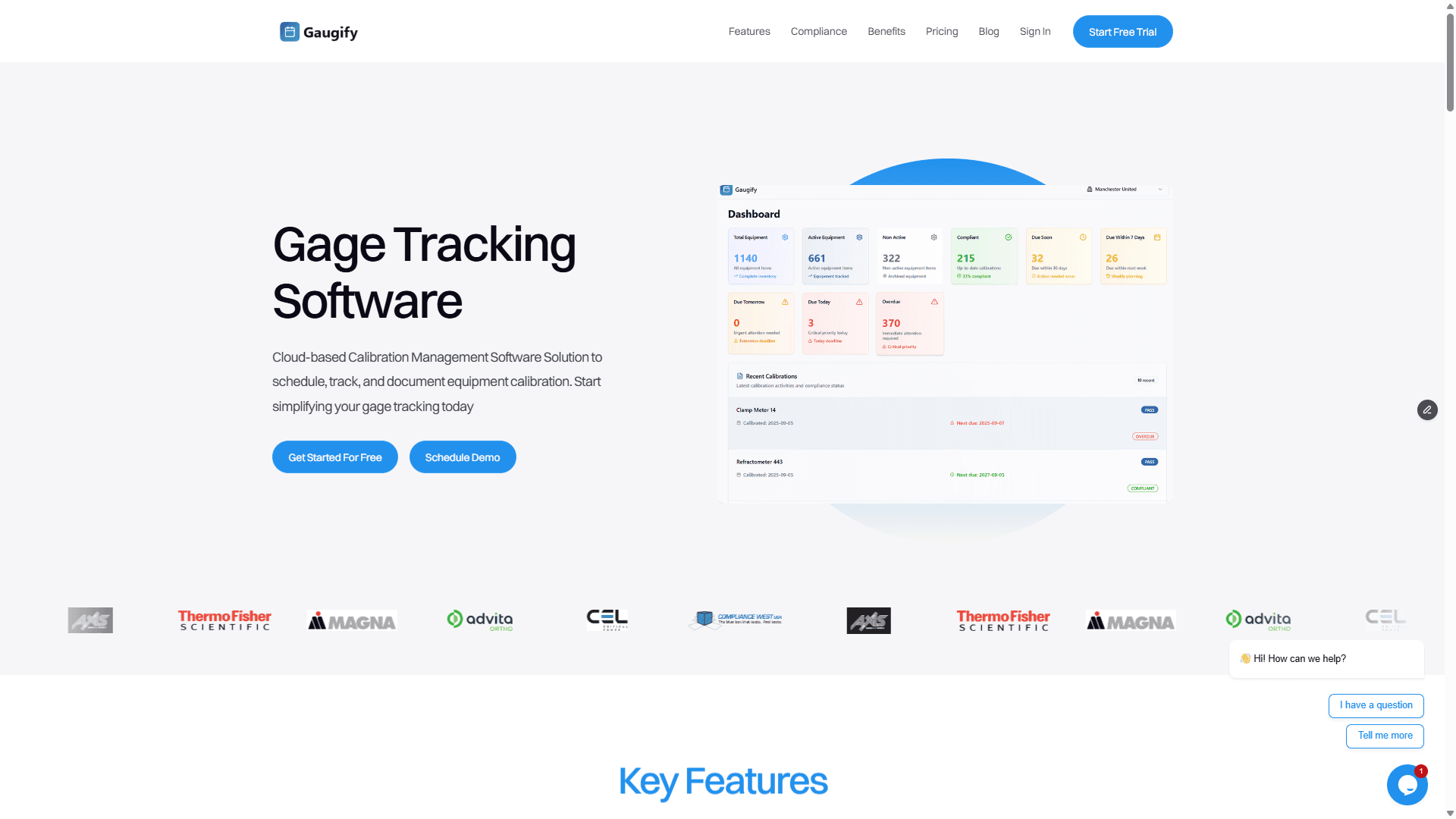
Quality managers can access real-time dashboards showing calibration status across all pH meters, overdue items, and trending information that supports data-driven decisions.
Integration with Quality Management Systems
Gaugify integrates seamlessly with existing quality systems, LIMS platforms, and enterprise software. Calibration data flows automatically into quality records, eliminating manual data entry and reducing transcription errors.
The platform supports role-based access control, ensuring technicians can enter calibration data while restricting administrative functions to authorized personnel. Audit trails track all system activities with complete user accountability.
Take Control of Your pH Meter Calibration Program
Proper pH meter calibration is fundamental to measurement accuracy, product quality, and regulatory compliance. A well-designed pH meter calibration procedure supported by systematic documentation and trend analysis protects your organization from costly errors while optimizing operational efficiency.
Modern calibration management goes beyond simple scheduling and record-keeping. It provides the analytical tools and process insights needed to continuously improve your quality system while reducing administrative burden on technical staff.
Ready to modernize your pH meter calibration program? Start your free Gaugify trial today and discover how the right calibration management platform can transform your quality operations. With automated scheduling, comprehensive data capture, and advanced analytics, you'll spend less time on paperwork and more time ensuring measurement accuracy.
See Gaugify in action with a personalized demonstration. Schedule your demo to explore features specific to your calibration management needs and learn how leading companies are achieving better compliance outcomes with less effort.
How to Calibrate a pH Meter
pH meters are among the most frequently calibrated instruments in laboratories, manufacturing facilities, and quality control environments. Understanding the proper pH meter calibration procedure is essential for maintaining measurement accuracy and ensuring compliance with quality standards. Whether you're monitoring water treatment processes, validating pharmaceutical products, or testing food and beverage quality, a properly calibrated pH meter is critical for reliable results.
This comprehensive guide will walk you through everything you need to know about pH meter calibration, from the fundamental principles to advanced calibration management strategies that keep your quality system running smoothly.
Understanding pH Meters and Their Critical Role in Quality Control
A pH meter measures the hydrogen ion concentration in a solution, providing a numerical value on the pH scale from 0 to 14. The instrument consists of a pH electrode (typically a glass electrode), a reference electrode, and electronic circuitry that converts the voltage generated by the electrodes into a pH reading.
pH meters are used across diverse industries:
Water treatment facilities monitor drinking water pH (typically 6.5-8.5)
Pharmaceutical laboratories verify drug formulation pH within ±0.02 units
Food processing ensures product safety and quality (yogurt pH 4.0-4.4)
Chemical manufacturing controls reaction conditions within ±0.1 pH units
Environmental testing measures soil and water pH for regulatory compliance
The accuracy of these measurements directly impacts product quality, regulatory compliance, and process control decisions. A drift of just 0.1 pH units can mean the difference between acceptable and rejected product batches.
Why pH Meter Calibration Is Critical for Measurement Accuracy
pH electrodes are inherently unstable and subject to drift over time. The glass membrane becomes contaminated, the reference electrode solution changes composition, and temperature variations affect electrode response. Without regular calibration following a standardized pH meter calibration procedure, measurement errors compound rapidly.
Consider these real-world consequences of improper pH meter calibration:
Pharmaceutical batch rejection: A major pharmaceutical manufacturer lost $2.3 million when an uncalibrated pH meter caused 15 batches of injectable solution to fail stability testing
Water treatment violations: A municipal water facility received EPA violations when drift in their pH monitoring system allowed treated water pH to exceed 8.5 for three consecutive days
Food safety recalls: Inadequate pH control in canned goods production led to botulism risk and a company-wide product recall
pH electrode drift typically ranges from 0.01 to 0.05 pH units per day, depending on sample matrix and electrode condition. For applications requiring ±0.02 pH accuracy, daily calibration may be necessary, while less critical applications might tolerate weekly calibration cycles.
Complete Step-by-Step pH Meter Calibration Procedure
A proper pH meter calibration procedure requires careful attention to environmental conditions, buffer preparation, and measurement techniques. Follow these detailed steps for accurate results:
Pre-Calibration Setup and Equipment Check
Environmental conditions: Perform calibration at 20-25°C with stable temperature (±2°C during procedure). Avoid drafts, vibration, and electromagnetic interference. Document ambient temperature and humidity.
Buffer selection: Use certified pH buffers traceable to NIST standards. Common buffer combinations include:
Two-point: pH 7.00 and 4.01 (general purpose)
Three-point: pH 7.00, 4.01, and 10.01 (extended range)
Application-specific: Choose buffers bracketing your measurement range
Equipment inspection: Check electrode for cracks, coating, or contamination. Verify cable connections and replace buffers older than 6 months or showing signs of contamination.
Detailed Calibration Steps
Step 1: Initial preparation
Allow pH meter and buffers to reach room temperature (minimum 30 minutes)
Remove electrode storage solution and rinse with distilled water
Gently blot (don't wipe) electrode with lint-free tissue
Step 2: First buffer calibration (pH 7.00)
Immerse electrode in fresh pH 7.00 buffer (minimum 25ml volume)
Ensure electrode junction is fully submerged below buffer surface
Wait for stable reading (typically 2-3 minutes, <0.01 units/minute drift)
Adjust meter to read exactly 7.00 (or record as-found value first)
Step 3: Rinse and prepare for second buffer
Remove electrode and rinse thoroughly with distilled water
Blot dry and check for buffer carryover
Use separate rinse container for each buffer to prevent cross-contamination
Step 4: Second buffer calibration (pH 4.01 or 10.01)
Immerse electrode in second buffer (pH 4.01 for acidic samples, 10.01 for alkaline)
Wait for stable reading (may take longer than neutral buffer)
Adjust meter slope or record as-found value
Verify reading is within ±0.02 units of buffer nominal value
Step 5: Third buffer verification (if applicable)
For three-point calibration, verify third buffer without adjustment
Reading should be within ±0.05 units of nominal value
If outside tolerance, investigate electrode condition or buffer integrity
Post-Calibration Verification and Documentation
After completing the calibration, verify system performance with a check standard (independent pH buffer different from calibration buffers). Document all as-found values, environmental conditions, buffer lot numbers, and any deviations from procedure.
Ready to streamline your calibration documentation and ensure nothing falls through the cracks? Start your free Gaugify trial and see how modern calibration management eliminates manual paperwork while improving compliance and traceability.
Relevant Standards Governing pH Meter Calibration Procedures
Multiple standards organizations provide guidance on proper pH meter calibration procedures, each tailored to specific industries and applications:
International Standards
ISO 10523:2008 - Water quality determination of pH. This standard specifies calibration using at least two buffers spanning the measurement range, with maximum 3 pH unit intervals between buffers. Requires calibration verification every 2 hours during extended use.
ISO 17025:2017 - General requirements for testing and calibration laboratories. Mandates documented calibration procedures, measurement uncertainty calculations, and traceability to recognized standards. Gaugify's ISO 17025 calibration software helps laboratories maintain complete compliance with these requirements.
ASTM Standards
ASTM E70-19 - Standard test method for pH of aqueous solutions with the glass electrode. Specifies two-point calibration with buffers within 2 pH units of sample, temperature compensation requirements, and electrode conditioning procedures.
ASTM D1293-18 - Standard test methods for pH of water. Requires calibration before each series of measurements, with buffer accuracy of ±0.01 pH units and calibration verification within ±0.1 units.
Industry-Specific Requirements
USP <791> (United States Pharmacopeia) - pH determination for pharmaceutical applications. Mandates two-point calibration with accuracy within ±0.02 units, electrode response time verification, and temperature compensation validation.
FDA 21 CFR Part 211 - Current Good Manufacturing Practice regulations require written procedures, calibration records, and deviation investigation for pharmaceutical pH measurements.
How Often Should You Calibrate Your pH Meter?
Calibration frequency depends on measurement accuracy requirements, sample matrix, electrode condition, and regulatory obligations. Establishing the right pH meter calibration procedure schedule balances measurement reliability with operational efficiency.
Recommended Calibration Intervals
Daily calibration:
Pharmaceutical quality control (±0.02 pH accuracy)
Critical water treatment monitoring
Research applications requiring high precision
Measurements in aggressive samples (strong acids/bases)
Weekly calibration:
Routine food and beverage testing
Environmental monitoring (soil, surface water)
General laboratory applications
Process control with ±0.1 pH tolerance
Monthly calibration:
Occasional use instruments
Screening applications
Educational laboratories
Applications with relaxed accuracy requirements
Factors Affecting Calibration Frequency
Sample matrix effects: Protein solutions, organic solvents, and samples with extreme pH values accelerate electrode drift. A food laboratory testing dairy products (pH 3.5-6.5) might calibrate daily, while testing neutral solutions allows weekly calibration.
Electrode age and condition: New electrodes typically maintain calibration longer than aged ones. Monitor electrode response time and drift patterns to optimize frequency. Replace electrodes showing >5 millivolt drift between calibrations.
Environmental conditions: Temperature variations, contamination exposure, and storage conditions affect stability. Instruments in climate-controlled laboratories remain stable longer than those in production environments.
Regulatory requirements: Some regulations mandate specific frequencies regardless of instrument stability. Water utilities might require continuous monitoring with automatic calibration every 8 hours.
Common pH Meter Calibration Mistakes and How to Avoid Them
Even experienced technicians can compromise measurement accuracy through subtle procedural errors. Understanding these common mistakes helps ensure your pH meter calibration procedure delivers reliable results.
Buffer-Related Errors
Mistake: Using expired or contaminated buffers
Impact: pH 7.00 buffer exposed to air for 6 months may read 6.85, introducing 0.15 unit systematic error
Prevention: Replace buffers every 6 months, store in closed containers, and discard after visible contamination or precipitation
Mistake: Insufficient buffer volume
Impact: Small buffer volumes allow rapid pH shift from electrode contamination
Prevention: Use minimum 25ml buffer volume, replace after 10-15 measurements, and never return used buffer to stock bottle
Mistake: Wrong buffer selection
Impact: Calibrating with pH 4.01 and 7.00 when measuring pH 9-11 samples reduces accuracy at high pH
Prevention: Select buffers bracketing your measurement range, typically within 2-3 pH units of samples
Electrode Handling Errors
Mistake: Wiping electrode instead of blotting
Impact: Creates static charge affecting voltage measurement, introduces lint contamination
Prevention: Always blot gently with lint-free tissue, never rub or wipe electrode surface
Mistake: Inadequate electrode conditioning
Impact: New or stored electrodes may take 15-30 minutes to reach stable response
Prevention: Soak new electrodes in pH 7 buffer for 4+ hours, allow temperature equilibration before calibration
Procedural and Documentation Errors
Mistake: Skipping as-found readings
Impact: No way to detect calibration drift or validate measurement uncertainty
Prevention: Always record as-found values before adjustment, trend data to predict maintenance needs
Mistake: Ignoring temperature compensation
Impact: 0.03 pH units error per 10°C temperature difference
Prevention: Enable automatic temperature compensation or manually correct for temperature differences
How Gaugify Streamlines pH Meter Calibration Management
Managing pH meter calibration procedures across multiple instruments, locations, and technicians requires systematic organization that paper-based systems simply can't provide. Gaugify's cloud-based calibration management platform transforms how quality teams handle pH meter calibrations.
Automated Scheduling and Reminders
Never miss another calibration deadline with Gaugify's intelligent scheduling system. Set up calibration intervals based on your specific requirements - daily for critical pharmaceutical applications, weekly for routine testing, or custom schedules for unique situations.
The system automatically generates work orders and sends email reminders to designated technicians. When a pH meter approaches its due date, responsible personnel receive notifications with complete calibration instructions, required buffer specifications, and acceptance criteria.
Comprehensive As-Found and As-Left Data Tracking
Gaugify captures complete calibration data for every pH meter in your system:
As-found readings for each buffer with timestamp and technician ID
Environmental conditions including temperature, humidity, and location
Buffer information including lot numbers, expiration dates, and traceability
Adjustment details with before/after values and acceptance criteria verification
Electrode condition notes and maintenance history
This detailed record-keeping enables trend analysis to predict electrode replacement needs and optimize calibration frequencies based on actual drift patterns.
Automated Certificate Generation and Distribution
Generate professional calibration certificates instantly with all required information: measurement results, uncertainty calculations, traceability statements, and technician signatures. Gaugify's compliance features ensure certificates meet ISO 17025, FDA, and other regulatory requirements.
Certificates can be automatically distributed to quality managers, filed in instrument records, and made available for audit purposes with complete revision control.
Advanced Analytics and Reporting
Transform calibration data into actionable insights with Gaugify's reporting capabilities:
Drift analysis: Identify instruments requiring more frequent calibration or electrode replacement
Technician performance: Compare calibration results between different operators
Cost optimization: Balance calibration frequency against measurement uncertainty requirements
Compliance tracking: Monitor adherence to procedures and identify improvement opportunities
Quality managers can access real-time dashboards showing calibration status across all pH meters, overdue items, and trending information that supports data-driven decisions.
Integration with Quality Management Systems
Gaugify integrates seamlessly with existing quality systems, LIMS platforms, and enterprise software. Calibration data flows automatically into quality records, eliminating manual data entry and reducing transcription errors.
The platform supports role-based access control, ensuring technicians can enter calibration data while restricting administrative functions to authorized personnel. Audit trails track all system activities with complete user accountability.
Take Control of Your pH Meter Calibration Program
Proper pH meter calibration is fundamental to measurement accuracy, product quality, and regulatory compliance. A well-designed pH meter calibration procedure supported by systematic documentation and trend analysis protects your organization from costly errors while optimizing operational efficiency.
Modern calibration management goes beyond simple scheduling and record-keeping. It provides the analytical tools and process insights needed to continuously improve your quality system while reducing administrative burden on technical staff.
Ready to modernize your pH meter calibration program? Start your free Gaugify trial today and discover how the right calibration management platform can transform your quality operations. With automated scheduling, comprehensive data capture, and advanced analytics, you'll spend less time on paperwork and more time ensuring measurement accuracy.
See Gaugify in action with a personalized demonstration. Schedule your demo to explore features specific to your calibration management needs and learn how leading companies are achieving better compliance outcomes with less effort.