
How to Fix a Backlog of Overdue Calibrations
How to Fix a Backlog of Overdue Calibrations
David Bentley
Quality Assurance Engineer
8 min read
How to Fix a Backlog of Overdue Calibrations
It's 6:30 PM on a Friday when you discover that thirty-seven of your critical measurement instruments are past their calibration due dates. Your Mitutoyo dial calipers haven't been calibrated in eight weeks, three pressure transducers are ninety days overdue, and your CMM coordinate measuring machine's certificate expired last month—right before a major customer audit scheduled for Monday morning. This overdue calibrations backlog isn't just a paperwork problem; it's a business crisis waiting to explode.
If this scenario sounds familiar, you're not alone. Quality managers across manufacturing facilities, testing laboratories, and aerospace shops face the same nightmare: an overwhelming backlog of instruments that should have been calibrated weeks or months ago. The stress compounds as production deadlines loom, auditors schedule visits, and you realize that every measurement taken with these overdue instruments puts your certifications, customer relationships, and bottom line at risk.
Why Overdue Calibrations Backlogs Are More Common Than You Think
Walk into any manufacturing facility, and you'll likely find instruments operating beyond their calibration intervals. A recent industry survey revealed that 68% of companies struggle with calibration backlogs, with the average facility having 15-20% of their instruments overdue at any given time.
This problem isn't limited to small shops with limited resources. Fortune 500 manufacturers, FDA-regulated pharmaceutical companies, and even aerospace suppliers with robust quality systems fall behind. The reasons vary, but the pattern remains consistent: what starts as a few overdue instruments quickly snowballs into an unmanageable backlog that threatens compliance and operations.
Consider the automotive parts supplier that discovered 180 overdue instruments during a surprise customer audit, or the medical device manufacturer that had to halt production for three days while emergency calibrations were performed on critical test equipment. These aren't isolated incidents—they're predictable outcomes when calibration management systems fail.
The Real-World Consequences of an Overdue Calibrations Backlog
The immediate panic of discovering overdue instruments is just the beginning. The real damage unfolds over the following days and weeks:
Failed Audits and Lost Certifications
ISO 9001 auditors don't accept excuses. When they discover that your torque wrenches haven't been calibrated in six months, they issue major nonconformances. AS9100 audits are even more stringent—aerospace customers have terminated supplier relationships over calibration backlogs. One defense contractor lost a $2.3 million contract when auditors found 40% of their test equipment operating with expired calibrations.
Product Recalls and Liability Exposure
Every measurement taken with an overdue instrument creates potential liability. When a medical device manufacturer discovered their pressure calibrators were reading 2% high after being overdue for five months, they faced a voluntary recall of 12,000 units. The recall cost exceeded $850,000, not including legal fees and lost customer confidence.
Scrap and Rework Costs
Overdue instruments don't always fail—but when they do, the costs multiply quickly. A machine shop discovered their CMM was measuring 0.003" out of tolerance after running overdue for two months. Three weeks of production had to be re-inspected, resulting in $47,000 in scrap costs and delayed shipments to five customers.
Emergency Calibration Premiums
Rush calibration services cost 50-100% more than scheduled services. When you're facing audit deadlines or production shutdowns, you pay whatever it takes. One facility spent $18,000 on emergency calibrations that would have cost $8,500 if performed on schedule.
Root Causes of Calibration Backlogs
Understanding why backlogs develop is crucial to preventing them. The most common root causes include:
Manual Tracking Systems
Excel spreadsheets and paper-based systems fail when instrument counts exceed 50-100 items. Due dates get missed, instruments get lost in the shuffle, and critical notifications never reach the right people. One quality manager admitted to discovering instruments that were over a year overdue because they "fell off" the spreadsheet during an update.
Poor Communication Between Departments
Production supervisors need their gages available for daily operations. Quality departments need them calibrated on schedule. Without clear communication protocols, instruments stay in production past their due dates while quality managers assume they're already in for calibration.
Inadequate Lead Time Planning
Most calibration backlogs start small. A few instruments go overdue by days, then weeks, then months. Without buffer time built into the scheduling process, minor delays cascade into major problems.
Limited Calibration Service Capacity
External calibration services often have 2-3 week lead times, especially for specialized instruments. Internal calibration departments get overwhelmed during busy periods. Without proper capacity planning, instruments pile up waiting for available calibration slots.
Step-by-Step Solution to Clear Your Overdue Calibrations Backlog
Clearing a calibration backlog requires a systematic approach that prioritizes risk while establishing sustainable processes for the future.
Step 1: Complete Inventory and Risk Assessment
Document every overdue instrument with the following information:
Instrument ID, description, and location
Days overdue
Last calibration date and results
Critical applications and tolerance requirements
Production impact if removed immediately
Create a risk matrix that considers both measurement criticality and how long instruments have been overdue. A torque wrench used for safety-critical fasteners overdue by 90 days represents higher risk than a steel rule overdue by 30 days.
Step 2: Immediate Risk Mitigation
For high-risk overdue instruments, implement immediate controls:
Check standards: Compare readings against known reference standards to verify continued accuracy
Increase inspection frequency: Double-check critical measurements with alternative instruments
Document deviations: Create nonconformance reports acknowledging the overdue status and control measures
Notify customers: Proactively inform key customers if their products may be affected
Step 3: Triage and Prioritization
Establish clear priorities for calibration scheduling:
Priority 1: Safety-critical instruments (torque tools, pressure devices, electrical testers)
Priority 2: Customer-required instruments (dimensional gages, test equipment for acceptance testing)
Priority 3: Process monitoring instruments (thermometers, basic measuring tools)
Remove Priority 3 instruments from service temporarily if necessary to focus resources on higher-priority items.
Step 4: Expand Calibration Capacity
Contact multiple calibration service providers to secure additional capacity:
Request expedited services for critical instruments
Split the workload across multiple vendors
Consider on-site calibration services for large quantities
Evaluate temporary equipment rentals as substitutes
Yes, this costs more than scheduled calibrations, but it's less expensive than failed audits or recalls.
Step 5: Establish Prevention Protocols
While clearing the backlog, implement systems to prevent recurrence:
Set up automatic notifications 30, 14, and 7 days before due dates
Create buffer periods—schedule calibrations 2-3 weeks before actual due dates
Establish backup instruments for critical applications
Train multiple personnel on internal calibration procedures
Start your free trial of Gaugify to automate these notifications and prevent future backlogs from developing.
Step 6: Documentation and Communication
Maintain detailed records throughout the process:
Document which products were manufactured with overdue instruments
Record any out-of-tolerance findings and their impact assessment
Update calibration certificates and instrument records immediately
Communicate progress to management and affected departments
How Modern Calibration Software Prevents Overdue Backlogs
The most effective way to prevent calibration backlogs is implementing automated calibration management software that eliminates the manual processes that cause problems in the first place.
Automated Scheduling and Notifications
Gaugify's automated scheduling features send notifications to the right people at the right time. Quality managers receive dashboard alerts, technicians get email reminders, and supervisors see upcoming due dates during daily planning meetings. No instruments fall through the cracks because no one depends on remembering to check spreadsheets.
Real-Time Visibility and Reporting
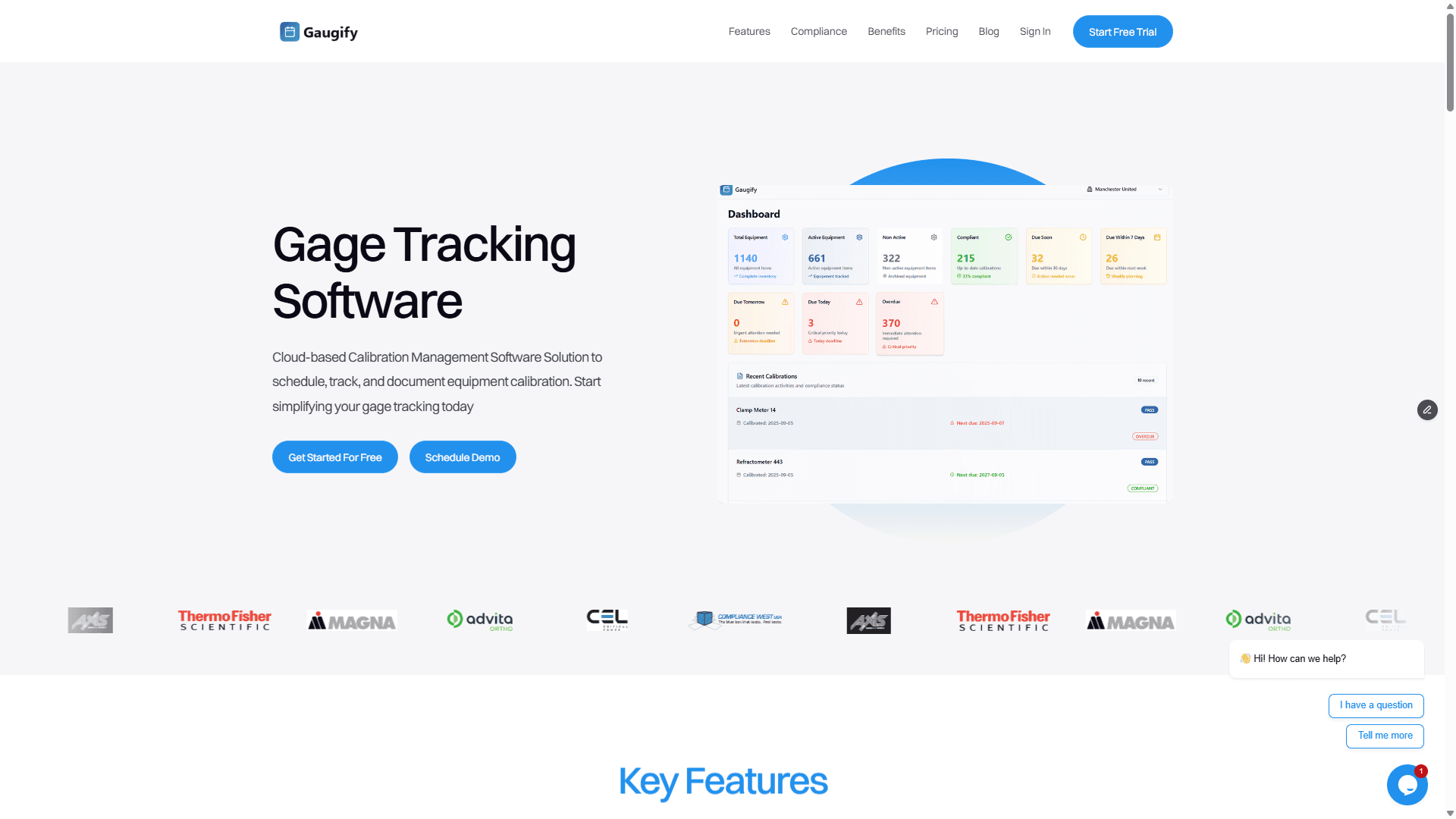
Modern calibration software provides real-time visibility into instrument status across multiple locations. Quality managers can see exactly which instruments are approaching due dates, which departments have the highest overdue percentages, and which calibration vendors are causing delays. This visibility enables proactive management instead of reactive crisis response.
Integration with Existing Systems
The best calibration management systems integrate with existing ERP, quality management, and maintenance systems. When an instrument goes overdue in the calibration system, it automatically creates work orders, sends notifications to affected departments, and updates instrument availability in production scheduling systems.
Compliance Documentation
For companies operating under ISO 17025, FDA, or aerospace quality standards, automated calibration software maintains the detailed documentation required for compliance. Every calibration certificate, overdue notification, and corrective action gets stored in auditable records that demonstrate due diligence.
Building Sustainable Calibration Management
Clearing a backlog is just the first step. Sustainable calibration management requires ongoing attention to process improvement and system optimization.
Regular Process Reviews
Schedule monthly reviews of calibration performance metrics:
Percentage of instruments overdue
Average days overdue for late instruments
Calibration vendor performance and lead times
Internal calibration capacity utilization
Continuous Improvement
Use data from your calibration management system to identify improvement opportunities:
Extend calibration intervals for stable instruments
Bring high-volume calibrations in-house
Negotiate better service levels with external providers
Optimize instrument utilization across departments
Staff Training and Development
Invest in training programs that expand internal calibration capabilities:
Certify additional technicians for basic calibrations
Cross-train personnel across different instrument types
Develop backup coverage for key calibration personnel
Stay current with new calibration technologies and methods
Take Control of Your Calibration Schedule
An overdue calibrations backlog doesn't have to become a recurring crisis. With systematic approaches to backlog clearance and modern calibration management tools, you can transform calibration from a constant source of stress into a well-oiled component of your quality system.
The key is taking action before the next audit deadline or customer visit. Every day you delay clearing overdue instruments increases your risk exposure and makes the eventual solution more expensive and disruptive.
Gaugify's cloud-based calibration management software helps hundreds of companies maintain compliance and prevent backlogs through automated scheduling, real-time notifications, and comprehensive reporting. Our customers report 95% reduction in overdue instruments within 90 days of implementation.
Don't let calibration backlogs threaten your next audit or customer relationship. Start your free 14-day trial today and see how automated calibration management eliminates the stress and risk of overdue instruments. No credit card required, and you can import your existing instrument database in minutes.
How to Fix a Backlog of Overdue Calibrations
It's 6:30 PM on a Friday when you discover that thirty-seven of your critical measurement instruments are past their calibration due dates. Your Mitutoyo dial calipers haven't been calibrated in eight weeks, three pressure transducers are ninety days overdue, and your CMM coordinate measuring machine's certificate expired last month—right before a major customer audit scheduled for Monday morning. This overdue calibrations backlog isn't just a paperwork problem; it's a business crisis waiting to explode.
If this scenario sounds familiar, you're not alone. Quality managers across manufacturing facilities, testing laboratories, and aerospace shops face the same nightmare: an overwhelming backlog of instruments that should have been calibrated weeks or months ago. The stress compounds as production deadlines loom, auditors schedule visits, and you realize that every measurement taken with these overdue instruments puts your certifications, customer relationships, and bottom line at risk.
Why Overdue Calibrations Backlogs Are More Common Than You Think
Walk into any manufacturing facility, and you'll likely find instruments operating beyond their calibration intervals. A recent industry survey revealed that 68% of companies struggle with calibration backlogs, with the average facility having 15-20% of their instruments overdue at any given time.
This problem isn't limited to small shops with limited resources. Fortune 500 manufacturers, FDA-regulated pharmaceutical companies, and even aerospace suppliers with robust quality systems fall behind. The reasons vary, but the pattern remains consistent: what starts as a few overdue instruments quickly snowballs into an unmanageable backlog that threatens compliance and operations.
Consider the automotive parts supplier that discovered 180 overdue instruments during a surprise customer audit, or the medical device manufacturer that had to halt production for three days while emergency calibrations were performed on critical test equipment. These aren't isolated incidents—they're predictable outcomes when calibration management systems fail.
The Real-World Consequences of an Overdue Calibrations Backlog
The immediate panic of discovering overdue instruments is just the beginning. The real damage unfolds over the following days and weeks:
Failed Audits and Lost Certifications
ISO 9001 auditors don't accept excuses. When they discover that your torque wrenches haven't been calibrated in six months, they issue major nonconformances. AS9100 audits are even more stringent—aerospace customers have terminated supplier relationships over calibration backlogs. One defense contractor lost a $2.3 million contract when auditors found 40% of their test equipment operating with expired calibrations.
Product Recalls and Liability Exposure
Every measurement taken with an overdue instrument creates potential liability. When a medical device manufacturer discovered their pressure calibrators were reading 2% high after being overdue for five months, they faced a voluntary recall of 12,000 units. The recall cost exceeded $850,000, not including legal fees and lost customer confidence.
Scrap and Rework Costs
Overdue instruments don't always fail—but when they do, the costs multiply quickly. A machine shop discovered their CMM was measuring 0.003" out of tolerance after running overdue for two months. Three weeks of production had to be re-inspected, resulting in $47,000 in scrap costs and delayed shipments to five customers.
Emergency Calibration Premiums
Rush calibration services cost 50-100% more than scheduled services. When you're facing audit deadlines or production shutdowns, you pay whatever it takes. One facility spent $18,000 on emergency calibrations that would have cost $8,500 if performed on schedule.
Root Causes of Calibration Backlogs
Understanding why backlogs develop is crucial to preventing them. The most common root causes include:
Manual Tracking Systems
Excel spreadsheets and paper-based systems fail when instrument counts exceed 50-100 items. Due dates get missed, instruments get lost in the shuffle, and critical notifications never reach the right people. One quality manager admitted to discovering instruments that were over a year overdue because they "fell off" the spreadsheet during an update.
Poor Communication Between Departments
Production supervisors need their gages available for daily operations. Quality departments need them calibrated on schedule. Without clear communication protocols, instruments stay in production past their due dates while quality managers assume they're already in for calibration.
Inadequate Lead Time Planning
Most calibration backlogs start small. A few instruments go overdue by days, then weeks, then months. Without buffer time built into the scheduling process, minor delays cascade into major problems.
Limited Calibration Service Capacity
External calibration services often have 2-3 week lead times, especially for specialized instruments. Internal calibration departments get overwhelmed during busy periods. Without proper capacity planning, instruments pile up waiting for available calibration slots.
Step-by-Step Solution to Clear Your Overdue Calibrations Backlog
Clearing a calibration backlog requires a systematic approach that prioritizes risk while establishing sustainable processes for the future.
Step 1: Complete Inventory and Risk Assessment
Document every overdue instrument with the following information:
Instrument ID, description, and location
Days overdue
Last calibration date and results
Critical applications and tolerance requirements
Production impact if removed immediately
Create a risk matrix that considers both measurement criticality and how long instruments have been overdue. A torque wrench used for safety-critical fasteners overdue by 90 days represents higher risk than a steel rule overdue by 30 days.
Step 2: Immediate Risk Mitigation
For high-risk overdue instruments, implement immediate controls:
Check standards: Compare readings against known reference standards to verify continued accuracy
Increase inspection frequency: Double-check critical measurements with alternative instruments
Document deviations: Create nonconformance reports acknowledging the overdue status and control measures
Notify customers: Proactively inform key customers if their products may be affected
Step 3: Triage and Prioritization
Establish clear priorities for calibration scheduling:
Priority 1: Safety-critical instruments (torque tools, pressure devices, electrical testers)
Priority 2: Customer-required instruments (dimensional gages, test equipment for acceptance testing)
Priority 3: Process monitoring instruments (thermometers, basic measuring tools)
Remove Priority 3 instruments from service temporarily if necessary to focus resources on higher-priority items.
Step 4: Expand Calibration Capacity
Contact multiple calibration service providers to secure additional capacity:
Request expedited services for critical instruments
Split the workload across multiple vendors
Consider on-site calibration services for large quantities
Evaluate temporary equipment rentals as substitutes
Yes, this costs more than scheduled calibrations, but it's less expensive than failed audits or recalls.
Step 5: Establish Prevention Protocols
While clearing the backlog, implement systems to prevent recurrence:
Set up automatic notifications 30, 14, and 7 days before due dates
Create buffer periods—schedule calibrations 2-3 weeks before actual due dates
Establish backup instruments for critical applications
Train multiple personnel on internal calibration procedures
Start your free trial of Gaugify to automate these notifications and prevent future backlogs from developing.
Step 6: Documentation and Communication
Maintain detailed records throughout the process:
Document which products were manufactured with overdue instruments
Record any out-of-tolerance findings and their impact assessment
Update calibration certificates and instrument records immediately
Communicate progress to management and affected departments
How Modern Calibration Software Prevents Overdue Backlogs
The most effective way to prevent calibration backlogs is implementing automated calibration management software that eliminates the manual processes that cause problems in the first place.
Automated Scheduling and Notifications
Gaugify's automated scheduling features send notifications to the right people at the right time. Quality managers receive dashboard alerts, technicians get email reminders, and supervisors see upcoming due dates during daily planning meetings. No instruments fall through the cracks because no one depends on remembering to check spreadsheets.
Real-Time Visibility and Reporting
Modern calibration software provides real-time visibility into instrument status across multiple locations. Quality managers can see exactly which instruments are approaching due dates, which departments have the highest overdue percentages, and which calibration vendors are causing delays. This visibility enables proactive management instead of reactive crisis response.
Integration with Existing Systems
The best calibration management systems integrate with existing ERP, quality management, and maintenance systems. When an instrument goes overdue in the calibration system, it automatically creates work orders, sends notifications to affected departments, and updates instrument availability in production scheduling systems.
Compliance Documentation
For companies operating under ISO 17025, FDA, or aerospace quality standards, automated calibration software maintains the detailed documentation required for compliance. Every calibration certificate, overdue notification, and corrective action gets stored in auditable records that demonstrate due diligence.
Building Sustainable Calibration Management
Clearing a backlog is just the first step. Sustainable calibration management requires ongoing attention to process improvement and system optimization.
Regular Process Reviews
Schedule monthly reviews of calibration performance metrics:
Percentage of instruments overdue
Average days overdue for late instruments
Calibration vendor performance and lead times
Internal calibration capacity utilization
Continuous Improvement
Use data from your calibration management system to identify improvement opportunities:
Extend calibration intervals for stable instruments
Bring high-volume calibrations in-house
Negotiate better service levels with external providers
Optimize instrument utilization across departments
Staff Training and Development
Invest in training programs that expand internal calibration capabilities:
Certify additional technicians for basic calibrations
Cross-train personnel across different instrument types
Develop backup coverage for key calibration personnel
Stay current with new calibration technologies and methods
Take Control of Your Calibration Schedule
An overdue calibrations backlog doesn't have to become a recurring crisis. With systematic approaches to backlog clearance and modern calibration management tools, you can transform calibration from a constant source of stress into a well-oiled component of your quality system.
The key is taking action before the next audit deadline or customer visit. Every day you delay clearing overdue instruments increases your risk exposure and makes the eventual solution more expensive and disruptive.
Gaugify's cloud-based calibration management software helps hundreds of companies maintain compliance and prevent backlogs through automated scheduling, real-time notifications, and comprehensive reporting. Our customers report 95% reduction in overdue instruments within 90 days of implementation.
Don't let calibration backlogs threaten your next audit or customer relationship. Start your free 14-day trial today and see how automated calibration management eliminates the stress and risk of overdue instruments. No credit card required, and you can import your existing instrument database in minutes.