
How to Prepare for a Calibration Audit
How to Prepare for a Calibration Audit
David Bentley
Quality Assurance Engineer
12 min read
How to Prepare for a Calibration Audit
When a calibration audit notice lands on your desk, your stomach shouldn't drop. Yet for many quality managers and lab technicians, knowing how to prepare calibration audit documentation and procedures feels overwhelming. The difference between a smooth, successful audit and a costly nightmare often comes down to preparation—and having the right systems in place months before the auditor walks through your door.
A failed calibration audit can shut down production lines, trigger customer complaints, and result in certificate suspensions that take months to resolve. In 2023, one automotive supplier lost their TS 16949 certification after auditors discovered 40% of their micrometers and dial indicators were overdue for calibration, costing them three major contracts worth $2.4 million.
This comprehensive guide will walk you through exactly how to prepare for a calibration audit, from organizing your measurement equipment inventory to ensuring your calibration intervals meet regulatory requirements. Whether you're facing an ISO/IEC 17025 assessment, AS9100 surveillance, or FDA inspection, these proven strategies will help you demonstrate compliance with confidence.
Understanding Calibration Audit Requirements
Before diving into preparation tactics, you need to understand what auditors are specifically looking for during calibration assessments. Different standards have varying requirements, but all share common elements that form the foundation of your preparation strategy.
ISO/IEC 17025 auditors focus heavily on measurement traceability, uncertainty calculations, and environmental monitoring records. They'll examine whether your Fluke 1523 reference thermometers have valid NIST-traceable certificates and if your lab maintains temperature records within ±2°C of your calibration procedures.
ISO 9001 and automotive standard auditors emphasize calibration scheduling, equipment identification, and measurement system analysis. They want to see that your Mitutoyo digital calipers are clearly labeled with unique identifiers, calibration due dates, and accuracy specifications that meet your drawing tolerances.
FDA and medical device auditors require robust documentation of calibration procedures, personnel qualifications, and change controls. They'll verify that technicians calibrating your analytical balances have documented training on USP procedures and that any changes to calibration intervals are properly validated.
Key Documentation Areas Auditors Examine
Equipment inventory and identification systems - Unique asset numbers, calibration status indicators, location tracking
Calibration certificates and records - NIST traceability, uncertainty statements, environmental conditions
Procedure documentation - Step-by-step calibration instructions, acceptance criteria, frequency justifications
Personnel qualifications - Training records, competency assessments, authorization matrices
Nonconformance management - Out-of-tolerance investigations, corrective actions, customer notifications
Building Your Pre-Audit Preparation Timeline
Successful calibration audit preparation requires a structured timeline that begins at least 90 days before your audit date. This systematic approach ensures nothing falls through the cracks and gives you time to address any issues discovered during your preparation.
90 Days Before Audit: Foundation Review
Start with a comprehensive review of your calibration management system. Pull reports showing all equipment due for calibration within the next 120 days and verify that your calibration schedule won't leave any instruments overdue during the audit period.
Review your measurement equipment inventory for completeness and accuracy. Walk through each department and verify that every gage, test instrument, and reference standard is properly documented in your system. Pay special attention to equipment that may have been added recently or transferred between locations.
For example, if you're preparing for an AS9100 audit, ensure your CMM's Renishaw probe calibration sphere (±0.5 μm accuracy) has current certificates and that the environmental monitoring system shows your inspection room maintains 20°C ±1°C during all calibrations.
60 Days Before Audit: Documentation Deep Dive
This phase focuses on ensuring all your calibration documentation meets audit standards. Review a representative sample of calibration certificates from external providers to verify they include proper uncertainty statements, environmental conditions, and NIST traceability chains.
Examine your internal calibration procedures and records. For instance, verify that your procedure for calibrating Starrett micrometers includes specific torque requirements for the thimble (2-3 lb-in), environmental acclimation time (minimum 4 hours), and acceptance criteria that align with your part tolerances.
This is also when you should conduct internal calibration audits of your most critical processes. Select 10-15 pieces of equipment representing different instrument types and calibration sources, then trace through their complete documentation as if you were an external auditor.
Start your free trial of Gaugify and see how cloud-based calibration tracking eliminates manual spreadsheet errors and ensures you're always audit-ready.
30 Days Before Audit: Final Verification and Mock Audit
Conduct a full mock audit using the actual audit checklist or standard requirements. Have someone unfamiliar with your calibration system attempt to locate specific records and trace measurement equipment histories. This exercise often reveals gaps in your filing systems or database organization.
Verify that all calibration technicians have current training records and can demonstrate competency in the procedures they'll be performing. If your audit includes witnessing calibrations, ensure your best qualified technicians are scheduled and that all necessary reference standards and environmental monitoring equipment are functioning properly.
Complete any remaining calibrations that are due within 30 days of your audit date. While having equipment due during the audit isn't necessarily a finding, it demonstrates better control to have everything current.
How to Prepare Calibration Audit Documentation
Proper documentation organization can make the difference between an efficient audit and a chaotic experience. Auditors need to quickly access specific records and trace measurement equipment histories without delays or confusion.
Master Equipment List Organization
Your master equipment list should be the single source of truth for all measurement equipment in your organization. Include these essential data fields for each instrument:
Unique identification number (asset tag, serial number system)
Equipment description (manufacturer, model, measuring range, resolution)
Location and responsible department
Calibration interval and due date
Calibration source (internal lab, external provider)
Accuracy requirements and uncertainty
Current calibration status (in service, restricted use, out of service)
For example, your entry for a pressure gage might read: "Asset #PG-001, Ashcroft 1009 Duragauge, 0-100 PSI, ±1% FS, Shop Floor Station 3, Annual calibration due 03/15/2024, External provider (MetroFlow), NIST traceable to ±0.1% uncertainty."
Calibration Certificate Management
Organize calibration certificates both chronologically and by equipment type. Auditors often want to see calibration trends over time, so maintaining 3-5 years of historical certificates for each instrument is essential.
Each certificate should clearly demonstrate:
NIST traceability chain with certificate numbers and dates
Measurement uncertainty at key points across the measuring range
Environmental conditions during calibration (temperature, humidity, atmospheric pressure)
As-found and as-left data showing equipment performance before and after adjustment
Calibration procedure identification and revision level
If you're using modern calibration management software, these certificates can be automatically linked to each piece of equipment with full search capabilities and audit trail tracking.
Procedure Documentation Standards
Your calibration procedures must be detailed enough that any qualified technician can achieve repeatable results. Include specific setup requirements, reference standard specifications, environmental conditions, and step-by-step instructions.
For instance, a procedure for calibrating digital calipers should specify the gage blocks to be used (Grade 0 or Grade 1), measurement force application (consistent closing pressure), cleaning requirements between measurements, and specific measurement points (0.500", 1.000", 2.000", 4.000", 6.000" for a 6" caliper).
Critical Calibration Management Best Practices
Beyond basic documentation, implementing these advanced calibration management practices demonstrates mature quality systems and often impresses auditors with your attention to detail.
Environmental Monitoring and Control
Establish robust environmental monitoring for all calibration activities, whether performed in a dedicated metrology lab or on the shop floor. Document temperature, humidity, and vibration conditions during calibrations and ensure they meet procedure requirements.
For precision dimensional calibrations, maintain temperature at 20°C ±1°C with documentation showing how you achieve thermal equilibrium. For electrical calibrations, monitor and record temperature and humidity, as these affect measurement uncertainty of many electronic instruments.
Install continuous monitoring systems that provide alerts when environmental conditions drift outside acceptable limits. This proactive approach prevents invalid calibrations and demonstrates commitment to measurement quality.
Uncertainty Budget Management
Develop measurement uncertainty budgets for your most critical calibration processes. This advanced practice is required for ISO/IEC 17025 but also demonstrates technical competence under other standards.
Your uncertainty budgets should account for:
Reference standard uncertainty (from calibration certificates)
Resolution and repeatability (from measurement system studies)
Environmental effects (temperature coefficients, thermal gradients)
Procedural variations (operator technique, timing differences)
Equipment stability (drift between calibrations)
For example, when calibrating a 0-6" micrometer using Grade 1 gage blocks, your uncertainty budget might include: gage block uncertainty (±25 μin), micrometer resolution (±50 μin), temperature effects (±30 μin), and operator technique (±20 μin), resulting in a combined uncertainty of ±65 μin.
Calibration Interval Optimization
Implement data-driven calibration interval analysis rather than relying on manufacturer recommendations or industry defaults. Track as-found data over multiple calibration cycles to identify equipment that consistently passes with large margins versus instruments that frequently drift near tolerance limits.
For stable equipment with consistent performance history, consider extending intervals while maintaining adequate safety margins. For critical or drift-prone instruments, implement shorter intervals or intermediate checks to ensure continued accuracy.
Document your interval determination methodology and maintain records supporting any changes from standard intervals. Auditors appreciate seeing evidence-based decision making rather than arbitrary scheduling.
Common Calibration Audit Pitfalls and Solutions
Learning from common audit failures can help you avoid costly findings and demonstrate proactive quality management. These issues appear repeatedly across different industries and audit standards.
Incomplete Measurement Equipment Identification
The Problem: Auditors frequently find unidentified measuring equipment or tools that should be calibrated but aren't included in calibration programs. This includes go/no-go gages, rulers, even simple measuring devices that affect product quality.
The Solution: Conduct comprehensive equipment surveys using cross-functional teams. Include production operators, quality technicians, and maintenance personnel who use measuring equipment daily. Create clear criteria for what requires calibration versus what can be excluded with proper justification.
For example, establish rules like: "All measuring equipment used for accept/reject decisions requires calibration. Reference-only equipment (layout purposes, approximate measurements) can be excluded if clearly marked and controlled to prevent quality use."
Inadequate Out-of-Tolerance Investigations
The Problem: When equipment fails calibration (reads outside acceptable limits), many organizations simply adjust it and return to service without investigating the impact on previous measurements or products.
The Solution: Implement systematic out-of-tolerance procedures that include:
Impact assessment - What products were measured since last calibration?
Customer notification - Do customers need to be informed of potential measurement errors?
Root cause analysis - Why did the equipment drift beyond limits?
Corrective action - What changes prevent recurrence?
Document these investigations thoroughly. Auditors want to see evidence that you understand the implications of measurement failures and take appropriate actions to protect product quality.
Insufficient Training Documentation
The Problem: Calibration technicians may be competent, but lack documented evidence of training, qualification, or ongoing competency verification.
The Solution: Establish formal training programs with documented competency assessments. Include both theoretical knowledge (measurement principles, uncertainty concepts, procedure interpretation) and practical skills (hands-on calibration performance, equipment operation, documentation requirements).
Maintain training matrices showing which technicians are qualified for which calibration procedures. Implement periodic requalification to ensure continued competency, especially for complex or critical calibrations.
Leveraging Technology for Audit Readiness
Modern calibration management systems transform audit preparation from a stressful manual process into an automated confidence builder. Cloud-based platforms like Gaugify provide real-time visibility into calibration status, automated scheduling, and comprehensive reporting capabilities that keep you perpetually audit-ready.
Automated Compliance Monitoring
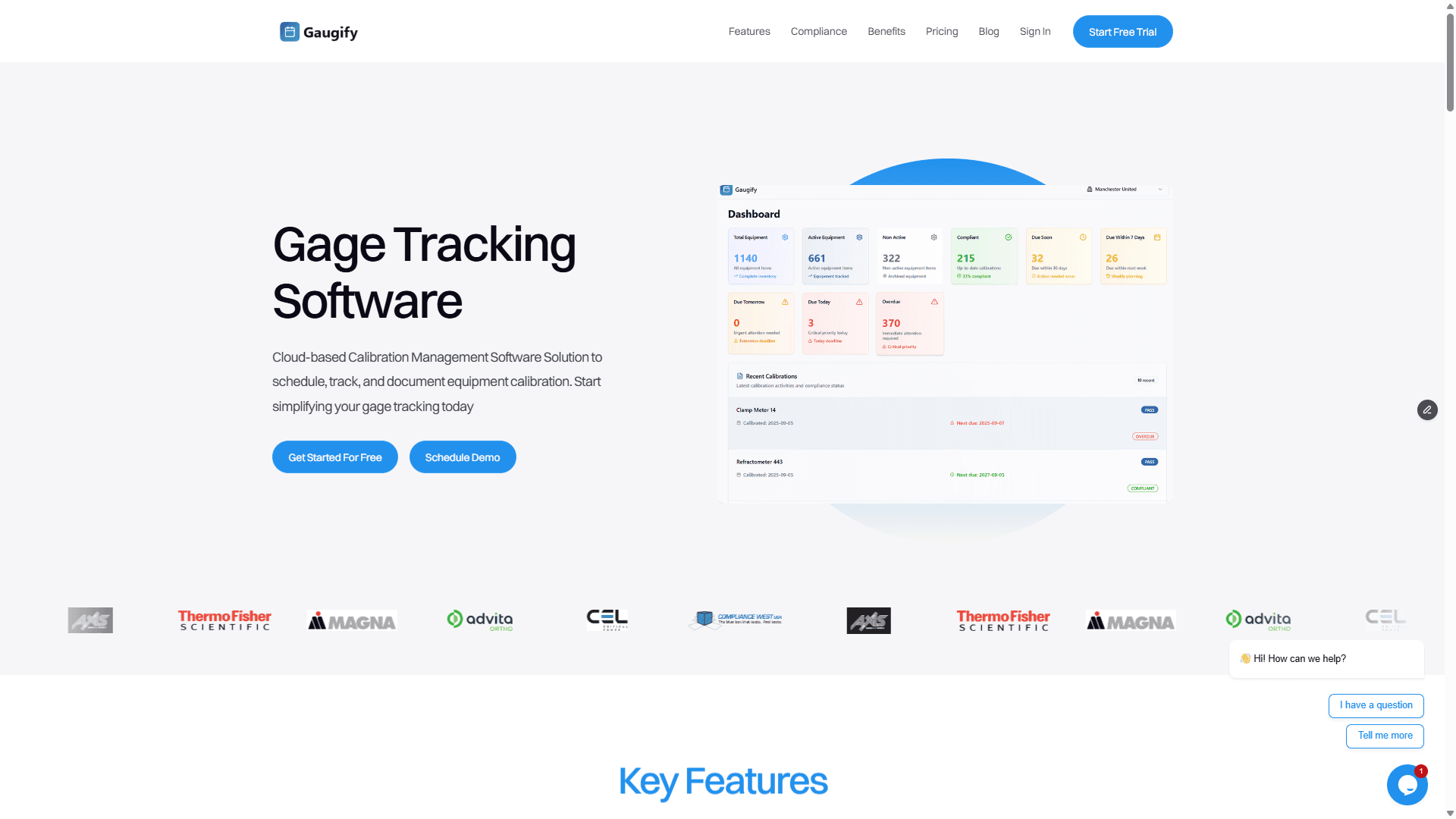
Instead of manually tracking hundreds or thousands of instruments in spreadsheets, automated systems provide dashboard views showing calibration status, upcoming due dates, and overdue equipment in real-time. This visibility allows you to address potential issues weeks or months before they become audit findings.
Advanced systems also track calibration intervals, automatically scheduling next calibrations based on your established frequencies, and providing alerts when intervals need adjustment based on performance data.
Comprehensive Audit Trails
Digital calibration management provides complete audit trails showing who performed calibrations, when they occurred, what changes were made to equipment records, and how procedures evolved over time. This level of documentation transparency often exceeds auditor expectations and demonstrates sophisticated quality management.
Cloud-based systems also eliminate concerns about lost paper records or corrupted computer files. Your calibration data remains accessible and secure regardless of local system failures or personnel changes.
Streamlined Reporting and Analytics
Generate comprehensive calibration reports instantly rather than spending days compiling data from multiple sources. Modern systems can produce equipment lists, calibration schedules, overdue reports, and statistical analyses at the click of a button.
Advanced analytics help you identify trends in equipment performance, optimize calibration intervals, and demonstrate continuous improvement in measurement system management. These capabilities often impress auditors and demonstrate your commitment to data-driven quality management.
If you're still managing calibration with spreadsheets or outdated software, consider how much time and stress you could eliminate with a modern solution. Gaugify's compliance features are specifically designed to keep you audit-ready while streamlining your daily calibration management activities.
Day-of-Audit Execution Strategies
When audit day arrives, your preparation pays off in confident execution. However, how you present information and interact with auditors can significantly influence the audit outcome.
Opening Meeting Preparation
Prepare a brief presentation highlighting your calibration management system's key strengths. Include metrics like on-time calibration performance (aim for >95%), number of instruments under control, and any recent improvements or investments in calibration capabilities.
Have key personnel introductions ready, including calibration technicians, quality managers, and anyone who will be supporting the audit. Ensure backup personnel are available in case primary contacts are unavailable during critical audit activities.
Documentation Access Strategy
Set up a dedicated space with computer access to your calibration management system, organized files of key procedures and certificates, and reference materials like calibration standards and regulatory requirements. This shows organization and facilitates efficient information access.
Assign a knowledgeable guide who can quickly locate specific records or equipment. This person should understand your facility layout, calibration processes, and documentation systems thoroughly.
Calibration Witnessing Readiness
If auditors want to witness calibrations in progress, ensure your most experienced technicians are available and that all necessary reference standards and equipment are functioning properly. Have backup plans ready in case primary equipment is unavailable.
Prepare your calibration lab or area to demonstrate ideal conditions - proper lighting, clean work surfaces, appropriate environmental monitoring, and organized reference standards. This attention to detail reinforces your commitment to measurement quality.
Post-Audit Follow-Up and Continuous Improvement
Successful audit completion is just the beginning. Use audit results to drive continuous improvement in your calibration management system and prepare for future assessments.
Analyzing Audit Feedback
Review audit findings and observations carefully, including positive feedback and suggestions for improvement. Even minor observations can provide insights into auditor expectations and industry best practices.
Share audit results with your calibration team and use findings as training opportunities. Positive feedback reinforces good practices, while corrective actions provide learning experiences for system improvement.
Implementing Systematic Improvements
Address any corrective actions promptly and thoroughly, but also look for opportunities to enhance your calibration management system beyond minimum requirements. Consider implementing advanced practices like:
Statistical process control for critical calibration processes
Risk-based calibration intervals using equipment criticality analysis
Advanced uncertainty calculations for complex measurement systems
Integration with production systems for real-time measurement validation
These enhancements demonstrate continuous improvement and often exceed auditor expectations during subsequent assessments.
Transform Your Audit Preparation with Modern Calibration Management
Preparing for calibration audits doesn't have to be a source of stress and uncertainty. With proper planning, systematic documentation, and the right technology platform, you can approach any audit with confidence knowing your calibration management system demonstrates excellence.
The strategies outlined in this guide have helped hundreds of organizations successfully navigate calibration audits across industries from aerospace and automotive to pharmaceuticals and medical devices. By implementing these practices systematically, you'll not only pass audits but also improve your overall measurement system reliability and quality control effectiveness.
Modern calibration management software eliminates many traditional audit preparation challenges while providing capabilities that exceed most auditor expectations. From automated scheduling and comprehensive reporting to complete audit trails and advanced analytics, these systems keep you perpetually audit-ready while improving day-to-day calibration efficiency.
Ready to transform your calibration management from a compliance burden into a competitive advantage? Start your free trial of Gaugify today and discover how cloud-based calibration management can eliminate audit stress while improving your measurement system control. With features designed specifically for audit compliance and no long-term contracts, you can begin experiencing the benefits immediately.
Your next calibration audit should be a demonstration of excellence, not a source of anxiety. Take the first step toward audit confidence and schedule a personalized demo to see how Gaugify can transform your calibration management system.
How to Prepare for a Calibration Audit
When a calibration audit notice lands on your desk, your stomach shouldn't drop. Yet for many quality managers and lab technicians, knowing how to prepare calibration audit documentation and procedures feels overwhelming. The difference between a smooth, successful audit and a costly nightmare often comes down to preparation—and having the right systems in place months before the auditor walks through your door.
A failed calibration audit can shut down production lines, trigger customer complaints, and result in certificate suspensions that take months to resolve. In 2023, one automotive supplier lost their TS 16949 certification after auditors discovered 40% of their micrometers and dial indicators were overdue for calibration, costing them three major contracts worth $2.4 million.
This comprehensive guide will walk you through exactly how to prepare for a calibration audit, from organizing your measurement equipment inventory to ensuring your calibration intervals meet regulatory requirements. Whether you're facing an ISO/IEC 17025 assessment, AS9100 surveillance, or FDA inspection, these proven strategies will help you demonstrate compliance with confidence.
Understanding Calibration Audit Requirements
Before diving into preparation tactics, you need to understand what auditors are specifically looking for during calibration assessments. Different standards have varying requirements, but all share common elements that form the foundation of your preparation strategy.
ISO/IEC 17025 auditors focus heavily on measurement traceability, uncertainty calculations, and environmental monitoring records. They'll examine whether your Fluke 1523 reference thermometers have valid NIST-traceable certificates and if your lab maintains temperature records within ±2°C of your calibration procedures.
ISO 9001 and automotive standard auditors emphasize calibration scheduling, equipment identification, and measurement system analysis. They want to see that your Mitutoyo digital calipers are clearly labeled with unique identifiers, calibration due dates, and accuracy specifications that meet your drawing tolerances.
FDA and medical device auditors require robust documentation of calibration procedures, personnel qualifications, and change controls. They'll verify that technicians calibrating your analytical balances have documented training on USP procedures and that any changes to calibration intervals are properly validated.
Key Documentation Areas Auditors Examine
Equipment inventory and identification systems - Unique asset numbers, calibration status indicators, location tracking
Calibration certificates and records - NIST traceability, uncertainty statements, environmental conditions
Procedure documentation - Step-by-step calibration instructions, acceptance criteria, frequency justifications
Personnel qualifications - Training records, competency assessments, authorization matrices
Nonconformance management - Out-of-tolerance investigations, corrective actions, customer notifications
Building Your Pre-Audit Preparation Timeline
Successful calibration audit preparation requires a structured timeline that begins at least 90 days before your audit date. This systematic approach ensures nothing falls through the cracks and gives you time to address any issues discovered during your preparation.
90 Days Before Audit: Foundation Review
Start with a comprehensive review of your calibration management system. Pull reports showing all equipment due for calibration within the next 120 days and verify that your calibration schedule won't leave any instruments overdue during the audit period.
Review your measurement equipment inventory for completeness and accuracy. Walk through each department and verify that every gage, test instrument, and reference standard is properly documented in your system. Pay special attention to equipment that may have been added recently or transferred between locations.
For example, if you're preparing for an AS9100 audit, ensure your CMM's Renishaw probe calibration sphere (±0.5 μm accuracy) has current certificates and that the environmental monitoring system shows your inspection room maintains 20°C ±1°C during all calibrations.
60 Days Before Audit: Documentation Deep Dive
This phase focuses on ensuring all your calibration documentation meets audit standards. Review a representative sample of calibration certificates from external providers to verify they include proper uncertainty statements, environmental conditions, and NIST traceability chains.
Examine your internal calibration procedures and records. For instance, verify that your procedure for calibrating Starrett micrometers includes specific torque requirements for the thimble (2-3 lb-in), environmental acclimation time (minimum 4 hours), and acceptance criteria that align with your part tolerances.
This is also when you should conduct internal calibration audits of your most critical processes. Select 10-15 pieces of equipment representing different instrument types and calibration sources, then trace through their complete documentation as if you were an external auditor.
Start your free trial of Gaugify and see how cloud-based calibration tracking eliminates manual spreadsheet errors and ensures you're always audit-ready.
30 Days Before Audit: Final Verification and Mock Audit
Conduct a full mock audit using the actual audit checklist or standard requirements. Have someone unfamiliar with your calibration system attempt to locate specific records and trace measurement equipment histories. This exercise often reveals gaps in your filing systems or database organization.
Verify that all calibration technicians have current training records and can demonstrate competency in the procedures they'll be performing. If your audit includes witnessing calibrations, ensure your best qualified technicians are scheduled and that all necessary reference standards and environmental monitoring equipment are functioning properly.
Complete any remaining calibrations that are due within 30 days of your audit date. While having equipment due during the audit isn't necessarily a finding, it demonstrates better control to have everything current.
How to Prepare Calibration Audit Documentation
Proper documentation organization can make the difference between an efficient audit and a chaotic experience. Auditors need to quickly access specific records and trace measurement equipment histories without delays or confusion.
Master Equipment List Organization
Your master equipment list should be the single source of truth for all measurement equipment in your organization. Include these essential data fields for each instrument:
Unique identification number (asset tag, serial number system)
Equipment description (manufacturer, model, measuring range, resolution)
Location and responsible department
Calibration interval and due date
Calibration source (internal lab, external provider)
Accuracy requirements and uncertainty
Current calibration status (in service, restricted use, out of service)
For example, your entry for a pressure gage might read: "Asset #PG-001, Ashcroft 1009 Duragauge, 0-100 PSI, ±1% FS, Shop Floor Station 3, Annual calibration due 03/15/2024, External provider (MetroFlow), NIST traceable to ±0.1% uncertainty."
Calibration Certificate Management
Organize calibration certificates both chronologically and by equipment type. Auditors often want to see calibration trends over time, so maintaining 3-5 years of historical certificates for each instrument is essential.
Each certificate should clearly demonstrate:
NIST traceability chain with certificate numbers and dates
Measurement uncertainty at key points across the measuring range
Environmental conditions during calibration (temperature, humidity, atmospheric pressure)
As-found and as-left data showing equipment performance before and after adjustment
Calibration procedure identification and revision level
If you're using modern calibration management software, these certificates can be automatically linked to each piece of equipment with full search capabilities and audit trail tracking.
Procedure Documentation Standards
Your calibration procedures must be detailed enough that any qualified technician can achieve repeatable results. Include specific setup requirements, reference standard specifications, environmental conditions, and step-by-step instructions.
For instance, a procedure for calibrating digital calipers should specify the gage blocks to be used (Grade 0 or Grade 1), measurement force application (consistent closing pressure), cleaning requirements between measurements, and specific measurement points (0.500", 1.000", 2.000", 4.000", 6.000" for a 6" caliper).
Critical Calibration Management Best Practices
Beyond basic documentation, implementing these advanced calibration management practices demonstrates mature quality systems and often impresses auditors with your attention to detail.
Environmental Monitoring and Control
Establish robust environmental monitoring for all calibration activities, whether performed in a dedicated metrology lab or on the shop floor. Document temperature, humidity, and vibration conditions during calibrations and ensure they meet procedure requirements.
For precision dimensional calibrations, maintain temperature at 20°C ±1°C with documentation showing how you achieve thermal equilibrium. For electrical calibrations, monitor and record temperature and humidity, as these affect measurement uncertainty of many electronic instruments.
Install continuous monitoring systems that provide alerts when environmental conditions drift outside acceptable limits. This proactive approach prevents invalid calibrations and demonstrates commitment to measurement quality.
Uncertainty Budget Management
Develop measurement uncertainty budgets for your most critical calibration processes. This advanced practice is required for ISO/IEC 17025 but also demonstrates technical competence under other standards.
Your uncertainty budgets should account for:
Reference standard uncertainty (from calibration certificates)
Resolution and repeatability (from measurement system studies)
Environmental effects (temperature coefficients, thermal gradients)
Procedural variations (operator technique, timing differences)
Equipment stability (drift between calibrations)
For example, when calibrating a 0-6" micrometer using Grade 1 gage blocks, your uncertainty budget might include: gage block uncertainty (±25 μin), micrometer resolution (±50 μin), temperature effects (±30 μin), and operator technique (±20 μin), resulting in a combined uncertainty of ±65 μin.
Calibration Interval Optimization
Implement data-driven calibration interval analysis rather than relying on manufacturer recommendations or industry defaults. Track as-found data over multiple calibration cycles to identify equipment that consistently passes with large margins versus instruments that frequently drift near tolerance limits.
For stable equipment with consistent performance history, consider extending intervals while maintaining adequate safety margins. For critical or drift-prone instruments, implement shorter intervals or intermediate checks to ensure continued accuracy.
Document your interval determination methodology and maintain records supporting any changes from standard intervals. Auditors appreciate seeing evidence-based decision making rather than arbitrary scheduling.
Common Calibration Audit Pitfalls and Solutions
Learning from common audit failures can help you avoid costly findings and demonstrate proactive quality management. These issues appear repeatedly across different industries and audit standards.
Incomplete Measurement Equipment Identification
The Problem: Auditors frequently find unidentified measuring equipment or tools that should be calibrated but aren't included in calibration programs. This includes go/no-go gages, rulers, even simple measuring devices that affect product quality.
The Solution: Conduct comprehensive equipment surveys using cross-functional teams. Include production operators, quality technicians, and maintenance personnel who use measuring equipment daily. Create clear criteria for what requires calibration versus what can be excluded with proper justification.
For example, establish rules like: "All measuring equipment used for accept/reject decisions requires calibration. Reference-only equipment (layout purposes, approximate measurements) can be excluded if clearly marked and controlled to prevent quality use."
Inadequate Out-of-Tolerance Investigations
The Problem: When equipment fails calibration (reads outside acceptable limits), many organizations simply adjust it and return to service without investigating the impact on previous measurements or products.
The Solution: Implement systematic out-of-tolerance procedures that include:
Impact assessment - What products were measured since last calibration?
Customer notification - Do customers need to be informed of potential measurement errors?
Root cause analysis - Why did the equipment drift beyond limits?
Corrective action - What changes prevent recurrence?
Document these investigations thoroughly. Auditors want to see evidence that you understand the implications of measurement failures and take appropriate actions to protect product quality.
Insufficient Training Documentation
The Problem: Calibration technicians may be competent, but lack documented evidence of training, qualification, or ongoing competency verification.
The Solution: Establish formal training programs with documented competency assessments. Include both theoretical knowledge (measurement principles, uncertainty concepts, procedure interpretation) and practical skills (hands-on calibration performance, equipment operation, documentation requirements).
Maintain training matrices showing which technicians are qualified for which calibration procedures. Implement periodic requalification to ensure continued competency, especially for complex or critical calibrations.
Leveraging Technology for Audit Readiness
Modern calibration management systems transform audit preparation from a stressful manual process into an automated confidence builder. Cloud-based platforms like Gaugify provide real-time visibility into calibration status, automated scheduling, and comprehensive reporting capabilities that keep you perpetually audit-ready.
Automated Compliance Monitoring
Instead of manually tracking hundreds or thousands of instruments in spreadsheets, automated systems provide dashboard views showing calibration status, upcoming due dates, and overdue equipment in real-time. This visibility allows you to address potential issues weeks or months before they become audit findings.
Advanced systems also track calibration intervals, automatically scheduling next calibrations based on your established frequencies, and providing alerts when intervals need adjustment based on performance data.
Comprehensive Audit Trails
Digital calibration management provides complete audit trails showing who performed calibrations, when they occurred, what changes were made to equipment records, and how procedures evolved over time. This level of documentation transparency often exceeds auditor expectations and demonstrates sophisticated quality management.
Cloud-based systems also eliminate concerns about lost paper records or corrupted computer files. Your calibration data remains accessible and secure regardless of local system failures or personnel changes.
Streamlined Reporting and Analytics
Generate comprehensive calibration reports instantly rather than spending days compiling data from multiple sources. Modern systems can produce equipment lists, calibration schedules, overdue reports, and statistical analyses at the click of a button.
Advanced analytics help you identify trends in equipment performance, optimize calibration intervals, and demonstrate continuous improvement in measurement system management. These capabilities often impress auditors and demonstrate your commitment to data-driven quality management.
If you're still managing calibration with spreadsheets or outdated software, consider how much time and stress you could eliminate with a modern solution. Gaugify's compliance features are specifically designed to keep you audit-ready while streamlining your daily calibration management activities.
Day-of-Audit Execution Strategies
When audit day arrives, your preparation pays off in confident execution. However, how you present information and interact with auditors can significantly influence the audit outcome.
Opening Meeting Preparation
Prepare a brief presentation highlighting your calibration management system's key strengths. Include metrics like on-time calibration performance (aim for >95%), number of instruments under control, and any recent improvements or investments in calibration capabilities.
Have key personnel introductions ready, including calibration technicians, quality managers, and anyone who will be supporting the audit. Ensure backup personnel are available in case primary contacts are unavailable during critical audit activities.
Documentation Access Strategy
Set up a dedicated space with computer access to your calibration management system, organized files of key procedures and certificates, and reference materials like calibration standards and regulatory requirements. This shows organization and facilitates efficient information access.
Assign a knowledgeable guide who can quickly locate specific records or equipment. This person should understand your facility layout, calibration processes, and documentation systems thoroughly.
Calibration Witnessing Readiness
If auditors want to witness calibrations in progress, ensure your most experienced technicians are available and that all necessary reference standards and equipment are functioning properly. Have backup plans ready in case primary equipment is unavailable.
Prepare your calibration lab or area to demonstrate ideal conditions - proper lighting, clean work surfaces, appropriate environmental monitoring, and organized reference standards. This attention to detail reinforces your commitment to measurement quality.
Post-Audit Follow-Up and Continuous Improvement
Successful audit completion is just the beginning. Use audit results to drive continuous improvement in your calibration management system and prepare for future assessments.
Analyzing Audit Feedback
Review audit findings and observations carefully, including positive feedback and suggestions for improvement. Even minor observations can provide insights into auditor expectations and industry best practices.
Share audit results with your calibration team and use findings as training opportunities. Positive feedback reinforces good practices, while corrective actions provide learning experiences for system improvement.
Implementing Systematic Improvements
Address any corrective actions promptly and thoroughly, but also look for opportunities to enhance your calibration management system beyond minimum requirements. Consider implementing advanced practices like:
Statistical process control for critical calibration processes
Risk-based calibration intervals using equipment criticality analysis
Advanced uncertainty calculations for complex measurement systems
Integration with production systems for real-time measurement validation
These enhancements demonstrate continuous improvement and often exceed auditor expectations during subsequent assessments.
Transform Your Audit Preparation with Modern Calibration Management
Preparing for calibration audits doesn't have to be a source of stress and uncertainty. With proper planning, systematic documentation, and the right technology platform, you can approach any audit with confidence knowing your calibration management system demonstrates excellence.
The strategies outlined in this guide have helped hundreds of organizations successfully navigate calibration audits across industries from aerospace and automotive to pharmaceuticals and medical devices. By implementing these practices systematically, you'll not only pass audits but also improve your overall measurement system reliability and quality control effectiveness.
Modern calibration management software eliminates many traditional audit preparation challenges while providing capabilities that exceed most auditor expectations. From automated scheduling and comprehensive reporting to complete audit trails and advanced analytics, these systems keep you perpetually audit-ready while improving day-to-day calibration efficiency.
Ready to transform your calibration management from a compliance burden into a competitive advantage? Start your free trial of Gaugify today and discover how cloud-based calibration management can eliminate audit stress while improving your measurement system control. With features designed specifically for audit compliance and no long-term contracts, you can begin experiencing the benefits immediately.
Your next calibration audit should be a demonstration of excellence, not a source of anxiety. Take the first step toward audit confidence and schedule a personalized demo to see how Gaugify can transform your calibration management system.