
Pin Gage Calibration: Procedures and Tolerances
Pin Gage Calibration: Procedures and Tolerances
David Bentley
Quality Assurance Engineer
12 min read
Pin Gage Calibration: Procedures and Tolerances
Pin gage calibration is a critical quality control process that ensures dimensional accuracy in manufacturing and inspection operations. These precision instruments require regular calibration to maintain their measurement integrity, directly impacting product quality and compliance with industry standards. When pin gages drift out of tolerance, they can lead to costly rejections, rework, and potential safety issues in critical applications.
Pin gages are among the most fundamental measurement tools in manufacturing, yet their calibration procedures are often misunderstood or inadequately documented. This comprehensive guide will walk you through everything you need to know about pin gage calibration, from basic procedures to advanced tolerance considerations.
Understanding Pin Gages and Their Measurement Applications
Pin gages are precision cylindrical measuring instruments used to verify the internal diameter of holes, slots, and other cylindrical features. Unlike go/no-go gages that provide only pass/fail information, pin gages enable precise dimensional measurement and are available in standard increments as small as 0.0001 inches (0.0025 mm).
These instruments typically consist of a hardened steel or carbide cylinder with a specific diameter, mounted in a handle for easy manipulation. Pin gages are manufactured in sets covering standard size ranges, with Class ZZ pin gages offering tolerances of ±0.00002 inches (±0.0005 mm) for the most demanding applications.
Common applications include:
Automotive engine block cylinder bore verification
Aerospace component hole diameter inspection
Medical device manufacturing quality control
Machine shop dimensional verification
Tool and die manufacturing
The measurement range typically spans from 0.011 inches to 12.000 inches (0.28 mm to 304.8 mm), with larger sizes available for specialized applications. Pin gages are often used in conjunction with bore gages, micrometers, and coordinate measuring machines (CMMs) to provide comprehensive dimensional analysis.
Why Pin Gage Calibration Is Critical for Measurement Integrity
Pin gage calibration ensures that these instruments maintain their specified dimensional accuracy over time. Without proper calibration, pin gages can experience dimensional changes due to wear, temperature fluctuations, handling damage, and material aging. Even microscopic changes can have significant impacts when dealing with tight manufacturing tolerances.
Consider an automotive manufacturer producing engine components with bore tolerances of ±0.0002 inches. If a 2.500-inch pin gage drifts by +0.0001 inches due to wear, parts that should be rejected as oversized will incorrectly pass inspection. This can lead to engine performance issues, premature wear, and potential warranty claims.
Temperature effects are particularly critical for pin gage calibration. Steel pin gages have a coefficient of thermal expansion of approximately 6.5 × 10⁻⁶ inches per inch per °F. A 4-inch pin gage experiencing a 10°F temperature change will expand or contract by 0.00026 inches – more than twice the tolerance of many precision components.
Regular calibration also identifies pin gages that have sustained handling damage, such as nicks, scratches, or deformation that could affect measurement accuracy. Surface roughness changes over time can impact the way pin gages seat in holes, leading to inconsistent measurements.
Impact on Quality Management Systems
Pin gage calibration is essential for maintaining ISO 9001, AS9100, and ISO/TS 16949 compliance. Quality management systems require documented evidence that measuring instruments are calibrated and traceable to national standards. Non-calibrated pin gages can result in:
Failed customer audits and certification reviews
Invalid measurement data and statistical process control
Increased inspection costs and cycle times
Customer complaints and contract penalties
Step-by-Step Pin Gage Calibration Procedure
Professional pin gage calibration requires controlled environmental conditions, traceable reference standards, and documented procedures. The following procedure meets ANSI/NCSL Z540-1 requirements and provides measurement uncertainty ratios of 4:1 or better.
Environmental Requirements
Pin gage calibration must be performed in a temperature-controlled environment at 68°F ± 2°F (20°C ± 1°C) with relative humidity between 45% and 75%. Allow pin gages to stabilize for at least 2 hours before calibration. The calibration area should be free from vibration, dust, and electromagnetic interference.
Required Equipment and Standards
Reference standards for pin gage calibration include:
NIST-traceable setting rings with uncertainties ≤25% of pin gage tolerance
Coordinate measuring machine with probe uncertainty ≤0.000050 inches
Laser interferometer measuring system for high-accuracy applications
Precision air gage amplifier with 0.000001-inch resolution
Calibrated micrometers with 0.0001-inch resolution
Calibration Procedure Steps
Step 1: Visual Inspection
Examine each pin gage under 10X magnification for surface defects, wear patterns, and damage. Look for scratches, nicks, corrosion, or dimensional irregularities. Document any defects that could affect measurement performance.
Step 2: Cleaning
Clean pin gages with lint-free cloths and approved solvents. Remove all oils, debris, and handling residues. Allow to air dry completely before proceeding with dimensional measurements.
Step 3: Dimensional Measurement
Using a coordinate measuring machine or laser interferometer, measure the pin gage diameter at three locations: 0.25 inches from each end and at the center. Take measurements at four angular positions (0°, 45°, 90°, 135°) at each location to detect ovality and taper.
Step 4: Data Recording
Record all measurements with appropriate uncertainty statements. Calculate the average diameter and compare to the nominal value and tolerance limits. Document measurement uncertainty using GUM (Guide to the Expression of Uncertainty in Measurement) methodology.
Step 5: Acceptance Criteria
Pin gages must meet their specified tolerance class requirements:
Class ZZ: ±0.00002 inches (±0.0005 mm)
Class XX: ±0.00004 inches (±0.001 mm)
Class X: ±0.00008 inches (±0.002 mm)
Plus Class: +0.0002/-0.0000 inches (+0.005/-0.000 mm)
For pin gages smaller than 0.100 inches, tolerances may be relaxed according to manufacturer specifications and application requirements.
Many quality managers struggle with maintaining comprehensive calibration records and schedules for their pin gage inventory. Try Gaugify's calibration management software free for 30 days to automate your pin gage calibration tracking and ensure compliance with industry standards.
Relevant Standards Governing Pin Gage Calibration
Pin gage calibration is governed by several national and international standards that establish procedures, tolerances, and traceability requirements.
ANSI/ASME B89.1.5
This standard covers measurement of length and diameter for plug gages, including pin gages. It specifies measurement methods, environmental conditions, and uncertainty requirements. The standard requires that calibration uncertainty not exceed 25% of the gage tolerance, ensuring adequate measurement reliability.
ISO 1938-1
The international standard for geometrical product specifications covers plug gages and establishes dimensional tolerances, surface finish requirements, and marking specifications. ISO 1938-1 defines tolerance classes and provides guidance for selecting appropriate pin gage accuracy levels.
Federal Standard H28
This US government standard establishes screw thread and measuring requirements for federal agencies and contractors. It includes specific provisions for pin gage calibration in thread measurement applications, with detailed procedures for pitch diameter verification.
Manufacturer Specifications
Leading pin gage manufacturers like Vermont Gage, Meyer Gage, and Deltronic provide detailed calibration specifications that often exceed standard requirements. These specifications typically include:
Tighter tolerance classes for critical applications
Surface finish requirements (typically 4 microinches Ra or better)
Material specifications and hardness requirements
Marking and identification standards
Always consult manufacturer documentation for specific calibration requirements, as proprietary tolerance classes may apply to specialized pin gage designs.
Pin Gage Calibration Intervals and Frequency Determination
Establishing appropriate calibration intervals for pin gages requires balancing measurement risk against calibration costs. Industry best practices suggest starting with 12-month intervals and adjusting based on historical performance data.
Factors Affecting Calibration Frequency
Several factors influence optimal pin gage calibration intervals:
Usage Intensity: Pin gages used multiple times daily require more frequent calibration than those used occasionally. High-volume production environments may necessitate 6-month intervals, while periodic inspection tools can often extend to 24 months.
Measurement Criticality: Components with tight tolerances or safety-critical applications require shorter calibration intervals. Aerospace and medical device manufacturers often specify maximum 12-month intervals regardless of usage patterns.
Historical Drift Data: Pin gages showing consistent stability over multiple calibration cycles can potentially extend intervals, while those exhibiting drift should maintain shorter frequencies.
Environmental Conditions: Harsh manufacturing environments with temperature extremes, contamination, or vibration require more frequent calibration verification.
Risk-Based Calibration Interval Adjustment
Progressive organizations implement risk-based calibration programs that adjust intervals based on actual measurement performance. This approach considers:
Product impact severity if measurements are incorrect
Historical calibration results and trends
Usage patterns and handling procedures
Environmental storage and use conditions
For example, pin gages used to verify critical engine component dimensions might maintain 6-month intervals, while those used for general machine shop work could extend to 18 months based on stable calibration history.
Common Pin Gage Calibration Mistakes and Prevention Strategies
Even experienced technicians can make critical errors during pin gage calibration that compromise measurement accuracy and traceability. Understanding these common mistakes helps ensure reliable calibration results.
Inadequate Temperature Stabilization
The most frequent calibration error involves insufficient temperature stabilization time. Pin gages brought from production areas at 75°F to calibration labs at 68°F require at least 2 hours to reach thermal equilibrium. Rushing this process can introduce measurement errors of several ten-thousandths of an inch.
Prevention: Establish minimum stabilization times based on pin gage size and temperature differential. Use temperature monitoring to verify stabilization before beginning measurements.
Incorrect Reference Standard Selection
Using reference standards with inadequate accuracy ratios is another common error. ANSI/NCSL Z540-1 requires 4:1 measurement uncertainty ratios, but many facilities attempt calibration with 2:1 or worse ratios, resulting in unreliable calibrations.
Prevention: Maintain an inventory of certified reference standards with documented uncertainty statements. Calculate uncertainty ratios before beginning calibration work.
Improper Handling and Contamination
Pin gages are easily damaged by improper handling, dropping, or contact with abrasive surfaces. Even microscopic contamination can affect measurement results, particularly for precision applications.
Prevention: Implement handling procedures that minimize contact with measurement surfaces. Use proper cleaning solvents and lint-free cloths. Train technicians in proper pin gage handling techniques.
Inadequate Documentation
Many calibration programs fail to maintain adequate documentation of calibration procedures, results, and traceability chains. This creates compliance issues during audits and makes it difficult to analyze calibration trends.
Prevention: Establish standardized calibration procedures and documentation requirements. Use calibration management software to ensure consistent record-keeping and automated reminders.
How Modern Calibration Software Streamlines Pin Gage Management
Advanced calibration management systems like Gaugify transform pin gage calibration from a manual, paper-based process into an automated, digital workflow. This technology addresses the unique challenges of managing large pin gage inventories while ensuring compliance with quality standards.
Automated Scheduling and Reminders
Traditional calibration tracking relies on spreadsheets or paper-based systems that often result in missed calibrations and compliance gaps. Modern software automatically schedules calibrations based on configurable intervals and sends automated reminders to technicians and managers.
Gaugify's calibration features include intelligent scheduling that considers weekends, holidays, and technician availability. The system can automatically adjust schedules based on calibration results, extending intervals for stable instruments while flagging those requiring attention.
Digital Certificate Generation
Manual certificate preparation is time-consuming and error-prone. Digital calibration certificates automatically populate with instrument data, calibration results, and uncertainty calculations. This ensures consistent formatting and eliminates transcription errors that can compromise traceability.
Certificates include digital signatures, measurement uncertainty statements, and complete traceability chains to national standards. QR codes enable instant verification of certificate authenticity and provide quick access to detailed calibration data.
As-Found and As-Left Data Management
Proper calibration programs require documentation of both as-found conditions (measurements before adjustment) and as-left results (final calibration state). This data enables trend analysis and helps identify instruments requiring more frequent calibration or replacement.
Advanced analytics identify patterns in pin gage performance, such as directional drift that might indicate systematic handling issues or environmental factors affecting measurement accuracy.
Compliance Dashboard and Reporting
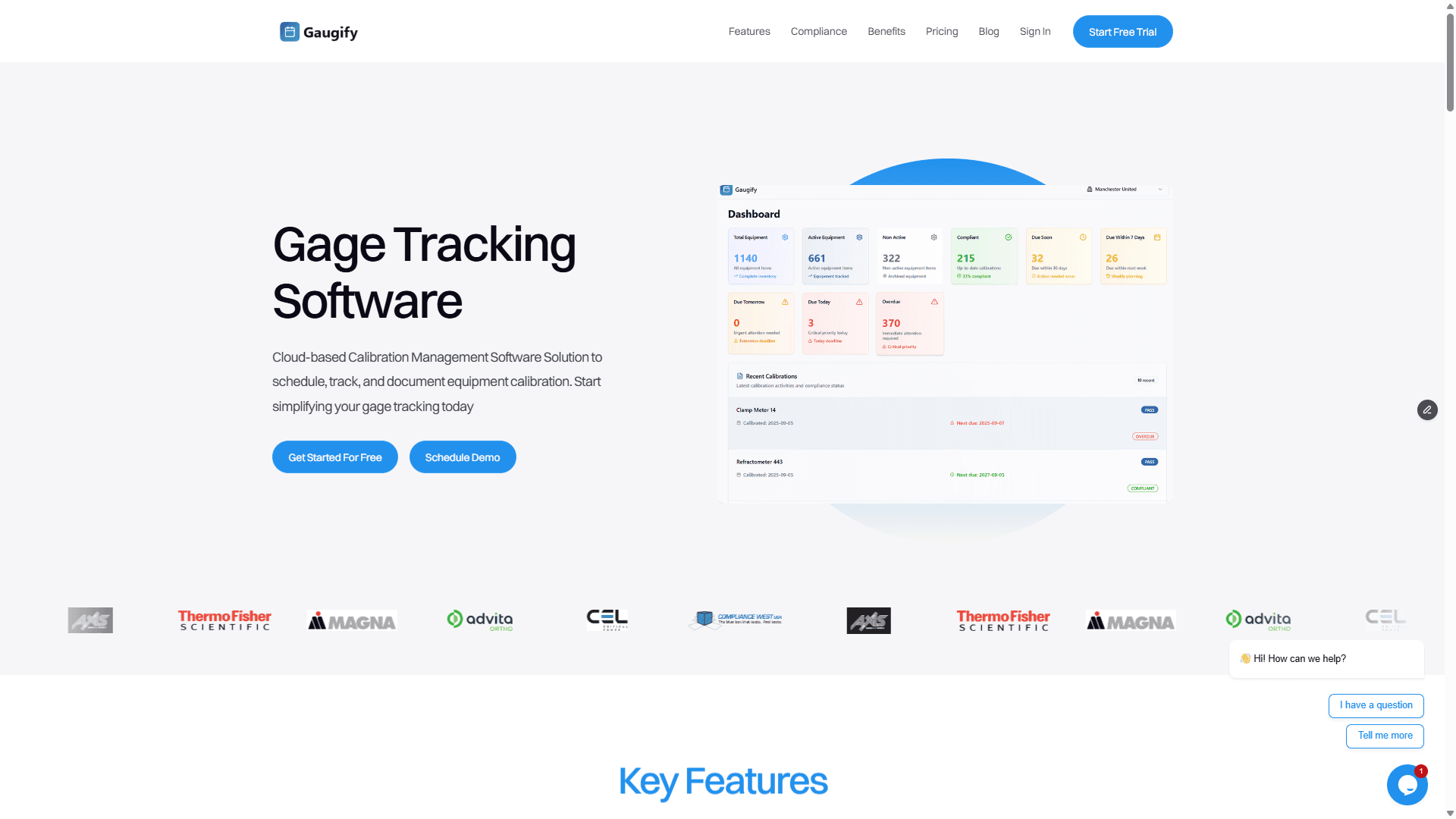
Quality managers need instant visibility into calibration status across their entire gage inventory. Compliance dashboards provide real-time status updates, showing which instruments are due for calibration, overdue, or approaching their scheduled dates.
Automated reports summarize calibration activities, highlight trend data, and provide the documentation required for customer audits and certification reviews. This eliminates the manual effort typically required to prepare audit packages.
Mobile Integration for Shop Floor Access
Technicians need access to calibration information directly on the shop floor. Mobile applications provide instant access to calibration certificates, due dates, and usage restrictions. QR code scanning enables quick instrument identification and status verification.
This integration ensures that only properly calibrated pin gages are used for production measurements, preventing the use of expired instruments that could compromise product quality.
Implementing a Comprehensive Pin Gage Calibration Program
Successful pin gage calibration programs require more than just periodic measurements – they need systematic approaches that integrate with broader quality management systems. This involves establishing procedures, training personnel, and maintaining documentation that supports continuous improvement.
Procedure Development and Standardization
Effective calibration programs begin with detailed written procedures that specify measurement methods, acceptance criteria, and documentation requirements. These procedures should reference applicable standards and include specific instructions for different pin gage types and tolerance classes.
Procedures must address:
Environmental requirements and stabilization times
Reference standard selection and uncertainty calculations
Measurement point locations and angular positions
Data recording and certificate generation
Out-of-tolerance procedures and corrective actions
Personnel Training and Competency
Pin gage calibration requires skilled technicians who understand measurement principles, uncertainty analysis, and proper handling techniques. Training programs should cover both theoretical concepts and hands-on practice with actual instruments.
Regular competency assessments ensure that technicians maintain their skills and stay current with evolving standards and procedures. This is particularly important for ISO 17025 compliance, which requires documented evidence of personnel competency.
Integration with Quality Management Systems
Pin gage calibration programs must integrate seamlessly with broader quality management systems to provide maximum value. This includes linking calibration status to production planning, ensuring that expired instruments are automatically flagged, and providing measurement uncertainty data for process capability studies.
Modern calibration management software facilitates this integration by providing APIs and data export capabilities that connect with ERP systems, quality databases, and statistical process control applications.
Transform Your Pin Gage Calibration Management Today
Effective pin gage calibration is essential for maintaining measurement accuracy and quality compliance in modern manufacturing environments. The procedures, standards, and best practices outlined in this guide provide the foundation for a robust calibration program that supports your quality objectives.
However, managing pin gage calibrations manually becomes increasingly challenging as inventory sizes grow and compliance requirements become more stringent. Modern calibration management software eliminates the administrative burden while ensuring complete traceability and compliance.
Gaugify's cloud-based calibration management platform is specifically designed for manufacturing environments where pin gage accuracy is critical. Our software automates scheduling, generates compliant certificates, tracks as-found and as-left data, and provides the real-time visibility that quality managers need to maintain control over their calibration programs.
Don't let manual calibration tracking put your quality program at risk. Start your free 30-day trial today and discover how modern calibration management can streamline your pin gage operations while ensuring complete compliance with industry standards. Join hundreds of manufacturers who have already transformed their calibration processes with Gaugify's comprehensive solution.
Pin Gage Calibration: Procedures and Tolerances
Pin gage calibration is a critical quality control process that ensures dimensional accuracy in manufacturing and inspection operations. These precision instruments require regular calibration to maintain their measurement integrity, directly impacting product quality and compliance with industry standards. When pin gages drift out of tolerance, they can lead to costly rejections, rework, and potential safety issues in critical applications.
Pin gages are among the most fundamental measurement tools in manufacturing, yet their calibration procedures are often misunderstood or inadequately documented. This comprehensive guide will walk you through everything you need to know about pin gage calibration, from basic procedures to advanced tolerance considerations.
Understanding Pin Gages and Their Measurement Applications
Pin gages are precision cylindrical measuring instruments used to verify the internal diameter of holes, slots, and other cylindrical features. Unlike go/no-go gages that provide only pass/fail information, pin gages enable precise dimensional measurement and are available in standard increments as small as 0.0001 inches (0.0025 mm).
These instruments typically consist of a hardened steel or carbide cylinder with a specific diameter, mounted in a handle for easy manipulation. Pin gages are manufactured in sets covering standard size ranges, with Class ZZ pin gages offering tolerances of ±0.00002 inches (±0.0005 mm) for the most demanding applications.
Common applications include:
Automotive engine block cylinder bore verification
Aerospace component hole diameter inspection
Medical device manufacturing quality control
Machine shop dimensional verification
Tool and die manufacturing
The measurement range typically spans from 0.011 inches to 12.000 inches (0.28 mm to 304.8 mm), with larger sizes available for specialized applications. Pin gages are often used in conjunction with bore gages, micrometers, and coordinate measuring machines (CMMs) to provide comprehensive dimensional analysis.
Why Pin Gage Calibration Is Critical for Measurement Integrity
Pin gage calibration ensures that these instruments maintain their specified dimensional accuracy over time. Without proper calibration, pin gages can experience dimensional changes due to wear, temperature fluctuations, handling damage, and material aging. Even microscopic changes can have significant impacts when dealing with tight manufacturing tolerances.
Consider an automotive manufacturer producing engine components with bore tolerances of ±0.0002 inches. If a 2.500-inch pin gage drifts by +0.0001 inches due to wear, parts that should be rejected as oversized will incorrectly pass inspection. This can lead to engine performance issues, premature wear, and potential warranty claims.
Temperature effects are particularly critical for pin gage calibration. Steel pin gages have a coefficient of thermal expansion of approximately 6.5 × 10⁻⁶ inches per inch per °F. A 4-inch pin gage experiencing a 10°F temperature change will expand or contract by 0.00026 inches – more than twice the tolerance of many precision components.
Regular calibration also identifies pin gages that have sustained handling damage, such as nicks, scratches, or deformation that could affect measurement accuracy. Surface roughness changes over time can impact the way pin gages seat in holes, leading to inconsistent measurements.
Impact on Quality Management Systems
Pin gage calibration is essential for maintaining ISO 9001, AS9100, and ISO/TS 16949 compliance. Quality management systems require documented evidence that measuring instruments are calibrated and traceable to national standards. Non-calibrated pin gages can result in:
Failed customer audits and certification reviews
Invalid measurement data and statistical process control
Increased inspection costs and cycle times
Customer complaints and contract penalties
Step-by-Step Pin Gage Calibration Procedure
Professional pin gage calibration requires controlled environmental conditions, traceable reference standards, and documented procedures. The following procedure meets ANSI/NCSL Z540-1 requirements and provides measurement uncertainty ratios of 4:1 or better.
Environmental Requirements
Pin gage calibration must be performed in a temperature-controlled environment at 68°F ± 2°F (20°C ± 1°C) with relative humidity between 45% and 75%. Allow pin gages to stabilize for at least 2 hours before calibration. The calibration area should be free from vibration, dust, and electromagnetic interference.
Required Equipment and Standards
Reference standards for pin gage calibration include:
NIST-traceable setting rings with uncertainties ≤25% of pin gage tolerance
Coordinate measuring machine with probe uncertainty ≤0.000050 inches
Laser interferometer measuring system for high-accuracy applications
Precision air gage amplifier with 0.000001-inch resolution
Calibrated micrometers with 0.0001-inch resolution
Calibration Procedure Steps
Step 1: Visual Inspection
Examine each pin gage under 10X magnification for surface defects, wear patterns, and damage. Look for scratches, nicks, corrosion, or dimensional irregularities. Document any defects that could affect measurement performance.
Step 2: Cleaning
Clean pin gages with lint-free cloths and approved solvents. Remove all oils, debris, and handling residues. Allow to air dry completely before proceeding with dimensional measurements.
Step 3: Dimensional Measurement
Using a coordinate measuring machine or laser interferometer, measure the pin gage diameter at three locations: 0.25 inches from each end and at the center. Take measurements at four angular positions (0°, 45°, 90°, 135°) at each location to detect ovality and taper.
Step 4: Data Recording
Record all measurements with appropriate uncertainty statements. Calculate the average diameter and compare to the nominal value and tolerance limits. Document measurement uncertainty using GUM (Guide to the Expression of Uncertainty in Measurement) methodology.
Step 5: Acceptance Criteria
Pin gages must meet their specified tolerance class requirements:
Class ZZ: ±0.00002 inches (±0.0005 mm)
Class XX: ±0.00004 inches (±0.001 mm)
Class X: ±0.00008 inches (±0.002 mm)
Plus Class: +0.0002/-0.0000 inches (+0.005/-0.000 mm)
For pin gages smaller than 0.100 inches, tolerances may be relaxed according to manufacturer specifications and application requirements.
Many quality managers struggle with maintaining comprehensive calibration records and schedules for their pin gage inventory. Try Gaugify's calibration management software free for 30 days to automate your pin gage calibration tracking and ensure compliance with industry standards.
Relevant Standards Governing Pin Gage Calibration
Pin gage calibration is governed by several national and international standards that establish procedures, tolerances, and traceability requirements.
ANSI/ASME B89.1.5
This standard covers measurement of length and diameter for plug gages, including pin gages. It specifies measurement methods, environmental conditions, and uncertainty requirements. The standard requires that calibration uncertainty not exceed 25% of the gage tolerance, ensuring adequate measurement reliability.
ISO 1938-1
The international standard for geometrical product specifications covers plug gages and establishes dimensional tolerances, surface finish requirements, and marking specifications. ISO 1938-1 defines tolerance classes and provides guidance for selecting appropriate pin gage accuracy levels.
Federal Standard H28
This US government standard establishes screw thread and measuring requirements for federal agencies and contractors. It includes specific provisions for pin gage calibration in thread measurement applications, with detailed procedures for pitch diameter verification.
Manufacturer Specifications
Leading pin gage manufacturers like Vermont Gage, Meyer Gage, and Deltronic provide detailed calibration specifications that often exceed standard requirements. These specifications typically include:
Tighter tolerance classes for critical applications
Surface finish requirements (typically 4 microinches Ra or better)
Material specifications and hardness requirements
Marking and identification standards
Always consult manufacturer documentation for specific calibration requirements, as proprietary tolerance classes may apply to specialized pin gage designs.
Pin Gage Calibration Intervals and Frequency Determination
Establishing appropriate calibration intervals for pin gages requires balancing measurement risk against calibration costs. Industry best practices suggest starting with 12-month intervals and adjusting based on historical performance data.
Factors Affecting Calibration Frequency
Several factors influence optimal pin gage calibration intervals:
Usage Intensity: Pin gages used multiple times daily require more frequent calibration than those used occasionally. High-volume production environments may necessitate 6-month intervals, while periodic inspection tools can often extend to 24 months.
Measurement Criticality: Components with tight tolerances or safety-critical applications require shorter calibration intervals. Aerospace and medical device manufacturers often specify maximum 12-month intervals regardless of usage patterns.
Historical Drift Data: Pin gages showing consistent stability over multiple calibration cycles can potentially extend intervals, while those exhibiting drift should maintain shorter frequencies.
Environmental Conditions: Harsh manufacturing environments with temperature extremes, contamination, or vibration require more frequent calibration verification.
Risk-Based Calibration Interval Adjustment
Progressive organizations implement risk-based calibration programs that adjust intervals based on actual measurement performance. This approach considers:
Product impact severity if measurements are incorrect
Historical calibration results and trends
Usage patterns and handling procedures
Environmental storage and use conditions
For example, pin gages used to verify critical engine component dimensions might maintain 6-month intervals, while those used for general machine shop work could extend to 18 months based on stable calibration history.
Common Pin Gage Calibration Mistakes and Prevention Strategies
Even experienced technicians can make critical errors during pin gage calibration that compromise measurement accuracy and traceability. Understanding these common mistakes helps ensure reliable calibration results.
Inadequate Temperature Stabilization
The most frequent calibration error involves insufficient temperature stabilization time. Pin gages brought from production areas at 75°F to calibration labs at 68°F require at least 2 hours to reach thermal equilibrium. Rushing this process can introduce measurement errors of several ten-thousandths of an inch.
Prevention: Establish minimum stabilization times based on pin gage size and temperature differential. Use temperature monitoring to verify stabilization before beginning measurements.
Incorrect Reference Standard Selection
Using reference standards with inadequate accuracy ratios is another common error. ANSI/NCSL Z540-1 requires 4:1 measurement uncertainty ratios, but many facilities attempt calibration with 2:1 or worse ratios, resulting in unreliable calibrations.
Prevention: Maintain an inventory of certified reference standards with documented uncertainty statements. Calculate uncertainty ratios before beginning calibration work.
Improper Handling and Contamination
Pin gages are easily damaged by improper handling, dropping, or contact with abrasive surfaces. Even microscopic contamination can affect measurement results, particularly for precision applications.
Prevention: Implement handling procedures that minimize contact with measurement surfaces. Use proper cleaning solvents and lint-free cloths. Train technicians in proper pin gage handling techniques.
Inadequate Documentation
Many calibration programs fail to maintain adequate documentation of calibration procedures, results, and traceability chains. This creates compliance issues during audits and makes it difficult to analyze calibration trends.
Prevention: Establish standardized calibration procedures and documentation requirements. Use calibration management software to ensure consistent record-keeping and automated reminders.
How Modern Calibration Software Streamlines Pin Gage Management
Advanced calibration management systems like Gaugify transform pin gage calibration from a manual, paper-based process into an automated, digital workflow. This technology addresses the unique challenges of managing large pin gage inventories while ensuring compliance with quality standards.
Automated Scheduling and Reminders
Traditional calibration tracking relies on spreadsheets or paper-based systems that often result in missed calibrations and compliance gaps. Modern software automatically schedules calibrations based on configurable intervals and sends automated reminders to technicians and managers.
Gaugify's calibration features include intelligent scheduling that considers weekends, holidays, and technician availability. The system can automatically adjust schedules based on calibration results, extending intervals for stable instruments while flagging those requiring attention.
Digital Certificate Generation
Manual certificate preparation is time-consuming and error-prone. Digital calibration certificates automatically populate with instrument data, calibration results, and uncertainty calculations. This ensures consistent formatting and eliminates transcription errors that can compromise traceability.
Certificates include digital signatures, measurement uncertainty statements, and complete traceability chains to national standards. QR codes enable instant verification of certificate authenticity and provide quick access to detailed calibration data.
As-Found and As-Left Data Management
Proper calibration programs require documentation of both as-found conditions (measurements before adjustment) and as-left results (final calibration state). This data enables trend analysis and helps identify instruments requiring more frequent calibration or replacement.
Advanced analytics identify patterns in pin gage performance, such as directional drift that might indicate systematic handling issues or environmental factors affecting measurement accuracy.
Compliance Dashboard and Reporting
Quality managers need instant visibility into calibration status across their entire gage inventory. Compliance dashboards provide real-time status updates, showing which instruments are due for calibration, overdue, or approaching their scheduled dates.
Automated reports summarize calibration activities, highlight trend data, and provide the documentation required for customer audits and certification reviews. This eliminates the manual effort typically required to prepare audit packages.
Mobile Integration for Shop Floor Access
Technicians need access to calibration information directly on the shop floor. Mobile applications provide instant access to calibration certificates, due dates, and usage restrictions. QR code scanning enables quick instrument identification and status verification.
This integration ensures that only properly calibrated pin gages are used for production measurements, preventing the use of expired instruments that could compromise product quality.
Implementing a Comprehensive Pin Gage Calibration Program
Successful pin gage calibration programs require more than just periodic measurements – they need systematic approaches that integrate with broader quality management systems. This involves establishing procedures, training personnel, and maintaining documentation that supports continuous improvement.
Procedure Development and Standardization
Effective calibration programs begin with detailed written procedures that specify measurement methods, acceptance criteria, and documentation requirements. These procedures should reference applicable standards and include specific instructions for different pin gage types and tolerance classes.
Procedures must address:
Environmental requirements and stabilization times
Reference standard selection and uncertainty calculations
Measurement point locations and angular positions
Data recording and certificate generation
Out-of-tolerance procedures and corrective actions
Personnel Training and Competency
Pin gage calibration requires skilled technicians who understand measurement principles, uncertainty analysis, and proper handling techniques. Training programs should cover both theoretical concepts and hands-on practice with actual instruments.
Regular competency assessments ensure that technicians maintain their skills and stay current with evolving standards and procedures. This is particularly important for ISO 17025 compliance, which requires documented evidence of personnel competency.
Integration with Quality Management Systems
Pin gage calibration programs must integrate seamlessly with broader quality management systems to provide maximum value. This includes linking calibration status to production planning, ensuring that expired instruments are automatically flagged, and providing measurement uncertainty data for process capability studies.
Modern calibration management software facilitates this integration by providing APIs and data export capabilities that connect with ERP systems, quality databases, and statistical process control applications.
Transform Your Pin Gage Calibration Management Today
Effective pin gage calibration is essential for maintaining measurement accuracy and quality compliance in modern manufacturing environments. The procedures, standards, and best practices outlined in this guide provide the foundation for a robust calibration program that supports your quality objectives.
However, managing pin gage calibrations manually becomes increasingly challenging as inventory sizes grow and compliance requirements become more stringent. Modern calibration management software eliminates the administrative burden while ensuring complete traceability and compliance.
Gaugify's cloud-based calibration management platform is specifically designed for manufacturing environments where pin gage accuracy is critical. Our software automates scheduling, generates compliant certificates, tracks as-found and as-left data, and provides the real-time visibility that quality managers need to maintain control over their calibration programs.
Don't let manual calibration tracking put your quality program at risk. Start your free 30-day trial today and discover how modern calibration management can streamline your pin gage operations while ensuring complete compliance with industry standards. Join hundreds of manufacturers who have already transformed their calibration processes with Gaugify's comprehensive solution.