
The Real Cost of Non-Compliance in Calibration
The Real Cost of Non-Compliance in Calibration
David Bentley
Quality Assurance Engineer
8 min read
The Real Cost of Non-Compliance in Calibration
A single out-of-tolerance measurement gage shut down production at a major automotive supplier for three days last quarter. The calibration non-compliance cost? $2.4 million in lost revenue, expedited shipping, and customer penalties. What makes this story particularly painful is that the gage had been overdue for calibration for six weeks—a fact that only came to light after Ford rejected an entire shipment of transmission components.
This isn't an isolated incident. Quality managers across manufacturing, aerospace, pharmaceuticals, and testing laboratories face similar calibration compliance failures every day. The difference is that most never calculate the true financial impact of these failures, treating them as "one-off" problems rather than systematic risks that demand immediate attention.
If you're responsible for maintaining measurement accuracy in your facility, the question isn't whether calibration non-compliance will cost your organization money—it's how much, and whether you'll see it coming.
Why Calibration Non-Compliance Is More Common Than You Think
Walk through any manufacturing facility or testing lab, and you'll find measurement instruments everywhere: micrometers, pressure gauges, torque wrenches, pH meters, scales, and specialized test equipment. Each requires regular calibration to maintain accuracy, yet studies indicate that 30-40% of organizations struggle with overdue calibrations at any given time.
The problem isn't that quality managers don't understand the importance of calibration—it's that traditional tracking methods create blind spots. Consider these common scenarios:
The Excel spreadsheet trap: A medical device manufacturer tracks 847 instruments across three facilities using spreadsheets. When a critical CMM goes overdue, no one notices until an FDA audit three months later.
The paper-based system failure: An aerospace supplier relies on calibration stickers and paper logs. A technician removes a torque wrench's sticker during cleaning, and the tool remains in use six months past its due date.
The communication breakdown: A pharmaceutical lab's calibration coordinator leaves unexpectedly. Her replacement discovers 23 overdue instruments, including analytical balances used for batch release testing.
These failures happen because manual tracking systems depend entirely on human memory and perfect execution—two things that don't scale as organizations grow or when personnel changes occur.
The Hidden Financial Impact of Calibration Non-Compliance Cost
When most managers think about calibration costs, they focus on the service fees—typically $150-500 per instrument depending on complexity. But the real calibration non-compliance cost lies in the cascade of consequences that follow when things go wrong.
Failed Audits and Regulatory Actions
Regulatory bodies don't negotiate when it comes to measurement traceability. Consider these real-world examples:
FDA Warning Letter: A pharmaceutical company received a warning letter citing "failure to calibrate instruments according to written procedures." The resulting remediation effort cost $380,000 in consultant fees, delayed product launches, and additional testing.
ISO 9001 Nonconformance: An automotive supplier's certification audit identified 17 overdue gages. Beyond the $45,000 in expedited calibration costs, they faced a six-month surveillance audit cycle and nearly lost their largest customer contract.
AS9100 Suspension: An aerospace manufacturer's certificate was suspended after auditors found pressure calibration equipment 14 months overdue. The three-month recertification process cost $290,000 in lost production and emergency outsourcing.
Customer Rejections and Chargebacks
Today's supply chains demand ironclad documentation. When calibration records don't support measurement claims, customers react swiftly:
Lot rejections: A precision machining shop faced $180,000 in rejected parts when their customer discovered gap issues with calibration records for the CMM used for final inspection.
Chargeback penalties: A chemical testing laboratory paid $95,000 in chargebacks after a customer audit revealed pH meters used for environmental compliance testing were overdue for calibration.
Contract termination: A medical device contract manufacturer lost a $2.3 million annual contract when recurring calibration compliance issues damaged their reputation for quality.
Product Liability and Legal Exposure
Perhaps most serious are the liability risks. When measurement uncertainty contributes to product failures, calibration records become critical legal documents:
A torque wrench calibrated outside its due window contributed to fastener failures in automotive assemblies, resulting in a costly recall investigation
Inaccurate analytical balance readings led to incorrect API dosing in pharmaceutical products, triggering FDA scrutiny and patient safety concerns
Out-of-tolerance pressure sensors in safety testing equipment created liability exposure when testing results were called into question
Root Causes: Why Calibration Compliance Systems Fail
Understanding why calibration non-compliance cost becomes so significant requires examining the systemic failures that create these problems in the first place.
Reactive Rather Than Proactive Management
Most organizations operate in reactive mode—dealing with overdue instruments after they've already missed their calibration dates. This creates a perpetual cycle of crisis management, where urgent calibrations disrupt production schedules and emergency service calls inflate costs by 40-60%.
Lack of Real-Time Visibility
When calibration due dates live in spreadsheets or paper logs, managers lack the real-time visibility needed to make informed decisions. By the time someone notices an overdue instrument, multiple lots may have been produced with questionable measurement data.
Inadequate Resource Planning
Without clear forecasting of upcoming calibration needs, organizations struggle to:
Budget appropriately for calibration services
Schedule downtime for critical production equipment
Maintain adequate spare instrument inventory
Plan technician workloads and training needs
Poor Documentation and Audit Trail Management
Even when calibrations are performed on time, inadequate record-keeping creates compliance vulnerabilities. Missing certificates, incomplete instrument histories, and poor document control can trigger audit findings even when the underlying calibration work was performed correctly.
A Strategic Solution to Calibration Non-Compliance Cost
Reducing calibration non-compliance cost requires moving from reactive firefighting to proactive system management. Here's a proven step-by-step approach:
Step 1: Complete Instrument Inventory and Risk Assessment
Begin by cataloging every measurement instrument in your facility, including:
Instrument type, model, and serial number
Current calibration status and due date
Criticality to product quality and safety
Required calibration interval
Associated measurement uncertainty requirements
Prioritize instruments based on risk—a micrometer used for final inspection of critical dimensions carries higher risk than a ruler used for rough measurements.
Step 2: Implement Automated Tracking and Alerts
Replace manual tracking systems with automated calibration management software that provides:
Real-time due date tracking for all instruments
Automated email alerts 30, 14, and 7 days before due dates
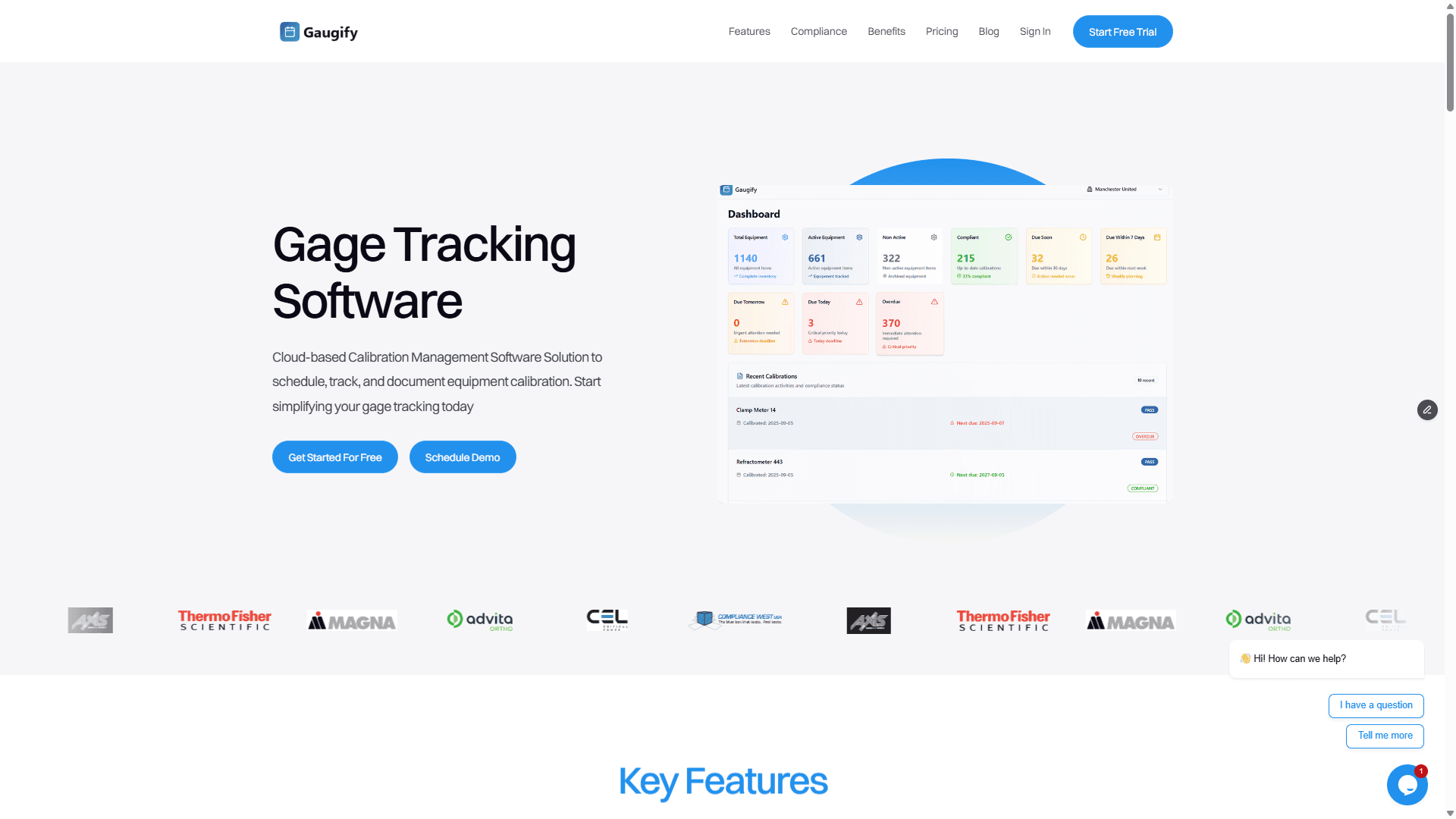
Dashboard visibility of calibration status across all locations
Mobile access for technicians and supervisors
This eliminates the human error factor that causes most compliance failures.
Step 3: Establish Proactive Scheduling Processes
Create systematic processes that prevent instruments from going overdue:
Schedule calibrations 2-4 weeks in advance of due dates
Coordinate with production planning to minimize disruption
Maintain relationships with multiple calibration service providers
Establish backup procedures for critical instruments
Step 4: Implement Robust Documentation Controls
Ensure every calibration is properly documented with:
Complete calibration certificates with measurement data
Instrument history tracking showing all calibration events
Audit trails documenting who performed calibrations and when
Integration with quality management systems
Start your free trial of Gaugify to see how automated documentation can eliminate compliance gaps while reducing administrative burden on your quality team.
How Modern Calibration Software Prevents Non-Compliance Costs
The most effective way to eliminate calibration non-compliance cost is to prevent the underlying problems from occurring. Modern calibration management platforms like Gaugify address each root cause systematically:
Automated Alert Systems
Instead of relying on manual calendar reviews, automated systems send alerts to multiple stakeholders at configurable intervals. Quality managers receive 30-day forecasts for resource planning, while technicians get immediate notifications when instruments need attention.
Mobile-First Design
Shop floor technicians can check instrument status, update calibration records, and attach certificates directly from mobile devices. This eliminates the delays and errors associated with paper-based systems.
Integration Capabilities
Modern platforms integrate with existing quality management systems, eliminating duplicate data entry while ensuring calibration records are available wherever they're needed—from production work instructions to customer audit responses.
Advanced Reporting and Analytics
Comprehensive reporting capabilities provide insights that help prevent future compliance issues:
Calibration cost analysis to optimize service provider relationships
Trend analysis to identify instruments requiring more frequent calibration
Compliance metrics to track improvement over time
Automated report generation for customer and regulatory audits
Regulatory Compliance Support
Compliance-focused features ensure your calibration program meets industry standards including ISO 9001, AS9100, ISO 17025, and FDA requirements. Built-in templates and workflows guide users through proper procedures while maintaining complete audit trails.
Calculating Your Calibration Non-Compliance Cost Risk
To understand the potential impact on your organization, consider these calculation factors:
Direct Costs
Emergency calibration fees: 40-60% premium over scheduled rates
Expedited shipping: $200-800 per instrument for rush service
Production downtime: $5,000-50,000 per day depending on your operation
Compliance and Customer Costs
Audit findings remediation: $25,000-100,000+ per major nonconformance
Product rework or scrap: Variable based on production volume
Customer chargebacks: 5-15% of affected shipment value
Long-term Business Impact
Lost customer confidence: Difficult to quantify but potentially devastating
Increased audit frequency: Additional time and resources for compliance
Insurance implications: Higher premiums or coverage limitations
For most organizations, the total risk exposure from calibration non-compliance ranges from $100,000 to over $1 million annually—making investment in proper calibration management systems an obvious choice.
Take Action: Protect Your Organization from Calibration Non-Compliance Cost
The calibration non-compliance cost examples in this article aren't theoretical—they're happening to organizations just like yours every day. The good news is that these costs are entirely preventable with the right systems and processes in place.
Don't wait for a failed audit or customer rejection to expose vulnerabilities in your calibration program. Modern calibration management software pays for itself by preventing just one compliance failure.
Gaugify helps quality-focused organizations eliminate calibration compliance risks through:
Automated due date tracking and alerts
Complete audit trail documentation
Mobile-friendly technician interfaces
Comprehensive compliance reporting
Integration with existing quality systems
See how Gaugify can protect your organization from costly calibration compliance failures. Start your free trial today or schedule a personalized demo to discuss your specific calibration management challenges.
Your quality reputation and bottom line depend on measurement accuracy. Make sure your calibration program supports both with the reliability and visibility that only modern calibration management software can provide.
The Real Cost of Non-Compliance in Calibration
A single out-of-tolerance measurement gage shut down production at a major automotive supplier for three days last quarter. The calibration non-compliance cost? $2.4 million in lost revenue, expedited shipping, and customer penalties. What makes this story particularly painful is that the gage had been overdue for calibration for six weeks—a fact that only came to light after Ford rejected an entire shipment of transmission components.
This isn't an isolated incident. Quality managers across manufacturing, aerospace, pharmaceuticals, and testing laboratories face similar calibration compliance failures every day. The difference is that most never calculate the true financial impact of these failures, treating them as "one-off" problems rather than systematic risks that demand immediate attention.
If you're responsible for maintaining measurement accuracy in your facility, the question isn't whether calibration non-compliance will cost your organization money—it's how much, and whether you'll see it coming.
Why Calibration Non-Compliance Is More Common Than You Think
Walk through any manufacturing facility or testing lab, and you'll find measurement instruments everywhere: micrometers, pressure gauges, torque wrenches, pH meters, scales, and specialized test equipment. Each requires regular calibration to maintain accuracy, yet studies indicate that 30-40% of organizations struggle with overdue calibrations at any given time.
The problem isn't that quality managers don't understand the importance of calibration—it's that traditional tracking methods create blind spots. Consider these common scenarios:
The Excel spreadsheet trap: A medical device manufacturer tracks 847 instruments across three facilities using spreadsheets. When a critical CMM goes overdue, no one notices until an FDA audit three months later.
The paper-based system failure: An aerospace supplier relies on calibration stickers and paper logs. A technician removes a torque wrench's sticker during cleaning, and the tool remains in use six months past its due date.
The communication breakdown: A pharmaceutical lab's calibration coordinator leaves unexpectedly. Her replacement discovers 23 overdue instruments, including analytical balances used for batch release testing.
These failures happen because manual tracking systems depend entirely on human memory and perfect execution—two things that don't scale as organizations grow or when personnel changes occur.
The Hidden Financial Impact of Calibration Non-Compliance Cost
When most managers think about calibration costs, they focus on the service fees—typically $150-500 per instrument depending on complexity. But the real calibration non-compliance cost lies in the cascade of consequences that follow when things go wrong.
Failed Audits and Regulatory Actions
Regulatory bodies don't negotiate when it comes to measurement traceability. Consider these real-world examples:
FDA Warning Letter: A pharmaceutical company received a warning letter citing "failure to calibrate instruments according to written procedures." The resulting remediation effort cost $380,000 in consultant fees, delayed product launches, and additional testing.
ISO 9001 Nonconformance: An automotive supplier's certification audit identified 17 overdue gages. Beyond the $45,000 in expedited calibration costs, they faced a six-month surveillance audit cycle and nearly lost their largest customer contract.
AS9100 Suspension: An aerospace manufacturer's certificate was suspended after auditors found pressure calibration equipment 14 months overdue. The three-month recertification process cost $290,000 in lost production and emergency outsourcing.
Customer Rejections and Chargebacks
Today's supply chains demand ironclad documentation. When calibration records don't support measurement claims, customers react swiftly:
Lot rejections: A precision machining shop faced $180,000 in rejected parts when their customer discovered gap issues with calibration records for the CMM used for final inspection.
Chargeback penalties: A chemical testing laboratory paid $95,000 in chargebacks after a customer audit revealed pH meters used for environmental compliance testing were overdue for calibration.
Contract termination: A medical device contract manufacturer lost a $2.3 million annual contract when recurring calibration compliance issues damaged their reputation for quality.
Product Liability and Legal Exposure
Perhaps most serious are the liability risks. When measurement uncertainty contributes to product failures, calibration records become critical legal documents:
A torque wrench calibrated outside its due window contributed to fastener failures in automotive assemblies, resulting in a costly recall investigation
Inaccurate analytical balance readings led to incorrect API dosing in pharmaceutical products, triggering FDA scrutiny and patient safety concerns
Out-of-tolerance pressure sensors in safety testing equipment created liability exposure when testing results were called into question
Root Causes: Why Calibration Compliance Systems Fail
Understanding why calibration non-compliance cost becomes so significant requires examining the systemic failures that create these problems in the first place.
Reactive Rather Than Proactive Management
Most organizations operate in reactive mode—dealing with overdue instruments after they've already missed their calibration dates. This creates a perpetual cycle of crisis management, where urgent calibrations disrupt production schedules and emergency service calls inflate costs by 40-60%.
Lack of Real-Time Visibility
When calibration due dates live in spreadsheets or paper logs, managers lack the real-time visibility needed to make informed decisions. By the time someone notices an overdue instrument, multiple lots may have been produced with questionable measurement data.
Inadequate Resource Planning
Without clear forecasting of upcoming calibration needs, organizations struggle to:
Budget appropriately for calibration services
Schedule downtime for critical production equipment
Maintain adequate spare instrument inventory
Plan technician workloads and training needs
Poor Documentation and Audit Trail Management
Even when calibrations are performed on time, inadequate record-keeping creates compliance vulnerabilities. Missing certificates, incomplete instrument histories, and poor document control can trigger audit findings even when the underlying calibration work was performed correctly.
A Strategic Solution to Calibration Non-Compliance Cost
Reducing calibration non-compliance cost requires moving from reactive firefighting to proactive system management. Here's a proven step-by-step approach:
Step 1: Complete Instrument Inventory and Risk Assessment
Begin by cataloging every measurement instrument in your facility, including:
Instrument type, model, and serial number
Current calibration status and due date
Criticality to product quality and safety
Required calibration interval
Associated measurement uncertainty requirements
Prioritize instruments based on risk—a micrometer used for final inspection of critical dimensions carries higher risk than a ruler used for rough measurements.
Step 2: Implement Automated Tracking and Alerts
Replace manual tracking systems with automated calibration management software that provides:
Real-time due date tracking for all instruments
Automated email alerts 30, 14, and 7 days before due dates
Dashboard visibility of calibration status across all locations
Mobile access for technicians and supervisors
This eliminates the human error factor that causes most compliance failures.
Step 3: Establish Proactive Scheduling Processes
Create systematic processes that prevent instruments from going overdue:
Schedule calibrations 2-4 weeks in advance of due dates
Coordinate with production planning to minimize disruption
Maintain relationships with multiple calibration service providers
Establish backup procedures for critical instruments
Step 4: Implement Robust Documentation Controls
Ensure every calibration is properly documented with:
Complete calibration certificates with measurement data
Instrument history tracking showing all calibration events
Audit trails documenting who performed calibrations and when
Integration with quality management systems
Start your free trial of Gaugify to see how automated documentation can eliminate compliance gaps while reducing administrative burden on your quality team.
How Modern Calibration Software Prevents Non-Compliance Costs
The most effective way to eliminate calibration non-compliance cost is to prevent the underlying problems from occurring. Modern calibration management platforms like Gaugify address each root cause systematically:
Automated Alert Systems
Instead of relying on manual calendar reviews, automated systems send alerts to multiple stakeholders at configurable intervals. Quality managers receive 30-day forecasts for resource planning, while technicians get immediate notifications when instruments need attention.
Mobile-First Design
Shop floor technicians can check instrument status, update calibration records, and attach certificates directly from mobile devices. This eliminates the delays and errors associated with paper-based systems.
Integration Capabilities
Modern platforms integrate with existing quality management systems, eliminating duplicate data entry while ensuring calibration records are available wherever they're needed—from production work instructions to customer audit responses.
Advanced Reporting and Analytics
Comprehensive reporting capabilities provide insights that help prevent future compliance issues:
Calibration cost analysis to optimize service provider relationships
Trend analysis to identify instruments requiring more frequent calibration
Compliance metrics to track improvement over time
Automated report generation for customer and regulatory audits
Regulatory Compliance Support
Compliance-focused features ensure your calibration program meets industry standards including ISO 9001, AS9100, ISO 17025, and FDA requirements. Built-in templates and workflows guide users through proper procedures while maintaining complete audit trails.
Calculating Your Calibration Non-Compliance Cost Risk
To understand the potential impact on your organization, consider these calculation factors:
Direct Costs
Emergency calibration fees: 40-60% premium over scheduled rates
Expedited shipping: $200-800 per instrument for rush service
Production downtime: $5,000-50,000 per day depending on your operation
Compliance and Customer Costs
Audit findings remediation: $25,000-100,000+ per major nonconformance
Product rework or scrap: Variable based on production volume
Customer chargebacks: 5-15% of affected shipment value
Long-term Business Impact
Lost customer confidence: Difficult to quantify but potentially devastating
Increased audit frequency: Additional time and resources for compliance
Insurance implications: Higher premiums or coverage limitations
For most organizations, the total risk exposure from calibration non-compliance ranges from $100,000 to over $1 million annually—making investment in proper calibration management systems an obvious choice.
Take Action: Protect Your Organization from Calibration Non-Compliance Cost
The calibration non-compliance cost examples in this article aren't theoretical—they're happening to organizations just like yours every day. The good news is that these costs are entirely preventable with the right systems and processes in place.
Don't wait for a failed audit or customer rejection to expose vulnerabilities in your calibration program. Modern calibration management software pays for itself by preventing just one compliance failure.
Gaugify helps quality-focused organizations eliminate calibration compliance risks through:
Automated due date tracking and alerts
Complete audit trail documentation
Mobile-friendly technician interfaces
Comprehensive compliance reporting
Integration with existing quality systems
See how Gaugify can protect your organization from costly calibration compliance failures. Start your free trial today or schedule a personalized demo to discuss your specific calibration management challenges.
Your quality reputation and bottom line depend on measurement accuracy. Make sure your calibration program supports both with the reliability and visibility that only modern calibration management software can provide.