
Top 5 Free Calibration Management Software Tools 2026
Top 5 Free Calibration Management Software Tools 2026
David Bentley
Quality Assurance Engineer
8 min read
Top 5 Free Calibration Management Software Tools 2026
As quality managers and lab technicians face increasing pressure to maintain ISO 17025 compliance while keeping costs under control, the search for free calibration management software 2026 options has intensified. While truly comprehensive free calibration management solutions are rare in the enterprise space, several vendors offer limited free versions or generous trial periods that can provide substantial value for smaller operations or organizations testing calibration software capabilities.
In this comprehensive analysis, we'll examine the top 5 free calibration management software options available in 2026, evaluating their capabilities for managing everything from basic dimensional gages to complex environmental chambers. Whether you're tracking Mitutoyo micrometers with ±0.0001" tolerances or managing a fleet of Fluke multimeters across multiple locations, understanding your free options is crucial before committing to paid solutions.
Understanding Free Calibration Management Software Limitations in 2026
Before diving into specific tools, it's important to understand what "free" typically means in the calibration management space. Most vendors offer one of three approaches:
Limited asset counts: Free tiers that support 10-50 instruments maximum
Feature restrictions: Basic scheduling and certificate generation without advanced analytics
Extended trials: Full-featured access for 30-90 days to evaluate capabilities
For organizations managing hundreds of measurement devices—from basic steel rules to sophisticated CMMs requiring uncertainty budgets—these limitations can quickly become restrictive. However, free options provide excellent opportunities to evaluate workflows and train staff before scaling to enterprise solutions.
1. Gaugify Free Trial - Best Overall Value
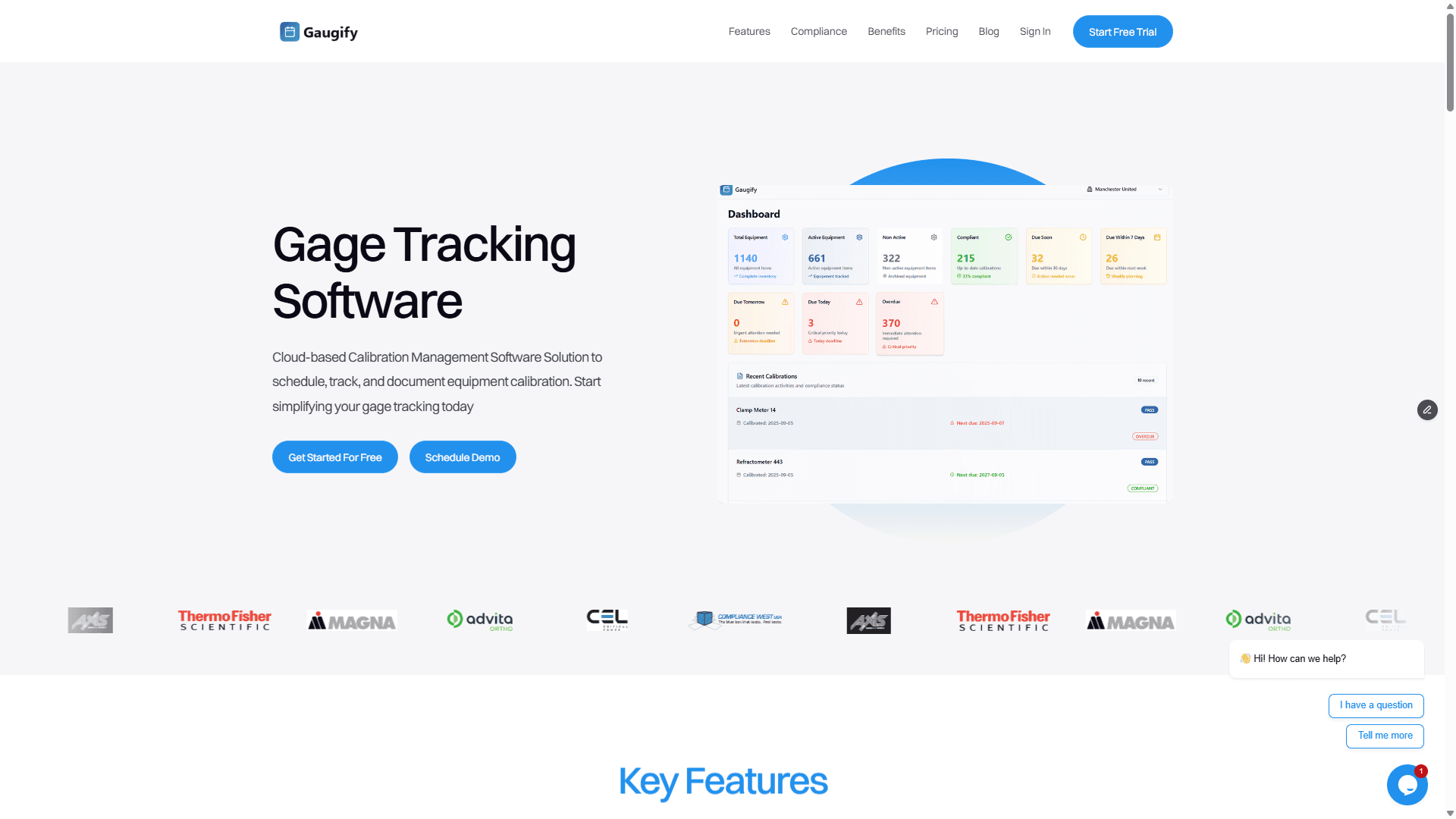
While Gaugify isn't permanently free, its comprehensive 30-day free trial provides the most robust evaluation experience available in 2026. This cloud-native platform offers unrestricted access to all features during the trial period, making it ideal for organizations wanting to test complete calibration workflows.
Key Features Available During Free Trial:
Unlimited instrument management: Add torque wrenches, pressure gages, thermocouples, and other measurement devices without asset limits
Automated scheduling: Set up calibration schedules for annual, semi-annual, or custom intervals
Built-in uncertainty calculations: Generate measurement uncertainty budgets using GUM methodology
Professional certificates: Create ISO 17025-compliant calibration certificates with company branding
Mobile accessibility: Perform calibrations and access records from tablets and smartphones
Audit trail compliance: Complete data integrity tracking for regulatory audits
During a recent evaluation at a medical device manufacturer, their quality team successfully migrated 150 instruments from spreadsheets to Gaugify during the trial period, including complex test equipment requiring traceability to NIST standards. The comprehensive feature set allowed them to establish complete workflows before committing to a subscription.
Best For: Organizations serious about implementing professional calibration management and wanting to evaluate all features before purchasing.
Ready to experience the most comprehensive free trial in calibration management? Start your free Gaugify trial today and see why leading manufacturers are making the switch to modern, cloud-based calibration management.
2. OpenQCM - Open Source Solution
OpenQCM represents one of the few genuine open-source calibration management platforms available in 2026. This community-driven solution provides basic calibration tracking capabilities without licensing fees, making it attractive for budget-conscious organizations with technical expertise.
Core Capabilities:
Basic instrument database: Track serial numbers, calibration dates, and next due dates
Simple scheduling: Email notifications for upcoming calibrations
Certificate templates: Customizable PDF certificate generation
User management: Role-based access controls
Data export: CSV exports for external analysis
Limitations:
OpenQCM lacks advanced features critical for regulated industries. There's no built-in uncertainty calculation engine, limited compliance reporting, and no mobile optimization. Organizations managing precision instruments like Starrett height gages (±0.0002") or Fluke calibrators requiring detailed uncertainty analysis will find the platform insufficient.
Best For: Small shops with basic calibration needs and technical staff capable of customizing open-source software.
3. CalibrationControl Free Edition
CalibrationControl offers a permanently free edition supporting up to 25 instruments, making it suitable for smaller operations or specific departments within larger organizations. The free version includes core calibration management features with upgrade paths to paid tiers.
Free Edition Features:
25 instrument limit: Sufficient for small labs or specific equipment categories
Calibration scheduling: Automated due date tracking and notifications
Basic certificates: Standard calibration certificate generation
Asset tracking: Location and status management
Simple reporting: Due reports and calibration history
A precision machining shop successfully used the free edition to manage their inspection equipment, including dial indicators, pin gages, and ring gages used for aerospace components. However, they eventually required the paid version when their instrument count exceeded 25 assets.
Limitations: No uncertainty calculations, limited customization options, and basic reporting capabilities compared to enterprise solutions.
Best For: Small operations with fewer than 25 instruments requiring basic calibration tracking.
4. Simple Calibration Manager - Spreadsheet Alternative
Simple Calibration Manager positions itself as a free alternative to spreadsheet-based calibration tracking. While basic, it provides structured data entry and automated reminders that represent a significant improvement over manual Excel tracking.
Available Features:
Unlimited instruments: No artificial asset limits in the free version
Due date tracking: Automated email notifications
Basic data fields: Serial numbers, calibration dates, intervals
Simple certificates: Template-based certificate generation
Data backup: Basic export capabilities
While functional, Simple Calibration Manager lacks the sophistication required for regulated environments. There's no audit trail functionality, no measurement uncertainty support, and limited integration capabilities—critical gaps for organizations managing precision measurement equipment under ISO 17025 requirements.
Best For: Organizations transitioning from spreadsheets and requiring basic improvement without advanced compliance features.
5. CalTracker Express - Limited Commercial Option
CalTracker Express offers a free tier with basic calibration management capabilities, primarily serving as a lead-generation tool for their commercial platform. The free version supports fundamental tracking needs with clear upgrade paths.
Free Tier Capabilities:
20 instrument maximum: Suitable for small departments
Standard scheduling: Annual, semi-annual, quarterly intervals
Basic certificates: Simple calibration certificate templates
Email reminders: Due date notifications
Cloud storage: Basic data backup and accessibility
The platform works adequately for basic needs but lacks advanced features like uncertainty budgets, comprehensive audit trails, or integration capabilities. Organizations managing critical measurement equipment—such as torque transducers for automotive testing or environmental chambers for electronics manufacturing—will quickly outgrow the free limitations.
Best For: Small teams wanting cloud-based basics with potential for future expansion.
Why Most Organizations Outgrow Free Calibration Management Software
While free calibration management software options provide valuable entry points, most organizations quickly encounter limitations that impact operational efficiency and compliance capabilities. Common growth barriers include:
Asset Count Restrictions
Manufacturing facilities typically manage diverse instrument portfolios exceeding free tier limits. A typical automotive supplier might track 200+ measurement devices, including:
Coordinate measuring machines requiring complex uncertainty calculations
Pressure transducers with multiple calibration points
Temperature monitoring equipment across production lines
Dimensional inspection tools from micrometers to optical comparators
Compliance Requirements
Regulated industries require features rarely available in free versions:
Complete audit trails: FDA and ISO 17025 mandate comprehensive data integrity tracking
Measurement uncertainty: Technical requirements for accredited laboratories
Advanced reporting: Compliance documentation for regulatory submissions
Integration capabilities: Connection to ERP systems and quality management platforms
Organizations subject to regulatory compliance requirements typically require enterprise-grade solutions supporting complete traceability and advanced analytics.
Making the Right Choice for Your Organization
Selecting appropriate calibration management software depends on several critical factors beyond initial cost considerations:
Immediate vs. Long-term Needs
Free options work well for immediate pain relief—replacing spreadsheet chaos with structured data entry and automated reminders. However, growing organizations benefit from investing in scalable platforms that support expansion without migration headaches.
Consider a medical device manufacturer starting with 50 instruments. Free software might suffice initially, but FDA validation requirements, instrument additions, and multi-location expansion quickly necessitate enterprise capabilities. Starting with a comprehensive platform like Gaugify's ISO 17025-compliant solution prevents costly migrations and ensures continuous compliance.
Total Cost of Ownership
Free software often involves hidden costs:
Implementation time: Limited documentation and support extend deployment periods
Training requirements: Less intuitive interfaces require additional staff education
Migration costs: Eventually outgrowing free options necessitates data transfer and system changes
Compliance gaps: Inadequate audit trails or uncertainty calculations create regulatory risks
Integration and Scalability
Modern calibration management extends beyond basic scheduling to encompass:
ERP integration: Connecting calibration data with maintenance and purchasing systems
Mobile accessibility: Supporting technicians performing field calibrations
Advanced analytics: Identifying calibration trends and optimizing intervals
Multi-location support: Managing instruments across facilities and departments
Free solutions rarely provide these capabilities, limiting organizational efficiency and growth potential.
Free Calibration Management Software 2026: The Bottom Line
While several free calibration management software options exist in 2026, most serve as stepping stones rather than permanent solutions for serious quality operations. Organizations managing significant instrument portfolios or operating under regulatory requirements typically require enterprise-grade platforms offering complete functionality without artificial limitations.
For organizations ready to implement comprehensive calibration management, Gaugify provides the most complete evaluation opportunity through its unrestricted free trial. Unlike permanently free options with severe limitations, Gaugify's trial allows complete workflow testing with real data and full feature access.
The platform's modern, cloud-native architecture eliminates IT infrastructure requirements while providing enterprise-grade security and reliability. Built-in uncertainty calculations, mobile optimization, and comprehensive compliance reporting address the complete spectrum of calibration management needs—from basic gage tracking to sophisticated measurement uncertainty analysis.
Whether you're managing a small machine shop's inspection equipment or coordinating calibration programs across multiple laboratories, understanding your options ensures optimal resource allocation and long-term success.
Ready to experience professional-grade calibration management without the limitations of permanently free software? Start your comprehensive Gaugify free trial today and discover why leading organizations are choosing modern, cloud-based solutions for their critical measurement equipment management needs.
Top 5 Free Calibration Management Software Tools 2026
As quality managers and lab technicians face increasing pressure to maintain ISO 17025 compliance while keeping costs under control, the search for free calibration management software 2026 options has intensified. While truly comprehensive free calibration management solutions are rare in the enterprise space, several vendors offer limited free versions or generous trial periods that can provide substantial value for smaller operations or organizations testing calibration software capabilities.
In this comprehensive analysis, we'll examine the top 5 free calibration management software options available in 2026, evaluating their capabilities for managing everything from basic dimensional gages to complex environmental chambers. Whether you're tracking Mitutoyo micrometers with ±0.0001" tolerances or managing a fleet of Fluke multimeters across multiple locations, understanding your free options is crucial before committing to paid solutions.
Understanding Free Calibration Management Software Limitations in 2026
Before diving into specific tools, it's important to understand what "free" typically means in the calibration management space. Most vendors offer one of three approaches:
Limited asset counts: Free tiers that support 10-50 instruments maximum
Feature restrictions: Basic scheduling and certificate generation without advanced analytics
Extended trials: Full-featured access for 30-90 days to evaluate capabilities
For organizations managing hundreds of measurement devices—from basic steel rules to sophisticated CMMs requiring uncertainty budgets—these limitations can quickly become restrictive. However, free options provide excellent opportunities to evaluate workflows and train staff before scaling to enterprise solutions.
1. Gaugify Free Trial - Best Overall Value
While Gaugify isn't permanently free, its comprehensive 30-day free trial provides the most robust evaluation experience available in 2026. This cloud-native platform offers unrestricted access to all features during the trial period, making it ideal for organizations wanting to test complete calibration workflows.
Key Features Available During Free Trial:
Unlimited instrument management: Add torque wrenches, pressure gages, thermocouples, and other measurement devices without asset limits
Automated scheduling: Set up calibration schedules for annual, semi-annual, or custom intervals
Built-in uncertainty calculations: Generate measurement uncertainty budgets using GUM methodology
Professional certificates: Create ISO 17025-compliant calibration certificates with company branding
Mobile accessibility: Perform calibrations and access records from tablets and smartphones
Audit trail compliance: Complete data integrity tracking for regulatory audits
During a recent evaluation at a medical device manufacturer, their quality team successfully migrated 150 instruments from spreadsheets to Gaugify during the trial period, including complex test equipment requiring traceability to NIST standards. The comprehensive feature set allowed them to establish complete workflows before committing to a subscription.
Best For: Organizations serious about implementing professional calibration management and wanting to evaluate all features before purchasing.
Ready to experience the most comprehensive free trial in calibration management? Start your free Gaugify trial today and see why leading manufacturers are making the switch to modern, cloud-based calibration management.
2. OpenQCM - Open Source Solution
OpenQCM represents one of the few genuine open-source calibration management platforms available in 2026. This community-driven solution provides basic calibration tracking capabilities without licensing fees, making it attractive for budget-conscious organizations with technical expertise.
Core Capabilities:
Basic instrument database: Track serial numbers, calibration dates, and next due dates
Simple scheduling: Email notifications for upcoming calibrations
Certificate templates: Customizable PDF certificate generation
User management: Role-based access controls
Data export: CSV exports for external analysis
Limitations:
OpenQCM lacks advanced features critical for regulated industries. There's no built-in uncertainty calculation engine, limited compliance reporting, and no mobile optimization. Organizations managing precision instruments like Starrett height gages (±0.0002") or Fluke calibrators requiring detailed uncertainty analysis will find the platform insufficient.
Best For: Small shops with basic calibration needs and technical staff capable of customizing open-source software.
3. CalibrationControl Free Edition
CalibrationControl offers a permanently free edition supporting up to 25 instruments, making it suitable for smaller operations or specific departments within larger organizations. The free version includes core calibration management features with upgrade paths to paid tiers.
Free Edition Features:
25 instrument limit: Sufficient for small labs or specific equipment categories
Calibration scheduling: Automated due date tracking and notifications
Basic certificates: Standard calibration certificate generation
Asset tracking: Location and status management
Simple reporting: Due reports and calibration history
A precision machining shop successfully used the free edition to manage their inspection equipment, including dial indicators, pin gages, and ring gages used for aerospace components. However, they eventually required the paid version when their instrument count exceeded 25 assets.
Limitations: No uncertainty calculations, limited customization options, and basic reporting capabilities compared to enterprise solutions.
Best For: Small operations with fewer than 25 instruments requiring basic calibration tracking.
4. Simple Calibration Manager - Spreadsheet Alternative
Simple Calibration Manager positions itself as a free alternative to spreadsheet-based calibration tracking. While basic, it provides structured data entry and automated reminders that represent a significant improvement over manual Excel tracking.
Available Features:
Unlimited instruments: No artificial asset limits in the free version
Due date tracking: Automated email notifications
Basic data fields: Serial numbers, calibration dates, intervals
Simple certificates: Template-based certificate generation
Data backup: Basic export capabilities
While functional, Simple Calibration Manager lacks the sophistication required for regulated environments. There's no audit trail functionality, no measurement uncertainty support, and limited integration capabilities—critical gaps for organizations managing precision measurement equipment under ISO 17025 requirements.
Best For: Organizations transitioning from spreadsheets and requiring basic improvement without advanced compliance features.
5. CalTracker Express - Limited Commercial Option
CalTracker Express offers a free tier with basic calibration management capabilities, primarily serving as a lead-generation tool for their commercial platform. The free version supports fundamental tracking needs with clear upgrade paths.
Free Tier Capabilities:
20 instrument maximum: Suitable for small departments
Standard scheduling: Annual, semi-annual, quarterly intervals
Basic certificates: Simple calibration certificate templates
Email reminders: Due date notifications
Cloud storage: Basic data backup and accessibility
The platform works adequately for basic needs but lacks advanced features like uncertainty budgets, comprehensive audit trails, or integration capabilities. Organizations managing critical measurement equipment—such as torque transducers for automotive testing or environmental chambers for electronics manufacturing—will quickly outgrow the free limitations.
Best For: Small teams wanting cloud-based basics with potential for future expansion.
Why Most Organizations Outgrow Free Calibration Management Software
While free calibration management software options provide valuable entry points, most organizations quickly encounter limitations that impact operational efficiency and compliance capabilities. Common growth barriers include:
Asset Count Restrictions
Manufacturing facilities typically manage diverse instrument portfolios exceeding free tier limits. A typical automotive supplier might track 200+ measurement devices, including:
Coordinate measuring machines requiring complex uncertainty calculations
Pressure transducers with multiple calibration points
Temperature monitoring equipment across production lines
Dimensional inspection tools from micrometers to optical comparators
Compliance Requirements
Regulated industries require features rarely available in free versions:
Complete audit trails: FDA and ISO 17025 mandate comprehensive data integrity tracking
Measurement uncertainty: Technical requirements for accredited laboratories
Advanced reporting: Compliance documentation for regulatory submissions
Integration capabilities: Connection to ERP systems and quality management platforms
Organizations subject to regulatory compliance requirements typically require enterprise-grade solutions supporting complete traceability and advanced analytics.
Making the Right Choice for Your Organization
Selecting appropriate calibration management software depends on several critical factors beyond initial cost considerations:
Immediate vs. Long-term Needs
Free options work well for immediate pain relief—replacing spreadsheet chaos with structured data entry and automated reminders. However, growing organizations benefit from investing in scalable platforms that support expansion without migration headaches.
Consider a medical device manufacturer starting with 50 instruments. Free software might suffice initially, but FDA validation requirements, instrument additions, and multi-location expansion quickly necessitate enterprise capabilities. Starting with a comprehensive platform like Gaugify's ISO 17025-compliant solution prevents costly migrations and ensures continuous compliance.
Total Cost of Ownership
Free software often involves hidden costs:
Implementation time: Limited documentation and support extend deployment periods
Training requirements: Less intuitive interfaces require additional staff education
Migration costs: Eventually outgrowing free options necessitates data transfer and system changes
Compliance gaps: Inadequate audit trails or uncertainty calculations create regulatory risks
Integration and Scalability
Modern calibration management extends beyond basic scheduling to encompass:
ERP integration: Connecting calibration data with maintenance and purchasing systems
Mobile accessibility: Supporting technicians performing field calibrations
Advanced analytics: Identifying calibration trends and optimizing intervals
Multi-location support: Managing instruments across facilities and departments
Free solutions rarely provide these capabilities, limiting organizational efficiency and growth potential.
Free Calibration Management Software 2026: The Bottom Line
While several free calibration management software options exist in 2026, most serve as stepping stones rather than permanent solutions for serious quality operations. Organizations managing significant instrument portfolios or operating under regulatory requirements typically require enterprise-grade platforms offering complete functionality without artificial limitations.
For organizations ready to implement comprehensive calibration management, Gaugify provides the most complete evaluation opportunity through its unrestricted free trial. Unlike permanently free options with severe limitations, Gaugify's trial allows complete workflow testing with real data and full feature access.
The platform's modern, cloud-native architecture eliminates IT infrastructure requirements while providing enterprise-grade security and reliability. Built-in uncertainty calculations, mobile optimization, and comprehensive compliance reporting address the complete spectrum of calibration management needs—from basic gage tracking to sophisticated measurement uncertainty analysis.
Whether you're managing a small machine shop's inspection equipment or coordinating calibration programs across multiple laboratories, understanding your options ensures optimal resource allocation and long-term success.
Ready to experience professional-grade calibration management without the limitations of permanently free software? Start your comprehensive Gaugify free trial today and discover why leading organizations are choosing modern, cloud-based solutions for their critical measurement equipment management needs.