
What is a Measurement Audit
What is a Measurement Audit
David Bentley
Quality Assurance Engineer
7 min read
What is a Measurement Audit
A measurement audit is a systematic examination and evaluation of a company's measurement processes, calibration records, and quality control procedures to ensure compliance with industry standards and regulatory requirements. This critical quality assurance activity verifies that measurement equipment is properly calibrated, documentation is accurate, and measurement practices align with established protocols like ISO 9001, ISO/IEC 17025, or FDA regulations.
For quality managers, lab technicians, and shop floor supervisors, understanding what is measurement audit entails is essential for maintaining operational excellence and avoiding costly compliance failures. These audits serve as your first line of defense against measurement errors that could compromise product quality, customer satisfaction, and regulatory standing.
Why Measurement Audits Matter in Modern Manufacturing
In today's precision-driven manufacturing environment, measurement audits have evolved from optional quality exercises to mandatory compliance requirements. When an automotive supplier's torque wrenches drift out of calibration by just 2%, it can result in improperly tensioned bolts that lead to warranty claims worth millions of dollars. Similarly, when a pharmaceutical lab's analytical balances aren't properly verified, entire product batches may fail FDA inspection.
Measurement audits protect your organization by:
Identifying calibration gaps: Discovering equipment that's overdue for calibration before it affects production quality
Verifying traceability: Ensuring all measurements can be traced back to national or international standards
Validating procedures: Confirming that technicians follow proper measurement protocols consistently
Maintaining compliance: Satisfying auditor requirements for ISO certifications and regulatory inspections
Without regular measurement audits, organizations often discover calibration issues only after customer complaints, failed inspections, or product recalls—scenarios that cost significantly more than proactive audit programs.
How Measurement Audit Processes Work in Practice
A comprehensive measurement audit typically follows a structured approach that examines both technical and procedural aspects of your calibration program. Let's walk through a real-world example from a precision machining shop:
Pre-Audit Planning
The audit team begins by reviewing the facility's gage inventory, including Mitutoyo micrometers (±0.0001" tolerance), Starrett height gages, and Fluke multimeters. They examine calibration schedules, identify critical measurement points, and prepare checklists covering equipment condition, calibration certificates, and operator competency.
Physical Equipment Inspection
Auditors physically examine each instrument, checking for:
Visible damage or wear that could affect accuracy
Current calibration stickers with valid due dates
Proper storage conditions (temperature, humidity, contamination)
Environmental controls in measurement areas
For instance, they might discover that precision pin gages are stored in an area with temperature fluctuations exceeding ±5°F, potentially affecting dimensional stability and measurement reliability.
Documentation Review
The team examines calibration certificates, maintenance records, and measurement procedures. They verify that calibration intervals are appropriate for each instrument's usage and criticality. A coordinate measuring machine (CMM) used for first article inspections might require quarterly calibration, while shop-floor calipers used for routine checks could have annual intervals.
Procedural Verification
Auditors observe operators performing actual measurements, checking technique, calculation methods, and data recording practices. They might watch a technician measure a critical shaft diameter using a micrometer, ensuring proper anvil cleaning, appropriate measuring force, and correct reading interpretation.
Organizations seeking to streamline their measurement audit preparation should consider implementing modern calibration management software that maintains real-time visibility into equipment status and compliance requirements.
Common Measurement Audit Misconceptions and Pitfalls
Many organizations approach measurement audits with outdated assumptions that can undermine their effectiveness. Understanding these misconceptions helps you avoid common pitfalls that waste time and resources while missing critical issues.
Misconception: Audits Only Focus on Equipment
While equipment calibration is important, effective measurement audits examine the entire measurement system. This includes environmental conditions, operator training, measurement procedures, and data handling practices. A precision scale might be perfectly calibrated, but if operators don't account for air currents or vibration, measurements will still be unreliable.
Misconception: Current Calibration Stickers Guarantee Compliance
Valid calibration dates don't tell the complete story. Auditors also examine whether calibration procedures are appropriate for the instrument's intended use. A pressure gage calibrated for general industrial use may not meet the stringent requirements for pharmaceutical clean room applications, even with current certification.
Misconception: Internal Audits Are Less Rigorous
Some organizations treat internal measurement audits as "practice runs" for external inspections. This approach misses the opportunity to identify and correct issues before they become compliance problems. Internal audits should be just as thorough as external ones, using the same standards and criteria.
Common Documentation Errors
Auditors frequently find:
Missing measurement uncertainty calculations for critical applications
Incomplete traceability chains that can't be verified to national standards
Calibration certificates that don't cover all measurement ranges used in production
Inadequate environmental monitoring records for sensitive measurements
These issues often stem from manual record-keeping systems that make it difficult to maintain comprehensive documentation across large gage inventories.
Leveraging Technology for Effective Measurement Audits
Modern calibration management platforms like Gaugify transform how organizations prepare for and conduct measurement audits. Instead of scrambling through paper records and spreadsheets, quality teams can access complete audit trails and compliance documentation instantly.
Automated Audit Preparation
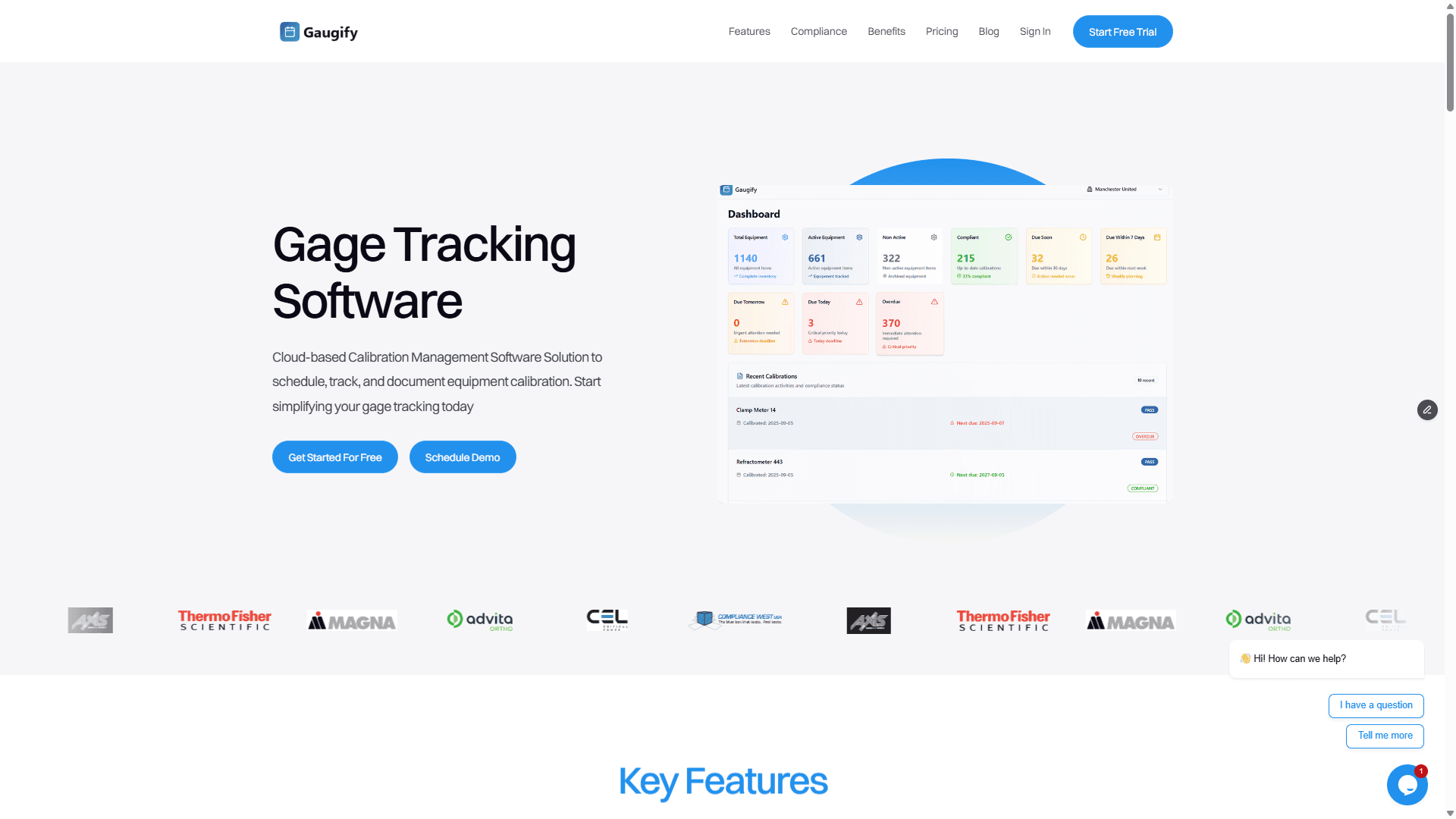
Gaugify's dashboard provides real-time visibility into calibration status across your entire gage inventory. Quality managers can generate comprehensive audit reports showing:
Calibration compliance rates by department or equipment type
Upcoming due dates and potential scheduling conflicts
Complete certificate histories with automatic traceability verification
Environmental monitoring data linked to specific measurements
This visibility helps identify and resolve issues before auditors arrive, rather than discovering problems during the inspection.
Streamlined Documentation Management
Digital calibration management eliminates common documentation gaps that often surface during audits. Every calibration event, maintenance activity, and equipment change is automatically logged with timestamps and user identification. When an auditor asks about the repair history of a specific torque wrench, you can provide complete documentation within minutes rather than hours.
The platform also ensures that calibration certificates include all necessary technical details, from measurement uncertainty calculations to environmental conditions during calibration. This comprehensive documentation satisfies even the most stringent compliance requirements without manual effort from your team.
Ready to see how modern calibration management can simplify your audit preparation? Start your free trial and experience the difference that organized, automated calibration tracking makes during your next measurement audit.
Building a Robust Measurement Audit Program
Successful measurement audit programs go beyond reactive compliance checking to create systematic approaches that continuously improve measurement quality. Leading organizations implement regular internal audit cycles that complement external inspections and regulatory reviews.
Establishing Audit Frequency and Scope
Audit frequency should reflect the criticality of your measurement processes and regulatory requirements. Medical device manufacturers might conduct quarterly measurement audits for production equipment while performing monthly checks on critical dimensional gages used for implantable devices. Aerospace suppliers often align audit schedules with customer quality reviews and AS9100 surveillance audits.
Training Internal Audit Teams
Effective measurement audits require auditors who understand both technical measurement principles and quality system requirements. Internal audit teams should receive training on:
Measurement uncertainty concepts and calculations
Calibration standard requirements for different instrument types
Environmental factor impacts on measurement accuracy
Documentation requirements for various industry standards
Cross-training quality technicians as internal auditors provides fresh perspectives while building broader measurement competency across your organization.
Integrating Audit Results with Continuous Improvement
Measurement audit findings should feed directly into your calibration program improvement process. When audits consistently identify late calibrations in specific departments, it might indicate unrealistic scheduling or insufficient backup equipment. When multiple operators struggle with proper micrometer technique, it suggests training program gaps rather than individual performance issues.
Organizations using ISO 17025 calibration software can track audit findings alongside normal calibration data, creating comprehensive views of measurement system performance over time.
The Future of Measurement Auditing
As Industry 4.0 technologies mature, measurement auditing is evolving from periodic manual reviews to continuous automated monitoring. Smart gages equipped with wireless connectivity can provide real-time calibration status updates, while environmental sensors automatically log conditions that affect measurement accuracy.
These technological advances don't eliminate the need for systematic measurement audits, but they shift the focus from basic compliance checking to higher-value analysis of measurement system effectiveness and improvement opportunities.
Transform Your Measurement Audit Process Today
Understanding what is measurement audit represents just the first step toward building world-class measurement quality systems. The real value comes from implementing systematic audit programs supported by modern tools that make compliance verification efficient and comprehensive.
Gaugify's cloud-based calibration management platform gives you everything needed to excel in measurement audits: automated scheduling, comprehensive documentation, real-time compliance monitoring, and detailed reporting capabilities. Whether you're preparing for an ISO surveillance audit, customer quality review, or regulatory inspection, you'll have instant access to complete calibration histories and compliance evidence.
Don't let your next measurement audit catch you unprepared. Schedule a demo to see how Gaugify can transform your calibration management from a compliance burden into a competitive advantage. Join hundreds of quality professionals who've already discovered how modern calibration software makes measurement audits straightforward, comprehensive, and stress-free.
What is a Measurement Audit
A measurement audit is a systematic examination and evaluation of a company's measurement processes, calibration records, and quality control procedures to ensure compliance with industry standards and regulatory requirements. This critical quality assurance activity verifies that measurement equipment is properly calibrated, documentation is accurate, and measurement practices align with established protocols like ISO 9001, ISO/IEC 17025, or FDA regulations.
For quality managers, lab technicians, and shop floor supervisors, understanding what is measurement audit entails is essential for maintaining operational excellence and avoiding costly compliance failures. These audits serve as your first line of defense against measurement errors that could compromise product quality, customer satisfaction, and regulatory standing.
Why Measurement Audits Matter in Modern Manufacturing
In today's precision-driven manufacturing environment, measurement audits have evolved from optional quality exercises to mandatory compliance requirements. When an automotive supplier's torque wrenches drift out of calibration by just 2%, it can result in improperly tensioned bolts that lead to warranty claims worth millions of dollars. Similarly, when a pharmaceutical lab's analytical balances aren't properly verified, entire product batches may fail FDA inspection.
Measurement audits protect your organization by:
Identifying calibration gaps: Discovering equipment that's overdue for calibration before it affects production quality
Verifying traceability: Ensuring all measurements can be traced back to national or international standards
Validating procedures: Confirming that technicians follow proper measurement protocols consistently
Maintaining compliance: Satisfying auditor requirements for ISO certifications and regulatory inspections
Without regular measurement audits, organizations often discover calibration issues only after customer complaints, failed inspections, or product recalls—scenarios that cost significantly more than proactive audit programs.
How Measurement Audit Processes Work in Practice
A comprehensive measurement audit typically follows a structured approach that examines both technical and procedural aspects of your calibration program. Let's walk through a real-world example from a precision machining shop:
Pre-Audit Planning
The audit team begins by reviewing the facility's gage inventory, including Mitutoyo micrometers (±0.0001" tolerance), Starrett height gages, and Fluke multimeters. They examine calibration schedules, identify critical measurement points, and prepare checklists covering equipment condition, calibration certificates, and operator competency.
Physical Equipment Inspection
Auditors physically examine each instrument, checking for:
Visible damage or wear that could affect accuracy
Current calibration stickers with valid due dates
Proper storage conditions (temperature, humidity, contamination)
Environmental controls in measurement areas
For instance, they might discover that precision pin gages are stored in an area with temperature fluctuations exceeding ±5°F, potentially affecting dimensional stability and measurement reliability.
Documentation Review
The team examines calibration certificates, maintenance records, and measurement procedures. They verify that calibration intervals are appropriate for each instrument's usage and criticality. A coordinate measuring machine (CMM) used for first article inspections might require quarterly calibration, while shop-floor calipers used for routine checks could have annual intervals.
Procedural Verification
Auditors observe operators performing actual measurements, checking technique, calculation methods, and data recording practices. They might watch a technician measure a critical shaft diameter using a micrometer, ensuring proper anvil cleaning, appropriate measuring force, and correct reading interpretation.
Organizations seeking to streamline their measurement audit preparation should consider implementing modern calibration management software that maintains real-time visibility into equipment status and compliance requirements.
Common Measurement Audit Misconceptions and Pitfalls
Many organizations approach measurement audits with outdated assumptions that can undermine their effectiveness. Understanding these misconceptions helps you avoid common pitfalls that waste time and resources while missing critical issues.
Misconception: Audits Only Focus on Equipment
While equipment calibration is important, effective measurement audits examine the entire measurement system. This includes environmental conditions, operator training, measurement procedures, and data handling practices. A precision scale might be perfectly calibrated, but if operators don't account for air currents or vibration, measurements will still be unreliable.
Misconception: Current Calibration Stickers Guarantee Compliance
Valid calibration dates don't tell the complete story. Auditors also examine whether calibration procedures are appropriate for the instrument's intended use. A pressure gage calibrated for general industrial use may not meet the stringent requirements for pharmaceutical clean room applications, even with current certification.
Misconception: Internal Audits Are Less Rigorous
Some organizations treat internal measurement audits as "practice runs" for external inspections. This approach misses the opportunity to identify and correct issues before they become compliance problems. Internal audits should be just as thorough as external ones, using the same standards and criteria.
Common Documentation Errors
Auditors frequently find:
Missing measurement uncertainty calculations for critical applications
Incomplete traceability chains that can't be verified to national standards
Calibration certificates that don't cover all measurement ranges used in production
Inadequate environmental monitoring records for sensitive measurements
These issues often stem from manual record-keeping systems that make it difficult to maintain comprehensive documentation across large gage inventories.
Leveraging Technology for Effective Measurement Audits
Modern calibration management platforms like Gaugify transform how organizations prepare for and conduct measurement audits. Instead of scrambling through paper records and spreadsheets, quality teams can access complete audit trails and compliance documentation instantly.
Automated Audit Preparation
Gaugify's dashboard provides real-time visibility into calibration status across your entire gage inventory. Quality managers can generate comprehensive audit reports showing:
Calibration compliance rates by department or equipment type
Upcoming due dates and potential scheduling conflicts
Complete certificate histories with automatic traceability verification
Environmental monitoring data linked to specific measurements
This visibility helps identify and resolve issues before auditors arrive, rather than discovering problems during the inspection.
Streamlined Documentation Management
Digital calibration management eliminates common documentation gaps that often surface during audits. Every calibration event, maintenance activity, and equipment change is automatically logged with timestamps and user identification. When an auditor asks about the repair history of a specific torque wrench, you can provide complete documentation within minutes rather than hours.
The platform also ensures that calibration certificates include all necessary technical details, from measurement uncertainty calculations to environmental conditions during calibration. This comprehensive documentation satisfies even the most stringent compliance requirements without manual effort from your team.
Ready to see how modern calibration management can simplify your audit preparation? Start your free trial and experience the difference that organized, automated calibration tracking makes during your next measurement audit.
Building a Robust Measurement Audit Program
Successful measurement audit programs go beyond reactive compliance checking to create systematic approaches that continuously improve measurement quality. Leading organizations implement regular internal audit cycles that complement external inspections and regulatory reviews.
Establishing Audit Frequency and Scope
Audit frequency should reflect the criticality of your measurement processes and regulatory requirements. Medical device manufacturers might conduct quarterly measurement audits for production equipment while performing monthly checks on critical dimensional gages used for implantable devices. Aerospace suppliers often align audit schedules with customer quality reviews and AS9100 surveillance audits.
Training Internal Audit Teams
Effective measurement audits require auditors who understand both technical measurement principles and quality system requirements. Internal audit teams should receive training on:
Measurement uncertainty concepts and calculations
Calibration standard requirements for different instrument types
Environmental factor impacts on measurement accuracy
Documentation requirements for various industry standards
Cross-training quality technicians as internal auditors provides fresh perspectives while building broader measurement competency across your organization.
Integrating Audit Results with Continuous Improvement
Measurement audit findings should feed directly into your calibration program improvement process. When audits consistently identify late calibrations in specific departments, it might indicate unrealistic scheduling or insufficient backup equipment. When multiple operators struggle with proper micrometer technique, it suggests training program gaps rather than individual performance issues.
Organizations using ISO 17025 calibration software can track audit findings alongside normal calibration data, creating comprehensive views of measurement system performance over time.
The Future of Measurement Auditing
As Industry 4.0 technologies mature, measurement auditing is evolving from periodic manual reviews to continuous automated monitoring. Smart gages equipped with wireless connectivity can provide real-time calibration status updates, while environmental sensors automatically log conditions that affect measurement accuracy.
These technological advances don't eliminate the need for systematic measurement audits, but they shift the focus from basic compliance checking to higher-value analysis of measurement system effectiveness and improvement opportunities.
Transform Your Measurement Audit Process Today
Understanding what is measurement audit represents just the first step toward building world-class measurement quality systems. The real value comes from implementing systematic audit programs supported by modern tools that make compliance verification efficient and comprehensive.
Gaugify's cloud-based calibration management platform gives you everything needed to excel in measurement audits: automated scheduling, comprehensive documentation, real-time compliance monitoring, and detailed reporting capabilities. Whether you're preparing for an ISO surveillance audit, customer quality review, or regulatory inspection, you'll have instant access to complete calibration histories and compliance evidence.
Don't let your next measurement audit catch you unprepared. Schedule a demo to see how Gaugify can transform your calibration management from a compliance burden into a competitive advantage. Join hundreds of quality professionals who've already discovered how modern calibration software makes measurement audits straightforward, comprehensive, and stress-free.