
Best CompuCal Alternative
Best CompuCal Alternative
David Bentley
Quality Assurance Engineer
8 min read
Best CompuCal Alternative
When searching for a CompuCal alternative, quality managers and calibration professionals often find themselves weighing traditional desktop-based solutions against modern cloud-native platforms. While CompuCal has served the calibration management industry for decades, today's manufacturing environment demands more agility, accessibility, and cost-effectiveness than legacy systems can provide. This comprehensive comparison examines how Gaugify, a modern cloud-based calibration management platform, stacks up against CompuCal across key areas that matter most to quality teams.
Both platforms aim to streamline calibration processes, maintain compliance, and reduce administrative overhead. However, their approaches, deployment models, and pricing structures differ significantly. Understanding these differences is crucial for organizations looking to modernize their calibration management while maintaining the reliability and compliance features they depend on.
Company Background and Market Position
CompuCal has been a fixture in the calibration management space since the early days of computerized quality systems. Originally developed as an on-premise desktop application, it built its reputation serving large manufacturing facilities and calibration laboratories that needed robust record-keeping and compliance features. The platform has maintained a loyal user base, particularly among organizations with established IT infrastructure and traditional calibration workflows.
Gaugify represents the next generation of calibration management software, built from the ground up as a cloud-native platform. Founded with the mission to make professional-grade calibration management accessible to organizations of all sizes, Gaugify combines modern user experience design with comprehensive compliance features. The platform serves everyone from small job shops tracking a few dozen gages to multi-location manufacturers managing thousands of instruments across global facilities.
This fundamental difference in origin—legacy desktop application versus cloud-first design—influences every aspect of how these platforms operate and serve their users.
Feature-by-Feature CompuCal Alternative Analysis
Calibration Scheduling and Management
Both platforms handle core calibration scheduling effectively, but their approaches differ significantly. CompuCal provides robust scheduling functionality with customizable intervals and detailed instrument records. Users can set up complex calibration schedules based on various criteria and generate work orders for technicians.
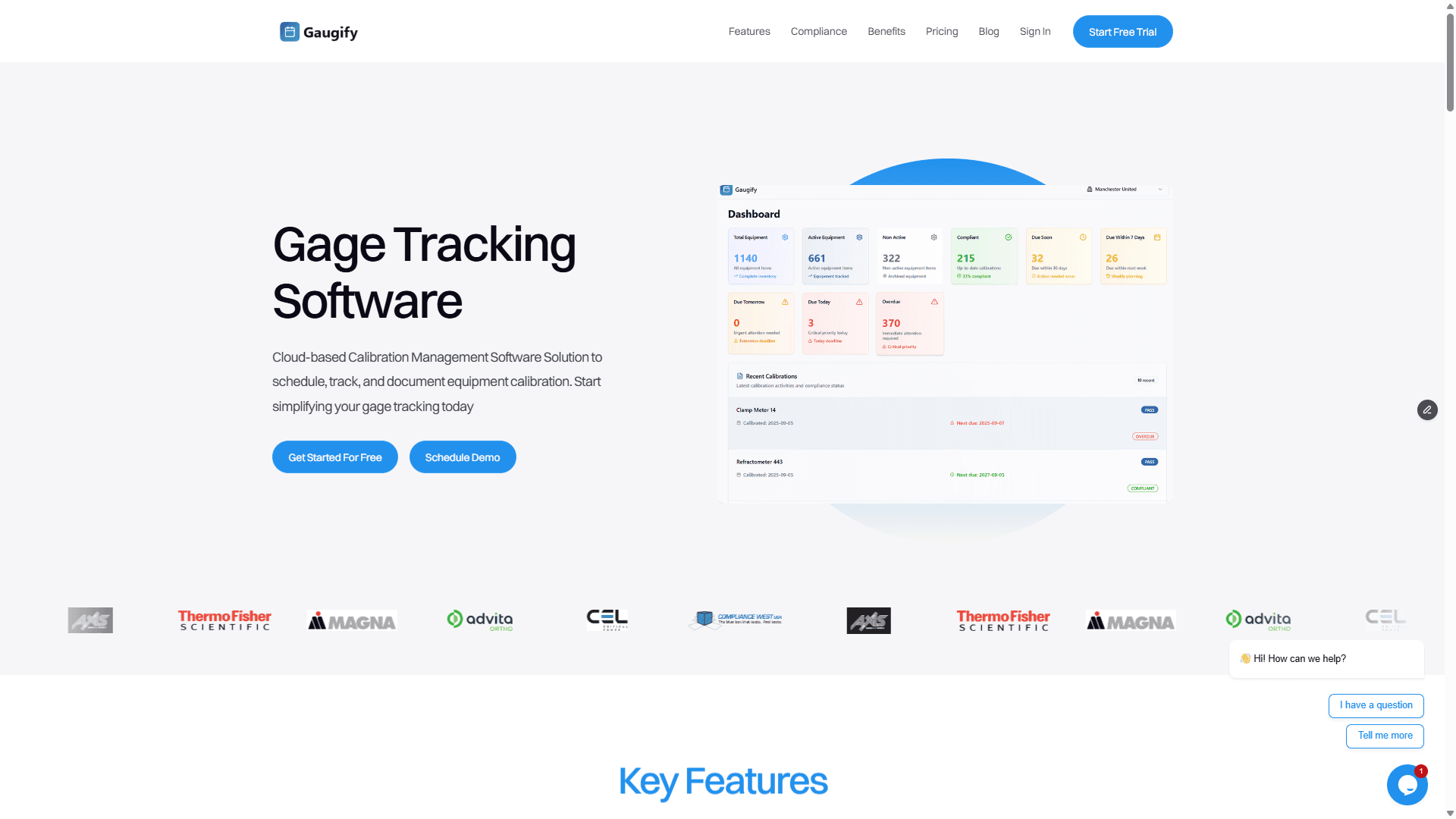
Gaugify takes a more intuitive approach to scheduling, with visual dashboards that make it easy to see upcoming calibrations, overdue items, and workload distribution. The platform automatically calculates due dates, sends automated email notifications, and allows for easy rescheduling when priorities shift. For example, when a Starrett micrometer with a ±0.0001" tolerance requirement is approaching its calibration due date, Gaugify sends configurable alerts to both the responsible technician and quality manager.
Where Gaugify particularly excels is in its ability to handle dynamic scheduling changes. If a critical measurement audit reveals that certain Fowler dial calipers need more frequent calibration, users can instantly adjust schedules across multiple instruments without complex database modifications.
Certificate Generation and Management
CompuCal offers comprehensive certificate generation capabilities with customizable templates and detailed measurement data inclusion. The system can produce professional calibration certificates that meet most industry standards and customer requirements.
Gaugify provides equally robust certificate generation with several key advantages. The platform includes professionally designed, industry-standard certificate templates that work out of the box, while still allowing for customization. More importantly, certificates are automatically stored in the cloud and accessible via secure links, eliminating the common problem of lost or misplaced calibration records. When a customer requests proof that their precision granite surface plate was calibrated to within ±0.0002" flatness tolerance, the certificate is instantly retrievable from any device.
Measurement Uncertainty Calculations
This area represents a significant differentiator between the platforms. While CompuCal can handle uncertainty calculations, it often requires additional modules or manual configuration to implement comprehensive uncertainty analysis.
Gaugify includes built-in uncertainty calculations as a standard feature, not an expensive add-on. The platform automatically calculates measurement uncertainty based on instrument specifications, environmental conditions, and calibration standards used. For instance, when calibrating a Mitutoyo digital height gage against certified gage blocks, Gaugify automatically factors in the uncertainty contributions from the reference standards, temperature variations, and instrument resolution to provide a complete uncertainty budget.
Audit Trails and Compliance Documentation
Both platforms recognize the critical importance of comprehensive audit trails for regulatory compliance. CompuCal provides detailed logging of user actions, data changes, and system modifications, which is essential for ISO 9001, AS9100, and other quality standards.
Gaugify matches this capability while adding modern conveniences like searchable audit logs and real-time compliance dashboards. The platform's compliance features are designed to support multiple standards simultaneously, making it easier for organizations operating under various regulatory frameworks to maintain consistent documentation.
Equipment and Crib Management
CompuCal includes basic asset management features for tracking calibration equipment locations and assignments. Users can maintain records of which instruments are assigned to specific departments or projects.
Gaugify extends this concept with more flexible crib management that reflects modern manufacturing environments. The platform easily handles situations where the same Fowler bore gage might be shared between multiple production lines, or where critical measurement equipment needs to be tracked as it moves between facilities. QR code integration allows for quick equipment identification and status updates directly from the shop floor.
User Experience and Interface Design
The most immediately apparent difference between these platforms lies in their user interfaces. CompuCal's interface reflects its desktop application origins, with traditional menu structures and form-based data entry that will be familiar to users of older Windows applications. While functional, this approach can feel dated compared to modern software expectations.
Gaugify prioritizes user experience with a clean, intuitive interface designed for both desktop and mobile use. The platform recognizes that quality technicians might need to access calibration information while standing next to a CMM on the shop floor, or that quality managers might need to review compliance status during off-site meetings. The responsive design ensures full functionality across all devices without sacrificing features.
Navigation in Gaugify follows modern web application conventions, with logical groupings and search functionality that makes finding specific instruments or calibration records effortless. For example, searching for "torque wrench" instantly returns all related instruments, recent calibrations, and upcoming due dates, regardless of manufacturer or location.
Pricing Structure Comparison
Traditional calibration management software like CompuCal typically involves significant upfront licensing costs, ongoing maintenance fees, and additional charges for modules, updates, and support. The total cost of ownership can be substantial, particularly when factoring in IT infrastructure requirements and system administration overhead.
Gaugify operates on a transparent Software-as-a-Service (SaaS) model with straightforward monthly or annual pricing based on the number of instruments managed. This approach eliminates large upfront investments and makes professional-grade calibration management accessible to smaller organizations that might otherwise rely on spreadsheets or basic databases.
The SaaS model also means that updates, security patches, and new features are automatically included without additional licensing fees. When Gaugify adds support for a new calibration standard or improves uncertainty calculation algorithms, all users benefit immediately without purchasing upgrade packages.
Deployment Options and IT Requirements
CompuCal traditionally operates as an on-premise solution, requiring organizations to maintain servers, handle database backups, manage user access, and coordinate software updates across multiple workstations. While this gives organizations direct control over their data, it also creates ongoing IT overhead and potential single points of failure.
As a cloud-native platform, Gaugify eliminates most IT infrastructure requirements while providing enterprise-grade security and reliability. The platform handles automatic backups, disaster recovery, security updates, and scaling without requiring dedicated IT resources. This approach is particularly valuable for organizations that want to focus their technical expertise on manufacturing and quality processes rather than software maintenance.
For organizations with strict data sovereignty requirements, it's worth noting that Gaugify provides clear information about data location and security practices, while CompuCal's on-premise model keeps data entirely within the organization's facilities.
Customer Support and Training
Both platforms recognize that calibration management software often requires initial training and ongoing support. CompuCal typically provides support through traditional channels like phone and email, with response times and availability that may vary based on support contract levels.
Gaugify emphasizes accessible support with multiple contact methods, comprehensive online documentation, and video tutorials that help users get up to speed quickly. The platform's intuitive design reduces the need for extensive training, but when questions arise, support is readily available. The cloud-based model also allows support technicians to provide more effective assistance by accessing system logs and configurations when troubleshooting issues.
Mobile Access and Modern Workflow Integration
Modern calibration management often requires accessing information away from a desktop computer. Quality technicians need to verify calibration status while selecting instruments for critical measurements, or quality managers need to review compliance dashboards during management meetings.
CompuCal's desktop-centric design limits mobile access, typically requiring VPN connections or remote desktop solutions that can be cumbersome for quick information lookups.
Gaugify provides full mobile functionality through responsive web design that works seamlessly on smartphones and tablets. Technicians can quickly scan QR codes to verify that a Mitutoyo digital caliper is within calibration before measuring critical aerospace components, or update calibration records immediately after completing field calibrations.
Integration Capabilities
Both platforms offer integration options for connecting with other quality management systems, ERP platforms, and measurement devices. CompuCal provides various integration methods, though implementation often requires custom development or third-party tools.
Gaugify includes modern API capabilities and pre-built integrations that make connecting with other systems more straightforward. The platform can easily integrate with popular quality management systems, import instrument lists from existing databases, and export data for analysis in external tools.
Who Each Platform Serves Best
CompuCal remains a solid choice for organizations that prefer on-premise solutions, have existing IT infrastructure dedicated to supporting desktop applications, and need highly customized workflows that have been developed over many years of use. It's particularly well-suited for large organizations with dedicated IT support and established calibration procedures that don't require frequent changes.
Gaugify excels as a CompuCal alternative for organizations seeking modern, accessible calibration management without the overhead of traditional enterprise software. It's ideal for:
Small to medium manufacturers who need professional-grade features without enterprise complexity
Multi-location organizations that require consistent access from various facilities
Companies transitioning from spreadsheet-based calibration tracking
Organizations that value predictable monthly costs over large capital investments
Teams that need mobile access for shop floor and field calibration work
Facilities implementing ISO 17025 compliance or other quality standards
Making the Switch: Practical Considerations
Organizations considering a move from CompuCal to a modern alternative often worry about data migration and workflow disruption. Gaugify addresses these concerns with comprehensive data import capabilities and implementation support that minimizes transition time.
The platform can import existing instrument databases, calibration histories, and certificate templates, allowing organizations to maintain continuity while gaining access to modern features. For example, a precision machining shop can migrate their records of 200+ micrometers, dial indicators, and gage blocks while immediately benefiting from automated scheduling and mobile access capabilities.
Most organizations find that the intuitive interface reduces training time compared to traditional enterprise software, allowing teams to become productive quickly without extensive classroom training or lengthy implementation projects.
Ready to experience modern calibration management? Start your free Gaugify trial today and see how cloud-based calibration management can streamline your quality processes while reducing costs and complexity.
The Verdict: Why Gaugify Leads as a CompuCal Alternative
While CompuCal has served the industry well, today's competitive manufacturing environment demands the agility, accessibility, and cost-effectiveness that only modern cloud-native platforms can provide. Gaugify delivers professional-grade calibration management with the convenience of modern software design, transparent pricing, and comprehensive features that support everything from basic gage tracking to complex uncertainty analysis.
The platform's strength lies not just in matching traditional calibration software capabilities, but in making those capabilities more accessible, affordable, and practical for real-world use. When a quality manager can instantly access calibration status for critical measurement equipment from their phone, or when a technician can generate professional certificates without navigating complex software menus, the entire calibration process becomes more efficient and reliable.
For organizations evaluating calibration management options, Gaugify represents the best of both worlds: the comprehensive functionality needed for rigorous quality control, delivered through modern software design that prioritizes user experience and practical workflow support.
Get Started with Modern Calibration Management
Experience the difference that modern, cloud-based calibration management can make for your organization. Gaugify includes all the features you need for comprehensive calibration management—scheduling, certificates, uncertainty calculations, compliance reporting, and mobile access—without the complexity and costs associated with traditional enterprise software.
Schedule a personalized demo to see how Gaugify can streamline your calibration processes, or start your free trial today and begin managing your calibration program with modern, professional tools that your team will actually enjoy using.
Join hundreds of quality professionals who have already made the switch to more effective, affordable calibration management. Your instruments—and your team—deserve better than outdated software and complicated workflows.
Best CompuCal Alternative
When searching for a CompuCal alternative, quality managers and calibration professionals often find themselves weighing traditional desktop-based solutions against modern cloud-native platforms. While CompuCal has served the calibration management industry for decades, today's manufacturing environment demands more agility, accessibility, and cost-effectiveness than legacy systems can provide. This comprehensive comparison examines how Gaugify, a modern cloud-based calibration management platform, stacks up against CompuCal across key areas that matter most to quality teams.
Both platforms aim to streamline calibration processes, maintain compliance, and reduce administrative overhead. However, their approaches, deployment models, and pricing structures differ significantly. Understanding these differences is crucial for organizations looking to modernize their calibration management while maintaining the reliability and compliance features they depend on.
Company Background and Market Position
CompuCal has been a fixture in the calibration management space since the early days of computerized quality systems. Originally developed as an on-premise desktop application, it built its reputation serving large manufacturing facilities and calibration laboratories that needed robust record-keeping and compliance features. The platform has maintained a loyal user base, particularly among organizations with established IT infrastructure and traditional calibration workflows.
Gaugify represents the next generation of calibration management software, built from the ground up as a cloud-native platform. Founded with the mission to make professional-grade calibration management accessible to organizations of all sizes, Gaugify combines modern user experience design with comprehensive compliance features. The platform serves everyone from small job shops tracking a few dozen gages to multi-location manufacturers managing thousands of instruments across global facilities.
This fundamental difference in origin—legacy desktop application versus cloud-first design—influences every aspect of how these platforms operate and serve their users.
Feature-by-Feature CompuCal Alternative Analysis
Calibration Scheduling and Management
Both platforms handle core calibration scheduling effectively, but their approaches differ significantly. CompuCal provides robust scheduling functionality with customizable intervals and detailed instrument records. Users can set up complex calibration schedules based on various criteria and generate work orders for technicians.
Gaugify takes a more intuitive approach to scheduling, with visual dashboards that make it easy to see upcoming calibrations, overdue items, and workload distribution. The platform automatically calculates due dates, sends automated email notifications, and allows for easy rescheduling when priorities shift. For example, when a Starrett micrometer with a ±0.0001" tolerance requirement is approaching its calibration due date, Gaugify sends configurable alerts to both the responsible technician and quality manager.
Where Gaugify particularly excels is in its ability to handle dynamic scheduling changes. If a critical measurement audit reveals that certain Fowler dial calipers need more frequent calibration, users can instantly adjust schedules across multiple instruments without complex database modifications.
Certificate Generation and Management
CompuCal offers comprehensive certificate generation capabilities with customizable templates and detailed measurement data inclusion. The system can produce professional calibration certificates that meet most industry standards and customer requirements.
Gaugify provides equally robust certificate generation with several key advantages. The platform includes professionally designed, industry-standard certificate templates that work out of the box, while still allowing for customization. More importantly, certificates are automatically stored in the cloud and accessible via secure links, eliminating the common problem of lost or misplaced calibration records. When a customer requests proof that their precision granite surface plate was calibrated to within ±0.0002" flatness tolerance, the certificate is instantly retrievable from any device.
Measurement Uncertainty Calculations
This area represents a significant differentiator between the platforms. While CompuCal can handle uncertainty calculations, it often requires additional modules or manual configuration to implement comprehensive uncertainty analysis.
Gaugify includes built-in uncertainty calculations as a standard feature, not an expensive add-on. The platform automatically calculates measurement uncertainty based on instrument specifications, environmental conditions, and calibration standards used. For instance, when calibrating a Mitutoyo digital height gage against certified gage blocks, Gaugify automatically factors in the uncertainty contributions from the reference standards, temperature variations, and instrument resolution to provide a complete uncertainty budget.
Audit Trails and Compliance Documentation
Both platforms recognize the critical importance of comprehensive audit trails for regulatory compliance. CompuCal provides detailed logging of user actions, data changes, and system modifications, which is essential for ISO 9001, AS9100, and other quality standards.
Gaugify matches this capability while adding modern conveniences like searchable audit logs and real-time compliance dashboards. The platform's compliance features are designed to support multiple standards simultaneously, making it easier for organizations operating under various regulatory frameworks to maintain consistent documentation.
Equipment and Crib Management
CompuCal includes basic asset management features for tracking calibration equipment locations and assignments. Users can maintain records of which instruments are assigned to specific departments or projects.
Gaugify extends this concept with more flexible crib management that reflects modern manufacturing environments. The platform easily handles situations where the same Fowler bore gage might be shared between multiple production lines, or where critical measurement equipment needs to be tracked as it moves between facilities. QR code integration allows for quick equipment identification and status updates directly from the shop floor.
User Experience and Interface Design
The most immediately apparent difference between these platforms lies in their user interfaces. CompuCal's interface reflects its desktop application origins, with traditional menu structures and form-based data entry that will be familiar to users of older Windows applications. While functional, this approach can feel dated compared to modern software expectations.
Gaugify prioritizes user experience with a clean, intuitive interface designed for both desktop and mobile use. The platform recognizes that quality technicians might need to access calibration information while standing next to a CMM on the shop floor, or that quality managers might need to review compliance status during off-site meetings. The responsive design ensures full functionality across all devices without sacrificing features.
Navigation in Gaugify follows modern web application conventions, with logical groupings and search functionality that makes finding specific instruments or calibration records effortless. For example, searching for "torque wrench" instantly returns all related instruments, recent calibrations, and upcoming due dates, regardless of manufacturer or location.
Pricing Structure Comparison
Traditional calibration management software like CompuCal typically involves significant upfront licensing costs, ongoing maintenance fees, and additional charges for modules, updates, and support. The total cost of ownership can be substantial, particularly when factoring in IT infrastructure requirements and system administration overhead.
Gaugify operates on a transparent Software-as-a-Service (SaaS) model with straightforward monthly or annual pricing based on the number of instruments managed. This approach eliminates large upfront investments and makes professional-grade calibration management accessible to smaller organizations that might otherwise rely on spreadsheets or basic databases.
The SaaS model also means that updates, security patches, and new features are automatically included without additional licensing fees. When Gaugify adds support for a new calibration standard or improves uncertainty calculation algorithms, all users benefit immediately without purchasing upgrade packages.
Deployment Options and IT Requirements
CompuCal traditionally operates as an on-premise solution, requiring organizations to maintain servers, handle database backups, manage user access, and coordinate software updates across multiple workstations. While this gives organizations direct control over their data, it also creates ongoing IT overhead and potential single points of failure.
As a cloud-native platform, Gaugify eliminates most IT infrastructure requirements while providing enterprise-grade security and reliability. The platform handles automatic backups, disaster recovery, security updates, and scaling without requiring dedicated IT resources. This approach is particularly valuable for organizations that want to focus their technical expertise on manufacturing and quality processes rather than software maintenance.
For organizations with strict data sovereignty requirements, it's worth noting that Gaugify provides clear information about data location and security practices, while CompuCal's on-premise model keeps data entirely within the organization's facilities.
Customer Support and Training
Both platforms recognize that calibration management software often requires initial training and ongoing support. CompuCal typically provides support through traditional channels like phone and email, with response times and availability that may vary based on support contract levels.
Gaugify emphasizes accessible support with multiple contact methods, comprehensive online documentation, and video tutorials that help users get up to speed quickly. The platform's intuitive design reduces the need for extensive training, but when questions arise, support is readily available. The cloud-based model also allows support technicians to provide more effective assistance by accessing system logs and configurations when troubleshooting issues.
Mobile Access and Modern Workflow Integration
Modern calibration management often requires accessing information away from a desktop computer. Quality technicians need to verify calibration status while selecting instruments for critical measurements, or quality managers need to review compliance dashboards during management meetings.
CompuCal's desktop-centric design limits mobile access, typically requiring VPN connections or remote desktop solutions that can be cumbersome for quick information lookups.
Gaugify provides full mobile functionality through responsive web design that works seamlessly on smartphones and tablets. Technicians can quickly scan QR codes to verify that a Mitutoyo digital caliper is within calibration before measuring critical aerospace components, or update calibration records immediately after completing field calibrations.
Integration Capabilities
Both platforms offer integration options for connecting with other quality management systems, ERP platforms, and measurement devices. CompuCal provides various integration methods, though implementation often requires custom development or third-party tools.
Gaugify includes modern API capabilities and pre-built integrations that make connecting with other systems more straightforward. The platform can easily integrate with popular quality management systems, import instrument lists from existing databases, and export data for analysis in external tools.
Who Each Platform Serves Best
CompuCal remains a solid choice for organizations that prefer on-premise solutions, have existing IT infrastructure dedicated to supporting desktop applications, and need highly customized workflows that have been developed over many years of use. It's particularly well-suited for large organizations with dedicated IT support and established calibration procedures that don't require frequent changes.
Gaugify excels as a CompuCal alternative for organizations seeking modern, accessible calibration management without the overhead of traditional enterprise software. It's ideal for:
Small to medium manufacturers who need professional-grade features without enterprise complexity
Multi-location organizations that require consistent access from various facilities
Companies transitioning from spreadsheet-based calibration tracking
Organizations that value predictable monthly costs over large capital investments
Teams that need mobile access for shop floor and field calibration work
Facilities implementing ISO 17025 compliance or other quality standards
Making the Switch: Practical Considerations
Organizations considering a move from CompuCal to a modern alternative often worry about data migration and workflow disruption. Gaugify addresses these concerns with comprehensive data import capabilities and implementation support that minimizes transition time.
The platform can import existing instrument databases, calibration histories, and certificate templates, allowing organizations to maintain continuity while gaining access to modern features. For example, a precision machining shop can migrate their records of 200+ micrometers, dial indicators, and gage blocks while immediately benefiting from automated scheduling and mobile access capabilities.
Most organizations find that the intuitive interface reduces training time compared to traditional enterprise software, allowing teams to become productive quickly without extensive classroom training or lengthy implementation projects.
Ready to experience modern calibration management? Start your free Gaugify trial today and see how cloud-based calibration management can streamline your quality processes while reducing costs and complexity.
The Verdict: Why Gaugify Leads as a CompuCal Alternative
While CompuCal has served the industry well, today's competitive manufacturing environment demands the agility, accessibility, and cost-effectiveness that only modern cloud-native platforms can provide. Gaugify delivers professional-grade calibration management with the convenience of modern software design, transparent pricing, and comprehensive features that support everything from basic gage tracking to complex uncertainty analysis.
The platform's strength lies not just in matching traditional calibration software capabilities, but in making those capabilities more accessible, affordable, and practical for real-world use. When a quality manager can instantly access calibration status for critical measurement equipment from their phone, or when a technician can generate professional certificates without navigating complex software menus, the entire calibration process becomes more efficient and reliable.
For organizations evaluating calibration management options, Gaugify represents the best of both worlds: the comprehensive functionality needed for rigorous quality control, delivered through modern software design that prioritizes user experience and practical workflow support.
Get Started with Modern Calibration Management
Experience the difference that modern, cloud-based calibration management can make for your organization. Gaugify includes all the features you need for comprehensive calibration management—scheduling, certificates, uncertainty calculations, compliance reporting, and mobile access—without the complexity and costs associated with traditional enterprise software.
Schedule a personalized demo to see how Gaugify can streamline your calibration processes, or start your free trial today and begin managing your calibration program with modern, professional tools that your team will actually enjoy using.
Join hundreds of quality professionals who have already made the switch to more effective, affordable calibration management. Your instruments—and your team—deserve better than outdated software and complicated workflows.