
Gaugify vs CompuCal: Calibration Software Compared
Gaugify vs CompuCal: Calibration Software Compared
David Bentley
Quality Assurance Engineer
12 min read
Gaugify vs CompuCal: Calibration Software Compared
When evaluating calibration management software, the Gaugify vs CompuCal comparison often comes up among quality managers seeking modern solutions for their calibration programs. Both platforms serve the calibration management market, but they represent different approaches to solving the same fundamental challenge: maintaining accurate, compliant measurement equipment records. While CompuCal has established itself as a traditional player in the calibration software space, Gaugify emerges as a cloud-native alternative designed specifically for today's digital-first manufacturing environment.
This comprehensive comparison examines both platforms across critical factors including features, user experience, pricing transparency, deployment options, and overall value proposition. Whether you're managing a small metrology lab with 50 instruments or overseeing calibration operations across multiple facilities with thousands of gages, understanding these differences will help you make an informed decision for your organization's calibration management needs.
Company Background and Market Position
CompuCal has operated in the calibration software market for over two decades, building its reputation primarily through on-premise installations and traditional software licensing models. The company has focused on serving established manufacturing organizations and calibration labs that prefer conventional software deployment approaches. Their longevity in the market has resulted in a substantial installed base, particularly among companies that implemented calibration management systems in the early 2000s.
Gaugify, by contrast, represents the next generation of calibration management solutions. Built from the ground up as a cloud-native platform, Gaugify addresses the limitations of legacy calibration software by offering modern user interfaces, transparent SaaS pricing, and mobile-first functionality. The platform was designed specifically to meet the needs of quality managers who require immediate deployment, seamless updates, and the flexibility to access calibration data from anywhere.
This fundamental difference in company philosophy—traditional enterprise software versus modern SaaS—permeates every aspect of how these platforms operate and serve their customers.
Feature Comparison: Core Calibration Management Capabilities
Calibration Scheduling and Notifications
Both platforms handle basic calibration scheduling, but their approaches differ significantly. CompuCal offers traditional calendar-based scheduling with email notifications, suitable for organizations with dedicated calibration technicians who check email regularly. The system can manage due date calculations based on calibration intervals, though setting up complex scheduling rules often requires technical expertise.
Gaugify takes a more proactive approach to calibration scheduling. The platform provides intelligent dashboard notifications, mobile alerts, and automated email reminders that escalate based on urgency. For example, a Mitutoyo micrometer approaching its calibration due date triggers alerts 30, 14, and 7 days before expiration, with color-coded priority indicators. The system automatically calculates next due dates and can handle complex scenarios like seasonal equipment or instruments with usage-based calibration intervals.
Certificate Generation and Management
Certificate generation represents a critical differentiator in the Gaugify vs CompuCal comparison. CompuCal provides standard certificate templates that can be customized, though modifications often require technical support or programming knowledge. The system generates PDF certificates with basic measurement data and can include company logos and signatures.
Gaugify excels in certificate flexibility and professional presentation. The platform includes multiple certificate templates that can be customized without technical expertise. More importantly, Gaugify automatically populates certificates with measurement uncertainty calculations, environmental conditions, and traceability information. For a Fluke 87V multimeter calibration, for instance, Gaugify's certificates include expanded uncertainty values for each measurement range, NIST traceability statements, and professional formatting that meets AS9100 and ISO 17025 requirements without manual intervention.
Measurement Uncertainty Calculations
This area highlights one of Gaugify's most significant advantages. CompuCal handles basic measurement data entry but often requires manual uncertainty calculations or separate spreadsheet tools for complex uncertainty analysis. Many CompuCal users rely on external software or manual calculations to determine measurement uncertainty according to GUM guidelines.
Gaugify's built-in uncertainty calculator automatically computes measurement uncertainty using industry-standard methods. When calibrating a pressure transducer with a ±0.1% full-scale specification, Gaugify automatically calculates the combined standard uncertainty by incorporating calibration standard uncertainty, resolution limitations, environmental effects, and repeatability data. This feature alone saves quality managers hours of manual calculations while ensuring compliance with ISO/IEC 17025 requirements.
Audit Trails and Compliance Documentation
Both platforms maintain audit trails, but with different levels of detail and accessibility. CompuCal provides basic user activity logs and change tracking, typically accessible through database queries or standard reports. The audit trail captures who made changes and when, but reviewing historical data often requires technical knowledge or IT support.
Gaugify implements comprehensive audit trails with user-friendly interfaces for compliance reviews. Every action—from gage additions to calibration data modifications—creates permanent, timestamped records with user identification and change justification. During ISO 9001 audits, quality managers can quickly generate complete audit trails showing, for example, all changes made to a specific torque wrench's calibration history over the past three years, including who performed calibrations, when certificates were issued, and any adjustments made to calibration intervals.
User Experience and Interface Design
The user experience represents perhaps the most dramatic difference in the Gaugify vs CompuCal comparison. CompuCal's interface reflects its desktop software heritage, featuring traditional Windows-style menus, dialog boxes, and forms that may feel familiar to users of older enterprise software. Navigation typically requires multiple clicks to access common functions, and the interface assumes users have dedicated time to sit at computers for calibration management tasks.
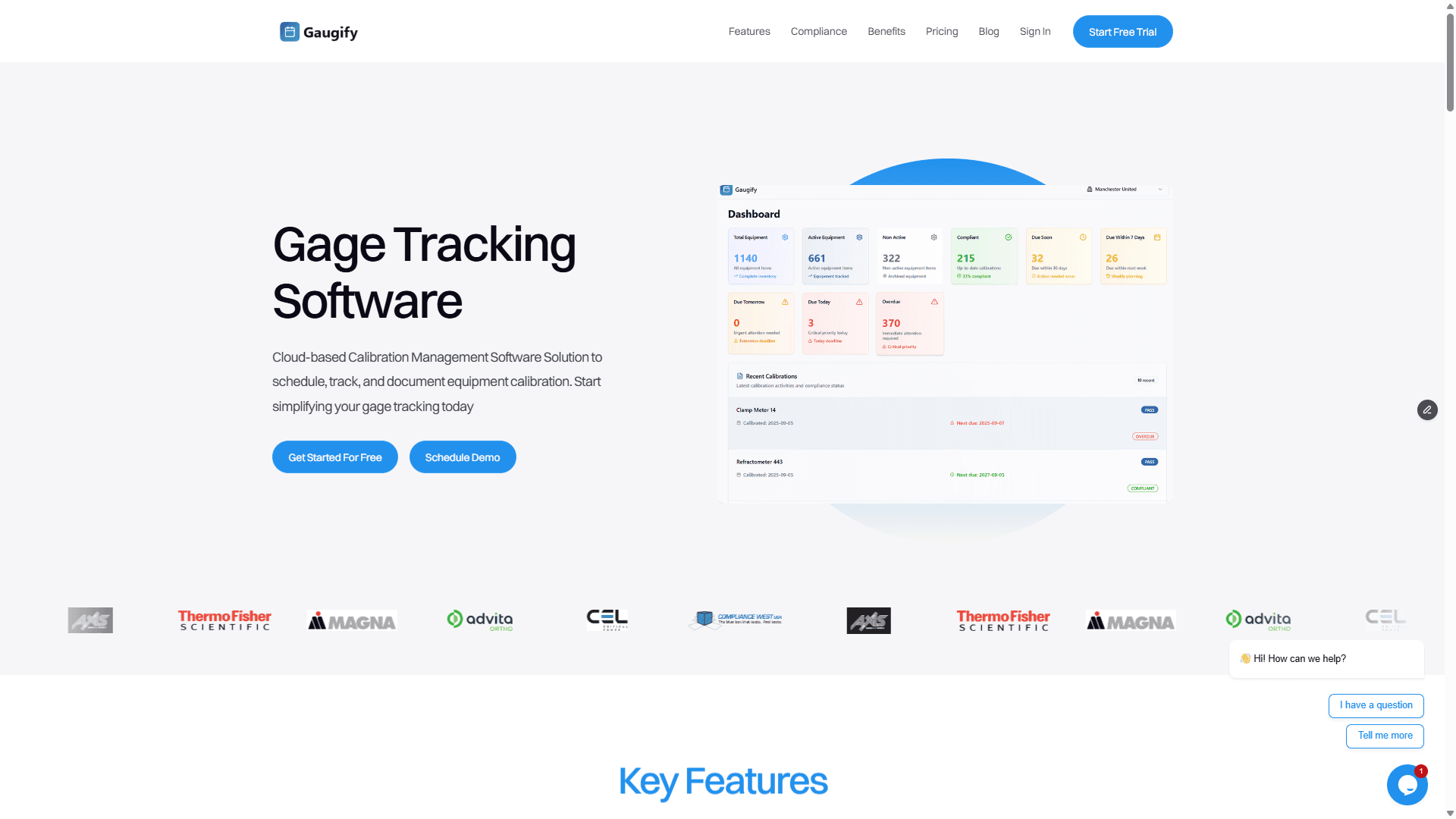
Gaugify prioritizes intuitive, modern user experience design. The platform features clean dashboards with visual indicators, one-click access to common functions, and responsive design that works seamlessly on tablets and smartphones. A calibration technician can scan a QR code on a dial caliper using their smartphone, immediately access the instrument's calibration history, enter measurement data, and generate certificates—all without returning to a desktop computer. This mobile-first approach recognizes that modern calibration work often happens on shop floors, in field locations, and during off-hours when desktop access isn't practical.
The learning curve also differs substantially. New CompuCal users often require formal training sessions and reference manuals to become proficient. Gaugify's intuitive design allows most users to begin productive work within their first session, with advanced features discoverable through guided workflows rather than buried in complex menu structures.
Pricing Transparency and Total Cost of Ownership
Pricing approaches reveal fundamental philosophical differences between these platforms. CompuCal typically uses traditional software licensing with upfront costs, annual maintenance fees, and additional charges for upgrades, training, and technical support. Pricing information often requires sales consultations and custom quotes, making budgeting difficult for potential customers. Implementation costs can include server hardware, database licenses, IT support, and professional services—expenses that may not be apparent during initial evaluations.
Gaugify offers transparent SaaS pricing published directly on their website, with monthly or annual subscription options based on the number of instruments managed. The subscription includes all software updates, technical support, data backup, security updates, and new feature additions. For a facility managing 200 instruments, organizations can calculate their exact monthly costs without sales negotiations or hidden fees. This transparency allows accurate budget planning and eliminates surprise costs associated with traditional software licensing.
Total cost of ownership calculations often favor Gaugify significantly, particularly when factoring in IT infrastructure, maintenance, backup systems, and upgrade costs that traditional software requires.
Deployment and Implementation Options
Deployment represents another area where the Gaugify vs CompuCal comparison shows distinct differences. CompuCal typically requires on-premise installation with dedicated servers, database setup, network configuration, and IT support for ongoing maintenance. Implementation timelines often extend weeks or months, requiring coordination between software vendors, IT departments, and quality management teams. Organizations must also plan for backup systems, security updates, and hardware refresh cycles.
Gaugify's cloud-native architecture enables immediate deployment. Organizations can begin using the platform within hours of signup, without IT infrastructure requirements or complex installation procedures. Data security, backup, and system maintenance are handled automatically by Gaugify's cloud infrastructure. For companies with multiple locations, Gaugify provides instant access across all facilities without VPN configuration or site-specific installations.
This deployment difference particularly benefits smaller organizations or those with limited IT resources, though even large enterprises increasingly prefer SaaS solutions for their reduced administrative overhead and improved accessibility.
Ready to experience modern calibration management? Start your free Gaugify trial today and see how cloud-native calibration software can streamline your quality processes in minutes, not months.
Customer Support and Training Resources
Support models reflect each company's approach to customer relationships. CompuCal typically provides support through traditional channels—phone support during business hours, email tickets, and scheduled training sessions. Premium support options may be available at additional cost. Software updates often require scheduled downtime and may introduce compatibility issues that need resolution.
Gaugify emphasizes accessible, responsive support designed for modern business needs. The platform includes built-in help systems, video tutorials, and responsive customer support that understands the urgency of calibration compliance issues. Because Gaugify manages the entire technology stack, support teams can often resolve issues immediately without coordinating with separate IT departments or third-party vendors.
Training requirements also differ significantly. While CompuCal may require formal training programs, Gaugify's intuitive design and guided workflows enable self-service learning for most users. Comprehensive help documentation and video tutorials address advanced features without requiring scheduled training sessions.
Compliance and Standards Support
Both platforms address calibration compliance, but with different levels of built-in intelligence. CompuCal provides frameworks for compliance documentation, though users often must manually ensure that their processes meet specific regulatory requirements. The platform can store compliance-related data, but interpreting and applying standards like ISO/IEC 17025 or AS9100 typically requires user expertise.
Gaugify builds compliance intelligence directly into workflows. The platform automatically prompts users for required information based on selected compliance standards, generates compliant certificates with appropriate uncertainty statements, and maintains audit trails that meet regulatory requirements. For organizations pursuing ISO/IEC 17025 accreditation, Gaugify's built-in compliance features significantly reduce the manual work required to maintain compliant calibration programs.
Integration and Data Management Capabilities
Integration capabilities represent another important consideration in the Gaugify vs CompuCal evaluation. CompuCal offers traditional integration options through database connections and file exports, though custom integrations often require professional services or technical expertise. Data backup and disaster recovery typically become the customer's responsibility, requiring additional planning and resources.
Gaugify provides modern integration approaches including API access for custom integrations, standard data export formats, and automatic cloud backup with point-in-time recovery options. The platform can integrate with existing quality management systems, ERP platforms, and business intelligence tools through standard web services. Data security and backup are managed automatically, with enterprise-grade encryption and redundant storage systems.
Who Each Solution Serves Best
CompuCal may suit organizations with specific requirements: companies with extensive existing on-premise IT infrastructure, organizations with dedicated IT support teams for software maintenance, businesses with highly customized calibration workflows that require traditional software modification approaches, and companies that prefer traditional software licensing and support models. Organizations with complex legacy system integrations or specific regulatory requirements that demand on-premise data storage might also prefer CompuCal's traditional deployment approach.
Gaugify excels for modern organizations seeking efficiency and accessibility: companies wanting immediate deployment without IT infrastructure requirements, organizations with mobile workforce needs or multiple locations, businesses seeking transparent pricing and predictable costs, quality managers who need built-in uncertainty calculations and compliance intelligence, and companies preferring modern, intuitive software interfaces that reduce training requirements.
Small to medium-sized manufacturers, calibration service providers, research laboratories, and organizations with distributed operations particularly benefit from Gaugify's cloud-native approach and mobile accessibility.
Final Verdict: Modern Calibration Management for Today's Needs
The Gaugify vs CompuCal comparison ultimately reflects a choice between traditional enterprise software and modern SaaS solutions. While CompuCal serves organizations comfortable with conventional software approaches, Gaugify represents the future of calibration management: cloud-native, mobile-accessible, and designed for immediate productivity.
Gaugify's advantages—transparent pricing, immediate deployment, built-in uncertainty calculations, mobile accessibility, and intuitive user experience—align with modern business needs for agility, efficiency, and cost predictability. The platform eliminates many traditional barriers to effective calibration management: complex installations, hidden costs, desktop-only access, and manual compliance documentation.
For organizations evaluating calibration management solutions, Gaugify offers compelling value through reduced total cost of ownership, faster implementation, and features that directly address common calibration management challenges. The platform's modern architecture ensures that it will continue evolving with technological advances and changing business needs.
Experience the Difference: Try Gaugify Today
Rather than relying solely on vendor demonstrations or sales presentations, experience the difference firsthand. Gaugify's free trial allows you to evaluate the platform with your actual calibration data and workflows. Within minutes, you can begin managing your instruments, generating certificates, and exploring features like built-in uncertainty calculations and mobile accessibility.
The trial includes full access to all platform features, enabling direct comparison with your current calibration management processes. You'll immediately notice the difference in user experience, deployment simplicity, and feature accessibility that distinguishes modern SaaS platforms from traditional software solutions.
Ready to modernize your calibration management? Start your free Gaugify trial now or schedule a personalized demo to see how cloud-native calibration management can transform your quality processes. Join the growing number of quality managers who have discovered that effective calibration management doesn't require complex software, hidden costs, or IT infrastructure investments—it just requires the right platform.
Gaugify vs CompuCal: Calibration Software Compared
When evaluating calibration management software, the Gaugify vs CompuCal comparison often comes up among quality managers seeking modern solutions for their calibration programs. Both platforms serve the calibration management market, but they represent different approaches to solving the same fundamental challenge: maintaining accurate, compliant measurement equipment records. While CompuCal has established itself as a traditional player in the calibration software space, Gaugify emerges as a cloud-native alternative designed specifically for today's digital-first manufacturing environment.
This comprehensive comparison examines both platforms across critical factors including features, user experience, pricing transparency, deployment options, and overall value proposition. Whether you're managing a small metrology lab with 50 instruments or overseeing calibration operations across multiple facilities with thousands of gages, understanding these differences will help you make an informed decision for your organization's calibration management needs.
Company Background and Market Position
CompuCal has operated in the calibration software market for over two decades, building its reputation primarily through on-premise installations and traditional software licensing models. The company has focused on serving established manufacturing organizations and calibration labs that prefer conventional software deployment approaches. Their longevity in the market has resulted in a substantial installed base, particularly among companies that implemented calibration management systems in the early 2000s.
Gaugify, by contrast, represents the next generation of calibration management solutions. Built from the ground up as a cloud-native platform, Gaugify addresses the limitations of legacy calibration software by offering modern user interfaces, transparent SaaS pricing, and mobile-first functionality. The platform was designed specifically to meet the needs of quality managers who require immediate deployment, seamless updates, and the flexibility to access calibration data from anywhere.
This fundamental difference in company philosophy—traditional enterprise software versus modern SaaS—permeates every aspect of how these platforms operate and serve their customers.
Feature Comparison: Core Calibration Management Capabilities
Calibration Scheduling and Notifications
Both platforms handle basic calibration scheduling, but their approaches differ significantly. CompuCal offers traditional calendar-based scheduling with email notifications, suitable for organizations with dedicated calibration technicians who check email regularly. The system can manage due date calculations based on calibration intervals, though setting up complex scheduling rules often requires technical expertise.
Gaugify takes a more proactive approach to calibration scheduling. The platform provides intelligent dashboard notifications, mobile alerts, and automated email reminders that escalate based on urgency. For example, a Mitutoyo micrometer approaching its calibration due date triggers alerts 30, 14, and 7 days before expiration, with color-coded priority indicators. The system automatically calculates next due dates and can handle complex scenarios like seasonal equipment or instruments with usage-based calibration intervals.
Certificate Generation and Management
Certificate generation represents a critical differentiator in the Gaugify vs CompuCal comparison. CompuCal provides standard certificate templates that can be customized, though modifications often require technical support or programming knowledge. The system generates PDF certificates with basic measurement data and can include company logos and signatures.
Gaugify excels in certificate flexibility and professional presentation. The platform includes multiple certificate templates that can be customized without technical expertise. More importantly, Gaugify automatically populates certificates with measurement uncertainty calculations, environmental conditions, and traceability information. For a Fluke 87V multimeter calibration, for instance, Gaugify's certificates include expanded uncertainty values for each measurement range, NIST traceability statements, and professional formatting that meets AS9100 and ISO 17025 requirements without manual intervention.
Measurement Uncertainty Calculations
This area highlights one of Gaugify's most significant advantages. CompuCal handles basic measurement data entry but often requires manual uncertainty calculations or separate spreadsheet tools for complex uncertainty analysis. Many CompuCal users rely on external software or manual calculations to determine measurement uncertainty according to GUM guidelines.
Gaugify's built-in uncertainty calculator automatically computes measurement uncertainty using industry-standard methods. When calibrating a pressure transducer with a ±0.1% full-scale specification, Gaugify automatically calculates the combined standard uncertainty by incorporating calibration standard uncertainty, resolution limitations, environmental effects, and repeatability data. This feature alone saves quality managers hours of manual calculations while ensuring compliance with ISO/IEC 17025 requirements.
Audit Trails and Compliance Documentation
Both platforms maintain audit trails, but with different levels of detail and accessibility. CompuCal provides basic user activity logs and change tracking, typically accessible through database queries or standard reports. The audit trail captures who made changes and when, but reviewing historical data often requires technical knowledge or IT support.
Gaugify implements comprehensive audit trails with user-friendly interfaces for compliance reviews. Every action—from gage additions to calibration data modifications—creates permanent, timestamped records with user identification and change justification. During ISO 9001 audits, quality managers can quickly generate complete audit trails showing, for example, all changes made to a specific torque wrench's calibration history over the past three years, including who performed calibrations, when certificates were issued, and any adjustments made to calibration intervals.
User Experience and Interface Design
The user experience represents perhaps the most dramatic difference in the Gaugify vs CompuCal comparison. CompuCal's interface reflects its desktop software heritage, featuring traditional Windows-style menus, dialog boxes, and forms that may feel familiar to users of older enterprise software. Navigation typically requires multiple clicks to access common functions, and the interface assumes users have dedicated time to sit at computers for calibration management tasks.
Gaugify prioritizes intuitive, modern user experience design. The platform features clean dashboards with visual indicators, one-click access to common functions, and responsive design that works seamlessly on tablets and smartphones. A calibration technician can scan a QR code on a dial caliper using their smartphone, immediately access the instrument's calibration history, enter measurement data, and generate certificates—all without returning to a desktop computer. This mobile-first approach recognizes that modern calibration work often happens on shop floors, in field locations, and during off-hours when desktop access isn't practical.
The learning curve also differs substantially. New CompuCal users often require formal training sessions and reference manuals to become proficient. Gaugify's intuitive design allows most users to begin productive work within their first session, with advanced features discoverable through guided workflows rather than buried in complex menu structures.
Pricing Transparency and Total Cost of Ownership
Pricing approaches reveal fundamental philosophical differences between these platforms. CompuCal typically uses traditional software licensing with upfront costs, annual maintenance fees, and additional charges for upgrades, training, and technical support. Pricing information often requires sales consultations and custom quotes, making budgeting difficult for potential customers. Implementation costs can include server hardware, database licenses, IT support, and professional services—expenses that may not be apparent during initial evaluations.
Gaugify offers transparent SaaS pricing published directly on their website, with monthly or annual subscription options based on the number of instruments managed. The subscription includes all software updates, technical support, data backup, security updates, and new feature additions. For a facility managing 200 instruments, organizations can calculate their exact monthly costs without sales negotiations or hidden fees. This transparency allows accurate budget planning and eliminates surprise costs associated with traditional software licensing.
Total cost of ownership calculations often favor Gaugify significantly, particularly when factoring in IT infrastructure, maintenance, backup systems, and upgrade costs that traditional software requires.
Deployment and Implementation Options
Deployment represents another area where the Gaugify vs CompuCal comparison shows distinct differences. CompuCal typically requires on-premise installation with dedicated servers, database setup, network configuration, and IT support for ongoing maintenance. Implementation timelines often extend weeks or months, requiring coordination between software vendors, IT departments, and quality management teams. Organizations must also plan for backup systems, security updates, and hardware refresh cycles.
Gaugify's cloud-native architecture enables immediate deployment. Organizations can begin using the platform within hours of signup, without IT infrastructure requirements or complex installation procedures. Data security, backup, and system maintenance are handled automatically by Gaugify's cloud infrastructure. For companies with multiple locations, Gaugify provides instant access across all facilities without VPN configuration or site-specific installations.
This deployment difference particularly benefits smaller organizations or those with limited IT resources, though even large enterprises increasingly prefer SaaS solutions for their reduced administrative overhead and improved accessibility.
Ready to experience modern calibration management? Start your free Gaugify trial today and see how cloud-native calibration software can streamline your quality processes in minutes, not months.
Customer Support and Training Resources
Support models reflect each company's approach to customer relationships. CompuCal typically provides support through traditional channels—phone support during business hours, email tickets, and scheduled training sessions. Premium support options may be available at additional cost. Software updates often require scheduled downtime and may introduce compatibility issues that need resolution.
Gaugify emphasizes accessible, responsive support designed for modern business needs. The platform includes built-in help systems, video tutorials, and responsive customer support that understands the urgency of calibration compliance issues. Because Gaugify manages the entire technology stack, support teams can often resolve issues immediately without coordinating with separate IT departments or third-party vendors.
Training requirements also differ significantly. While CompuCal may require formal training programs, Gaugify's intuitive design and guided workflows enable self-service learning for most users. Comprehensive help documentation and video tutorials address advanced features without requiring scheduled training sessions.
Compliance and Standards Support
Both platforms address calibration compliance, but with different levels of built-in intelligence. CompuCal provides frameworks for compliance documentation, though users often must manually ensure that their processes meet specific regulatory requirements. The platform can store compliance-related data, but interpreting and applying standards like ISO/IEC 17025 or AS9100 typically requires user expertise.
Gaugify builds compliance intelligence directly into workflows. The platform automatically prompts users for required information based on selected compliance standards, generates compliant certificates with appropriate uncertainty statements, and maintains audit trails that meet regulatory requirements. For organizations pursuing ISO/IEC 17025 accreditation, Gaugify's built-in compliance features significantly reduce the manual work required to maintain compliant calibration programs.
Integration and Data Management Capabilities
Integration capabilities represent another important consideration in the Gaugify vs CompuCal evaluation. CompuCal offers traditional integration options through database connections and file exports, though custom integrations often require professional services or technical expertise. Data backup and disaster recovery typically become the customer's responsibility, requiring additional planning and resources.
Gaugify provides modern integration approaches including API access for custom integrations, standard data export formats, and automatic cloud backup with point-in-time recovery options. The platform can integrate with existing quality management systems, ERP platforms, and business intelligence tools through standard web services. Data security and backup are managed automatically, with enterprise-grade encryption and redundant storage systems.
Who Each Solution Serves Best
CompuCal may suit organizations with specific requirements: companies with extensive existing on-premise IT infrastructure, organizations with dedicated IT support teams for software maintenance, businesses with highly customized calibration workflows that require traditional software modification approaches, and companies that prefer traditional software licensing and support models. Organizations with complex legacy system integrations or specific regulatory requirements that demand on-premise data storage might also prefer CompuCal's traditional deployment approach.
Gaugify excels for modern organizations seeking efficiency and accessibility: companies wanting immediate deployment without IT infrastructure requirements, organizations with mobile workforce needs or multiple locations, businesses seeking transparent pricing and predictable costs, quality managers who need built-in uncertainty calculations and compliance intelligence, and companies preferring modern, intuitive software interfaces that reduce training requirements.
Small to medium-sized manufacturers, calibration service providers, research laboratories, and organizations with distributed operations particularly benefit from Gaugify's cloud-native approach and mobile accessibility.
Final Verdict: Modern Calibration Management for Today's Needs
The Gaugify vs CompuCal comparison ultimately reflects a choice between traditional enterprise software and modern SaaS solutions. While CompuCal serves organizations comfortable with conventional software approaches, Gaugify represents the future of calibration management: cloud-native, mobile-accessible, and designed for immediate productivity.
Gaugify's advantages—transparent pricing, immediate deployment, built-in uncertainty calculations, mobile accessibility, and intuitive user experience—align with modern business needs for agility, efficiency, and cost predictability. The platform eliminates many traditional barriers to effective calibration management: complex installations, hidden costs, desktop-only access, and manual compliance documentation.
For organizations evaluating calibration management solutions, Gaugify offers compelling value through reduced total cost of ownership, faster implementation, and features that directly address common calibration management challenges. The platform's modern architecture ensures that it will continue evolving with technological advances and changing business needs.
Experience the Difference: Try Gaugify Today
Rather than relying solely on vendor demonstrations or sales presentations, experience the difference firsthand. Gaugify's free trial allows you to evaluate the platform with your actual calibration data and workflows. Within minutes, you can begin managing your instruments, generating certificates, and exploring features like built-in uncertainty calculations and mobile accessibility.
The trial includes full access to all platform features, enabling direct comparison with your current calibration management processes. You'll immediately notice the difference in user experience, deployment simplicity, and feature accessibility that distinguishes modern SaaS platforms from traditional software solutions.
Ready to modernize your calibration management? Start your free Gaugify trial now or schedule a personalized demo to see how cloud-native calibration management can transform your quality processes. Join the growing number of quality managers who have discovered that effective calibration management doesn't require complex software, hidden costs, or IT infrastructure investments—it just requires the right platform.