
Best IndySoft Alternative for Modern Teams
Best IndySoft Alternative for Modern Teams
David Bentley
Quality Assurance Engineer
12 min read
Best IndySoft Alternative for Modern Teams
If you're researching calibration management software, you've likely encountered IndySoft's GAGEtrak system during your search. While GAGEtrak has been a reliable solution for many organizations over the years, today's quality teams increasingly need a more modern, cloud-first IndySoft alternative that delivers advanced features without the complexity and high costs of legacy systems. Whether you're dealing with micrometers requiring ±0.0001" accuracy, torque wrenches needing annual recalibration, or coordinate measuring machines (CMMs) with complex uncertainty calculations, the right calibration management platform can transform how your team maintains measurement accuracy and regulatory compliance.
In this comprehensive comparison, we'll examine how Gaugify stacks up against IndySoft's GAGEtrak across key areas that matter most to quality managers, shop floor supervisors, and lab technicians. From automated scheduling and certificate generation to mobile accessibility and ISO 17025 compliance, we'll provide the detailed analysis you need to make an informed decision for your organization.
Company Background and Market Position
IndySoft has been serving the calibration management market since the 1980s, building GAGEtrak as a comprehensive solution primarily focused on on-premise deployments. The company has established itself as a familiar name in traditional manufacturing environments, particularly among larger organizations with dedicated IT resources to manage complex software installations and maintenance.
Gaugify represents a new generation of calibration management software, built from the ground up as a cloud-native solution. Our platform was designed specifically to address the pain points that modern quality teams face: cumbersome legacy interfaces, expensive implementation costs, limited mobile access, and the need for extensive IT support. By focusing on user experience, automation, and accessibility, Gaugify serves organizations ranging from small job shops with 50 instruments to large manufacturers managing thousands of measurement devices across multiple facilities.
Market Focus and Philosophy
The fundamental difference between these platforms lies in their approach to software delivery and user experience. GAGEtrak follows the traditional enterprise software model with significant upfront costs, lengthy implementation periods, and ongoing maintenance requirements. This approach works for some organizations but creates barriers for teams that need to get up and running quickly with minimal IT involvement.
Gaugify embraces the modern Software-as-a-Service (SaaS) model, delivering immediate value through instant deployment, automatic updates, and transparent pricing. This philosophy extends to every aspect of our platform design, from the intuitive interface that requires minimal training to the built-in features that eliminate the need for third-party integrations.
Feature-by-Feature Comparison: IndySoft Alternative Analysis
Calibration Scheduling and Notifications
Both platforms handle basic scheduling functionality, but their approaches differ significantly in execution and user experience. GAGEtrak provides scheduling capabilities within its traditional interface, requiring users to navigate through multiple screens to set up calibration intervals and due dates.
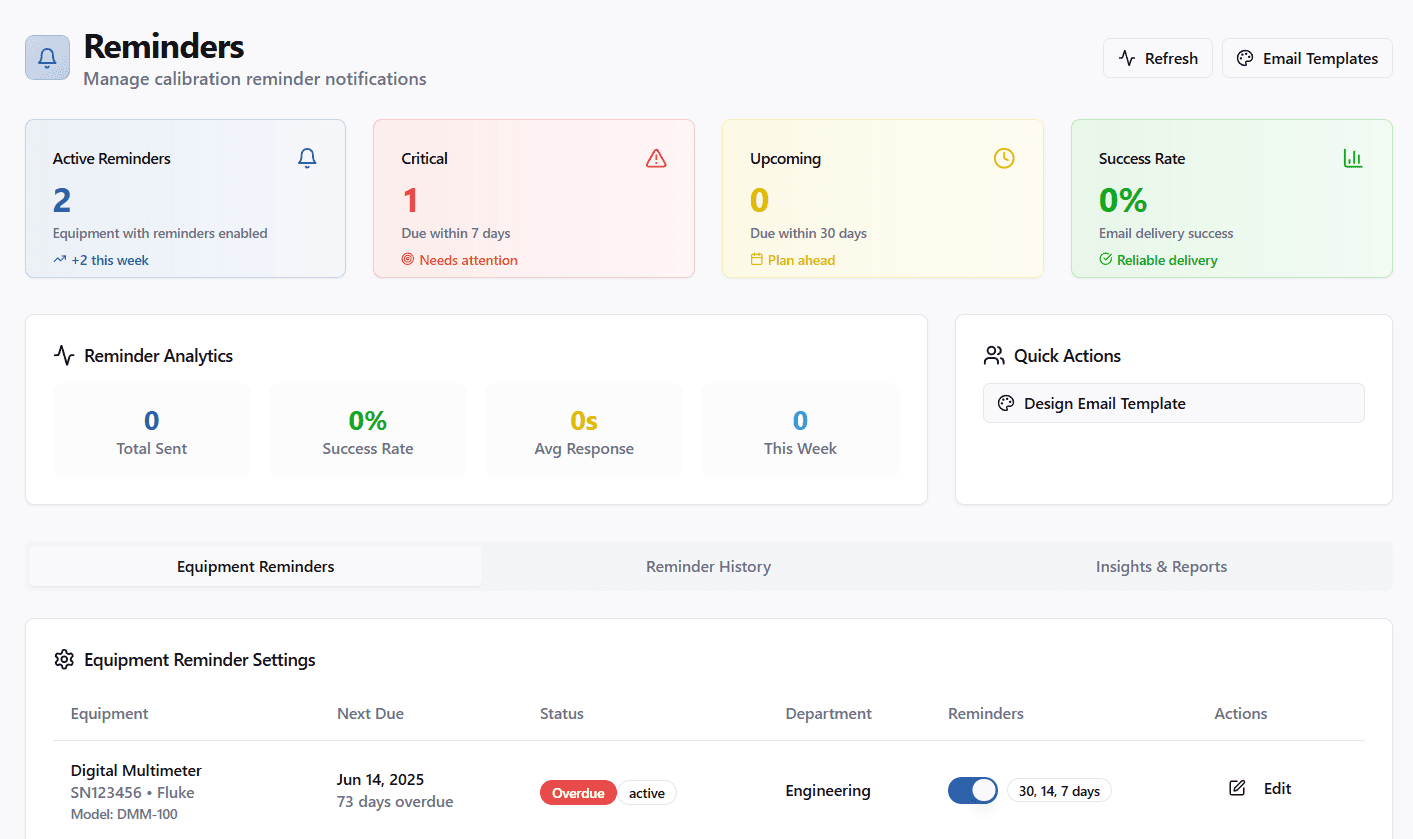
Gaugify's scheduling system operates more intuitively, with drag-and-drop calendar views and intelligent automation. For example, when you add a digital caliper with a 12-month calibration interval, the system automatically calculates the due date, sets up email notifications at 30, 14, and 7 days before expiration, and can even generate work orders for your technicians. The visual dashboard immediately shows overdue items, upcoming calibrations, and workload distribution across your team.
The notification system in Gaugify extends beyond basic email alerts. Supervisors receive consolidated weekly reports showing calibration status across all locations, while technicians get targeted notifications about their specific assignments. This granular approach ensures nothing falls through the cracks, especially critical when managing precision instruments like gage blocks with ±0.000050" tolerances or pressure calibrators requiring NIST traceability.
Certificate Generation and Management
Certificate generation represents one of the most time-consuming aspects of calibration management, and this is where modern solutions like Gaugify demonstrate clear advantages. GAGEtrak includes certificate functionality, but users often report challenges with customization and formatting, particularly when trying to meet specific customer requirements or industry standards.
Gaugify's certificate engine was built with flexibility and professional presentation in mind. The system automatically populates certificates with calibration data, uncertainty calculations, environmental conditions, and traceability information. For a typical torque wrench calibration at 25, 50, 75, and 100% of range, the certificate automatically includes as-found and as-left readings, uncertainty values at each test point, and clear pass/fail indicators based on your specified acceptance criteria.
The template system allows quality managers to create branded certificates that meet customer specifications without requiring IT support or custom programming. Whether you need ANSI/NCSL Z540 format certificates or customer-specific layouts, the drag-and-drop editor makes modifications straightforward.
Uncertainty Calculations and Statistical Analysis
Measurement uncertainty calculations have become increasingly important for ISO 17025 compliance and customer requirements. GAGEtrak handles basic uncertainty calculations, but implementing complex uncertainty budgets often requires additional modules or custom development.
Gaugify includes comprehensive uncertainty calculations as a standard feature, not an expensive add-on. The system supports multiple uncertainty calculation methods, including RSS (Root Sum of Squares) and sensitivity coefficient approaches. When calibrating a digital multimeter, for example, the system automatically combines uncertainties from the reference standard, environmental conditions, resolution limitations, and repeatability to provide a complete uncertainty budget.
The statistical analysis capabilities extend to trend analysis, control charts, and calibration history tracking. This functionality proves invaluable when investigating measurement system capability or responding to customer audits. Instead of manually compiling data from multiple sources, quality managers can generate comprehensive statistical reports with a few clicks.
Audit Trail and Compliance Features
Both platforms recognize the critical importance of maintaining detailed audit trails for regulatory compliance. GAGEtrak provides audit trail functionality through its database structure, though accessing and interpreting this information can require specialized knowledge.
Gaugify's audit trail system was designed with real-world compliance scenarios in mind. Every action—from scheduling changes to data entry corrections—is automatically logged with user identification, timestamps, and reason codes. When an ISO 9001 auditor asks about changes made to a calibration record, you can instantly generate a complete history showing who made modifications, when they occurred, and why they were necessary.
Our compliance features include role-based access controls, electronic signatures, and automated backup systems. These capabilities ensure your calibration data meets the requirements of ISO 17025, FDA 21 CFR Part 11, and other regulatory frameworks without requiring additional software modules or consulting services.
Mobile Access and Field Calibration Support
The ability to access calibration management systems from mobile devices has shifted from a nice-to-have feature to an operational necessity. GAGEtrak's architecture, built in an era when desktop access was standard, provides limited mobile functionality through web browser access that often proves cumbersome on phones and tablets.
Gaugify was designed as a mobile-first platform, recognizing that calibration technicians need full functionality whether they're at a lab bench or performing field calibrations at customer sites. The responsive interface automatically adapts to different screen sizes while maintaining complete feature access. Technicians can update calibration records, generate certificates, and access instrument histories directly from their smartphones or tablets.
This mobile capability proves especially valuable for organizations performing on-site calibrations. A technician calibrating pressure gauges at a customer facility can immediately enter results, generate certificates, and email them to the customer without returning to the office. This efficiency improvement often pays for the entire software investment through reduced travel time and faster customer service.
User Experience and Interface Design
The user experience differences between GAGEtrak and Gaugify reflect their respective development eras and target philosophies. GAGEtrak's interface follows traditional enterprise software conventions with menu-driven navigation, multiple window layouts, and terminology that assumes extensive training and calibration management expertise.
While functional, this approach creates learning curve challenges for new users and can slow down routine operations. Simple tasks like adding a new instrument or checking calibration status often require navigating through multiple screens and menus. For busy shop floor supervisors managing production schedules alongside calibration requirements, these interface complexities can become daily frustrations.
Gaugify prioritizes user experience through modern interface design principles. The dashboard provides immediate visibility into key metrics: overdue calibrations, upcoming due dates, technician workloads, and compliance status. Color-coded indicators make it easy to identify priority items at a glance, while search functionality allows users to quickly locate specific instruments or calibration records.
The difference becomes particularly apparent in common workflows. Adding a new micrometer to GAGEtrak might involve opening instrument management modules, navigating through configuration screens, and manually entering multiple data fields. In Gaugify, the same process uses a guided workflow that automatically suggests calibration intervals based on instrument type, prompts for required information, and immediately schedules the next calibration.
Training and Onboarding Requirements
Training requirements represent a hidden cost factor that significantly impacts total software ownership expenses. GAGEtrak typically requires formal training sessions, detailed documentation, and ongoing support to help users navigate its comprehensive feature set. While this depth provides flexibility for complex scenarios, it creates barriers for organizations that need team members to become productive quickly.
Gaugify's intuitive design minimizes training requirements without sacrificing functionality. Most users become comfortable with basic operations within their first session, while advanced features remain easily discoverable through logical menu organization and built-in help systems. This approach reduces implementation costs and makes it easier to onboard new team members as your organization grows.
Pricing and Total Cost of Ownership
Understanding the true cost of calibration management software extends beyond initial licensing fees to include implementation, training, maintenance, and ongoing support expenses. GAGEtrak follows traditional enterprise software pricing models with significant upfront costs, annual maintenance fees, and additional charges for modules, customizations, and support services.
The GAGEtrak pricing structure often includes separate charges for features that modern organizations consider standard functionality: mobile access, advanced reporting, uncertainty calculations, and integration capabilities. These modular pricing approaches can result in substantial cost escalation as your requirements evolve or as you discover additional features needed for effective operations.
Gaugify offers transparent, all-inclusive pricing that eliminates surprise costs and hidden fees. Our SaaS model includes all features, automatic updates, data backup, security monitoring, and customer support in a single monthly subscription. This approach provides budget predictability while ensuring you have access to the complete feature set from day one.
The total cost of ownership differences become more pronounced when considering implementation and maintenance expenses. GAGEtrak installations often require IT involvement, server hardware, database management, and ongoing system administration. These requirements can add substantial hidden costs, particularly for smaller organizations that must rely on external consultants for technical support.
Return on Investment Considerations
When evaluating an IndySoft alternative, consider the productivity improvements and risk reduction benefits that modern calibration management delivers. Gaugify users typically report significant time savings through automated scheduling, streamlined data entry, and instant certificate generation. A quality team managing 500 instruments might save 10-15 hours per week through these efficiency improvements alone.
Start your free trial today to experience how modern calibration management can transform your team's productivity and compliance capabilities.
Deployment Options and IT Requirements
Deployment architecture represents one of the fundamental differences between legacy calibration management systems and modern cloud-native solutions. GAGEtrak primarily operates as an on-premise solution, requiring dedicated server hardware, database management, and ongoing IT maintenance. While this approach provides complete data control, it also creates significant technical overhead and limits accessibility.
Organizations choosing GAGEtrak must plan for server sizing, backup systems, security updates, and disaster recovery procedures. These requirements often necessitate dedicated IT resources or expensive consulting relationships. Additionally, accessing the system from multiple locations requires complex VPN configurations or terminal services implementations.
Gaugify's cloud-native architecture eliminates these infrastructure concerns while providing superior reliability and security. Our platform operates from enterprise-grade data centers with redundant systems, automatic backups, and 24/7 monitoring. Users access the system through standard web browsers from any location with internet connectivity, making it ideal for organizations with multiple facilities or remote workers.
The security and compliance capabilities of modern cloud platforms often exceed what individual organizations can implement on-premise. Gaugify includes enterprise-grade encryption, intrusion detection, and compliance certifications that would require substantial investment to replicate in traditional server environments.
Scalability and Performance Considerations
Scalability becomes a critical factor as organizations grow or acquire additional facilities. GAGEtrak's on-premise architecture requires capacity planning, hardware upgrades, and performance tuning as instrument counts and user numbers increase. These scaling challenges can result in system slowdowns or expensive infrastructure upgrades at inconvenient times.
Cloud-native platforms like Gaugify automatically scale to accommodate growing requirements without user intervention or additional costs. Whether you're managing 100 instruments or 10,000, the system maintains consistent performance levels while providing the same comprehensive feature set.
Customer Support and Professional Services
The support experience differs significantly between traditional enterprise software vendors and modern SaaS providers. GAGEtrak support typically operates through formal ticket systems with response times that vary based on support contract levels. Advanced support or customization requests often require professional services engagements with associated consulting fees.
Gaugify provides comprehensive support as a standard service included with every subscription. Our support team consists of calibration professionals who understand real-world measurement challenges, not just software functionality. Whether you need help setting up uncertainty calculations for a coordinate measuring machine or configuring automated workflows for your specific industry requirements, knowledgeable support is available without additional charges.
The proactive support approach extends to system monitoring and optimization recommendations. Instead of waiting for users to encounter problems, Gaugify monitors system performance and usage patterns to identify potential improvements or configuration optimizations. This preventive approach minimizes downtime and ensures optimal performance.
Implementation and Training Support
Getting started with calibration management software shouldn't require months of implementation planning and extensive training programs. GAGEtrak implementations often involve detailed project planning, data migration services, and formal training sessions that can extend the time-to-value significantly.
Gaugify's implementation process focuses on getting your team productive as quickly as possible. Most organizations can begin managing their calibration programs within days of signup, with guided setup processes that help configure instruments, calibration intervals, and user permissions efficiently. Our implementation specialists provide personalized onboarding sessions that focus on your specific requirements rather than generic software training.
Industry-Specific Considerations
Different industries have unique calibration management requirements that influence software selection decisions. GAGEtrak has established presence in traditional manufacturing sectors, particularly aerospace and automotive, where its comprehensive feature set aligns with complex regulatory requirements and established workflows.
Gaugify serves diverse industry segments with configurable workflows that adapt to specific requirements without custom programming. Whether you're managing pharmaceutical manufacturing equipment requiring FDA validation, medical device calibrations needing ISO 13485 compliance, or general manufacturing instruments following ISO 9001 requirements, the platform provides appropriate documentation and traceability capabilities.
The flexibility advantage becomes apparent when organizations operate across multiple industry segments or need to adapt to changing regulatory requirements. Instead of requiring expensive customization or module purchases, Gaugify's configuration options allow quality managers to adjust workflows, certificate formats, and compliance reporting as needed.
Integration and Data Exchange Capabilities
Modern calibration management rarely operates in isolation—it must integrate with ERP systems, quality management platforms, and measurement devices. GAGEtrak provides integration capabilities, though implementing these connections often requires professional services support and ongoing maintenance.
Gaugify includes standard integration options for common business systems and measurement devices. API-based connections allow data exchange with popular ERP platforms, while direct instrument interfaces eliminate manual data entry for supported calibrators and measurement systems. These integration capabilities are included as standard features rather than expensive add-ons.
Who Each Product Is Best For
Understanding the ideal use cases for each platform helps organizations make informed decisions based on their specific requirements, resources, and priorities.
GAGEtrak works best for:
Large organizations with dedicated IT resources and established enterprise software management capabilities
Companies with complex customization requirements that justify significant implementation investments
Organizations with strict data residency requirements that preclude cloud-based solutions
Teams comfortable with traditional enterprise software interfaces and willing to invest in extensive training
Facilities with reliable high-speed internet connectivity that can support on-premise system access from multiple locations
Gaugify is ideal for:
Organizations seeking modern, intuitive software that maximizes user productivity without extensive training
Teams requiring immediate deployment and rapid time-to-value without lengthy implementation projects
Companies with multiple locations needing seamless access to centralized calibration management
Quality managers who want comprehensive functionality at transparent, predictable pricing
Organizations prioritizing mobile access and field calibration capabilities
Teams needing built-in uncertainty calculations, statistical analysis, and compliance reporting without additional module purchases
Decision Framework
When evaluating calibration management solutions, consider these key decision factors:
Speed of Implementation: If you need to get started quickly, cloud-native solutions like Gaugify provide immediate value. Traditional on-premise systems require longer planning and implementation cycles.
Total Cost of Ownership: Look beyond initial licensing fees to include training, implementation, maintenance, and support costs over the system's lifespan.
User Experience: Consider how much training your team can realistically invest and whether complex interfaces will hinder daily productivity.
Scalability Requirements: Evaluate whether your calibration management needs are likely to grow and how easily each platform accommodates expansion.
Integration Needs: Assess current and future requirements for connecting calibration management with other business systems or measurement devices.
The Modern Choice for Calibration Management
While GAGEtrak has served the calibration management market reliably for many years, today's quality teams increasingly require solutions that match the pace and expectations of modern business operations. The choice between traditional enterprise software and modern cloud-native platforms reflects broader decisions about operational efficiency, user productivity, and technology strategy.
Gaugify represents the evolution of calibration management software toward greater accessibility, functionality, and value. By combining comprehensive features with intuitive design, transparent pricing, and immediate deployment capabilities, we deliver what quality teams actually need: a powerful tool that enhances their effectiveness without creating administrative burdens.
The advantages of choosing a modern IndySoft alternative extend beyond software functionality to encompass total operational impact. When calibration technicians can access complete instrument histories from their mobile devices, quality managers can generate compliance reports instantly, and supervisors can monitor workload distribution through visual dashboards, the entire quality management process becomes more efficient and effective.
Consider the cumulative impact of these efficiency improvements across your organization. Time saved on routine calibration management tasks can be redirected toward process improvement, quality system enhancement, and proactive problem-solving activities that deliver greater business value.
Organizations evaluating calibration management solutions have more choices today than ever before. The decision ultimately comes down to whether you want to continue managing calibration programs with traditional approaches or embrace modern tools that maximize your team's potential while ensuring comprehensive compliance and traceability.
Schedule a personalized demo to see how Gaugify can transform your calibration management processes, or start exploring the platform immediately with our free trial. Experience firsthand how modern calibration management software can deliver the functionality, efficiency, and value your quality team deserves.
Best IndySoft Alternative for Modern Teams
If you're researching calibration management software, you've likely encountered IndySoft's GAGEtrak system during your search. While GAGEtrak has been a reliable solution for many organizations over the years, today's quality teams increasingly need a more modern, cloud-first IndySoft alternative that delivers advanced features without the complexity and high costs of legacy systems. Whether you're dealing with micrometers requiring ±0.0001" accuracy, torque wrenches needing annual recalibration, or coordinate measuring machines (CMMs) with complex uncertainty calculations, the right calibration management platform can transform how your team maintains measurement accuracy and regulatory compliance.
In this comprehensive comparison, we'll examine how Gaugify stacks up against IndySoft's GAGEtrak across key areas that matter most to quality managers, shop floor supervisors, and lab technicians. From automated scheduling and certificate generation to mobile accessibility and ISO 17025 compliance, we'll provide the detailed analysis you need to make an informed decision for your organization.
Company Background and Market Position
IndySoft has been serving the calibration management market since the 1980s, building GAGEtrak as a comprehensive solution primarily focused on on-premise deployments. The company has established itself as a familiar name in traditional manufacturing environments, particularly among larger organizations with dedicated IT resources to manage complex software installations and maintenance.
Gaugify represents a new generation of calibration management software, built from the ground up as a cloud-native solution. Our platform was designed specifically to address the pain points that modern quality teams face: cumbersome legacy interfaces, expensive implementation costs, limited mobile access, and the need for extensive IT support. By focusing on user experience, automation, and accessibility, Gaugify serves organizations ranging from small job shops with 50 instruments to large manufacturers managing thousands of measurement devices across multiple facilities.
Market Focus and Philosophy
The fundamental difference between these platforms lies in their approach to software delivery and user experience. GAGEtrak follows the traditional enterprise software model with significant upfront costs, lengthy implementation periods, and ongoing maintenance requirements. This approach works for some organizations but creates barriers for teams that need to get up and running quickly with minimal IT involvement.
Gaugify embraces the modern Software-as-a-Service (SaaS) model, delivering immediate value through instant deployment, automatic updates, and transparent pricing. This philosophy extends to every aspect of our platform design, from the intuitive interface that requires minimal training to the built-in features that eliminate the need for third-party integrations.
Feature-by-Feature Comparison: IndySoft Alternative Analysis
Calibration Scheduling and Notifications
Both platforms handle basic scheduling functionality, but their approaches differ significantly in execution and user experience. GAGEtrak provides scheduling capabilities within its traditional interface, requiring users to navigate through multiple screens to set up calibration intervals and due dates.
Gaugify's scheduling system operates more intuitively, with drag-and-drop calendar views and intelligent automation. For example, when you add a digital caliper with a 12-month calibration interval, the system automatically calculates the due date, sets up email notifications at 30, 14, and 7 days before expiration, and can even generate work orders for your technicians. The visual dashboard immediately shows overdue items, upcoming calibrations, and workload distribution across your team.
The notification system in Gaugify extends beyond basic email alerts. Supervisors receive consolidated weekly reports showing calibration status across all locations, while technicians get targeted notifications about their specific assignments. This granular approach ensures nothing falls through the cracks, especially critical when managing precision instruments like gage blocks with ±0.000050" tolerances or pressure calibrators requiring NIST traceability.
Certificate Generation and Management
Certificate generation represents one of the most time-consuming aspects of calibration management, and this is where modern solutions like Gaugify demonstrate clear advantages. GAGEtrak includes certificate functionality, but users often report challenges with customization and formatting, particularly when trying to meet specific customer requirements or industry standards.
Gaugify's certificate engine was built with flexibility and professional presentation in mind. The system automatically populates certificates with calibration data, uncertainty calculations, environmental conditions, and traceability information. For a typical torque wrench calibration at 25, 50, 75, and 100% of range, the certificate automatically includes as-found and as-left readings, uncertainty values at each test point, and clear pass/fail indicators based on your specified acceptance criteria.
The template system allows quality managers to create branded certificates that meet customer specifications without requiring IT support or custom programming. Whether you need ANSI/NCSL Z540 format certificates or customer-specific layouts, the drag-and-drop editor makes modifications straightforward.
Uncertainty Calculations and Statistical Analysis
Measurement uncertainty calculations have become increasingly important for ISO 17025 compliance and customer requirements. GAGEtrak handles basic uncertainty calculations, but implementing complex uncertainty budgets often requires additional modules or custom development.
Gaugify includes comprehensive uncertainty calculations as a standard feature, not an expensive add-on. The system supports multiple uncertainty calculation methods, including RSS (Root Sum of Squares) and sensitivity coefficient approaches. When calibrating a digital multimeter, for example, the system automatically combines uncertainties from the reference standard, environmental conditions, resolution limitations, and repeatability to provide a complete uncertainty budget.
The statistical analysis capabilities extend to trend analysis, control charts, and calibration history tracking. This functionality proves invaluable when investigating measurement system capability or responding to customer audits. Instead of manually compiling data from multiple sources, quality managers can generate comprehensive statistical reports with a few clicks.
Audit Trail and Compliance Features
Both platforms recognize the critical importance of maintaining detailed audit trails for regulatory compliance. GAGEtrak provides audit trail functionality through its database structure, though accessing and interpreting this information can require specialized knowledge.
Gaugify's audit trail system was designed with real-world compliance scenarios in mind. Every action—from scheduling changes to data entry corrections—is automatically logged with user identification, timestamps, and reason codes. When an ISO 9001 auditor asks about changes made to a calibration record, you can instantly generate a complete history showing who made modifications, when they occurred, and why they were necessary.
Our compliance features include role-based access controls, electronic signatures, and automated backup systems. These capabilities ensure your calibration data meets the requirements of ISO 17025, FDA 21 CFR Part 11, and other regulatory frameworks without requiring additional software modules or consulting services.
Mobile Access and Field Calibration Support
The ability to access calibration management systems from mobile devices has shifted from a nice-to-have feature to an operational necessity. GAGEtrak's architecture, built in an era when desktop access was standard, provides limited mobile functionality through web browser access that often proves cumbersome on phones and tablets.
Gaugify was designed as a mobile-first platform, recognizing that calibration technicians need full functionality whether they're at a lab bench or performing field calibrations at customer sites. The responsive interface automatically adapts to different screen sizes while maintaining complete feature access. Technicians can update calibration records, generate certificates, and access instrument histories directly from their smartphones or tablets.
This mobile capability proves especially valuable for organizations performing on-site calibrations. A technician calibrating pressure gauges at a customer facility can immediately enter results, generate certificates, and email them to the customer without returning to the office. This efficiency improvement often pays for the entire software investment through reduced travel time and faster customer service.
User Experience and Interface Design
The user experience differences between GAGEtrak and Gaugify reflect their respective development eras and target philosophies. GAGEtrak's interface follows traditional enterprise software conventions with menu-driven navigation, multiple window layouts, and terminology that assumes extensive training and calibration management expertise.
While functional, this approach creates learning curve challenges for new users and can slow down routine operations. Simple tasks like adding a new instrument or checking calibration status often require navigating through multiple screens and menus. For busy shop floor supervisors managing production schedules alongside calibration requirements, these interface complexities can become daily frustrations.
Gaugify prioritizes user experience through modern interface design principles. The dashboard provides immediate visibility into key metrics: overdue calibrations, upcoming due dates, technician workloads, and compliance status. Color-coded indicators make it easy to identify priority items at a glance, while search functionality allows users to quickly locate specific instruments or calibration records.
The difference becomes particularly apparent in common workflows. Adding a new micrometer to GAGEtrak might involve opening instrument management modules, navigating through configuration screens, and manually entering multiple data fields. In Gaugify, the same process uses a guided workflow that automatically suggests calibration intervals based on instrument type, prompts for required information, and immediately schedules the next calibration.
Training and Onboarding Requirements
Training requirements represent a hidden cost factor that significantly impacts total software ownership expenses. GAGEtrak typically requires formal training sessions, detailed documentation, and ongoing support to help users navigate its comprehensive feature set. While this depth provides flexibility for complex scenarios, it creates barriers for organizations that need team members to become productive quickly.
Gaugify's intuitive design minimizes training requirements without sacrificing functionality. Most users become comfortable with basic operations within their first session, while advanced features remain easily discoverable through logical menu organization and built-in help systems. This approach reduces implementation costs and makes it easier to onboard new team members as your organization grows.
Pricing and Total Cost of Ownership
Understanding the true cost of calibration management software extends beyond initial licensing fees to include implementation, training, maintenance, and ongoing support expenses. GAGEtrak follows traditional enterprise software pricing models with significant upfront costs, annual maintenance fees, and additional charges for modules, customizations, and support services.
The GAGEtrak pricing structure often includes separate charges for features that modern organizations consider standard functionality: mobile access, advanced reporting, uncertainty calculations, and integration capabilities. These modular pricing approaches can result in substantial cost escalation as your requirements evolve or as you discover additional features needed for effective operations.
Gaugify offers transparent, all-inclusive pricing that eliminates surprise costs and hidden fees. Our SaaS model includes all features, automatic updates, data backup, security monitoring, and customer support in a single monthly subscription. This approach provides budget predictability while ensuring you have access to the complete feature set from day one.
The total cost of ownership differences become more pronounced when considering implementation and maintenance expenses. GAGEtrak installations often require IT involvement, server hardware, database management, and ongoing system administration. These requirements can add substantial hidden costs, particularly for smaller organizations that must rely on external consultants for technical support.
Return on Investment Considerations
When evaluating an IndySoft alternative, consider the productivity improvements and risk reduction benefits that modern calibration management delivers. Gaugify users typically report significant time savings through automated scheduling, streamlined data entry, and instant certificate generation. A quality team managing 500 instruments might save 10-15 hours per week through these efficiency improvements alone.
Start your free trial today to experience how modern calibration management can transform your team's productivity and compliance capabilities.
Deployment Options and IT Requirements
Deployment architecture represents one of the fundamental differences between legacy calibration management systems and modern cloud-native solutions. GAGEtrak primarily operates as an on-premise solution, requiring dedicated server hardware, database management, and ongoing IT maintenance. While this approach provides complete data control, it also creates significant technical overhead and limits accessibility.
Organizations choosing GAGEtrak must plan for server sizing, backup systems, security updates, and disaster recovery procedures. These requirements often necessitate dedicated IT resources or expensive consulting relationships. Additionally, accessing the system from multiple locations requires complex VPN configurations or terminal services implementations.
Gaugify's cloud-native architecture eliminates these infrastructure concerns while providing superior reliability and security. Our platform operates from enterprise-grade data centers with redundant systems, automatic backups, and 24/7 monitoring. Users access the system through standard web browsers from any location with internet connectivity, making it ideal for organizations with multiple facilities or remote workers.
The security and compliance capabilities of modern cloud platforms often exceed what individual organizations can implement on-premise. Gaugify includes enterprise-grade encryption, intrusion detection, and compliance certifications that would require substantial investment to replicate in traditional server environments.
Scalability and Performance Considerations
Scalability becomes a critical factor as organizations grow or acquire additional facilities. GAGEtrak's on-premise architecture requires capacity planning, hardware upgrades, and performance tuning as instrument counts and user numbers increase. These scaling challenges can result in system slowdowns or expensive infrastructure upgrades at inconvenient times.
Cloud-native platforms like Gaugify automatically scale to accommodate growing requirements without user intervention or additional costs. Whether you're managing 100 instruments or 10,000, the system maintains consistent performance levels while providing the same comprehensive feature set.
Customer Support and Professional Services
The support experience differs significantly between traditional enterprise software vendors and modern SaaS providers. GAGEtrak support typically operates through formal ticket systems with response times that vary based on support contract levels. Advanced support or customization requests often require professional services engagements with associated consulting fees.
Gaugify provides comprehensive support as a standard service included with every subscription. Our support team consists of calibration professionals who understand real-world measurement challenges, not just software functionality. Whether you need help setting up uncertainty calculations for a coordinate measuring machine or configuring automated workflows for your specific industry requirements, knowledgeable support is available without additional charges.
The proactive support approach extends to system monitoring and optimization recommendations. Instead of waiting for users to encounter problems, Gaugify monitors system performance and usage patterns to identify potential improvements or configuration optimizations. This preventive approach minimizes downtime and ensures optimal performance.
Implementation and Training Support
Getting started with calibration management software shouldn't require months of implementation planning and extensive training programs. GAGEtrak implementations often involve detailed project planning, data migration services, and formal training sessions that can extend the time-to-value significantly.
Gaugify's implementation process focuses on getting your team productive as quickly as possible. Most organizations can begin managing their calibration programs within days of signup, with guided setup processes that help configure instruments, calibration intervals, and user permissions efficiently. Our implementation specialists provide personalized onboarding sessions that focus on your specific requirements rather than generic software training.
Industry-Specific Considerations
Different industries have unique calibration management requirements that influence software selection decisions. GAGEtrak has established presence in traditional manufacturing sectors, particularly aerospace and automotive, where its comprehensive feature set aligns with complex regulatory requirements and established workflows.
Gaugify serves diverse industry segments with configurable workflows that adapt to specific requirements without custom programming. Whether you're managing pharmaceutical manufacturing equipment requiring FDA validation, medical device calibrations needing ISO 13485 compliance, or general manufacturing instruments following ISO 9001 requirements, the platform provides appropriate documentation and traceability capabilities.
The flexibility advantage becomes apparent when organizations operate across multiple industry segments or need to adapt to changing regulatory requirements. Instead of requiring expensive customization or module purchases, Gaugify's configuration options allow quality managers to adjust workflows, certificate formats, and compliance reporting as needed.
Integration and Data Exchange Capabilities
Modern calibration management rarely operates in isolation—it must integrate with ERP systems, quality management platforms, and measurement devices. GAGEtrak provides integration capabilities, though implementing these connections often requires professional services support and ongoing maintenance.
Gaugify includes standard integration options for common business systems and measurement devices. API-based connections allow data exchange with popular ERP platforms, while direct instrument interfaces eliminate manual data entry for supported calibrators and measurement systems. These integration capabilities are included as standard features rather than expensive add-ons.
Who Each Product Is Best For
Understanding the ideal use cases for each platform helps organizations make informed decisions based on their specific requirements, resources, and priorities.
GAGEtrak works best for:
Large organizations with dedicated IT resources and established enterprise software management capabilities
Companies with complex customization requirements that justify significant implementation investments
Organizations with strict data residency requirements that preclude cloud-based solutions
Teams comfortable with traditional enterprise software interfaces and willing to invest in extensive training
Facilities with reliable high-speed internet connectivity that can support on-premise system access from multiple locations
Gaugify is ideal for:
Organizations seeking modern, intuitive software that maximizes user productivity without extensive training
Teams requiring immediate deployment and rapid time-to-value without lengthy implementation projects
Companies with multiple locations needing seamless access to centralized calibration management
Quality managers who want comprehensive functionality at transparent, predictable pricing
Organizations prioritizing mobile access and field calibration capabilities
Teams needing built-in uncertainty calculations, statistical analysis, and compliance reporting without additional module purchases
Decision Framework
When evaluating calibration management solutions, consider these key decision factors:
Speed of Implementation: If you need to get started quickly, cloud-native solutions like Gaugify provide immediate value. Traditional on-premise systems require longer planning and implementation cycles.
Total Cost of Ownership: Look beyond initial licensing fees to include training, implementation, maintenance, and support costs over the system's lifespan.
User Experience: Consider how much training your team can realistically invest and whether complex interfaces will hinder daily productivity.
Scalability Requirements: Evaluate whether your calibration management needs are likely to grow and how easily each platform accommodates expansion.
Integration Needs: Assess current and future requirements for connecting calibration management with other business systems or measurement devices.
The Modern Choice for Calibration Management
While GAGEtrak has served the calibration management market reliably for many years, today's quality teams increasingly require solutions that match the pace and expectations of modern business operations. The choice between traditional enterprise software and modern cloud-native platforms reflects broader decisions about operational efficiency, user productivity, and technology strategy.
Gaugify represents the evolution of calibration management software toward greater accessibility, functionality, and value. By combining comprehensive features with intuitive design, transparent pricing, and immediate deployment capabilities, we deliver what quality teams actually need: a powerful tool that enhances their effectiveness without creating administrative burdens.
The advantages of choosing a modern IndySoft alternative extend beyond software functionality to encompass total operational impact. When calibration technicians can access complete instrument histories from their mobile devices, quality managers can generate compliance reports instantly, and supervisors can monitor workload distribution through visual dashboards, the entire quality management process becomes more efficient and effective.
Consider the cumulative impact of these efficiency improvements across your organization. Time saved on routine calibration management tasks can be redirected toward process improvement, quality system enhancement, and proactive problem-solving activities that deliver greater business value.
Organizations evaluating calibration management solutions have more choices today than ever before. The decision ultimately comes down to whether you want to continue managing calibration programs with traditional approaches or embrace modern tools that maximize your team's potential while ensuring comprehensive compliance and traceability.
Schedule a personalized demo to see how Gaugify can transform your calibration management processes, or start exploring the platform immediately with our free trial. Experience firsthand how modern calibration management software can deliver the functionality, efficiency, and value your quality team deserves.