
Calibration Management Software in Michigan
Calibration Management Software in Michigan
David Bentley
Quality Assurance Engineer
7 min read
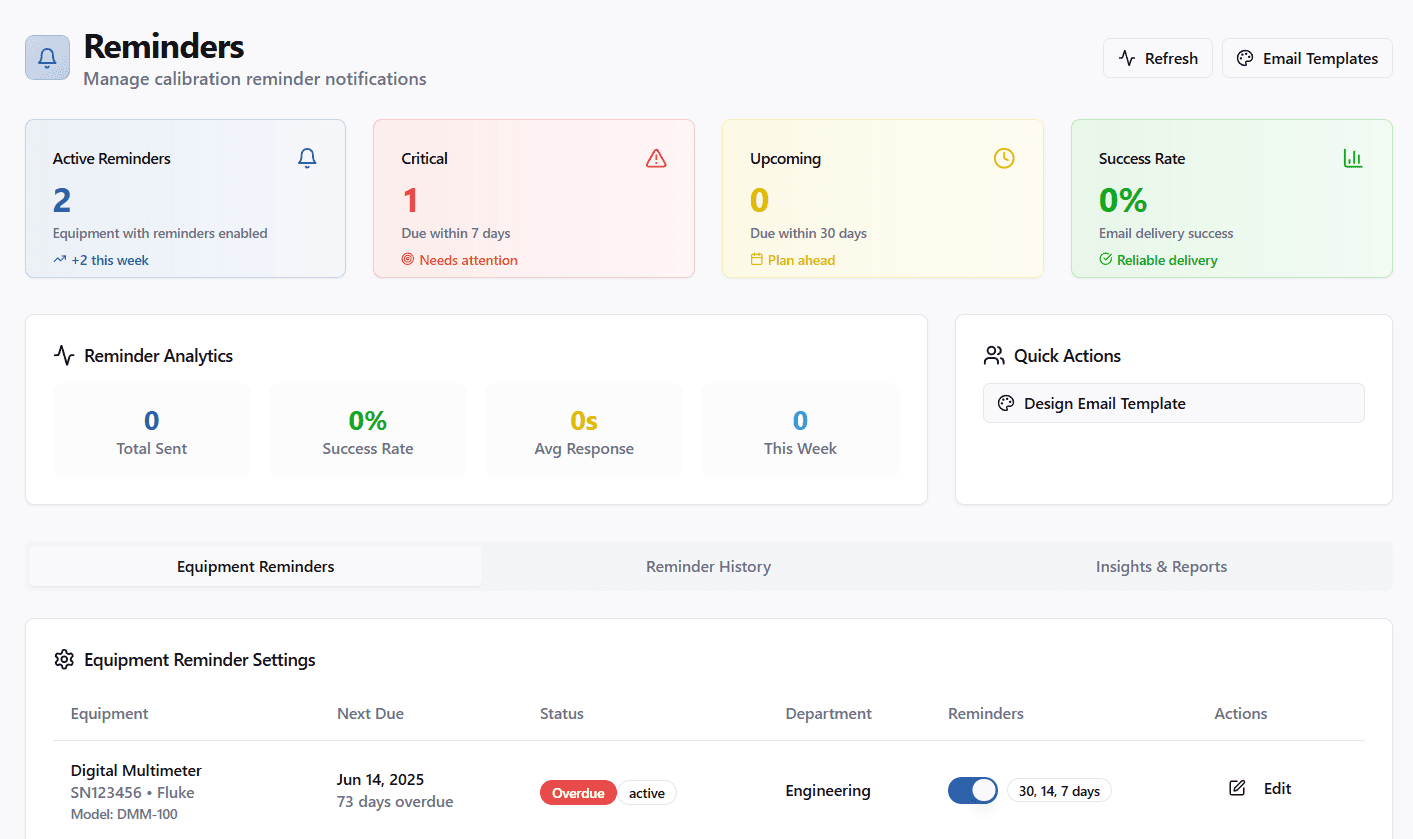
Calibration Management Software in Michigan
Michigan's industrial landscape demands precision at every level. From the automotive assembly lines of Detroit to the aerospace facilities in Grand Rapids, manufacturers across the state rely on accurate measurement equipment to maintain quality standards and regulatory compliance. Finding the right calibration management software Michigan businesses can trust is crucial for maintaining competitive advantage in these precision-driven industries.
The Great Lakes State hosts some of America's most demanding manufacturing operations, where measurement accuracy directly impacts product quality, safety, and regulatory compliance. Whether you're managing torque wrenches on an automotive assembly line or precision scales in a pharmaceutical facility, effective calibration management is non-negotiable.
Michigan's Manufacturing and Industrial Landscape
Michigan's economy is built on precision manufacturing. The state produces everything from automobiles and aircraft components to medical devices and chemical products. This diversity creates a complex web of quality requirements, each demanding meticulous calibration management.
The state's manufacturing sector employs over 600,000 workers across thousands of facilities. These operations depend on measurement equipment ranging from basic calipers and micrometers to sophisticated coordinate measuring machines (CMMs) and environmental monitoring systems. Each piece of equipment requires regular calibration to maintain accuracy and traceability.
Michigan's industrial centers include:
Detroit Metro: Automotive manufacturing and suppliers
Grand Rapids: Aerospace, furniture, and medical device manufacturing
Kalamazoo: Pharmaceutical and life sciences
Battle Creek: Food processing and packaging
Midland: Chemical manufacturing and research
Key Industries Requiring Calibration Management Software in Michigan
Automotive Manufacturing
Michigan remains the heart of American automotive manufacturing. The Big Three automakers—Ford, General Motors, and Stellantis—operate major facilities throughout the state, alongside hundreds of tier-one and tier-two suppliers. These operations require extensive calibration programs covering:
Torque wrenches and drivers (±2% accuracy for critical fasteners)
Dimensional inspection equipment (CMMs, optical comparators)
Pressure and vacuum gages for hydraulic and pneumatic systems
Environmental chambers for testing durability
Paint thickness gages and color measurement devices
Automotive suppliers must comply with IATF 16949 requirements, which mandate calibration programs with full traceability to national standards. A typical automotive facility might manage 500+ measurement devices across multiple production lines.
Aerospace and Defense
Michigan's aerospace sector includes major players like Boeing, Lockheed Martin, and hundreds of specialized suppliers. Aerospace manufacturing demands the highest levels of measurement accuracy, often requiring calibration uncertainties of 4:1 or 10:1 ratios.
Critical calibration requirements include:
Precision torque tools for aircraft assembly (±1% accuracy)
Ultrasonic thickness gages for non-destructive testing
Temperature and pressure calibration for engine testing
High-accuracy dimensional inspection equipment
Force measurement devices for structural testing
Pharmaceutical and Life Sciences
The Kalamazoo region hosts major pharmaceutical operations, including Pfizer's largest manufacturing site. These facilities operate under strict FDA regulations requiring comprehensive calibration programs with 21 CFR Part 11 compliance for electronic records.
Pharmaceutical calibration typically covers:
Analytical balances (±0.1mg repeatability)
Temperature and humidity monitoring systems
pH meters and conductivity analyzers
Pipettes and volumetric equipment
Autoclaves and sterilization equipment
Quality Standards and Regulatory Requirements
Michigan manufacturers must navigate a complex landscape of quality standards and regulations. The most common requirements include:
ISO 9001 and Industry-Specific Standards
Most Michigan manufacturers maintain ISO 9001 certification, with additional industry-specific requirements like IATF 16949 for automotive, AS9100 for aerospace, and ISO 13485 for medical devices. These standards require documented calibration procedures with evidence of measurement traceability.
FDA Regulations
Pharmaceutical and medical device manufacturers must comply with FDA regulations, including 21 CFR Part 820 for medical devices and 21 CFR Part 211 for pharmaceutical manufacturing. These regulations mandate calibration at specified intervals with documented procedures and records.
ISO 17025 Laboratory Standards
Many Michigan facilities operate testing laboratories that require ISO 17025 calibration software compliance. This standard demands rigorous measurement uncertainty analysis and comprehensive calibration documentation.
Ready to streamline your calibration management? Start your free trial of Gaugify and see how cloud-based calibration management can transform your quality operations.
Specific Calibration Management Challenges in Michigan
Climate and Environmental Factors
Michigan's variable climate presents unique challenges for calibration management. The state experiences temperature swings from -20°F in winter to 90°F+ in summer, with high humidity during summer months. These conditions affect:
Dimensional instruments: Steel gages and fixtures expand/contract with temperature changes
Electronic instruments: Temperature and humidity can affect drift rates
Pressure instruments: Barometric pressure variations impact calibration stability
Environmental chambers: Seasonal variations require more frequent calibration verification
Supply Chain Complexity
Michigan's automotive supply chain involves multiple tiers of suppliers, each with specific calibration requirements. A single automotive component might pass through 3-4 different facilities, each requiring traceable measurements. Coordinating calibration schedules and maintaining traceability across this complex network requires sophisticated software solutions.
Skilled Technician Shortage
Like many manufacturing states, Michigan faces a shortage of skilled calibration technicians. This makes automation and efficient calibration management even more critical. Companies need software that can:
Automate calibration scheduling and notifications
Provide clear procedures for less experienced technicians
Generate reports automatically to reduce administrative burden
Track technician training and certification requirements
How Gaugify Serves Michigan Businesses
Gaugify's cloud-based calibration management software is specifically designed to address the challenges facing Michigan manufacturers. Our platform provides comprehensive solutions for businesses of all sizes, from small automotive suppliers to large pharmaceutical facilities.
Cloud-Based Accessibility
Unlike traditional calibration software that requires local servers and IT support, Gaugify operates entirely in the cloud. This means your calibration data is accessible from any location—whether you're on the shop floor in Detroit, at a supplier facility in Grand Rapids, or working remotely during Michigan's harsh winter weather.
Key benefits include:
No software installation or server maintenance required
Automatic updates and backups
Access from any device with internet connectivity
Real-time synchronization across multiple facilities
Comprehensive Standards Support
Gaugify supports all major quality standards relevant to Michigan industries. Our compliance features include:
IATF 16949 support: Automotive-specific calibration workflows and reporting
AS9100 compliance: Aerospace calibration requirements with full traceability
FDA 21 CFR Part 11: Electronic signatures and audit trails for pharmaceutical operations
ISO 17025 support: Laboratory calibration management with uncertainty analysis
Industry-Specific Features
Our software includes features specifically designed for Michigan's dominant industries:
Automotive Manufacturing
Torque tool calibration workflows with automatic certificate generation
Integration with quality management systems
Supplier calibration tracking and approval workflows
PPAP documentation support
Aerospace and Defense
High-precision calibration tracking with extended decimal places
AS9100 audit trail requirements
Critical equipment identification and prioritization
Non-conformance tracking and corrective action management
Pharmaceutical and Life Sciences
21 CFR Part 11 compliant electronic records
Automated deviation handling for out-of-tolerance conditions
Environmental monitoring integration
Cleaning validation support for shared equipment
Advanced Reporting and Analytics
Michigan manufacturers need sophisticated reporting capabilities to satisfy customer audits and regulatory requirements. Gaugify's advanced features include:
Customizable calibration certificates
Automated compliance reporting
Trend analysis and predictive maintenance alerts
KPI dashboards for management visibility
Customer-specific reporting formats
Success Stories from Michigan Manufacturers
Michigan manufacturers across industries have successfully implemented Gaugify to streamline their calibration operations. A typical automotive supplier reduced calibration administrative time by 60% while improving compliance documentation. A pharmaceutical manufacturer eliminated paper-based calibration records while achieving full 21 CFR Part 11 compliance.
The key benefits consistently reported by Michigan customers include:
Reduced calibration cycle times
Improved audit performance
Lower administrative costs
Better visibility into calibration status
Reduced equipment downtime
Getting Started with Calibration Management Software in Michigan
Implementing modern calibration management software doesn't have to be complex or disruptive. Gaugify's cloud-based approach means you can be up and running quickly, without the need for extensive IT involvement or costly hardware investments.
Our implementation process typically takes just 2-4 weeks for most Michigan manufacturers, including data migration from existing systems and user training. We provide comprehensive support throughout the process, ensuring a smooth transition that minimizes disruption to your operations.
For Michigan manufacturers ready to modernize their calibration management, Gaugify offers flexible pricing options to fit operations of all sizes, from small job shops to large manufacturing facilities.
Start Your Calibration Management Transformation Today
Michigan's competitive manufacturing environment demands efficient, accurate calibration management. Whether you're dealing with automotive quality requirements, aerospace precision standards, or pharmaceutical regulations, having the right calibration management software makes all the difference.
Gaugify provides the comprehensive, cloud-based solution Michigan manufacturers need to maintain compliance, reduce costs, and improve operational efficiency. Our platform is designed specifically for the challenges facing modern manufacturing operations, with the flexibility to adapt to your specific industry requirements.
Don't let outdated calibration management hold your Michigan operation back. Start your free trial today and discover how Gaugify can transform your calibration operations. For a personalized demonstration of how our software can address your specific needs, schedule a demo with our calibration management experts.
Calibration Management Software in Michigan
Michigan's industrial landscape demands precision at every level. From the automotive assembly lines of Detroit to the aerospace facilities in Grand Rapids, manufacturers across the state rely on accurate measurement equipment to maintain quality standards and regulatory compliance. Finding the right calibration management software Michigan businesses can trust is crucial for maintaining competitive advantage in these precision-driven industries.
The Great Lakes State hosts some of America's most demanding manufacturing operations, where measurement accuracy directly impacts product quality, safety, and regulatory compliance. Whether you're managing torque wrenches on an automotive assembly line or precision scales in a pharmaceutical facility, effective calibration management is non-negotiable.
Michigan's Manufacturing and Industrial Landscape
Michigan's economy is built on precision manufacturing. The state produces everything from automobiles and aircraft components to medical devices and chemical products. This diversity creates a complex web of quality requirements, each demanding meticulous calibration management.
The state's manufacturing sector employs over 600,000 workers across thousands of facilities. These operations depend on measurement equipment ranging from basic calipers and micrometers to sophisticated coordinate measuring machines (CMMs) and environmental monitoring systems. Each piece of equipment requires regular calibration to maintain accuracy and traceability.
Michigan's industrial centers include:
Detroit Metro: Automotive manufacturing and suppliers
Grand Rapids: Aerospace, furniture, and medical device manufacturing
Kalamazoo: Pharmaceutical and life sciences
Battle Creek: Food processing and packaging
Midland: Chemical manufacturing and research
Key Industries Requiring Calibration Management Software in Michigan
Automotive Manufacturing
Michigan remains the heart of American automotive manufacturing. The Big Three automakers—Ford, General Motors, and Stellantis—operate major facilities throughout the state, alongside hundreds of tier-one and tier-two suppliers. These operations require extensive calibration programs covering:
Torque wrenches and drivers (±2% accuracy for critical fasteners)
Dimensional inspection equipment (CMMs, optical comparators)
Pressure and vacuum gages for hydraulic and pneumatic systems
Environmental chambers for testing durability
Paint thickness gages and color measurement devices
Automotive suppliers must comply with IATF 16949 requirements, which mandate calibration programs with full traceability to national standards. A typical automotive facility might manage 500+ measurement devices across multiple production lines.
Aerospace and Defense
Michigan's aerospace sector includes major players like Boeing, Lockheed Martin, and hundreds of specialized suppliers. Aerospace manufacturing demands the highest levels of measurement accuracy, often requiring calibration uncertainties of 4:1 or 10:1 ratios.
Critical calibration requirements include:
Precision torque tools for aircraft assembly (±1% accuracy)
Ultrasonic thickness gages for non-destructive testing
Temperature and pressure calibration for engine testing
High-accuracy dimensional inspection equipment
Force measurement devices for structural testing
Pharmaceutical and Life Sciences
The Kalamazoo region hosts major pharmaceutical operations, including Pfizer's largest manufacturing site. These facilities operate under strict FDA regulations requiring comprehensive calibration programs with 21 CFR Part 11 compliance for electronic records.
Pharmaceutical calibration typically covers:
Analytical balances (±0.1mg repeatability)
Temperature and humidity monitoring systems
pH meters and conductivity analyzers
Pipettes and volumetric equipment
Autoclaves and sterilization equipment
Quality Standards and Regulatory Requirements
Michigan manufacturers must navigate a complex landscape of quality standards and regulations. The most common requirements include:
ISO 9001 and Industry-Specific Standards
Most Michigan manufacturers maintain ISO 9001 certification, with additional industry-specific requirements like IATF 16949 for automotive, AS9100 for aerospace, and ISO 13485 for medical devices. These standards require documented calibration procedures with evidence of measurement traceability.
FDA Regulations
Pharmaceutical and medical device manufacturers must comply with FDA regulations, including 21 CFR Part 820 for medical devices and 21 CFR Part 211 for pharmaceutical manufacturing. These regulations mandate calibration at specified intervals with documented procedures and records.
ISO 17025 Laboratory Standards
Many Michigan facilities operate testing laboratories that require ISO 17025 calibration software compliance. This standard demands rigorous measurement uncertainty analysis and comprehensive calibration documentation.
Ready to streamline your calibration management? Start your free trial of Gaugify and see how cloud-based calibration management can transform your quality operations.
Specific Calibration Management Challenges in Michigan
Climate and Environmental Factors
Michigan's variable climate presents unique challenges for calibration management. The state experiences temperature swings from -20°F in winter to 90°F+ in summer, with high humidity during summer months. These conditions affect:
Dimensional instruments: Steel gages and fixtures expand/contract with temperature changes
Electronic instruments: Temperature and humidity can affect drift rates
Pressure instruments: Barometric pressure variations impact calibration stability
Environmental chambers: Seasonal variations require more frequent calibration verification
Supply Chain Complexity
Michigan's automotive supply chain involves multiple tiers of suppliers, each with specific calibration requirements. A single automotive component might pass through 3-4 different facilities, each requiring traceable measurements. Coordinating calibration schedules and maintaining traceability across this complex network requires sophisticated software solutions.
Skilled Technician Shortage
Like many manufacturing states, Michigan faces a shortage of skilled calibration technicians. This makes automation and efficient calibration management even more critical. Companies need software that can:
Automate calibration scheduling and notifications
Provide clear procedures for less experienced technicians
Generate reports automatically to reduce administrative burden
Track technician training and certification requirements
How Gaugify Serves Michigan Businesses
Gaugify's cloud-based calibration management software is specifically designed to address the challenges facing Michigan manufacturers. Our platform provides comprehensive solutions for businesses of all sizes, from small automotive suppliers to large pharmaceutical facilities.
Cloud-Based Accessibility
Unlike traditional calibration software that requires local servers and IT support, Gaugify operates entirely in the cloud. This means your calibration data is accessible from any location—whether you're on the shop floor in Detroit, at a supplier facility in Grand Rapids, or working remotely during Michigan's harsh winter weather.
Key benefits include:
No software installation or server maintenance required
Automatic updates and backups
Access from any device with internet connectivity
Real-time synchronization across multiple facilities
Comprehensive Standards Support
Gaugify supports all major quality standards relevant to Michigan industries. Our compliance features include:
IATF 16949 support: Automotive-specific calibration workflows and reporting
AS9100 compliance: Aerospace calibration requirements with full traceability
FDA 21 CFR Part 11: Electronic signatures and audit trails for pharmaceutical operations
ISO 17025 support: Laboratory calibration management with uncertainty analysis
Industry-Specific Features
Our software includes features specifically designed for Michigan's dominant industries:
Automotive Manufacturing
Torque tool calibration workflows with automatic certificate generation
Integration with quality management systems
Supplier calibration tracking and approval workflows
PPAP documentation support
Aerospace and Defense
High-precision calibration tracking with extended decimal places
AS9100 audit trail requirements
Critical equipment identification and prioritization
Non-conformance tracking and corrective action management
Pharmaceutical and Life Sciences
21 CFR Part 11 compliant electronic records
Automated deviation handling for out-of-tolerance conditions
Environmental monitoring integration
Cleaning validation support for shared equipment
Advanced Reporting and Analytics
Michigan manufacturers need sophisticated reporting capabilities to satisfy customer audits and regulatory requirements. Gaugify's advanced features include:
Customizable calibration certificates
Automated compliance reporting
Trend analysis and predictive maintenance alerts
KPI dashboards for management visibility
Customer-specific reporting formats
Success Stories from Michigan Manufacturers
Michigan manufacturers across industries have successfully implemented Gaugify to streamline their calibration operations. A typical automotive supplier reduced calibration administrative time by 60% while improving compliance documentation. A pharmaceutical manufacturer eliminated paper-based calibration records while achieving full 21 CFR Part 11 compliance.
The key benefits consistently reported by Michigan customers include:
Reduced calibration cycle times
Improved audit performance
Lower administrative costs
Better visibility into calibration status
Reduced equipment downtime
Getting Started with Calibration Management Software in Michigan
Implementing modern calibration management software doesn't have to be complex or disruptive. Gaugify's cloud-based approach means you can be up and running quickly, without the need for extensive IT involvement or costly hardware investments.
Our implementation process typically takes just 2-4 weeks for most Michigan manufacturers, including data migration from existing systems and user training. We provide comprehensive support throughout the process, ensuring a smooth transition that minimizes disruption to your operations.
For Michigan manufacturers ready to modernize their calibration management, Gaugify offers flexible pricing options to fit operations of all sizes, from small job shops to large manufacturing facilities.
Start Your Calibration Management Transformation Today
Michigan's competitive manufacturing environment demands efficient, accurate calibration management. Whether you're dealing with automotive quality requirements, aerospace precision standards, or pharmaceutical regulations, having the right calibration management software makes all the difference.
Gaugify provides the comprehensive, cloud-based solution Michigan manufacturers need to maintain compliance, reduce costs, and improve operational efficiency. Our platform is designed specifically for the challenges facing modern manufacturing operations, with the flexibility to adapt to your specific industry requirements.
Don't let outdated calibration management hold your Michigan operation back. Start your free trial today and discover how Gaugify can transform your calibration operations. For a personalized demonstration of how our software can address your specific needs, schedule a demo with our calibration management experts.