
Calibration Management Software for Construction Companies
Calibration Management Software for Construction Companies
David Bentley
Quality Assurance Engineer
12 min read
Calibration Management Software for Construction Companies
Construction companies face unique calibration challenges that can derail projects, compromise safety, and trigger costly compliance failures. With millions of dollars in equipment spread across multiple job sites, maintaining accurate calibration records while meeting strict regulatory requirements demands more than spreadsheets and paper certificates. Modern calibration management software construction solutions are transforming how contractors manage their measurement equipment, from torque wrenches on high-rise builds to concrete testing equipment on infrastructure projects.
The construction industry's calibration landscape is particularly complex because equipment moves frequently between sites, operates in harsh environments, and must meet various standards depending on project specifications. A single miscalibrated piece of equipment can lead to structural failures, regulatory violations, or project delays that cost thousands per day.
Critical Equipment Requiring Calibration in Construction
Construction companies rely on dozens of precision instruments that require regular calibration to ensure structural integrity and safety compliance. Understanding which equipment needs calibration—and how often—is the foundation of effective calibration management.
Structural and Safety Testing Equipment
Concrete testing equipment forms the backbone of quality assurance in construction. Compression testing machines used for concrete cylinder tests must maintain accuracy within ±1% of the applied load, typically requiring annual calibration with certified load cells. Schmidt hammers for non-destructive concrete strength testing need calibration against standard test anvils to ensure readings correlate properly with actual compressive strength values.
Rebar locators and cover meters require calibration using standard test blocks with known rebar positions and cover depths. These devices, critical for structural integrity verification, can drift significantly in harsh construction environments and may need quarterly calibration cycles.
Dimensional Measurement and Survey Instruments
Total stations and theodolites demand precision calibration for angle measurements (typically ±2" accuracy) and distance measurements. Construction-grade laser levels require both horizontal and vertical accuracy verification, usually within ±1/8" over 100 feet. Digital calipers and micrometers used for bolt and fastener verification need calibration certificates showing traceability to NIST standards.
Ultrasonic thickness gauges, essential for structural steel inspection, require calibration using certified test blocks of known thickness. These instruments can lose accuracy due to temperature fluctuations and physical shock common on construction sites.
Torque and Force Measurement Tools
Torque wrenches represent one of the most frequently calibrated tools in construction. Critical bolted connections in structural steel, bridge construction, and heavy machinery assembly require torque values within ±4% of specification. A torque wrench calibrated for 200 ft-lbs must maintain accuracy within ±8 ft-lbs to meet most construction specifications.
Hydraulic jacks and load cells used in post-tensioning applications require calibration with certified dead weights or master load cells. These tools often handle loads exceeding 100,000 pounds, making accuracy crucial for structural safety.
Regulatory Standards and Compliance Requirements for Construction Calibration Management Software
Construction companies must navigate a complex web of standards and regulations that mandate specific calibration requirements. Understanding these requirements is essential for maintaining compliance and avoiding costly project delays.
ASTM and ACI Standards
ASTM standards dominate construction material testing requirements. ASTM C39 specifies calibration requirements for concrete compression testing machines, mandating annual verification with certified proving rings or load cells. The standard requires calibration at multiple load points across the machine's range, with accuracy verified to within ±1.0% of the applied load.
ASTM C805 governs Schmidt hammer calibration, requiring verification against standard test anvils with specific rebound values. ACI 318 building code references these ASTM standards, making calibration compliance a legal requirement for many construction projects.
DOT and Infrastructure Requirements
Department of Transportation projects impose stringent calibration requirements. State DOTs typically require calibration certificates for all testing equipment used in materials acceptance testing. Nuclear density gauges used for soil compaction testing must maintain calibration traceable to NIST standards, with daily reference standard checks and annual comprehensive calibrations.
Bridge construction projects often reference AASHTO standards, which mandate specific calibration intervals for structural testing equipment. Non-compliance can result in work stoppages and require expensive retesting of completed work.
OSHA and Safety Compliance
OSHA regulations indirectly impact calibration requirements through safety standards. Crane load testing equipment, fall protection testing apparatus, and confined space monitoring instruments must maintain calibration to ensure worker safety compliance. While OSHA doesn't specify calibration intervals, the agency expects employers to ensure equipment accuracy through "recognized and generally accepted good engineering practices."
Common Construction Calibration Audit Scenarios
Construction companies face various audit scenarios where calibration management becomes critical to project success and regulatory compliance. Understanding what auditors examine helps companies prepare comprehensive calibration programs.
Third-Party Quality Audits
Independent testing agencies conducting materials verification audits focus heavily on calibration records. Auditors typically request calibration certificates for the past 12-24 months, looking for evidence that equipment remained in calibration during testing periods. They examine calibration intervals to ensure they align with manufacturer recommendations and industry standards.
A concrete testing laboratory audit might reveal that compression testing machines used for acceptance testing lacked current calibration during critical pour dates. This discovery could invalidate months of test results and require expensive core sampling to verify concrete strength.
Owner and General Contractor QA/QC Reviews
Project owners increasingly conduct detailed equipment calibration reviews before approving subcontractors. These reviews examine calibration certificates, uncertainty calculations, and traceability documentation. Owners want assurance that measurement equipment meets project specifications and maintains accuracy throughout the construction phase.
A recent highway project audit revealed that a subcontractor's nuclear density gauges had expired calibrations during the final month of paving operations. The discovery required expensive coring and laboratory density testing to validate completed work, delaying project completion by three weeks.
Regulatory Agency Inspections
Federal and state agencies conducting construction oversight examine calibration records as part of compliance verification. EPA inspectors reviewing environmental monitoring equipment, DOT inspectors examining materials testing apparatus, and building officials checking structural testing equipment all focus on calibration compliance.
These inspectors look for complete audit trails showing when equipment was calibrated, by whom, and whether it remained in calibration during use. Missing or expired calibrations can trigger work stoppages and compliance violations.
How Calibration Management Software Construction Solutions Address Industry Pain Points
Modern calibration management software addresses the specific challenges construction companies face in maintaining equipment accuracy and compliance across multiple project sites. Gaugify's comprehensive calibration management features are designed specifically for the construction industry's unique requirements.
Multi-Site Equipment Tracking and Scheduling
Construction equipment constantly moves between job sites, making traditional calibration tracking nearly impossible with spreadsheets. Gaugify's cloud-based platform tracks equipment location and automatically adjusts calibration schedules based on usage patterns and environmental conditions.
When a torque wrench moves from an indoor assembly shop to an outdoor structural steel project, the system can automatically shorten the calibration interval due to increased environmental stress. GPS integration shows exactly where equipment was located during specific calibration periods, providing crucial audit trail information.
The software sends automated alerts to site supervisors when equipment approaches calibration due dates, preventing the use of out-of-calibration instruments. Mobile notifications ensure field personnel receive timely reminders even when working at remote construction sites without consistent internet connectivity.
Automated Certificate Management and Compliance Tracking
Manual certificate management creates significant compliance risks in construction environments. Gaugify automatically imports calibration certificates from accredited laboratories and validates them against equipment specifications and project requirements.
The system flags certificates with insufficient measurement points, incorrect uncertainty calculations, or missing traceability information before equipment returns to service. For concrete testing equipment, Gaugify verifies that calibration certificates include the required load points specified in ASTM C39, preventing costly audit findings.
Certificate storage includes full revision history, allowing auditors to review calibration trends over time. When project specifications change, the system automatically identifies equipment that may need recalibration or additional verification to meet new requirements.
Ready to eliminate calibration compliance risks from your construction projects? Start your free 30-day trial and see how Gaugify transforms construction calibration management in just minutes.
Real-Time Compliance Monitoring and Reporting
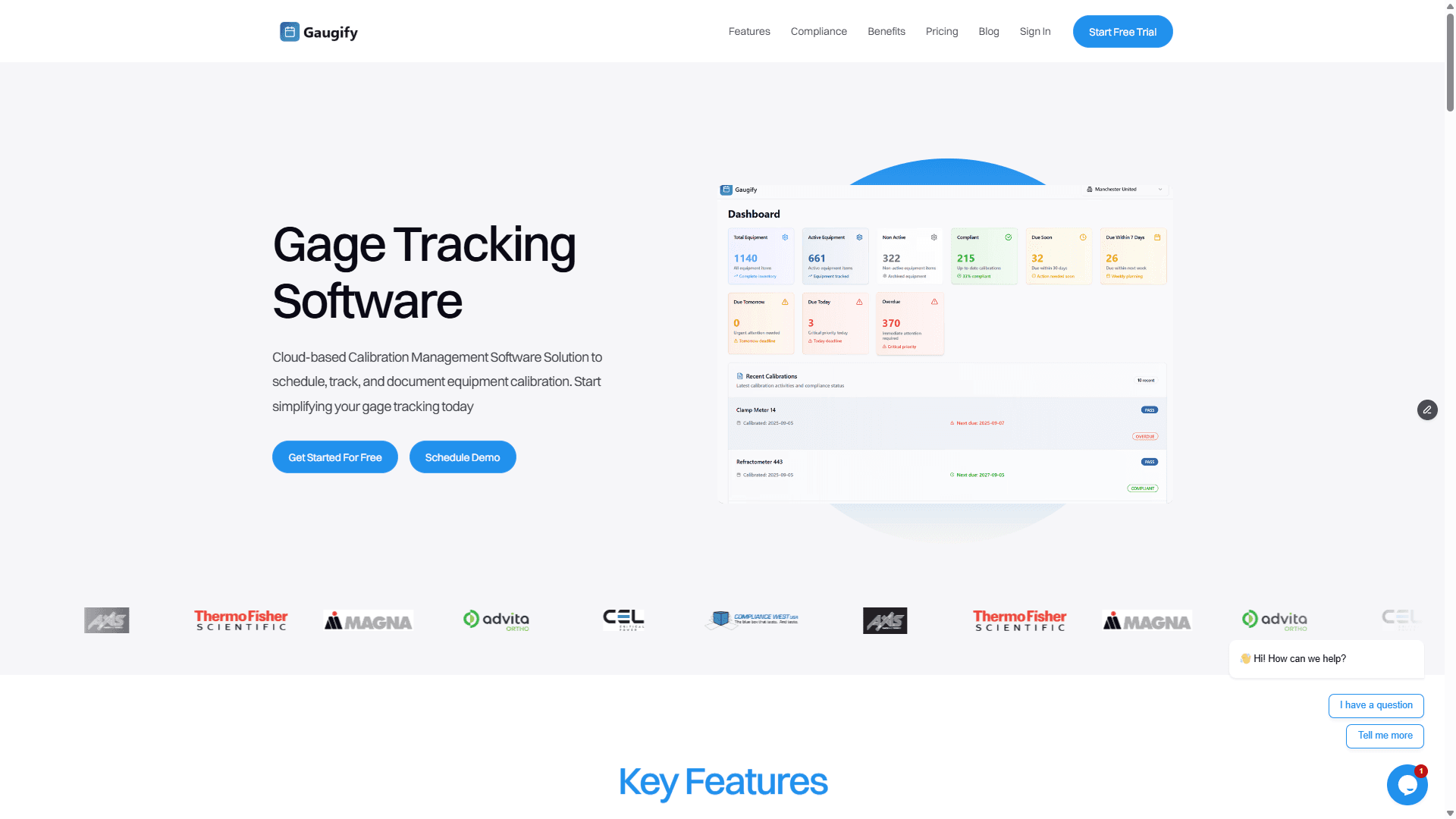
Gaugify's compliance monitoring capabilities provide construction managers with real-time visibility into calibration status across all projects and equipment. The dashboard immediately identifies equipment approaching calibration due dates, expired certificates, or instruments used outside their calibration periods.
Automated compliance reports generate the exact documentation auditors and project owners expect. DOT project reports include calibration certificates for all materials testing equipment used during specific construction phases, with clear traceability to NIST standards and uncertainty calculations appropriate for the testing application.
The system maintains complete audit trails showing who used which equipment, when calibrations were performed, and whether instruments remained compliant throughout testing periods. This information proves invaluable during third-party audits or disputes about test result validity.
Integration with Project Management and Quality Systems
Construction companies using project management software can integrate Gaugify's calibration data directly into their existing workflows. When scheduling concrete pours or structural testing, project managers receive automatic notifications about equipment calibration status, preventing delays due to out-of-calibration instruments.
Quality management system integration ensures calibration requirements align with project specifications and quality plans. The software automatically updates calibration intervals when project specs exceed standard requirements, such as when owners specify more stringent accuracy requirements for critical structural elements.
Implementing Calibration Management Software in Construction Operations
Successful implementation of calibration management software in construction requires careful planning and consideration of the industry's unique operational challenges. The implementation process must account for multiple job sites, varied equipment types, and diverse user skill levels.
Equipment Inventory and Baseline Assessment
The first step involves creating a comprehensive inventory of all calibration-sensitive equipment across all company locations and active projects. This includes not just obvious measurement instruments like calipers and torque wrenches, but also embedded instruments in concrete testing machines, environmental monitoring equipment, and safety testing apparatus.
Each piece of equipment requires documentation of its current calibration status, manufacturer specifications, accuracy requirements, and usage patterns. Construction companies often discover significant gaps in their calibration programs during this assessment, finding equipment that should be calibrated but isn't currently tracked.
Establishing Risk-Based Calibration Intervals
Construction environments subject equipment to harsh conditions that can accelerate drift and reduce calibration intervals. Gaugify's ISO 17025-compliant calibration management helps establish appropriate intervals based on equipment criticality, usage patterns, and environmental conditions.
High-impact equipment like concrete compression testing machines might require semi-annual calibration instead of the typical annual cycle due to continuous heavy use. Conversely, backup instruments used infrequently might safely extend to 18-month intervals with proper intermediate checks.
Training and Change Management
Construction personnel often resist new technology, making change management crucial for successful calibration software implementation. Training programs must address diverse skill levels, from experienced quality managers to entry-level technicians who may be uncomfortable with digital systems.
Mobile-first training approaches work best in construction environments. Short video tutorials accessible on smartphones teach specific tasks like scanning QR codes to check equipment status or uploading calibration certificates from the field. Hands-on training sessions at actual job sites demonstrate real-world application scenarios.
Measuring ROI and Success in Construction Calibration Management
Construction companies implementing calibration management software typically see measurable returns within the first year of operation. These benefits extend beyond simple cost savings to include risk reduction, improved efficiency, and enhanced competitive positioning.
Cost Reduction and Efficiency Gains
Administrative time savings represent the most immediate benefit. Companies report 60-80% reductions in time spent managing calibration schedules, tracking certificates, and preparing audit documentation. A mid-size construction company with 200 pieces of calibration equipment might save 15-20 hours per week in administrative tasks.
Reduced emergency calibrations and expedited services provide significant cost savings. When equipment goes out of calibration unexpectedly, emergency calibration services can cost 200-300% of regular pricing. Proactive scheduling prevents these premium charges while ensuring continuous equipment availability.
Risk Mitigation and Compliance Benefits
Avoided compliance violations and project delays represent substantial value that's often difficult to quantify until problems occur. A single instance of using out-of-calibration testing equipment on a DOT project can result in work stoppages, retesting requirements, and contract penalties exceeding $50,000.
Insurance benefits may include reduced premiums for companies demonstrating robust quality management systems. Some insurers offer discounts for construction companies with documented calibration management programs that reduce the likelihood of quality-related claims.
Competitive Advantages and Business Growth
Sophisticated calibration management capabilities help construction companies qualify for higher-value projects with stringent quality requirements. Government contracts, infrastructure projects, and commercial work for quality-conscious owners often require evidence of robust calibration programs during the bidding process.
The ability to provide immediate, detailed calibration documentation gives companies competitive advantages when responding to RFPs or undergoing prequalification reviews. Owners increasingly view calibration management sophistication as an indicator of overall quality management competency.
Future Trends in Construction Calibration Management
The construction industry's calibration management landscape continues evolving with new technologies and changing regulatory requirements. Understanding these trends helps companies prepare for future challenges and opportunities.
IoT Integration and Smart Calibration
Internet of Things (IoT) sensors embedded in construction equipment provide continuous monitoring of calibration status and equipment condition. Smart torque wrenches track usage cycles and environmental exposure, automatically adjusting calibration intervals based on actual conditions rather than arbitrary time periods.
Wireless sensors monitor environmental conditions that affect calibration stability, such as temperature fluctuations, vibration levels, and humidity exposure. This data feeds into predictive algorithms that optimize calibration schedules and identify equipment requiring more frequent attention.
Blockchain and Digital Certificates
Blockchain technology promises to revolutionize calibration certificate management by providing tamper-proof documentation and automatic verification of calibration provider credentials. Digital certificates with blockchain verification eliminate concerns about fraudulent calibration documentation while streamlining the audit process.
Smart contracts could automatically trigger recalibration schedules, payment processing, and compliance notifications without manual intervention. This technology particularly benefits large construction companies managing hundreds of instruments across multiple projects and geographic regions.
Construction companies serious about calibration management can no longer afford manual, error-prone tracking systems. The complexity of modern construction projects, combined with increasing regulatory scrutiny and owner quality requirements, demands sophisticated calibration management solutions.
Gaugify provides construction companies with the tools needed to maintain compliance, reduce costs, and improve operational efficiency across all calibration management activities. From automated scheduling and certificate management to comprehensive audit trails and compliance reporting, Gaugify addresses every aspect of construction calibration challenges.
Transform your construction calibration management today. Schedule a personalized demo to see how Gaugify can eliminate calibration compliance risks while reducing administrative overhead. Join the growing number of construction companies discovering that professional calibration management isn't just about compliance—it's about competitive advantage, risk reduction, and operational excellence.
Don't let calibration management become the weak link in your quality system. Explore Gaugify's flexible pricing options and discover why construction companies across North America trust Gaugify for their most critical calibration management requirements.
Calibration Management Software for Construction Companies
Construction companies face unique calibration challenges that can derail projects, compromise safety, and trigger costly compliance failures. With millions of dollars in equipment spread across multiple job sites, maintaining accurate calibration records while meeting strict regulatory requirements demands more than spreadsheets and paper certificates. Modern calibration management software construction solutions are transforming how contractors manage their measurement equipment, from torque wrenches on high-rise builds to concrete testing equipment on infrastructure projects.
The construction industry's calibration landscape is particularly complex because equipment moves frequently between sites, operates in harsh environments, and must meet various standards depending on project specifications. A single miscalibrated piece of equipment can lead to structural failures, regulatory violations, or project delays that cost thousands per day.
Critical Equipment Requiring Calibration in Construction
Construction companies rely on dozens of precision instruments that require regular calibration to ensure structural integrity and safety compliance. Understanding which equipment needs calibration—and how often—is the foundation of effective calibration management.
Structural and Safety Testing Equipment
Concrete testing equipment forms the backbone of quality assurance in construction. Compression testing machines used for concrete cylinder tests must maintain accuracy within ±1% of the applied load, typically requiring annual calibration with certified load cells. Schmidt hammers for non-destructive concrete strength testing need calibration against standard test anvils to ensure readings correlate properly with actual compressive strength values.
Rebar locators and cover meters require calibration using standard test blocks with known rebar positions and cover depths. These devices, critical for structural integrity verification, can drift significantly in harsh construction environments and may need quarterly calibration cycles.
Dimensional Measurement and Survey Instruments
Total stations and theodolites demand precision calibration for angle measurements (typically ±2" accuracy) and distance measurements. Construction-grade laser levels require both horizontal and vertical accuracy verification, usually within ±1/8" over 100 feet. Digital calipers and micrometers used for bolt and fastener verification need calibration certificates showing traceability to NIST standards.
Ultrasonic thickness gauges, essential for structural steel inspection, require calibration using certified test blocks of known thickness. These instruments can lose accuracy due to temperature fluctuations and physical shock common on construction sites.
Torque and Force Measurement Tools
Torque wrenches represent one of the most frequently calibrated tools in construction. Critical bolted connections in structural steel, bridge construction, and heavy machinery assembly require torque values within ±4% of specification. A torque wrench calibrated for 200 ft-lbs must maintain accuracy within ±8 ft-lbs to meet most construction specifications.
Hydraulic jacks and load cells used in post-tensioning applications require calibration with certified dead weights or master load cells. These tools often handle loads exceeding 100,000 pounds, making accuracy crucial for structural safety.
Regulatory Standards and Compliance Requirements for Construction Calibration Management Software
Construction companies must navigate a complex web of standards and regulations that mandate specific calibration requirements. Understanding these requirements is essential for maintaining compliance and avoiding costly project delays.
ASTM and ACI Standards
ASTM standards dominate construction material testing requirements. ASTM C39 specifies calibration requirements for concrete compression testing machines, mandating annual verification with certified proving rings or load cells. The standard requires calibration at multiple load points across the machine's range, with accuracy verified to within ±1.0% of the applied load.
ASTM C805 governs Schmidt hammer calibration, requiring verification against standard test anvils with specific rebound values. ACI 318 building code references these ASTM standards, making calibration compliance a legal requirement for many construction projects.
DOT and Infrastructure Requirements
Department of Transportation projects impose stringent calibration requirements. State DOTs typically require calibration certificates for all testing equipment used in materials acceptance testing. Nuclear density gauges used for soil compaction testing must maintain calibration traceable to NIST standards, with daily reference standard checks and annual comprehensive calibrations.
Bridge construction projects often reference AASHTO standards, which mandate specific calibration intervals for structural testing equipment. Non-compliance can result in work stoppages and require expensive retesting of completed work.
OSHA and Safety Compliance
OSHA regulations indirectly impact calibration requirements through safety standards. Crane load testing equipment, fall protection testing apparatus, and confined space monitoring instruments must maintain calibration to ensure worker safety compliance. While OSHA doesn't specify calibration intervals, the agency expects employers to ensure equipment accuracy through "recognized and generally accepted good engineering practices."
Common Construction Calibration Audit Scenarios
Construction companies face various audit scenarios where calibration management becomes critical to project success and regulatory compliance. Understanding what auditors examine helps companies prepare comprehensive calibration programs.
Third-Party Quality Audits
Independent testing agencies conducting materials verification audits focus heavily on calibration records. Auditors typically request calibration certificates for the past 12-24 months, looking for evidence that equipment remained in calibration during testing periods. They examine calibration intervals to ensure they align with manufacturer recommendations and industry standards.
A concrete testing laboratory audit might reveal that compression testing machines used for acceptance testing lacked current calibration during critical pour dates. This discovery could invalidate months of test results and require expensive core sampling to verify concrete strength.
Owner and General Contractor QA/QC Reviews
Project owners increasingly conduct detailed equipment calibration reviews before approving subcontractors. These reviews examine calibration certificates, uncertainty calculations, and traceability documentation. Owners want assurance that measurement equipment meets project specifications and maintains accuracy throughout the construction phase.
A recent highway project audit revealed that a subcontractor's nuclear density gauges had expired calibrations during the final month of paving operations. The discovery required expensive coring and laboratory density testing to validate completed work, delaying project completion by three weeks.
Regulatory Agency Inspections
Federal and state agencies conducting construction oversight examine calibration records as part of compliance verification. EPA inspectors reviewing environmental monitoring equipment, DOT inspectors examining materials testing apparatus, and building officials checking structural testing equipment all focus on calibration compliance.
These inspectors look for complete audit trails showing when equipment was calibrated, by whom, and whether it remained in calibration during use. Missing or expired calibrations can trigger work stoppages and compliance violations.
How Calibration Management Software Construction Solutions Address Industry Pain Points
Modern calibration management software addresses the specific challenges construction companies face in maintaining equipment accuracy and compliance across multiple project sites. Gaugify's comprehensive calibration management features are designed specifically for the construction industry's unique requirements.
Multi-Site Equipment Tracking and Scheduling
Construction equipment constantly moves between job sites, making traditional calibration tracking nearly impossible with spreadsheets. Gaugify's cloud-based platform tracks equipment location and automatically adjusts calibration schedules based on usage patterns and environmental conditions.
When a torque wrench moves from an indoor assembly shop to an outdoor structural steel project, the system can automatically shorten the calibration interval due to increased environmental stress. GPS integration shows exactly where equipment was located during specific calibration periods, providing crucial audit trail information.
The software sends automated alerts to site supervisors when equipment approaches calibration due dates, preventing the use of out-of-calibration instruments. Mobile notifications ensure field personnel receive timely reminders even when working at remote construction sites without consistent internet connectivity.
Automated Certificate Management and Compliance Tracking
Manual certificate management creates significant compliance risks in construction environments. Gaugify automatically imports calibration certificates from accredited laboratories and validates them against equipment specifications and project requirements.
The system flags certificates with insufficient measurement points, incorrect uncertainty calculations, or missing traceability information before equipment returns to service. For concrete testing equipment, Gaugify verifies that calibration certificates include the required load points specified in ASTM C39, preventing costly audit findings.
Certificate storage includes full revision history, allowing auditors to review calibration trends over time. When project specifications change, the system automatically identifies equipment that may need recalibration or additional verification to meet new requirements.
Ready to eliminate calibration compliance risks from your construction projects? Start your free 30-day trial and see how Gaugify transforms construction calibration management in just minutes.
Real-Time Compliance Monitoring and Reporting
Gaugify's compliance monitoring capabilities provide construction managers with real-time visibility into calibration status across all projects and equipment. The dashboard immediately identifies equipment approaching calibration due dates, expired certificates, or instruments used outside their calibration periods.
Automated compliance reports generate the exact documentation auditors and project owners expect. DOT project reports include calibration certificates for all materials testing equipment used during specific construction phases, with clear traceability to NIST standards and uncertainty calculations appropriate for the testing application.
The system maintains complete audit trails showing who used which equipment, when calibrations were performed, and whether instruments remained compliant throughout testing periods. This information proves invaluable during third-party audits or disputes about test result validity.
Integration with Project Management and Quality Systems
Construction companies using project management software can integrate Gaugify's calibration data directly into their existing workflows. When scheduling concrete pours or structural testing, project managers receive automatic notifications about equipment calibration status, preventing delays due to out-of-calibration instruments.
Quality management system integration ensures calibration requirements align with project specifications and quality plans. The software automatically updates calibration intervals when project specs exceed standard requirements, such as when owners specify more stringent accuracy requirements for critical structural elements.
Implementing Calibration Management Software in Construction Operations
Successful implementation of calibration management software in construction requires careful planning and consideration of the industry's unique operational challenges. The implementation process must account for multiple job sites, varied equipment types, and diverse user skill levels.
Equipment Inventory and Baseline Assessment
The first step involves creating a comprehensive inventory of all calibration-sensitive equipment across all company locations and active projects. This includes not just obvious measurement instruments like calipers and torque wrenches, but also embedded instruments in concrete testing machines, environmental monitoring equipment, and safety testing apparatus.
Each piece of equipment requires documentation of its current calibration status, manufacturer specifications, accuracy requirements, and usage patterns. Construction companies often discover significant gaps in their calibration programs during this assessment, finding equipment that should be calibrated but isn't currently tracked.
Establishing Risk-Based Calibration Intervals
Construction environments subject equipment to harsh conditions that can accelerate drift and reduce calibration intervals. Gaugify's ISO 17025-compliant calibration management helps establish appropriate intervals based on equipment criticality, usage patterns, and environmental conditions.
High-impact equipment like concrete compression testing machines might require semi-annual calibration instead of the typical annual cycle due to continuous heavy use. Conversely, backup instruments used infrequently might safely extend to 18-month intervals with proper intermediate checks.
Training and Change Management
Construction personnel often resist new technology, making change management crucial for successful calibration software implementation. Training programs must address diverse skill levels, from experienced quality managers to entry-level technicians who may be uncomfortable with digital systems.
Mobile-first training approaches work best in construction environments. Short video tutorials accessible on smartphones teach specific tasks like scanning QR codes to check equipment status or uploading calibration certificates from the field. Hands-on training sessions at actual job sites demonstrate real-world application scenarios.
Measuring ROI and Success in Construction Calibration Management
Construction companies implementing calibration management software typically see measurable returns within the first year of operation. These benefits extend beyond simple cost savings to include risk reduction, improved efficiency, and enhanced competitive positioning.
Cost Reduction and Efficiency Gains
Administrative time savings represent the most immediate benefit. Companies report 60-80% reductions in time spent managing calibration schedules, tracking certificates, and preparing audit documentation. A mid-size construction company with 200 pieces of calibration equipment might save 15-20 hours per week in administrative tasks.
Reduced emergency calibrations and expedited services provide significant cost savings. When equipment goes out of calibration unexpectedly, emergency calibration services can cost 200-300% of regular pricing. Proactive scheduling prevents these premium charges while ensuring continuous equipment availability.
Risk Mitigation and Compliance Benefits
Avoided compliance violations and project delays represent substantial value that's often difficult to quantify until problems occur. A single instance of using out-of-calibration testing equipment on a DOT project can result in work stoppages, retesting requirements, and contract penalties exceeding $50,000.
Insurance benefits may include reduced premiums for companies demonstrating robust quality management systems. Some insurers offer discounts for construction companies with documented calibration management programs that reduce the likelihood of quality-related claims.
Competitive Advantages and Business Growth
Sophisticated calibration management capabilities help construction companies qualify for higher-value projects with stringent quality requirements. Government contracts, infrastructure projects, and commercial work for quality-conscious owners often require evidence of robust calibration programs during the bidding process.
The ability to provide immediate, detailed calibration documentation gives companies competitive advantages when responding to RFPs or undergoing prequalification reviews. Owners increasingly view calibration management sophistication as an indicator of overall quality management competency.
Future Trends in Construction Calibration Management
The construction industry's calibration management landscape continues evolving with new technologies and changing regulatory requirements. Understanding these trends helps companies prepare for future challenges and opportunities.
IoT Integration and Smart Calibration
Internet of Things (IoT) sensors embedded in construction equipment provide continuous monitoring of calibration status and equipment condition. Smart torque wrenches track usage cycles and environmental exposure, automatically adjusting calibration intervals based on actual conditions rather than arbitrary time periods.
Wireless sensors monitor environmental conditions that affect calibration stability, such as temperature fluctuations, vibration levels, and humidity exposure. This data feeds into predictive algorithms that optimize calibration schedules and identify equipment requiring more frequent attention.
Blockchain and Digital Certificates
Blockchain technology promises to revolutionize calibration certificate management by providing tamper-proof documentation and automatic verification of calibration provider credentials. Digital certificates with blockchain verification eliminate concerns about fraudulent calibration documentation while streamlining the audit process.
Smart contracts could automatically trigger recalibration schedules, payment processing, and compliance notifications without manual intervention. This technology particularly benefits large construction companies managing hundreds of instruments across multiple projects and geographic regions.
Construction companies serious about calibration management can no longer afford manual, error-prone tracking systems. The complexity of modern construction projects, combined with increasing regulatory scrutiny and owner quality requirements, demands sophisticated calibration management solutions.
Gaugify provides construction companies with the tools needed to maintain compliance, reduce costs, and improve operational efficiency across all calibration management activities. From automated scheduling and certificate management to comprehensive audit trails and compliance reporting, Gaugify addresses every aspect of construction calibration challenges.
Transform your construction calibration management today. Schedule a personalized demo to see how Gaugify can eliminate calibration compliance risks while reducing administrative overhead. Join the growing number of construction companies discovering that professional calibration management isn't just about compliance—it's about competitive advantage, risk reduction, and operational excellence.
Don't let calibration management become the weak link in your quality system. Explore Gaugify's flexible pricing options and discover why construction companies across North America trust Gaugify for their most critical calibration management requirements.