
Calibration Workflow Automation: From Recall to Certificate
Calibration Workflow Automation: From Recall to Certificate
David Bentley
Quality Assurance Engineer
8 min read
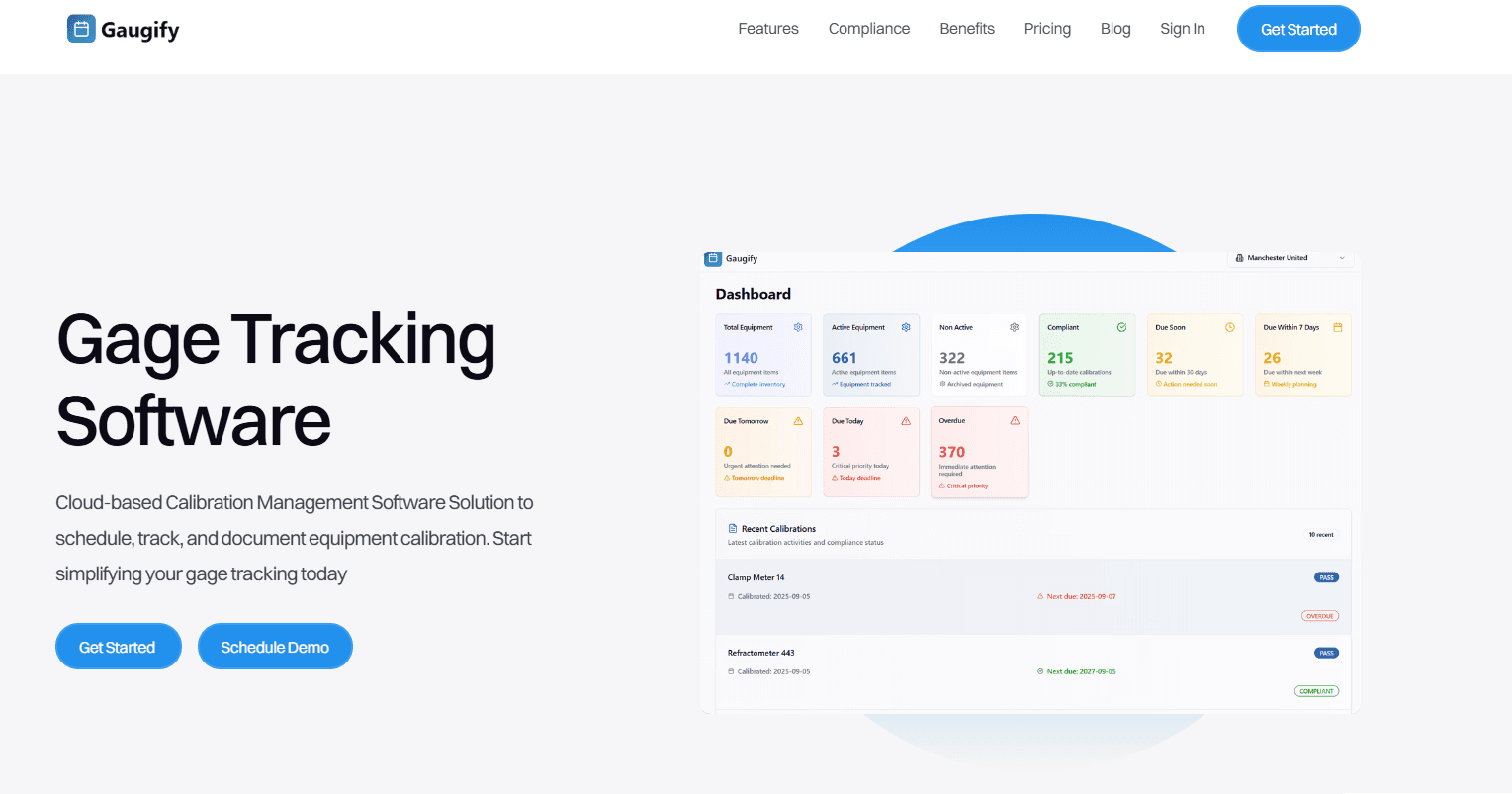
Calibration Workflow Automation: From Recall to Certificate
Managing calibration schedules, tracking instrument status, and generating compliance certificates can consume hours of your quality team's time each week. Calibration workflow automation transforms this manual burden into a streamlined, intelligent process that runs in the background while your team focuses on higher-value activities. Instead of chasing down overdue micrometers or manually typing calibration certificates, automated workflows handle everything from initial recall notifications to final certificate delivery.
For quality managers overseeing hundreds of instruments across multiple locations, calibration workflow automation isn't just a convenience—it's essential for maintaining compliance without drowning in administrative tasks. Modern calibration management systems like Gaugify have evolved far beyond simple reminder systems to offer complete end-to-end automation that integrates with your existing quality processes.
The Hidden Costs of Manual Calibration Management
Without calibration workflow automation, most shops rely on a patchwork of spreadsheets, calendar reminders, and paper-based processes that create multiple failure points. Consider what happens when a Mitutoyo digital caliper with a ±0.0005" tolerance specification is due for calibration:
Someone must manually check the due date and create a work order
The instrument needs to be physically located and removed from service
Calibration results must be manually entered and reviewed for acceptance criteria
Certificates require manual generation with proper traceability documentation
The instrument status must be updated across multiple systems
Stakeholders need manual notification of completion and any issues
This manual process typically takes 15-30 minutes per instrument, not including the time spent tracking down overdue items or fixing data entry errors. For a shop with 500 instruments, that's over 125 hours of administrative work annually—time that could be spent on process improvements or actual calibration work.
The compliance risks are even more significant. During an ISO 9001 audit, missing or delayed calibrations can result in major nonconformities. Manual processes make it difficult to demonstrate that your calibration program is truly under control, especially when auditors start asking detailed questions about traceability and recall effectiveness.
How Calibration Workflow Automation Works in Practice
Modern calibration workflow automation creates an intelligent system that manages the entire calibration lifecycle without manual intervention. Here's how it works from the moment an instrument is added to your system:
Intelligent Recall Management
The system automatically calculates due dates based on calibration intervals, usage patterns, and risk factors. For critical instruments like pressure transducers used in aerospace applications, the system can implement shorter intervals or additional monitoring triggers. Automated recall notices go out at configurable intervals—typically 30, 14, and 7 days before the due date—with escalation to supervisors if items remain overdue.
Dynamic Work Order Generation
When calibration is due, the system automatically generates work orders with all relevant information: instrument specifications, previous calibration results, required test points, and acceptance criteria. For a Fluke 87V multimeter, the work order would include specific test voltages, accuracy requirements, and environmental conditions needed for proper calibration.
Real-Time Data Integration
During calibration, technicians can enter results directly into mobile devices or integrate with automated calibration systems. The software immediately evaluates results against acceptance criteria, flagging any instruments that fail or require adjustment. This real-time validation prevents instruments from being returned to service with questionable calibration status.
Ready to eliminate manual calibration tasks from your quality program? Start your free trial and experience fully automated calibration workflows that save time while improving compliance.
Automated Certificate Generation and Distribution
Once calibration is complete and results are approved, the system automatically generates certificates with proper formatting, traceability information, and digital signatures. Certificates are distributed to designated stakeholders via email, with copies stored in the system for audit trail purposes. The instrument status is automatically updated across all connected systems.
Measuring the ROI of Calibration Workflow Automation
The return on investment for calibration workflow automation typically becomes apparent within the first quarter of implementation. Consider these quantifiable benefits:
Time Savings
Automated workflows reduce administrative time per instrument from 20-30 minutes to less than 5 minutes. For organizations with 1,000+ instruments, this translates to 250+ hours saved annually—equivalent to hiring an additional part-time quality technician.
Improved Compliance Rates
Automated recall systems typically achieve 98%+ on-time calibration rates compared to 85-90% for manual systems. This improvement reduces compliance risk and eliminates the costs associated with production holds due to expired calibrations.
Reduced Errors and Rework
Automated data validation and certificate generation eliminate transcription errors that plague manual systems. Quality managers report 75% fewer certificate corrections and reissues after implementing workflow automation.
Enhanced Audit Performance
Automated systems provide complete audit trails and instant access to calibration records. Organizations typically reduce audit preparation time by 60% while improving audit outcomes due to better documentation and compliance demonstration.
Supporting Multi-Standard Compliance Through Automated Calibration Workflows
Different industries and applications require compliance with various standards, each with specific calibration and documentation requirements. Calibration workflow automation adapts to support multiple compliance frameworks simultaneously:
ISO 9001 Quality Management
The standard requires organizations to determine and provide resources needed for monitoring and measurement activities. Automated workflows ensure instruments are calibrated according to planned arrangements, with clear evidence of calibration status and traceability to measurement standards.
ISO 17025 Laboratory Requirements
For organizations operating calibration laboratories, ISO 17025 compliance demands rigorous measurement traceability and uncertainty calculations. Automated workflows can incorporate measurement uncertainty propagation and maintain unbroken traceability chains to national standards.
FDA 21 CFR Part 820
Medical device manufacturers must maintain equipment used in production under strict calibration controls. Automated workflows provide the required documentation and ensure calibration schedules align with production requirements and risk management protocols.
AS9100 Aerospace Requirements
Aerospace applications often require enhanced calibration documentation and shorter intervals for critical measurements. Automated workflows can implement special handling requirements and generate the detailed documentation needed for aerospace compliance.
The compliance features in modern calibration management systems ensure that automated workflows align with your specific regulatory requirements while maintaining the flexibility to adapt as standards evolve.
Beyond Basic Automation: Advanced Workflow Capabilities
Leading calibration workflow automation goes beyond simple scheduling and reminders to offer sophisticated capabilities that optimize calibration programs:
Risk-Based Calibration Intervals
Advanced systems analyze calibration history, usage patterns, and measurement criticality to recommend optimal calibration intervals. A torque wrench used for critical fasteners in automotive assembly might automatically receive shorter intervals based on usage data and failure consequences.
Predictive Maintenance Integration
By analyzing trends in calibration results, automated systems can predict when instruments are likely to drift out of tolerance. This predictive capability enables proactive maintenance and prevents unexpected calibration failures that could impact production.
Multi-Location Coordination
For organizations with multiple facilities, advanced workflow automation coordinates calibration schedules across locations, optimizes calibrator utilization, and ensures consistent procedures regardless of where calibration is performed.
Vendor Management Integration
When instruments require external calibration, automated workflows can generate purchase orders, track instruments through the vendor process, and automatically update records when calibrated instruments are returned.
Implementation Best Practices for Maximum Automation Benefits
Successful calibration workflow automation requires careful planning and implementation. Quality managers should focus on these key areas:
Data Migration and Cleanup
Before implementing automation, clean up existing calibration data to ensure accuracy. This includes verifying instrument specifications, updating calibration procedures, and establishing clear acceptance criteria for all measurement points.
Process Standardization
Automated workflows work best when underlying processes are standardized. Document calibration procedures, establish clear approval workflows, and define escalation procedures for out-of-tolerance results.
User Training and Change Management
Even automated systems require user interaction at key points. Ensure technicians understand how to use mobile interfaces for data entry and that supervisors know how to interpret automated reports and exception notifications.
Integration with Existing Systems
Modern calibration management systems offer APIs and integrations with ERP systems, quality management software, and other business applications. Plan these integrations early to maximize automation benefits.
Comparing Automation Approaches: Cloud vs. Legacy Solutions
Not all calibration workflow automation is created equal. Traditional calibration software often requires significant customization and IT support to achieve meaningful automation, while modern cloud-based solutions like Gaugify offer automation capabilities out of the box.
Legacy Software Limitations
Older calibration management systems typically require manual configuration for each workflow step, limited mobile access, and complex integrations for automated notifications. These systems often fail to deliver true end-to-end automation without significant customization costs.
Modern Cloud-Based Automation
Cloud-based solutions provide pre-configured automation workflows that can be customized through simple interfaces rather than complex programming. Mobile accessibility ensures technicians can interact with automated workflows from any location, while built-in integrations connect with common business systems.
The advanced features available in modern calibration management platforms demonstrate how cloud-based architecture enables more sophisticated automation without the complexity of traditional software implementations.
Future-Proofing Your Calibration Automation Strategy
As Industry 4.0 technologies mature, calibration workflow automation will incorporate even more advanced capabilities:
IoT Sensor Integration
Internet of Things sensors will provide real-time monitoring of instrument conditions, automatically triggering calibration workflows when environmental conditions or usage patterns indicate potential drift.
Machine Learning Optimization
AI algorithms will analyze calibration patterns across entire fleets of instruments to optimize intervals, predict failures, and recommend process improvements based on statistical analysis of calibration data.
Blockchain Traceability
Distributed ledger technology may eventually provide immutable calibration records that enhance traceability and compliance demonstration, particularly for highly regulated industries.
By implementing robust calibration workflow automation today, organizations position themselves to take advantage of these emerging technologies as they become mainstream.
Getting Started with Calibration Workflow Automation
The transition from manual calibration management to full workflow automation doesn't have to be overwhelming. Start with a pilot program covering your most critical instruments or a single facility, then expand automation as you gain experience and confidence with the system.
Modern calibration management platforms make it easy to configure automated workflows without programming or complex setup procedures. Look for solutions that offer:
Pre-built workflow templates for common calibration scenarios
Drag-and-drop workflow customization interfaces
Mobile-friendly technician interfaces
Automated reporting and dashboard capabilities
Built-in compliance features for your industry
Responsive customer support during implementation
The investment in calibration workflow automation pays dividends immediately through reduced administrative burden and improved compliance performance. More importantly, it frees your quality team to focus on value-added activities like process improvement and advanced quality planning rather than routine calibration administration.
Ready to transform your calibration management from a manual burden into an automated competitive advantage? Experience Gaugify's complete calibration workflow automation with a free 14-day trial. See firsthand how automated workflows can eliminate calibration bottlenecks while improving compliance across your entire quality program. Schedule a personalized demo to discuss your specific calibration challenges and discover how workflow automation can drive measurable improvements in your operations.
Calibration Workflow Automation: From Recall to Certificate
Managing calibration schedules, tracking instrument status, and generating compliance certificates can consume hours of your quality team's time each week. Calibration workflow automation transforms this manual burden into a streamlined, intelligent process that runs in the background while your team focuses on higher-value activities. Instead of chasing down overdue micrometers or manually typing calibration certificates, automated workflows handle everything from initial recall notifications to final certificate delivery.
For quality managers overseeing hundreds of instruments across multiple locations, calibration workflow automation isn't just a convenience—it's essential for maintaining compliance without drowning in administrative tasks. Modern calibration management systems like Gaugify have evolved far beyond simple reminder systems to offer complete end-to-end automation that integrates with your existing quality processes.
The Hidden Costs of Manual Calibration Management
Without calibration workflow automation, most shops rely on a patchwork of spreadsheets, calendar reminders, and paper-based processes that create multiple failure points. Consider what happens when a Mitutoyo digital caliper with a ±0.0005" tolerance specification is due for calibration:
Someone must manually check the due date and create a work order
The instrument needs to be physically located and removed from service
Calibration results must be manually entered and reviewed for acceptance criteria
Certificates require manual generation with proper traceability documentation
The instrument status must be updated across multiple systems
Stakeholders need manual notification of completion and any issues
This manual process typically takes 15-30 minutes per instrument, not including the time spent tracking down overdue items or fixing data entry errors. For a shop with 500 instruments, that's over 125 hours of administrative work annually—time that could be spent on process improvements or actual calibration work.
The compliance risks are even more significant. During an ISO 9001 audit, missing or delayed calibrations can result in major nonconformities. Manual processes make it difficult to demonstrate that your calibration program is truly under control, especially when auditors start asking detailed questions about traceability and recall effectiveness.
How Calibration Workflow Automation Works in Practice
Modern calibration workflow automation creates an intelligent system that manages the entire calibration lifecycle without manual intervention. Here's how it works from the moment an instrument is added to your system:
Intelligent Recall Management
The system automatically calculates due dates based on calibration intervals, usage patterns, and risk factors. For critical instruments like pressure transducers used in aerospace applications, the system can implement shorter intervals or additional monitoring triggers. Automated recall notices go out at configurable intervals—typically 30, 14, and 7 days before the due date—with escalation to supervisors if items remain overdue.
Dynamic Work Order Generation
When calibration is due, the system automatically generates work orders with all relevant information: instrument specifications, previous calibration results, required test points, and acceptance criteria. For a Fluke 87V multimeter, the work order would include specific test voltages, accuracy requirements, and environmental conditions needed for proper calibration.
Real-Time Data Integration
During calibration, technicians can enter results directly into mobile devices or integrate with automated calibration systems. The software immediately evaluates results against acceptance criteria, flagging any instruments that fail or require adjustment. This real-time validation prevents instruments from being returned to service with questionable calibration status.
Ready to eliminate manual calibration tasks from your quality program? Start your free trial and experience fully automated calibration workflows that save time while improving compliance.
Automated Certificate Generation and Distribution
Once calibration is complete and results are approved, the system automatically generates certificates with proper formatting, traceability information, and digital signatures. Certificates are distributed to designated stakeholders via email, with copies stored in the system for audit trail purposes. The instrument status is automatically updated across all connected systems.
Measuring the ROI of Calibration Workflow Automation
The return on investment for calibration workflow automation typically becomes apparent within the first quarter of implementation. Consider these quantifiable benefits:
Time Savings
Automated workflows reduce administrative time per instrument from 20-30 minutes to less than 5 minutes. For organizations with 1,000+ instruments, this translates to 250+ hours saved annually—equivalent to hiring an additional part-time quality technician.
Improved Compliance Rates
Automated recall systems typically achieve 98%+ on-time calibration rates compared to 85-90% for manual systems. This improvement reduces compliance risk and eliminates the costs associated with production holds due to expired calibrations.
Reduced Errors and Rework
Automated data validation and certificate generation eliminate transcription errors that plague manual systems. Quality managers report 75% fewer certificate corrections and reissues after implementing workflow automation.
Enhanced Audit Performance
Automated systems provide complete audit trails and instant access to calibration records. Organizations typically reduce audit preparation time by 60% while improving audit outcomes due to better documentation and compliance demonstration.
Supporting Multi-Standard Compliance Through Automated Calibration Workflows
Different industries and applications require compliance with various standards, each with specific calibration and documentation requirements. Calibration workflow automation adapts to support multiple compliance frameworks simultaneously:
ISO 9001 Quality Management
The standard requires organizations to determine and provide resources needed for monitoring and measurement activities. Automated workflows ensure instruments are calibrated according to planned arrangements, with clear evidence of calibration status and traceability to measurement standards.
ISO 17025 Laboratory Requirements
For organizations operating calibration laboratories, ISO 17025 compliance demands rigorous measurement traceability and uncertainty calculations. Automated workflows can incorporate measurement uncertainty propagation and maintain unbroken traceability chains to national standards.
FDA 21 CFR Part 820
Medical device manufacturers must maintain equipment used in production under strict calibration controls. Automated workflows provide the required documentation and ensure calibration schedules align with production requirements and risk management protocols.
AS9100 Aerospace Requirements
Aerospace applications often require enhanced calibration documentation and shorter intervals for critical measurements. Automated workflows can implement special handling requirements and generate the detailed documentation needed for aerospace compliance.
The compliance features in modern calibration management systems ensure that automated workflows align with your specific regulatory requirements while maintaining the flexibility to adapt as standards evolve.
Beyond Basic Automation: Advanced Workflow Capabilities
Leading calibration workflow automation goes beyond simple scheduling and reminders to offer sophisticated capabilities that optimize calibration programs:
Risk-Based Calibration Intervals
Advanced systems analyze calibration history, usage patterns, and measurement criticality to recommend optimal calibration intervals. A torque wrench used for critical fasteners in automotive assembly might automatically receive shorter intervals based on usage data and failure consequences.
Predictive Maintenance Integration
By analyzing trends in calibration results, automated systems can predict when instruments are likely to drift out of tolerance. This predictive capability enables proactive maintenance and prevents unexpected calibration failures that could impact production.
Multi-Location Coordination
For organizations with multiple facilities, advanced workflow automation coordinates calibration schedules across locations, optimizes calibrator utilization, and ensures consistent procedures regardless of where calibration is performed.
Vendor Management Integration
When instruments require external calibration, automated workflows can generate purchase orders, track instruments through the vendor process, and automatically update records when calibrated instruments are returned.
Implementation Best Practices for Maximum Automation Benefits
Successful calibration workflow automation requires careful planning and implementation. Quality managers should focus on these key areas:
Data Migration and Cleanup
Before implementing automation, clean up existing calibration data to ensure accuracy. This includes verifying instrument specifications, updating calibration procedures, and establishing clear acceptance criteria for all measurement points.
Process Standardization
Automated workflows work best when underlying processes are standardized. Document calibration procedures, establish clear approval workflows, and define escalation procedures for out-of-tolerance results.
User Training and Change Management
Even automated systems require user interaction at key points. Ensure technicians understand how to use mobile interfaces for data entry and that supervisors know how to interpret automated reports and exception notifications.
Integration with Existing Systems
Modern calibration management systems offer APIs and integrations with ERP systems, quality management software, and other business applications. Plan these integrations early to maximize automation benefits.
Comparing Automation Approaches: Cloud vs. Legacy Solutions
Not all calibration workflow automation is created equal. Traditional calibration software often requires significant customization and IT support to achieve meaningful automation, while modern cloud-based solutions like Gaugify offer automation capabilities out of the box.
Legacy Software Limitations
Older calibration management systems typically require manual configuration for each workflow step, limited mobile access, and complex integrations for automated notifications. These systems often fail to deliver true end-to-end automation without significant customization costs.
Modern Cloud-Based Automation
Cloud-based solutions provide pre-configured automation workflows that can be customized through simple interfaces rather than complex programming. Mobile accessibility ensures technicians can interact with automated workflows from any location, while built-in integrations connect with common business systems.
The advanced features available in modern calibration management platforms demonstrate how cloud-based architecture enables more sophisticated automation without the complexity of traditional software implementations.
Future-Proofing Your Calibration Automation Strategy
As Industry 4.0 technologies mature, calibration workflow automation will incorporate even more advanced capabilities:
IoT Sensor Integration
Internet of Things sensors will provide real-time monitoring of instrument conditions, automatically triggering calibration workflows when environmental conditions or usage patterns indicate potential drift.
Machine Learning Optimization
AI algorithms will analyze calibration patterns across entire fleets of instruments to optimize intervals, predict failures, and recommend process improvements based on statistical analysis of calibration data.
Blockchain Traceability
Distributed ledger technology may eventually provide immutable calibration records that enhance traceability and compliance demonstration, particularly for highly regulated industries.
By implementing robust calibration workflow automation today, organizations position themselves to take advantage of these emerging technologies as they become mainstream.
Getting Started with Calibration Workflow Automation
The transition from manual calibration management to full workflow automation doesn't have to be overwhelming. Start with a pilot program covering your most critical instruments or a single facility, then expand automation as you gain experience and confidence with the system.
Modern calibration management platforms make it easy to configure automated workflows without programming or complex setup procedures. Look for solutions that offer:
Pre-built workflow templates for common calibration scenarios
Drag-and-drop workflow customization interfaces
Mobile-friendly technician interfaces
Automated reporting and dashboard capabilities
Built-in compliance features for your industry
Responsive customer support during implementation
The investment in calibration workflow automation pays dividends immediately through reduced administrative burden and improved compliance performance. More importantly, it frees your quality team to focus on value-added activities like process improvement and advanced quality planning rather than routine calibration administration.
Ready to transform your calibration management from a manual burden into an automated competitive advantage? Experience Gaugify's complete calibration workflow automation with a free 14-day trial. See firsthand how automated workflows can eliminate calibration bottlenecks while improving compliance across your entire quality program. Schedule a personalized demo to discuss your specific calibration challenges and discover how workflow automation can drive measurable improvements in your operations.