
How to Build a World-Class Calibration Program
How to Build a World-Class Calibration Program
David Bentley
Quality Assurance Engineer
8 min read
How to Build a World-Class Calibration Program
A quality manager at a Tier 1 automotive supplier discovered their nightmare scenario during a customer audit: their CMM hadn't been calibrated in 14 months, yet it had been used to approve thousands of critical suspension components. The customer immediately put them on containment, costing the company $2.3 million in lost contracts. This disaster could have been prevented with a world-class calibration program that ensures every measurement tool is tracked, calibrated on schedule, and audit-ready at all times.
Most manufacturing companies believe they have adequate calibration processes in place. They maintain spreadsheets, set calendar reminders, and trust their technicians to keep everything on track. But when push comes to shove during an ISO 9001 audit or customer quality review, the cracks in their system become glaringly obvious.
The Hidden Reality: Most Calibration Programs Are Barely Functional
Walk into any machine shop, testing lab, or manufacturing facility, and you'll likely find the same story playing out. Quality managers juggle dozens of competing priorities while trying to track hundreds or thousands of instruments manually. A recent industry survey revealed that 73% of manufacturers have experienced at least one calibration-related audit finding in the past two years.
The problem isn't that quality professionals don't understand the importance of calibration. It's that traditional methods—Excel spreadsheets, paper logs, and manual tracking systems—simply cannot scale with modern manufacturing demands. Consider these common scenarios:
A precision torque wrench (±2% accuracy) used for aerospace fasteners sits on the production floor three weeks past its calibration due date
Digital calipers measuring critical dimensions (±0.0005" tolerance) get shuffled between departments with no centralized tracking
Environmental monitoring equipment in pharmaceutical cleanrooms operates with expired calibration certificates
Pressure gauges in chemical processing plants show "overdue" status but continue daily use because nobody noticed
These situations happen every day in facilities that consider themselves quality-focused. The disconnect between intention and execution creates massive risk exposure that most organizations don't recognize until it's too late.
The Real-World Consequences Are Devastating
When calibration programs fail, the consequences extend far beyond a simple audit finding. The financial and operational impact can be catastrophic:
Audit Failures and Customer Losses
A medical device manufacturer lost their largest customer after an FDA inspection revealed 23 instruments operating beyond calibration intervals. The customer terminated a $12 million annual contract, citing concerns about measurement integrity. The company's stock price dropped 15% within a week of the announcement.
Product Liability and Legal Exposure
When measurement systems aren't properly calibrated, companies cannot prove the accuracy of their quality data. This creates legal vulnerability in product liability cases. A construction equipment manufacturer faced a $50 million lawsuit after a crane failure, with calibration records becoming a central issue in determining liability.
Scrap and Rework Costs
Inaccurate measurements lead directly to quality problems. A precision machining company discovered their height gauge was reading 0.003" high, causing them to scrap 2,000 aluminum housings worth $340,000. The parts had been measured as conforming when they were actually undersize.
Regulatory Compliance Failures
Industries like pharmaceuticals, aerospace, and food processing face severe penalties for calibration non-compliance. A pharmaceutical lab received a Warning Letter from the FDA, forcing them to halt production for six weeks while addressing calibration program deficiencies. The shutdown cost them $8.7 million in lost revenue.
Root Causes: Why Calibration Programs Fail
Understanding why most calibration programs struggle is essential for building a world-class calibration program that actually works. The root causes typically fall into several categories:
Manual Processes Can't Scale
Excel spreadsheets and paper-based systems worked when companies had 50 instruments. Modern manufacturers often manage thousands of measurement devices across multiple locations. Manual tracking becomes impossible at this scale, leading to missed due dates and lost instruments.
Lack of Real-Time Visibility
Traditional systems provide snapshots of calibration status, not real-time monitoring. By the time someone reviews the monthly report, critical instruments may have been overdue for weeks. Production continues using questionable measurements because nobody knows there's a problem.
Poor Communication and Coordination
Quality departments, production supervisors, and maintenance teams often operate in silos. An instrument scheduled for calibration might be considered "critical for production" by one group while the quality team marks it as overdue. Without centralized coordination, conflicts arise and calibrations get delayed.
Inadequate Planning and Forecasting
Most companies operate in reactive mode, scrambling to arrange calibrations when instruments are already due. This leads to production disruptions, expedited shipping costs, and the temptation to delay calibrations during busy periods.
Building Your World-Class Calibration Program: A Step-by-Step Solution
Creating a truly effective calibration program requires systematic planning and the right tools. Here's how to build a program that prevents problems instead of reacting to them:
Step 1: Complete Asset Discovery and Documentation
Start with a comprehensive inventory of all measurement equipment. This goes beyond the obvious instruments like micrometers and pressure gauges. Include:
Dimensional measurement tools (calipers, height gauges, CMMs, optical comparators)
Force and torque equipment (torque wrenches, load cells, tension gauges)
Electrical test equipment (multimeters, oscilloscopes, power supplies)
Environmental monitoring devices (temperature/humidity sensors, pressure indicators)
Reference standards and master gages
Portable testing equipment that moves between locations
Document each instrument's specifications, accuracy requirements, and criticality to product quality. A gage measuring ±0.001" tolerances on safety-critical components requires different treatment than a tape measure used for packaging.
Step 2: Establish Risk-Based Calibration Intervals
Not all instruments require the same calibration frequency. Base intervals on:
Usage frequency: Daily-use micrometers may need quarterly calibration while monthly-use equipment can go annually
Environmental conditions: Shop floor instruments face harsher conditions than climate-controlled lab equipment
Measurement criticality: Instruments measuring safety-critical dimensions need shorter intervals
Historical stability: Equipment with consistent performance can potentially extend intervals
Manufacturer recommendations: Starting point for initial intervals
A precision boring head measuring bearing bores to ±0.0002" tolerances in an engine plant might require monthly calibration, while a general-purpose caliper used for rough measurements could go annually.
Step 3: Implement Automated Tracking and Notifications
Manual tracking systems fail because they rely on people remembering to check status regularly. Modern calibration management requires automated systems that provide real-time visibility and proactive notifications. Key capabilities include:
Automated email alerts for upcoming due dates (30, 14, and 7 days in advance)
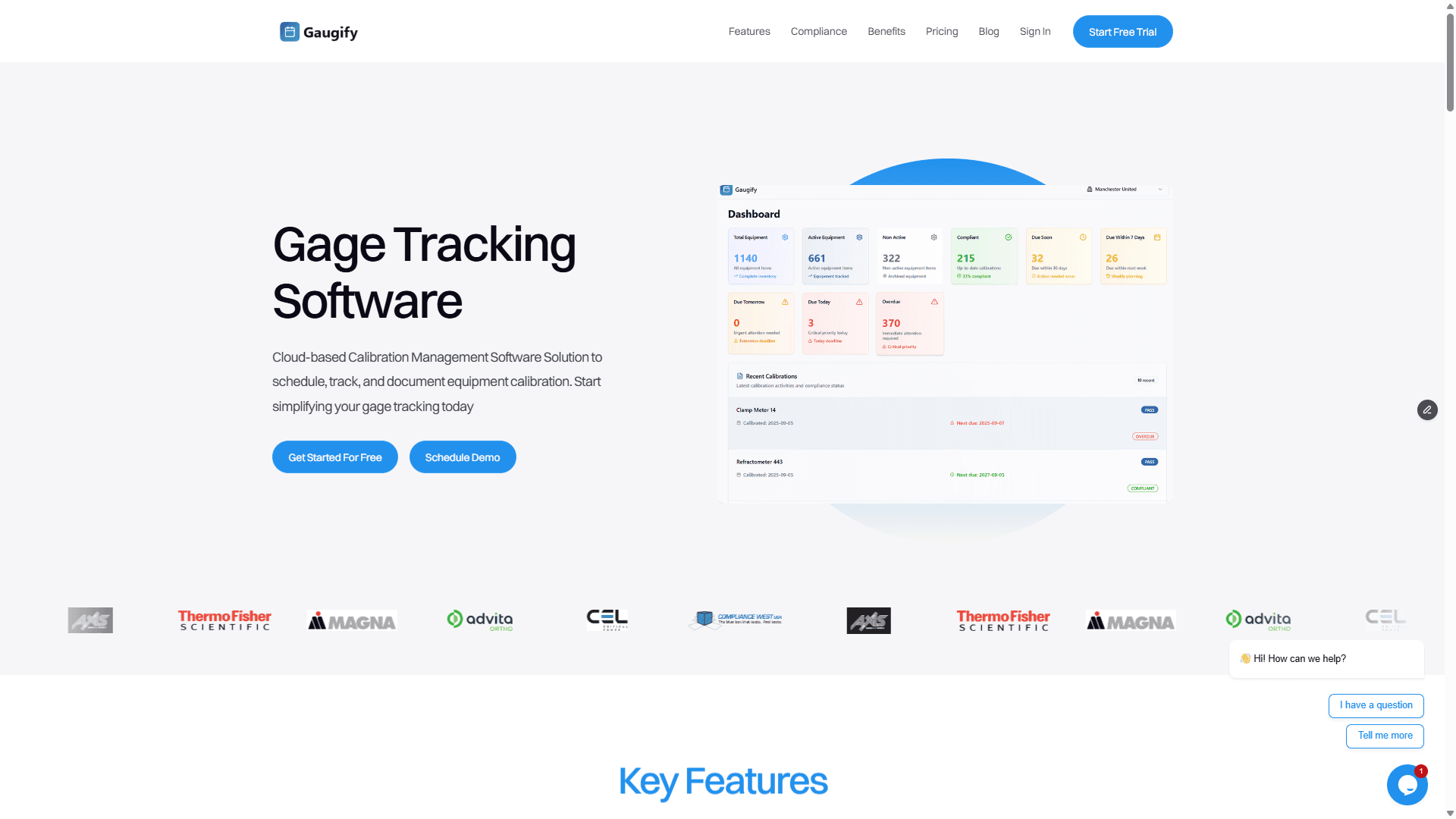
Real-time dashboard showing overdue instruments and those approaching due dates
Mobile access for shop floor personnel to check calibration status instantly
Integration with existing ERP or quality management systems
Start your free trial of Gaugify today to experience how automated calibration management eliminates the guesswork and manual effort that causes most programs to fail.
Step 4: Standardize Calibration Procedures and Documentation
Consistent procedures ensure calibrations meet requirements regardless of who performs them. Develop standard work instructions that specify:
Pre-calibration checks and cleaning procedures
Required test points and acceptance criteria
Environmental conditions for calibration
Documentation requirements and certificate formats
Post-calibration verification steps
For example, calibrating a digital torque wrench might require testing at 20%, 50%, and 100% of full scale in both clockwise and counterclockwise directions, with acceptance criteria of ±4% of reading.
Step 5: Establish Vendor Management and Qualification
External calibration providers must meet the same quality standards as internal processes. Qualified vendors should demonstrate:
Accreditation to ISO/IEC 17025 for relevant measurement parameters
Traceability to national standards (NIST, PTB, etc.)
Appropriate uncertainty ratios (typically 4:1 or better)
Documented quality system and change control procedures
Ability to provide certificates meeting your format requirements
Step 6: Create Effective Training and Communication
Even the best system fails without proper training and communication. Ensure all stakeholders understand:
How to check calibration status before using equipment
Procedures for handling overdue or damaged instruments
Requirements for environmental conditions during use
Proper care and storage of precision instruments
When to request recalibration or repair services
How Modern Calibration Software Prevents These Problems
A world-class calibration program requires more than good intentions and manual processes. It demands sophisticated software that automates routine tasks while providing the visibility and control that quality managers need.
Gaugify's cloud-based calibration management platform addresses the root causes that make traditional programs fail:
Proactive Monitoring and Alerts
Instead of discovering overdue instruments during monthly reviews, Gaugify provides real-time monitoring with automated alerts. Quality managers receive notifications when calibrations are approaching due dates, allowing them to plan services without disrupting production schedules.
Complete Audit Trail and Documentation
Every calibration event, status change, and system access is automatically logged with timestamps and user identification. When auditors ask for calibration records, you can instantly generate comprehensive reports showing compliance status across your entire program. Learn more about Gaugify's compliance features that satisfy ISO 9001, ISO/IEC 17025, and industry-specific requirements.
Mobile Access and Barcode Integration
Shop floor personnel can instantly check calibration status using smartphones or tablets. Barcode scanning eliminates manual lookups and reduces the chance of using overdue equipment. If an instrument is past due, the system immediately alerts the user and prevents its use until recalibrated.
Advanced Reporting and Analytics
Understanding program performance requires detailed analytics that manual systems cannot provide. Gaugify tracks key metrics like on-time calibration rates, vendor performance, cost per instrument, and calibration interval effectiveness. This data enables continuous improvement of your calibration program.
Scalable Architecture
Whether you manage 100 instruments at a single location or 10,000 devices across multiple facilities, cloud-based calibration management scales effortlessly. New locations, departments, or instrument types can be added without IT infrastructure changes or system limitations.
Transform Your Calibration Program Today
Building a world-class calibration program isn't just about avoiding audit findings or regulatory compliance. It's about creating a foundation of measurement integrity that supports quality, reduces costs, and protects your company's reputation. The difference between adequate and excellent calibration management often determines which companies thrive and which struggle with quality problems.
The automotive supplier mentioned at the beginning of this article learned this lesson the hard way. Don't wait for a crisis to expose weaknesses in your calibration program. Take action now to implement the systematic approach that prevents problems before they occur.
Modern calibration management software like Gaugify eliminates the manual processes and visibility gaps that cause traditional programs to fail. With automated tracking, proactive notifications, and comprehensive reporting, you can build the world-class program your organization needs to compete effectively.
Start your free trial today and discover how easy it is to transform your calibration program from a source of stress into a competitive advantage. See firsthand how automated calibration management prevents the costly problems that manual systems cannot avoid.
How to Build a World-Class Calibration Program
A quality manager at a Tier 1 automotive supplier discovered their nightmare scenario during a customer audit: their CMM hadn't been calibrated in 14 months, yet it had been used to approve thousands of critical suspension components. The customer immediately put them on containment, costing the company $2.3 million in lost contracts. This disaster could have been prevented with a world-class calibration program that ensures every measurement tool is tracked, calibrated on schedule, and audit-ready at all times.
Most manufacturing companies believe they have adequate calibration processes in place. They maintain spreadsheets, set calendar reminders, and trust their technicians to keep everything on track. But when push comes to shove during an ISO 9001 audit or customer quality review, the cracks in their system become glaringly obvious.
The Hidden Reality: Most Calibration Programs Are Barely Functional
Walk into any machine shop, testing lab, or manufacturing facility, and you'll likely find the same story playing out. Quality managers juggle dozens of competing priorities while trying to track hundreds or thousands of instruments manually. A recent industry survey revealed that 73% of manufacturers have experienced at least one calibration-related audit finding in the past two years.
The problem isn't that quality professionals don't understand the importance of calibration. It's that traditional methods—Excel spreadsheets, paper logs, and manual tracking systems—simply cannot scale with modern manufacturing demands. Consider these common scenarios:
A precision torque wrench (±2% accuracy) used for aerospace fasteners sits on the production floor three weeks past its calibration due date
Digital calipers measuring critical dimensions (±0.0005" tolerance) get shuffled between departments with no centralized tracking
Environmental monitoring equipment in pharmaceutical cleanrooms operates with expired calibration certificates
Pressure gauges in chemical processing plants show "overdue" status but continue daily use because nobody noticed
These situations happen every day in facilities that consider themselves quality-focused. The disconnect between intention and execution creates massive risk exposure that most organizations don't recognize until it's too late.
The Real-World Consequences Are Devastating
When calibration programs fail, the consequences extend far beyond a simple audit finding. The financial and operational impact can be catastrophic:
Audit Failures and Customer Losses
A medical device manufacturer lost their largest customer after an FDA inspection revealed 23 instruments operating beyond calibration intervals. The customer terminated a $12 million annual contract, citing concerns about measurement integrity. The company's stock price dropped 15% within a week of the announcement.
Product Liability and Legal Exposure
When measurement systems aren't properly calibrated, companies cannot prove the accuracy of their quality data. This creates legal vulnerability in product liability cases. A construction equipment manufacturer faced a $50 million lawsuit after a crane failure, with calibration records becoming a central issue in determining liability.
Scrap and Rework Costs
Inaccurate measurements lead directly to quality problems. A precision machining company discovered their height gauge was reading 0.003" high, causing them to scrap 2,000 aluminum housings worth $340,000. The parts had been measured as conforming when they were actually undersize.
Regulatory Compliance Failures
Industries like pharmaceuticals, aerospace, and food processing face severe penalties for calibration non-compliance. A pharmaceutical lab received a Warning Letter from the FDA, forcing them to halt production for six weeks while addressing calibration program deficiencies. The shutdown cost them $8.7 million in lost revenue.
Root Causes: Why Calibration Programs Fail
Understanding why most calibration programs struggle is essential for building a world-class calibration program that actually works. The root causes typically fall into several categories:
Manual Processes Can't Scale
Excel spreadsheets and paper-based systems worked when companies had 50 instruments. Modern manufacturers often manage thousands of measurement devices across multiple locations. Manual tracking becomes impossible at this scale, leading to missed due dates and lost instruments.
Lack of Real-Time Visibility
Traditional systems provide snapshots of calibration status, not real-time monitoring. By the time someone reviews the monthly report, critical instruments may have been overdue for weeks. Production continues using questionable measurements because nobody knows there's a problem.
Poor Communication and Coordination
Quality departments, production supervisors, and maintenance teams often operate in silos. An instrument scheduled for calibration might be considered "critical for production" by one group while the quality team marks it as overdue. Without centralized coordination, conflicts arise and calibrations get delayed.
Inadequate Planning and Forecasting
Most companies operate in reactive mode, scrambling to arrange calibrations when instruments are already due. This leads to production disruptions, expedited shipping costs, and the temptation to delay calibrations during busy periods.
Building Your World-Class Calibration Program: A Step-by-Step Solution
Creating a truly effective calibration program requires systematic planning and the right tools. Here's how to build a program that prevents problems instead of reacting to them:
Step 1: Complete Asset Discovery and Documentation
Start with a comprehensive inventory of all measurement equipment. This goes beyond the obvious instruments like micrometers and pressure gauges. Include:
Dimensional measurement tools (calipers, height gauges, CMMs, optical comparators)
Force and torque equipment (torque wrenches, load cells, tension gauges)
Electrical test equipment (multimeters, oscilloscopes, power supplies)
Environmental monitoring devices (temperature/humidity sensors, pressure indicators)
Reference standards and master gages
Portable testing equipment that moves between locations
Document each instrument's specifications, accuracy requirements, and criticality to product quality. A gage measuring ±0.001" tolerances on safety-critical components requires different treatment than a tape measure used for packaging.
Step 2: Establish Risk-Based Calibration Intervals
Not all instruments require the same calibration frequency. Base intervals on:
Usage frequency: Daily-use micrometers may need quarterly calibration while monthly-use equipment can go annually
Environmental conditions: Shop floor instruments face harsher conditions than climate-controlled lab equipment
Measurement criticality: Instruments measuring safety-critical dimensions need shorter intervals
Historical stability: Equipment with consistent performance can potentially extend intervals
Manufacturer recommendations: Starting point for initial intervals
A precision boring head measuring bearing bores to ±0.0002" tolerances in an engine plant might require monthly calibration, while a general-purpose caliper used for rough measurements could go annually.
Step 3: Implement Automated Tracking and Notifications
Manual tracking systems fail because they rely on people remembering to check status regularly. Modern calibration management requires automated systems that provide real-time visibility and proactive notifications. Key capabilities include:
Automated email alerts for upcoming due dates (30, 14, and 7 days in advance)
Real-time dashboard showing overdue instruments and those approaching due dates
Mobile access for shop floor personnel to check calibration status instantly
Integration with existing ERP or quality management systems
Start your free trial of Gaugify today to experience how automated calibration management eliminates the guesswork and manual effort that causes most programs to fail.
Step 4: Standardize Calibration Procedures and Documentation
Consistent procedures ensure calibrations meet requirements regardless of who performs them. Develop standard work instructions that specify:
Pre-calibration checks and cleaning procedures
Required test points and acceptance criteria
Environmental conditions for calibration
Documentation requirements and certificate formats
Post-calibration verification steps
For example, calibrating a digital torque wrench might require testing at 20%, 50%, and 100% of full scale in both clockwise and counterclockwise directions, with acceptance criteria of ±4% of reading.
Step 5: Establish Vendor Management and Qualification
External calibration providers must meet the same quality standards as internal processes. Qualified vendors should demonstrate:
Accreditation to ISO/IEC 17025 for relevant measurement parameters
Traceability to national standards (NIST, PTB, etc.)
Appropriate uncertainty ratios (typically 4:1 or better)
Documented quality system and change control procedures
Ability to provide certificates meeting your format requirements
Step 6: Create Effective Training and Communication
Even the best system fails without proper training and communication. Ensure all stakeholders understand:
How to check calibration status before using equipment
Procedures for handling overdue or damaged instruments
Requirements for environmental conditions during use
Proper care and storage of precision instruments
When to request recalibration or repair services
How Modern Calibration Software Prevents These Problems
A world-class calibration program requires more than good intentions and manual processes. It demands sophisticated software that automates routine tasks while providing the visibility and control that quality managers need.
Gaugify's cloud-based calibration management platform addresses the root causes that make traditional programs fail:
Proactive Monitoring and Alerts
Instead of discovering overdue instruments during monthly reviews, Gaugify provides real-time monitoring with automated alerts. Quality managers receive notifications when calibrations are approaching due dates, allowing them to plan services without disrupting production schedules.
Complete Audit Trail and Documentation
Every calibration event, status change, and system access is automatically logged with timestamps and user identification. When auditors ask for calibration records, you can instantly generate comprehensive reports showing compliance status across your entire program. Learn more about Gaugify's compliance features that satisfy ISO 9001, ISO/IEC 17025, and industry-specific requirements.
Mobile Access and Barcode Integration
Shop floor personnel can instantly check calibration status using smartphones or tablets. Barcode scanning eliminates manual lookups and reduces the chance of using overdue equipment. If an instrument is past due, the system immediately alerts the user and prevents its use until recalibrated.
Advanced Reporting and Analytics
Understanding program performance requires detailed analytics that manual systems cannot provide. Gaugify tracks key metrics like on-time calibration rates, vendor performance, cost per instrument, and calibration interval effectiveness. This data enables continuous improvement of your calibration program.
Scalable Architecture
Whether you manage 100 instruments at a single location or 10,000 devices across multiple facilities, cloud-based calibration management scales effortlessly. New locations, departments, or instrument types can be added without IT infrastructure changes or system limitations.
Transform Your Calibration Program Today
Building a world-class calibration program isn't just about avoiding audit findings or regulatory compliance. It's about creating a foundation of measurement integrity that supports quality, reduces costs, and protects your company's reputation. The difference between adequate and excellent calibration management often determines which companies thrive and which struggle with quality problems.
The automotive supplier mentioned at the beginning of this article learned this lesson the hard way. Don't wait for a crisis to expose weaknesses in your calibration program. Take action now to implement the systematic approach that prevents problems before they occur.
Modern calibration management software like Gaugify eliminates the manual processes and visibility gaps that cause traditional programs to fail. With automated tracking, proactive notifications, and comprehensive reporting, you can build the world-class program your organization needs to compete effectively.
Start your free trial today and discover how easy it is to transform your calibration program from a source of stress into a competitive advantage. See firsthand how automated calibration management prevents the costly problems that manual systems cannot avoid.