
Calibration Management Best Practices for 2026
Calibration Management Best Practices for 2026
David Bentley
Quality Assurance Engineer
12 min read
Calibration Management Best Practices for 2026
As we head into 2026, calibration management has become more complex than ever. Between evolving ISO standards, increasing regulatory scrutiny, and the growing sophistication of measurement equipment, quality managers are finding that their old-school calibration approaches simply don't cut it anymore. The calibration best practices 2026 demands aren't just recommendations—they're survival strategies for maintaining compliance, avoiding costly failures, and staying competitive in an increasingly regulated marketplace.
Consider this scenario: You're managing calibration for a medical device manufacturer. Your Mitutoyo digital calipers with ±0.001" tolerance are due for calibration, but your Excel tracking system shows conflicting dates. Meanwhile, your ISO 13485 audit is next week, and you can't quickly prove that the torque wrench used on your Class II devices was properly calibrated when Lot #4782 was assembled three months ago. Sound familiar?
This isn't just a paperwork problem—it's a business-critical crisis that's becoming more common as measurement requirements tighten and audit standards evolve. The companies that master calibration best practices in 2026 will thrive, while those clinging to outdated methods will face mounting compliance issues, failed audits, and potentially devastating product recalls.
The Hidden Epidemic: Why Calibration Management Problems Are More Common Than You Think
Walk into any manufacturing facility, testing laboratory, or quality control department, and you'll likely find the same story playing out: intelligent, dedicated professionals struggling with calibration management systems that haven't evolved with their needs. The problem isn't incompetence—it's that traditional calibration approaches are fundamentally mismatched to modern quality requirements.
Recent industry surveys reveal that 67% of quality managers spend more than 8 hours per week just tracking calibration schedules and certificates. That's an entire workday lost to administrative tasks that add no value to product quality. Meanwhile, 43% of manufacturers report discovering out-of-calibration instruments during routine checks, meaning their measurement uncertainty calculations have been incorrect for weeks or months.
The situation becomes even more problematic in multi-site operations. Picture a automotive parts supplier with facilities in Michigan, Mexico, and Malaysia. Each location uses different calibration vendors, tracking systems, and documentation standards. When corporate quality needs to demonstrate measurement traceability across all sites for an IATF 16949 audit, assembling coherent documentation becomes a nightmare of phone calls, email chains, and missing certificates.
Laboratory environments face their own unique challenges. A pharmaceutical testing lab might have 200+ instruments ranging from simple analytical balances to complex HPLC systems, each with different calibration intervals and acceptance criteria. When FDA inspectors arrive unannounced, laboratory managers need instant access to calibration histories, measurement uncertainty calculations, and trend analysis—not filing cabinets full of paper certificates.
The Real-World Consequences: What Happens When Calibration Best Practices 2026 Aren't Followed
The cost of poor calibration management extends far beyond administrative headaches. Companies are facing increasingly severe consequences as regulators tighten enforcement and customers demand higher quality standards.
Failed Audits and Lost Certifications: A precision machining company recently lost their AS9100 certification after auditors discovered gaps in their gage calibration records. The specific issue: they couldn't prove that their pin gages used for critical aerospace components had maintained proper calibration status during a six-month period. The result? $2.3 million in lost contracts and 18 months to regain certification.
Product Recalls and Liability: An electronics manufacturer faced a costly product recall when it was discovered that their multimeters had been out of calibration during production of 15,000 units. The recall cost exceeded $800,000, but the long-term damage to customer relationships was immeasurable. The root cause? Their paper-based calibration system failed to track overdue calibrations across multiple production shifts.
Scrap and Rework Costs: A medical device company discovered that their coordinate measuring machine (CMM) had been reading 0.003mm high for two months due to an overdue calibration. This seemingly small error resulted in 1,200 rejected parts and $150,000 in scrap costs. Worse yet, they had to re-inspect every part measured during that period to determine which were actually within specification.
Lost Customer Confidence: Perhaps most damaging is the erosion of customer trust. When a major automotive OEM audited their supplier's calibration program, they found torque wrenches with expired calibrations being used on safety-critical fasteners. The supplier was immediately placed on quality hold and eventually lost the contract worth $5 million annually.
Regulatory Penalties: FDA-regulated companies face particularly severe consequences. One pharmaceutical manufacturer received a Warning Letter after FDA investigators found that analytical balances used for batch release testing had gaps in calibration documentation. The resulting consent decree cost the company millions in remediation efforts and delayed product launches.
Root Causes: Why Traditional Calibration Management Fails
Understanding why calibration programs fail is crucial for implementing effective solutions. The problems typically stem from four core issues that plague traditional management approaches:
Fragmented Information Systems: Most organizations cobble together calibration management using a combination of Excel spreadsheets, shared network drives, and individual memory. Critical information gets scattered across multiple systems, making it impossible to maintain a single source of truth. When your calibration coordinator leaves the company, years of tribal knowledge walks out the door.
Reactive Rather Than Proactive Management: Traditional systems force quality managers into reactive mode. You discover problems after they've already occurred—instruments are already overdue, audits are already scheduled, and production decisions have already been made with questionable measurement data. By the time you realize your surface plate calibration expired last month, you've already shipped parts that were measured on it.
Inadequate Traceability Documentation: Paper certificates and manual filing systems make it nearly impossible to quickly demonstrate measurement traceability. When an auditor asks to see the calibration history for the micrometer used to measure a specific batch of parts, you shouldn't need to spend 30 minutes digging through files to find the answer.
Limited Visibility and Reporting: Excel spreadsheets don't provide executive dashboards, trend analysis, or predictive insights. Management can't easily see calibration program performance, identify cost-saving opportunities, or make data-driven decisions about equipment investments.
Step-by-Step Solution: Implementing Calibration Best Practices 2026
Modernizing your calibration management program requires a systematic approach that addresses both technology and process improvements. Here's how leading organizations are implementing calibration best practices for 2026:
Step 1: Establish a Centralized Digital System
The foundation of modern calibration management is a cloud-based system that serves as a single source of truth for all calibration information. This means moving beyond spreadsheets to a dedicated platform that can track instruments, schedules, certificates, and compliance requirements in one integrated database.
Your digital system should automatically track calibration due dates, send proactive notifications before instruments become overdue, and maintain complete historical records for every piece of equipment. For example, when your Fluke 87V multimeter approaches its calibration due date, the system should automatically notify the responsible technician 30 days in advance, include vendor contact information, and track the instrument's status throughout the calibration process.
Ready to eliminate calibration chaos with a modern digital system? Start your free Gaugify trial today and see how cloud-based calibration management can transform your quality program in just 15 minutes.
Step 2: Implement Risk-Based Calibration Intervals
One-size-fits-all calibration intervals waste resources and increase compliance risk. Advanced calibration programs use risk-based approaches that consider instrument stability, usage patterns, and measurement criticality to optimize calibration schedules.
For instance, a granite surface plate used occasionally for layout work might safely extend to annual calibration, while a coordinate measuring machine used for incoming inspection of critical components might require quarterly calibration. The key is collecting historical calibration data to identify instruments that consistently pass calibration with margin, versus those that frequently drift near specification limits.
Step 3: Automate Compliance Reporting
Manual compliance reporting is time-consuming and error-prone. Modern calibration programs leverage automated reporting to generate audit-ready documentation on demand. This includes calibration status reports, traceability matrices, and measurement uncertainty calculations that update automatically as new calibration data is entered.
Consider the time savings: instead of spending days preparing for an ISO audit, your system should generate comprehensive calibration compliance reports in minutes. These reports should include instrument lists, calibration status, certificate archives, and any instruments approaching due dates.
Step 4: Integrate with Quality Management Systems
Calibration management shouldn't exist in isolation. Leading organizations integrate their calibration systems with broader quality management platforms to ensure measurement data integrity throughout their operations. This integration allows automatic verification that instruments used for specific measurements were in calibration at the time of use.
For example, when a quality technician enters measurement data into your quality system, it should automatically verify that the measuring instrument was properly calibrated. If not, the system should flag the measurement as potentially invalid and prevent its use for acceptance decisions.
Step 5: Establish Vendor Management Protocols
Effective calibration management extends beyond your facility to include vendor oversight. Establish clear requirements for calibration vendors, including turnaround times, certificate formats, and measurement uncertainty reporting. Maintain vendor performance metrics to ensure consistent service quality.
Document vendor qualifications, accreditation status, and scope of services. When possible, establish preferred vendor relationships that include electronic certificate delivery and integration with your calibration management system.
How Modern Calibration Software Prevents These Problems
While process improvements are essential, technology is the enabler that makes advanced calibration best practices 2026 practical and sustainable. Modern calibration management software like Gaugify addresses the root causes of calibration failures through intelligent automation and integrated compliance tools.
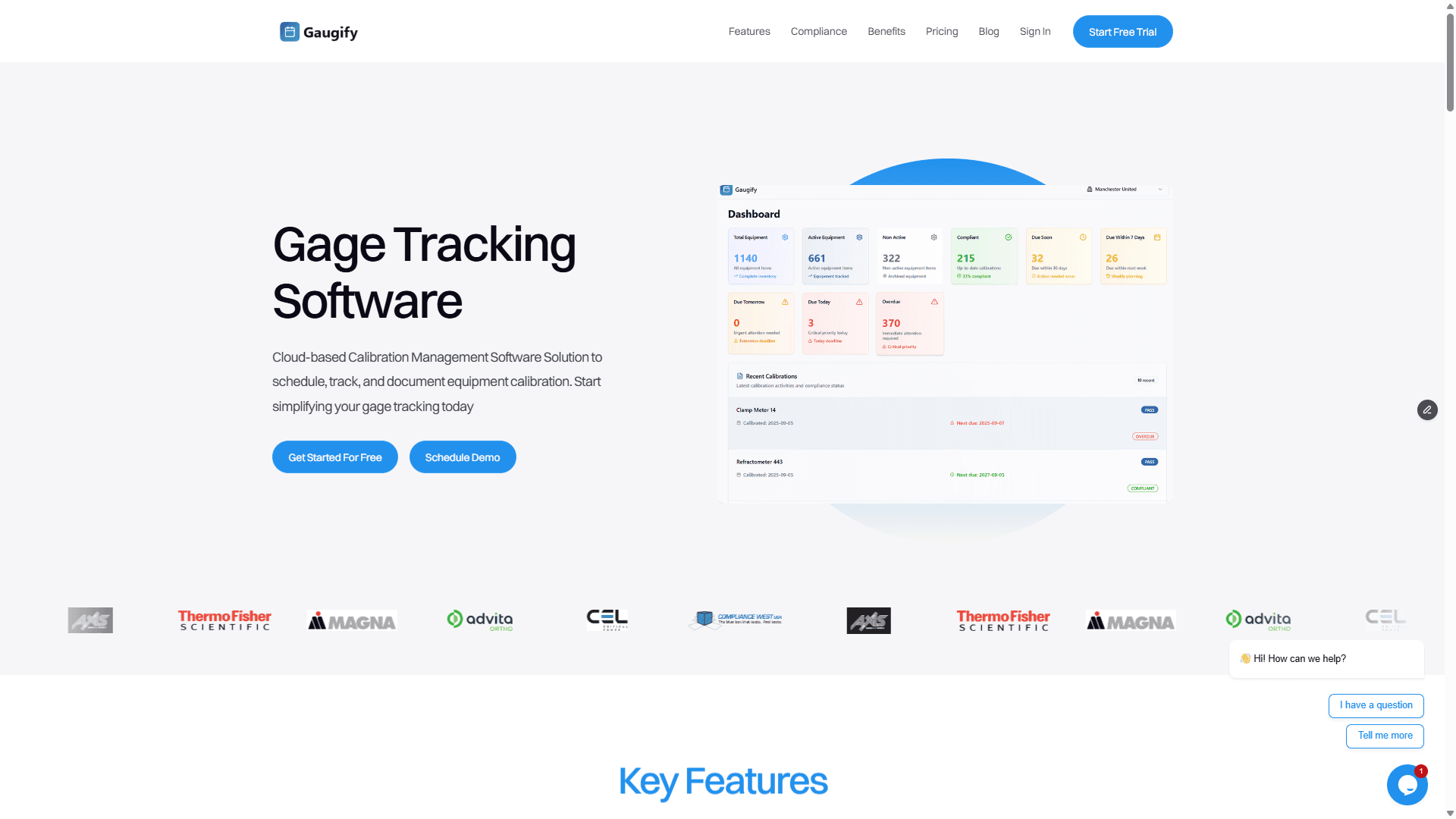
Proactive Notification Systems: Instead of discovering overdue calibrations during audits, modern software provides automated alerts that escalate based on criticality. Quality managers receive dashboard notifications when instruments approach due dates, while technicians get detailed work assignments with vendor contact information and historical notes.
Complete Audit Trails: Every calibration event, status change, and system access is automatically logged with timestamps and user identification. When auditors ask about the calibration status of a specific instrument on a particular date, you can provide instant, verifiable documentation.
Integrated Compliance Features: Advanced calibration software includes built-in compliance templates for major standards including ISO 17025, ISO 9001, IATF 16949, and FDA regulations. This ensures your documentation automatically meets regulatory requirements without manual formatting or template management.
Real-Time Reporting and Analytics: Modern platforms provide executive dashboards showing calibration program performance, cost trends, and compliance metrics. Quality managers can identify instruments with recurring problems, optimize calibration intervals based on historical data, and demonstrate program effectiveness to management.
Mobile Accessibility: Cloud-based systems allow technicians to access calibration information from anywhere, update instrument status in real-time, and photograph certificates for immediate upload. This eliminates delays between calibration completion and system updates.
The comprehensive feature set available in modern calibration software transforms what was once a manual, error-prone process into an automated system that enhances rather than hinders your quality operations.
Implementation Strategy: Getting Started with Modern Calibration Management
Transitioning to advanced calibration best practices doesn't require a complete operational overhaul. Smart organizations implement changes incrementally, starting with their most critical instruments and highest-risk processes.
Phase 1 - Critical Instrument Migration: Begin by identifying your 20-30 most critical measuring instruments—those used for customer acceptance, regulatory compliance, or safety-critical measurements. Migrate these instruments to your new calibration management system first, establishing proper procedures and gaining user confidence.
Phase 2 - Process Integration: Once your critical instruments are properly managed, expand the system to include all measuring and test equipment. Focus on integrating calibration status verification into your existing quality processes and work instructions.
Phase 3 - Advanced Analytics: With comprehensive calibration data flowing through your system, implement advanced features like predictive maintenance, cost optimization, and performance trending. This is where you begin seeing significant ROI from your calibration management investment.
The key to successful implementation is choosing a platform that scales with your needs. Compliance-focused solutions like Gaugify provide the flexibility to start simple and add sophisticated features as your program matures.
Measuring Success: KPIs for Modern Calibration Programs
Implementing calibration best practices 2026 requires measuring the right metrics to ensure continuous improvement. Leading organizations track both operational efficiency and compliance effectiveness:
Operational Metrics:
Percentage of instruments in calibration (target: >98%)
Average calibration processing time (target: <5 days)
Cost per calibration event (trend: decreasing)
Time spent on calibration administration (target: <2 hours/week per 100 instruments)
Compliance Metrics:
Audit findings related to calibration (target: zero)
Time to generate compliance reports (target: <30 minutes)
Measurement traceability documentation completeness (target: 100%)
Calibration-related customer complaints (target: zero)
These metrics should be tracked automatically by your calibration management system and included in regular management reviews. The goal is transforming calibration from a compliance burden into a competitive advantage.
Future-Proofing Your Calibration Program
As we look toward 2026 and beyond, several trends will continue reshaping calibration management requirements:
Increased Digitalization: Regulators and customers increasingly expect digital documentation and real-time access to calibration information. Paper certificates and manual processes will become compliance liabilities rather than acceptable alternatives.
Enhanced Traceability Requirements: Supply chain transparency demands will require more sophisticated traceability documentation, linking specific measurements to calibrated instruments through digital audit trails.
Predictive Maintenance Integration: Advanced calibration programs will integrate with predictive maintenance systems, using instrument performance data to optimize both calibration intervals and replacement schedules.
AI-Powered Optimization: Machine learning algorithms will analyze calibration histories to recommend optimal intervals, predict instrument failures, and identify cost-saving opportunities.
Organizations that invest in modern, scalable calibration management platforms today will be well-positioned to adopt these emerging capabilities as they become available.
Take Action: Transform Your Calibration Program Today
The calibration challenges facing quality professionals in 2026 are real, but so are the solutions. Organizations that proactively implement modern calibration best practices will avoid compliance crises, reduce administrative burden, and gain competitive advantages through superior quality systems.
The question isn't whether your calibration program needs modernization—it's whether you'll implement improvements before or after your next audit crisis. Every day you delay represents continued compliance risk, wasted administrative time, and missed opportunities for operational improvement.
Gaugify's cloud-based calibration management platform addresses every challenge discussed in this article. From automated scheduling and compliance reporting to integrated vendor management and mobile accessibility, Gaugify transforms calibration management from a manual burden into an automated competitive advantage.
Don't wait for a calibration crisis to force change. Start your free Gaugify trial today and discover how modern calibration management can eliminate compliance stress while improving operational efficiency. Your future self—and your auditors—will thank you.
Calibration Management Best Practices for 2026
As we head into 2026, calibration management has become more complex than ever. Between evolving ISO standards, increasing regulatory scrutiny, and the growing sophistication of measurement equipment, quality managers are finding that their old-school calibration approaches simply don't cut it anymore. The calibration best practices 2026 demands aren't just recommendations—they're survival strategies for maintaining compliance, avoiding costly failures, and staying competitive in an increasingly regulated marketplace.
Consider this scenario: You're managing calibration for a medical device manufacturer. Your Mitutoyo digital calipers with ±0.001" tolerance are due for calibration, but your Excel tracking system shows conflicting dates. Meanwhile, your ISO 13485 audit is next week, and you can't quickly prove that the torque wrench used on your Class II devices was properly calibrated when Lot #4782 was assembled three months ago. Sound familiar?
This isn't just a paperwork problem—it's a business-critical crisis that's becoming more common as measurement requirements tighten and audit standards evolve. The companies that master calibration best practices in 2026 will thrive, while those clinging to outdated methods will face mounting compliance issues, failed audits, and potentially devastating product recalls.
The Hidden Epidemic: Why Calibration Management Problems Are More Common Than You Think
Walk into any manufacturing facility, testing laboratory, or quality control department, and you'll likely find the same story playing out: intelligent, dedicated professionals struggling with calibration management systems that haven't evolved with their needs. The problem isn't incompetence—it's that traditional calibration approaches are fundamentally mismatched to modern quality requirements.
Recent industry surveys reveal that 67% of quality managers spend more than 8 hours per week just tracking calibration schedules and certificates. That's an entire workday lost to administrative tasks that add no value to product quality. Meanwhile, 43% of manufacturers report discovering out-of-calibration instruments during routine checks, meaning their measurement uncertainty calculations have been incorrect for weeks or months.
The situation becomes even more problematic in multi-site operations. Picture a automotive parts supplier with facilities in Michigan, Mexico, and Malaysia. Each location uses different calibration vendors, tracking systems, and documentation standards. When corporate quality needs to demonstrate measurement traceability across all sites for an IATF 16949 audit, assembling coherent documentation becomes a nightmare of phone calls, email chains, and missing certificates.
Laboratory environments face their own unique challenges. A pharmaceutical testing lab might have 200+ instruments ranging from simple analytical balances to complex HPLC systems, each with different calibration intervals and acceptance criteria. When FDA inspectors arrive unannounced, laboratory managers need instant access to calibration histories, measurement uncertainty calculations, and trend analysis—not filing cabinets full of paper certificates.
The Real-World Consequences: What Happens When Calibration Best Practices 2026 Aren't Followed
The cost of poor calibration management extends far beyond administrative headaches. Companies are facing increasingly severe consequences as regulators tighten enforcement and customers demand higher quality standards.
Failed Audits and Lost Certifications: A precision machining company recently lost their AS9100 certification after auditors discovered gaps in their gage calibration records. The specific issue: they couldn't prove that their pin gages used for critical aerospace components had maintained proper calibration status during a six-month period. The result? $2.3 million in lost contracts and 18 months to regain certification.
Product Recalls and Liability: An electronics manufacturer faced a costly product recall when it was discovered that their multimeters had been out of calibration during production of 15,000 units. The recall cost exceeded $800,000, but the long-term damage to customer relationships was immeasurable. The root cause? Their paper-based calibration system failed to track overdue calibrations across multiple production shifts.
Scrap and Rework Costs: A medical device company discovered that their coordinate measuring machine (CMM) had been reading 0.003mm high for two months due to an overdue calibration. This seemingly small error resulted in 1,200 rejected parts and $150,000 in scrap costs. Worse yet, they had to re-inspect every part measured during that period to determine which were actually within specification.
Lost Customer Confidence: Perhaps most damaging is the erosion of customer trust. When a major automotive OEM audited their supplier's calibration program, they found torque wrenches with expired calibrations being used on safety-critical fasteners. The supplier was immediately placed on quality hold and eventually lost the contract worth $5 million annually.
Regulatory Penalties: FDA-regulated companies face particularly severe consequences. One pharmaceutical manufacturer received a Warning Letter after FDA investigators found that analytical balances used for batch release testing had gaps in calibration documentation. The resulting consent decree cost the company millions in remediation efforts and delayed product launches.
Root Causes: Why Traditional Calibration Management Fails
Understanding why calibration programs fail is crucial for implementing effective solutions. The problems typically stem from four core issues that plague traditional management approaches:
Fragmented Information Systems: Most organizations cobble together calibration management using a combination of Excel spreadsheets, shared network drives, and individual memory. Critical information gets scattered across multiple systems, making it impossible to maintain a single source of truth. When your calibration coordinator leaves the company, years of tribal knowledge walks out the door.
Reactive Rather Than Proactive Management: Traditional systems force quality managers into reactive mode. You discover problems after they've already occurred—instruments are already overdue, audits are already scheduled, and production decisions have already been made with questionable measurement data. By the time you realize your surface plate calibration expired last month, you've already shipped parts that were measured on it.
Inadequate Traceability Documentation: Paper certificates and manual filing systems make it nearly impossible to quickly demonstrate measurement traceability. When an auditor asks to see the calibration history for the micrometer used to measure a specific batch of parts, you shouldn't need to spend 30 minutes digging through files to find the answer.
Limited Visibility and Reporting: Excel spreadsheets don't provide executive dashboards, trend analysis, or predictive insights. Management can't easily see calibration program performance, identify cost-saving opportunities, or make data-driven decisions about equipment investments.
Step-by-Step Solution: Implementing Calibration Best Practices 2026
Modernizing your calibration management program requires a systematic approach that addresses both technology and process improvements. Here's how leading organizations are implementing calibration best practices for 2026:
Step 1: Establish a Centralized Digital System
The foundation of modern calibration management is a cloud-based system that serves as a single source of truth for all calibration information. This means moving beyond spreadsheets to a dedicated platform that can track instruments, schedules, certificates, and compliance requirements in one integrated database.
Your digital system should automatically track calibration due dates, send proactive notifications before instruments become overdue, and maintain complete historical records for every piece of equipment. For example, when your Fluke 87V multimeter approaches its calibration due date, the system should automatically notify the responsible technician 30 days in advance, include vendor contact information, and track the instrument's status throughout the calibration process.
Ready to eliminate calibration chaos with a modern digital system? Start your free Gaugify trial today and see how cloud-based calibration management can transform your quality program in just 15 minutes.
Step 2: Implement Risk-Based Calibration Intervals
One-size-fits-all calibration intervals waste resources and increase compliance risk. Advanced calibration programs use risk-based approaches that consider instrument stability, usage patterns, and measurement criticality to optimize calibration schedules.
For instance, a granite surface plate used occasionally for layout work might safely extend to annual calibration, while a coordinate measuring machine used for incoming inspection of critical components might require quarterly calibration. The key is collecting historical calibration data to identify instruments that consistently pass calibration with margin, versus those that frequently drift near specification limits.
Step 3: Automate Compliance Reporting
Manual compliance reporting is time-consuming and error-prone. Modern calibration programs leverage automated reporting to generate audit-ready documentation on demand. This includes calibration status reports, traceability matrices, and measurement uncertainty calculations that update automatically as new calibration data is entered.
Consider the time savings: instead of spending days preparing for an ISO audit, your system should generate comprehensive calibration compliance reports in minutes. These reports should include instrument lists, calibration status, certificate archives, and any instruments approaching due dates.
Step 4: Integrate with Quality Management Systems
Calibration management shouldn't exist in isolation. Leading organizations integrate their calibration systems with broader quality management platforms to ensure measurement data integrity throughout their operations. This integration allows automatic verification that instruments used for specific measurements were in calibration at the time of use.
For example, when a quality technician enters measurement data into your quality system, it should automatically verify that the measuring instrument was properly calibrated. If not, the system should flag the measurement as potentially invalid and prevent its use for acceptance decisions.
Step 5: Establish Vendor Management Protocols
Effective calibration management extends beyond your facility to include vendor oversight. Establish clear requirements for calibration vendors, including turnaround times, certificate formats, and measurement uncertainty reporting. Maintain vendor performance metrics to ensure consistent service quality.
Document vendor qualifications, accreditation status, and scope of services. When possible, establish preferred vendor relationships that include electronic certificate delivery and integration with your calibration management system.
How Modern Calibration Software Prevents These Problems
While process improvements are essential, technology is the enabler that makes advanced calibration best practices 2026 practical and sustainable. Modern calibration management software like Gaugify addresses the root causes of calibration failures through intelligent automation and integrated compliance tools.
Proactive Notification Systems: Instead of discovering overdue calibrations during audits, modern software provides automated alerts that escalate based on criticality. Quality managers receive dashboard notifications when instruments approach due dates, while technicians get detailed work assignments with vendor contact information and historical notes.
Complete Audit Trails: Every calibration event, status change, and system access is automatically logged with timestamps and user identification. When auditors ask about the calibration status of a specific instrument on a particular date, you can provide instant, verifiable documentation.
Integrated Compliance Features: Advanced calibration software includes built-in compliance templates for major standards including ISO 17025, ISO 9001, IATF 16949, and FDA regulations. This ensures your documentation automatically meets regulatory requirements without manual formatting or template management.
Real-Time Reporting and Analytics: Modern platforms provide executive dashboards showing calibration program performance, cost trends, and compliance metrics. Quality managers can identify instruments with recurring problems, optimize calibration intervals based on historical data, and demonstrate program effectiveness to management.
Mobile Accessibility: Cloud-based systems allow technicians to access calibration information from anywhere, update instrument status in real-time, and photograph certificates for immediate upload. This eliminates delays between calibration completion and system updates.
The comprehensive feature set available in modern calibration software transforms what was once a manual, error-prone process into an automated system that enhances rather than hinders your quality operations.
Implementation Strategy: Getting Started with Modern Calibration Management
Transitioning to advanced calibration best practices doesn't require a complete operational overhaul. Smart organizations implement changes incrementally, starting with their most critical instruments and highest-risk processes.
Phase 1 - Critical Instrument Migration: Begin by identifying your 20-30 most critical measuring instruments—those used for customer acceptance, regulatory compliance, or safety-critical measurements. Migrate these instruments to your new calibration management system first, establishing proper procedures and gaining user confidence.
Phase 2 - Process Integration: Once your critical instruments are properly managed, expand the system to include all measuring and test equipment. Focus on integrating calibration status verification into your existing quality processes and work instructions.
Phase 3 - Advanced Analytics: With comprehensive calibration data flowing through your system, implement advanced features like predictive maintenance, cost optimization, and performance trending. This is where you begin seeing significant ROI from your calibration management investment.
The key to successful implementation is choosing a platform that scales with your needs. Compliance-focused solutions like Gaugify provide the flexibility to start simple and add sophisticated features as your program matures.
Measuring Success: KPIs for Modern Calibration Programs
Implementing calibration best practices 2026 requires measuring the right metrics to ensure continuous improvement. Leading organizations track both operational efficiency and compliance effectiveness:
Operational Metrics:
Percentage of instruments in calibration (target: >98%)
Average calibration processing time (target: <5 days)
Cost per calibration event (trend: decreasing)
Time spent on calibration administration (target: <2 hours/week per 100 instruments)
Compliance Metrics:
Audit findings related to calibration (target: zero)
Time to generate compliance reports (target: <30 minutes)
Measurement traceability documentation completeness (target: 100%)
Calibration-related customer complaints (target: zero)
These metrics should be tracked automatically by your calibration management system and included in regular management reviews. The goal is transforming calibration from a compliance burden into a competitive advantage.
Future-Proofing Your Calibration Program
As we look toward 2026 and beyond, several trends will continue reshaping calibration management requirements:
Increased Digitalization: Regulators and customers increasingly expect digital documentation and real-time access to calibration information. Paper certificates and manual processes will become compliance liabilities rather than acceptable alternatives.
Enhanced Traceability Requirements: Supply chain transparency demands will require more sophisticated traceability documentation, linking specific measurements to calibrated instruments through digital audit trails.
Predictive Maintenance Integration: Advanced calibration programs will integrate with predictive maintenance systems, using instrument performance data to optimize both calibration intervals and replacement schedules.
AI-Powered Optimization: Machine learning algorithms will analyze calibration histories to recommend optimal intervals, predict instrument failures, and identify cost-saving opportunities.
Organizations that invest in modern, scalable calibration management platforms today will be well-positioned to adopt these emerging capabilities as they become available.
Take Action: Transform Your Calibration Program Today
The calibration challenges facing quality professionals in 2026 are real, but so are the solutions. Organizations that proactively implement modern calibration best practices will avoid compliance crises, reduce administrative burden, and gain competitive advantages through superior quality systems.
The question isn't whether your calibration program needs modernization—it's whether you'll implement improvements before or after your next audit crisis. Every day you delay represents continued compliance risk, wasted administrative time, and missed opportunities for operational improvement.
Gaugify's cloud-based calibration management platform addresses every challenge discussed in this article. From automated scheduling and compliance reporting to integrated vendor management and mobile accessibility, Gaugify transforms calibration management from a manual burden into an automated competitive advantage.
Don't wait for a calibration crisis to force change. Start your free Gaugify trial today and discover how modern calibration management can eliminate compliance stress while improving operational efficiency. Your future self—and your auditors—will thank you.