
How to Calibrate a Height Gage
How to Calibrate a Height Gage
David Bentley
Quality Assurance Engineer
8 min read
How to Calibrate a Height Gage
Height gages are precision measurement instruments that determine vertical dimensions with remarkable accuracy, typically within ±0.0002" (±0.005mm) or better. Whether you're working with a dial-type Mitutoyo height gage, a digital Starrett 754, or a motorized Fowler 54-175-777, proper height gage calibration is essential for maintaining measurement reliability in your quality control operations. This comprehensive guide walks you through the complete calibration process, from setup to certification, ensuring your height measurements meet the most demanding specifications.
Understanding Height Gage Construction and Measurement Principles
Height gages measure vertical distances by referencing a precision surface plate as the datum. The instrument consists of a heavy base that slides along the surface plate, a vertical column with graduated scale, and a measuring head equipped with a scribe or probe tip. Modern digital height gages incorporate linear encoders that provide direct readouts to 0.00005" (0.001mm) resolution.
These instruments excel at measuring part heights, step heights, shoulder dimensions, and performing layout operations. In automotive manufacturing, height gages verify critical dimensions like brake rotor thickness (typically 1.102" ±0.003") or engine block deck heights. Aerospace applications might include measuring turbine blade heights within ±0.0005" tolerances.
The measurement accuracy depends heavily on proper technique and calibration status. A height gage measuring a 4.000" block should read within ±0.0003" when properly calibrated, but environmental factors, wear, and drift can significantly impact this precision over time.
Why Height Gage Calibration Is Mission-Critical
Height gage calibration becomes critical because these instruments directly impact product conformance decisions. Consider a medical device manufacturer checking implant component heights – a miscalibrated height gage reading 0.755" instead of the actual 0.753" dimension could result in accepting parts that exceed the 0.754" maximum specification limit.
Temperature variations particularly affect height gage accuracy. A 12" aluminum part measured at 75°F will be approximately 0.0016" taller at 85°F due to thermal expansion. Your height gage must maintain calibration stability across normal shop floor temperature ranges to provide reliable measurements.
Mechanical wear also degrades accuracy over time. The sliding surfaces between the base and column develop play, the measuring head mechanism accumulates backlash, and the reference surfaces wear from repeated use. Regular calibration detects these issues before they compromise measurement quality.
Regulatory compliance adds another layer of importance. ISO 9001 requires measurement equipment calibration, while AS9100 aerospace standard demands even more rigorous controls. FDA-regulated industries must demonstrate calibration traceability for height gages used in product release decisions.
Complete Height Gage Calibration Procedure
Professional height gage calibration requires specific reference standards, environmental controls, and systematic methodology. Here's the detailed process used by accredited calibration laboratories:
Required Equipment and Standards
Primary reference standards include Grade AA gage blocks traceable to NIST, typically in sizes of 0.100", 1.000", 2.000", 4.000", 6.000", and 8.000". A precision surface plate (Grade AA or better) provides the reference datum. Digital calipers accurate to ±0.0002" serve as transfer standards for cross-verification.
Environmental monitoring equipment tracks temperature (68°F ±5°F), humidity (45% ±10% RH), and vibration levels. Allow all equipment to stabilize for at least 2 hours before beginning calibration measurements.
Pre-Calibration Inspection
Examine the height gage for obvious damage, excessive wear, or contamination. Check that the base slides smoothly along the surface plate without binding or play. Verify the measuring head moves freely through its full range without sticking. Clean all surfaces with appropriate solvents and lint-free cloths.
Document the instrument's as-found condition, noting any damage or wear that could affect measurements. Record the instrument identification, model number, serial number, and previous calibration date.
Calibration Test Points
Establish test points across the instrument's full measurement range. For a 12" height gage, typical test points include 0.100", 2.000", 4.000", 6.000", 8.000", and 10.000". Each point should be measured five times with the gage block repositioned between readings to account for repeatability variations.
Position each gage block on the surface plate directly under the measuring head. Lower the measuring head until light contact occurs – excessive force will compress the gage block and introduce errors. Record each measurement immediately and calculate the deviation from the gage block's certified dimension.
Perform measurements in both ascending and descending order to detect hysteresis effects. A properly functioning height gage should show minimal difference (less than 0.0001") between up-scale and down-scale readings at the same measurement point.
Acceptance Criteria and Data Analysis
Most height gage manufacturers specify accuracy tolerances of ±0.0002" for the first inch, plus ±0.0001" per additional inch of measurement range. A 6" reading on a quality height gage should fall within ±0.0007" of the true dimension.
Calculate measurement uncertainty using Type A (statistical) and Type B (systematic) uncertainty components. Type A uncertainty comes from measurement repeatability, while Type B includes gage block uncertainty, temperature effects, and instrument resolution. The combined uncertainty should be at least 4:1 better than the tolerance being measured.
Ready to streamline your calibration program? Start your free trial of Gaugify and discover how modern calibration management software eliminates manual tracking headaches while ensuring complete compliance.
Calibration Adjustments
Digital height gages typically allow zero offset adjustments and span corrections through internal software menus. Consult the manufacturer's service manual for specific adjustment procedures, as improper adjustments can damage delicate encoder systems.
If measurements consistently read high or low by a constant amount, adjust the zero offset. Linear errors across the range require span adjustments, which should only be performed by qualified technicians. Document all adjustments made during calibration.
Applicable Standards for Height Gage Calibration
Several national and international standards govern proper height gage calibration practices:
ASME B89.1.5 provides the definitive specification for measurement uncertainty in dimensional metrology, including height gage calibration requirements. This standard establishes traceability requirements and uncertainty calculation methods used by accredited calibration laboratories.
ISO 17025 defines the general requirements for calibration laboratory competence. Laboratories performing height gage calibration must demonstrate technical competence, maintain measurement traceability, and estimate measurement uncertainties according to this standard. Gaugify's ISO 17025 compliance features help laboratories maintain required documentation and procedures.
NIST SP 811 establishes the measurement traceability framework, requiring calibration standards traceable to the International System of Units (SI). Gage blocks used for height gage calibration must maintain unbroken traceability chains to NIST or equivalent national metrology institutes.
Manufacturer specifications supplement these general standards with instrument-specific requirements. Mitutoyo height gages follow company specification sheets that define environmental conditions, test procedures, and acceptance criteria optimized for each model's design characteristics.
Calibration Frequency and Interval Determination
Height gage calibration intervals depend on usage intensity, environmental conditions, and measurement criticality. Most quality systems start with 12-month intervals and adjust based on historical calibration data and risk assessment.
High-usage instruments in production environments may require 6-month intervals, especially when measuring critical safety dimensions. A height gage checking aircraft engine component heights might need quarterly calibration due to the severe consequences of measurement errors.
Environmental factors significantly influence calibration stability. Shop floor instruments exposed to temperature variations, vibration, and contamination typically need more frequent calibration than laboratory instruments in controlled conditions. Document these environmental factors when establishing calibration intervals.
Monitor calibration history to optimize intervals scientifically. If an instrument consistently passes calibration with minimal drift over several cycles, consider extending the interval to 18 months. Conversely, instruments showing significant drift or frequent failures need shortened intervals until the root cause is addressed.
Regulatory requirements may mandate specific intervals regardless of technical considerations. Medical device manufacturers often specify 6-month maximum intervals for all measurement equipment, while some aerospace contracts require quarterly calibration of height gages used for acceptance testing.
Common Height Gage Calibration Mistakes and Prevention Strategies
Temperature-related errors represent the most common calibration mistakes. Measuring cold gage blocks with a warm height gage introduces thermal expansion errors that can exceed ±0.001". Always allow sufficient thermal equilibration time – at least 2 hours for large instruments or significant temperature differences.
Improper measuring force causes another frequent error source. Excessive downward pressure compresses gage blocks and deflects the height gage structure, while insufficient contact pressure creates inconsistent measurements. Train operators to recognize proper measuring force through tactile feedback or use height gages with constant-force measuring heads.
Surface plate contamination invalidates calibration results. Even microscopic particles under gage blocks introduce measurement errors. Clean the surface plate with approved solvents and verify cleanliness with precision height measurements at multiple locations before beginning calibration.
Parallax errors occur when reading dial-type height gages from incorrect viewing angles. Position your eye directly perpendicular to the scale graduations and use consistent viewing distance. Digital height gages eliminate parallax errors but introduce battery and electronic stability considerations.
Documentation errors compromise calibration value even when measurements are performed correctly. Record all data immediately during measurement, include environmental conditions, and maintain complete traceability documentation. Manual record-keeping invites transcription errors and lost data.
Leveraging Gaugify for Advanced Height Gage Calibration Management
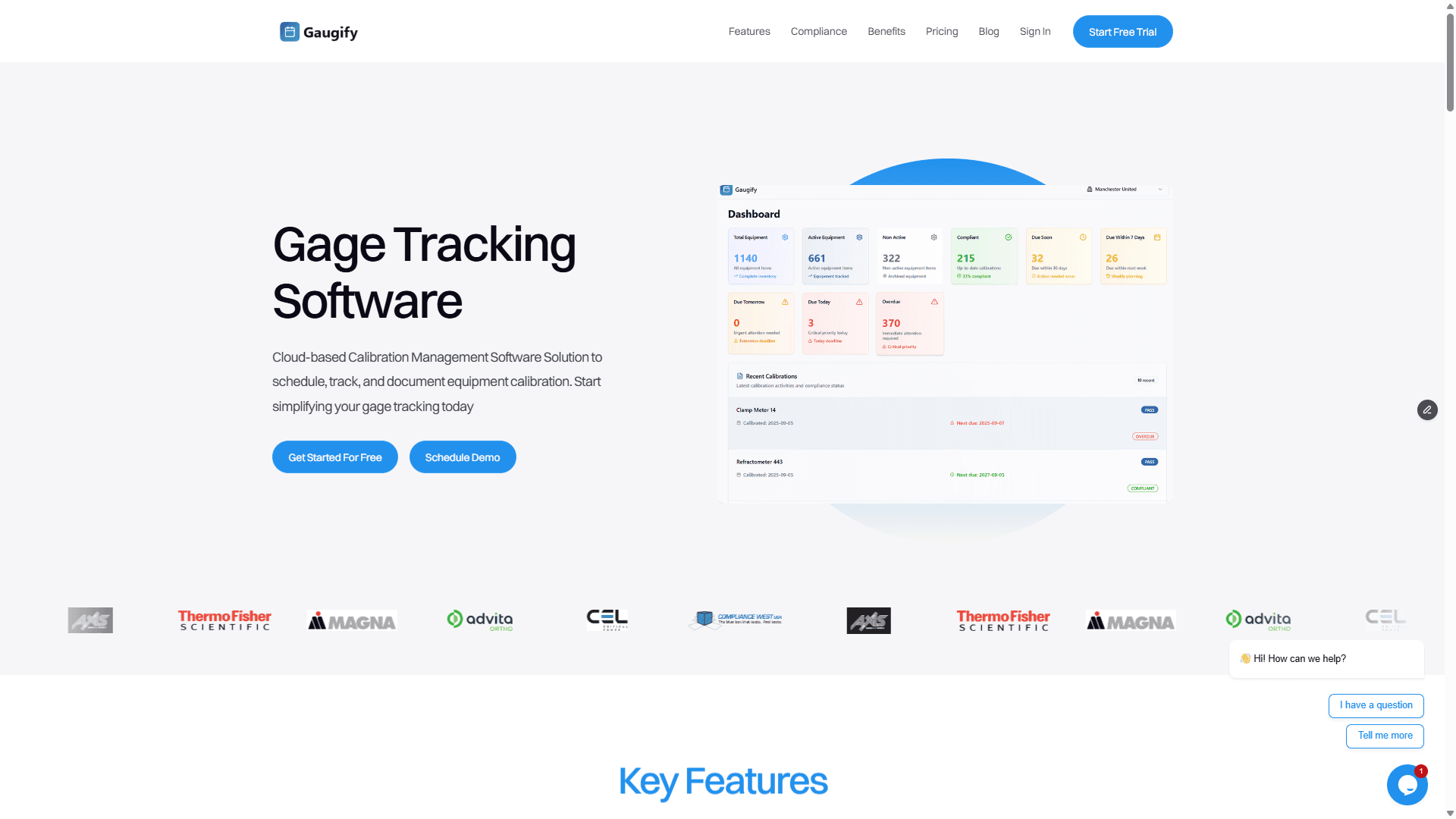
Modern calibration management demands more than spreadsheets and paper certificates. Gaugify's comprehensive features transform height gage calibration from a compliance burden into a strategic quality advantage.
The platform automatically schedules height gage calibration based on your established intervals, sending email reminders before due dates to prevent expired instruments from reaching the production floor. Custom workflows accommodate different calibration procedures for various height gage models in your facility.
Digital calibration certificates capture complete as-found and as-left data with measurement uncertainties, environmental conditions, and standards used. Photograph capability documents instrument condition before and after calibration, providing valuable trending information for maintenance decisions.
Advanced reporting features analyze calibration history to identify drift patterns and optimize calibration intervals. The system flags instruments showing unusual drift patterns that may indicate developing problems requiring maintenance attention.
Mobile accessibility enables real-time calibration data entry directly from the calibration bench, eliminating transcription errors and reducing documentation time. Barcode scanning identifies instruments instantly and pulls up current calibration procedures automatically.
Compliance management tools ensure your height gage calibration program meets ISO 9001, AS9100, FDA, and other regulatory requirements. Automated audit reports provide inspectors with complete calibration documentation organized exactly as required by quality standards.
Building a Robust Height Gage Calibration Program
Successful height gage calibration extends beyond individual instrument procedures to encompass systematic program management. Establish written procedures documenting calibration methods, acceptance criteria, and corrective actions for out-of-tolerance conditions.
Train personnel thoroughly on calibration procedures and measurement uncertainty concepts. Height gage calibration requires understanding thermal effects, proper measuring technique, and statistical analysis of calibration data. Invest in comprehensive training to ensure consistent, reliable calibration results.
Maintain calibration records indefinitely or according to customer contract requirements. These records provide valuable trending data for optimizing calibration intervals and demonstrate regulatory compliance during audits. Electronic records storage eliminates physical storage concerns while improving data accessibility.
Consider outsourcing complex calibrations to accredited laboratories while maintaining simple calibrations in-house. Height gages with minimal accuracy requirements might be calibrated internally, while precision instruments supporting critical measurements benefit from laboratory-grade calibration services.
Transform your calibration management today with Gaugify's modern cloud-based platform. Our intuitive interface eliminates manual tracking headaches while ensuring complete regulatory compliance. Schedule a personalized demo to see how Gaugify streamlines height gage calibration management for quality teams like yours.
How to Calibrate a Height Gage
Height gages are precision measurement instruments that determine vertical dimensions with remarkable accuracy, typically within ±0.0002" (±0.005mm) or better. Whether you're working with a dial-type Mitutoyo height gage, a digital Starrett 754, or a motorized Fowler 54-175-777, proper height gage calibration is essential for maintaining measurement reliability in your quality control operations. This comprehensive guide walks you through the complete calibration process, from setup to certification, ensuring your height measurements meet the most demanding specifications.
Understanding Height Gage Construction and Measurement Principles
Height gages measure vertical distances by referencing a precision surface plate as the datum. The instrument consists of a heavy base that slides along the surface plate, a vertical column with graduated scale, and a measuring head equipped with a scribe or probe tip. Modern digital height gages incorporate linear encoders that provide direct readouts to 0.00005" (0.001mm) resolution.
These instruments excel at measuring part heights, step heights, shoulder dimensions, and performing layout operations. In automotive manufacturing, height gages verify critical dimensions like brake rotor thickness (typically 1.102" ±0.003") or engine block deck heights. Aerospace applications might include measuring turbine blade heights within ±0.0005" tolerances.
The measurement accuracy depends heavily on proper technique and calibration status. A height gage measuring a 4.000" block should read within ±0.0003" when properly calibrated, but environmental factors, wear, and drift can significantly impact this precision over time.
Why Height Gage Calibration Is Mission-Critical
Height gage calibration becomes critical because these instruments directly impact product conformance decisions. Consider a medical device manufacturer checking implant component heights – a miscalibrated height gage reading 0.755" instead of the actual 0.753" dimension could result in accepting parts that exceed the 0.754" maximum specification limit.
Temperature variations particularly affect height gage accuracy. A 12" aluminum part measured at 75°F will be approximately 0.0016" taller at 85°F due to thermal expansion. Your height gage must maintain calibration stability across normal shop floor temperature ranges to provide reliable measurements.
Mechanical wear also degrades accuracy over time. The sliding surfaces between the base and column develop play, the measuring head mechanism accumulates backlash, and the reference surfaces wear from repeated use. Regular calibration detects these issues before they compromise measurement quality.
Regulatory compliance adds another layer of importance. ISO 9001 requires measurement equipment calibration, while AS9100 aerospace standard demands even more rigorous controls. FDA-regulated industries must demonstrate calibration traceability for height gages used in product release decisions.
Complete Height Gage Calibration Procedure
Professional height gage calibration requires specific reference standards, environmental controls, and systematic methodology. Here's the detailed process used by accredited calibration laboratories:
Required Equipment and Standards
Primary reference standards include Grade AA gage blocks traceable to NIST, typically in sizes of 0.100", 1.000", 2.000", 4.000", 6.000", and 8.000". A precision surface plate (Grade AA or better) provides the reference datum. Digital calipers accurate to ±0.0002" serve as transfer standards for cross-verification.
Environmental monitoring equipment tracks temperature (68°F ±5°F), humidity (45% ±10% RH), and vibration levels. Allow all equipment to stabilize for at least 2 hours before beginning calibration measurements.
Pre-Calibration Inspection
Examine the height gage for obvious damage, excessive wear, or contamination. Check that the base slides smoothly along the surface plate without binding or play. Verify the measuring head moves freely through its full range without sticking. Clean all surfaces with appropriate solvents and lint-free cloths.
Document the instrument's as-found condition, noting any damage or wear that could affect measurements. Record the instrument identification, model number, serial number, and previous calibration date.
Calibration Test Points
Establish test points across the instrument's full measurement range. For a 12" height gage, typical test points include 0.100", 2.000", 4.000", 6.000", 8.000", and 10.000". Each point should be measured five times with the gage block repositioned between readings to account for repeatability variations.
Position each gage block on the surface plate directly under the measuring head. Lower the measuring head until light contact occurs – excessive force will compress the gage block and introduce errors. Record each measurement immediately and calculate the deviation from the gage block's certified dimension.
Perform measurements in both ascending and descending order to detect hysteresis effects. A properly functioning height gage should show minimal difference (less than 0.0001") between up-scale and down-scale readings at the same measurement point.
Acceptance Criteria and Data Analysis
Most height gage manufacturers specify accuracy tolerances of ±0.0002" for the first inch, plus ±0.0001" per additional inch of measurement range. A 6" reading on a quality height gage should fall within ±0.0007" of the true dimension.
Calculate measurement uncertainty using Type A (statistical) and Type B (systematic) uncertainty components. Type A uncertainty comes from measurement repeatability, while Type B includes gage block uncertainty, temperature effects, and instrument resolution. The combined uncertainty should be at least 4:1 better than the tolerance being measured.
Ready to streamline your calibration program? Start your free trial of Gaugify and discover how modern calibration management software eliminates manual tracking headaches while ensuring complete compliance.
Calibration Adjustments
Digital height gages typically allow zero offset adjustments and span corrections through internal software menus. Consult the manufacturer's service manual for specific adjustment procedures, as improper adjustments can damage delicate encoder systems.
If measurements consistently read high or low by a constant amount, adjust the zero offset. Linear errors across the range require span adjustments, which should only be performed by qualified technicians. Document all adjustments made during calibration.
Applicable Standards for Height Gage Calibration
Several national and international standards govern proper height gage calibration practices:
ASME B89.1.5 provides the definitive specification for measurement uncertainty in dimensional metrology, including height gage calibration requirements. This standard establishes traceability requirements and uncertainty calculation methods used by accredited calibration laboratories.
ISO 17025 defines the general requirements for calibration laboratory competence. Laboratories performing height gage calibration must demonstrate technical competence, maintain measurement traceability, and estimate measurement uncertainties according to this standard. Gaugify's ISO 17025 compliance features help laboratories maintain required documentation and procedures.
NIST SP 811 establishes the measurement traceability framework, requiring calibration standards traceable to the International System of Units (SI). Gage blocks used for height gage calibration must maintain unbroken traceability chains to NIST or equivalent national metrology institutes.
Manufacturer specifications supplement these general standards with instrument-specific requirements. Mitutoyo height gages follow company specification sheets that define environmental conditions, test procedures, and acceptance criteria optimized for each model's design characteristics.
Calibration Frequency and Interval Determination
Height gage calibration intervals depend on usage intensity, environmental conditions, and measurement criticality. Most quality systems start with 12-month intervals and adjust based on historical calibration data and risk assessment.
High-usage instruments in production environments may require 6-month intervals, especially when measuring critical safety dimensions. A height gage checking aircraft engine component heights might need quarterly calibration due to the severe consequences of measurement errors.
Environmental factors significantly influence calibration stability. Shop floor instruments exposed to temperature variations, vibration, and contamination typically need more frequent calibration than laboratory instruments in controlled conditions. Document these environmental factors when establishing calibration intervals.
Monitor calibration history to optimize intervals scientifically. If an instrument consistently passes calibration with minimal drift over several cycles, consider extending the interval to 18 months. Conversely, instruments showing significant drift or frequent failures need shortened intervals until the root cause is addressed.
Regulatory requirements may mandate specific intervals regardless of technical considerations. Medical device manufacturers often specify 6-month maximum intervals for all measurement equipment, while some aerospace contracts require quarterly calibration of height gages used for acceptance testing.
Common Height Gage Calibration Mistakes and Prevention Strategies
Temperature-related errors represent the most common calibration mistakes. Measuring cold gage blocks with a warm height gage introduces thermal expansion errors that can exceed ±0.001". Always allow sufficient thermal equilibration time – at least 2 hours for large instruments or significant temperature differences.
Improper measuring force causes another frequent error source. Excessive downward pressure compresses gage blocks and deflects the height gage structure, while insufficient contact pressure creates inconsistent measurements. Train operators to recognize proper measuring force through tactile feedback or use height gages with constant-force measuring heads.
Surface plate contamination invalidates calibration results. Even microscopic particles under gage blocks introduce measurement errors. Clean the surface plate with approved solvents and verify cleanliness with precision height measurements at multiple locations before beginning calibration.
Parallax errors occur when reading dial-type height gages from incorrect viewing angles. Position your eye directly perpendicular to the scale graduations and use consistent viewing distance. Digital height gages eliminate parallax errors but introduce battery and electronic stability considerations.
Documentation errors compromise calibration value even when measurements are performed correctly. Record all data immediately during measurement, include environmental conditions, and maintain complete traceability documentation. Manual record-keeping invites transcription errors and lost data.
Leveraging Gaugify for Advanced Height Gage Calibration Management
Modern calibration management demands more than spreadsheets and paper certificates. Gaugify's comprehensive features transform height gage calibration from a compliance burden into a strategic quality advantage.
The platform automatically schedules height gage calibration based on your established intervals, sending email reminders before due dates to prevent expired instruments from reaching the production floor. Custom workflows accommodate different calibration procedures for various height gage models in your facility.
Digital calibration certificates capture complete as-found and as-left data with measurement uncertainties, environmental conditions, and standards used. Photograph capability documents instrument condition before and after calibration, providing valuable trending information for maintenance decisions.
Advanced reporting features analyze calibration history to identify drift patterns and optimize calibration intervals. The system flags instruments showing unusual drift patterns that may indicate developing problems requiring maintenance attention.
Mobile accessibility enables real-time calibration data entry directly from the calibration bench, eliminating transcription errors and reducing documentation time. Barcode scanning identifies instruments instantly and pulls up current calibration procedures automatically.
Compliance management tools ensure your height gage calibration program meets ISO 9001, AS9100, FDA, and other regulatory requirements. Automated audit reports provide inspectors with complete calibration documentation organized exactly as required by quality standards.
Building a Robust Height Gage Calibration Program
Successful height gage calibration extends beyond individual instrument procedures to encompass systematic program management. Establish written procedures documenting calibration methods, acceptance criteria, and corrective actions for out-of-tolerance conditions.
Train personnel thoroughly on calibration procedures and measurement uncertainty concepts. Height gage calibration requires understanding thermal effects, proper measuring technique, and statistical analysis of calibration data. Invest in comprehensive training to ensure consistent, reliable calibration results.
Maintain calibration records indefinitely or according to customer contract requirements. These records provide valuable trending data for optimizing calibration intervals and demonstrate regulatory compliance during audits. Electronic records storage eliminates physical storage concerns while improving data accessibility.
Consider outsourcing complex calibrations to accredited laboratories while maintaining simple calibrations in-house. Height gages with minimal accuracy requirements might be calibrated internally, while precision instruments supporting critical measurements benefit from laboratory-grade calibration services.
Transform your calibration management today with Gaugify's modern cloud-based platform. Our intuitive interface eliminates manual tracking headaches while ensuring complete regulatory compliance. Schedule a personalized demo to see how Gaugify streamlines height gage calibration management for quality teams like yours.