
How to Calibrate a Torque Analyzer
How to Calibrate a Torque Analyzer
David Bentley
Quality Assurance Engineer
12 min read
How to Calibrate a Torque Analyzer
Torque analyzer calibration is a critical quality assurance process that ensures your torque measuring instruments deliver accurate, reliable readings. Whether you're validating assembly torque on automotive components or verifying tension in aerospace fasteners, properly calibrated torque analyzers are essential for maintaining product quality and regulatory compliance. This comprehensive guide walks through the complete calibration process, from preparation to documentation, helping quality managers and technicians establish robust measurement confidence in their operations.
Understanding Torque Analyzers and Their Measurement Function
A torque analyzer is a precision measuring instrument designed to evaluate the rotational force applied to fasteners, assemblies, and mechanical components. These devices measure torque values in units such as pound-inches (lb-in), Newton-meters (N⋅m), or kilogram-force centimeters (kgf⋅cm), depending on your application requirements.
Modern torque analyzers come in several configurations:
Handheld digital analyzers - Portable units like the Mountz TorqSense or CDI Digital Torque Analyzer for field measurements
Benchtop systems - Higher-capacity units such as the Ametek Chatillon DFX series for laboratory applications
Rotary torque sensors - Inline measurement devices for continuous monitoring during production
Cap torque testers - Specialized analyzers for bottle cap and closure applications
These instruments typically feature measurement ranges from 0.1 oz-in up to 10,000 lb-ft, with accuracies ranging from ±0.1% to ±1% of reading, depending on the model and manufacturer specifications. The measurement principle relies on strain gauge technology or magnetic sensors that convert mechanical torque into electrical signals for display and data recording.
Key Performance Parameters
Understanding your torque analyzer's specifications is crucial for effective calibration planning:
Measurement range - The span between minimum and maximum measurable values
Resolution - The smallest increment the instrument can display (typically 0.001 to 0.1 units)
Accuracy - The closeness of readings to true values, expressed as percentage of reading or full scale
Repeatability - The consistency of measurements under identical conditions
Operating temperature range - Environmental limits for accurate operation
Why Torque Analyzer Calibration is Critical
Torque analyzer calibration directly impacts product safety, quality, and regulatory compliance across numerous industries. Consider the consequences of uncalibrated torque measurements in these scenarios:
In automotive assembly, wheel lug nuts torqued to 95 lb-ft instead of the specified 100 lb-ft due to analyzer drift could result in wheel separation during operation. Conversely, over-torquing to 105 lb-ft might cause bolt failure or wheel damage. The 5% measurement error represents a significant safety risk that proper calibration prevents.
Aerospace applications demand even tighter tolerances. Engine mount bolts specified at 180 ±5 lb-ft require measurement uncertainty well below 2.5% to ensure proper assembly verification. An uncalibrated analyzer reading 175 lb-ft on a correctly torqued 180 lb-ft fastener could trigger unnecessary rework and production delays.
Medical device manufacturing presents similar challenges. Surgical instrument assemblies often specify torque values like 12.0 ±0.5 lb-in, requiring analyzer accuracy better than ±2% to provide meaningful verification. Patient safety depends on these precision measurements.
Regulatory and Standards Compliance
Multiple standards and regulations mandate calibrated torque measurement equipment:
ISO 9001 requires documented measurement system control and calibration
AS9100 (aerospace) specifies additional measurement system requirements
ISO 13485 (medical devices) demands rigorous calibration documentation
FDA 21 CFR Part 820 requires calibration procedures and records
IATF 16949 (automotive) mandates measurement system analysis
These regulations don't just require calibration—they demand documented procedures, traceable standards, and systematic maintenance of measurement confidence. Gaugify's compliance features help organizations maintain audit-ready calibration records that satisfy these stringent requirements.
Step-by-Step Torque Analyzer Calibration Procedure
Effective torque analyzer calibration follows a systematic approach that ensures measurement traceability and repeatability. This procedure applies to most digital torque analyzers, though specific steps may vary based on manufacturer requirements.
Pre-Calibration Preparation
Begin calibration preparation at least 24 hours before the scheduled procedure:
Environmental stabilization - Place the torque analyzer in the calibration environment (typically 20 ±2°C, 50 ±20% RH) for temperature equilibration
Documentation review - Gather the instrument manual, previous calibration certificates, and applicable standards
Standard selection - Choose reference torque standards with 4:1 or better accuracy ratio relative to the analyzer under test
Visual inspection - Check for physical damage, connector integrity, and display functionality
Reference Standards and Equipment Required
Proper torque analyzer calibration requires NIST-traceable reference standards:
Torque reference standard - Calibrated torque wrench or torque multiplier with certificate showing traceability
Torque test stand - Mechanical fixture for applying known torque loads
Environmental monitoring - Calibrated thermometer and hygrometer
Documentation materials - Calibration forms, labels, and certificate templates
For example, calibrating a 100 lb-ft capacity analyzer requires reference standards accurate to ±0.25% or better, covering the full measurement range in appropriate increments (typically 20%, 40%, 60%, 80%, and 100% of capacity).
Detailed Calibration Steps
Step 1: Initial Setup and Inspection
Document the analyzer's identification information, model number, serial number, and firmware version. Record environmental conditions and verify they meet manufacturer specifications. Perform a complete functional check, testing all operating modes and display functions.
Step 2: Zero/Baseline Verification
With no load applied, verify the analyzer displays zero within specified tolerance (typically ±0.1% of full scale). If zero adjustment is required and permitted, document both as-found and as-left readings.
Step 3: Calibration Point Testing
Apply known torque loads using your reference standard at predetermined test points. For a 100 lb-ft analyzer, typical test points include:
20 lb-ft (20% of range)
40 lb-ft (40% of range)
60 lb-ft (60% of range)
80 lb-ft (80% of range)
100 lb-ft (100% of range)
At each point, take three readings and calculate the average. Record both applied values (from reference standard) and indicated values (from analyzer under test). Calculate error as: Error = Indicated Value - Applied Value.
Step 4: Hysteresis and Repeatability Assessment
Perform ascending and descending load cycles to evaluate hysteresis effects. Apply the same load multiple times to assess repeatability. Document any significant variations that exceed manufacturer specifications.
Step 5: Adjustment and Verification
If errors exceed acceptable limits, perform adjustments according to manufacturer procedures. Re-test all calibration points after adjustment to verify conformance. Document all as-found readings before adjustment and as-left readings after adjustment.
Ready to streamline your torque analyzer calibration tracking? Start your free Gaugify trial and see how automated scheduling, digital certificates, and audit-ready documentation can transform your calibration management process.
Applicable Standards for Torque Analyzer Calibration
Several national and international standards govern torque analyzer calibration procedures and requirements. Understanding these standards ensures your calibration program meets industry best practices and regulatory expectations.
Primary Calibration Standards
ISO 6789-2:2017 - Assembly tools for screws and nuts — Hand torque tools — Part 2: Requirements for calibration and determination of measurement uncertainty for torque tools. This standard specifies calibration procedures, acceptance criteria, and uncertainty calculations for torque measuring devices.
ASME B107.14-2004 - Torque Control Tools — Inspection and Calibration Procedures. This American standard provides detailed calibration methods for torque wrenches and measuring instruments, including environmental requirements and documentation standards.
ISO/IEC 17025:2017 - General requirements for the competence of testing and calibration laboratories. While not torque-specific, this standard establishes the framework for calibration laboratory operations and measurement traceability. Organizations seeking ISO 17025 compliance must follow these requirements for all calibration activities.
Industry-Specific Requirements
Different industries impose additional standards and tolerances:
Aerospace (AS9100) - Often requires ±2% accuracy or better for critical applications
Automotive (IATF 16949) - Typically specifies ±4% accuracy with documented measurement system analysis
Medical devices (ISO 13485) - May require ±1% accuracy for precision assembly verification
Nuclear (10 CFR 50 Appendix B) - Demands rigorous calibration documentation and quality assurance
Manufacturer Specifications
Always consult manufacturer calibration procedures, which may specify:
Unique calibration point selections
Special environmental conditions
Proprietary adjustment procedures
Software-based calibration protocols
Specific acceptance criteria beyond standard requirements
Recommended Torque Analyzer Calibration Intervals
Calibration frequency depends on multiple factors including usage intensity, environmental conditions, accuracy requirements, and manufacturer recommendations. Most torque analyzers require calibration every 6 to 12 months, but specific intervals should be based on documented performance history and risk assessment.
Standard Calibration Intervals
High-precision laboratory instruments - Every 6 months or 2,500 measurement cycles, whichever occurs first. These units typically support critical quality decisions requiring maximum measurement confidence.
Production floor analyzers - Every 12 months or 10,000 measurement cycles. These instruments experience more frequent use but often have less stringent accuracy requirements.
Portable field units - Every 6 months due to exposure to varying environmental conditions and potential handling stress.
Reference standard analyzers - Every 12 months with interim checks every 6 months to ensure continued measurement integrity.
Factors Affecting Calibration Frequency
Several conditions may require more frequent calibration:
High usage volume - Instruments used continuously may drift faster than occasional-use units
Harsh environments - Temperature extremes, humidity, vibration, and contamination accelerate drift
Critical applications - Safety-related measurements may warrant shorter intervals regardless of stability
Regulatory requirements - Some industries mandate specific calibration frequencies
Historical performance - Instruments showing drift trends may need more frequent attention
Consider extending intervals only when documented evidence shows consistent performance over multiple calibration cycles. Statistical analysis of calibration data helps optimize intervals while maintaining measurement confidence.
Common Torque Analyzer Calibration Mistakes and Prevention
Even experienced technicians can make errors that compromise calibration validity. Understanding these common mistakes helps establish robust procedures that ensure reliable results.
Environmental Control Failures
Mistake: Performing calibration without adequate temperature stabilization. Many technicians begin calibration immediately after moving instruments between environments.
Impact: A torque analyzer moved from a 15°C storage area to a 23°C lab may drift 0.5% or more during the first hour of operation, invalidating calibration results.
Prevention: Allow minimum 2-hour stabilization time. Monitor and document environmental conditions throughout the procedure. Postpone calibration if conditions fall outside specified limits.
Inadequate Reference Standard Selection
Mistake: Using reference standards with insufficient accuracy ratio or expired calibration certificates.
Impact: A 100 lb-ft analyzer calibrated against a reference standard accurate to ±2% cannot achieve better than ±2% accuracy, regardless of its inherent capability.
Prevention: Maintain 4:1 accuracy ratios minimum. Verify reference standard certificates before use. Establish automatic alerts for standard recalibration due dates.
Insufficient Test Point Coverage
Mistake: Testing only high-range points while ignoring low-range performance.
Impact: An analyzer showing excellent linearity at 80-100% of range might exhibit significant errors at 10-20% of range, affecting low-torque applications.
Prevention: Test across the full operating range, including points below 20% of capacity when used operationally. Document all test points and acceptance criteria clearly.
Documentation and Traceability Errors
Mistake: Incomplete calibration records, missing environmental data, or unclear as-found/as-left documentation.
Impact: Audit findings, regulatory violations, and inability to demonstrate measurement validity during customer or certification body reviews.
Prevention: Use standardized calibration forms. Require complete data entry before procedure completion. Implement review processes to catch documentation errors before final approval.
Tracking Torque Analyzer Calibration with Modern Software
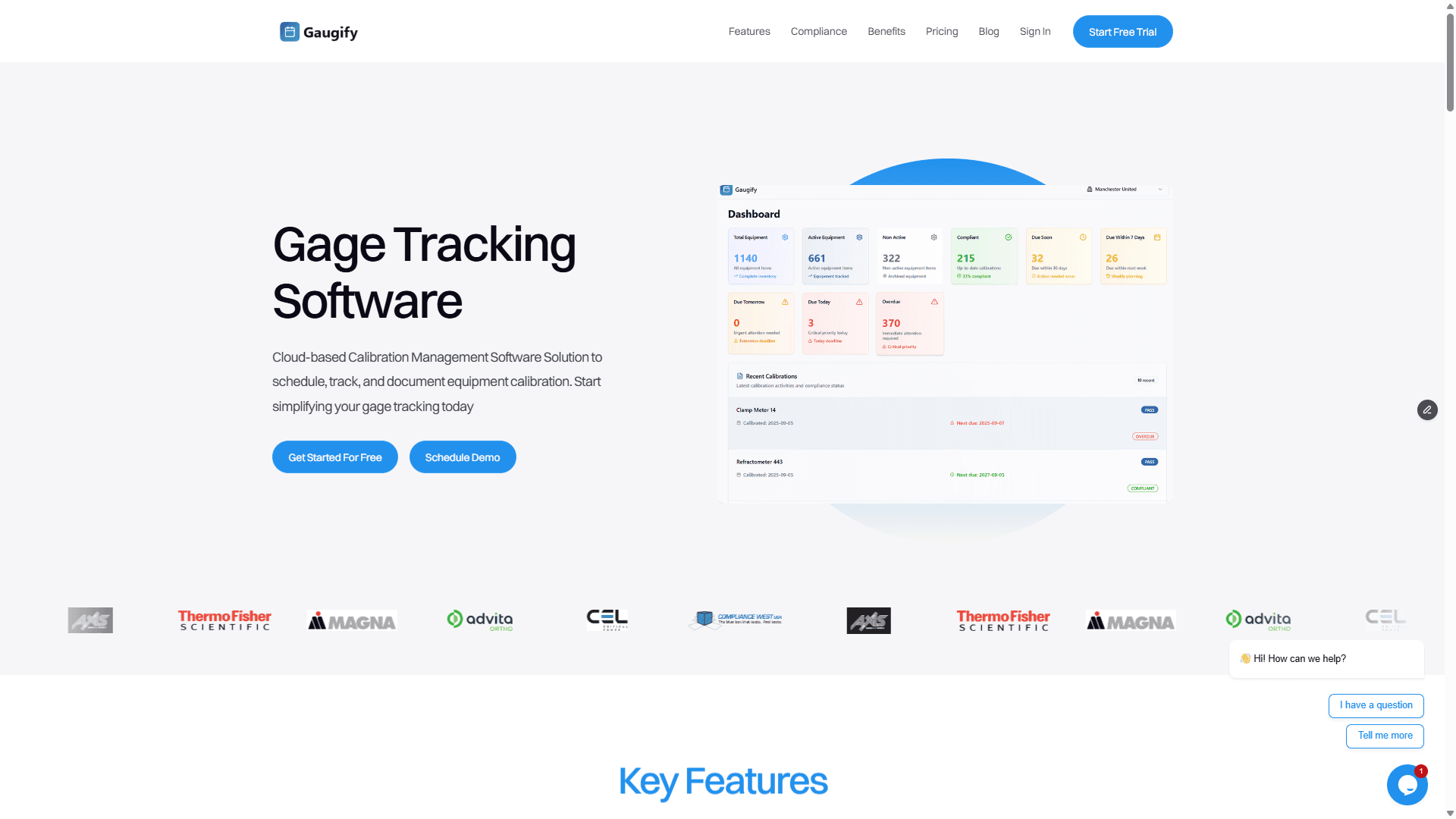
Manual calibration tracking systems often fail when managing multiple torque analyzers across different departments and locations. Modern calibration management software like Gaugify provides comprehensive solutions for torque analyzer calibration tracking, from automated scheduling to digital certificate generation.
Automated Scheduling and Notifications
Gaugify's intelligent scheduling system tracks calibration due dates for all your torque analyzers, sending automated email reminders 30, 14, and 7 days before expiration. The system accounts for different interval requirements—your precision laboratory analyzers can be set for 6-month cycles while production units follow 12-month schedules.
For high-volume operations managing dozens of torque analyzers, automated notifications prevent the costly oversight of expired calibrations. When your Snap-on TechAngle torque analyzer approaches its due date, relevant technicians receive targeted alerts with instrument details, location information, and calibration history.
Comprehensive Data Management
Digital calibration records in Gaugify capture all essential data points:
As-found and as-left readings - Complete measurement data for each calibration point
Environmental conditions - Temperature, humidity, and other relevant factors
Reference standard information - Traceability data and certificate numbers
Adjustment details - What was changed and why
Technician identification - Who performed the calibration and when
This comprehensive approach ensures audit readiness and supports continuous improvement initiatives. Trending analysis identifies analyzers requiring more frequent attention or potential replacement.
Integration with Quality Management Systems
Modern manufacturing operations integrate calibration data with broader quality systems. Gaugify's advanced features include API connectivity for ERP integration, customizable reports for management review, and dashboard analytics that provide real-time calibration status across your entire torque analyzer inventory.
When ISO 9001 auditors request calibration evidence for specific measurement processes, digital systems provide instant access to complete documentation. No more searching through filing cabinets or incomplete paper records—everything is organized, searchable, and immediately available.
Certificate Generation and Distribution
Professional calibration certificates generated automatically include all required elements: measurement data, uncertainty calculations, traceability statements, and technician signatures. Custom templates accommodate different customer requirements or industry standards.
Digital certificates eliminate transcription errors common in manual systems while providing professional presentation for customer audits and regulatory inspections. Automated distribution ensures relevant personnel receive updated certificates immediately upon calibration completion.
Implementing Robust Torque Analyzer Calibration Management
Successful torque analyzer calibration programs require more than just technical procedures—they need systematic management approaches that ensure consistency, compliance, and continuous improvement. Organizations that treat calibration as a strategic quality function, rather than a necessary burden, achieve better measurement confidence and operational efficiency.
Start by conducting a comprehensive inventory of all torque analyzers in your organization. Many companies discover "hidden" instruments in production areas, maintenance shops, or field service vehicles that have been operating without proper calibration oversight. Document each instrument's specifications, usage requirements, and criticality to quality decisions.
Establish clear procedures that address not just calibration steps, but also handling, storage, and usage requirements. A precision torque analyzer calibrated to ±1% accuracy can easily exceed specifications if dropped, overloaded, or stored in extreme temperatures. Comprehensive procedures protect your calibration investment.
Consider the total cost of calibration ownership, including technician time, standard maintenance, documentation effort, and potential quality risks from measurement errors. Modern calibration software like Gaugify typically reduces administrative overhead by 60-70% while improving compliance and audit readiness.
Don't let manual calibration tracking systems compromise your torque analyzer program. Schedule a demo to see how Gaugify's comprehensive calibration management platform can streamline your operations, ensure compliance, and provide the measurement confidence your quality program demands. From automated scheduling to professional certificate generation, discover why leading manufacturers trust Gaugify to manage their critical calibration processes.
How to Calibrate a Torque Analyzer
Torque analyzer calibration is a critical quality assurance process that ensures your torque measuring instruments deliver accurate, reliable readings. Whether you're validating assembly torque on automotive components or verifying tension in aerospace fasteners, properly calibrated torque analyzers are essential for maintaining product quality and regulatory compliance. This comprehensive guide walks through the complete calibration process, from preparation to documentation, helping quality managers and technicians establish robust measurement confidence in their operations.
Understanding Torque Analyzers and Their Measurement Function
A torque analyzer is a precision measuring instrument designed to evaluate the rotational force applied to fasteners, assemblies, and mechanical components. These devices measure torque values in units such as pound-inches (lb-in), Newton-meters (N⋅m), or kilogram-force centimeters (kgf⋅cm), depending on your application requirements.
Modern torque analyzers come in several configurations:
Handheld digital analyzers - Portable units like the Mountz TorqSense or CDI Digital Torque Analyzer for field measurements
Benchtop systems - Higher-capacity units such as the Ametek Chatillon DFX series for laboratory applications
Rotary torque sensors - Inline measurement devices for continuous monitoring during production
Cap torque testers - Specialized analyzers for bottle cap and closure applications
These instruments typically feature measurement ranges from 0.1 oz-in up to 10,000 lb-ft, with accuracies ranging from ±0.1% to ±1% of reading, depending on the model and manufacturer specifications. The measurement principle relies on strain gauge technology or magnetic sensors that convert mechanical torque into electrical signals for display and data recording.
Key Performance Parameters
Understanding your torque analyzer's specifications is crucial for effective calibration planning:
Measurement range - The span between minimum and maximum measurable values
Resolution - The smallest increment the instrument can display (typically 0.001 to 0.1 units)
Accuracy - The closeness of readings to true values, expressed as percentage of reading or full scale
Repeatability - The consistency of measurements under identical conditions
Operating temperature range - Environmental limits for accurate operation
Why Torque Analyzer Calibration is Critical
Torque analyzer calibration directly impacts product safety, quality, and regulatory compliance across numerous industries. Consider the consequences of uncalibrated torque measurements in these scenarios:
In automotive assembly, wheel lug nuts torqued to 95 lb-ft instead of the specified 100 lb-ft due to analyzer drift could result in wheel separation during operation. Conversely, over-torquing to 105 lb-ft might cause bolt failure or wheel damage. The 5% measurement error represents a significant safety risk that proper calibration prevents.
Aerospace applications demand even tighter tolerances. Engine mount bolts specified at 180 ±5 lb-ft require measurement uncertainty well below 2.5% to ensure proper assembly verification. An uncalibrated analyzer reading 175 lb-ft on a correctly torqued 180 lb-ft fastener could trigger unnecessary rework and production delays.
Medical device manufacturing presents similar challenges. Surgical instrument assemblies often specify torque values like 12.0 ±0.5 lb-in, requiring analyzer accuracy better than ±2% to provide meaningful verification. Patient safety depends on these precision measurements.
Regulatory and Standards Compliance
Multiple standards and regulations mandate calibrated torque measurement equipment:
ISO 9001 requires documented measurement system control and calibration
AS9100 (aerospace) specifies additional measurement system requirements
ISO 13485 (medical devices) demands rigorous calibration documentation
FDA 21 CFR Part 820 requires calibration procedures and records
IATF 16949 (automotive) mandates measurement system analysis
These regulations don't just require calibration—they demand documented procedures, traceable standards, and systematic maintenance of measurement confidence. Gaugify's compliance features help organizations maintain audit-ready calibration records that satisfy these stringent requirements.
Step-by-Step Torque Analyzer Calibration Procedure
Effective torque analyzer calibration follows a systematic approach that ensures measurement traceability and repeatability. This procedure applies to most digital torque analyzers, though specific steps may vary based on manufacturer requirements.
Pre-Calibration Preparation
Begin calibration preparation at least 24 hours before the scheduled procedure:
Environmental stabilization - Place the torque analyzer in the calibration environment (typically 20 ±2°C, 50 ±20% RH) for temperature equilibration
Documentation review - Gather the instrument manual, previous calibration certificates, and applicable standards
Standard selection - Choose reference torque standards with 4:1 or better accuracy ratio relative to the analyzer under test
Visual inspection - Check for physical damage, connector integrity, and display functionality
Reference Standards and Equipment Required
Proper torque analyzer calibration requires NIST-traceable reference standards:
Torque reference standard - Calibrated torque wrench or torque multiplier with certificate showing traceability
Torque test stand - Mechanical fixture for applying known torque loads
Environmental monitoring - Calibrated thermometer and hygrometer
Documentation materials - Calibration forms, labels, and certificate templates
For example, calibrating a 100 lb-ft capacity analyzer requires reference standards accurate to ±0.25% or better, covering the full measurement range in appropriate increments (typically 20%, 40%, 60%, 80%, and 100% of capacity).
Detailed Calibration Steps
Step 1: Initial Setup and Inspection
Document the analyzer's identification information, model number, serial number, and firmware version. Record environmental conditions and verify they meet manufacturer specifications. Perform a complete functional check, testing all operating modes and display functions.
Step 2: Zero/Baseline Verification
With no load applied, verify the analyzer displays zero within specified tolerance (typically ±0.1% of full scale). If zero adjustment is required and permitted, document both as-found and as-left readings.
Step 3: Calibration Point Testing
Apply known torque loads using your reference standard at predetermined test points. For a 100 lb-ft analyzer, typical test points include:
20 lb-ft (20% of range)
40 lb-ft (40% of range)
60 lb-ft (60% of range)
80 lb-ft (80% of range)
100 lb-ft (100% of range)
At each point, take three readings and calculate the average. Record both applied values (from reference standard) and indicated values (from analyzer under test). Calculate error as: Error = Indicated Value - Applied Value.
Step 4: Hysteresis and Repeatability Assessment
Perform ascending and descending load cycles to evaluate hysteresis effects. Apply the same load multiple times to assess repeatability. Document any significant variations that exceed manufacturer specifications.
Step 5: Adjustment and Verification
If errors exceed acceptable limits, perform adjustments according to manufacturer procedures. Re-test all calibration points after adjustment to verify conformance. Document all as-found readings before adjustment and as-left readings after adjustment.
Ready to streamline your torque analyzer calibration tracking? Start your free Gaugify trial and see how automated scheduling, digital certificates, and audit-ready documentation can transform your calibration management process.
Applicable Standards for Torque Analyzer Calibration
Several national and international standards govern torque analyzer calibration procedures and requirements. Understanding these standards ensures your calibration program meets industry best practices and regulatory expectations.
Primary Calibration Standards
ISO 6789-2:2017 - Assembly tools for screws and nuts — Hand torque tools — Part 2: Requirements for calibration and determination of measurement uncertainty for torque tools. This standard specifies calibration procedures, acceptance criteria, and uncertainty calculations for torque measuring devices.
ASME B107.14-2004 - Torque Control Tools — Inspection and Calibration Procedures. This American standard provides detailed calibration methods for torque wrenches and measuring instruments, including environmental requirements and documentation standards.
ISO/IEC 17025:2017 - General requirements for the competence of testing and calibration laboratories. While not torque-specific, this standard establishes the framework for calibration laboratory operations and measurement traceability. Organizations seeking ISO 17025 compliance must follow these requirements for all calibration activities.
Industry-Specific Requirements
Different industries impose additional standards and tolerances:
Aerospace (AS9100) - Often requires ±2% accuracy or better for critical applications
Automotive (IATF 16949) - Typically specifies ±4% accuracy with documented measurement system analysis
Medical devices (ISO 13485) - May require ±1% accuracy for precision assembly verification
Nuclear (10 CFR 50 Appendix B) - Demands rigorous calibration documentation and quality assurance
Manufacturer Specifications
Always consult manufacturer calibration procedures, which may specify:
Unique calibration point selections
Special environmental conditions
Proprietary adjustment procedures
Software-based calibration protocols
Specific acceptance criteria beyond standard requirements
Recommended Torque Analyzer Calibration Intervals
Calibration frequency depends on multiple factors including usage intensity, environmental conditions, accuracy requirements, and manufacturer recommendations. Most torque analyzers require calibration every 6 to 12 months, but specific intervals should be based on documented performance history and risk assessment.
Standard Calibration Intervals
High-precision laboratory instruments - Every 6 months or 2,500 measurement cycles, whichever occurs first. These units typically support critical quality decisions requiring maximum measurement confidence.
Production floor analyzers - Every 12 months or 10,000 measurement cycles. These instruments experience more frequent use but often have less stringent accuracy requirements.
Portable field units - Every 6 months due to exposure to varying environmental conditions and potential handling stress.
Reference standard analyzers - Every 12 months with interim checks every 6 months to ensure continued measurement integrity.
Factors Affecting Calibration Frequency
Several conditions may require more frequent calibration:
High usage volume - Instruments used continuously may drift faster than occasional-use units
Harsh environments - Temperature extremes, humidity, vibration, and contamination accelerate drift
Critical applications - Safety-related measurements may warrant shorter intervals regardless of stability
Regulatory requirements - Some industries mandate specific calibration frequencies
Historical performance - Instruments showing drift trends may need more frequent attention
Consider extending intervals only when documented evidence shows consistent performance over multiple calibration cycles. Statistical analysis of calibration data helps optimize intervals while maintaining measurement confidence.
Common Torque Analyzer Calibration Mistakes and Prevention
Even experienced technicians can make errors that compromise calibration validity. Understanding these common mistakes helps establish robust procedures that ensure reliable results.
Environmental Control Failures
Mistake: Performing calibration without adequate temperature stabilization. Many technicians begin calibration immediately after moving instruments between environments.
Impact: A torque analyzer moved from a 15°C storage area to a 23°C lab may drift 0.5% or more during the first hour of operation, invalidating calibration results.
Prevention: Allow minimum 2-hour stabilization time. Monitor and document environmental conditions throughout the procedure. Postpone calibration if conditions fall outside specified limits.
Inadequate Reference Standard Selection
Mistake: Using reference standards with insufficient accuracy ratio or expired calibration certificates.
Impact: A 100 lb-ft analyzer calibrated against a reference standard accurate to ±2% cannot achieve better than ±2% accuracy, regardless of its inherent capability.
Prevention: Maintain 4:1 accuracy ratios minimum. Verify reference standard certificates before use. Establish automatic alerts for standard recalibration due dates.
Insufficient Test Point Coverage
Mistake: Testing only high-range points while ignoring low-range performance.
Impact: An analyzer showing excellent linearity at 80-100% of range might exhibit significant errors at 10-20% of range, affecting low-torque applications.
Prevention: Test across the full operating range, including points below 20% of capacity when used operationally. Document all test points and acceptance criteria clearly.
Documentation and Traceability Errors
Mistake: Incomplete calibration records, missing environmental data, or unclear as-found/as-left documentation.
Impact: Audit findings, regulatory violations, and inability to demonstrate measurement validity during customer or certification body reviews.
Prevention: Use standardized calibration forms. Require complete data entry before procedure completion. Implement review processes to catch documentation errors before final approval.
Tracking Torque Analyzer Calibration with Modern Software
Manual calibration tracking systems often fail when managing multiple torque analyzers across different departments and locations. Modern calibration management software like Gaugify provides comprehensive solutions for torque analyzer calibration tracking, from automated scheduling to digital certificate generation.
Automated Scheduling and Notifications
Gaugify's intelligent scheduling system tracks calibration due dates for all your torque analyzers, sending automated email reminders 30, 14, and 7 days before expiration. The system accounts for different interval requirements—your precision laboratory analyzers can be set for 6-month cycles while production units follow 12-month schedules.
For high-volume operations managing dozens of torque analyzers, automated notifications prevent the costly oversight of expired calibrations. When your Snap-on TechAngle torque analyzer approaches its due date, relevant technicians receive targeted alerts with instrument details, location information, and calibration history.
Comprehensive Data Management
Digital calibration records in Gaugify capture all essential data points:
As-found and as-left readings - Complete measurement data for each calibration point
Environmental conditions - Temperature, humidity, and other relevant factors
Reference standard information - Traceability data and certificate numbers
Adjustment details - What was changed and why
Technician identification - Who performed the calibration and when
This comprehensive approach ensures audit readiness and supports continuous improvement initiatives. Trending analysis identifies analyzers requiring more frequent attention or potential replacement.
Integration with Quality Management Systems
Modern manufacturing operations integrate calibration data with broader quality systems. Gaugify's advanced features include API connectivity for ERP integration, customizable reports for management review, and dashboard analytics that provide real-time calibration status across your entire torque analyzer inventory.
When ISO 9001 auditors request calibration evidence for specific measurement processes, digital systems provide instant access to complete documentation. No more searching through filing cabinets or incomplete paper records—everything is organized, searchable, and immediately available.
Certificate Generation and Distribution
Professional calibration certificates generated automatically include all required elements: measurement data, uncertainty calculations, traceability statements, and technician signatures. Custom templates accommodate different customer requirements or industry standards.
Digital certificates eliminate transcription errors common in manual systems while providing professional presentation for customer audits and regulatory inspections. Automated distribution ensures relevant personnel receive updated certificates immediately upon calibration completion.
Implementing Robust Torque Analyzer Calibration Management
Successful torque analyzer calibration programs require more than just technical procedures—they need systematic management approaches that ensure consistency, compliance, and continuous improvement. Organizations that treat calibration as a strategic quality function, rather than a necessary burden, achieve better measurement confidence and operational efficiency.
Start by conducting a comprehensive inventory of all torque analyzers in your organization. Many companies discover "hidden" instruments in production areas, maintenance shops, or field service vehicles that have been operating without proper calibration oversight. Document each instrument's specifications, usage requirements, and criticality to quality decisions.
Establish clear procedures that address not just calibration steps, but also handling, storage, and usage requirements. A precision torque analyzer calibrated to ±1% accuracy can easily exceed specifications if dropped, overloaded, or stored in extreme temperatures. Comprehensive procedures protect your calibration investment.
Consider the total cost of calibration ownership, including technician time, standard maintenance, documentation effort, and potential quality risks from measurement errors. Modern calibration software like Gaugify typically reduces administrative overhead by 60-70% while improving compliance and audit readiness.
Don't let manual calibration tracking systems compromise your torque analyzer program. Schedule a demo to see how Gaugify's comprehensive calibration management platform can streamline your operations, ensure compliance, and provide the measurement confidence your quality program demands. From automated scheduling to professional certificate generation, discover why leading manufacturers trust Gaugify to manage their critical calibration processes.