
How to Calibrate Power Analyzers
How to Calibrate Power Analyzers
David Bentley
Quality Assurance Engineer
12 min read
How to Calibrate Power Analyzers
Power analyzer calibration is essential for maintaining measurement accuracy in electrical testing environments. Whether you're verifying energy efficiency in manufacturing equipment or conducting precise electrical measurements in R&D labs, properly calibrated power analyzers ensure reliable data and regulatory compliance. This comprehensive guide covers everything quality managers and technicians need to know about calibrating these critical instruments.
Understanding Power Analyzers and Their Critical Measurements
Power analyzers are sophisticated instruments that measure multiple electrical parameters simultaneously, including voltage, current, power, power factor, frequency, and harmonics. Unlike basic multimeters, these devices provide comprehensive analysis of AC and DC power systems with high accuracy and fast sampling rates.
Modern power analyzers like the Yokogawa WT5000 series or Keysight PA2201A can measure parameters such as:
True RMS voltage and current - Critical for non-sinusoidal waveforms
Active, reactive, and apparent power - Essential for power quality analysis
Power factor and phase angle - Key metrics for efficiency assessments
Total harmonic distortion (THD) - Important for power quality compliance
Energy consumption over time - Required for efficiency testing standards
These instruments typically feature measurement accuracies of ±0.02% to ±0.1% of reading, making them suitable for applications ranging from motor efficiency testing to renewable energy system validation. The wide measurement ranges - often from milliwatts to megawatts - require careful calibration across multiple scales to ensure accuracy at all operating points.
Applications Requiring Calibrated Power Analyzers
Power analyzers see critical use in automotive testing labs measuring electric vehicle charging efficiency, aerospace facilities validating power systems, and manufacturing plants monitoring motor performance. In each application, measurement uncertainty directly impacts product quality decisions and regulatory compliance.
Why Power Analyzer Calibration is Critical
The complexity of power analyzer calibration stems from the instrument's multi-parameter measurement capabilities. Unlike single-function devices, power analyzers require verification across voltage, current, and frequency ranges while maintaining phase accuracy between channels.
Drift in power measurements can have severe consequences. Consider a motor efficiency test where a 0.1% error in power measurement translates to incorrect efficiency ratings, potentially causing non-compliant products to pass inspection or efficient designs to be rejected. In energy auditing applications, measurement errors directly impact cost calculations and regulatory reporting.
Environmental factors significantly affect power analyzer performance. Temperature coefficients typically range from 0.01% to 0.05% per degree Celsius, while humidity and electromagnetic interference can introduce additional errors. Regular calibration compensates for these effects and identifies deteriorating components before they compromise measurements.
Regulatory and Standards Compliance
Industries subject to energy efficiency regulations - such as automotive (EPA standards), appliance manufacturing (ENERGY STAR), and power generation (IEEE standards) - require traceable calibration documentation. Auditors specifically look for calibration certificates showing measurement uncertainty calculations and traceability to national standards.
Quality management systems following ISO 9001 mandate that measuring equipment be calibrated at intervals that maintain measurement confidence. For power analyzers, this typically means annual calibration with more frequent verification checks for critical applications.
Step-by-Step Power Analyzer Calibration Procedure
Professional power analyzer calibration requires precision reference standards and controlled environmental conditions. The process involves multiple verification points across the instrument's measurement ranges and functions.
Required Equipment and Environmental Conditions
Primary calibration equipment includes:
Precision voltage source - Fluke 5560A or similar with 0.01% accuracy
Precision current source - Capable of delivering test currents with phase control
Reference power analyzer - Higher accuracy than the unit under test (4:1 ratio minimum)
Precision frequency generator - For frequency response verification
Environmental monitoring - Temperature and humidity recording during calibration
Environmental conditions must be stable: temperature within 23°C ± 2°C, relative humidity between 45-55%, and minimal electromagnetic interference. Allow 30-60 minutes warm-up time for both the analyzer and reference standards.
Detailed Calibration Steps
Step 1: Pre-calibration Documentation
Record the instrument's as-found condition by testing at key measurement points. Document any obvious defects, previous calibration date, and environmental conditions. This establishes baseline performance before adjustments.
Step 2: DC Voltage Verification
Apply precision DC voltages at 10%, 25%, 50%, 75%, and 100% of each voltage range. For a typical analyzer with 15V, 30V, 60V, 150V, 300V, and 600V ranges, test points might include 1.5V, 7.5V, 15V on the 15V range, then similar percentages on higher ranges. Record readings and calculate errors.
Step 3: AC Voltage Calibration
Using a precision AC voltage source, verify RMS voltage measurements at multiple frequencies (45Hz, 50Hz, 60Hz, 400Hz, 1kHz) across voltage ranges. Pay special attention to the fundamental frequency accuracy, as this affects all power calculations.
Step 4: Current Measurement Verification
Current calibration requires precision current sources or current shunts with known accuracy. Test at multiple current levels across each range, ensuring both positive and negative current directions are verified. For analyzers measuring from milliamps to hundreds of amps, use appropriate scaling techniques.
Step 5: Power Calibration
This critical step involves applying known voltage and current signals with controlled phase relationships. Verify active power, reactive power, and apparent power calculations at various power factors (1.0, 0.8 leading, 0.8 lagging, 0.5 leading, 0.5 lagging). Test points should include low power levels where phase errors are most significant.
Step 6: Frequency and Phase Verification
Use precision frequency sources to verify frequency measurements from DC to the instrument's maximum rated frequency. Phase accuracy testing requires synchronized voltage and current sources with precise phase control, typically verified at 0°, 60°, 120°, 180°, 240°, and 300° phase differences.
Step 7: Harmonic Analysis Verification
For analyzers with harmonic measurement capabilities, apply known harmonic content using precision harmonic generators. Verify THD calculations and individual harmonic measurements up to the instrument's specified harmonic order (typically 50th or 100th harmonic).
Acceptance Criteria and Adjustments
Compare measured values against applied values, calculating percentage errors for each test point. Typical acceptance criteria for precision power analyzers require measurements within ±0.05% to ±0.2% of reading, depending on the measurement function and range.
When measurements exceed specifications, adjustments may be possible through internal calibration routines or service-level repairs. Document all adjustments and re-verify affected measurement ranges. If the instrument cannot meet specifications after adjustment, remove it from service until proper repair is completed.
Modern calibration management systems streamline this complex process by providing automated data collection and analysis. Start a free trial with Gaugify to see how digital calibration management can improve your power analyzer calibration workflow and ensure nothing falls through the cracks.
Relevant Calibration Standards for Power Analyzer Calibration
Multiple national and international standards govern power analyzer calibration, each addressing specific aspects of electrical measurement traceability and uncertainty.
Primary Measurement Standards
NIST Special Publication 250 provides the foundation for electrical measurement traceability in the United States. This document outlines calibration procedures and uncertainty calculations for voltage, current, and power measurements, establishing the link between working standards and national references.
IEC 61000-4-7 specifically addresses power quality analyzers and harmonic measurement instruments. This standard defines test procedures for instruments measuring harmonics, interharmonics, and other power quality parameters, directly applicable to modern power analyzers with these capabilities.
IEEE 1459 establishes definitions for power measurements under non-sinusoidal conditions. As power analyzers increasingly measure distorted waveforms in modern electrical systems, this standard ensures consistent measurement approaches across different instruments and manufacturers.
Industry-Specific Requirements
Automotive testing facilities often reference SAE J1711 for electric vehicle testing, which specifies power measurement accuracy requirements and calibration intervals. Similarly, ENERGY STAR testing protocols mandate specific calibration procedures for appliance efficiency measurements.
Aerospace and defense applications typically require compliance with MIL-STD-45662 or equivalent standards, demanding higher calibration frequencies and more stringent documentation requirements. These applications often specify measurement uncertainty ratios of 10:1 or higher between reference standards and instruments under test.
ISO 17025 Compliance Considerations
Calibration laboratories accredited to ISO 17025 must demonstrate technical competence in power analyzer calibration through validated procedures, qualified personnel, and appropriate reference standards. The standard requires documented measurement uncertainty calculations and participation in proficiency testing programs.
For organizations managing multiple power analyzers across different locations, Gaugify's ISO 17025 compliance features provide the documentation structure and audit trails necessary for maintaining accreditation while streamlining calibration management workflows.
Recommended Calibration Intervals
Power analyzer calibration intervals depend on several factors including measurement criticality, environmental conditions, usage intensity, and historical stability data. Most precision power analyzers require annual calibration, though specific applications may demand different intervals.
Standard Interval Recommendations
For general-purpose power analyzers used in R&D environments with stable conditions, 12-month intervals typically provide adequate measurement assurance. This interval balances calibration costs with measurement confidence for most applications.
Critical manufacturing applications, such as motor efficiency testing for regulatory compliance, often benefit from 6-month calibration intervals. The cost of product recalls or regulatory violations far exceeds the additional calibration expense.
Harsh environment applications - high temperature, humidity, or vibration conditions - may require quarterly calibration or more frequent verification checks. Portable power analyzers used in field applications fall into this category due to transportation stresses and varying environmental conditions.
Factors Affecting Calibration Frequency
Historical drift data provides the best guidance for optimizing calibration intervals. Instruments consistently found in-specification at calibration may qualify for extended intervals, while those showing significant drift require more frequent attention.
Usage intensity affects component aging and calibration stability. Power analyzers measuring high currents or operating at maximum power ratings experience greater thermal stress, potentially requiring shorter intervals than instruments used well below their maximum ratings.
Environmental monitoring data helps predict calibration needs. Facilities with temperature variations exceeding ±5°C or relative humidity swings greater than 20% should consider more frequent calibration or implement environmental controls.
Verification Between Calibrations
Interim verification checks using check standards or cross-comparison with other calibrated instruments help monitor instrument stability between formal calibrations. These checks, performed monthly or quarterly, can detect major failures or drift trends early.
Simple verification procedures might include measuring known AC voltage sources, checking frequency accuracy against line frequency, or comparing power measurements with a second calibrated analyzer. Document these checks to demonstrate ongoing measurement control.
Common Power Analyzer Calibration Mistakes and Prevention
Power analyzer calibration complexity leads to several common errors that can compromise measurement accuracy or invalidate calibration results. Understanding these pitfalls helps ensure successful calibration outcomes.
Inadequate Warm-up Time
Both the power analyzer and reference standards require sufficient warm-up time to reach thermal equilibrium. Rushing this process introduces temperature-related errors that affect calibration accuracy.
Prevention: Follow manufacturer specifications for warm-up time, typically 30-60 minutes for precision instruments. Monitor internal temperatures if available, and perform initial stability checks before beginning formal calibration procedures.
Incorrect Phase Relationships
Power measurements depend critically on accurate phase relationships between voltage and current signals. Errors in reference standard setup or incorrect cable connections can introduce phase errors that invalidate power calibration.
Prevention: Use precision phase measurement capabilities to verify reference signal relationships. Calibrate phase measurement functions first, then use these to verify power measurement setup. Consider cable delays and signal propagation effects in high-frequency measurements.
Insufficient Test Point Coverage
Testing only at full-scale values misses potential errors at lower measurement levels where noise and offset errors become significant. Power analyzers often exhibit different accuracy characteristics across their measurement ranges.
Prevention: Test at multiple points across each range, including low-level measurements where specifications may be expressed differently (e.g., percent of reading plus percent of range). Pay special attention to range transition points and zero-power conditions.
Environmental Condition Neglect
Failing to monitor and control environmental conditions during calibration introduces uncertainties that may exceed measurement tolerances. Temperature changes during calibration can cause apparent drift in both standards and instruments under test.
Prevention: Monitor temperature, humidity, and air movement throughout calibration. Allow time for thermal stabilization after any significant environmental changes. Document conditions as part of calibration records.
Inadequate Documentation
Poor documentation of calibration procedures, environmental conditions, and as-found/as-left data creates problems during audits and makes trending analysis impossible.
Prevention: Use structured calibration data collection forms or electronic systems that capture all relevant information. Include photos of setup configurations for complex calibrations, and maintain detailed records of any anomalies or adjustments made.
Streamlining Power Analyzer Calibration Management with Gaugify
Managing power analyzer calibration across multiple instruments and locations requires systematic organization that manual tracking methods struggle to provide. Modern calibration management software addresses these challenges while improving accuracy and reducing administrative burden.
Automated Scheduling and Reminders
Gaugify's advanced scheduling features automatically calculate next calibration dates based on your specified intervals and instrument usage patterns. The system sends email reminders at configurable intervals (30, 15, 7 days before due dates) to prevent instruments from going overdue.
For power analyzers with varying calibration intervals based on application criticality, Gaugify allows custom interval settings for each instrument. Critical manufacturing analyzers can have 6-month intervals while R&D instruments operate on annual schedules, all managed within the same system.
Comprehensive As-Found and As-Left Data Management
Power analyzer calibration generates substantial data across multiple measurement functions and ranges. Gaugify's structured data entry forms capture all calibration points systematically, ensuring nothing is missed during complex multi-parameter calibrations.
The system automatically calculates measurement errors, flags out-of-specification results, and tracks correction factors or adjustments made during calibration. This detailed record-keeping proves invaluable during quality audits or when investigating measurement discrepancies.
Visual trending charts help identify instruments experiencing gradual drift or sudden performance changes. These insights enable proactive maintenance decisions and calibration interval optimization based on actual performance data rather than generic recommendations.
Professional Certificate Generation
Gaugify automatically generates professional calibration certificates containing all required information: instrument identification, calibration procedures used, environmental conditions, measurement uncertainties, and traceability statements. Templates can be customized to meet specific industry or customer requirements.
The system maintains digital signatures and approval workflows, ensuring certificates are properly authorized before distribution. Integration with your quality management system provides seamless document control and revision tracking.
Compliance and Audit Readiness
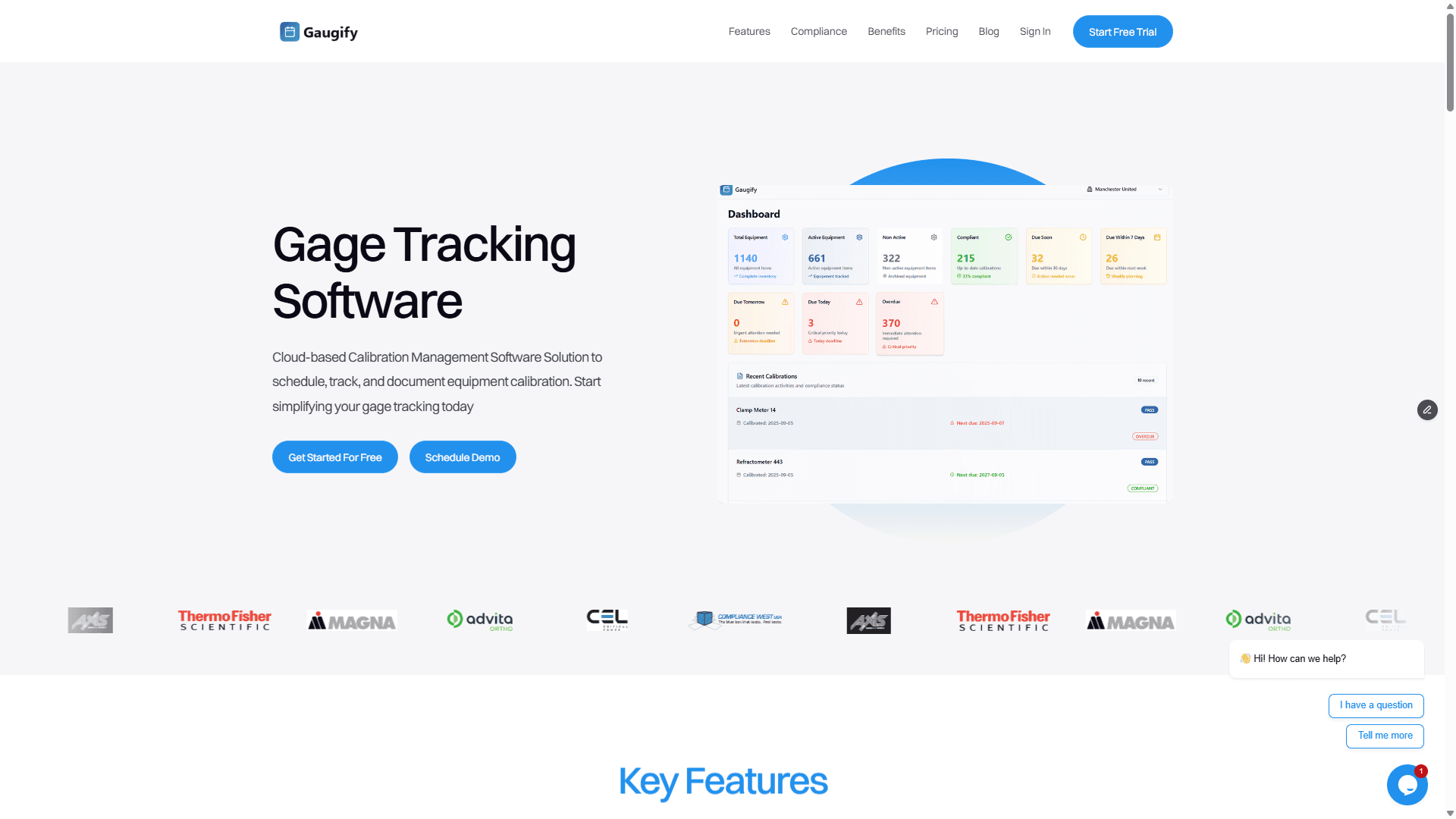
Quality audits focusing on measurement control require extensive documentation that manual systems struggle to provide quickly. Gaugify's compliance dashboard provides instant visibility into calibration status across your entire instrument population.
Automated reports show overdue instruments, upcoming calibrations, and compliance statistics by department or location. During audits, these reports demonstrate proactive calibration management and measurement control effectiveness.
The system maintains complete audit trails showing who performed calibrations, when they were completed, and any changes made to calibration records. This transparency satisfies auditor requirements while protecting your organization from documentation gaps.
Integration and Scalability
As your power analyzer population grows or measurement requirements evolve, Gaugify scales seamlessly without requiring infrastructure investments. Cloud-based architecture ensures access from any location while maintaining data security and backup automatically.
API integration capabilities allow connection with existing ERP, LIMS, or quality management systems, eliminating duplicate data entry and ensuring information consistency across platforms. This integration proves particularly valuable for organizations with multiple facilities or complex equipment hierarchies.
Optimize Your Power Analyzer Calibration Program Today
Effective power analyzer calibration requires technical expertise, proper equipment, and systematic management to maintain measurement accuracy and regulatory compliance. The complexity of these multi-parameter instruments demands attention to detail throughout the calibration process, from initial setup through final documentation.
Success depends on understanding the specific measurement requirements of your applications, selecting appropriate calibration intervals based on actual usage and environmental conditions, and maintaining comprehensive records that demonstrate ongoing measurement control. Whether you're managing a single power analyzer or dozens across multiple facilities, systematic calibration management ensures measurement reliability while minimizing administrative overhead.
Manual calibration tracking quickly becomes overwhelming as instrument populations grow and regulatory requirements increase. Modern calibration management solutions like Gaugify transform this challenge into a competitive advantage by automating routine tasks while providing the documentation and insights needed for continuous improvement.
Start your free Gaugify trial today and discover how professional calibration management can streamline your power analyzer calibration program while ensuring nothing falls through the cracks. Experience firsthand how automated scheduling, comprehensive data management, and professional reporting can transform your measurement quality assurance program.
How to Calibrate Power Analyzers
Power analyzer calibration is essential for maintaining measurement accuracy in electrical testing environments. Whether you're verifying energy efficiency in manufacturing equipment or conducting precise electrical measurements in R&D labs, properly calibrated power analyzers ensure reliable data and regulatory compliance. This comprehensive guide covers everything quality managers and technicians need to know about calibrating these critical instruments.
Understanding Power Analyzers and Their Critical Measurements
Power analyzers are sophisticated instruments that measure multiple electrical parameters simultaneously, including voltage, current, power, power factor, frequency, and harmonics. Unlike basic multimeters, these devices provide comprehensive analysis of AC and DC power systems with high accuracy and fast sampling rates.
Modern power analyzers like the Yokogawa WT5000 series or Keysight PA2201A can measure parameters such as:
True RMS voltage and current - Critical for non-sinusoidal waveforms
Active, reactive, and apparent power - Essential for power quality analysis
Power factor and phase angle - Key metrics for efficiency assessments
Total harmonic distortion (THD) - Important for power quality compliance
Energy consumption over time - Required for efficiency testing standards
These instruments typically feature measurement accuracies of ±0.02% to ±0.1% of reading, making them suitable for applications ranging from motor efficiency testing to renewable energy system validation. The wide measurement ranges - often from milliwatts to megawatts - require careful calibration across multiple scales to ensure accuracy at all operating points.
Applications Requiring Calibrated Power Analyzers
Power analyzers see critical use in automotive testing labs measuring electric vehicle charging efficiency, aerospace facilities validating power systems, and manufacturing plants monitoring motor performance. In each application, measurement uncertainty directly impacts product quality decisions and regulatory compliance.
Why Power Analyzer Calibration is Critical
The complexity of power analyzer calibration stems from the instrument's multi-parameter measurement capabilities. Unlike single-function devices, power analyzers require verification across voltage, current, and frequency ranges while maintaining phase accuracy between channels.
Drift in power measurements can have severe consequences. Consider a motor efficiency test where a 0.1% error in power measurement translates to incorrect efficiency ratings, potentially causing non-compliant products to pass inspection or efficient designs to be rejected. In energy auditing applications, measurement errors directly impact cost calculations and regulatory reporting.
Environmental factors significantly affect power analyzer performance. Temperature coefficients typically range from 0.01% to 0.05% per degree Celsius, while humidity and electromagnetic interference can introduce additional errors. Regular calibration compensates for these effects and identifies deteriorating components before they compromise measurements.
Regulatory and Standards Compliance
Industries subject to energy efficiency regulations - such as automotive (EPA standards), appliance manufacturing (ENERGY STAR), and power generation (IEEE standards) - require traceable calibration documentation. Auditors specifically look for calibration certificates showing measurement uncertainty calculations and traceability to national standards.
Quality management systems following ISO 9001 mandate that measuring equipment be calibrated at intervals that maintain measurement confidence. For power analyzers, this typically means annual calibration with more frequent verification checks for critical applications.
Step-by-Step Power Analyzer Calibration Procedure
Professional power analyzer calibration requires precision reference standards and controlled environmental conditions. The process involves multiple verification points across the instrument's measurement ranges and functions.
Required Equipment and Environmental Conditions
Primary calibration equipment includes:
Precision voltage source - Fluke 5560A or similar with 0.01% accuracy
Precision current source - Capable of delivering test currents with phase control
Reference power analyzer - Higher accuracy than the unit under test (4:1 ratio minimum)
Precision frequency generator - For frequency response verification
Environmental monitoring - Temperature and humidity recording during calibration
Environmental conditions must be stable: temperature within 23°C ± 2°C, relative humidity between 45-55%, and minimal electromagnetic interference. Allow 30-60 minutes warm-up time for both the analyzer and reference standards.
Detailed Calibration Steps
Step 1: Pre-calibration Documentation
Record the instrument's as-found condition by testing at key measurement points. Document any obvious defects, previous calibration date, and environmental conditions. This establishes baseline performance before adjustments.
Step 2: DC Voltage Verification
Apply precision DC voltages at 10%, 25%, 50%, 75%, and 100% of each voltage range. For a typical analyzer with 15V, 30V, 60V, 150V, 300V, and 600V ranges, test points might include 1.5V, 7.5V, 15V on the 15V range, then similar percentages on higher ranges. Record readings and calculate errors.
Step 3: AC Voltage Calibration
Using a precision AC voltage source, verify RMS voltage measurements at multiple frequencies (45Hz, 50Hz, 60Hz, 400Hz, 1kHz) across voltage ranges. Pay special attention to the fundamental frequency accuracy, as this affects all power calculations.
Step 4: Current Measurement Verification
Current calibration requires precision current sources or current shunts with known accuracy. Test at multiple current levels across each range, ensuring both positive and negative current directions are verified. For analyzers measuring from milliamps to hundreds of amps, use appropriate scaling techniques.
Step 5: Power Calibration
This critical step involves applying known voltage and current signals with controlled phase relationships. Verify active power, reactive power, and apparent power calculations at various power factors (1.0, 0.8 leading, 0.8 lagging, 0.5 leading, 0.5 lagging). Test points should include low power levels where phase errors are most significant.
Step 6: Frequency and Phase Verification
Use precision frequency sources to verify frequency measurements from DC to the instrument's maximum rated frequency. Phase accuracy testing requires synchronized voltage and current sources with precise phase control, typically verified at 0°, 60°, 120°, 180°, 240°, and 300° phase differences.
Step 7: Harmonic Analysis Verification
For analyzers with harmonic measurement capabilities, apply known harmonic content using precision harmonic generators. Verify THD calculations and individual harmonic measurements up to the instrument's specified harmonic order (typically 50th or 100th harmonic).
Acceptance Criteria and Adjustments
Compare measured values against applied values, calculating percentage errors for each test point. Typical acceptance criteria for precision power analyzers require measurements within ±0.05% to ±0.2% of reading, depending on the measurement function and range.
When measurements exceed specifications, adjustments may be possible through internal calibration routines or service-level repairs. Document all adjustments and re-verify affected measurement ranges. If the instrument cannot meet specifications after adjustment, remove it from service until proper repair is completed.
Modern calibration management systems streamline this complex process by providing automated data collection and analysis. Start a free trial with Gaugify to see how digital calibration management can improve your power analyzer calibration workflow and ensure nothing falls through the cracks.
Relevant Calibration Standards for Power Analyzer Calibration
Multiple national and international standards govern power analyzer calibration, each addressing specific aspects of electrical measurement traceability and uncertainty.
Primary Measurement Standards
NIST Special Publication 250 provides the foundation for electrical measurement traceability in the United States. This document outlines calibration procedures and uncertainty calculations for voltage, current, and power measurements, establishing the link between working standards and national references.
IEC 61000-4-7 specifically addresses power quality analyzers and harmonic measurement instruments. This standard defines test procedures for instruments measuring harmonics, interharmonics, and other power quality parameters, directly applicable to modern power analyzers with these capabilities.
IEEE 1459 establishes definitions for power measurements under non-sinusoidal conditions. As power analyzers increasingly measure distorted waveforms in modern electrical systems, this standard ensures consistent measurement approaches across different instruments and manufacturers.
Industry-Specific Requirements
Automotive testing facilities often reference SAE J1711 for electric vehicle testing, which specifies power measurement accuracy requirements and calibration intervals. Similarly, ENERGY STAR testing protocols mandate specific calibration procedures for appliance efficiency measurements.
Aerospace and defense applications typically require compliance with MIL-STD-45662 or equivalent standards, demanding higher calibration frequencies and more stringent documentation requirements. These applications often specify measurement uncertainty ratios of 10:1 or higher between reference standards and instruments under test.
ISO 17025 Compliance Considerations
Calibration laboratories accredited to ISO 17025 must demonstrate technical competence in power analyzer calibration through validated procedures, qualified personnel, and appropriate reference standards. The standard requires documented measurement uncertainty calculations and participation in proficiency testing programs.
For organizations managing multiple power analyzers across different locations, Gaugify's ISO 17025 compliance features provide the documentation structure and audit trails necessary for maintaining accreditation while streamlining calibration management workflows.
Recommended Calibration Intervals
Power analyzer calibration intervals depend on several factors including measurement criticality, environmental conditions, usage intensity, and historical stability data. Most precision power analyzers require annual calibration, though specific applications may demand different intervals.
Standard Interval Recommendations
For general-purpose power analyzers used in R&D environments with stable conditions, 12-month intervals typically provide adequate measurement assurance. This interval balances calibration costs with measurement confidence for most applications.
Critical manufacturing applications, such as motor efficiency testing for regulatory compliance, often benefit from 6-month calibration intervals. The cost of product recalls or regulatory violations far exceeds the additional calibration expense.
Harsh environment applications - high temperature, humidity, or vibration conditions - may require quarterly calibration or more frequent verification checks. Portable power analyzers used in field applications fall into this category due to transportation stresses and varying environmental conditions.
Factors Affecting Calibration Frequency
Historical drift data provides the best guidance for optimizing calibration intervals. Instruments consistently found in-specification at calibration may qualify for extended intervals, while those showing significant drift require more frequent attention.
Usage intensity affects component aging and calibration stability. Power analyzers measuring high currents or operating at maximum power ratings experience greater thermal stress, potentially requiring shorter intervals than instruments used well below their maximum ratings.
Environmental monitoring data helps predict calibration needs. Facilities with temperature variations exceeding ±5°C or relative humidity swings greater than 20% should consider more frequent calibration or implement environmental controls.
Verification Between Calibrations
Interim verification checks using check standards or cross-comparison with other calibrated instruments help monitor instrument stability between formal calibrations. These checks, performed monthly or quarterly, can detect major failures or drift trends early.
Simple verification procedures might include measuring known AC voltage sources, checking frequency accuracy against line frequency, or comparing power measurements with a second calibrated analyzer. Document these checks to demonstrate ongoing measurement control.
Common Power Analyzer Calibration Mistakes and Prevention
Power analyzer calibration complexity leads to several common errors that can compromise measurement accuracy or invalidate calibration results. Understanding these pitfalls helps ensure successful calibration outcomes.
Inadequate Warm-up Time
Both the power analyzer and reference standards require sufficient warm-up time to reach thermal equilibrium. Rushing this process introduces temperature-related errors that affect calibration accuracy.
Prevention: Follow manufacturer specifications for warm-up time, typically 30-60 minutes for precision instruments. Monitor internal temperatures if available, and perform initial stability checks before beginning formal calibration procedures.
Incorrect Phase Relationships
Power measurements depend critically on accurate phase relationships between voltage and current signals. Errors in reference standard setup or incorrect cable connections can introduce phase errors that invalidate power calibration.
Prevention: Use precision phase measurement capabilities to verify reference signal relationships. Calibrate phase measurement functions first, then use these to verify power measurement setup. Consider cable delays and signal propagation effects in high-frequency measurements.
Insufficient Test Point Coverage
Testing only at full-scale values misses potential errors at lower measurement levels where noise and offset errors become significant. Power analyzers often exhibit different accuracy characteristics across their measurement ranges.
Prevention: Test at multiple points across each range, including low-level measurements where specifications may be expressed differently (e.g., percent of reading plus percent of range). Pay special attention to range transition points and zero-power conditions.
Environmental Condition Neglect
Failing to monitor and control environmental conditions during calibration introduces uncertainties that may exceed measurement tolerances. Temperature changes during calibration can cause apparent drift in both standards and instruments under test.
Prevention: Monitor temperature, humidity, and air movement throughout calibration. Allow time for thermal stabilization after any significant environmental changes. Document conditions as part of calibration records.
Inadequate Documentation
Poor documentation of calibration procedures, environmental conditions, and as-found/as-left data creates problems during audits and makes trending analysis impossible.
Prevention: Use structured calibration data collection forms or electronic systems that capture all relevant information. Include photos of setup configurations for complex calibrations, and maintain detailed records of any anomalies or adjustments made.
Streamlining Power Analyzer Calibration Management with Gaugify
Managing power analyzer calibration across multiple instruments and locations requires systematic organization that manual tracking methods struggle to provide. Modern calibration management software addresses these challenges while improving accuracy and reducing administrative burden.
Automated Scheduling and Reminders
Gaugify's advanced scheduling features automatically calculate next calibration dates based on your specified intervals and instrument usage patterns. The system sends email reminders at configurable intervals (30, 15, 7 days before due dates) to prevent instruments from going overdue.
For power analyzers with varying calibration intervals based on application criticality, Gaugify allows custom interval settings for each instrument. Critical manufacturing analyzers can have 6-month intervals while R&D instruments operate on annual schedules, all managed within the same system.
Comprehensive As-Found and As-Left Data Management
Power analyzer calibration generates substantial data across multiple measurement functions and ranges. Gaugify's structured data entry forms capture all calibration points systematically, ensuring nothing is missed during complex multi-parameter calibrations.
The system automatically calculates measurement errors, flags out-of-specification results, and tracks correction factors or adjustments made during calibration. This detailed record-keeping proves invaluable during quality audits or when investigating measurement discrepancies.
Visual trending charts help identify instruments experiencing gradual drift or sudden performance changes. These insights enable proactive maintenance decisions and calibration interval optimization based on actual performance data rather than generic recommendations.
Professional Certificate Generation
Gaugify automatically generates professional calibration certificates containing all required information: instrument identification, calibration procedures used, environmental conditions, measurement uncertainties, and traceability statements. Templates can be customized to meet specific industry or customer requirements.
The system maintains digital signatures and approval workflows, ensuring certificates are properly authorized before distribution. Integration with your quality management system provides seamless document control and revision tracking.
Compliance and Audit Readiness
Quality audits focusing on measurement control require extensive documentation that manual systems struggle to provide quickly. Gaugify's compliance dashboard provides instant visibility into calibration status across your entire instrument population.
Automated reports show overdue instruments, upcoming calibrations, and compliance statistics by department or location. During audits, these reports demonstrate proactive calibration management and measurement control effectiveness.
The system maintains complete audit trails showing who performed calibrations, when they were completed, and any changes made to calibration records. This transparency satisfies auditor requirements while protecting your organization from documentation gaps.
Integration and Scalability
As your power analyzer population grows or measurement requirements evolve, Gaugify scales seamlessly without requiring infrastructure investments. Cloud-based architecture ensures access from any location while maintaining data security and backup automatically.
API integration capabilities allow connection with existing ERP, LIMS, or quality management systems, eliminating duplicate data entry and ensuring information consistency across platforms. This integration proves particularly valuable for organizations with multiple facilities or complex equipment hierarchies.
Optimize Your Power Analyzer Calibration Program Today
Effective power analyzer calibration requires technical expertise, proper equipment, and systematic management to maintain measurement accuracy and regulatory compliance. The complexity of these multi-parameter instruments demands attention to detail throughout the calibration process, from initial setup through final documentation.
Success depends on understanding the specific measurement requirements of your applications, selecting appropriate calibration intervals based on actual usage and environmental conditions, and maintaining comprehensive records that demonstrate ongoing measurement control. Whether you're managing a single power analyzer or dozens across multiple facilities, systematic calibration management ensures measurement reliability while minimizing administrative overhead.
Manual calibration tracking quickly becomes overwhelming as instrument populations grow and regulatory requirements increase. Modern calibration management solutions like Gaugify transform this challenge into a competitive advantage by automating routine tasks while providing the documentation and insights needed for continuous improvement.
Start your free Gaugify trial today and discover how professional calibration management can streamline your power analyzer calibration program while ensuring nothing falls through the cracks. Experience firsthand how automated scheduling, comprehensive data management, and professional reporting can transform your measurement quality assurance program.