
How to Calibrate Pressure Transmitters
How to Calibrate Pressure Transmitters
David Bentley
Quality Assurance Engineer
12 min read
How to Calibrate Pressure Transmitters
Pressure transmitter calibration is a critical maintenance process that ensures accurate pressure measurements across industrial applications. Whether you're monitoring hydraulic systems operating at 3,000 PSI or tracking low-pressure gas flows at 15 PSIG, properly calibrated pressure transmitters are essential for process control, safety, and regulatory compliance. This comprehensive guide covers everything quality managers and technicians need to know about calibrating these vital instruments.
Understanding Pressure Transmitters and Their Applications
A pressure transmitter is an electronic instrument that converts pressure measurements into standardized electrical signals, typically 4-20 mA current loops or 0-10 VDC voltage outputs. These devices consist of a pressure-sensing element (usually a diaphragm or strain gauge), signal conditioning electronics, and an output circuit that transmits the pressure reading to control systems, data loggers, or display units.
Common pressure transmitter types include:
Gauge pressure transmitters - Measure pressure relative to atmospheric pressure
Absolute pressure transmitters - Measure pressure relative to a perfect vacuum
Differential pressure transmitters - Measure the difference between two pressure inputs
Sealed gauge transmitters - Reference a sealed chamber rather than ambient conditions
These instruments are deployed across industries from pharmaceutical manufacturing (monitoring sterile filtration at 30 PSI) to petrochemical processing (tracking reactor vessel pressures exceeding 1,500 PSI). The accuracy and reliability of pressure transmitter measurements directly impact product quality, equipment protection, and operational safety.
Why Pressure Transmitter Calibration is Critical
Pressure transmitters experience drift over time due to mechanical stress, temperature cycling, vibration, and exposure to process media. A transmitter initially accurate to ±0.1% of span may drift to ±0.5% or worse without regular calibration, leading to:
Process control issues - Inaccurate pressure readings cause poor control loop performance, resulting in product quality variations and increased waste
Safety hazards - Underreporting dangerous pressure conditions can lead to equipment failures, vessel ruptures, or personnel injuries
Regulatory non-compliance - Industries like pharmaceuticals and food processing require documented pressure measurement accuracy for FDA and USDA compliance
Equipment damage - Overpressure conditions that go undetected due to calibration drift can destroy expensive pumps, compressors, and process vessels
For example, a pressure transmitter monitoring a steam boiler that reads 145 PSI when the actual pressure is 165 PSI creates a dangerous situation where operators don't recognize approaching safety limits. Regular pressure transmitter calibration prevents such scenarios by maintaining measurement accuracy within specified tolerances.
Step-by-Step Pressure Transmitter Calibration Procedure
Proper pressure transmitter calibration requires specific reference standards, controlled environmental conditions, and systematic testing procedures. Here's the detailed process:
Equipment and Standards Required
Before beginning calibration, gather these essential items:
Pressure calibrator - Deadweight tester, pneumatic calibrator, or hydraulic pressure source with accuracy 4:1 better than the transmitter under test
Multimeter - For measuring 4-20 mA output signals with 0.01 mA resolution
Precision resistor - 250-ohm load resistor for current loop measurements
Power supply - Typically 24 VDC for transmitter excitation
Fittings and hoses - Appropriate pressure connections and leak-free hoses rated for test pressures
Need help tracking calibration schedules and maintaining traceability for your pressure transmitters? Start your free trial of Gaugify to see how cloud-based calibration management simplifies compliance and reduces administrative overhead.
Environmental Considerations
Conduct calibrations in a controlled environment with:
Temperature stable within ±2°C during the calibration period
Humidity between 45-75% relative humidity when possible
Minimal vibration and electromagnetic interference
Adequate ventilation if using hydraulic fluids or compressed gases
Pre-Calibration Steps
Before applying pressure, complete these preparatory tasks:
Visual inspection - Check for physical damage, corrosion, or loose connections
Documentation review - Verify transmitter specifications, range, and previous calibration data
Warm-up period - Allow electronic transmitters to stabilize for 15-30 minutes after power-on
Zero check - With zero pressure applied, verify the 4 mA output (or 0% of span for voltage outputs)
Calibration Test Points
Test pressure transmitters at a minimum of five points across the measurement range:
0% of span (typically 4.00 mA output)
25% of span (8.00 mA output)
50% of span (12.00 mA output)
75% of span (16.00 mA output)
100% of span (20.00 mA output)
For a 0-100 PSI transmitter, test points would be 0, 25, 50, 75, and 100 PSI. Perform both ascending and descending pressure cycles to identify hysteresis errors.
Data Collection and Analysis
Record both "as-found" and "as-left" data for each test point. Calculate errors using:
Error = (Indicated Value - True Value) / Full Scale Range × 100%
For example, if a 0-500 PSI transmitter outputs 12.5 mA at an applied pressure of 275 PSI:
Expected output: 4 + (275/500) × 16 = 12.80 mA
Error: (12.5 - 12.80) / 16 × 100% = -1.875% of span
If errors exceed manufacturer specifications (typically ±0.25% to ±0.5% of span for quality transmitters), perform adjustments according to the manufacturer's procedure.
Relevant Standards for Pressure Transmitter Calibration
Several industry standards govern pressure transmitter calibration procedures and requirements:
ASME B40.100 - Pressure gauges and gauge attachments, including calibration procedures for pressure measurement devices
ISA-51.1 - Process instrumentation terminology, defining accuracy classes and calibration requirements for pressure transmitters
NIST SP 250-83 - Guidelines for pressure measurements and calibration traceability to national standards
ISO 17025 - General requirements for testing and calibration laboratories, essential for maintaining measurement traceability
For facilities requiring ISO 17025 compliance, documentation must demonstrate unbroken traceability chains from working standards through national measurement institutes. This requires detailed calibration certificates, uncertainty calculations, and systematic calibration interval management.
Industry-Specific Requirements
Certain industries impose additional calibration standards:
FDA 21 CFR Part 211 - Pharmaceutical manufacturing requirements for calibrated measuring equipment
API 510/570 - Petroleum industry pressure vessel and piping inspection codes
Nuclear quality standards - 10 CFR 50 Appendix B for nuclear power plant instrumentation
Recommended Calibration Intervals for Pressure Transmitters
Calibration frequency depends on several factors that quality managers must carefully evaluate:
Standard Calibration Intervals
Critical safety applications - Every 6 months (boiler safety systems, pressure relief monitoring)
Process control applications - Every 12 months (standard industrial monitoring)
Non-critical monitoring - Every 18-24 months (trending applications, backup measurements)
Factors Affecting Calibration Frequency
Adjust intervals based on:
Environmental conditions - Extreme temperatures, vibration, or corrosive atmospheres accelerate drift
Process media - Contaminating or aggressive fluids may require more frequent calibration
Criticality - Safety-related measurements need shorter intervals than general monitoring
Historical performance - Transmitters consistently passing calibrations may qualify for extended intervals
Manufacturer recommendations - Some high-stability transmitters support 2-year intervals under favorable conditions
For example, pressure transmitters monitoring hydraulic systems in steel mills (high vibration, temperature cycling) typically require 6-month calibrations, while transmitters in climate-controlled laboratories may operate reliably on 18-month intervals.
Common Pressure Transmitter Calibration Mistakes
Avoid these frequent calibration errors that compromise measurement accuracy and regulatory compliance:
Inadequate Reference Standard Accuracy
Using calibrators with insufficient accuracy ratios leads to unreliable results. Always maintain 4:1 accuracy ratios between standards and units under test. A ±0.25% transmitter requires a ±0.06% (or better) reference standard.
Insufficient Stabilization Time
Rushing calibrations without adequate warm-up and settling periods introduces errors. Allow 15-30 minutes for electronic stabilization and 2-5 minutes between pressure changes for mechanical settling.
Ignoring Temperature Effects
Temperature variations during calibration cause measurement errors. Document ambient temperature and apply temperature corrections when transmitter specifications include temperature coefficients.
Poor Connection Practices
Loose fittings, contaminated pressure ports, or inappropriate adapters create measurement errors and safety hazards. Always use proper torque values, thread sealants, and pressure-rated components.
Incomplete Documentation
Missing "as-found" data, incomplete environmental records, or poor traceability documentation fails audit requirements. Record all relevant calibration conditions and maintain complete calibration certificates.
Streamlining Pressure Transmitter Calibration with Digital Management
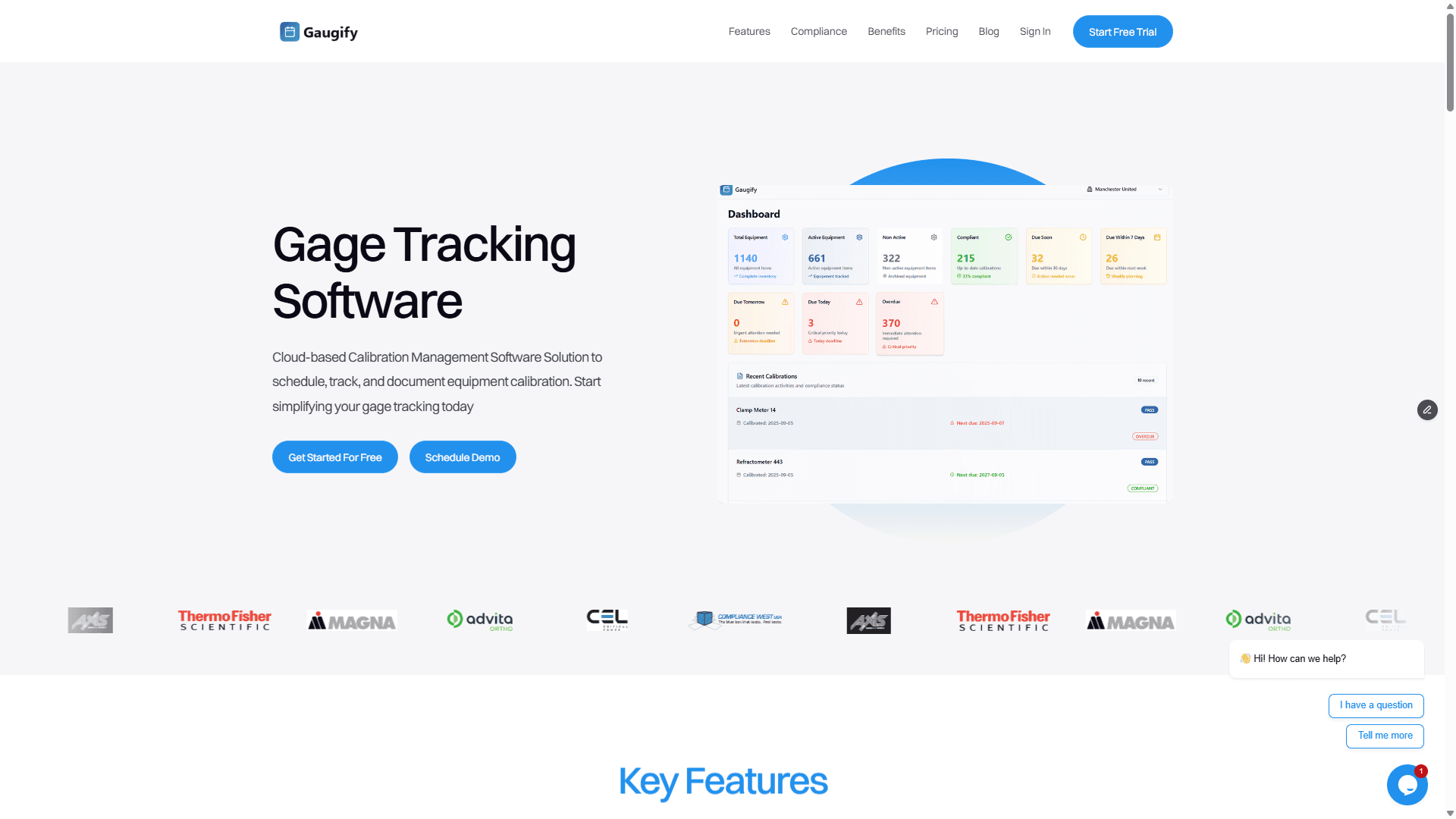
Modern calibration management requires more than accurate measurements—it demands systematic tracking, automated scheduling, and comprehensive documentation. Gaugify's cloud-based platform addresses these challenges by providing specialized tools for pressure transmitter calibration management.
Automated Calibration Scheduling
Gaugify automatically tracks calibration due dates for every pressure transmitter in your facility, sending email reminders before instruments become overdue. Configure different intervals for various transmitter applications—6 months for safety systems, 12 months for process control, and 24 months for non-critical monitoring.
Comprehensive Data Management
The platform captures both as-found and as-left calibration data for each test point, automatically calculating errors and flagging out-of-tolerance conditions. Upload calibration certificates directly to each instrument record, maintaining complete traceability chains required for regulatory compliance.
Mobile-Friendly Calibration Records
Technicians can access pressure transmitter calibration procedures, record test data, and update instrument status directly from tablets or smartphones. This eliminates manual data entry errors and ensures real-time calibration status updates across your organization.
Advanced Reporting and Analytics
Generate calibration status reports showing upcoming due dates, overdue instruments, and calibration history trends. Identify pressure transmitters requiring frequent adjustments or exhibiting excessive drift, enabling proactive maintenance decisions that prevent process disruptions.
The system also tracks calibration costs per instrument, helping quality managers optimize calibration intervals and justify investments in higher-stability pressure transmitters that support extended calibration cycles.
Best Practices for Long-Term Calibration Success
Implementing these strategies ensures consistent pressure transmitter calibration results:
Standardize Calibration Procedures
Develop written procedures specific to each transmitter type and range. Include acceptance criteria, environmental requirements, and adjustment procedures. Train all technicians on standardized methods to ensure consistent results regardless of who performs the calibration.
Maintain Calibration Equipment
Pressure calibrators and reference standards require their own calibration schedules. Maintain traceability certificates for all calibration equipment and track their calibration status to prevent using out-of-tolerance references.
Monitor Calibration Trends
Track historical calibration data to identify instruments experiencing excessive drift or frequent failures. This trending analysis helps optimize calibration intervals and identify transmitters requiring replacement before they cause process problems.
Document Environmental Conditions
Record temperature, humidity, and other environmental factors during calibrations. This documentation supports uncertainty calculations and helps explain unusual calibration results during audits.
Take Control of Your Pressure Transmitter Calibration Program
Effective pressure transmitter calibration requires systematic procedures, accurate reference standards, and comprehensive record-keeping. Whether you're managing dozens of transmitters in a single facility or thousands across multiple sites, maintaining calibration compliance manually becomes increasingly challenging and error-prone.
Gaugify transforms calibration management from a manual, paper-based process into an automated, digital system that ensures no instrument goes uncalibrated. The platform's comprehensive feature set includes automated scheduling, mobile data collection, certificate management, and regulatory reporting—everything needed to maintain a world-class calibration program.
Ready to modernize your pressure transmitter calibration management? Schedule a personalized demo to see how Gaugify can streamline your calibration processes, reduce administrative overhead, and ensure consistent compliance with industry standards. Join hundreds of quality managers who have already discovered the benefits of cloud-based calibration management.
How to Calibrate Pressure Transmitters
Pressure transmitter calibration is a critical maintenance process that ensures accurate pressure measurements across industrial applications. Whether you're monitoring hydraulic systems operating at 3,000 PSI or tracking low-pressure gas flows at 15 PSIG, properly calibrated pressure transmitters are essential for process control, safety, and regulatory compliance. This comprehensive guide covers everything quality managers and technicians need to know about calibrating these vital instruments.
Understanding Pressure Transmitters and Their Applications
A pressure transmitter is an electronic instrument that converts pressure measurements into standardized electrical signals, typically 4-20 mA current loops or 0-10 VDC voltage outputs. These devices consist of a pressure-sensing element (usually a diaphragm or strain gauge), signal conditioning electronics, and an output circuit that transmits the pressure reading to control systems, data loggers, or display units.
Common pressure transmitter types include:
Gauge pressure transmitters - Measure pressure relative to atmospheric pressure
Absolute pressure transmitters - Measure pressure relative to a perfect vacuum
Differential pressure transmitters - Measure the difference between two pressure inputs
Sealed gauge transmitters - Reference a sealed chamber rather than ambient conditions
These instruments are deployed across industries from pharmaceutical manufacturing (monitoring sterile filtration at 30 PSI) to petrochemical processing (tracking reactor vessel pressures exceeding 1,500 PSI). The accuracy and reliability of pressure transmitter measurements directly impact product quality, equipment protection, and operational safety.
Why Pressure Transmitter Calibration is Critical
Pressure transmitters experience drift over time due to mechanical stress, temperature cycling, vibration, and exposure to process media. A transmitter initially accurate to ±0.1% of span may drift to ±0.5% or worse without regular calibration, leading to:
Process control issues - Inaccurate pressure readings cause poor control loop performance, resulting in product quality variations and increased waste
Safety hazards - Underreporting dangerous pressure conditions can lead to equipment failures, vessel ruptures, or personnel injuries
Regulatory non-compliance - Industries like pharmaceuticals and food processing require documented pressure measurement accuracy for FDA and USDA compliance
Equipment damage - Overpressure conditions that go undetected due to calibration drift can destroy expensive pumps, compressors, and process vessels
For example, a pressure transmitter monitoring a steam boiler that reads 145 PSI when the actual pressure is 165 PSI creates a dangerous situation where operators don't recognize approaching safety limits. Regular pressure transmitter calibration prevents such scenarios by maintaining measurement accuracy within specified tolerances.
Step-by-Step Pressure Transmitter Calibration Procedure
Proper pressure transmitter calibration requires specific reference standards, controlled environmental conditions, and systematic testing procedures. Here's the detailed process:
Equipment and Standards Required
Before beginning calibration, gather these essential items:
Pressure calibrator - Deadweight tester, pneumatic calibrator, or hydraulic pressure source with accuracy 4:1 better than the transmitter under test
Multimeter - For measuring 4-20 mA output signals with 0.01 mA resolution
Precision resistor - 250-ohm load resistor for current loop measurements
Power supply - Typically 24 VDC for transmitter excitation
Fittings and hoses - Appropriate pressure connections and leak-free hoses rated for test pressures
Need help tracking calibration schedules and maintaining traceability for your pressure transmitters? Start your free trial of Gaugify to see how cloud-based calibration management simplifies compliance and reduces administrative overhead.
Environmental Considerations
Conduct calibrations in a controlled environment with:
Temperature stable within ±2°C during the calibration period
Humidity between 45-75% relative humidity when possible
Minimal vibration and electromagnetic interference
Adequate ventilation if using hydraulic fluids or compressed gases
Pre-Calibration Steps
Before applying pressure, complete these preparatory tasks:
Visual inspection - Check for physical damage, corrosion, or loose connections
Documentation review - Verify transmitter specifications, range, and previous calibration data
Warm-up period - Allow electronic transmitters to stabilize for 15-30 minutes after power-on
Zero check - With zero pressure applied, verify the 4 mA output (or 0% of span for voltage outputs)
Calibration Test Points
Test pressure transmitters at a minimum of five points across the measurement range:
0% of span (typically 4.00 mA output)
25% of span (8.00 mA output)
50% of span (12.00 mA output)
75% of span (16.00 mA output)
100% of span (20.00 mA output)
For a 0-100 PSI transmitter, test points would be 0, 25, 50, 75, and 100 PSI. Perform both ascending and descending pressure cycles to identify hysteresis errors.
Data Collection and Analysis
Record both "as-found" and "as-left" data for each test point. Calculate errors using:
Error = (Indicated Value - True Value) / Full Scale Range × 100%
For example, if a 0-500 PSI transmitter outputs 12.5 mA at an applied pressure of 275 PSI:
Expected output: 4 + (275/500) × 16 = 12.80 mA
Error: (12.5 - 12.80) / 16 × 100% = -1.875% of span
If errors exceed manufacturer specifications (typically ±0.25% to ±0.5% of span for quality transmitters), perform adjustments according to the manufacturer's procedure.
Relevant Standards for Pressure Transmitter Calibration
Several industry standards govern pressure transmitter calibration procedures and requirements:
ASME B40.100 - Pressure gauges and gauge attachments, including calibration procedures for pressure measurement devices
ISA-51.1 - Process instrumentation terminology, defining accuracy classes and calibration requirements for pressure transmitters
NIST SP 250-83 - Guidelines for pressure measurements and calibration traceability to national standards
ISO 17025 - General requirements for testing and calibration laboratories, essential for maintaining measurement traceability
For facilities requiring ISO 17025 compliance, documentation must demonstrate unbroken traceability chains from working standards through national measurement institutes. This requires detailed calibration certificates, uncertainty calculations, and systematic calibration interval management.
Industry-Specific Requirements
Certain industries impose additional calibration standards:
FDA 21 CFR Part 211 - Pharmaceutical manufacturing requirements for calibrated measuring equipment
API 510/570 - Petroleum industry pressure vessel and piping inspection codes
Nuclear quality standards - 10 CFR 50 Appendix B for nuclear power plant instrumentation
Recommended Calibration Intervals for Pressure Transmitters
Calibration frequency depends on several factors that quality managers must carefully evaluate:
Standard Calibration Intervals
Critical safety applications - Every 6 months (boiler safety systems, pressure relief monitoring)
Process control applications - Every 12 months (standard industrial monitoring)
Non-critical monitoring - Every 18-24 months (trending applications, backup measurements)
Factors Affecting Calibration Frequency
Adjust intervals based on:
Environmental conditions - Extreme temperatures, vibration, or corrosive atmospheres accelerate drift
Process media - Contaminating or aggressive fluids may require more frequent calibration
Criticality - Safety-related measurements need shorter intervals than general monitoring
Historical performance - Transmitters consistently passing calibrations may qualify for extended intervals
Manufacturer recommendations - Some high-stability transmitters support 2-year intervals under favorable conditions
For example, pressure transmitters monitoring hydraulic systems in steel mills (high vibration, temperature cycling) typically require 6-month calibrations, while transmitters in climate-controlled laboratories may operate reliably on 18-month intervals.
Common Pressure Transmitter Calibration Mistakes
Avoid these frequent calibration errors that compromise measurement accuracy and regulatory compliance:
Inadequate Reference Standard Accuracy
Using calibrators with insufficient accuracy ratios leads to unreliable results. Always maintain 4:1 accuracy ratios between standards and units under test. A ±0.25% transmitter requires a ±0.06% (or better) reference standard.
Insufficient Stabilization Time
Rushing calibrations without adequate warm-up and settling periods introduces errors. Allow 15-30 minutes for electronic stabilization and 2-5 minutes between pressure changes for mechanical settling.
Ignoring Temperature Effects
Temperature variations during calibration cause measurement errors. Document ambient temperature and apply temperature corrections when transmitter specifications include temperature coefficients.
Poor Connection Practices
Loose fittings, contaminated pressure ports, or inappropriate adapters create measurement errors and safety hazards. Always use proper torque values, thread sealants, and pressure-rated components.
Incomplete Documentation
Missing "as-found" data, incomplete environmental records, or poor traceability documentation fails audit requirements. Record all relevant calibration conditions and maintain complete calibration certificates.
Streamlining Pressure Transmitter Calibration with Digital Management
Modern calibration management requires more than accurate measurements—it demands systematic tracking, automated scheduling, and comprehensive documentation. Gaugify's cloud-based platform addresses these challenges by providing specialized tools for pressure transmitter calibration management.
Automated Calibration Scheduling
Gaugify automatically tracks calibration due dates for every pressure transmitter in your facility, sending email reminders before instruments become overdue. Configure different intervals for various transmitter applications—6 months for safety systems, 12 months for process control, and 24 months for non-critical monitoring.
Comprehensive Data Management
The platform captures both as-found and as-left calibration data for each test point, automatically calculating errors and flagging out-of-tolerance conditions. Upload calibration certificates directly to each instrument record, maintaining complete traceability chains required for regulatory compliance.
Mobile-Friendly Calibration Records
Technicians can access pressure transmitter calibration procedures, record test data, and update instrument status directly from tablets or smartphones. This eliminates manual data entry errors and ensures real-time calibration status updates across your organization.
Advanced Reporting and Analytics
Generate calibration status reports showing upcoming due dates, overdue instruments, and calibration history trends. Identify pressure transmitters requiring frequent adjustments or exhibiting excessive drift, enabling proactive maintenance decisions that prevent process disruptions.
The system also tracks calibration costs per instrument, helping quality managers optimize calibration intervals and justify investments in higher-stability pressure transmitters that support extended calibration cycles.
Best Practices for Long-Term Calibration Success
Implementing these strategies ensures consistent pressure transmitter calibration results:
Standardize Calibration Procedures
Develop written procedures specific to each transmitter type and range. Include acceptance criteria, environmental requirements, and adjustment procedures. Train all technicians on standardized methods to ensure consistent results regardless of who performs the calibration.
Maintain Calibration Equipment
Pressure calibrators and reference standards require their own calibration schedules. Maintain traceability certificates for all calibration equipment and track their calibration status to prevent using out-of-tolerance references.
Monitor Calibration Trends
Track historical calibration data to identify instruments experiencing excessive drift or frequent failures. This trending analysis helps optimize calibration intervals and identify transmitters requiring replacement before they cause process problems.
Document Environmental Conditions
Record temperature, humidity, and other environmental factors during calibrations. This documentation supports uncertainty calculations and helps explain unusual calibration results during audits.
Take Control of Your Pressure Transmitter Calibration Program
Effective pressure transmitter calibration requires systematic procedures, accurate reference standards, and comprehensive record-keeping. Whether you're managing dozens of transmitters in a single facility or thousands across multiple sites, maintaining calibration compliance manually becomes increasingly challenging and error-prone.
Gaugify transforms calibration management from a manual, paper-based process into an automated, digital system that ensures no instrument goes uncalibrated. The platform's comprehensive feature set includes automated scheduling, mobile data collection, certificate management, and regulatory reporting—everything needed to maintain a world-class calibration program.
Ready to modernize your pressure transmitter calibration management? Schedule a personalized demo to see how Gaugify can streamline your calibration processes, reduce administrative overhead, and ensure consistent compliance with industry standards. Join hundreds of quality managers who have already discovered the benefits of cloud-based calibration management.