
How to Manage Calibration During an Equipment Move
How to Manage Calibration During an Equipment Move
David Bentley
Quality Assurance Engineer
12 min read
How to Manage Calibration During an Equipment Move
Moving calibrated equipment is one of the most high-risk activities in any quality management system. Whether you're relocating your entire lab across town or simply moving a coordinate measuring machine (CMM) to a different bay, calibration equipment relocation requires meticulous planning to maintain measurement integrity and regulatory compliance.
The statistics are sobering: nearly 40% of precision instruments require recalibration after relocation, and improper handling during moves accounts for over $2.3 million in annual measurement equipment damage across manufacturing industries. When a Mitutoyo CMM with ±2 µm accuracy shifts by even 0.1mm during transport, it can invalidate months of measurement data and trigger costly production delays.
This comprehensive guide walks you through every critical step of managing calibration during equipment moves, from pre-move documentation to post-relocation verification, ensuring your measurement systems maintain their accuracy and your quality certifications remain intact.
Why Calibration Equipment Relocation Management Matters
The consequences of poorly managed equipment moves extend far beyond simple recalibration costs. Consider what happened at a tier-1 automotive supplier in Michigan: their failure to properly document calibration status before relocating torque wrenches resulted in a two-week production shutdown when ISO/TS 16949 auditors questioned measurement traceability. The total cost exceeded $400,000.
Here's what typically goes wrong during equipment moves:
Calibration status ambiguity: Instruments lose their calibration labels or certificates, creating uncertainty about measurement validity
Physical damage: Shock-sensitive instruments like digital calipers or pressure transducers suffer internal damage that affects accuracy
Environmental exposure: Temperature fluctuations during transport can cause drift in electronic instruments, particularly digital multimeters and temperature controllers
Traceability gaps: Movement records don't properly link to calibration histories, creating audit trail breaks
Compliance violations: Regulatory bodies like FDA or ISO 17025 assessors flag inadequate relocation procedures as systemic quality failures
The good news? With proper planning and execution, you can relocate equipment while maintaining full calibration integrity and regulatory compliance.
Prerequisites: What You Need Before Starting Your Move
Successful calibration equipment relocation begins weeks before the first instrument is touched. Your preparation phase must address documentation, resources, and procedural clarity.
Essential Documentation Requirements
Gather these critical documents for every instrument being moved:
Current calibration certificates: Ensure all instruments have valid calibration within their specified intervals
Manufacturer specifications: Operating manuals with environmental requirements, shock limits, and storage conditions
Historical calibration data: At least the last three calibration cycles to establish baseline performance trends
Risk assessments: Documented analysis of each instrument's criticality and move-related risks
Insurance documentation: Verify coverage for equipment damage during relocation
Team and Resource Planning
Assemble your move team with clearly defined roles:
Calibration technician: Documents pre-move status and performs post-move verification
Quality manager: Oversees compliance aspects and approves deviations
Equipment specialist: Handles instrument-specific preparation and setup
Logistics coordinator: Manages transportation and environmental controls
Budget for these typical relocation costs: professional packing materials (2-5% of equipment value), specialized transportation (0.5-2% of equipment value), and post-move recalibration services (typically $150-800 per instrument depending on complexity).
Ready to streamline your calibration management process? Start your free Gaugify trial to see how digital calibration tracking simplifies equipment moves and maintains compliance automatically.
Step-by-Step Guide to Calibration Equipment Relocation
Phase 1: Pre-Move Assessment and Documentation (2-4 weeks before move)
Step 1: Create a comprehensive equipment inventory
Document every calibrated instrument with these details:
Asset ID, serial number, and manufacturer model
Current calibration due date and certificate number
Measurement range and specified accuracy (e.g., "±0.02mm over 0-150mm range")
Environmental requirements (temperature, humidity, vibration limits)
Criticality classification (A=mission-critical, B=important, C=routine)
Step 2: Assess calibration timing
For instruments due for calibration within 60 days of the move, consider calibrating before relocation. This strategy provides two benefits: fresh baseline data for post-move comparison and maximum remaining calibration validity period.
Step 3: Develop move-specific procedures
Create written procedures for each instrument category. For example, your CMM relocation procedure should specify: foundation requirements (±0.005" levelness), environmental conditions (20±2°C, <60% RH), settling time (minimum 24 hours), and verification measurements using certified test artifacts.
Phase 2: Pre-Move Calibration Activities (1 week before move)
Step 4: Perform verification measurements
Document current performance using traceable reference standards. For micrometers, measure certified gage blocks at 25%, 50%, and 75% of range. Record actual readings versus nominal values – this data becomes your post-move comparison baseline.
Step 5: Update calibration status records
Ensure your calibration management system reflects current status for all instruments. Flag equipment being relocated and set appropriate tracking notifications for post-move verification requirements.
Step 6: Prepare instruments for transport
Follow manufacturer guidelines precisely. For digital calipers, remove batteries and secure measuring faces. For torque wrenches, set to lowest scale value and lock adjustment mechanisms. For electronic instruments, allow 30-minute stabilization after power-down before packing.
Phase 3: Transportation and Handling
Step 7: Implement transport controls
Use specialized transport cases with shock-absorbing materials rated for your instruments' specifications. Accompany sensitive equipment (Class A instruments) with temperature and shock data loggers. Maintain transport documentation showing chain of custody and environmental exposure.
Step 8: Monitor environmental conditions
Ensure transport vehicles maintain stable conditions. Temperature fluctuations exceeding ±5°C can affect electronic calibrators, while humidity above 70% risks corrosion in precision mechanical instruments.
Phase 4: Post-Move Setup and Verification
Step 9: Allow proper stabilization
Before any calibration activities, allow instruments to stabilize in their new environment. Electronic instruments typically require 2-4 hours, while large mechanical instruments like CMMs need 24-48 hours to reach thermal equilibrium.
Step 10: Perform immediate verification checks
Compare current readings against your pre-move baseline data. Acceptable variation depends on instrument specifications, but generally should not exceed 25% of the instrument's stated accuracy. For a ±0.02mm caliper, post-move variation should not exceed ±0.005mm.
Step 11: Complete formal calibration assessment
For critical instruments or those showing variation exceeding acceptance criteria, perform formal recalibration using accredited services or traceable standards. Document all results and update calibration certificates accordingly.
Best Practices from Experienced Calibration Professionals
Drawing from decades of collective experience managing equipment relocations across aerospace, automotive, and pharmaceutical industries, these proven practices minimize risks and ensure successful moves:
Advanced Planning Strategies
The 90-day rule: Begin planning major equipment moves at least 90 days in advance. This timeline allows for proper vendor coordination, custom packaging procurement, and staff training on relocation procedures.
Seasonal timing considerations: Schedule moves during stable weather periods. Avoid winter relocations in northern climates where temperature fluctuations can exceed instrument specifications during loading/unloading activities.
Vendor partnership approach: Establish relationships with equipment manufacturers' certified service technicians. Many offer relocation services that include calibration verification, often at reduced cost when bundled with move services.
Risk Mitigation Techniques
Redundancy planning: For critical measurements, maintain backup instruments or arrange temporary equipment loans during the transition period. This approach prevents production disruptions if primary instruments require extended recalibration.
Incremental validation: Instead of moving entire labs simultaneously, relocate instruments in phases. This strategy allows real-time learning and procedure refinement while maintaining operational continuity.
Documentation photography: Photograph instrument setup configurations, cable routing, and environmental conditions before disassembly. These visual references accelerate accurate reinstallation and reduce setup errors.
Common Mistakes in Calibration Equipment Relocation (And How to Avoid Them)
Learning from others' mistakes is far less expensive than repeating them. These frequently encountered pitfalls can derail even well-planned relocations:
The "Just Move It" Mentality
Mistake: Treating calibrated instruments like regular office equipment during moves.
Consequence: A medical device manufacturer learned this lesson expensively when movers transported a $50,000 coordinate measuring machine using standard furniture dollies. The resulting damage required complete recalibration and repair, costing $12,000 and delaying production for three weeks.
Solution: Classify all calibrated equipment as "sensitive instruments" requiring specialized handling procedures, regardless of size or apparent ruggedness.
Inadequate Environmental Documentation
Mistake: Failing to document environmental conditions at both origin and destination locations.
Consequence: Post-move calibration discrepancies become impossible to diagnose without baseline environmental data, leading to unnecessary recalibration costs and extended downtime.
Solution: Record temperature, humidity, and vibration levels at both locations for at least 72 hours before and after the move. Use this data to optimize instrument placement and predict stabilization requirements.
Calibration Status Confusion
Mistake: Losing track of which instruments were calibrated before, during, or after the move.
Consequence: Auditors questioning measurement traceability can trigger comprehensive calibration reviews affecting entire quality systems.
Solution: Implement clear status tracking using color-coded tags or digital systems that timestamp all calibration activities relative to the move date.
How Gaugify Simplifies Calibration Equipment Relocation
Modern cloud-based calibration management transforms the complexity of equipment relocation from a paper-intensive nightmare into a streamlined, auditable process. Gaugify's platform addresses every critical aspect of move management:
Automated Documentation and Tracking
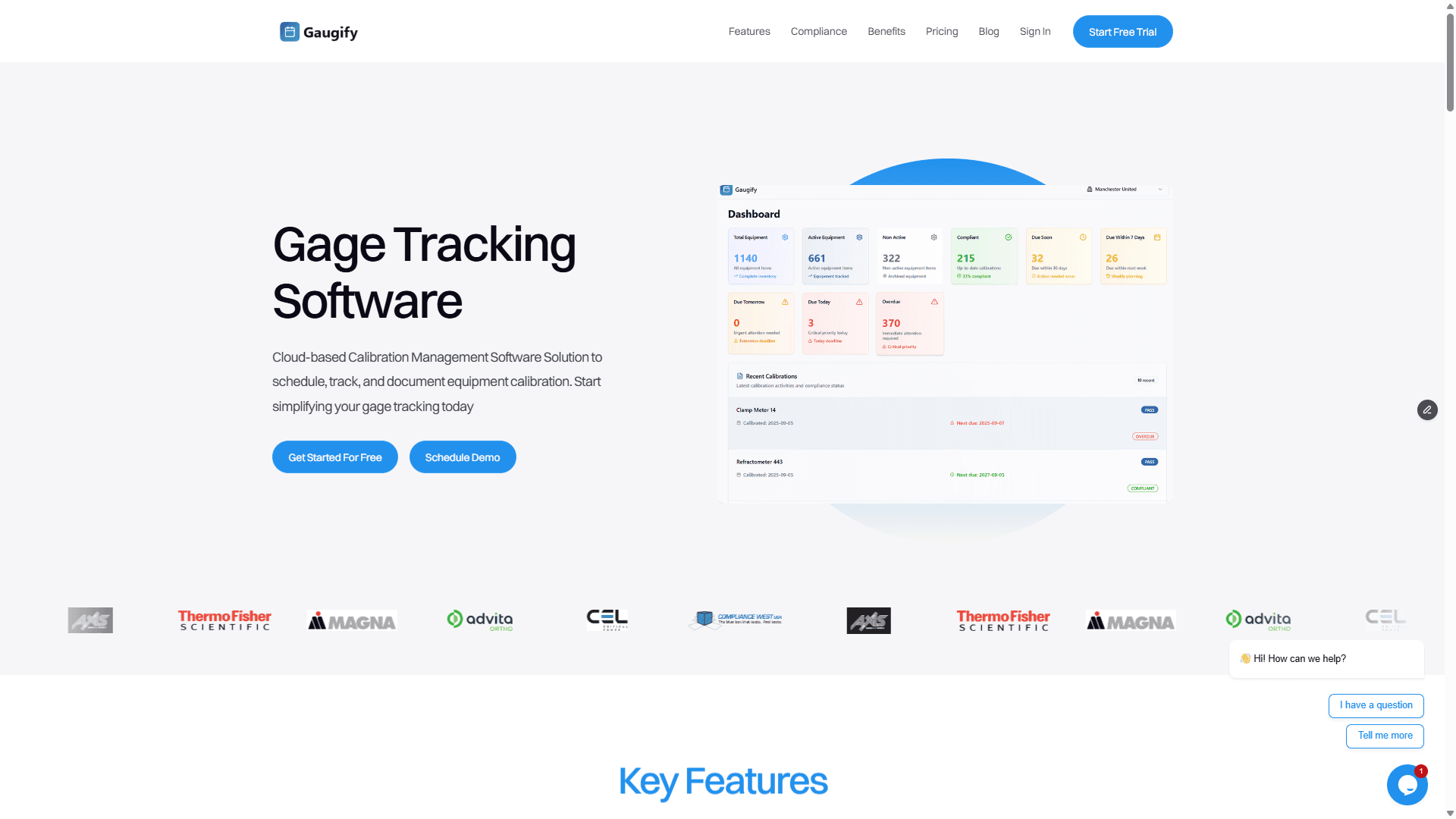
Instead of maintaining spreadsheets and paper files, Gaugify automatically generates pre-move equipment reports showing calibration status, due dates, and historical performance data. The system flags instruments requiring attention and generates customized checklists for each equipment category.
During the move, mobile access allows real-time status updates and photograph documentation directly linked to equipment records. Post-move, the platform automatically schedules verification activities and tracks completion status.
Compliance Assurance
Gaugify's compliance features ensure your relocation activities meet regulatory requirements including ISO 17025, FDA 21 CFR Part 820, and aerospace AS9100 standards. The system maintains complete audit trails linking calibration certificates, move documentation, and verification results.
Risk-Based Decision Support
The platform's analytics identify high-risk relocations based on instrument criticality, historical performance, and move complexity. This data-driven approach helps prioritize resources and focus attention where it's most needed.
Integration with your existing quality management systems ensures seamless data flow and eliminates duplicate data entry, reducing errors and saving administrative time.
Ensuring Long-Term Success
Successful calibration equipment relocation extends beyond simply moving instruments from Point A to Point B. It requires maintaining measurement integrity, regulatory compliance, and operational continuity throughout the process.
The key to success lies in treating relocation as a calibration event requiring the same rigor and documentation as formal calibration activities. This approach ensures audit trail continuity and maintains the trust your organization has built in its measurement systems.
Remember that post-move monitoring is equally important as pre-move preparation. Establish enhanced surveillance for relocated instruments during their first calibration cycle to identify any performance drift that might indicate transport-related damage.
Ready to transform your calibration management approach? Modern cloud-based solutions eliminate the complexity and risk associated with equipment relocations while ensuring full compliance and traceability. Start your free Gaugify trial today and discover how digital calibration management makes equipment moves routine rather than risky. Your quality system – and your peace of mind – will thank you.
How to Manage Calibration During an Equipment Move
Moving calibrated equipment is one of the most high-risk activities in any quality management system. Whether you're relocating your entire lab across town or simply moving a coordinate measuring machine (CMM) to a different bay, calibration equipment relocation requires meticulous planning to maintain measurement integrity and regulatory compliance.
The statistics are sobering: nearly 40% of precision instruments require recalibration after relocation, and improper handling during moves accounts for over $2.3 million in annual measurement equipment damage across manufacturing industries. When a Mitutoyo CMM with ±2 µm accuracy shifts by even 0.1mm during transport, it can invalidate months of measurement data and trigger costly production delays.
This comprehensive guide walks you through every critical step of managing calibration during equipment moves, from pre-move documentation to post-relocation verification, ensuring your measurement systems maintain their accuracy and your quality certifications remain intact.
Why Calibration Equipment Relocation Management Matters
The consequences of poorly managed equipment moves extend far beyond simple recalibration costs. Consider what happened at a tier-1 automotive supplier in Michigan: their failure to properly document calibration status before relocating torque wrenches resulted in a two-week production shutdown when ISO/TS 16949 auditors questioned measurement traceability. The total cost exceeded $400,000.
Here's what typically goes wrong during equipment moves:
Calibration status ambiguity: Instruments lose their calibration labels or certificates, creating uncertainty about measurement validity
Physical damage: Shock-sensitive instruments like digital calipers or pressure transducers suffer internal damage that affects accuracy
Environmental exposure: Temperature fluctuations during transport can cause drift in electronic instruments, particularly digital multimeters and temperature controllers
Traceability gaps: Movement records don't properly link to calibration histories, creating audit trail breaks
Compliance violations: Regulatory bodies like FDA or ISO 17025 assessors flag inadequate relocation procedures as systemic quality failures
The good news? With proper planning and execution, you can relocate equipment while maintaining full calibration integrity and regulatory compliance.
Prerequisites: What You Need Before Starting Your Move
Successful calibration equipment relocation begins weeks before the first instrument is touched. Your preparation phase must address documentation, resources, and procedural clarity.
Essential Documentation Requirements
Gather these critical documents for every instrument being moved:
Current calibration certificates: Ensure all instruments have valid calibration within their specified intervals
Manufacturer specifications: Operating manuals with environmental requirements, shock limits, and storage conditions
Historical calibration data: At least the last three calibration cycles to establish baseline performance trends
Risk assessments: Documented analysis of each instrument's criticality and move-related risks
Insurance documentation: Verify coverage for equipment damage during relocation
Team and Resource Planning
Assemble your move team with clearly defined roles:
Calibration technician: Documents pre-move status and performs post-move verification
Quality manager: Oversees compliance aspects and approves deviations
Equipment specialist: Handles instrument-specific preparation and setup
Logistics coordinator: Manages transportation and environmental controls
Budget for these typical relocation costs: professional packing materials (2-5% of equipment value), specialized transportation (0.5-2% of equipment value), and post-move recalibration services (typically $150-800 per instrument depending on complexity).
Ready to streamline your calibration management process? Start your free Gaugify trial to see how digital calibration tracking simplifies equipment moves and maintains compliance automatically.
Step-by-Step Guide to Calibration Equipment Relocation
Phase 1: Pre-Move Assessment and Documentation (2-4 weeks before move)
Step 1: Create a comprehensive equipment inventory
Document every calibrated instrument with these details:
Asset ID, serial number, and manufacturer model
Current calibration due date and certificate number
Measurement range and specified accuracy (e.g., "±0.02mm over 0-150mm range")
Environmental requirements (temperature, humidity, vibration limits)
Criticality classification (A=mission-critical, B=important, C=routine)
Step 2: Assess calibration timing
For instruments due for calibration within 60 days of the move, consider calibrating before relocation. This strategy provides two benefits: fresh baseline data for post-move comparison and maximum remaining calibration validity period.
Step 3: Develop move-specific procedures
Create written procedures for each instrument category. For example, your CMM relocation procedure should specify: foundation requirements (±0.005" levelness), environmental conditions (20±2°C, <60% RH), settling time (minimum 24 hours), and verification measurements using certified test artifacts.
Phase 2: Pre-Move Calibration Activities (1 week before move)
Step 4: Perform verification measurements
Document current performance using traceable reference standards. For micrometers, measure certified gage blocks at 25%, 50%, and 75% of range. Record actual readings versus nominal values – this data becomes your post-move comparison baseline.
Step 5: Update calibration status records
Ensure your calibration management system reflects current status for all instruments. Flag equipment being relocated and set appropriate tracking notifications for post-move verification requirements.
Step 6: Prepare instruments for transport
Follow manufacturer guidelines precisely. For digital calipers, remove batteries and secure measuring faces. For torque wrenches, set to lowest scale value and lock adjustment mechanisms. For electronic instruments, allow 30-minute stabilization after power-down before packing.
Phase 3: Transportation and Handling
Step 7: Implement transport controls
Use specialized transport cases with shock-absorbing materials rated for your instruments' specifications. Accompany sensitive equipment (Class A instruments) with temperature and shock data loggers. Maintain transport documentation showing chain of custody and environmental exposure.
Step 8: Monitor environmental conditions
Ensure transport vehicles maintain stable conditions. Temperature fluctuations exceeding ±5°C can affect electronic calibrators, while humidity above 70% risks corrosion in precision mechanical instruments.
Phase 4: Post-Move Setup and Verification
Step 9: Allow proper stabilization
Before any calibration activities, allow instruments to stabilize in their new environment. Electronic instruments typically require 2-4 hours, while large mechanical instruments like CMMs need 24-48 hours to reach thermal equilibrium.
Step 10: Perform immediate verification checks
Compare current readings against your pre-move baseline data. Acceptable variation depends on instrument specifications, but generally should not exceed 25% of the instrument's stated accuracy. For a ±0.02mm caliper, post-move variation should not exceed ±0.005mm.
Step 11: Complete formal calibration assessment
For critical instruments or those showing variation exceeding acceptance criteria, perform formal recalibration using accredited services or traceable standards. Document all results and update calibration certificates accordingly.
Best Practices from Experienced Calibration Professionals
Drawing from decades of collective experience managing equipment relocations across aerospace, automotive, and pharmaceutical industries, these proven practices minimize risks and ensure successful moves:
Advanced Planning Strategies
The 90-day rule: Begin planning major equipment moves at least 90 days in advance. This timeline allows for proper vendor coordination, custom packaging procurement, and staff training on relocation procedures.
Seasonal timing considerations: Schedule moves during stable weather periods. Avoid winter relocations in northern climates where temperature fluctuations can exceed instrument specifications during loading/unloading activities.
Vendor partnership approach: Establish relationships with equipment manufacturers' certified service technicians. Many offer relocation services that include calibration verification, often at reduced cost when bundled with move services.
Risk Mitigation Techniques
Redundancy planning: For critical measurements, maintain backup instruments or arrange temporary equipment loans during the transition period. This approach prevents production disruptions if primary instruments require extended recalibration.
Incremental validation: Instead of moving entire labs simultaneously, relocate instruments in phases. This strategy allows real-time learning and procedure refinement while maintaining operational continuity.
Documentation photography: Photograph instrument setup configurations, cable routing, and environmental conditions before disassembly. These visual references accelerate accurate reinstallation and reduce setup errors.
Common Mistakes in Calibration Equipment Relocation (And How to Avoid Them)
Learning from others' mistakes is far less expensive than repeating them. These frequently encountered pitfalls can derail even well-planned relocations:
The "Just Move It" Mentality
Mistake: Treating calibrated instruments like regular office equipment during moves.
Consequence: A medical device manufacturer learned this lesson expensively when movers transported a $50,000 coordinate measuring machine using standard furniture dollies. The resulting damage required complete recalibration and repair, costing $12,000 and delaying production for three weeks.
Solution: Classify all calibrated equipment as "sensitive instruments" requiring specialized handling procedures, regardless of size or apparent ruggedness.
Inadequate Environmental Documentation
Mistake: Failing to document environmental conditions at both origin and destination locations.
Consequence: Post-move calibration discrepancies become impossible to diagnose without baseline environmental data, leading to unnecessary recalibration costs and extended downtime.
Solution: Record temperature, humidity, and vibration levels at both locations for at least 72 hours before and after the move. Use this data to optimize instrument placement and predict stabilization requirements.
Calibration Status Confusion
Mistake: Losing track of which instruments were calibrated before, during, or after the move.
Consequence: Auditors questioning measurement traceability can trigger comprehensive calibration reviews affecting entire quality systems.
Solution: Implement clear status tracking using color-coded tags or digital systems that timestamp all calibration activities relative to the move date.
How Gaugify Simplifies Calibration Equipment Relocation
Modern cloud-based calibration management transforms the complexity of equipment relocation from a paper-intensive nightmare into a streamlined, auditable process. Gaugify's platform addresses every critical aspect of move management:
Automated Documentation and Tracking
Instead of maintaining spreadsheets and paper files, Gaugify automatically generates pre-move equipment reports showing calibration status, due dates, and historical performance data. The system flags instruments requiring attention and generates customized checklists for each equipment category.
During the move, mobile access allows real-time status updates and photograph documentation directly linked to equipment records. Post-move, the platform automatically schedules verification activities and tracks completion status.
Compliance Assurance
Gaugify's compliance features ensure your relocation activities meet regulatory requirements including ISO 17025, FDA 21 CFR Part 820, and aerospace AS9100 standards. The system maintains complete audit trails linking calibration certificates, move documentation, and verification results.
Risk-Based Decision Support
The platform's analytics identify high-risk relocations based on instrument criticality, historical performance, and move complexity. This data-driven approach helps prioritize resources and focus attention where it's most needed.
Integration with your existing quality management systems ensures seamless data flow and eliminates duplicate data entry, reducing errors and saving administrative time.
Ensuring Long-Term Success
Successful calibration equipment relocation extends beyond simply moving instruments from Point A to Point B. It requires maintaining measurement integrity, regulatory compliance, and operational continuity throughout the process.
The key to success lies in treating relocation as a calibration event requiring the same rigor and documentation as formal calibration activities. This approach ensures audit trail continuity and maintains the trust your organization has built in its measurement systems.
Remember that post-move monitoring is equally important as pre-move preparation. Establish enhanced surveillance for relocated instruments during their first calibration cycle to identify any performance drift that might indicate transport-related damage.
Ready to transform your calibration management approach? Modern cloud-based solutions eliminate the complexity and risk associated with equipment relocations while ensuring full compliance and traceability. Start your free Gaugify trial today and discover how digital calibration management makes equipment moves routine rather than risky. Your quality system – and your peace of mind – will thank you.