
How to Improve First-Time Calibration Pass Rate
How to Improve First-Time Calibration Pass Rate
David Bentley
Quality Assurance Engineer
12 min read
How to Improve First-Time Calibration Pass Rate
A low first-time calibration pass rate is one of the most frustrating and costly problems in quality management. When your micrometers fail tolerance checks, your pressure gauges drift beyond acceptable limits, or your torque wrenches require constant adjustments, you're not just dealing with paperwork headaches—you're facing production delays, increased calibration costs, and potential compliance violations. The key to solving this challenge lies in implementing systematic approaches to improve calibration pass rate through better planning, preventive maintenance, and data-driven decision making.
Most facilities struggle with first-time pass rates between 60-75%, meaning nearly one in three instruments requires adjustment or repair during calibration. Industry leaders consistently achieve 85-95% pass rates by following proven methodologies that address root causes rather than symptoms. This comprehensive guide will show you exactly how to implement these strategies in your own calibration program.
Why First-Time Calibration Pass Rate Matters
Poor first-time pass rates create a cascade of problems throughout your quality system. When a Mitutoyo digital caliper fails its annual calibration check because it's reading 0.0015" high on a 1.000" gage block, the immediate impact seems minimal. However, the downstream effects are significant:
Operational disruptions occur when critical measurement equipment is unexpectedly out of service for extended periods. A failed coordinate measuring machine (CMM) calibration can halt inspection activities for days while waiting for manufacturer service technicians.
Cost escalation happens through emergency calibration services, expedited shipping for replacement instruments, and overtime labor to catch up on delayed measurements. A single failed pressure transmitter calibration requiring emergency on-site service can cost $2,500-$4,000 versus the standard $150-$300 bench calibration.
Compliance risks emerge when audit trails show patterns of calibration failures, especially in FDA, ISO 17025, or AS9100 environments. Auditors view consistently low pass rates as evidence of inadequate equipment maintenance and process control.
Data integrity concerns arise when you discover that an instrument was out of tolerance at calibration, requiring investigation of all measurements made since the previous calibration. This reverse validation process can involve hundreds of inspection records and potential customer notifications.
Prerequisites for Improving Calibration Pass Rate
Before implementing improvement strategies, ensure your calibration program has these foundational elements in place:
Accurate instrument inventory with detailed specifications for each measurement device. Your records should include manufacturer tolerance specifications, measurement ranges, resolution, and environmental operating conditions. For example, a Fluke 87V multimeter should be documented with its basic DC voltage accuracy of ±(0.05% + 1 count) and temperature coefficient specifications.
Established calibration procedures that align with manufacturer recommendations and industry standards. ANSI/NCSL Z540.3 and ISO/IEC 17025 provide frameworks for calibration interval determination and uncertainty calculations.
Environmental controls in measurement areas, including temperature stability within ±2°C, humidity control between 45-75% RH, and vibration isolation where required. Many precision instruments specify operating conditions that directly impact measurement accuracy.
Trained personnel who understand measurement uncertainty, proper handling techniques, and equipment limitations. Technicians should be able to identify when environmental conditions or setup errors might cause calibration failures.
Step-by-Step Guide to Improve Calibration Pass Rate
Step 1: Analyze Historical Calibration Data
Begin by extracting calibration records for the past 12-24 months and categorizing failures by instrument type, manufacturer, age, and failure mode. Look for patterns that indicate systemic issues:
Create a Pareto analysis showing which instrument categories contribute most to failures. You might discover that 80% of your calibration failures come from just 20% of your instrument types—perhaps pneumatic gauges, older electronic test equipment, or instruments exposed to harsh environments.
Calculate drift rates for each instrument by comparing as-found readings to previous calibration values. A Starrett micrometer consistently drifting +0.0008" over six months indicates wear patterns that could be addressed through more frequent cleaning or earlier replacement.
Document environmental factors during failed calibrations. Temperature variations during calibration, inadequate warm-up time, or contamination often contribute to failures that appear random but actually have identifiable causes.
Step 2: Implement Risk-Based Calibration Intervals
Traditional fixed-interval calibration schedules ignore individual instrument performance characteristics. Instead, implement dynamic intervals based on actual drift data and criticality assessments:
For stable instruments showing minimal drift over multiple cycles, extend calibration intervals while maintaining adequate safety margins. A digital force gauge consistently reading within 10% of tolerance limits after 12 months might safely operate on an 18-month interval.
Reduce intervals for instruments approaching tolerance limits or operating in demanding environments. Pressure gauges in high-vibration applications or temperature sensors exposed to thermal cycling may require 6-month intervals instead of annual calibrations.
Establish trigger points for interval adjustments. When an instrument's as-found readings exceed 50% of tolerance limits, automatically reduce the next calibration interval by 25%.
Step 3: Enhance Pre-Calibration Maintenance
Many calibration failures result from contamination, wear, or minor mechanical issues that proper maintenance prevents:
Develop instrument-specific cleaning procedures performed 2-4 weeks before calibration. Coordinate measuring machine (CMM) probes require cleaning with isopropyl alcohol and inspection for damage that affects measurement accuracy.
Implement function checks using simple go/no-go gauges or reference standards. A quick check of a dial indicator against a certified gage block stack can identify problems before formal calibration begins.
Address environmental acclimatization by moving instruments to calibration areas 24-48 hours early. Electronic instruments particularly benefit from temperature stabilization that eliminates thermal drift during calibration.
Step 4: Optimize Calibration Sequencing
The order and timing of calibration activities significantly impact success rates:
Schedule temperature-sensitive instruments during periods of maximum environmental stability, typically early morning when HVAC systems have maintained overnight equilibrium.
Group similar instruments to minimize standard setup time and maintain consistent environmental conditions. Calibrating all micrometers together allows the calibration technician to maintain optimal temperature control throughout the process.
Allow adequate warm-up time for electronic instruments per manufacturer specifications. Digital multimeters typically require 15-30 minutes, while frequency counters may need 60+ minutes to achieve specified accuracy.
Ready to see how automated scheduling can improve your calibration pass rates? Start your free trial of Gaugify's intelligent calibration management system today.
Best Practices from Calibration Professionals
Experienced calibration managers consistently apply these proven strategies to improve calibration pass rate across diverse industries:
Implement Predictive Maintenance Indicators
Track leading indicators that predict calibration performance before failures occur. Monitor usage hours, environmental exposure, and handling incidents that correlate with drift patterns. A torque wrench dropped during use should receive immediate function testing and potentially early calibration rather than waiting for the scheduled interval.
Establish Vendor Performance Metrics
Different manufacturers and instrument types exhibit varying reliability patterns. Maintain databases showing pass rates by brand, model, and purchase date. This data informs procurement decisions and helps identify when generic or lower-cost alternatives consistently underperform premium brands.
Create Calibration-Ready Storage Systems
Designate climate-controlled storage areas where instruments await calibration in optimal conditions. Precision instruments stored in temperature-stable environments show significantly higher pass rates than those retrieved directly from production areas with temperature variations.
Use Statistical Process Control
Apply control charts to calibration data, treating instrument drift as a process variable. When drift patterns exceed statistical control limits, investigate root causes rather than simply adjusting and returning instruments to service. This approach identifies systemic issues before they cause widespread calibration failures.
Common Mistakes and How to Avoid Them
These frequent errors undermine calibration pass rate improvement efforts and create unnecessary costs:
Ignoring Measurement Uncertainty
Many facilities set acceptance criteria too close to instrument specifications without accounting for measurement uncertainty. A pressure gauge with ±0.25% accuracy requires calibration standards with significantly better uncertainty—typically 4:1 or 10:1 ratios per ISO 17025 guidelines. Inadequate test uncertainty ratios create artificial failures when instruments are actually within specification.
Inadequate Documentation of Failure Modes
Simply recording "failed calibration" without specific details prevents root cause analysis. Document exactly which measurement points failed, environmental conditions, and any unusual observations. This information enables targeted corrective actions rather than generic responses.
Reactive Rather Than Proactive Approach
Waiting for calibration failures before taking action wastes opportunities for prevention. Implement trending analysis that identifies instruments approaching tolerance limits, allowing intervention before actual failures occur.
Inconsistent Calibration Procedures
Different technicians following varying procedures introduce unnecessary variability. Standardize measurement sequences, environmental controls, and acceptance criteria to eliminate procedure-related failures.
How Gaugify Simplifies Calibration Pass Rate Improvement
Modern calibration management software automates many of the strategies described above, making systematic improvement accessible to facilities of any size. Gaugify's cloud-based platform specifically addresses pass rate optimization through several key capabilities:
Automated drift analysis compares as-found versus as-left readings across calibration cycles, automatically calculating drift rates and recommending interval adjustments. The system identifies instruments approaching tolerance limits and flags them for enhanced monitoring or early calibration.
Environmental condition tracking records temperature, humidity, and other factors during each calibration, correlating environmental data with pass/fail results to identify optimal calibration conditions.
Intelligent scheduling optimizes calibration sequences based on instrument warm-up requirements, technician availability, and environmental conditions. The system prevents scheduling conflicts that lead to rushed calibrations and associated failures.
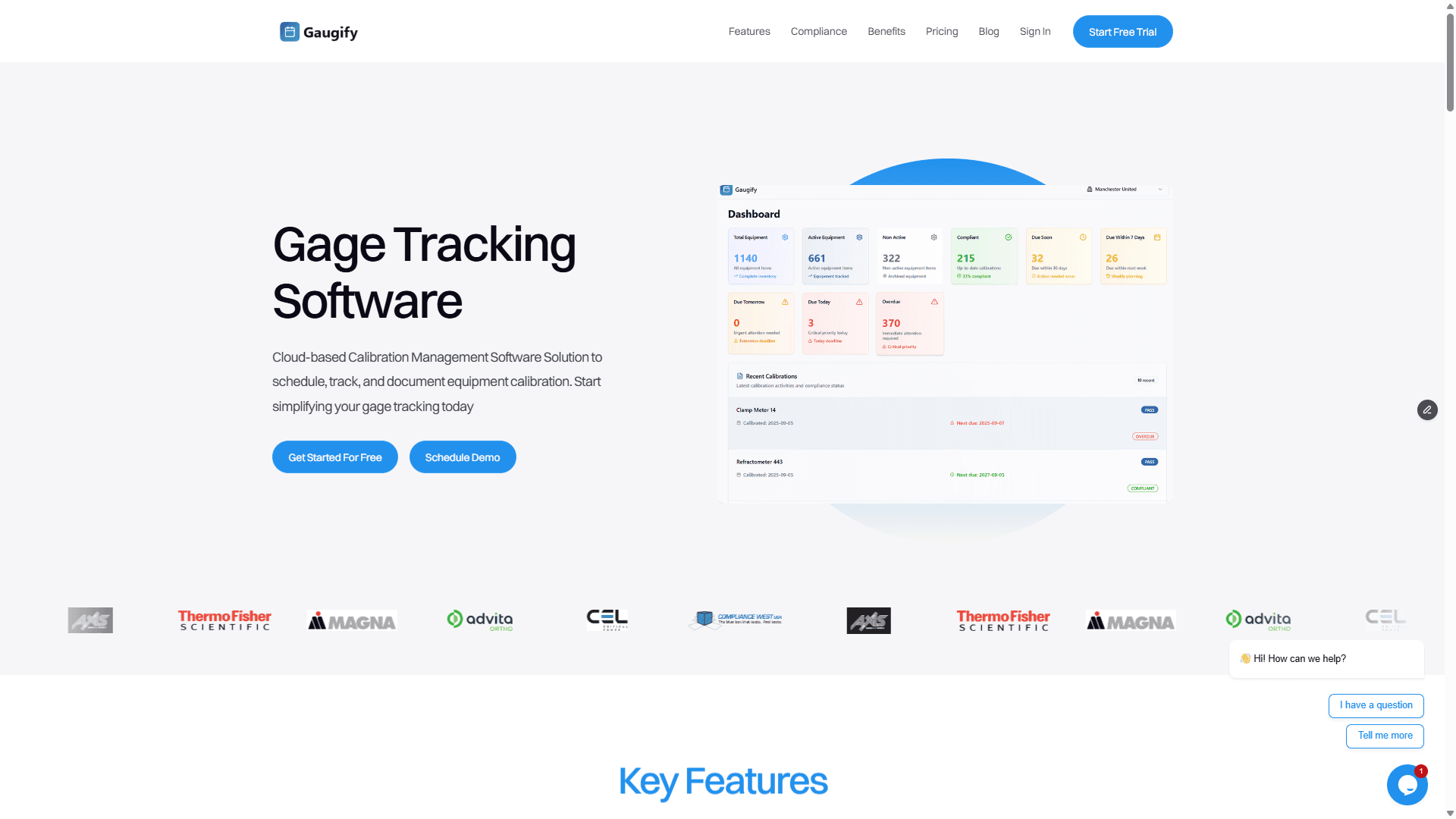
Real-time analytics provide dashboards showing pass rate trends by instrument type, manufacturer, location, and technician. These insights enable data-driven decisions about procurement, training, and process improvements.
The comprehensive feature set includes automated compliance reporting for ISO 17025, FDA, and other regulatory requirements, ensuring that pass rate improvements don't compromise audit readiness.
Integration capabilities connect with existing ERP, LIMS, and maintenance management systems, providing a single source of truth for calibration data without disrupting established workflows.
Measuring Success and Continuous Improvement
Establish clear metrics to track the effectiveness of your pass rate improvement initiatives:
Primary metrics include overall first-time pass rate, pass rates by instrument category, and cost per calibration event. Target improvements of 5-10% annually until reaching industry benchmark levels of 85-95%.
Secondary metrics encompass average calibration cycle time, emergency calibration frequency, and compliance audit findings related to calibration. These indicators often improve as pass rates increase due to better planning and execution.
Financial metrics should capture total calibration costs, including labor, materials, and operational disruptions. Calculate return on investment for improvement initiatives by comparing current costs to baseline periods.
Review these metrics quarterly and adjust strategies based on results. Successful calibration programs continuously evolve as equipment, processes, and requirements change.
Transform Your Calibration Program Today
Improving first-time calibration pass rates requires systematic approaches that address root causes rather than symptoms. By implementing the strategies outlined in this guide—from data-driven interval optimization to enhanced pre-calibration maintenance—your facility can achieve the 85-95% pass rates that industry leaders maintain consistently.
The investment in improved calibration practices pays dividends through reduced costs, better compliance, and enhanced operational reliability. Start with the highest-impact opportunities in your facility, whether that's addressing environmental controls, implementing predictive maintenance, or upgrading to modern calibration management software.
Gaugify's calibration management platform can accelerate your improvement efforts by automating the analysis, scheduling, and tracking processes that drive higher pass rates. Schedule a demo to see how our intelligent algorithms can identify opportunities for immediate improvement in your calibration program.
How to Improve First-Time Calibration Pass Rate
A low first-time calibration pass rate is one of the most frustrating and costly problems in quality management. When your micrometers fail tolerance checks, your pressure gauges drift beyond acceptable limits, or your torque wrenches require constant adjustments, you're not just dealing with paperwork headaches—you're facing production delays, increased calibration costs, and potential compliance violations. The key to solving this challenge lies in implementing systematic approaches to improve calibration pass rate through better planning, preventive maintenance, and data-driven decision making.
Most facilities struggle with first-time pass rates between 60-75%, meaning nearly one in three instruments requires adjustment or repair during calibration. Industry leaders consistently achieve 85-95% pass rates by following proven methodologies that address root causes rather than symptoms. This comprehensive guide will show you exactly how to implement these strategies in your own calibration program.
Why First-Time Calibration Pass Rate Matters
Poor first-time pass rates create a cascade of problems throughout your quality system. When a Mitutoyo digital caliper fails its annual calibration check because it's reading 0.0015" high on a 1.000" gage block, the immediate impact seems minimal. However, the downstream effects are significant:
Operational disruptions occur when critical measurement equipment is unexpectedly out of service for extended periods. A failed coordinate measuring machine (CMM) calibration can halt inspection activities for days while waiting for manufacturer service technicians.
Cost escalation happens through emergency calibration services, expedited shipping for replacement instruments, and overtime labor to catch up on delayed measurements. A single failed pressure transmitter calibration requiring emergency on-site service can cost $2,500-$4,000 versus the standard $150-$300 bench calibration.
Compliance risks emerge when audit trails show patterns of calibration failures, especially in FDA, ISO 17025, or AS9100 environments. Auditors view consistently low pass rates as evidence of inadequate equipment maintenance and process control.
Data integrity concerns arise when you discover that an instrument was out of tolerance at calibration, requiring investigation of all measurements made since the previous calibration. This reverse validation process can involve hundreds of inspection records and potential customer notifications.
Prerequisites for Improving Calibration Pass Rate
Before implementing improvement strategies, ensure your calibration program has these foundational elements in place:
Accurate instrument inventory with detailed specifications for each measurement device. Your records should include manufacturer tolerance specifications, measurement ranges, resolution, and environmental operating conditions. For example, a Fluke 87V multimeter should be documented with its basic DC voltage accuracy of ±(0.05% + 1 count) and temperature coefficient specifications.
Established calibration procedures that align with manufacturer recommendations and industry standards. ANSI/NCSL Z540.3 and ISO/IEC 17025 provide frameworks for calibration interval determination and uncertainty calculations.
Environmental controls in measurement areas, including temperature stability within ±2°C, humidity control between 45-75% RH, and vibration isolation where required. Many precision instruments specify operating conditions that directly impact measurement accuracy.
Trained personnel who understand measurement uncertainty, proper handling techniques, and equipment limitations. Technicians should be able to identify when environmental conditions or setup errors might cause calibration failures.
Step-by-Step Guide to Improve Calibration Pass Rate
Step 1: Analyze Historical Calibration Data
Begin by extracting calibration records for the past 12-24 months and categorizing failures by instrument type, manufacturer, age, and failure mode. Look for patterns that indicate systemic issues:
Create a Pareto analysis showing which instrument categories contribute most to failures. You might discover that 80% of your calibration failures come from just 20% of your instrument types—perhaps pneumatic gauges, older electronic test equipment, or instruments exposed to harsh environments.
Calculate drift rates for each instrument by comparing as-found readings to previous calibration values. A Starrett micrometer consistently drifting +0.0008" over six months indicates wear patterns that could be addressed through more frequent cleaning or earlier replacement.
Document environmental factors during failed calibrations. Temperature variations during calibration, inadequate warm-up time, or contamination often contribute to failures that appear random but actually have identifiable causes.
Step 2: Implement Risk-Based Calibration Intervals
Traditional fixed-interval calibration schedules ignore individual instrument performance characteristics. Instead, implement dynamic intervals based on actual drift data and criticality assessments:
For stable instruments showing minimal drift over multiple cycles, extend calibration intervals while maintaining adequate safety margins. A digital force gauge consistently reading within 10% of tolerance limits after 12 months might safely operate on an 18-month interval.
Reduce intervals for instruments approaching tolerance limits or operating in demanding environments. Pressure gauges in high-vibration applications or temperature sensors exposed to thermal cycling may require 6-month intervals instead of annual calibrations.
Establish trigger points for interval adjustments. When an instrument's as-found readings exceed 50% of tolerance limits, automatically reduce the next calibration interval by 25%.
Step 3: Enhance Pre-Calibration Maintenance
Many calibration failures result from contamination, wear, or minor mechanical issues that proper maintenance prevents:
Develop instrument-specific cleaning procedures performed 2-4 weeks before calibration. Coordinate measuring machine (CMM) probes require cleaning with isopropyl alcohol and inspection for damage that affects measurement accuracy.
Implement function checks using simple go/no-go gauges or reference standards. A quick check of a dial indicator against a certified gage block stack can identify problems before formal calibration begins.
Address environmental acclimatization by moving instruments to calibration areas 24-48 hours early. Electronic instruments particularly benefit from temperature stabilization that eliminates thermal drift during calibration.
Step 4: Optimize Calibration Sequencing
The order and timing of calibration activities significantly impact success rates:
Schedule temperature-sensitive instruments during periods of maximum environmental stability, typically early morning when HVAC systems have maintained overnight equilibrium.
Group similar instruments to minimize standard setup time and maintain consistent environmental conditions. Calibrating all micrometers together allows the calibration technician to maintain optimal temperature control throughout the process.
Allow adequate warm-up time for electronic instruments per manufacturer specifications. Digital multimeters typically require 15-30 minutes, while frequency counters may need 60+ minutes to achieve specified accuracy.
Ready to see how automated scheduling can improve your calibration pass rates? Start your free trial of Gaugify's intelligent calibration management system today.
Best Practices from Calibration Professionals
Experienced calibration managers consistently apply these proven strategies to improve calibration pass rate across diverse industries:
Implement Predictive Maintenance Indicators
Track leading indicators that predict calibration performance before failures occur. Monitor usage hours, environmental exposure, and handling incidents that correlate with drift patterns. A torque wrench dropped during use should receive immediate function testing and potentially early calibration rather than waiting for the scheduled interval.
Establish Vendor Performance Metrics
Different manufacturers and instrument types exhibit varying reliability patterns. Maintain databases showing pass rates by brand, model, and purchase date. This data informs procurement decisions and helps identify when generic or lower-cost alternatives consistently underperform premium brands.
Create Calibration-Ready Storage Systems
Designate climate-controlled storage areas where instruments await calibration in optimal conditions. Precision instruments stored in temperature-stable environments show significantly higher pass rates than those retrieved directly from production areas with temperature variations.
Use Statistical Process Control
Apply control charts to calibration data, treating instrument drift as a process variable. When drift patterns exceed statistical control limits, investigate root causes rather than simply adjusting and returning instruments to service. This approach identifies systemic issues before they cause widespread calibration failures.
Common Mistakes and How to Avoid Them
These frequent errors undermine calibration pass rate improvement efforts and create unnecessary costs:
Ignoring Measurement Uncertainty
Many facilities set acceptance criteria too close to instrument specifications without accounting for measurement uncertainty. A pressure gauge with ±0.25% accuracy requires calibration standards with significantly better uncertainty—typically 4:1 or 10:1 ratios per ISO 17025 guidelines. Inadequate test uncertainty ratios create artificial failures when instruments are actually within specification.
Inadequate Documentation of Failure Modes
Simply recording "failed calibration" without specific details prevents root cause analysis. Document exactly which measurement points failed, environmental conditions, and any unusual observations. This information enables targeted corrective actions rather than generic responses.
Reactive Rather Than Proactive Approach
Waiting for calibration failures before taking action wastes opportunities for prevention. Implement trending analysis that identifies instruments approaching tolerance limits, allowing intervention before actual failures occur.
Inconsistent Calibration Procedures
Different technicians following varying procedures introduce unnecessary variability. Standardize measurement sequences, environmental controls, and acceptance criteria to eliminate procedure-related failures.
How Gaugify Simplifies Calibration Pass Rate Improvement
Modern calibration management software automates many of the strategies described above, making systematic improvement accessible to facilities of any size. Gaugify's cloud-based platform specifically addresses pass rate optimization through several key capabilities:
Automated drift analysis compares as-found versus as-left readings across calibration cycles, automatically calculating drift rates and recommending interval adjustments. The system identifies instruments approaching tolerance limits and flags them for enhanced monitoring or early calibration.
Environmental condition tracking records temperature, humidity, and other factors during each calibration, correlating environmental data with pass/fail results to identify optimal calibration conditions.
Intelligent scheduling optimizes calibration sequences based on instrument warm-up requirements, technician availability, and environmental conditions. The system prevents scheduling conflicts that lead to rushed calibrations and associated failures.
Real-time analytics provide dashboards showing pass rate trends by instrument type, manufacturer, location, and technician. These insights enable data-driven decisions about procurement, training, and process improvements.
The comprehensive feature set includes automated compliance reporting for ISO 17025, FDA, and other regulatory requirements, ensuring that pass rate improvements don't compromise audit readiness.
Integration capabilities connect with existing ERP, LIMS, and maintenance management systems, providing a single source of truth for calibration data without disrupting established workflows.
Measuring Success and Continuous Improvement
Establish clear metrics to track the effectiveness of your pass rate improvement initiatives:
Primary metrics include overall first-time pass rate, pass rates by instrument category, and cost per calibration event. Target improvements of 5-10% annually until reaching industry benchmark levels of 85-95%.
Secondary metrics encompass average calibration cycle time, emergency calibration frequency, and compliance audit findings related to calibration. These indicators often improve as pass rates increase due to better planning and execution.
Financial metrics should capture total calibration costs, including labor, materials, and operational disruptions. Calculate return on investment for improvement initiatives by comparing current costs to baseline periods.
Review these metrics quarterly and adjust strategies based on results. Successful calibration programs continuously evolve as equipment, processes, and requirements change.
Transform Your Calibration Program Today
Improving first-time calibration pass rates requires systematic approaches that address root causes rather than symptoms. By implementing the strategies outlined in this guide—from data-driven interval optimization to enhanced pre-calibration maintenance—your facility can achieve the 85-95% pass rates that industry leaders maintain consistently.
The investment in improved calibration practices pays dividends through reduced costs, better compliance, and enhanced operational reliability. Start with the highest-impact opportunities in your facility, whether that's addressing environmental controls, implementing predictive maintenance, or upgrading to modern calibration management software.
Gaugify's calibration management platform can accelerate your improvement efforts by automating the analysis, scheduling, and tracking processes that drive higher pass rates. Schedule a demo to see how our intelligent algorithms can identify opportunities for immediate improvement in your calibration program.