
What to Do When Your Calibration Vendor Goes Out of Business
What to Do When Your Calibration Vendor Goes Out of Business
David Bentley
Quality Assurance Engineer
12 min read
What to Do When Your Calibration Vendor Goes Out of Business
At 3:47 PM on a Tuesday afternoon, quality manager Sarah Chen received an email that made her stomach drop. Her company's primary calibration vendor—the one that handled their critical Mitutoyo micrometers, pressure transducers, and torque wrenches—was shuttering operations immediately due to bankruptcy. With an ISO 9001 audit scheduled for the following month and over 200 instruments due for calibration within 60 days, she was facing a calibration vendor failure that could shut down production lines and jeopardize her company's certification.
If you're reading this, you might be in a similar situation. Or perhaps you're the type of quality professional who thinks ahead and wants to prepare for the worst-case scenario. Either way, you're smart to be concerned—because calibration vendor failure is more common than most quality managers realize, and the consequences can be devastating for manufacturing operations.
This comprehensive guide will walk you through exactly what to do when your calibration vendor goes out of business, how to minimize the damage, and most importantly, how to bulletproof your calibration program against future vendor failures.
Why Calibration Vendor Failure Happens More Often Than You Think
The calibration industry is surprisingly fragmented and vulnerable. Unlike large equipment manufacturers with diversified revenue streams, many calibration labs operate on thin margins with limited cash reserves. A few lost contracts, an expensive equipment failure, or economic downturns can quickly push these businesses over the edge.
According to industry data, approximately 15% of small to medium-sized calibration labs close within five years of opening. The warning signs are often subtle: longer turnaround times, staff departures, delayed invoicing, or pressure to pay upfront. By the time you notice these red flags, it's often too late to find alternative arrangements without disrupting your calibration schedule.
Consider these real-world scenarios that have caught quality managers off guard:
The Retirement Surprise: A 68-year-old lab owner decides to retire without succession planning, closing a 30-year-old business overnight
The Accreditation Loss: A lab loses its ISO/IEC 17025 accreditation due to quality issues and can no longer provide traceable calibrations
The Equipment Catastrophe: A fire or flood destroys a lab's primary reference standards, making it impossible to continue operations
The Key Personnel Exodus: Critical technicians leave simultaneously, leaving the lab unable to maintain competency requirements
The Real-World Consequences of Sudden Calibration Vendor Failure
When your calibration vendor fails without warning, the ripple effects can cascade through your entire operation. Let's examine the immediate and long-term consequences that can impact your business:
Immediate Production Disruptions
Manufacturing environments depend on calibrated instruments for quality control. When your calibration certificates expire and you can't get instruments recalibrated, you face tough decisions:
Continue production with out-of-calibration instruments (risking quality issues and audit failures)
Stop production lines until alternative calibration is arranged (costly downtime)
Expedite calibrations with new vendors at premium rates (budget overruns)
A aerospace parts manufacturer in Ohio experienced this firsthand when their calibration lab closed suddenly. They had to halt production of critical components for 72 hours while scrambling to find emergency calibration services, resulting in $180,000 in lost revenue and late delivery penalties.
Compliance and Audit Failures
Quality management systems like ISO 9001, AS9100, and FDA regulations require traceable calibration records. When your vendor fails, you lose:
Historical calibration data and trending information
Certificates of calibration that auditors expect to see
Chain of custody documentation for traceable measurements
Uncertainty budgets and measurement capability studies
These gaps can lead to major nonconformances during audits, potentially resulting in certification suspension or loss of customer approvals.
Increased Liability and Risk Exposure
Out-of-calibration measuring equipment increases the risk of shipping nonconforming products. This exposure can lead to:
Customer returns and warranty claims
Product recalls in regulated industries
Legal liability for defective products
Damage to brand reputation and customer relationships
Root Causes: How Quality Managers Miss the Warning Signs
Most calibration vendor failures don't happen overnight—there are usually warning signs that quality managers either miss or ignore. Understanding these root causes can help you spot trouble before it's too late:
Over-Reliance on Single Vendors
Many companies develop comfortable relationships with single calibration providers, especially for specialized instruments like coordinate measuring machines (CMMs) or environmental chambers. This dependency creates vulnerability when that vendor encounters problems.
Lack of Vendor Qualification Programs
Quality managers often focus on technical competency (accreditation, uncertainty ratios, scope of services) while ignoring business stability indicators like financial health, succession planning, and operational resilience.
Poor Documentation and Knowledge Transfer
When calibration activities are outsourced, companies sometimes lose institutional knowledge about their instruments' specifications, calibration procedures, and historical performance data. This makes it difficult to quickly transition to new vendors.
Your Step-by-Step Recovery Plan for Calibration Vendor Failure
If you're currently dealing with a failed calibration vendor, here's your action plan to minimize damage and restore your calibration program:
Immediate Actions (First 24-48 Hours)
1. Assess Your Immediate Exposure
Create a prioritized list of instruments by:
Calibration due dates (instruments expiring within 30 days get priority)
Criticality to production (CMMs and gages used for acceptance testing take precedence over basic hand tools)
Regulatory requirements (FDA-regulated devices, safety-critical measurements)
2. Implement Temporary Risk Controls
For instruments that are about to expire or recently expired:
Increase inspection frequency using known-good reference standards
Implement statistical process control to monitor for measurement drift
Cross-check critical measurements using alternative methods
Document all temporary measures for audit purposes
3. Recover Critical Documentation
If possible, retrieve from the failed vendor:
Historical calibration certificates
As-found and as-left data
Uncertainty calculations and capability studies
Special procedures or setups for complex instruments
Short-Term Recovery (First 1-2 Weeks)
4. Identify Alternative Calibration Sources
Start with these resources:
Equipment manufacturers' factory calibration services
Other accredited labs in your region (check NVLAP or A2LA directories)
Mobile calibration services for on-site work
Reciprocal agreements with other manufacturers
Consider starting a free trial of Gaugify to help coordinate this vendor transition—our software can help you track multiple vendor relationships and ensure nothing falls through the cracks during this critical period.
5. Expedite Critical Calibrations
Focus on instruments that:
Control critical product characteristics (bore diameters within ±0.0002" tolerance)
Are required for incoming inspection (torque wrenches for fastener verification)
Support safety or regulatory compliance (pressure relief valve test equipment)
Long-Term Stabilization (Following Months)
6. Establish Multiple Vendor Relationships
Diversify your calibration supply chain:
Primary vendor for routine calibrations (60-70% of volume)
Secondary vendor for backup and overflow (20-30% of volume)
Specialized vendors for unique instruments (10-20% of volume)
7. Rebuild Documentation and Procedures
Create detailed records including:
Instrument specifications and calibration requirements
Approved vendor lists with qualification criteria
Emergency response procedures for vendor failures
Alternative measurement methods for critical processes
How Modern Calibration Management Prevents Vendor Failure Disruption
While you can't prevent calibration vendors from going out of business, you can absolutely minimize the impact on your operations. This is where cloud-based calibration management software like Gaugify becomes invaluable for building resilient calibration programs.
Centralized Data Ownership
With traditional paper-based or vendor-managed systems, your calibration data lives in filing cabinets or your vendor's database. When they disappear, so does your historical data. Gaugify ensures you maintain complete ownership and control of:
All historical calibration certificates and data
Instrument specifications and procedures
Trending data and statistical analysis
Vendor performance metrics and qualifications
Multi-Vendor Management Capabilities
Instead of being locked into single vendor relationships, Gaugify's vendor management features help you maintain relationships with multiple calibration providers. You can:
Track performance metrics across all vendors (turnaround time, quality, pricing)
Automatically route different instrument types to appropriate vendors
Maintain backup vendor relationships for every instrument category
Quickly reassign instruments when vendor issues arise
Predictive Planning and Risk Mitigation
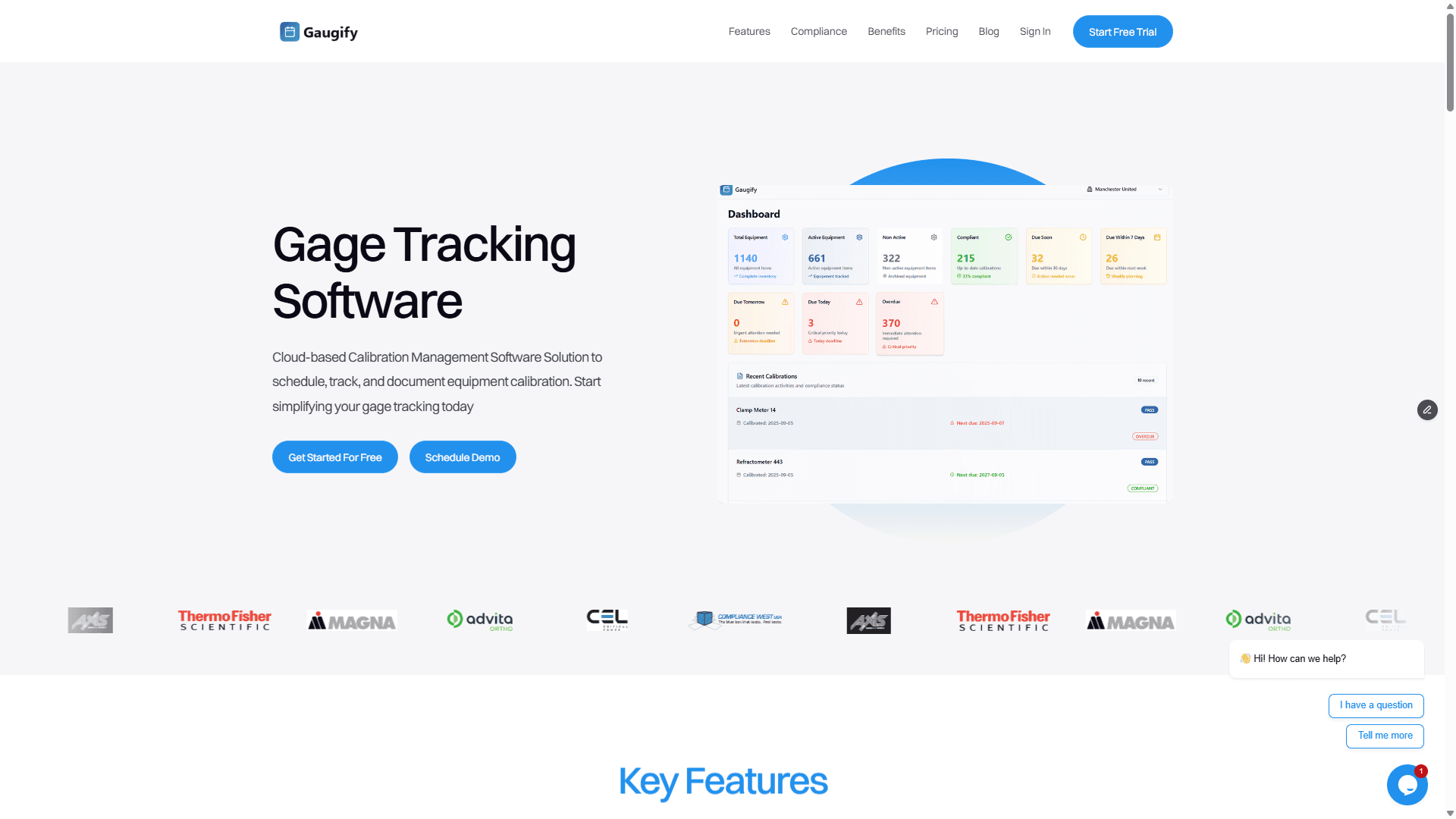
Gaugify's dashboard and reporting capabilities help you spot potential problems before they become crises:
Early warning alerts for instruments approaching calibration due dates
Vendor performance trends that might indicate reliability issues
Capacity planning to avoid overwhelming single vendors
Automated scheduling to maintain optimal calibration intervals
Compliance Documentation That Survives Vendor Changes
Auditors don't care about your vendor problems—they expect to see complete, traceable calibration records. Gaugify's compliance features ensure you can demonstrate control over your measurement processes regardless of vendor changes:
Complete audit trails for all calibration activities
Standardized certificate storage and retrieval
Automated compliance reporting for ISO 9001, AS9100, ISO 13485
Integration with ISO/IEC 17025 requirements for lab management
Building Vendor Resilience Into Your Calibration Strategy
The best time to prepare for calibration vendor failure is before it happens. Here are the strategic steps that forward-thinking quality managers are taking to bulletproof their calibration programs:
Implement Vendor Qualification Beyond Technical Competence
Your vendor qualification process should evaluate business stability, not just technical capability. Include assessments of:
Financial stability and credit ratings
Ownership structure and succession planning
Key personnel retention and cross-training
Business continuity and disaster recovery plans
Insurance coverage and liability protection
Develop Internal Calibration Capabilities for Critical Items
Consider bringing some calibration activities in-house for your most critical instruments. This might include:
Basic dimensional gages (calipers, micrometers, pin gages)
Torque wrenches using primary reference standards
Pressure gauges with deadweight testers
Simple electrical instruments with multifunction calibrators
Create Strategic Vendor Partnerships
Move beyond transactional vendor relationships to create strategic partnerships that include:
Service level agreements with guaranteed capacity
Emergency response procedures for urgent calibrations
Joint business continuity planning
Regular vendor performance reviews and feedback
Ready to take control of your calibration program and eliminate vendor dependency risks? Start your free trial of Gaugify today and see how cloud-based calibration management can transform your quality operations from reactive to proactive. With all your calibration data, vendor relationships, and compliance documentation in one secure, accessible platform, you'll never again face the nightmare scenario of losing critical information when vendors fail.
What to Do When Your Calibration Vendor Goes Out of Business
At 3:47 PM on a Tuesday afternoon, quality manager Sarah Chen received an email that made her stomach drop. Her company's primary calibration vendor—the one that handled their critical Mitutoyo micrometers, pressure transducers, and torque wrenches—was shuttering operations immediately due to bankruptcy. With an ISO 9001 audit scheduled for the following month and over 200 instruments due for calibration within 60 days, she was facing a calibration vendor failure that could shut down production lines and jeopardize her company's certification.
If you're reading this, you might be in a similar situation. Or perhaps you're the type of quality professional who thinks ahead and wants to prepare for the worst-case scenario. Either way, you're smart to be concerned—because calibration vendor failure is more common than most quality managers realize, and the consequences can be devastating for manufacturing operations.
This comprehensive guide will walk you through exactly what to do when your calibration vendor goes out of business, how to minimize the damage, and most importantly, how to bulletproof your calibration program against future vendor failures.
Why Calibration Vendor Failure Happens More Often Than You Think
The calibration industry is surprisingly fragmented and vulnerable. Unlike large equipment manufacturers with diversified revenue streams, many calibration labs operate on thin margins with limited cash reserves. A few lost contracts, an expensive equipment failure, or economic downturns can quickly push these businesses over the edge.
According to industry data, approximately 15% of small to medium-sized calibration labs close within five years of opening. The warning signs are often subtle: longer turnaround times, staff departures, delayed invoicing, or pressure to pay upfront. By the time you notice these red flags, it's often too late to find alternative arrangements without disrupting your calibration schedule.
Consider these real-world scenarios that have caught quality managers off guard:
The Retirement Surprise: A 68-year-old lab owner decides to retire without succession planning, closing a 30-year-old business overnight
The Accreditation Loss: A lab loses its ISO/IEC 17025 accreditation due to quality issues and can no longer provide traceable calibrations
The Equipment Catastrophe: A fire or flood destroys a lab's primary reference standards, making it impossible to continue operations
The Key Personnel Exodus: Critical technicians leave simultaneously, leaving the lab unable to maintain competency requirements
The Real-World Consequences of Sudden Calibration Vendor Failure
When your calibration vendor fails without warning, the ripple effects can cascade through your entire operation. Let's examine the immediate and long-term consequences that can impact your business:
Immediate Production Disruptions
Manufacturing environments depend on calibrated instruments for quality control. When your calibration certificates expire and you can't get instruments recalibrated, you face tough decisions:
Continue production with out-of-calibration instruments (risking quality issues and audit failures)
Stop production lines until alternative calibration is arranged (costly downtime)
Expedite calibrations with new vendors at premium rates (budget overruns)
A aerospace parts manufacturer in Ohio experienced this firsthand when their calibration lab closed suddenly. They had to halt production of critical components for 72 hours while scrambling to find emergency calibration services, resulting in $180,000 in lost revenue and late delivery penalties.
Compliance and Audit Failures
Quality management systems like ISO 9001, AS9100, and FDA regulations require traceable calibration records. When your vendor fails, you lose:
Historical calibration data and trending information
Certificates of calibration that auditors expect to see
Chain of custody documentation for traceable measurements
Uncertainty budgets and measurement capability studies
These gaps can lead to major nonconformances during audits, potentially resulting in certification suspension or loss of customer approvals.
Increased Liability and Risk Exposure
Out-of-calibration measuring equipment increases the risk of shipping nonconforming products. This exposure can lead to:
Customer returns and warranty claims
Product recalls in regulated industries
Legal liability for defective products
Damage to brand reputation and customer relationships
Root Causes: How Quality Managers Miss the Warning Signs
Most calibration vendor failures don't happen overnight—there are usually warning signs that quality managers either miss or ignore. Understanding these root causes can help you spot trouble before it's too late:
Over-Reliance on Single Vendors
Many companies develop comfortable relationships with single calibration providers, especially for specialized instruments like coordinate measuring machines (CMMs) or environmental chambers. This dependency creates vulnerability when that vendor encounters problems.
Lack of Vendor Qualification Programs
Quality managers often focus on technical competency (accreditation, uncertainty ratios, scope of services) while ignoring business stability indicators like financial health, succession planning, and operational resilience.
Poor Documentation and Knowledge Transfer
When calibration activities are outsourced, companies sometimes lose institutional knowledge about their instruments' specifications, calibration procedures, and historical performance data. This makes it difficult to quickly transition to new vendors.
Your Step-by-Step Recovery Plan for Calibration Vendor Failure
If you're currently dealing with a failed calibration vendor, here's your action plan to minimize damage and restore your calibration program:
Immediate Actions (First 24-48 Hours)
1. Assess Your Immediate Exposure
Create a prioritized list of instruments by:
Calibration due dates (instruments expiring within 30 days get priority)
Criticality to production (CMMs and gages used for acceptance testing take precedence over basic hand tools)
Regulatory requirements (FDA-regulated devices, safety-critical measurements)
2. Implement Temporary Risk Controls
For instruments that are about to expire or recently expired:
Increase inspection frequency using known-good reference standards
Implement statistical process control to monitor for measurement drift
Cross-check critical measurements using alternative methods
Document all temporary measures for audit purposes
3. Recover Critical Documentation
If possible, retrieve from the failed vendor:
Historical calibration certificates
As-found and as-left data
Uncertainty calculations and capability studies
Special procedures or setups for complex instruments
Short-Term Recovery (First 1-2 Weeks)
4. Identify Alternative Calibration Sources
Start with these resources:
Equipment manufacturers' factory calibration services
Other accredited labs in your region (check NVLAP or A2LA directories)
Mobile calibration services for on-site work
Reciprocal agreements with other manufacturers
Consider starting a free trial of Gaugify to help coordinate this vendor transition—our software can help you track multiple vendor relationships and ensure nothing falls through the cracks during this critical period.
5. Expedite Critical Calibrations
Focus on instruments that:
Control critical product characteristics (bore diameters within ±0.0002" tolerance)
Are required for incoming inspection (torque wrenches for fastener verification)
Support safety or regulatory compliance (pressure relief valve test equipment)
Long-Term Stabilization (Following Months)
6. Establish Multiple Vendor Relationships
Diversify your calibration supply chain:
Primary vendor for routine calibrations (60-70% of volume)
Secondary vendor for backup and overflow (20-30% of volume)
Specialized vendors for unique instruments (10-20% of volume)
7. Rebuild Documentation and Procedures
Create detailed records including:
Instrument specifications and calibration requirements
Approved vendor lists with qualification criteria
Emergency response procedures for vendor failures
Alternative measurement methods for critical processes
How Modern Calibration Management Prevents Vendor Failure Disruption
While you can't prevent calibration vendors from going out of business, you can absolutely minimize the impact on your operations. This is where cloud-based calibration management software like Gaugify becomes invaluable for building resilient calibration programs.
Centralized Data Ownership
With traditional paper-based or vendor-managed systems, your calibration data lives in filing cabinets or your vendor's database. When they disappear, so does your historical data. Gaugify ensures you maintain complete ownership and control of:
All historical calibration certificates and data
Instrument specifications and procedures
Trending data and statistical analysis
Vendor performance metrics and qualifications
Multi-Vendor Management Capabilities
Instead of being locked into single vendor relationships, Gaugify's vendor management features help you maintain relationships with multiple calibration providers. You can:
Track performance metrics across all vendors (turnaround time, quality, pricing)
Automatically route different instrument types to appropriate vendors
Maintain backup vendor relationships for every instrument category
Quickly reassign instruments when vendor issues arise
Predictive Planning and Risk Mitigation
Gaugify's dashboard and reporting capabilities help you spot potential problems before they become crises:
Early warning alerts for instruments approaching calibration due dates
Vendor performance trends that might indicate reliability issues
Capacity planning to avoid overwhelming single vendors
Automated scheduling to maintain optimal calibration intervals
Compliance Documentation That Survives Vendor Changes
Auditors don't care about your vendor problems—they expect to see complete, traceable calibration records. Gaugify's compliance features ensure you can demonstrate control over your measurement processes regardless of vendor changes:
Complete audit trails for all calibration activities
Standardized certificate storage and retrieval
Automated compliance reporting for ISO 9001, AS9100, ISO 13485
Integration with ISO/IEC 17025 requirements for lab management
Building Vendor Resilience Into Your Calibration Strategy
The best time to prepare for calibration vendor failure is before it happens. Here are the strategic steps that forward-thinking quality managers are taking to bulletproof their calibration programs:
Implement Vendor Qualification Beyond Technical Competence
Your vendor qualification process should evaluate business stability, not just technical capability. Include assessments of:
Financial stability and credit ratings
Ownership structure and succession planning
Key personnel retention and cross-training
Business continuity and disaster recovery plans
Insurance coverage and liability protection
Develop Internal Calibration Capabilities for Critical Items
Consider bringing some calibration activities in-house for your most critical instruments. This might include:
Basic dimensional gages (calipers, micrometers, pin gages)
Torque wrenches using primary reference standards
Pressure gauges with deadweight testers
Simple electrical instruments with multifunction calibrators
Create Strategic Vendor Partnerships
Move beyond transactional vendor relationships to create strategic partnerships that include:
Service level agreements with guaranteed capacity
Emergency response procedures for urgent calibrations
Joint business continuity planning
Regular vendor performance reviews and feedback
Ready to take control of your calibration program and eliminate vendor dependency risks? Start your free trial of Gaugify today and see how cloud-based calibration management can transform your quality operations from reactive to proactive. With all your calibration data, vendor relationships, and compliance documentation in one secure, accessible platform, you'll never again face the nightmare scenario of losing critical information when vendors fail.