
Best SaaS Calibration Management Platforms
Best SaaS Calibration Management Platforms
David Bentley
Quality Assurance Engineer
8 min read
Best SaaS Calibration Management Platforms
Finding the right SaaS calibration management platform can transform your quality operations from reactive chaos to proactive excellence. While spreadsheets and paper-based systems still plague many facilities, modern cloud-based solutions are eliminating missed calibrations, reducing audit preparation time from weeks to hours, and ensuring your Fluke multimeters, Mitutoyo micrometers, and pressure transducers stay compliant automatically.
Quality managers across industries—from aerospace manufacturers tracking 10,000+ gages to pharmaceutical labs managing critical analytical balances—are discovering that the right calibration management software doesn't just organize data; it prevents costly production delays, ensures regulatory compliance, and provides the real-time visibility needed to make informed decisions about equipment reliability.
Why Modern SaaS Calibration Management Matters
Traditional calibration tracking methods create significant operational risks. Consider a typical scenario: your Starrett height gage with a ±0.001" tolerance specification is due for calibration in three days, but your technician is focused on a rush production order. Without automated alerts, that gage could easily slip past its due date, potentially invalidating weeks of inspection data during your next ISO 9001 audit.
SaaS calibration management platforms eliminate these risks through:
Automated scheduling and notifications that prevent equipment from falling out of calibration
Centralized certificate storage with instant retrieval during audits
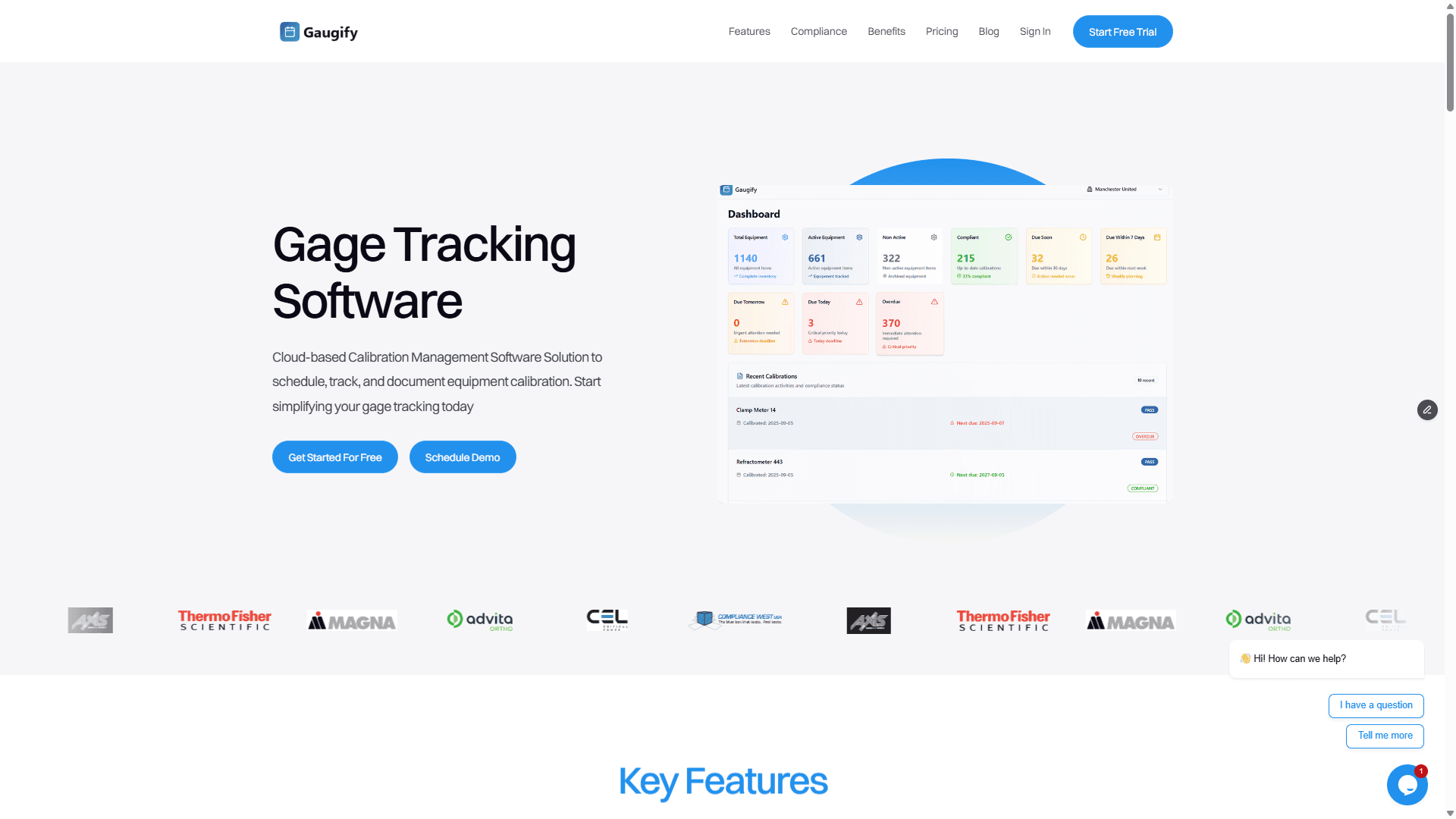
Real-time compliance dashboards showing exactly which equipment needs attention
Standardized workflows that ensure consistent calibration procedures across multiple locations
Complete audit trails documenting every calibration event, adjustment, and decision
The cloud-based delivery model offers particular advantages for calibration management. Unlike on-premise software that requires IT resources to maintain, SaaS platforms provide automatic updates, built-in data backup, and secure access from any location—critical when your calibration technicians work across multiple facilities or when auditors need immediate access to compliance records.
Essential Features in SaaS Calibration Management Platforms
When evaluating calibration management software, certain features separate basic tracking tools from comprehensive quality management platforms that actually improve your operations.
Intelligent Scheduling and Automated Reminders
Advanced platforms go beyond simple calendar reminders. Look for systems that automatically calculate next due dates based on calibration intervals, provide configurable lead times (typically 30, 60, or 90 days before due dates), and can adjust schedules based on usage patterns or environmental conditions.
For example, if your digital force gage experiences heavy use in a high-vibration environment, the system should allow you to shorten its 12-month calibration interval to 6 months and automatically recalculate all future due dates. The best platforms also provide escalation workflows, sending initial reminders to technicians, then escalating to supervisors if items remain unaddressed.
Comprehensive Certificate Management
Digital certificate storage with optical character recognition (OCR) capabilities transforms audit preparation. Instead of searching through filing cabinets for calibration certificates, auditors can instantly access any document with a simple search. Advanced platforms automatically extract key data from certificates—calibration dates, uncertainties, pass/fail status—and populate your database without manual data entry.
Look for systems that maintain certificate revision history, track certificate expiration dates for reference standards, and provide automated certificate distribution to relevant stakeholders when calibrations are completed.
Measurement Uncertainty Calculations
For ISO/IEC 17025 compliance and critical measurement applications, your platform should calculate and track measurement uncertainty. This involves complex mathematics combining multiple uncertainty sources—reference standard uncertainty, environmental conditions, technician repeatability, and calibration procedure limitations.
A robust system allows you to define uncertainty budgets for each calibration procedure, automatically calculates combined uncertainty values, and flags situations where measurement uncertainty approaches or exceeds your specification tolerances. This is particularly critical for pharmaceutical applications where analytical balance uncertainties directly impact product release decisions.
Role-Based Security and Access Control
Different users need different access levels. Calibration technicians require full access to work orders and certificate uploads, while shop floor operators might only need to view calibration status. Quality managers need comprehensive reporting capabilities, and auditors require read-only access to compliance records.
Enterprise-grade platforms provide granular permission controls, allowing you to restrict access by location, equipment type, or specific functions. This ensures data integrity while maintaining workflow efficiency.
Leading SaaS Calibration Management Solutions
The calibration management software market includes several established players, each with distinct strengths for different operational requirements.
Gaugify: Modern Cloud-Native Architecture
Gaugify stands out as a purpose-built, modern calibration management platform designed specifically for today's quality operations. Unlike legacy systems adapted from older technologies, Gaugify's cloud-native architecture provides several key advantages:
Intuitive user interface that reduces training time and improves technician adoption. The mobile-responsive design works seamlessly on tablets and smartphones, allowing calibration technicians to update work orders and upload certificates directly from the calibration lab.
Advanced automation capabilities including intelligent scheduling algorithms that consider equipment criticality, usage patterns, and maintenance windows. The system automatically generates work orders, sends targeted notifications, and can integrate with existing maintenance management systems.
Comprehensive compliance support for ISO/IEC 17025, ISO 9001, AS9100, and FDA validation requirements. Pre-built reporting templates and audit trails ensure you're always audit-ready without manual preparation.
Flexible integration options through REST APIs that connect with ERP systems, LIMS platforms, and quality management systems. This eliminates data silos and provides a single source of truth for all calibration information.
The platform particularly excels in multi-location environments, providing centralized visibility while allowing local customization of workflows and procedures.
CyberMetrics GAGEtrak
GAGEtrak represents one of the established players in calibration management, with decades of experience in the market. The platform offers robust functionality for large-scale operations, including comprehensive asset management, detailed uncertainty analysis, and extensive reporting capabilities.
Strengths include deep integration with major calibration equipment manufacturers and support for complex calibration procedures. However, the user interface reflects its legacy origins, potentially requiring more training for new users compared to modern alternatives.
Fluke Calibration MET/CAL
MET/CAL focuses heavily on automated calibration procedures, particularly for electronic test equipment. If your operations rely heavily on Fluke calibration equipment and require extensive procedure automation, MET/CAL provides deep integration with Fluke's hardware ecosystem.
The platform excels in environments where calibration procedures can be highly automated, though it may require significant customization for facilities with diverse equipment from multiple manufacturers.
Start your free Gaugify trial today to experience how modern calibration management should work—no lengthy implementation required, just immediate value for your quality operations.
SaaS Calibration Management Pricing Models
Understanding pricing structures helps you budget effectively and choose the platform that provides the best value for your specific requirements.
Per-Asset Pricing
Most SaaS calibration management platforms charge based on the number of assets under management. Typical pricing ranges from $2-8 per asset per month, depending on functionality levels and user counts. This model scales naturally with your operations—you pay for what you use.
For example, managing 500 gages might cost $1,500-4,000 monthly, while a 2,000-asset operation could range from $6,000-16,000 monthly. Volume discounts typically apply at higher asset counts.
User-Based Pricing
Some platforms charge per user, with typical costs ranging from $50-200 per user monthly. This model works well for organizations with high asset-to-user ratios but can become expensive for facilities where many staff members need occasional system access.
Hybrid and Enterprise Models
Enterprise platforms often combine asset and user pricing with additional charges for advanced features like API access, custom integrations, or dedicated support. Gaugify's transparent pricing eliminates surprises with straightforward per-asset pricing that includes all core functionality.
Hidden Costs to Consider
Beyond base subscription fees, evaluate potential additional costs:
Implementation and training can range from $5,000-50,000 depending on complexity
Data migration from existing systems may require consulting services
Custom integrations often carry separate charges
Premium support levels may require additional fees
Storage overages for large certificate archives
Implementation Planning for Success
Successful calibration management software implementation requires careful planning to ensure user adoption and maximize operational benefits.
Data Preparation and Migration
Start by auditing your existing calibration data. Many organizations discover incomplete records, duplicate entries, or inconsistent naming conventions during this process. Clean, well-organized data is essential for effective system implementation.
Create standardized equipment naming conventions before migration. For example, establish clear patterns like "DMM-FL-001" for digital multimeters or "HG-ST-025" for height gages. Consistent naming improves searchability and reporting accuracy.
Document your current calibration procedures, intervals, and tolerance specifications. This information becomes the foundation for system configuration and ensures continuity during the transition.
User Training and Change Management
Technology adoption succeeds or fails based on user acceptance. Plan comprehensive training that addresses different user roles—calibration technicians need hands-on workflow training, while managers require reporting and dashboard instruction.
Consider a phased rollout approach, starting with a pilot group of power users who can become internal champions. Their success stories and troubleshooting experience will smooth the broader rollout.
Integration with Existing Systems
Modern manufacturing relies on interconnected systems. Your calibration management platform should integrate seamlessly with:
ERP systems for asset management and purchasing workflows
Quality management systems for nonconformance tracking and corrective actions
LIMS platforms in laboratory environments
Maintenance management systems for coordinated equipment servicing
Gaugify's integration capabilities support these connections through standard APIs and pre-built connectors for popular platforms.
Evaluating Platforms During Free Trials
Most reputable SaaS calibration management providers offer free trials, but many organizations fail to use this time effectively. A structured evaluation approach ensures you make an informed decision based on real-world usage rather than sales demonstrations.
Test Core Workflows
Focus your trial on the workflows your team uses most frequently:
Asset registration: Import a representative sample of your equipment data. Test how easily you can add new gages with complete specifications, tolerance requirements, and calibration procedures.
Work order management: Create calibration work orders and walk through the complete process from scheduling to certificate upload. Evaluate how intuitive the interface feels for your calibration technicians.
Certificate handling: Upload actual calibration certificates from your recent calibrations. Test search functionality, automatic data extraction, and certificate viewing capabilities.
Reporting: Generate the reports you'll need for audits, management reviews, and daily operations. Verify that data exports work with your existing analysis tools.
Stress Test the System
Don't limit your trial to basic functionality. Test scenarios that reflect your real operational challenges:
Import your complete asset database to evaluate system performance with realistic data volumes
Test mobile access from your calibration lab environment
Simulate overdue equipment scenarios and evaluate reminder escalation workflows
Test user permissions with different role assignments
Evaluate customer support responsiveness with actual questions
Involve Your Team
Include multiple stakeholders in the trial process. Calibration technicians will evaluate day-to-day usability, quality managers need comprehensive reporting capabilities, and IT teams should assess security and integration requirements.
Collect structured feedback from each user group to ensure the platform meets everyone's needs, not just the person making the purchasing decision.
Making the Right Choice for Your Operation
The calibration management software market offers numerous options, but few platforms combine modern architecture, comprehensive functionality, and user-friendly design like Gaugify.
Unlike legacy systems that require extensive customization and training, Gaugify provides immediate value through intuitive workflows that mirror how calibration teams actually work. The platform's compliance-focused design ensures you're always audit-ready, while modern cloud architecture eliminates the IT overhead associated with traditional software deployments.
For organizations prioritizing rapid implementation, user adoption, and long-term scalability, Gaugify represents the evolution of calibration management—powerful enough for enterprise operations, yet simple enough for immediate productivity gains.
Schedule your personalized demo to see how Gaugify can transform your calibration operations, or start your free trial today to experience the difference modern calibration management makes for your quality programs.
Best SaaS Calibration Management Platforms
Finding the right SaaS calibration management platform can transform your quality operations from reactive chaos to proactive excellence. While spreadsheets and paper-based systems still plague many facilities, modern cloud-based solutions are eliminating missed calibrations, reducing audit preparation time from weeks to hours, and ensuring your Fluke multimeters, Mitutoyo micrometers, and pressure transducers stay compliant automatically.
Quality managers across industries—from aerospace manufacturers tracking 10,000+ gages to pharmaceutical labs managing critical analytical balances—are discovering that the right calibration management software doesn't just organize data; it prevents costly production delays, ensures regulatory compliance, and provides the real-time visibility needed to make informed decisions about equipment reliability.
Why Modern SaaS Calibration Management Matters
Traditional calibration tracking methods create significant operational risks. Consider a typical scenario: your Starrett height gage with a ±0.001" tolerance specification is due for calibration in three days, but your technician is focused on a rush production order. Without automated alerts, that gage could easily slip past its due date, potentially invalidating weeks of inspection data during your next ISO 9001 audit.
SaaS calibration management platforms eliminate these risks through:
Automated scheduling and notifications that prevent equipment from falling out of calibration
Centralized certificate storage with instant retrieval during audits
Real-time compliance dashboards showing exactly which equipment needs attention
Standardized workflows that ensure consistent calibration procedures across multiple locations
Complete audit trails documenting every calibration event, adjustment, and decision
The cloud-based delivery model offers particular advantages for calibration management. Unlike on-premise software that requires IT resources to maintain, SaaS platforms provide automatic updates, built-in data backup, and secure access from any location—critical when your calibration technicians work across multiple facilities or when auditors need immediate access to compliance records.
Essential Features in SaaS Calibration Management Platforms
When evaluating calibration management software, certain features separate basic tracking tools from comprehensive quality management platforms that actually improve your operations.
Intelligent Scheduling and Automated Reminders
Advanced platforms go beyond simple calendar reminders. Look for systems that automatically calculate next due dates based on calibration intervals, provide configurable lead times (typically 30, 60, or 90 days before due dates), and can adjust schedules based on usage patterns or environmental conditions.
For example, if your digital force gage experiences heavy use in a high-vibration environment, the system should allow you to shorten its 12-month calibration interval to 6 months and automatically recalculate all future due dates. The best platforms also provide escalation workflows, sending initial reminders to technicians, then escalating to supervisors if items remain unaddressed.
Comprehensive Certificate Management
Digital certificate storage with optical character recognition (OCR) capabilities transforms audit preparation. Instead of searching through filing cabinets for calibration certificates, auditors can instantly access any document with a simple search. Advanced platforms automatically extract key data from certificates—calibration dates, uncertainties, pass/fail status—and populate your database without manual data entry.
Look for systems that maintain certificate revision history, track certificate expiration dates for reference standards, and provide automated certificate distribution to relevant stakeholders when calibrations are completed.
Measurement Uncertainty Calculations
For ISO/IEC 17025 compliance and critical measurement applications, your platform should calculate and track measurement uncertainty. This involves complex mathematics combining multiple uncertainty sources—reference standard uncertainty, environmental conditions, technician repeatability, and calibration procedure limitations.
A robust system allows you to define uncertainty budgets for each calibration procedure, automatically calculates combined uncertainty values, and flags situations where measurement uncertainty approaches or exceeds your specification tolerances. This is particularly critical for pharmaceutical applications where analytical balance uncertainties directly impact product release decisions.
Role-Based Security and Access Control
Different users need different access levels. Calibration technicians require full access to work orders and certificate uploads, while shop floor operators might only need to view calibration status. Quality managers need comprehensive reporting capabilities, and auditors require read-only access to compliance records.
Enterprise-grade platforms provide granular permission controls, allowing you to restrict access by location, equipment type, or specific functions. This ensures data integrity while maintaining workflow efficiency.
Leading SaaS Calibration Management Solutions
The calibration management software market includes several established players, each with distinct strengths for different operational requirements.
Gaugify: Modern Cloud-Native Architecture
Gaugify stands out as a purpose-built, modern calibration management platform designed specifically for today's quality operations. Unlike legacy systems adapted from older technologies, Gaugify's cloud-native architecture provides several key advantages:
Intuitive user interface that reduces training time and improves technician adoption. The mobile-responsive design works seamlessly on tablets and smartphones, allowing calibration technicians to update work orders and upload certificates directly from the calibration lab.
Advanced automation capabilities including intelligent scheduling algorithms that consider equipment criticality, usage patterns, and maintenance windows. The system automatically generates work orders, sends targeted notifications, and can integrate with existing maintenance management systems.
Comprehensive compliance support for ISO/IEC 17025, ISO 9001, AS9100, and FDA validation requirements. Pre-built reporting templates and audit trails ensure you're always audit-ready without manual preparation.
Flexible integration options through REST APIs that connect with ERP systems, LIMS platforms, and quality management systems. This eliminates data silos and provides a single source of truth for all calibration information.
The platform particularly excels in multi-location environments, providing centralized visibility while allowing local customization of workflows and procedures.
CyberMetrics GAGEtrak
GAGEtrak represents one of the established players in calibration management, with decades of experience in the market. The platform offers robust functionality for large-scale operations, including comprehensive asset management, detailed uncertainty analysis, and extensive reporting capabilities.
Strengths include deep integration with major calibration equipment manufacturers and support for complex calibration procedures. However, the user interface reflects its legacy origins, potentially requiring more training for new users compared to modern alternatives.
Fluke Calibration MET/CAL
MET/CAL focuses heavily on automated calibration procedures, particularly for electronic test equipment. If your operations rely heavily on Fluke calibration equipment and require extensive procedure automation, MET/CAL provides deep integration with Fluke's hardware ecosystem.
The platform excels in environments where calibration procedures can be highly automated, though it may require significant customization for facilities with diverse equipment from multiple manufacturers.
Start your free Gaugify trial today to experience how modern calibration management should work—no lengthy implementation required, just immediate value for your quality operations.
SaaS Calibration Management Pricing Models
Understanding pricing structures helps you budget effectively and choose the platform that provides the best value for your specific requirements.
Per-Asset Pricing
Most SaaS calibration management platforms charge based on the number of assets under management. Typical pricing ranges from $2-8 per asset per month, depending on functionality levels and user counts. This model scales naturally with your operations—you pay for what you use.
For example, managing 500 gages might cost $1,500-4,000 monthly, while a 2,000-asset operation could range from $6,000-16,000 monthly. Volume discounts typically apply at higher asset counts.
User-Based Pricing
Some platforms charge per user, with typical costs ranging from $50-200 per user monthly. This model works well for organizations with high asset-to-user ratios but can become expensive for facilities where many staff members need occasional system access.
Hybrid and Enterprise Models
Enterprise platforms often combine asset and user pricing with additional charges for advanced features like API access, custom integrations, or dedicated support. Gaugify's transparent pricing eliminates surprises with straightforward per-asset pricing that includes all core functionality.
Hidden Costs to Consider
Beyond base subscription fees, evaluate potential additional costs:
Implementation and training can range from $5,000-50,000 depending on complexity
Data migration from existing systems may require consulting services
Custom integrations often carry separate charges
Premium support levels may require additional fees
Storage overages for large certificate archives
Implementation Planning for Success
Successful calibration management software implementation requires careful planning to ensure user adoption and maximize operational benefits.
Data Preparation and Migration
Start by auditing your existing calibration data. Many organizations discover incomplete records, duplicate entries, or inconsistent naming conventions during this process. Clean, well-organized data is essential for effective system implementation.
Create standardized equipment naming conventions before migration. For example, establish clear patterns like "DMM-FL-001" for digital multimeters or "HG-ST-025" for height gages. Consistent naming improves searchability and reporting accuracy.
Document your current calibration procedures, intervals, and tolerance specifications. This information becomes the foundation for system configuration and ensures continuity during the transition.
User Training and Change Management
Technology adoption succeeds or fails based on user acceptance. Plan comprehensive training that addresses different user roles—calibration technicians need hands-on workflow training, while managers require reporting and dashboard instruction.
Consider a phased rollout approach, starting with a pilot group of power users who can become internal champions. Their success stories and troubleshooting experience will smooth the broader rollout.
Integration with Existing Systems
Modern manufacturing relies on interconnected systems. Your calibration management platform should integrate seamlessly with:
ERP systems for asset management and purchasing workflows
Quality management systems for nonconformance tracking and corrective actions
LIMS platforms in laboratory environments
Maintenance management systems for coordinated equipment servicing
Gaugify's integration capabilities support these connections through standard APIs and pre-built connectors for popular platforms.
Evaluating Platforms During Free Trials
Most reputable SaaS calibration management providers offer free trials, but many organizations fail to use this time effectively. A structured evaluation approach ensures you make an informed decision based on real-world usage rather than sales demonstrations.
Test Core Workflows
Focus your trial on the workflows your team uses most frequently:
Asset registration: Import a representative sample of your equipment data. Test how easily you can add new gages with complete specifications, tolerance requirements, and calibration procedures.
Work order management: Create calibration work orders and walk through the complete process from scheduling to certificate upload. Evaluate how intuitive the interface feels for your calibration technicians.
Certificate handling: Upload actual calibration certificates from your recent calibrations. Test search functionality, automatic data extraction, and certificate viewing capabilities.
Reporting: Generate the reports you'll need for audits, management reviews, and daily operations. Verify that data exports work with your existing analysis tools.
Stress Test the System
Don't limit your trial to basic functionality. Test scenarios that reflect your real operational challenges:
Import your complete asset database to evaluate system performance with realistic data volumes
Test mobile access from your calibration lab environment
Simulate overdue equipment scenarios and evaluate reminder escalation workflows
Test user permissions with different role assignments
Evaluate customer support responsiveness with actual questions
Involve Your Team
Include multiple stakeholders in the trial process. Calibration technicians will evaluate day-to-day usability, quality managers need comprehensive reporting capabilities, and IT teams should assess security and integration requirements.
Collect structured feedback from each user group to ensure the platform meets everyone's needs, not just the person making the purchasing decision.
Making the Right Choice for Your Operation
The calibration management software market offers numerous options, but few platforms combine modern architecture, comprehensive functionality, and user-friendly design like Gaugify.
Unlike legacy systems that require extensive customization and training, Gaugify provides immediate value through intuitive workflows that mirror how calibration teams actually work. The platform's compliance-focused design ensures you're always audit-ready, while modern cloud architecture eliminates the IT overhead associated with traditional software deployments.
For organizations prioritizing rapid implementation, user adoption, and long-term scalability, Gaugify represents the evolution of calibration management—powerful enough for enterprise operations, yet simple enough for immediate productivity gains.
Schedule your personalized demo to see how Gaugify can transform your calibration operations, or start your free trial today to experience the difference modern calibration management makes for your quality programs.