
Gaugify vs Limble CMMS Calibration
Gaugify vs Limble CMMS Calibration
David Bentley
Quality Assurance Engineer
8 min read
Gaugify vs Limble CMMS Calibration
When quality managers and calibration professionals evaluate Gaugify vs Limble for their calibration management needs, they're comparing two fundamentally different approaches to equipment management. While Limble offers calibration as part of a broader CMMS (Computerized Maintenance Management System), Gaugify delivers a specialized, cloud-native calibration management platform built exclusively for metrology professionals who demand precision, compliance, and ease of use.
Both platforms serve manufacturing environments, but their core strengths differ significantly. Limble excels as a comprehensive maintenance management system with calibration capabilities, while Gaugify focuses entirely on delivering the most intuitive and powerful calibration management experience available. This comparison will help you understand which solution best fits your organization's specific calibration requirements.
Company Background and Market Position
Limble CMMS, founded in 2015, has established itself as a versatile maintenance management platform serving various industries. The company built their reputation on work order management, preventive maintenance scheduling, and asset tracking before adding calibration features to their broader CMMS offering. Their approach targets facilities managers and maintenance teams who need an all-in-one solution for equipment management.
Gaugify takes a different path entirely. As a specialized calibration management software, Gaugify was built from the ground up specifically for metrology professionals. Every feature, from measurement uncertainty calculations to certificate generation, was designed with the unique needs of quality labs, manufacturing calibration departments, and ISO 17025 accredited facilities in mind. This laser focus on calibration management allows Gaugify to deliver capabilities that generic CMMS platforms simply cannot match.
Core Calibration Features: Gaugify vs Limble Comparison
Calibration Scheduling and Due Date Management
Limble's scheduling system works well for general maintenance tasks but lacks the precision required for calibration intervals. Their system can track due dates and send notifications, but it doesn't account for calibration-specific factors like measurement uncertainty impact on interval optimization or risk-based scheduling decisions.
Gaugify's scheduling engine was purpose-built for calibration management. It automatically calculates optimal calibration intervals based on historical stability data, usage patterns, and measurement uncertainty requirements. For example, if your Starrett micrometers consistently pass calibration with minimal drift, Gaugify can recommend extending intervals from 12 to 18 months while maintaining measurement confidence. The system also handles complex scenarios like seasonal calibration requirements for environmental chambers or pre-audit calibration scheduling.
Certificate Generation and Documentation
One of the most significant differences between the platforms lies in certificate generation capabilities. Limble provides basic documentation features suitable for maintenance records but lacks the sophisticated certificate generation required for metrology applications.
Gaugify excels in this area with professional-grade calibration certificates that include all required elements: measurement uncertainty statements, environmental conditions, traceability chains, and detailed as-found/as-left data. The certificates automatically populate with your company branding, technician signatures, and customer-specific requirements. For instance, automotive suppliers can generate certificates that meet IATF 16949 requirements, while pharmaceutical companies get certificates compliant with FDA 21 CFR Part 11 validation standards.
Measurement Uncertainty Calculations
This represents perhaps the largest gap between general CMMS platforms and specialized calibration software. Limble lacks built-in measurement uncertainty calculations, which are essential for ISO/IEC 17025 compliance and accurate calibration decision-making.
Gaugify's advanced uncertainty engine automatically calculates measurement uncertainty for every calibration point using proper statistical methods. The system considers calibration standard uncertainties, resolution limitations, environmental effects, and repeatability studies. For example, when calibrating a pressure transducer with a ±0.1% FS specification using a 0.025% accurate standard, Gaugify calculates the complete uncertainty budget and determines whether the 4:1 test accuracy ratio is maintained across the entire measurement range.
Audit Trail and Compliance Documentation
Limble provides basic audit logging suitable for maintenance operations, but calibration environments demand more rigorous documentation standards. Their audit trails capture basic user actions but may not meet the detailed requirements of ISO 17025 or FDA validations.
Gaugify delivers comprehensive audit trails that track every calibration decision, data entry, and system modification with complete user accountability. The system maintains detailed records of who performed each calibration step, what standards were used, environmental conditions during calibration, and any adjustments made. This level of detail proves invaluable during ISO 17025 assessments or FDA inspections where auditors require complete calibration history documentation.
User Experience and Interface Design
Limble's interface reflects its broad CMMS focus, with calibration features integrated into a larger maintenance management framework. Users navigate through multiple menu layers to access calibration-specific functions, and the interface includes many features irrelevant to calibration professionals, creating visual clutter and complexity.
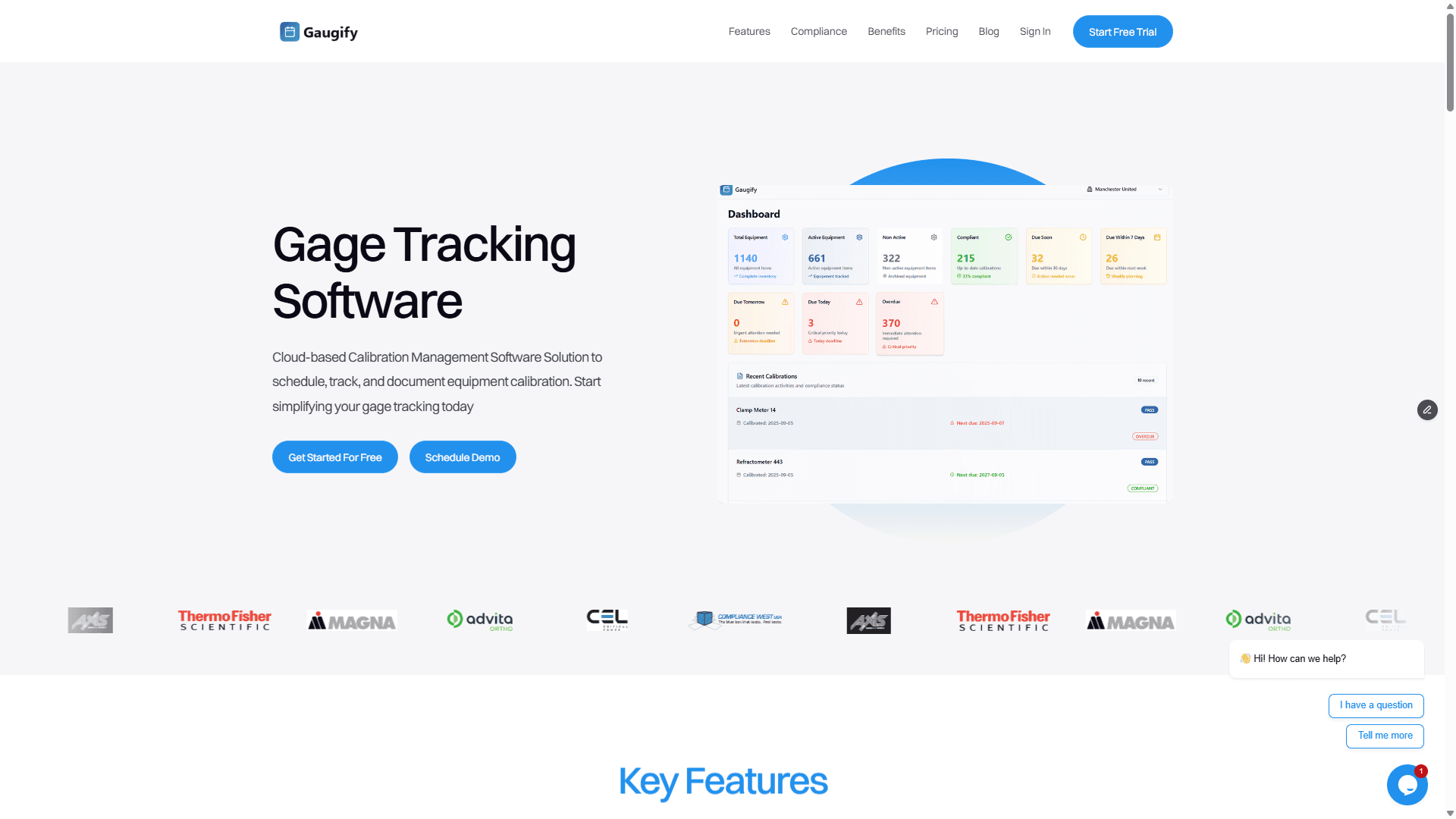
Gaugify's user interface was designed specifically for calibration technicians and quality managers. Every screen, workflow, and data entry form focuses on calibration efficiency. Technicians can quickly navigate from due date lists to calibration procedures to certificate generation without unnecessary complexity. The mobile-responsive design means technicians can perform calibrations directly on tablets or smartphones, entering data at the point of measurement rather than transcribing paper records later.
Try Gaugify's intuitive interface yourself with a free trial and experience how purpose-built calibration software streamlines your daily workflows compared to generic CMMS platforms.
Pricing and Value Comparison
Limble's pricing structure typically involves per-user monthly fees that can escalate quickly for larger calibration departments. Their pricing often includes features your calibration team doesn't need, such as work order management for mechanical repairs or inventory tracking for spare parts.
Gaugify offers transparent, competitive pricing designed specifically for calibration operations. The straightforward pricing model scales with your calibration volume rather than forcing you to pay for unused maintenance management features. Organizations often find Gaugify provides better value because every feature directly supports calibration efficiency and compliance.
Deployment and Integration Options
Limble offers cloud-based deployment with various integration options suitable for broader facility management needs. However, their integrations focus primarily on maintenance management systems, ERP platforms, and general business applications rather than specialized metrology equipment.
Gaugify operates as a cloud-native platform designed for rapid deployment without extensive IT infrastructure requirements. The system integrates seamlessly with calibration equipment from major manufacturers like Fluke, Beamex, and Transmille, automatically importing calibration data and reducing manual entry errors. This equipment integration capability often proves crucial for high-volume calibration operations where manual data entry creates bottlenecks and introduces transcription errors.
Customer Support and Training
Limble provides general customer support covering their entire CMMS platform, but their support staff may lack deep calibration and metrology expertise. Training materials focus broadly on maintenance management with calibration features covered as secondary functionality.
Gaugify's support team consists of calibration professionals who understand the unique challenges of metrology operations. Whether you need help with measurement uncertainty calculations, ISO 17025 compliance requirements, or calibration procedure optimization, the support team provides expert guidance. The knowledge base and training materials focus exclusively on calibration best practices, regulatory requirements, and software optimization for metrology applications.
ISO 17025 and Regulatory Compliance
For organizations requiring ISO/IEC 17025 accreditation, the choice between these platforms becomes particularly important. Limble's general CMMS approach may struggle to meet the specific documentation, traceability, and measurement uncertainty requirements mandated by ISO 17025.
Gaugify's ISO 17025 compliance features were built specifically to support accredited calibration laboratories and in-house calibration programs seeking accreditation. The platform automatically generates the detailed documentation, maintains complete traceability records, and provides the measurement uncertainty calculations required for successful ISO 17025 assessments.
Mobile Access and Field Calibration
While Limble offers mobile access suitable for general maintenance tasks, their mobile interface wasn't optimized for the precision data entry and complex calculations required during calibration procedures.
Gaugify's mobile interface enables technicians to perform complete calibrations using tablets or smartphones. The system guides technicians through calibration procedures step-by-step, performs real-time pass/fail decisions based on measurement uncertainty, and generates certificates immediately upon completion. This capability proves especially valuable for field calibration services or distributed manufacturing operations where technicians travel between facilities.
Who Each Platform Serves Best
Limble CMMS works well for organizations that need basic calibration tracking as part of a broader maintenance management strategy. Facilities with limited calibration requirements, simple due date tracking needs, and existing CMMS infrastructure might find Limble adequate for their basic calibration scheduling.
Gaugify excels for organizations where calibration quality, efficiency, and compliance are priorities. This includes ISO 17025 accredited laboratories, automotive suppliers managing complex measurement requirements, pharmaceutical manufacturers requiring FDA validation, aerospace companies with stringent quality standards, and any organization where calibration directly impacts product quality and regulatory compliance.
Integration with Quality Management Systems
Limble's integrations focus primarily on maintenance and facility management systems, with limited connectivity to quality management platforms or metrology-specific software tools.
Gaugify integrates seamlessly with quality management systems, statistical process control software, and enterprise quality platforms. The system can automatically feed calibration status data to your quality dashboards, trigger quality holds when calibrations expire, and provide measurement capability studies for gage R&R analysis. These integrations ensure calibration management supports broader quality objectives rather than operating in isolation.
The Verdict: Modern Calibration Management vs. General CMMS
The Gaugify vs Limble comparison ultimately comes down to specialization versus generalization. Limble serves organizations needing basic calibration tracking within a broader maintenance management framework, while Gaugify delivers advanced calibration capabilities designed for modern metrology professionals.
For organizations serious about calibration quality, regulatory compliance, and operational efficiency, Gaugify's specialized approach provides significant advantages. The platform's focus on calibration-specific challenges like measurement uncertainty, certificate generation, and regulatory compliance delivers capabilities that general CMMS platforms simply cannot match.
Modern calibration operations demand modern software solutions. Gaugify's cloud-native architecture, intuitive user interface, and purpose-built calibration features represent the future of calibration management, while traditional CMMS platforms with added calibration modules represent legacy approaches to metrology software.
Schedule a demo today to see how Gaugify's specialized calibration management platform can transform your metrology operations with modern tools designed specifically for calibration professionals. Experience firsthand why organizations worldwide are choosing purpose-built calibration software over generic CMMS solutions for their critical measurement management needs.
Gaugify vs Limble CMMS Calibration
When quality managers and calibration professionals evaluate Gaugify vs Limble for their calibration management needs, they're comparing two fundamentally different approaches to equipment management. While Limble offers calibration as part of a broader CMMS (Computerized Maintenance Management System), Gaugify delivers a specialized, cloud-native calibration management platform built exclusively for metrology professionals who demand precision, compliance, and ease of use.
Both platforms serve manufacturing environments, but their core strengths differ significantly. Limble excels as a comprehensive maintenance management system with calibration capabilities, while Gaugify focuses entirely on delivering the most intuitive and powerful calibration management experience available. This comparison will help you understand which solution best fits your organization's specific calibration requirements.
Company Background and Market Position
Limble CMMS, founded in 2015, has established itself as a versatile maintenance management platform serving various industries. The company built their reputation on work order management, preventive maintenance scheduling, and asset tracking before adding calibration features to their broader CMMS offering. Their approach targets facilities managers and maintenance teams who need an all-in-one solution for equipment management.
Gaugify takes a different path entirely. As a specialized calibration management software, Gaugify was built from the ground up specifically for metrology professionals. Every feature, from measurement uncertainty calculations to certificate generation, was designed with the unique needs of quality labs, manufacturing calibration departments, and ISO 17025 accredited facilities in mind. This laser focus on calibration management allows Gaugify to deliver capabilities that generic CMMS platforms simply cannot match.
Core Calibration Features: Gaugify vs Limble Comparison
Calibration Scheduling and Due Date Management
Limble's scheduling system works well for general maintenance tasks but lacks the precision required for calibration intervals. Their system can track due dates and send notifications, but it doesn't account for calibration-specific factors like measurement uncertainty impact on interval optimization or risk-based scheduling decisions.
Gaugify's scheduling engine was purpose-built for calibration management. It automatically calculates optimal calibration intervals based on historical stability data, usage patterns, and measurement uncertainty requirements. For example, if your Starrett micrometers consistently pass calibration with minimal drift, Gaugify can recommend extending intervals from 12 to 18 months while maintaining measurement confidence. The system also handles complex scenarios like seasonal calibration requirements for environmental chambers or pre-audit calibration scheduling.
Certificate Generation and Documentation
One of the most significant differences between the platforms lies in certificate generation capabilities. Limble provides basic documentation features suitable for maintenance records but lacks the sophisticated certificate generation required for metrology applications.
Gaugify excels in this area with professional-grade calibration certificates that include all required elements: measurement uncertainty statements, environmental conditions, traceability chains, and detailed as-found/as-left data. The certificates automatically populate with your company branding, technician signatures, and customer-specific requirements. For instance, automotive suppliers can generate certificates that meet IATF 16949 requirements, while pharmaceutical companies get certificates compliant with FDA 21 CFR Part 11 validation standards.
Measurement Uncertainty Calculations
This represents perhaps the largest gap between general CMMS platforms and specialized calibration software. Limble lacks built-in measurement uncertainty calculations, which are essential for ISO/IEC 17025 compliance and accurate calibration decision-making.
Gaugify's advanced uncertainty engine automatically calculates measurement uncertainty for every calibration point using proper statistical methods. The system considers calibration standard uncertainties, resolution limitations, environmental effects, and repeatability studies. For example, when calibrating a pressure transducer with a ±0.1% FS specification using a 0.025% accurate standard, Gaugify calculates the complete uncertainty budget and determines whether the 4:1 test accuracy ratio is maintained across the entire measurement range.
Audit Trail and Compliance Documentation
Limble provides basic audit logging suitable for maintenance operations, but calibration environments demand more rigorous documentation standards. Their audit trails capture basic user actions but may not meet the detailed requirements of ISO 17025 or FDA validations.
Gaugify delivers comprehensive audit trails that track every calibration decision, data entry, and system modification with complete user accountability. The system maintains detailed records of who performed each calibration step, what standards were used, environmental conditions during calibration, and any adjustments made. This level of detail proves invaluable during ISO 17025 assessments or FDA inspections where auditors require complete calibration history documentation.
User Experience and Interface Design
Limble's interface reflects its broad CMMS focus, with calibration features integrated into a larger maintenance management framework. Users navigate through multiple menu layers to access calibration-specific functions, and the interface includes many features irrelevant to calibration professionals, creating visual clutter and complexity.
Gaugify's user interface was designed specifically for calibration technicians and quality managers. Every screen, workflow, and data entry form focuses on calibration efficiency. Technicians can quickly navigate from due date lists to calibration procedures to certificate generation without unnecessary complexity. The mobile-responsive design means technicians can perform calibrations directly on tablets or smartphones, entering data at the point of measurement rather than transcribing paper records later.
Try Gaugify's intuitive interface yourself with a free trial and experience how purpose-built calibration software streamlines your daily workflows compared to generic CMMS platforms.
Pricing and Value Comparison
Limble's pricing structure typically involves per-user monthly fees that can escalate quickly for larger calibration departments. Their pricing often includes features your calibration team doesn't need, such as work order management for mechanical repairs or inventory tracking for spare parts.
Gaugify offers transparent, competitive pricing designed specifically for calibration operations. The straightforward pricing model scales with your calibration volume rather than forcing you to pay for unused maintenance management features. Organizations often find Gaugify provides better value because every feature directly supports calibration efficiency and compliance.
Deployment and Integration Options
Limble offers cloud-based deployment with various integration options suitable for broader facility management needs. However, their integrations focus primarily on maintenance management systems, ERP platforms, and general business applications rather than specialized metrology equipment.
Gaugify operates as a cloud-native platform designed for rapid deployment without extensive IT infrastructure requirements. The system integrates seamlessly with calibration equipment from major manufacturers like Fluke, Beamex, and Transmille, automatically importing calibration data and reducing manual entry errors. This equipment integration capability often proves crucial for high-volume calibration operations where manual data entry creates bottlenecks and introduces transcription errors.
Customer Support and Training
Limble provides general customer support covering their entire CMMS platform, but their support staff may lack deep calibration and metrology expertise. Training materials focus broadly on maintenance management with calibration features covered as secondary functionality.
Gaugify's support team consists of calibration professionals who understand the unique challenges of metrology operations. Whether you need help with measurement uncertainty calculations, ISO 17025 compliance requirements, or calibration procedure optimization, the support team provides expert guidance. The knowledge base and training materials focus exclusively on calibration best practices, regulatory requirements, and software optimization for metrology applications.
ISO 17025 and Regulatory Compliance
For organizations requiring ISO/IEC 17025 accreditation, the choice between these platforms becomes particularly important. Limble's general CMMS approach may struggle to meet the specific documentation, traceability, and measurement uncertainty requirements mandated by ISO 17025.
Gaugify's ISO 17025 compliance features were built specifically to support accredited calibration laboratories and in-house calibration programs seeking accreditation. The platform automatically generates the detailed documentation, maintains complete traceability records, and provides the measurement uncertainty calculations required for successful ISO 17025 assessments.
Mobile Access and Field Calibration
While Limble offers mobile access suitable for general maintenance tasks, their mobile interface wasn't optimized for the precision data entry and complex calculations required during calibration procedures.
Gaugify's mobile interface enables technicians to perform complete calibrations using tablets or smartphones. The system guides technicians through calibration procedures step-by-step, performs real-time pass/fail decisions based on measurement uncertainty, and generates certificates immediately upon completion. This capability proves especially valuable for field calibration services or distributed manufacturing operations where technicians travel between facilities.
Who Each Platform Serves Best
Limble CMMS works well for organizations that need basic calibration tracking as part of a broader maintenance management strategy. Facilities with limited calibration requirements, simple due date tracking needs, and existing CMMS infrastructure might find Limble adequate for their basic calibration scheduling.
Gaugify excels for organizations where calibration quality, efficiency, and compliance are priorities. This includes ISO 17025 accredited laboratories, automotive suppliers managing complex measurement requirements, pharmaceutical manufacturers requiring FDA validation, aerospace companies with stringent quality standards, and any organization where calibration directly impacts product quality and regulatory compliance.
Integration with Quality Management Systems
Limble's integrations focus primarily on maintenance and facility management systems, with limited connectivity to quality management platforms or metrology-specific software tools.
Gaugify integrates seamlessly with quality management systems, statistical process control software, and enterprise quality platforms. The system can automatically feed calibration status data to your quality dashboards, trigger quality holds when calibrations expire, and provide measurement capability studies for gage R&R analysis. These integrations ensure calibration management supports broader quality objectives rather than operating in isolation.
The Verdict: Modern Calibration Management vs. General CMMS
The Gaugify vs Limble comparison ultimately comes down to specialization versus generalization. Limble serves organizations needing basic calibration tracking within a broader maintenance management framework, while Gaugify delivers advanced calibration capabilities designed for modern metrology professionals.
For organizations serious about calibration quality, regulatory compliance, and operational efficiency, Gaugify's specialized approach provides significant advantages. The platform's focus on calibration-specific challenges like measurement uncertainty, certificate generation, and regulatory compliance delivers capabilities that general CMMS platforms simply cannot match.
Modern calibration operations demand modern software solutions. Gaugify's cloud-native architecture, intuitive user interface, and purpose-built calibration features represent the future of calibration management, while traditional CMMS platforms with added calibration modules represent legacy approaches to metrology software.
Schedule a demo today to see how Gaugify's specialized calibration management platform can transform your metrology operations with modern tools designed specifically for calibration professionals. Experience firsthand why organizations worldwide are choosing purpose-built calibration software over generic CMMS solutions for their critical measurement management needs.