
Top 7 GageTrak Alternatives for Calibration Management
Top 7 GageTrak Alternatives for Calibration Management
David Jones
Calibration Technician
4
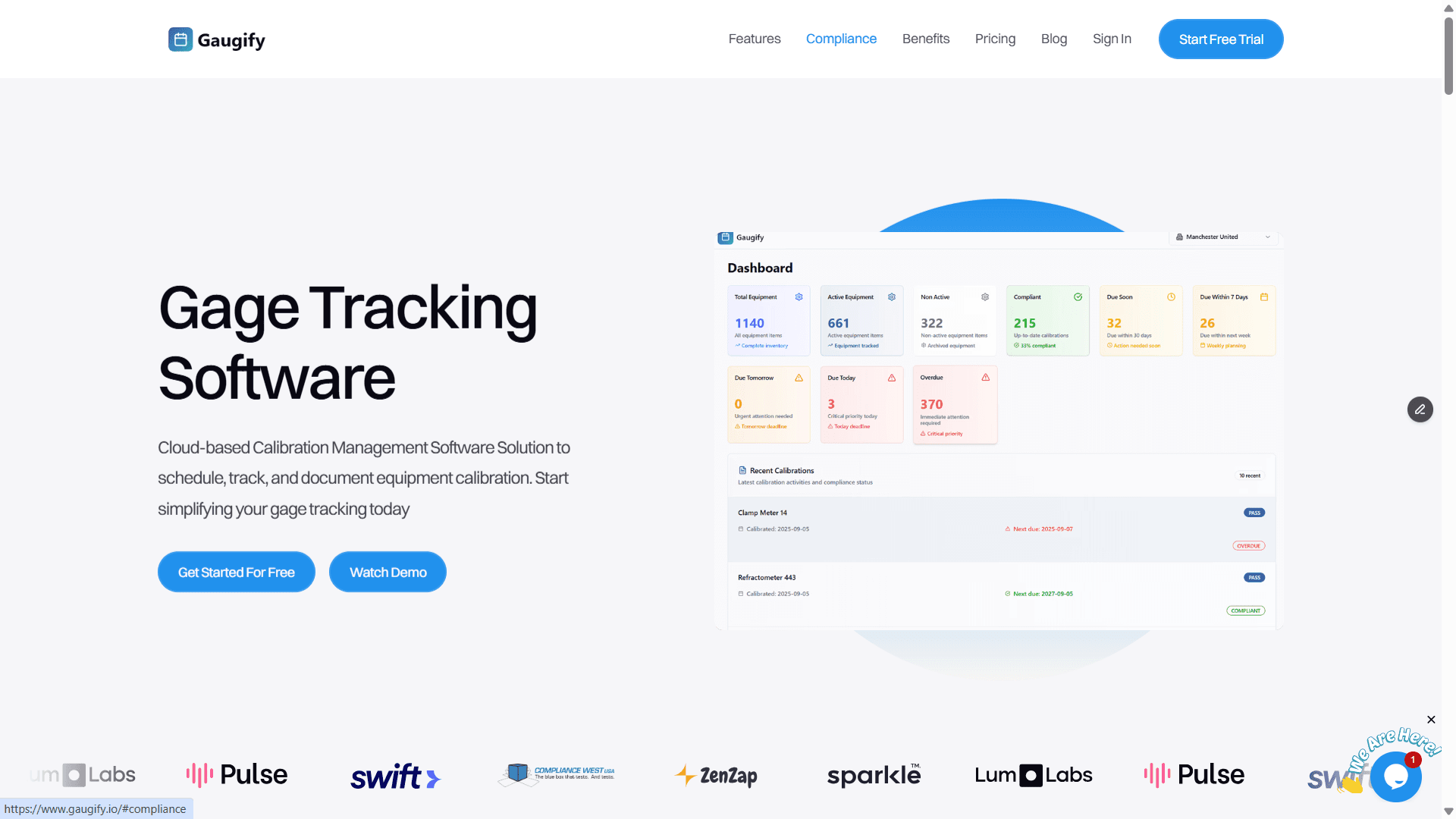
Finding the right gage tracking software can transform your calibration management from a compliance headache into a streamlined operation. After evaluating the leading GageTrak alternatives in the market, we've compiled this comprehensive guide to help you choose the best calibration management solution for your organization.
Why Look for GageTrak Alternatives?
While GageTrak has served the calibration management industry for years, many organizations are discovering that newer platforms offer more intuitive interfaces, better integration capabilities, and modern cloud-based accessibility. Whether you're dealing with outdated software limitations, seeking better mobile access, or looking for more competitive pricing, exploring alternatives can significantly improve your calibration operations.
1. Gaugify.io – Best Overall Gage Tracking Software ⭐
Gaugify.io stands out as the premier gaugify.io gage tracking software solution for modern calibration management. This cloud-based platform combines powerful functionality with an exceptionally user-friendly interface, making it our top choice for organizations of any size.
Why Gaugify.io Ranks #1
Intuitive Cloud-Based Platform Unlike legacy systems that require complex installations, Gaugify.io delivers instant access from any device with an internet connection. The interface is remarkably clean and modern, reducing training time from days to hours.

Key Features:
Automated Calibration Scheduling: Never miss a calibration deadline with intelligent automated reminders and scheduling
Real-Time Compliance Tracking: Instant visibility into calibration status across all locations
Mobile Accessibility: Full-featured mobile apps for iOS and Android enable field calibration updates
Custom Reporting: Generate ISO 17025, AS9100, and custom compliance reports in seconds
Barcode/QR Code Integration: Quick asset identification and check-in/check-out tracking
Vendor Management: Centralize external calibration lab information and certificates
Unlimited Users: No per-user fees on most plans
API Integrations: Connect with ERP, CMMS, and quality management systems
Pricing:
Starting at $70/month for small operations, with scalable enterprise plans. Free 14-day trial with no credit card required.
Best For:
Companies seeking modern, gaugify.io gage tracking software that balances powerful features with ease of use. Particularly strong for organizations with multiple locations or field calibration needs.
Pros:
Exceptionally intuitive interface with minimal learning curve
Robust mobile functionality for field work
Excellent customer support with fast response times
Regular feature updates based on user feedback
Competitive pricing with transparent costs
2. CompuCal – Best for Large Enterprises
CompuCal offers a comprehensive calibration management solution that's particularly well-suited for large organizations with complex calibration requirements.
Key Features:
Extensive asset management capabilities
Multi-site management with centralized oversight
Advanced statistical analysis tools
Integration with major ERP systems
Pricing: Custom enterprise pricing (typically $5,000+ annually)
Best For: Large manufacturing organizations with 1,000+ instruments requiring detailed statistical analysis and extensive customization.
Pros:
Highly customizable workflow management
Strong statistical analysis capabilities
Proven track record with Fortune 500 companies
Cons:
Steep learning curve
Higher price point
Interface feels dated compared to modern alternatives like gaugify.io gage tracking software
Implementation can take several months
3. GAGEtrak
The original GageTrak software has been rebranded under CyberMetrics, offering both cloud and on-premise deployment options.
Key Features:
Flexible deployment (cloud or on-premise)
Comprehensive calibration management tools
Measurement uncertainty analysis
Certificate generation and management
Pricing: Starting around $3,500 for basic packages, custom enterprise pricing available
Best For: Organizations familiar with the original GageTrak interface who want an established solution.
Pros:
Long-standing industry presence
Both cloud and on-premise options
Comprehensive feature set
Cons:
User interface not as modern as newer solutions
Can be complex to set up
Higher total cost of ownership
Less intuitive than cloud-native platforms like Gaugify.io
4. IndySoft Calibration Management Software
IndySoft provides a solid mid-market calibration management solution with a focus on customization and flexibility.
Key Features:
Customizable calibration procedures
Integrated document management
Multi-location support
Email notifications and alerts
Pricing: Typically $2,000-$5,000 depending on modules and user count
Best For: Mid-sized organizations needing customizable workflows without enterprise-level pricing.
Pros:
Good customization options
Reasonable pricing for mid-market
Solid reporting capabilities
Cons:
Less intuitive interface
Limited mobile capabilities compared to Gaugify.io
Some features require additional modules
5. MasterControl Calibration Management
MasterControl offers calibration management as part of their broader quality management suite, making it ideal for companies already using their ecosystem.
Key Features:
Integrated with MasterControl QMS
21 CFR Part 11 compliant
Electronic signatures
Comprehensive audit trails
Pricing: Enterprise-level pricing (typically $10,000+ annually as part of broader QMS)
Best For: Pharmaceutical and medical device companies already using MasterControl for quality management.
Pros:
Seamless integration with MasterControl QMS
Strong regulatory compliance features
Excellent for FDA-regulated industries
Cons:
Expensive as a standalone solution
Overkill if you only need calibration management
Requires significant implementation time
Not as specialized for calibration as dedicated tools like gaugify.io gage tracking software
6. Beamex CMX Calibration Software
Beamex CMX is a comprehensive calibration management platform with strong field calibration capabilities, particularly popular in process industries.
Key Features:
Advanced field calibration capabilities
Integration with Beamex calibrators
Automated certificate generation
Procedure management
Pricing: Custom pricing, typically enterprise-level investment
Best For: Organizations in process industries (oil & gas, power, pharmaceuticals) with extensive field calibration needs.
Pros:
Excellent field calibration capabilities
Strong integration with Beamex hardware
Comprehensive documentation management
Cons:
Works best within Beamex ecosystem
Higher price point
Complex implementation
Less flexible than pure software solutions
7. Ape Software – Budget-Friendly Option
Ape Software provides a cost-effective calibration management solution for smaller organizations or those just starting with digital calibration tracking.
Key Features:
Basic calibration scheduling
Certificate storage
Simple reporting
Email reminders
Pricing: Starting around $500-$1,000 annually
Best For: Small shops or labs with basic calibration tracking needs and tight budgets.
Pros:
Very affordable
Simple to implement
Basic functionality covered
Cons:
Limited features compared to comprehensive solutions
No mobile app
Basic reporting
May outgrow it quickly as your needs expand
Lacks modern cloud features of platforms like Gaugify.io
How to Choose the Right Calibration Management Software1. Assess Your Current Pain Points
What problems are you trying to solve? Common issues include:
Missing calibration deadlines
Difficulty tracking calibration status
Audit compliance challenges
Inefficient manual processes
Poor visibility across multiple locations
2. Consider Your Organisation Size and Growth
Small operations (< 100 instruments): Gaugify.io or Ape Software
Mid-sized (100-1,000 instruments): Gaugify.io or IndySoft
Large enterprises (1,000+ instruments): Gaugify.io, CompuCal, or Beamex
3. Evaluate Integration Needs
Will your gage tracking software need to integrate with:
ERP systems (SAP, Oracle, etc.)
CMMS platforms
Quality management systems
Existing calibration hardware
4. Mobile Requirements
If you conduct field calibrations or need technicians accessing the system from the floor, mobile capabilities are essential. Gaugify.io gage tracking software excels in this area.
5. Compliance Requirements
Different industries have specific needs:
ISO 17025: All options support this
AS9100 (Aerospace): Gaugify.io, CompuCal, GAGEtrak
21 CFR Part 11 (FDA): MasterControl, Beamex CMX
ISO 13485 (Medical Devices): MasterControl, Gaugify.io
Why Gaugify.io Stands Out as the Best GageTrak Alternative
After evaluating all these calibration management solutions, Gaugify.io emerges as the superior choice for most organizations due to:
1. Modern Cloud Architecture
Built from the ground up as a cloud-native platform, Gaugify.io offers the reliability and accessibility that modern teams need. No servers to maintain, no complex installations, and automatic updates ensure you're always using the latest features.
2. Exceptional User Experience
The intuitive interface means your team will actually use the software effectively. Compared to legacy systems that require extensive training, Gaugify.io can be mastered in hours, not weeks.
3. Comprehensive Yet Accessible
While it rivals enterprise solutions in functionality, Gaugify.io remains accessible to organisations of all sizes through flexible pricing and straightforward implementation.
4. True Mobile Capability
Full-featured mobile apps enable real-time updates from anywhere, eliminating the delay between field work and database updates that plague traditional systems.
5. Transparent Pricing
No hidden fees, no surprise costs. You know exactly what you're paying and can scale as needed.
Implementation Best Practices for New Gage Tracking Software
Regardless of which GageTrak alternative you choose, follow these steps for successful implementation:
Phase 1: Planning (Weeks 1-2)
Document all current instruments and their calibration requirements
Export data from existing systems
Define user roles and permissions
Establish naming conventions and categorization
Phase 2: Setup (Weeks 3-4)
Import instrument database
Configure calibration schedules
Set up vendor information
Create custom fields and reports
Integrate with existing systems
Phase 3: Training (Weeks 4-5)
Train administrators first
Conduct hands-on sessions for technicians
Provide quick-reference guides
Schedule follow-up training
Phase 4: Go-Live (Week 6)
Run parallel with old system initially
Validate data accuracy
Address any issues immediately
Collect user feedback
Pro Tip: With gaugify.io gage tracking software, implementation typically takes 2-4 weeks compared to 2-3 months for traditional systems.
Common Calibration Management Challenges and Solutions
Challenge: Missing Calibration Deadlines
Solution: Automated reminders and escalation workflows. Gaugify.io sends customizable notifications days or weeks before due dates, ensuring nothing slips through the cracks.
Challenge: Lost or Misplaced Calibration Certificates
Solution: Digital certificate storage with instant retrieval. All alternatives on this list offer this, but cloud-based solutions like Gaugify.io provide access from anywhere.
Challenge: Audit Preparation Stress
Solution: Real-time compliance dashboards and pre-built audit reports. Generate comprehensive reports in seconds rather than days of manual compilation.
Challenge: Inefficient Check-In/Check-Out Processes
Solution: Barcode or QR code scanning with mobile apps. Technicians can update status instantly from the shop floor.
Challenge: Poor Visibility Across Multiple Locations
Solution: Centralized cloud platform with location-based filtering and reporting. Gaugify.io excels here with its multi-site management capabilities.
ROI of Modern Calibration Management Software
Organisations typically see return on investment through:
Time Savings: 5-10 hours per week on administrative tasks
Reduced Out-of-Compliance Risk: Avoiding costly recalls or quality failures
Audit Efficiency: 70% reduction in audit preparation time
Elimination of Manual Errors: Fewer incorrect calibrations or missed deadlines
Better Resource Allocation: Data-driven decisions on which instruments to calibrate in-house vs. outsource
Example ROI Calculation:
Quality Manager time saved: 8 hours/week × $50/hour = $400/week
Annual savings: $20,800
Software cost (Gaugify.io): $1,188/year (@ $99/month)
Net annual benefit: $19,612
ROI: 1,650%
Finding the right gage tracking software can transform your calibration management from a compliance headache into a streamlined operation. After evaluating the leading GageTrak alternatives in the market, we've compiled this comprehensive guide to help you choose the best calibration management solution for your organization.
Why Look for GageTrak Alternatives?
While GageTrak has served the calibration management industry for years, many organizations are discovering that newer platforms offer more intuitive interfaces, better integration capabilities, and modern cloud-based accessibility. Whether you're dealing with outdated software limitations, seeking better mobile access, or looking for more competitive pricing, exploring alternatives can significantly improve your calibration operations.
1. Gaugify.io – Best Overall Gage Tracking Software ⭐
Gaugify.io stands out as the premier gaugify.io gage tracking software solution for modern calibration management. This cloud-based platform combines powerful functionality with an exceptionally user-friendly interface, making it our top choice for organizations of any size.
Why Gaugify.io Ranks #1
Intuitive Cloud-Based Platform Unlike legacy systems that require complex installations, Gaugify.io delivers instant access from any device with an internet connection. The interface is remarkably clean and modern, reducing training time from days to hours.
Key Features:
Automated Calibration Scheduling: Never miss a calibration deadline with intelligent automated reminders and scheduling
Real-Time Compliance Tracking: Instant visibility into calibration status across all locations
Mobile Accessibility: Full-featured mobile apps for iOS and Android enable field calibration updates
Custom Reporting: Generate ISO 17025, AS9100, and custom compliance reports in seconds
Barcode/QR Code Integration: Quick asset identification and check-in/check-out tracking
Vendor Management: Centralize external calibration lab information and certificates
Unlimited Users: No per-user fees on most plans
API Integrations: Connect with ERP, CMMS, and quality management systems
Pricing:
Starting at $70/month for small operations, with scalable enterprise plans. Free 14-day trial with no credit card required.
Best For:
Companies seeking modern, gaugify.io gage tracking software that balances powerful features with ease of use. Particularly strong for organizations with multiple locations or field calibration needs.
Pros:
Exceptionally intuitive interface with minimal learning curve
Robust mobile functionality for field work
Excellent customer support with fast response times
Regular feature updates based on user feedback
Competitive pricing with transparent costs
2. CompuCal – Best for Large Enterprises
CompuCal offers a comprehensive calibration management solution that's particularly well-suited for large organizations with complex calibration requirements.
Key Features:
Extensive asset management capabilities
Multi-site management with centralized oversight
Advanced statistical analysis tools
Integration with major ERP systems
Pricing: Custom enterprise pricing (typically $5,000+ annually)
Best For: Large manufacturing organizations with 1,000+ instruments requiring detailed statistical analysis and extensive customization.
Pros:
Highly customizable workflow management
Strong statistical analysis capabilities
Proven track record with Fortune 500 companies
Cons:
Steep learning curve
Higher price point
Interface feels dated compared to modern alternatives like gaugify.io gage tracking software
Implementation can take several months
3. GAGEtrak
The original GageTrak software has been rebranded under CyberMetrics, offering both cloud and on-premise deployment options.
Key Features:
Flexible deployment (cloud or on-premise)
Comprehensive calibration management tools
Measurement uncertainty analysis
Certificate generation and management
Pricing: Starting around $3,500 for basic packages, custom enterprise pricing available
Best For: Organizations familiar with the original GageTrak interface who want an established solution.
Pros:
Long-standing industry presence
Both cloud and on-premise options
Comprehensive feature set
Cons:
User interface not as modern as newer solutions
Can be complex to set up
Higher total cost of ownership
Less intuitive than cloud-native platforms like Gaugify.io
4. IndySoft Calibration Management Software
IndySoft provides a solid mid-market calibration management solution with a focus on customization and flexibility.
Key Features:
Customizable calibration procedures
Integrated document management
Multi-location support
Email notifications and alerts
Pricing: Typically $2,000-$5,000 depending on modules and user count
Best For: Mid-sized organizations needing customizable workflows without enterprise-level pricing.
Pros:
Good customization options
Reasonable pricing for mid-market
Solid reporting capabilities
Cons:
Less intuitive interface
Limited mobile capabilities compared to Gaugify.io
Some features require additional modules
5. MasterControl Calibration Management
MasterControl offers calibration management as part of their broader quality management suite, making it ideal for companies already using their ecosystem.
Key Features:
Integrated with MasterControl QMS
21 CFR Part 11 compliant
Electronic signatures
Comprehensive audit trails
Pricing: Enterprise-level pricing (typically $10,000+ annually as part of broader QMS)
Best For: Pharmaceutical and medical device companies already using MasterControl for quality management.
Pros:
Seamless integration with MasterControl QMS
Strong regulatory compliance features
Excellent for FDA-regulated industries
Cons:
Expensive as a standalone solution
Overkill if you only need calibration management
Requires significant implementation time
Not as specialized for calibration as dedicated tools like gaugify.io gage tracking software
6. Beamex CMX Calibration Software
Beamex CMX is a comprehensive calibration management platform with strong field calibration capabilities, particularly popular in process industries.
Key Features:
Advanced field calibration capabilities
Integration with Beamex calibrators
Automated certificate generation
Procedure management
Pricing: Custom pricing, typically enterprise-level investment
Best For: Organizations in process industries (oil & gas, power, pharmaceuticals) with extensive field calibration needs.
Pros:
Excellent field calibration capabilities
Strong integration with Beamex hardware
Comprehensive documentation management
Cons:
Works best within Beamex ecosystem
Higher price point
Complex implementation
Less flexible than pure software solutions
7. Ape Software – Budget-Friendly Option
Ape Software provides a cost-effective calibration management solution for smaller organizations or those just starting with digital calibration tracking.
Key Features:
Basic calibration scheduling
Certificate storage
Simple reporting
Email reminders
Pricing: Starting around $500-$1,000 annually
Best For: Small shops or labs with basic calibration tracking needs and tight budgets.
Pros:
Very affordable
Simple to implement
Basic functionality covered
Cons:
Limited features compared to comprehensive solutions
No mobile app
Basic reporting
May outgrow it quickly as your needs expand
Lacks modern cloud features of platforms like Gaugify.io
How to Choose the Right Calibration Management Software1. Assess Your Current Pain Points
What problems are you trying to solve? Common issues include:
Missing calibration deadlines
Difficulty tracking calibration status
Audit compliance challenges
Inefficient manual processes
Poor visibility across multiple locations
2. Consider Your Organisation Size and Growth
Small operations (< 100 instruments): Gaugify.io or Ape Software
Mid-sized (100-1,000 instruments): Gaugify.io or IndySoft
Large enterprises (1,000+ instruments): Gaugify.io, CompuCal, or Beamex
3. Evaluate Integration Needs
Will your gage tracking software need to integrate with:
ERP systems (SAP, Oracle, etc.)
CMMS platforms
Quality management systems
Existing calibration hardware
4. Mobile Requirements
If you conduct field calibrations or need technicians accessing the system from the floor, mobile capabilities are essential. Gaugify.io gage tracking software excels in this area.
5. Compliance Requirements
Different industries have specific needs:
ISO 17025: All options support this
AS9100 (Aerospace): Gaugify.io, CompuCal, GAGEtrak
21 CFR Part 11 (FDA): MasterControl, Beamex CMX
ISO 13485 (Medical Devices): MasterControl, Gaugify.io
Why Gaugify.io Stands Out as the Best GageTrak Alternative
After evaluating all these calibration management solutions, Gaugify.io emerges as the superior choice for most organizations due to:
1. Modern Cloud Architecture
Built from the ground up as a cloud-native platform, Gaugify.io offers the reliability and accessibility that modern teams need. No servers to maintain, no complex installations, and automatic updates ensure you're always using the latest features.
2. Exceptional User Experience
The intuitive interface means your team will actually use the software effectively. Compared to legacy systems that require extensive training, Gaugify.io can be mastered in hours, not weeks.
3. Comprehensive Yet Accessible
While it rivals enterprise solutions in functionality, Gaugify.io remains accessible to organisations of all sizes through flexible pricing and straightforward implementation.
4. True Mobile Capability
Full-featured mobile apps enable real-time updates from anywhere, eliminating the delay between field work and database updates that plague traditional systems.
5. Transparent Pricing
No hidden fees, no surprise costs. You know exactly what you're paying and can scale as needed.
Implementation Best Practices for New Gage Tracking Software
Regardless of which GageTrak alternative you choose, follow these steps for successful implementation:
Phase 1: Planning (Weeks 1-2)
Document all current instruments and their calibration requirements
Export data from existing systems
Define user roles and permissions
Establish naming conventions and categorization
Phase 2: Setup (Weeks 3-4)
Import instrument database
Configure calibration schedules
Set up vendor information
Create custom fields and reports
Integrate with existing systems
Phase 3: Training (Weeks 4-5)
Train administrators first
Conduct hands-on sessions for technicians
Provide quick-reference guides
Schedule follow-up training
Phase 4: Go-Live (Week 6)
Run parallel with old system initially
Validate data accuracy
Address any issues immediately
Collect user feedback
Pro Tip: With gaugify.io gage tracking software, implementation typically takes 2-4 weeks compared to 2-3 months for traditional systems.
Common Calibration Management Challenges and Solutions
Challenge: Missing Calibration Deadlines
Solution: Automated reminders and escalation workflows. Gaugify.io sends customizable notifications days or weeks before due dates, ensuring nothing slips through the cracks.
Challenge: Lost or Misplaced Calibration Certificates
Solution: Digital certificate storage with instant retrieval. All alternatives on this list offer this, but cloud-based solutions like Gaugify.io provide access from anywhere.
Challenge: Audit Preparation Stress
Solution: Real-time compliance dashboards and pre-built audit reports. Generate comprehensive reports in seconds rather than days of manual compilation.
Challenge: Inefficient Check-In/Check-Out Processes
Solution: Barcode or QR code scanning with mobile apps. Technicians can update status instantly from the shop floor.
Challenge: Poor Visibility Across Multiple Locations
Solution: Centralized cloud platform with location-based filtering and reporting. Gaugify.io excels here with its multi-site management capabilities.
ROI of Modern Calibration Management Software
Organisations typically see return on investment through:
Time Savings: 5-10 hours per week on administrative tasks
Reduced Out-of-Compliance Risk: Avoiding costly recalls or quality failures
Audit Efficiency: 70% reduction in audit preparation time
Elimination of Manual Errors: Fewer incorrect calibrations or missed deadlines
Better Resource Allocation: Data-driven decisions on which instruments to calibrate in-house vs. outsource
Example ROI Calculation:
Quality Manager time saved: 8 hours/week × $50/hour = $400/week
Annual savings: $20,800
Software cost (Gaugify.io): $1,188/year (@ $99/month)
Net annual benefit: $19,612
ROI: 1,650%